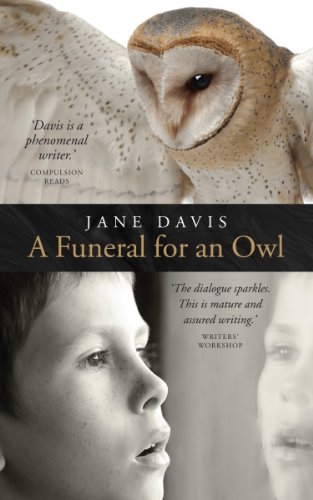
February Indie Book of the Month; A Funeral For An Owl by Jane Davis

It’s the end of the month, so that means it’s Indie Book of the Month time here on my blog. This is a new feature for 2018, where each month I will highlight the best indie book I read. This month please let me introduce you to another award-winning writer, Jane Davis. I first discovered Jane’s writing when another author I admire, recommended her book An Unchoreographed Life. I read it and loved it; it ticked every box for me as a reader. For this reason I was very keen to read A Funeral For An Owl and it did not disappoint at all. When I read books, I want good writing and a good plot, something to keep me turning the pages, but I also want to feel invested in the characters. I want to feel strongly about them, I want to worry about them and wish I knew them. Jane’s characters satisfy this need for me. It left me feeling I am in safe hands with her as  writer and will enjoy anything she writes because of this.

So, here is the blurb for A Funeral For An Owl;

A schoolyard stabbing sends wingbeats echoing from the past.

One shocking event. Two teachers risk their careers to help a boy who has nothing. Three worlds intersect and collide.

‘If you want to laugh and cry and stamp and cheer – all in the space of a few hours – then this book is the one for you.’ Bookmuse

The best way to avoid trouble, thinks Ayisha Emmanuelle, is to avoid confrontation. As an inner-city schoolteacher, she does a whole lot of avoidance.

14-year-old Shamayal Thomas trusts no one. Not the family, not the gang. And at school, trusting people is forbidden.

Jim Stevens teaches history. Haunted by his own, he still believes everyone can learn from the past. History doesn’t always have to repeat itself.

A powerful exploration of the ache of loss set in a landscape where broken people can heal each other.

Fresh, funny, heartbreaking and real, this original and compassionate study of when to break the rules and why is perfect for fans of Maggie O’Farrell, Rachel Joyce and Ali Smith.

“A perfect balance of gritty and feel-good.” society that is supposed to protect the most vulnerable.”

And here is my Amazon/Goodreads review;

“Having previously read another novel by this author, I was keen to read more and A Funeral For An Owl did not disappoint. In fact, it ticked so many boxes for me as a reader that I instantly pre-ordered the author’s new book which is out in the Spring, and I will be working my way through her backlist without a doubt. The plot of this book revolves around Jim, a history teacher who is stabbed while trying to protect a pupil at school, his colleague Ayisha who witnesses the attack, and Shamayal, a fourteen-year-old pupil Jim has befriended. Jim helps the boy one rainy night and a friendship grows between them, which is of course, very much against the rules. On the surface, it may seem like Jim and Shamayal have little in common, but it turns out Jim grew up in the same block of flats on the same notorious council estate and suffered many of the same issues Shymayal is dealing with. They even have a friend in common, Bins, a local misfit who knows everyone on the estate by the nick-names he gives them but is unable to recognise faces. With Jim in hospital, Ayisha comes to his aid and discovers the unlikely friendship between him and the boy. At first, she is very disapproving but as the story continues she finds herself drawn deeper into the lives of Jim and Shamayal. This book does an excellent job of weaving the past with the present. In 1992, Jim was a twelve-year-old boy with a penchant for bird-watching. His father is in prison, his older brother has been thrown out, and the estate is rife with danger from gangs. One day, Jim finds a teenage girl in his bird-spotting place. The mysterious Aimee White provides the thread that holds the past and present together. Jim’s friendship with her, the funeral for the owl and what happened to her, are things that have haunted Jim throughout his life. The reason this book ticked every box for me was that the plot kept me turning the pages, and the characters kept me there as I became increasingly engrossed in their lives. I wanted to find out what happened to Aimee, I wanted Ayisha and Jim to recognise the attraction between them, and I desperately wanted things to turn out well for Shamayal, who was probably my favourite character. A brilliant book, so well-written and compelling. I highly recommend it and this author!”

41n4bzwX3pL.jpg

Other Indies I’ve Enjoyed This Month;

The Finest Hat In The Whole World by Colleen A. Parkinson

Best Traditionally Published Book of The Month;

Release by Patrick Ness


The Joys and the Perils of Working on Multiple Projects

It’s never my intention to have multiple projects on the go, but almost since the beginning of my publishing journey, this is the way it’s worked out. Currently, I’m juggling a few things at the same time. Elliot Pie’s Guide To Human Nature is finished, but I’ve sent it out to a small list of publishers. While waiting for rejection, I’m planning my self-publishing launch of this book. A Song For Bill Robinson was sent to beta readers for the first time and I just received the first piece of feedback from a reader. I am now responding to this with a 6th edit of the book. Meanwhile, I made a decision to reduce the planned trilogy to two books by moving the main event of book three to the end of book two. This is in progress. And then there is the four-book series I promised myself I would not start until all these other things were finished! But that’s proving difficult, and I have recently succumbed to writing five chapters and indulging in some research…

I never plan on working like this, and in fact, I’m not sure it’s a good idea at all! I often experience what I would describe as a nervous stomach throughout the day. Unless there is something specific I am worried about, I have no option but to blame it on the thought of my evening writing.

Have you ever juggled more than one writing project? Or would this be your worst nightmare? Here are 5 perils of working this way, followed by 5 joys, because in my opinion, it is fraught with both.

girl-1940244_640

Perils

  1. Not Finishing – This is a genuine concern. It is the reason I rarely finished anything when I was a kid. During the inevitable slump, my mind would be drawn to a new story and off I would go. This has also happened to me as an adult writer, hence the half-written sequels to The Mess Of Me and The Tree Of Rebels.
  2. Distraction – Working on more than one writing project can be hugely distracting. If your mind is being pulled in more than one direction, it can be really tough to sit down and actually get some words out. It’s not easy to concentrate or commit to one story when you have others calling for your attention. Sometimes I start the evening working on one book, and finish the evening on another, which can feel quite frustrating as if nothing is really getting done.
  3. Panic – This is a definite peril and one I experience regularly. I get a nervous feeling in my stomach like it is constantly turning over on itself. Sometimes it feels like I cannot breathe and I take an extra big breath just to be sure. I’m not exactly sure why I’m nervous about my writing, but I always feel better once I am sat down doing it. I can only imagine that the feeling of panic comes from my struggle to do too much.
  4. Spreading Too Thin – Working on multiple projects could potentially dilute the quality of your work. Lack of concentration, distraction, panic, self-doubt can all be heightened when attempting to do too much at once. This could lead to a reduced quality of your writing, which is something I worry about a lot.
  5. Burn Out – Worst case scenario, working on too many projects can lead to burn out and exhaustion. It could spark off writers’ block. You could become utterly stuck, afraid to move on. I’ve experienced this before, and the only good thing about it is that it does finally force me to slow the hell down.

But what about the joys? Are there any good points about working on multiple projects? Can it be beneficial despite all the above? I might be crazy, but I do think so…

thought-2123970_640

Joys

  1. Excitement – Writing is exciting. It should be. I know half the reason I get such butterflies in my stomach is that I am excited to get writing. It’s exhilarating to put words to paper, to create and evolve characters, to give them lives, to shape and control their existence, to create worlds and spark drama and emotion. A new project is undeniably more exciting than an old one, which may be wearing thin. I like to stay excited and working on multiple projects keeps it going.
  2. Not Losing Ideas/Words – Now I know the rule is to never assume you will remember a good idea if you do not write it down. How many writers have made that mistake? You must write it down! It’s entirely possible to save future ideas by jotting the gist of it down somewhere safe, then getting back to the project in hand. But what if more words start to come? What if vague characters start to evolve into solid ones? What if they start to present you with conversations and dialogue? There is no way you will remember it all if you don’t write it down! And then before you know it…
  3. Keeps Things Fresh – Editing and revising a novel can go on for years. Writing the rough first draft is fairly easy compared to all that is to come. All the editing, re-reading, rewriting, revising, cutting, rewording and killing of darlings. Editing can be a challenge but it can quickly become dull, and even a torture. Here’s where starting another project can be helpful. Writing something fresh and new! It helps to be disciplined though. I only allow myself a chapter of a new book if I have edited four chapters of the current book, for example. Don’t jump ship! Stay on board and then reward yourself with a little bit of something fresh and new…
  4. Fills In Time Between Beta Readers – If you are anything like me, you will send your novel out to beta readers at different times. I usually have three rounds of beta reads, and I will work on the book in between. But when it’s out, I can’t work on it. What am I going to do? Sit around and twiddle my thumbs? It could be months! So I get my teeth into another project. As soon as the other book comes back from a beta, I down tools and get right back to it, always treating the one further along as the priority.
  5. Increases Productivity – In the indie age, productivity and brand are key. The more books you write, the more brand you create, the more trust you build with readers. Working on multiple projects increased productivity, there is no doubt about that. Simply put, more books are written.

So, over to you guys! What do you think? Do you work on multiple projects? If so, how do you stay sane? How do you stay on track and get it all done? Do you only ever work on one book at a time? Please feel free to share and comment!

Interview With Author Miriam Hastings

As you know, I’ve started a new feature on this blog where I pick the best Indie book I read that month, share it with you and then interview the author. The best book I read in January 2018 was The Minotaur Hunt by the award-winning Miriam Hastings as highlighed in this post. Miriam kindly agreed to an interview and here it is! You can find Miriam’s bio and links at the end of this post.
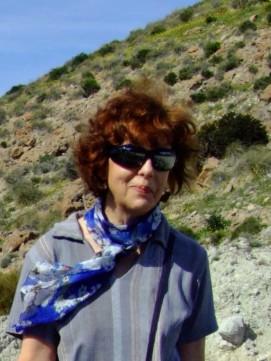
Miriam Hastings.jpg

1. When did you first know you wanted to be a writer? Why do you write?

I never made a conscious decision to be a writer, I need to write and always have. I have been making up stories ever since I can remember and writing them down from the moment I learned to write.

I have always had a vivid imagination and when I was a child I spent a lot of time in fantasy worlds that I created. I think I write fiction as an adult to meet the same needs I had then. This is partly a need to escape from reality when it’s too unbearable, but also a need to address the problems life poses by approaching them from a more creative angle. Writing is a way of taking control of reality because you can shape it and reshape it through words, expressing your own experience and vision of the world and, through doing that, you can transform reality into something greater.

2. Can you tell us about The Minotaur Hunt – what inspired you to write this particular book?

I wrote The Minotaur Hunt in my late 20s (it was first published when I was 31). I suffered from an extreme anxiety disorder as an adolescent, caused by childhood trauma, and was admitted to an adult acute ward when I was 14 and kept there for three and a half months. I was admitted to hospital again when I was 23.

Later, after I was 26, while I was writing the novel, I worked with people who had been moved out of the big asylums like Bradley. First I was working in a MIND day centre and then in a group home.

I was also studying for a part-time BA degree and designing and hand painting ceramic tiles, so it was an extremely busy period in my life! I used to write for half an hour every evening – I doubt The Minotaur Hunt would have been written if I hadn’t done that! But it was as if I had no choice – I felt driven to write the novel no matter what else I was doing at the time.

Throughout my 30s and 40s, I continued working part-time in the field of mental health, both doing therapeutic work with service users and also teaching on courses for mental health professionals, e.g. training courses for psychiatric nurses, social workers, psychologists, etc.

I wrote The Minotaur Hunt because I wanted to help people understand what it feels like to suffer from mental distress and to be labelled as “mad” or “mentally ill”, and the way it renders you totally illegitimate within society, so that your feelings and experiences are dismissed and pathologised, your experience of past trauma is disbelieved, and the social and family problems causing your distress are ignored and never addressed.

I also wanted to help bring about change within the psychiatric system because I had both experienced and witnessed so much abuse.

Looking back on it, I’m amazed at my own naiveté and arrogance – that I imagined my novel could change such a vast and impervious system! Sadly, I don’t think the closing of the big Victorian asylums has changed attitudes or brought about improvements in the way service users are treated, as I once hoped.

3. What is your writing process? How does it all come together?

In the years when I was studying and teaching it was often hard to find the time to write regularly. Now I like to write for at least an hour or two every day, but I am disabled with a progressive degenerative illness and these days my major problem is living in chronic pain and suffering from stiffness and weakness in my hands and wrists which make the physical act of writing difficult. I have to rely largely on voice recognition. I have a dictaphone that I use for making notes and for capturing ideas. I can download my notes to the computer from my dictaphone, although this involves a lot of correction and editing so it isn’t always useful.

When I first begin a novel, sometimes I have to be disciplined and make myself work on it every day but once I’ve become really involved in the story and the characters, I can’t wait to start writing each morning.

When I begin a novel I rarely start at the beginning – I don’t usually know where the beginning will be! I think writing a novel is like doing a large complicated jigsaw puzzle. I know what I’m aiming for but I don’t tackle the whole picture at once, just a small area at a time, as I might concentrate on the sky when doing a jigsaw. I recognize and build up connections gradually. Once I am about halfway through, it becomes much easier – sections begin to fit together and I see the whole work taking shape. I find the important thing is to keep writing; I don’t let myself get stuck over Chapter 2 if I could easily write Chapter 6. I know Chapter 2 will become clearer later, a novel is a long piece of work, I think if you don’t keep writing, it will never come into existence at all so it’s important to be disciplined. Occasionally I know how I want to begin but often the beginning and the end don’t become clear in my mind until I’ve written the rest of the book.

This sometimes applies to short stories as well, but I tend to write short stories in a more straightforward chronological manner from beginning to end; however the first and last paragraphs are the last things I work on because it’s vitally important to get them right in a short story – even more than in a novel.

Writing a novel is very different to writing a short story and to some extent it takes different skills. When I am writing a novel I need to know as much as possible about the characters and their lives, whether I’m going to use that information in the novel or not. However, when I’m writing a short story I don’t necessarily know everything about the character or their life.

4. What is more important to you, the characters or the plot?

I think my writing is more character-driven than plot-driven. The characters, their psychological make-up, their relationships, the life experiences that have made them who they are, interest me most. The plot is vitally important, of course, but mainly in relation to the characters and the way it affects them.

6. Do you have a day job, and if so, does it help your writing in any way?

For several years, as well as running therapeutic groups, I was a part-time lecturer at Birkbeck College, University of London, teaching post-colonial and cross-cultural women’s literature, and creative writing for personal development.

I think working with people has always fed into my writing because people fascinate me. I can’t imagine how I would create my characters if I didn’t know how people think and feel, and something of the richness of their lives.

After I became too disabled to work for a college or other institutions, I began teaching from home and running writing groups; also leading guided creative writing for personal development both in groups and for individuals.

Sadly, I’m able to do very little work now – less and less each year as my health problems increase – but I still run some writing workshops at home.

7. Do you write with a theme or a message in mind, and if so, what might it be?

I have always seen writing as a political act, however, I don’t necessarily set out to express a particular message. I don’t consciously write stories to give a message so much as to express a vision. On the other hand, the outsider is a constant theme in my work, and in all my writing the main protagonist is in some way an outsider.

8. What are you working on at the moment?

I have just finished a novel, The Dowager’s Dream, set on the north coast of Scotland during the brutal clearances in the region. The story was partly inspired by the lives of my great, great-grandmothers, Margaret MacKenzie and Christine Patterson, also by an extraordinary account written in 1809 by the Minister’s daughter of Reay, describing a mermaid she saw in Sandside Bay, Caithness – but the mermaid in The Dowager’s Dream is not pretty, being a dark symbol of both sexual and cultural repression. For several years I was researching the Highland clearances and themes of dispossession and ethnic cleansing are central to the novel.

Now I have several ideas for novels which I’m working on until it becomes clear which one I want to concentrate upon! There is a thriller (my first!) set in Cornwall; a novel about a group of young people living in short-life housing; and finally, a novel about three young sisters, which is exploring the secrets and taboos that all families hide.

I’m also working on a short story about Emily Bronte which I’ve been struggling with for quite some time.

9.Can you tell us about your publishing experiences so far? 

I was very fortunate with The Minotaur Hunt because the first publisher I approached, the Harvester Press, accepted it straightaway, and then it won the Mind Book of the Year Award which helped promote it. The Harvester press were a small independent publishers who mostly published literary criticism for universities but also some literary fiction. Unfortunately, they were taken over by a big multinational corporation, Simon & Schuster, soon after The Minotaur Hunt was published who closed down Harvester’s fiction list leaving me without a publisher. It was about the time that publishing changed a lot, following the ending of the net book agreement, most independent publishing houses were gradually taken over by a few huge multinationals that were totally profit centred. Mostly because of winning the award, The Minotaur Hunt sold out in hardback, although small numbers have usually been available through eBay, but I couldn’t find any other publisher to take it on. A few years ago I decided to write a new epilogue as it was 20 years since it was first published. I was inspired by Angela Carter’s “afterword” to her early novel, Love, written years after it was published. In my Afterword I revisit all the characters to see what has happened to them in the years since the novel finished. First of all I published this revised edition of the novel on Kindle and Kobo, and then in September I published it as a paperback.

I have written five novels since The Minotaur Hunt but sadly none of them have been published. I have published several short stories and poems in anthologies and literary magazines. I had a collection of short stories, Demon Lovers, shortlisted for the Scott Award in 2010 and I’m planning to self publish that as it so difficult to get short stories published. I have already published three short stories on Kindle and Kobo, The Doll and Other Stories: Strange Tales. I think it’s really sad that so few publishers, including small independent presses, publish short stories. I love reading short stories myself and I know lots of other people do too.

10.Do you find it hard to say goodbye to your characters? If so, which character from The Minotaur Hunt would you revisit if you could?

I love all my characters, even the minor ones and the unattractive ones, and I never forget them. As I said above, I have already revisited the characters from The Minotaur Hunt in the new epilogue I’ve written.

11. Tell us what inspires your writing

Anything that stimulates my imagination! Inspiration comes from all manner of things; I am always getting ideas for short stories and novels – some of which I will discard later but many I keep and return to; sometimes after several years.

I always begin with an idea, sometimes with a story I have heard or read, often this might be taken from history or from myth or legend. I’m a highly political person (with a small p!) and I’m always gripped by stories of injustice, abuse, alienation or persecution – these are the kind of stories I always want to tell (as with the Highland Clearances).

12.What is your approach to marketing and self-promotion?

This is the part of writing that have always found most difficult. I hate it! And I am really bad at it. When I first wrote The Minotaur Hunt I went about practically apologising for having had the temerity to write a novel!

I am getting better at it, partly because I’ve realised I must, given the extreme commercialisation of the publishing world today. I do have a website and a Facebook author page.

At the moment I’m approaching literary agents with my latest novel, The Dowager’s Dream, but so far I’ve had no luck. One of them was very enthusiastic at first but decided in the end that it wasn’t for him.

If none of them are interested, I will try some small presses before publishing it independently.

Miriam’s Bio;

For several years I worked in the field of mental health in a variety of roles. I ran therapeutic workshops for survivors of childhood trauma. I taught on community links courses and ran consultancy and personal development courses for mental health service clients, and training courses and workshops for mental health professionals.

I also worked part-time for the Faculty of Continuing Education at Birkbeck College, University of London, teaching a course for women in creative writing for personal development, and also teaching modern literature, cross-cultural and postcolonial literature.

I’m disabled by a progressive degenerative disease so now I work from home as a freelance tutor in literature and creative writing. I still run therapeutic creative writing workshops and offer individual sessions in writing for personal development and self-exploration.

I have had work published, including fiction, literary reviews and mental health articles. My first novel, The Minotaur Hunt, was published by the Harvester Press and won the MIND Book of the Year Award, a revised edition is now available as a paperback and on Kindle and Kobo. In 2010, I had a collection of short stories, Demon Lovers, shortlisted for the Scott Award (Salt publishing), three of these stories are published on Kindle and Kobo as The Doll and other stories: Strange Tales.

Connect with Miriam;

Facebook

Twitter

Website
The Lane of a Thousand Stories

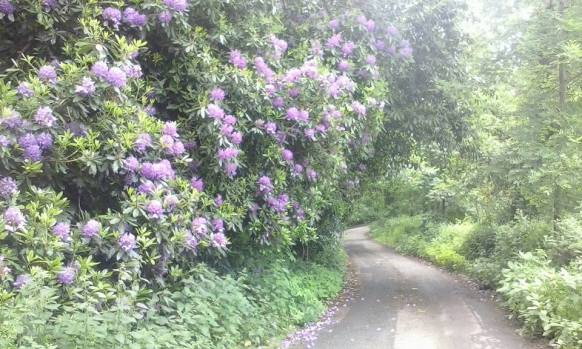
It’s not just a lane. To those who don’t know. But then nothing is ever just something. Everything is much, much more than that. To us, the lane is alive with a thousand stories. Millions of lives. Endless possibilities.

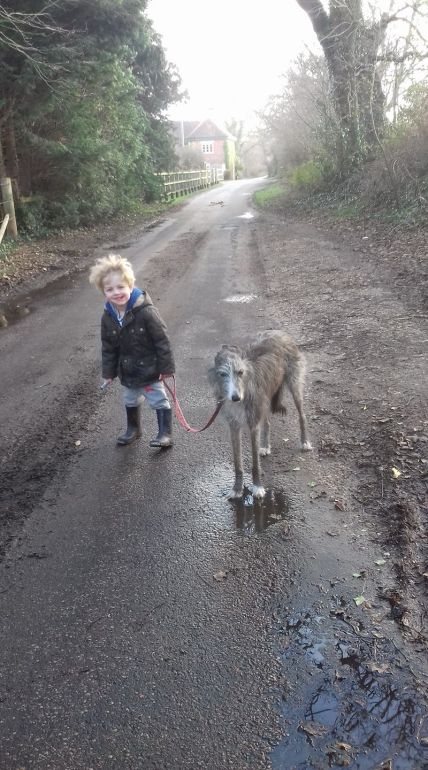
For me and you, hand in hand, it’s not just a lane, is it? It’s an adventure waiting to happen. It’s Doctor Who and Clara. It’s sticks turned into sonic screwdrivers. It’s the Tardis waiting for us back home. It’s mud monsters that will drag you down. It’s Cybermen and Daleks and Zygons. It’s a stretch of concrete that twists and turns, and it’s me watching your little legs running down it as fast as you can, yelling over your shoulder to run from the monsters. It’s me, forever tensed that a car will round the corner too fast.

26850613_1762316550454269_4173403912154306250_o.jpg

They are not just puddles in the lane. They are wonders to explore with stones and sticks and welly boots that never quite manage to keep the water out. They are covered with ice to crack and slip on. They are deep with mud to squelch and squerch through. We’re going on a bear hunt, we’re going on a bear hunt. They are not just puddles. They are portals to another world. Many worlds. Worlds with trees and telephone lines inside them. Worlds with a mystery face staring right back at yours.

They are not just bushes! Not just a hedgerow to hurl rubbish into. They are blackberries in the summer. Your little hands reaching in to pluck juicy berries from between the thorns. Your sleeve getting snagged on brambles. Your face smeared with red. They are alive, teeming with small unseen lives that run adjacent to ours, unknown. They are buzzing with bees and birds and butterflies, who go about their private lives without fuss or blunder. Who live never to question or worry. Me and you know they are there. And there is not a bush we don’t walk by without knowing or thinking.

Hello Mr Robin. Mr Blackbird. Mrs Blackbird. The shy Heron who takes off should you get too close. The noisy geese. The silent swans. The otters we have never seen. The rabbits in the fields and the buzzards on the telephone poles. The woodpecker drumming. Swifts and starlings and magpies and our favourite, the mighty crow. The crow rules the world, or so we secretly believe. With his knowing caaw and his murder of companions, they could take us all on, should they want to.

24837493_1719809801371611_2175290242776414385_o.jpg

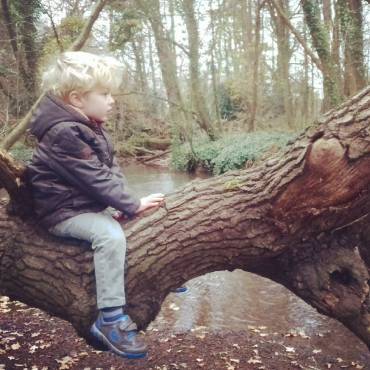
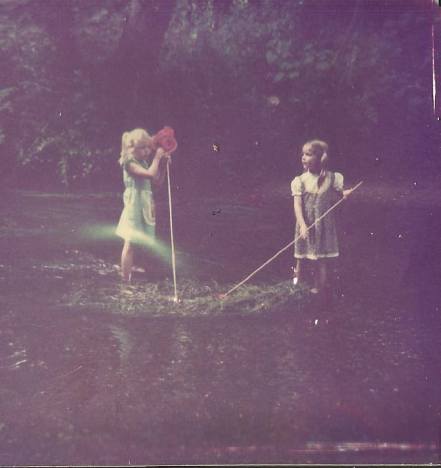
It’s not just a bridge, is it? It’s poo sticks and science. It’s sygnets and ducklings. It’s where we collect conkers in the Autumn. And it’s not just a river, it’s a ford, a fork, an expanse of water fit for paddling. Your favourite place. Your tree dragon and the swing and sitting on the fallen tree, trying to catch tiddlers in a jar. Mucky feet and cold toes. Snacks in the pushchair. Summer. Shady spot, dragonflies and damselflies. Kicking the water. Us and the dogs and me lost in time, caught between now and us, this life and an old one. Me and my sister, stood in the river, captured in a moment that has lasted forever, the sunlight perfect, illuminating our small lives, fishing nets in hand, shadows dancing. At the river, I am full of a thousand memories and with you, I am making a thousand more.

1484108_753931044626163_188489989_n

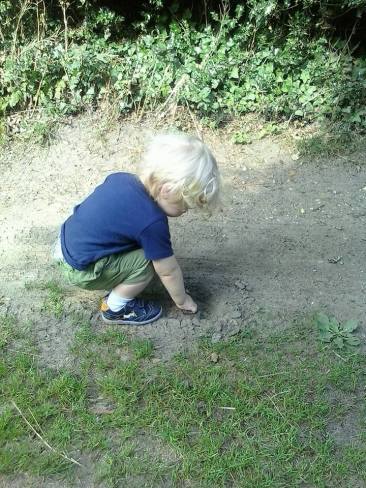
The lane seems so long when you walk so slow. It’s me saying hurry up, walk faster, come on, come on then, can you at least walk in the right direction? It’s you, picking up stones and sticks and conkers and leaves, staring at bugs, helping them cross the road, saying ‘that’s sad’ when you spot something dead because the lane is not just full of life, it’s full of death and we see it daily. Creatures too slow for the cars. It’s me in a hurry. Urging you on. Rolling my eyes. Come on, come on I’ve got stuff to do. Hurry up and I’ll get you a hot chocolate when we get in.

11889626_1028807190471879_5952087130499316575_n

It’s not just a lane. It’s songs and silliness and passing the time. It’s make-believe and storytelling and laughter and tears. Death and life and why? Why Mum? Why?

It’s not just a lane. It’s Nature, who was here first with the blackberries and the hawthorn and the Oaks and the Hazel and the dandelions, bluebells and daisies. It’s all the things that exist despite us and will go on after us. But for now, for a moment, it is our lane. Not just a lane, but our world and a thousand stories and lives.

Nothing is ever just something.

1470336_992303410788924_5944084606082827220_n