The Boy With The Thorn In His Side – by Chantelle Atkins (that’s me.)
So, why the relaunch? Why have I updated this book again? Why go back to it again? What’s the big deal about this book? I’m sure that if I were signed to an agent or had a big publishing deal, they would tell me I was mad to pursue this book the way I am. It’s a non-starter, they would say, or something like that. True, it is my worst seller. The Mess of Me has taken far less time and stress out of my life, and yet is consistently the one people choose to read. This Is Nowhere has only been out a few months, but is proving popular so far. Reviewers say it is my most mature work to date, which always makes me want to laugh. Mature? Me?
The Boy With The Thorn In His Side is anything but mature. But then, it wouldn’t be. I first wrote it when I was twelve years old. So yeah, it’s been with me a long old time. For some reason, I just can’t shake it off. Hence the relaunch, new cover, etc. If you are still with me, I will try to explain why…
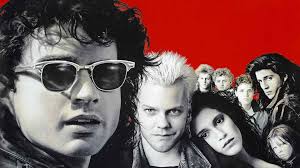
I was 12 years old in 1990. My parents had recently got divorced, and the thought of them attracting new partners was something that prayed constantly on my mind. I was a shy twelve year old, a bit strange, and fiercely proud of it. I never wanted to fit in, or be cool or popular. I was fine being me. I mostly wanted to be left alone to read and to write. I was attracted to horror, both in literature and in movies. Stephen King was my favourite author at this time, and The Lost Boys my favourite film. You can probably see where my head was at. And yes I dressed in black. A lot.
So at some point in the year 1990, with my own family kind of disintegrating in the background, I read a lot of Stephen King and watched The Lost Boys about a hundred times. I can still recall the moment the idea for the book started to grow inside my head. You know the bit right at the end of the film, where the character of Sam realises that his mother is dating the head vampire? That was it. His mother was dating a monster. A real life monster. And all along he had known the guy was rotten, and no one had believed him. Except his friends. It got me thinking about my own situation; what if one of my parents was to start seeing someone I didn’t like? Someone I abhorred? Someone who was a monster? At the time we did not have a computer, but I did have my very own electric word processor which I had saved up for with my own money. I adored it and was nothing but a slave to it. Every day was the same; home from school, up to room, Guns N Roses on, banging at the keys until my fingers ached. It was the first time I found a story that I couldn’t let go. Up until then I had written stories about animals. Lost dogs and stray kittens. That kind of thing. I used to illustrate them myself, hole punch them and tie them with string. Very cute. But I was getting too old for all of that cute stuff. I was nearly thirteen for fucks sake, I liked heavy metal! I wore black and hated the cool kids at school. My dad didn’t want to know, and my mum talked about other men. Great. Fantastic. So I wrote about it. I poured everything into this one story, this one story I could not let go. I could not escape it. It followed me to bed and kept me awake. It possessed my waking hours and distracted me constantly from this other thing called ‘real life.’ I wrote it in pencil on lined paper. I tapped away at my word processor and printed it all off. It was huge. Magnificent. Glorious. I was totally and utterly addicted to it. I was fucked up in so many ways but did I care? No. I was a fucking writer!
So, anyway. At the time the book had no title. The lead character was called Sam, not Danny. (I changed it to Danny when I rewrote it in 2011 because my husband is called Sam!) But I wrote it. I was 12 years old, weirder than you can know, and I wrote it. I took it to school and showed my English teacher and I got a merit for it. This was a cool little certificate you had to go up in assembly to collect. Probably still have that somewhere!
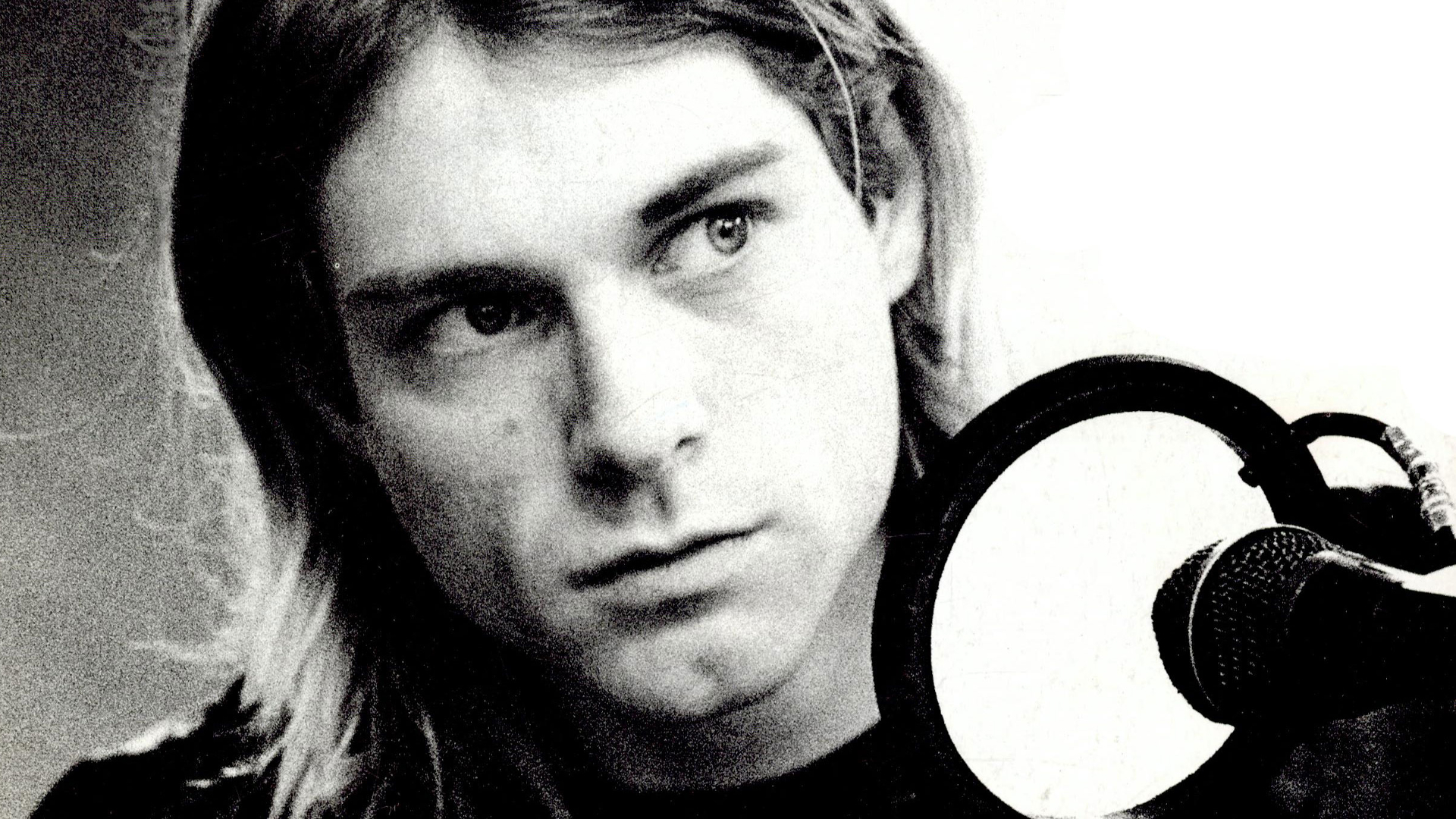
I wrote it and I loved it. I lived and breathed it. Every night when I went to bed the characters were talking in my head, telling me things, forcing the story to grow and change. I even drew all of the characters. In my mind the main character of Danny was a cute cross between Corey Haim and Kurt Cobain. But then that was it. I had written my book, and now it was time to write more. But the important thing was, this book was the first proper book I ever wrote, and the first time I really believed I was a writer. I left it alone for a while. When I was 16 I picked it up again. Why? Because they were still there, damn it. All those characters, arguing and jostling inside my head, vying for my attention and my time. I was older now! I could make it better! In fact, I was hideously embarrassed when I read it through. Ooh the cliches! The showing rather than telling! Of course, at 16, I was a highly accomplished writer. Well, no, maybe not. At age 19 I attacked it again. Dragged it out and hit the old word processor once more. So you can see how it refused to leave me alone. During these later years I was obsessed with music in a big, big way. I was just like Danny in the book. Veering between the current trend of grunge (I can still vividly recall where I was, what I was wearing, what I was drinking, doing, etc when I heard on the radio that Kurt Cobain had died) and old stuff like Bob Dylan, The Clash, The Smiths, The Beach Boys… Of course Danny would be a music fan just like me. And it is true that his journey through music is exactly mine. From Guns N Roses to Nirvana, to The Stone Roses, and through everything else that ever mattered and meant something, onwards and upwards to the inevitable spiralling and joyous salvation that was Britpop.

Ahh it was a glorious thing. You see grunge was one thing, and britpop almost the opposite. Kurt Cobain died, and all seemed lost. And then the Gallaghers hit the scene growling and snarling and swaggering, telling us we had to be ourselves, telling us to shine. Apologies to anyone who may not be British. But it really was an important time to be a music fan, and a teenager.
I weaved music into the book throughout the years it took me to write. The more I rewrote this book, the more of me I poured into it. It was and is, essentially a horror story born of my Stephen King and Lost Boys obsession. It has graphic and uncomfortable scenes of violence and abuse. (In fact I cut some of the scenes from the version I wrote when I was 12 for being too gratutitous!) It has blood and guts and gore and fear. It has anger and hate and obsession and control. But I wanted it to be more than that, and that is where the musical soundtrack came in. There needed to be hope and there are three things that deliver it in the book.
Danny’s friends. Well, I mean Michael really. God, I love him! Wonderful doe eyed Michael. The bad boy in town with the jailbird brother and boozing parents. He and Danny were kindred spirits from the start. And from the start he knew that Danny was in trouble and wanted to help him. And then there is Anthony; Michael’s brother and in many ways Danny’s saviour. He and Michael never gave up, even when it seemed like all was lost.
Lucy. The love interest. Of course! Theirs is a hit and miss relationship for most of the book. He likes her but thinks she is above him. She adores him but he seems to push her away at every turn.
And then, the music. The music! Because music provides hope when the rest of life refuses to. When I was a teenager, when I was lost and confused, sad or angry, music was there for me. Like Danny, I used to lie on my bedroom floor with the speakers on either side of my head. I used to try to locate and pinpoint every drumbeat, every spiralling guitar riff, every change of note or vocal, every arrangement or chord, whatever it was, whatever the magical unknown thing was that made me shiver from my head to my toes. The spine tingle. You know it. How does music do that?? Just like Danny, I lived for it. That, and the lyrics. I used to write them on my bedroom wall and on my floorboards. I sometimes wonder if whoever has lived in that house since then, still comes across them sometimes when redecorating! I hope so. I wrote them all, all the words that touched and inspired or comforted me through those times. Music really can save you, you know.
So then followed what I think of as the lost years. The years of very little writing. The years of University degrees, moving out, jobs and children. But still, every night without fail, Danny and his friends came into my head at night. I would rewrite the story again and again, adding scenes, taking some away. I knew these people so well. They spoke to me and acted out their dramas before I fell asleep. I never thought I would get the time to write again, and I certainly never believed in myself enough to make the time. Until my youngest child was due to start school and I can’t explain what happened. I read a book, started reading more again, listening to music again, finding me again. You never really notice how much of you gets lost while child rearing and working, but it happens. You forget what you loved. You forget what once made you you.
I picked up a pen and a pad of paper. I was too afraid to type anything into the computer, can you believe that? It was such a fragile and private thing. Me, the writer. No way. No chance. But no one would know, would they? It wouldn’t hurt just to see… So the pen hit the paper just like in the old days and somehow there it was, just like before. Danny’s story. The Boy… His gruesome step-father, his estranged mother, the best friends in the world ever and music….
Once I started writing in the summer of 2011, I could not stop. My pen flew over the pages. It was like a dirty secret to start with! I used to stuff the notepad under the bed or under the sofa if I was disturbed! I didn’t know why I was doing it you see. Why? After all these years? For what purpose? Then a good friend, in fact the only friend I had ever shared writing with asked me to show it to her. I switched to the laptop, started again, and sent her chapter after chapter.
And on it went. I wrote it all in third person. And then changed it all to first! I wrote it all from Danny’s point of view, and then changed it to both his and Howard’s. I started this wordpress blog and started posting chapters on here and sharing them to Facebook and Twitter. That was a brave move I can tell you. And for the longest time I was just talking to myself, my words lost and floating in cyberspace. And then a couple of Facebook friends started reading it, and asking for more. They said they had the story in their heads all of the time, and needed to know more!
Eventually I started sending it out to agents and publishers, along with The Mess Of Me which was written very quickly in this period of time. Obviously you know the rest. I put my books with an independent ebook publisher who were then called Autharium and are now called Indie. I have not looked back. When the story was over, it wasn’t over. I wrote a sequel called This Is The Day which is out now.
So, why the relaunch? After so much time, so much rewriting, why not leave it be? Well, it’s hard to say. Or rather, it would take me a long time, and hopefully this blog post has gone some way to explain it. I love this book and I felt like it deserved more time and attention. Another edit. A new front cover. The two parts merged back into the one long book it was originally intended to be. Yes, it is ridiculously long. I hold my hands up. I don’t deny it. I have broken all of the rules! Long, no obvious target market (fans of horror/drama who also like grunge and Britpop? Anyone??) I know it and I admit it and I am fine with it. Because I had to write this book. I had to write it and I had to rewrite it one last glorious time. I don’t care if no one reads it. Really, I don’t. This book is for me. It’s my indulgence. This is the book I wanted to read and couldn’t find. This is the book with all of my fears and hopes and dreams steamrollered into one gory blood thirsty tale. These are the characters I wished I knew in real life. They will be in my head forever. This is the book I would have always regretted not writing. So it is my worst seller and I have now spent way more money on it than I ever hope to get back! Fuck it. It was worth it.
This book, more than any of the others, this book, is me.