Dreaming Of Another World

On the 17th of March 2020 I was sat in my car about to go into a primary school to run an after-school writing club. I checked my phone and found an email from one of the other schools I work at, stating that schools would be closing at the end of the week and all clubs were cancelled. I felt a whoosh of fear and shock and checked my news feed for more information, all of which confirmed that the government were closing schools and putting us into lockdown due to the outbreak of Covid 19. It was probably the most surreal moment of my life. I went into the school and ran the club and I haven’t seen those children since. I haven’t been able to work since either, apart from a few bits online. I can’t yet go back to the libraries, museums, halls and schools I normally work in.

At the end of that week, life changed for everyone over night, just like that. I blogged about it almost instantly because it was just so strange, so historical and unprecedented and because writing about it helped me to make sense of it. Here’s the link to that post; https://chantelleatkins.com/2020/03/18/and-just-like-that-everything-changed/

And then, being the highly adaptable creatures we often forget we are, we all just got on with it. We worked from home, or we didn’t work, we home schooled our confused children, we stayed in, we entertained ourselves, we thanked fuck the internet existed and we very slowly but surely got used to a new normal. Humans are adaptable. We’ve proved that. Perhaps we’ve all realised how resilient we are capable of being. At the start of this, I blogged about how everything had changed over night, I blogged about the ups and downs of home schooling and I blogged about how weird had become the new normal, as well as the positives I hoped could come out of the pause in our lives.

Life is for many of us, slowly returning to normal. At the start of lockdown, it was eerily quiet in our garden, with barely any cars sailing by. Instead we had a constant flow of walkers and cyclists. Now it’s back to normal and that’s a bit sad. But I’m one of them now, aren’t I? Doing the school run again.

And I can’t help feel a bit lost and sad. Don’t get me wrong. I want all of my children to return to their normal lives and I am desperate to get back to my writing clubs and workshops. I just can’t help comparing the stillness, the silence, the gentle creep of Mother Nature reclaiming what is hers, at the start of lockdown, to the way it was before Covid 19 stopped us all in our tracks.

But the return to everything else makes me feel sad. Driving here and there, constantly in traffic and adding to the fumes that are heating up our only planet. Racing against the clock to get it all done, pick everyone up and get everyone where they need to be, dreading getting up and it all starting again.

What we were doing to the planet before Covid 19 was wrong. All of it was wrong. And we knew that…yet we couldn’t or wouldn’t change. And then lockdown… clear skies, grounded planes, silent roads, birdsong, sheep playing on roundabouts and deer walking down the streets, dolphins in the canals of Venice…so many beautiful, beautiful sights. And in our homes, we became creative. We sought out more and more ways to entertain ourselves and our children. We got into gardening! And self-sufficiency! We worried about where food came from and whether we could get any. Our eyes were being opened and we found we were not helpless. We had power.

I’ve always been into gardening, with varying degrees of success. I think it is actually one of the most therapeutic and simultaneously rebellious things you can do. It’s hopeful. To believe in a garden is to believe in tomorrow, they say. And that is so true…. On my darkest days, when life weighs so heavy I can’t breathe…I need my garden, I need fresh air and grass and dirt under my nails. If I plant something, I am optimistic. I am hopeful. And I am clawing back power. We used to feed ourselves; we had that power and that connection with Mother Nature, and not even that long ago. But we’ve lost it, moved so far away from it we forgot it was even possible.

And to care about this planet we have to feel connected to it! We have to feel part of it, part of everything and we have to believe that everything has a right to be here, to be treated with respect and dignity.

And during lockdown, the most amazing things happened. People started growing again. There was a massive increase in people buying seeds and plants and greenhouses. I was overjoyed to see this, even among my friends and family and social media contacts. People were discovering, many of them for the first time, how addictive gardening is. People were getting excited about growing a lettuce or picking their own strawberries. There was also an increase in people getting chickens for the first time. And undoubtedly, there has been an increase in people exploring their local wild places and perhaps fully appreciating the natural world for the first time too. Pond dipping, bird watching, identifying trees and leaves, bug hunting, walking and hiking and playing in rock pools. I have seen so much of this going on and it’s absolutely heartwarming.

But what now? Do we all go back to our ordinary lives and forget any of this happened? I really hope not. I really hope people continue to think about where their food comes from, continue to grow some of it themselves, continue to make ethical consumer choices, continue to do their bit to fight climate change, continue to respect animals and wildlife, continue to walk and cycle if they can and so on. Because I don’t know about you but I am constantly dreaming of another world.
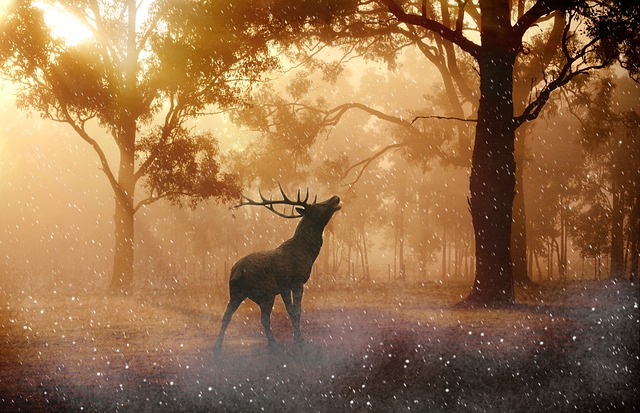
Another world where we are connected to wildlife and nature, where we respect and value and protect it above all else. Where money and wealth are not idolised or deemed more important than human happiness and dignity.

Sometimes I go there in my mind and wonder if I can make it possible, even just for me and my family. It’s perhaps not realistic, but something I can’t stop thinking about it. I call it my basic life. Because going back to basics is what I crave. In my basic life, I live in a log cabin in the middle of nowhere, surrounded by trees and rivers and streams and meadows. I grow all my own food and keep ducks and chickens and perhaps a few goats.

I have solar panels, wind turbines and a well. I have orchards. I go out each day and forage for food. I cook everything from scratch. I only go to the nearest town once a month for other supplies. I only have limited access to the internet. My kids are home schooled and spend their days swimming in rivers, climbing trees and learning survival skills. We sit around the fire outside at night under the stars, swapping stories and jokes.

I spend my time growing food, tending the animals and the children, writing, reading and listening to music and we are all at peace and at one with the Universe. Did I also mention our only means of transport is a battered VW campervan?
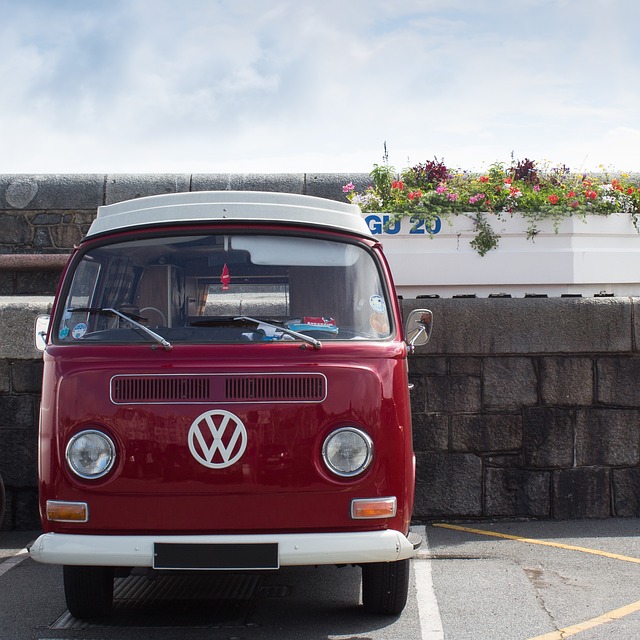
Haha, just a pipedream, but I like it. I go there in my head at night. I try to build up little parts of it in my real life, such as extending my vegetable plot so I can grow even more next year.

I dream of my basic life and another world while fearing and grieving for this one.

What about you? What do you hope changes when this is all over? Do you think this will ever be over? What do you think should change? Will you be changing anything in your own life? What kind of other world do you dream about?
This Is Lockdown – Q and A with MJ Mallon

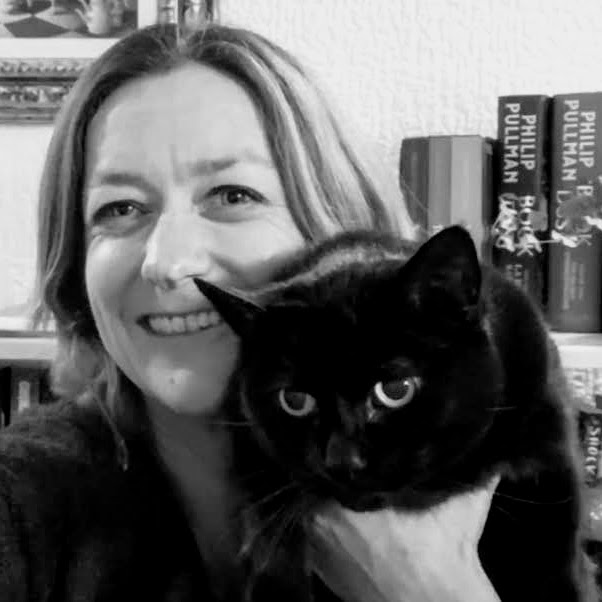
Author MJ Mallon has put together a collaborative collection of writing, poetry and musings on the subject of the Covid 19 lockdown. One of the features in the book is ‘isolation writers’, where writers recorded their personal experiences of being a writer during a pandemic. I was lucky enough to have a piece I wrote included in this collection, so I wanted to help spread the word about This Is Lockdown and MJ Mallon kindly agreed to the following interview. Find out what inspired her to put this together, how easy and hard it was to pull off and what is happening with her own writing.

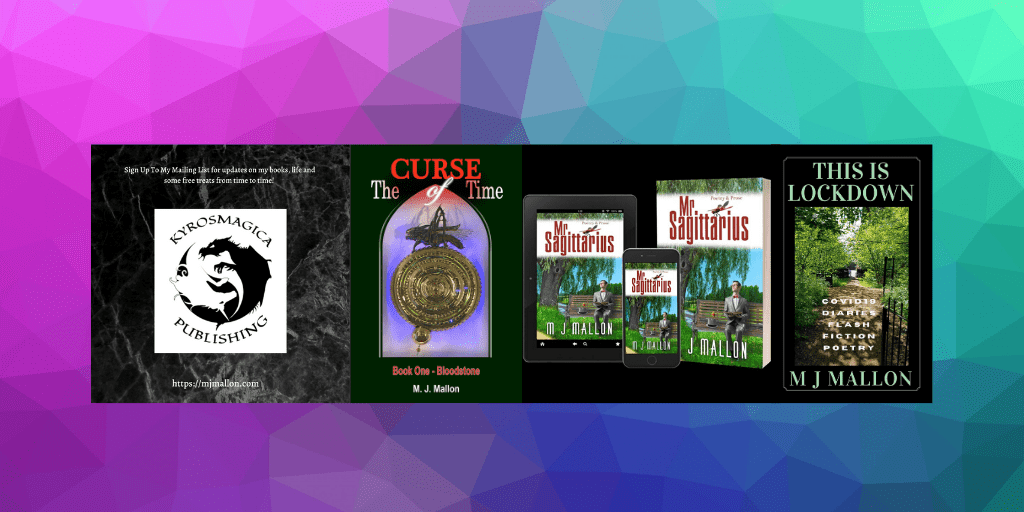
  • 1. Tell us about This Is Lockdown – what can we expect to read if we purchase this collection? I collated This Is Lockdown in two parts. The first section comprises my personal diaries, photography and poems It features the ‘isolation writers,‘ who share their pieces on isolation during COVID19, their poetry and writings. The second half focuses on my YA short story: The Poet’s Club, and a more mature love affair, plus various pieces of flash fiction inspired by news reports and social media during this time. This Is Lockdown is an authentic account of the difficulties and sadness of this time but there are also tales to lift the spirits, wonderful community initiatives such as Masks4NHS, (who contributed a piece documenting their fund-raising success.)

2. What made you decide to put this collection together?

This collection started off as a series of features on my blog. I posed this question: How do writers, creatives, artists and bookish souls cope with isolation? Is their capacity to cope different from the rest of the population? It’s an interesting question and one that fascinates me.

The popularity of this series of blog posts gave me the idea to put this collection together.

3. How did you approach authors/bloggers and what sort of response did you have?

I approached authors and bloggers via social media, specifically my Facebook group: Authors/Bloggers Rainbow Support Club and Book Connectors. The response was overwhelmingly positive. I saw it as a wonderful opportunity to connect with the writing community in a mutually helpful way during this time.

It gave me focus and drive to do something worthwhile whilst on furlough from work. I suddenly found myself with nothing else to do apart from housework, gardening, or the dreaded de-cluttering!

4. What sort of audience do you think will enjoy this book?

Ah, that’s an interesting question. Everyone. I hope. Firstly, I think it will appeal to writers, bloggers and creatives. Also, it will interest all of us – our experiences of the impact of coronavirus are similar wherever we live in the world.

5. What has been the easiest and what has been the hardest aspect of putting this together?

For me, the easiest part is writing! The hardest part is the formatting (especially as there are so many photographs in the collection.) I had to do a fair amount of rearranging, deciding on fonts, format, and headers. I’d say that it was the most difficult formatting job I’ve attempted to date.

There are many author photos, images I’d taken on walks, or in my garden, a photo of my daughter, two contributed photos of cats, food, etc. I changed the dpi (dots per inch,) of each photograph to ensure that it would be a high resolution for publishing.

6.What has your own experience of lockdown been, in terms of your writing?

Difficult. At the moment, I struggle to write in my normal style: YA Fantasy/magical realism. So, instead, I created realistic fiction

7. Tell us about your own writing and publishing journey so far

I started my blog Kyrosmagica – crystal magic – six years ago. Via my blogging journey I’ve joined in flash fiction, short story writing, poetry, and photography challenges. I’ve virtually met bloggers and writers who I now call friends, and I’ve also had the pleasure of meeting many of them in person at the Annual Bloggers Bash in London, which sadly didn’t happen this year due to circumstances not related to COVID19.

My debut novel, a YA fantasy set in Cambridge, is inspired by two amazing sculptural modern artworks: the Corpus Christi Chronophage clock invented by Dr. John C. Taylor, OBE, and the beautiful crystal grotto in Juniper Artland in Scotland, designed by Anya Gallaccio. These two creations give the book its raison d’être – its light and darkness.

The Curse of Time #1 Bloodstone is a coming of age story about a young girl, Amelina Scott. She lives in a weird family dynamic, with her much loved black cat, Shadow, Esme, a girl stuck in a mirror and her parents Mark and Eleanor who look like they’ve walked out of a horror wax museum. Ryder is delicious to look at but has a shadowy aura that excites and frightens her.

There are snippets of poems introducing each of the chapters and many themes interwoven in the book: music, magic, art, mental health/self harm, deception, and hypnotism. .

I’ve also contributed to these short story anthologies:Goodreads: Nightmareland, a bestselling horror anthology compiled and edited by Dan Alatorre, and the Ghostly Writer’s group organised by Claire Plaisted.

8. What was your latest release and who would enjoy it?

My latest release, Mr. Sagittarius is different too! It’s a collection of poetry, prose and photography inspired by the beauty of nature. It explores many themes: sibling relationships, love, the circle of life, myths and magic. It was recently featured under the heading Inspiration at Literary Lightbox.Here is the link: https://lightboxoriginals.com/lollipop-leaves/

9. What is your normal writing process?

I often awaken with ideas in the morning and rush to type them on my laptop! I don’t plot, I tend to write everything down and then add the detail, or rearrange. This helps to create imaginative and unusual effects!

10. What can we expect from you next?

First on the agenda is to finish the second in the Curse of Time series. I hope to publish the second book in this three-part series in the Autumn/Winter of 2020. I also have several other projects in mind… a poetry, photography book entitled Do What You Love, and a MG story about a dragon and a girl.

11. What advice would you have for any aspiring writers out there?Write, read, and repeat! Live, Laugh, cry. Experience the world through your eyes, ears and soul. Believe, and you will get there. Work at it and don’t let anyone crush your dreams.

12. What advice would you have for anyone thinking about putting together a collaborative collection such as This Is Lockdown?

It is my first attempt at a collaborative collection. My advice? Contribute to several anthologies before you attempt one yourself. This helps to give you an idea of the process and what you will need to do. There is a considerable amount of work involved, so make sure you have the time to devote to it. You will need to be organised. I use Canva to create content to share on my blog, and I manage my blog tour with featured posts by bloggers and authors I know in the writing community. It is important to ensure your cover and graphics are enticing. You can outsource blog tours, covers, formatting but it will be costly if you do. Keep costs down by creating your own ebook cover, making connections and using Kindle Create. 

Contributing Authors:

The wonderful contributing authors and creatives are many in number!

Richard Dee, (Sci Fi , Steampunk, Amateur Detective author,) Catherine Fearns, (Amazon Bestselling Author of Police Procedural/Mysteries and Music Journalist,) Lynn Fraser, (Author,) Jackie Carreira, (Writer, musician, designer and aspiring philosopher,) Willow Willers, (Poet and writer,) Sharon Marchisello, (Murder Mystery, Financial non-fiction,) Fi Phillips , (Author, Copy Writer) Jeannie Wycherley, (dark stories, suspense, horror,) Chantelle Atkins, (urban fiction, teen/YA,) Tracie Barton-Barrett, (Speaker/author,) Peter Taylor- Gooby, (Crime, Love Stories, Political Fiction,) Ritu Bhathal, (Chick Lit romance, poet,) Alice May , (Author, Artist and Speaker,) Miriam Owen, (Blogger and Doctoral Researcher,) Drew Neary and Ceri Williams (Ghost Horror, Supernatural,) Katherine Mezzacappa, (Author name:Katie Hutton,) Historical Fiction/Romance,) Sally Cronin, (huge supporter of indie community/blogger/author) Debby Gies (D G Kaye), (Memoirist/NonFiction,) Adele Marie Park, (Fantasy, horror, urban fantasy,) Marian Wood, (blogger, poet and writer.) Samantha Murdoch, (Writer, Blogger,) Beaton Mabaso (Blogger, African Storyteller,) Frank Prem  (Poet, Author,) Anne Goodwin (Author, Book Blogger) Sherri Matthews (Writer, Photographer, Blogger,) and Jane Horwood and Melissa Santiago-Val – Community Masks 4 NHS

Buying Link:

Amazon UK link: https://www.amazon.co.uk/gp/product/B08CD1MCFB?pf_rd_r=NPA6S5SQJ30A6VYX87Q5&pf_rd_p=e632fea2-678f-4848-9a97-bcecda59cb4e

Amazon US link:

Thank you so much to MJ Mallon for agreeing to this interview. If you would like to find out more about her and her work, the relevant links are just below!

Author Bio:

My favourite genres to write are: YA fantasy, magical realism, and various forms of poetry. I blog about books, writing, photography and inspiration at: https://mjmallon.com

I enjoy writing articles celebrating the spiritual realm, my love of nature and all things magical, mystical, and mysterious. One of my greatest pleasures is reading. I’ve written over 150 reviews at my lovely blog home: https://mjmallon.com/2015/09/28/a-z-of-my-book-reviews/


I’m a member of a professional writing body. SCBWI, the Society of Children’s Writers and Illustrators.

Links:

Authors Website: https://mjmallon.com
Authors Amazon page: https://www.amazon.co.uk/M-J-Mallon/e/B074CGNK4L
Twitter:@Marjorie_Mallon and @curseof_time 

Instagram https://www.instagram.com/mjmallonauthor/
Authors Bloggers Rainbow Support Club – #ABRSC: https://www.facebook.com/groups/1829166787333493
Goodreads: https://www.goodreads.com/author/show/17064826.M_J_Mallon 

BookBub: https://www.bookbub.com/profile/m-j-mallon

Collaborative Group: https://www.facebook.com/pg/5SpiritualSisters/

Indie Author Of The Month; Kim M Watt

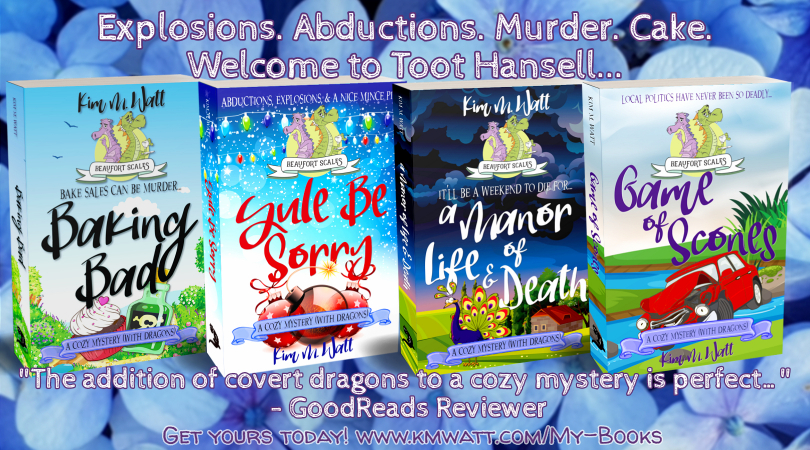
Hello and welcome to another Indie Author of The Month post! At the end of each month I highlight an indie author I happen to think is rather wonderful. This is usually because I have read their books and been following them online for some time. For June, please welcome author Kim M Watt. First, let me say that Kim writes books I wouldn’t normally make a beeline for. Humour and fantasy. Not that I don’t like either, but I’m usually more drawn to YA or gritty, dark kinds of books. I was attracted to Kim’s books because of the snippets and graphics she posts on social media, all of which made me smile and want to give these unusual books a go. I have particularly fallen in love with her Gobbelino London series. To find out more, read on!

1. Tell us about your latest release. What is it about and who is it aimed at?

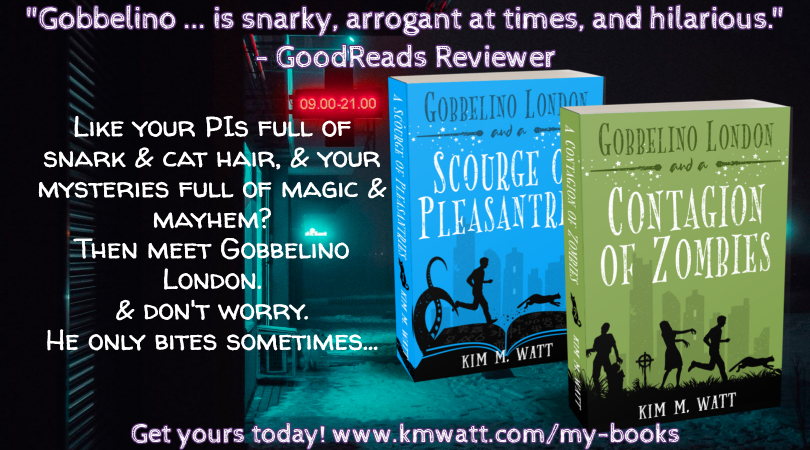
My latest book is Gobbelino London & a Contagion of Zombies, which is book two in the Gobbelino London series. It’s an immensely fun series to write, about the adventures of a feline PI and his human sidekick on the streets of Leeds. Contagion is (surprise!) about an unexpected rising of the dead, resulting in stress-baking reapers, irate magicians, zombie chickens, and some issues of undeadness for our team. It’s aimed at anyone who enjoys a light take on the PI genre, heavily salted with mayhem, humour, and cat hair.

2. Tell us about your publishing journey so far.

I’ve had a few attempts at traditional publishing (starting with a truly terrible vampire novel at 16), but a few years ago I became interested in indie publishing. I like the degree of control it affords the author, and as I’m a reasonably fast writer it also suits me. Plus, as my stories are a bit … quirky, shall we say? Weird has also been used… Anyhow, they don’t fit any one genre that well, so it’s tricky to sell them traditionally. So indie just seemed like a good fit all round. I published my first cozy mystery with dragons about 18 months ago, and it’s just been a really interesting and fun learning curve ever since.

3. When did you first know you wanted to be a writer?

Ooh, always! I grew up on a boat in the South Pacific for quite a few years, so was on the NZ correspondence schooling system. Those being the days of very slow post, we sometimes lost incoming coursework. My solution was to write (and illustrate) a book of short stories. Although I may have been trying to avoid my mum’s maths questions by saying I was writing, too.

4. What is your typical writing day like?

I’m really lucky in that I’m able to write fulltime at the moment, so a typical day for me is up around 6 (earlier if the cat feels I’m slacking on food duty), work out or run, breakfast, then write for about 4 to 5 hours. I don’t write every day, but when I’m on writing or rewriting, that’s my time frame to hopefully get a couple of chapters done. I’m not too hard and fast on word counts, but that’s my goal. The rest of the day is then blog posts, social media, newsletters – whatever else needs doing.

5. What is your writing process? (how do you plot a book, come up with characters, find motivation etc)

Right. Yes. My process. *Tries to look like she knows what she’s talking about*

My process is … messy. I’ve tried really hard to learn to plot, and have done everything from plot gardening to circle-y things to Beat Sheets and everything else I’ve come across, including using a small forest’s worth of Post-it notes (I’m sorry, trees).

My conclusion is that it doesn’t work for me, certainly not in the first draft. My best writing is to have a start point and a vague idea of where I want to end up, then I just start writing. I find by hand works really well, or fast typing without correcting anything (and I’m a terrible typist. It’s almost as bad as my handwriting). The characters tell me about themselves as I go along, and that tends to shape the story. I’m mostly just along for the ride at this stage.

I then go back for at least one major rewrite before I send the story out to beta readers, and that’s where I use a Beat Sheet as a reference point to make sure I’m hitting plot points at about where I should be. Motivation is rarely a problem when I work this way – by the time I start writing I’ve usually had an idea rolling around in my head for a few weeks or months, and I have so much fun watching it take shape on the page that I look forward to sitting down. When I try to plot, on the other hand … not so much fun.

6. What has been the most positive thing about your publishing journey so far?

The online writing community. It’s the most supportive and wonderful collection of people – it makes me feel so lucky to be a part of it. I also love how social media means you can chat to readers – it makes the whole process so personal and lovely.

7. What has been the most negative thing about your publishing journey so far?

I’m not sure I’d call it negative exactly, but it’s All The Other Stuff you have to learn – from formatting to figuring out what you want covers to look like to trying to work out why your website suddenly started eating all your photos. There’s a lot!

8. Who is your favourite character from your own books and why?

Aw, that’s hard! I love all of them for different reasons. Gobbelino because he’s just such a cat, and so much fun to write. Beaufort because he’s so optimistic and gentle and fierce all at once. Glenda, who joined the Apocalypse on her Vespa, and who hasn’t told me her full story yet, but I know she will.

9. Where do your ideas come from?

An amazing amount come from Twitter. Gobbelino London started as one of those games that go around – the name of your first pet plus the last place you went on holiday. The Beaufort Scales series was a combination of a tweet I misread (it was about being barbecued by dragons if you went near their hoard, and I thought it was about dragons hoarding barbecues) and a strange discussion with my dad regarding the Beaufort Scale. Anything can be an idea, really.

10. What can we expect from you next?

I have the third Gobbelino London book due out in August, and a fifth Beaufort book towards the end of the year.

11. Tell us three fun facts about you

This is the hardest question yet!

– I’m originally from New Zealand, but haven’t actually lived there all that much.

– The Little Furry Muse (aka Layla the cat, and inspiration behind many snarky feline characters) has been with me for over 10 years, and in that time has lived in three different countries, ten houses, and two campervans.

– I’ve had all sorts of non-writing jobs, including teaching SCUBA diving, teaching sailing, cooking on sailing yachts in the Caribbean, and being bosun on a superyacht. Writing’s still the most fun.

12. What is the best advice you could give to aspiring writers?

Finish your writing. Accept it won’t be perfect, but know when you’ve done the best you can, and put it down. Otherwise you’ll be adding dragons and taking away pixies for another 326 drafts. And celebrate everything. Every draft, every rewrite, every edit. They all deserve celebrating.

Plus drop the “aspiring” bit, unless you’ve actually not written anything at all yet. And in that case – just start. That’s the scariest bit, so just start anywhere. And then you’re a writer 🙂

Thank you so much for inviting me to interview!

Thanks so much Kim for joining me on the blog. If you would like to find out more about Kim and her books, the links are below!

Website: https://kmwatt.com/

Books links: https://kmwatt.com/my-books/

Indie Author Of The Month; Paula Harmon

Welcome to another Indie Author of The Month post! This time please welcome the marvellously versatile and prolific indie author Paula Harmon. As well as writing fantastic novels and short stories, Paula was also one of the wonderful people behind Blandford’s first ever literary festival last November. I was honoured to be asked to get involved and it was a fantastic event I hope they are all very proud of. I can’t wait for the next one! Here Paula talks about where her ideas come from, what her writing process is and more. Enjoy.

  1. Tell us about your latest release. What is it about and who is it aimed at?

The Wrong Sort To Die’ will be out as an e-book on 30th June 2020.

It’s a historical mystery set in June 1910.

Fighting her corner in a man’s world, Dr Margaret Demeray works as a pathologist in a London hospital for the poor. Suppressing her worry that she’s breaching confidentiality, Margaret gives a stranger called Fox information about a dead down-and-out, in the hope he’ll use it to raise awareness of bad working conditions.

But when a second man appears to die the same way, Margaret starts to wonder why the enigmatic Fox keeps turning up to ask ever more complex questions.

She decides to work alone, uncertain of his motives and wary of her attraction to him.

Once she starts investigating however, her home is burgled, she’s attacked in broad daylight and a close friend becomes distant.

Fox offers the chance to forge an alliance, saying he knows why the men have died but needs her to find out what is killing them and who is behind it.

Yet how come the closer she gets to him the more danger she faces? And how can a memory she’d buried possibly be linked to the deaths?

Margaret must discover the truth before someone – known or unknown – silences her for good.Margaret Demeray was a minor character in the Caster and Fleet series set in the 1890s where she first appeared as feisty teenager. There was no chance she was going to let her older sister get away with all the fun. It would be suitable for anyone who enjoys writers like Ann Granger, Anne Perry, Clara Benson and like a strong-minded female lead.Tell us about your publishing journey so far.

2. Tell us about your publishing journey so far.

I published two collections of short stories in 2016, followed by a memoir about my father in 2017. In 2018, I published my first novel ‘Murder Britannica’ which is a historical mystery set in Roman-Britain in AD190. The sequel ‘Murder Durnovaria’ set the following year in Roman Dorchester came out late 2019. I published a joint collection of short fantasy stories called ‘Weird and Peculiar Tales’ with Val Portelli. With Liz Hedgecock, I co-wrote the Caster and Fleet series – six historical mysteries set in 1890s London which start with ‘The Case of the Black Tulips’. They’re about two young women, frustrated with the restrictions in their lives who end up in partnership solving mysteries.

3. When did you first know you wanted to be a writer?

When I was very small, if I was sent to bed early as a punishment I was always quite glad as it gave me the chance to tell myself stories. (For as long as we shared a bedroom, I used to drive my younger sister up the wall by doing this under my breath when she was trying to go to sleep.) Creative writing was my favourite subject at school and I’d always meant to be a writer. Earning a living, then having a family got in the way to start but I thought I’d finally have time and space when my youngest child started school.  However, a relocation and change of working pattern meant my dream was dashed. Then in 2015, someone encouraged me to enter a competition and join a writers’ group. After that I sort of thought ‘if I don’t just get on with it whether I have time and space or not, I’ll never do it’ and I did.

4.What is your typical writing day like?

I work full-time and writing tends to have to fit round work. I try to write for one day at the weekend as well as fitting in an hour a day otherwise. I’d write on train journeys as I did a lot of commuting up till March. The current Covid-19 situation makes things less easy since, although I’m still working, I spend that ‘hour after work’ catching up by video with my mother and sister. But on the other hand, I’ve had nowhere to go at weekends and been able to get on with writing instead. Although, as for many, the coronavirus situation itself has a scrambled my brain a little.

5. What is your writing process? (how do you plot a book, come up with characters, find motivation etc)

I tend to start off with a short scene in my head – a person or people in a location doing something apparently ordinary and then I have to work out who they are and what’s extraordinary about it or what’s going to happen next. I usually start with two characters and seem to end up with a million – really not sure why! Once I know who the people are, I then work out where they are, when they’re living and what time of year it is. If it’s set in another era, I’ll do a little light research to find out what was going on at the time in case I need to factor that in.  Generally once I find the ‘shape’ of the story, I know how it will start and end and roughly who wants what and what is stopping them from getting it. I usually write that down and then an outline of what ought to happen roughly at each stage of the book. Then I just start and see what happens. I quite often end up completely reorganising the middle, though the beginning and end don’t usually change. I find out more and more about the characters as I go long – they become ‘real’ and that sometimes alters what the core of the story is about in terms of what they learn about themselves or their world.

6. What has been the most positive thing about your publishing journey so far?

Hearing that people enjoy what you’ve written – that it’s touched them or made them laugh – is wonderful. But for myself, even if I write something that not many people read, somehow tapping into the part of my brain that demands to write stories is a wonderful mental release.

7. What has been the most negative thing about your publishing journey so far?Marketing is very hard work. Most writers by nature are rather introverted. I’m not sure I always come across that way at work, but the minute I start talking about my books, I’m overwhelmed with shyness. It always feels like I’m exposing a part of myself, which I suppose I am – since most characters have elements of the author in them. (That’s a little alarming when I think of some of my characters.)

8. Who is your favourite character from your own books and why?

That’s really hard to answer and tends to depend on what I’m working on at the moment! Margaret Demeray’s outgoing and determined nature leads her to want to make the world a fairer place, but it hides a vulnerability. She’s drawn in part from some of the rather feisty women in my family, none of whom let anyone tell them what they could or couldn’t do. But I confess her tendency to lose her temper and say the wrong thing when she does is definitely me.

But I can’t help loving Lucretia – one of the main (and from her perspective) most misunderstood characters in the Murder Britannica series. It never ceases to astound her that people don’t realise just how important she is, but she remains full of hope that not only will she become even richer very soon but that she’ll find if not love then passion – it’s just annoying that people around her keep dying in suspicious circumstances.

9. Where do your ideas come from?

I really don’t know! They just turn up. I’ve always had very vivid dreams and quite often that’s where they come from, and I’m also a terrible day-dreamer. I love places of transit like stations where you can think ‘what if I got on a different train and went somewhere else entirely? or what if the train went back in time? or what if an old friend/enemy sat down next to me? or…’ I sort of apply that in other contexts and see what unfolds. ‘Murder Britannica’ started as a paragraph where Lucretia is having a snide and critical conversation with her daughter-in-law. It just came to me one lunch-time and I wrote it down. It was years before the rest fell into place. With ‘The Wrong Sort To Die’, I started knowing that Margaret had qualified as a doctor in about 1898 and wondered what she’d done after that. I knew she’d have a thirst for justice and equality but also suspected she wouldn’t be much good at bedside manner, so wondered what she’d do and decided she’d probably work in a charitable hospital in the pathology department. I decided what year the story would take place in and by chance, saw something on TV about that era which gave me a germ of a background for the plot – most of the general public thinks they’re living in a golden age of peace with new inventions and social change but meanwhile, the government is preparing for war. What might that mean for the people Margaret wants to help?

10. What can we expect from you next?

Next on the list will be the third in the ‘Murder Britannica’ series. While ‘Murder Durnovaria’ was set in Roman Dorchester, the third book is set in a small town near a river which is roughly located where modern day Blandford is. It’s midwinter and Lucretia’s nephew Fabio will do anything to avoid being forced into an arranged marriage, even look into strange goings on in a small town where it’s hard to know who’s on whose side.

11. Tell us three fun facts about youI can make something out of next to nothing whether it’s a meal or a costume; I don’t take myself remotely seriously; according to family legend I have a medieval ancestor who caught a ‘whale’ off London bridge.

12. What is the best advice you could give to aspiring writers?

Don’t give up. Keep writing things even if you don’t finish them, they may come into their own one day and if not then they’re worth it just for the practice. Maybe today is the right day and maybe it’s not. One day you’ll just get on with it, regardless of whether you really have the space or time. Everything you experience, witness and live through can inform your writing whether it’s serious or funny or thought-provoking. Within legal limits – be a people watcher!

Thank you so much to Paula for agreeing to be interviewed on my blog! |If you would like to find out more about Pauls and her books, her bio and links are below!

Paula Harmon was born in North London to parents of English, Scottish and Irish descent. Perhaps feeling the need to add a Welsh connection, her father relocated the family every two years from country town to country town moving slowly westwards until they settled in South Wales when Paula was eight. She later graduated from Chichester University before making her home in Gloucestershire and then Dorset where she has lived since 2005.

She is a civil servant, married with two children at university. Paula has several writing projects underway and wonders where the housework fairies are, because the house is a mess and she can’t think why.

https://paulaharmondownes.wordpress.com

https://www.facebook.com/pg/paulaharmonwrites

viewauthor.at/PHAuthorpage

Murder Britannica

It’s AD 190 in Southern Britain. Lucretia won’t let her get-rich-quick scheme be undermined by minor things like her husband’s death. But a gruesome discovery leads wise-woman Tryssa to start asking awkward questions.

Murder Durnovaria

It’s AD 191. Lucretia last saw Durnovaria as a teenager. Now she’s back to claim an inheritance. Who could imagine an old ring bought in the forum could bring lead to Tryssa having to help local magistrate Amicus discover who would rather kill than reveal long-buried truths.

The Wrong Sort To Die

London 1910. Dr Margaret Demeray is approached by a stranger called Fox to help find out what’s killed two impoverished men. How can a memory she’d buried possibly be linked to the deaths? And how come the closer she gets to Fox the more danger she faces herself?

The Cluttering Discombobulator

Can everything be fixed with duct tape? Dad thinks so. The story of one man’s battle against common sense and the family caught up in the chaos around him.

Kindling

Secrets and mysteries, strangers and friends. Stories as varied and changing as British skies.

The Advent Calendar

Christmas without the hype says it is – stories for midwinter.

The Quest

In a parallel universe, Dorissa and Menilly, descendants of the distrusted dragon people, are desperate to find their runaway brother in a fog-bound city, which simmers with unrest and deceit.

The Seaside Dragon

For 7-11 year olds. When Laura and Jane go on holiday to a remote cottage, the worst they expect is no wifi. The last thing they expect is to be battling strange creatures with an ancient grudge.

The Case of the Black Tulips (with Liz Hedgecock)

When Katherine Demeray opens a letter addressed to her missing father, little does she imagine that she will find herself in partnership with socialite Connie Swift, racing against time to solve mysteries and right wrongs. (This is the first of six Caster & Fleet Mysteries)

Weird and Peculiar Tales (with Val Portelli)

Short stories from this world and beyond.