Why I Love Writing #3; I Get To Live More Than One Life

Did you ever watch movies when you were a kid, and think why doesn’t anything interesting ever happen to me? You know the kind of movies I’m talking about. The Goonies, The Lost Boys, Indiana Jones, Close Encounters, Stand By Me… Did you ever watch those films and then moan with your siblings that ‘nothing fun ever happens around here?’

More often than not, our lives are ordinary. Mostly, we are safe. If we want adventure, we have to go looking for it, right?

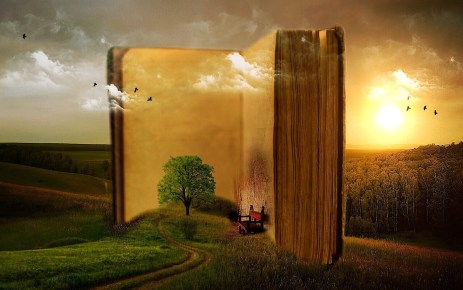
Not if you’re a writer. I think I figured this out at an early age. I fell in love with reading and became addicted to the feeling of snuggling up with a good book, shutting out the real world and allowing myself to become absorbed in a make-believe one, and then I discovered writing could offer the same joy and adventure.
book-863418_1920 (1).jpg

And it truly does.

My characters live tumultuous lives, with twists and turns, suspense, thrills, and plenty of drama. There is love and hate, obsession, adventure, pain and sorrow, unbelievable lows and amazing highs. I’ve put them through a lot and because of that I’ve been constantly excited, desperate to find out what happens next, eager to be part of the journey.
typewriter-2242164_1920

It feels like I go through all these things with them. I mean, I have to, as much as possible. When writing a dramatic scene, when describing complex emotions, I have to put myself in the characters shoes as much as I possibly can. I have to think about how I would feel, what I would do, what I would say, and how I would react in the long term. Writing, therefore, makes my life feel like a rollercoaster of drama, events, revelations and reactions. When my characters are scared, I feel scared. And I get just as excited as them when things go right for a change!

Because of this, I often feel like I am living more than one life. And I could choose to live any kind of life I wanted. When writing, whether in first or third person, I’m creating a world I become a part of. I can be any age, any gender, any sexuality, any class, any culture I choose.

I sometimes wonder if this is why I like writing young characters so much. Because I’m reluctant to grow old and feel like my life is constantly passing me by, going far too fast. As a writer, I get to go back and be a kid again. I don’t have to say goodbye to my youth, I can relive it and recreate it however I wish. In real life, there are always things that prevent you from living out your dreams. Things get in the way and hold you back. There are financial restraints and responsibilities and so on. But if I’m curious about something or feel I missed out, I can write about it instead. I can create whatever world I want and live whatever kind of life I want.



Why I Love Writing #2; It’s Free Therapy

Not that I would ever discourage anyone from seeking help for any mental health issue, or suggest that writing can replace professional therapy or counselling. However, there is no doubt in my mind that writing regularly is good for your mental health, for a whole host of reasons.

As this series of posts about why I love writing so much is personal, I’ll just talk about why it works for me. When I was a kid, I was painfully shy and awkward. I preferred books to real people and once I was old enough to write my own stories, I preferred that too. As I mentioned in last week’s post, I was forever being told that I lived in my own little world.

female-865110_1920

Now, being shy is not so bad when you’re a little kid. People often expect little kids to be shy. You can’t get away with it so much when you’re a teenager, and even less so when you’re an adult. Shyness is often then mistaken for rudeness or arrogance. You’re expected, quite rightly, to get on with things, sort your own problems out and be able to deal with life and the world.

I don’t think I could have done this if it wasn’t for writing. It was there for me when I was small; enticing me to create my own little worlds full of friends I wished were real. And it was even more vital when I became a teenager. I wrote diaries from a young age and often poured my heart and soul into them as I went through my adolescence. At the end of every day, there was my diary, waiting for me to expel the bad feelings, the anger, the hurt, the confusion onto the page. And how much better I would always feel afterward. Writing was not only for my diary though. I was seriously addicted to writing in my teens. It was what I rushed home for. I never wanted to be torn away from it. It was pretty much all I cared about. I don’t think I would have coped very well with adolescence if I hadn’t had writing. It helped me so much. I was able to express my thoughts and feelings, reflect, observe, question and have time to absorb what was going on around me. I got so much genuine joy from writing that it helped me hold my head above water and just get through it.

The same thing applies now. I turn to writing when I feel fragile. I turn to writing when I feel afraid. I turn to writing when I feel angry, dismayed, lost or frustrated. Writing is there when I need someone to talk to, when I want to organise and reorganise my words until I’ve finally figured out what I want to say. Writing allows me head space, time to breathe, time to think and work out how I feel. I’d be in chaos if not for writing. It calms me down. Cheers me up. It excites me. I’d be lost without it.

Barefoot On The Cobbles – Guest Post by Janet Few

Dr Janet Few.JPG

When Chantelle kindly offered to allow me to pay a visit to her blog, she said that her own writing was gritty, contemporary and non-conformist. I reckoned that I could manage at least two out of three. Then I discovered that her blog was called Glorious Outsiders and that certainly had a resonance. I am here to talk about my new novel Barefoot on the Cobbles and my slightly eccentric life; Glorious Outsiders abound!

Before I was any sort of published author, I was and still am, an historian. As such, I am not particularly interested in politics or tales of the great and good. I am fascinated by ordinary people, how they lived and the influences that underlie their behaviour. If I say that the presentations that I give on historical topics include aspects of witchcraft, mental health, non-conformist religion and the role of women, you might get the idea. It is the marginalised who intrigue me the most; truly the outsiders.

I am also a keen family historian. I seek out my ancestors and pay tribute to all those from whom I descend. These are not rich people, nor are they anyone who is well-known but they are those who, if it were not for me, might be forgotten. I have several non-fiction books in my portfolio; books about social history, genealogy and local history. I had reached a lull in ideas for more non-fiction topics, so I thought it was time to turn to fiction. I hadn’t written ‘stories’, since I was an angst-ridden teenager. I was all set to craft a very different novel, when the tragedy upon which Barefoot on the Cobbles is based came to my attention. It was a story that was not recalled in local folklore, which piqued my interest. So, in a way, I still haven’t written fiction, as this is the retelling of a true story. I did find that my historian’s instincts had to be suppressed at times. Although very little in the book is pure invention, there were occasions when I had to create plausible scenarios to fill in the gaps in the historical record. At first, I found it very difficult to convince myself that I really could just make it up!

Barefoot is set, in the early years of the twentieth century. This era provided me with plenty of scope, encompassing as it does, the First World War, the fight for women’s suffrage, the influenza epidemic, the dawning of a social conscience and medical care in pre-NHS days, all of which feature in the book. So, from that point of view, the novel is not contemporary, yet the emotions that my characters experience are recognisable today; the psychological make-up of human beings does not change.

3d

In Barefoot on the Cobbles you will find a narrative set in the beautiful Devon landscape; communities whose lives were shaped by the sea. So not just real people but real, recognisable places. There are scenes in the local asylum, on a battlefield, in court and on deathbeds. I think that qualifies as gritty. It isn’t all doom and gloom because the characters’ lives shaded from joy to despair, as do our own. As I struggle to answer the question, ‘What is your book about?’ I often say it is about people and the incidents in their pasts that led to the tragedy that is the culmination of the novel. It is a ‘why-done-it’.

Who then are Barefoot’s non-conformists, the Glorious Outsiders? The person who became the main character is a fisherman’s wife, who is past middle-age and described by some of her neighbours as ‘odd’. On the surface, her behaviour seems unconventional and the novel seeks to explain why this is so. Apart from this desperate mother, you will meet the troubled daughter, the reluctant soldier, the traumatised engineer, the militant suffragette, the alcoholic bankrupt and others on the side-lines.

I will leave you with the blurb and if you want more information, it can be found on my own blog The History Interpreter http://bit.do/bfotc

“In the euphoria of the armistice a young woman lay dying. Daisy had grown up, barefoot on the cobbles, in a village on the rugged North Devon coast; she was mindful of the perils of the uncertain sea. Her family had also been exposed to the dangers of disease and the First World War but for Daisy, it was her own mother who posed the greatest threat of all. What burdens did that mother, an ordinary fisherman’s wife, carry? What past traumas had led, inexorably, to this appalling outcome?

Vividly recreating life at the dawning of the twentieth century, Barefoot on the Cobbles is based on a real tragedy that lay hidden for nearly a hundred years. Rooted in its unique and beautiful geographical setting, here is the unfolding of a past that reverberates unhappily through the decades and of raw emotions that are surprisingly modern in character.”

Barefoot on the Cobbles – a Devon tragedy ISBN: 978-1-911438-54-0 is published by Blue Poppy Publishing https://bluepoppypublishing.co.uk and paperback copies can be obtained from them. It is available on Kindle from Amazon, in various English-speaking countries. The link for the UK is https://www.amazon.co.uk/gp/product/B07K3YMYRV


Why I Love Writing #1; I Don’t Have To Live In This World

There’s so much to say about why I love writing so much, I thought I would pen a little blog post series on the subject. It’s easier to break it down into separate pieces that way. There are just so many reasons I love writing!

typewriter-751566_1280

If anyone asks me why I love writing, I’ll usually answer by explaining that I get all these characters and ideas in my head and just have to write them down, or I would go mad.

But it’s really so much more than that. For me, writing is very similar to reading and the things that attract me are the same. When I’m absorbed in a really good book, it’s like entering another world. We all know that feeling. Maybe you get it from reading or from watching films or from listening to or playing music. You’re removed from the real world. You’re lifted above it and beyond it. You’re in the past, or the future, on another planet, another time, living and observing and experiencing another life. For a small and precious amount of time, until something in the real world interrupts you, you are gone. You’re not part of the real world and are utterly disconnected from your real life.

For me, writing provides the same thing. When I was a child, I was shy and awkward and extremely quiet. I melted into the background and both liked and resented this. There were things about the real world and my real life that I did not like and wished to escape from, and writing gave me this. Maybe even more so than reading a book, because writing your own stories is even more liberating. You’re in control, you’re like God, the puppet master, creating and destroying and moving people around like chess pieces. Once I started writing, I drifted away from the real world quickly and dramatically. I created my own.

People used to say to me all the time; ‘you’re in your own little world, aren’t you?’ And it was true. I really was.

paris-823883_1280

People still say that to me now, and these days writing is there when I don’t want to live in the real world anymore. And let’s face it, things are pretty bad right now. It sometimes feels like the destruction of this planet is something I simply cannot bear. It’s so pointless and needless, so utterly senseless how can any sane person possibly understand it? And then there are people. Human nature, such a complex, multi-layered thing. There are days when I’m floored by how cruel and heartless humans can be and I truly fear we’ve reached the end days, not just on the planet, but in our humanity. It feels so desolate and without hope. Of course, there are just as many days when humans surprise and delight me, and I remind myself that most of them are basically good and trying to be good. But on the bad days? Writing is an absolute Godsend. I couldn’t survive without it.

It’s in my head when I can’t physically get to pen, paper or laptop. So I’m already removed. I’m calmer. Less weighed down, less frantic, less panicked. Like when I was a kid, I’m off inside my own head. Entertaining myself. The stories go with me everywhere. I am never alone. And then when I get the time to sit and put pen to paper, or tap at the keys on my laptop, I’m gone again. I’m lost inside my own head and I’m free.

To me, writing sometimes feels like a rebellious act. Because when it revolts or disappoints me, I cannot be forced to live in this world. I’ll go if I want to. I’ll check out. I don’t have to stay. I can write.