Interview with Jane Davis; Author of A Funeral For An Owl

JD Bench 034

Welcome to another author interview, where this time I am joined by award-winning author Jane Davis, whose fantastic book A Funeral For An Owl was my Indie Book Of The Month for February. Read on for a fascinating insight into Jane’s publishing and writing journey so far.

1) For those who are new to your work, how would you best describe your genre?

I write about big subjects and give my characters almost impossible moral dilemmas. I don’t allow them a shred of privacy. I know what they’re thinking, what they’re feeling, the lies they tell, their secret fears. But I only meet them at a particular point on their journeys, usually in a highly volatile or unstable situation, and then I throw them to the lions. How people behave under pressure reveals so much about them.

2) When did you first know you wanted to be a writer? Why do you write?

I recently filled in an author survey. There was an entire section asking about early writing experiences. What was the first story you wrote? Did you win any writing competitions while at school? I began to think, ‘I’m not a writer. I’m a failed artist.’ It wasn’t that I didn’t make up stories as a child, but instead of words, I used pictures. Right up to my O-Level year, I spent most of my spare time drawing and painting. I’d always assumed that I would make a career in art. It was the one thing I was good at. And then came a hard blow. The examiners didn’t like my work. This knocked my confidence so the extent that I changed plans, left school and entered a career where judgement of good and bad results was far more objective. I didn’t turn to writing until my mid-thirties.

Fiction provides the unique opportunity to explore one or two points of view. It’s never going to provide the whole answer, but it forces writer and reader to walk in another person’s shoes. And, in many ways, it is the exploration and not the answer that’s important. I think the idea of a single truth is flawed. I have a sister who is less than a year older than me but our memories of the same events differ substantially.

As my collection of books grows, I’m beginning to see them as my legacy. As someone who doesn’t have children, they are the mark I will leave on the world. So another reason for writing – one that I didn’t think about in my mid-thirties when I started to write – is to create a legacy that I can be proud of.

3) Can you tell us about your publishing experiences so far?

There’s a graphic that regularly does the rounds. It’s made up of two graphs. The first goes under the caption, ‘what you think your career will look like’ and it’s upwards all the way. The caption for the second is ‘what it will actually look like.’ A roller-coaster. That’s my experience of publishing.

My first attempt at writing a novel didn’t make it as far as being a book, but it did earn me the services of a literary agent and the words, ‘Jane, you are a writer’, which sounded far more glamorous than ‘Jane, you are an insurance broker’. There was a draft contract from a small publisher, but before the ink could dry, the small publisher was eaten up by a big publisher.

My second novel won the Daily Mail First Novel Award. I was going to be the next Joanne Harris. But a couple of months after publication of Half-truths and White Lies, Transworld rejected my follow-up – and it’s the book you’ve asked me to talk about today. It was beautifully written, but it wasn’t ‘women’s fiction’. There was no point arguing that I hadn’t set out to write women’s fiction. No meant no.

I carried on submitting manuscripts. One had already won an award for its opening chapter. Surely two awards would open doors? By 2012, I felt like the writer in Michael Chabon’s Wonder Boys who attends the same conference year after year with a different edit of the same novel. A novel which continues to be rejected, albeit for slightly different reasons.

There was another path, but I’d been resisting it. I didn’t explore self-publishing until I attended a conference at the tail-end of 2012. I’d believed the line I had been sold that self-publishing wasn’t something a self-respecting author who wanted a long-term career should consider. But I was fired up by what I saw. Established authors who’d been dropped by publishers were rubbing shoulders with novices who’d priced their e-Books at 99p, and sold 100,000 copies within a year. This was a revolution! Was I out or was I in?

I decided I was in. Though I made rookie mistakes, reviews were positive. The next time, I did better. I grew my team of professionals. I now have self-published six titles under my own imprint. My fifth, An Unknown Woman, won Writing Magazine’s Self-published Book of the Year Award 2016 and was shortlisted for two more awards. I’m learning all of the time.

4) Tell us about A Funeral for an Owl – what inspired this book?

You’re asking me to go back a long way now! A Funeral for the Owl was the fourth novel I published, but it was the second novel I wrote.

It started life as the story of thirty-year-old Jim recounting the story of his nine-year-old self’s friendship with Aimee, a girl from the other side of the tracks. Most of the action took place over a six-week period, the summer holidays. The reader was left in no doubt that Aimee killed herself. One of my colleagues had committed suicide leaving behind two teenage children, and this event and its aftermath were very much on my mind.

Then I asked myself, who Jim is telling his story to? Is he in therapy? Is it one of the doctors who saved his life? The twist was that it was St Peter and that Jim was an atheist. He got a second chance and woke up on the operating table. My agent loved it! She said that we should put it out there immediately.

But Transworld, my then publisher, exercised their right of first refusal. My book lacked a strong female character and I’d been published under their women’s fiction imprint, something that had completely passed me by. And so I set the manuscript aside and got on with writing I Stopped Time and These Fragile Things. But I held onto a soft spot for Jim and his owl story. The material was too good to shelve. And so, when I came to the end of my next project, I began to re-write it.

Unless you want to be pigeon-holed as an author of Christian fiction, you can’t play the religion card twice. Having exhausted this with These Fragile Things, St Peter had to be shown the door. In the meantime, knife crime had risen dramatically in London. My story already had knife crime in it, so I explored where I could take that.

I added two new characters, Ayisha, another teacher and a pupil, Shamayal. By layering his story with Jim’s, I was able to reflect on cause and effect. It was an opportunity to acknowledge the enormous changes I have witnessed over the past twenty or so years. The cultural mix – in my South London middle school there was only one black family. My friends’ children simply cannot understand how we survived without mobile phones in the ‘olden days’ and why there are so few photographs of us. Children and adults were members of different species. Gangs were very different things then. Children didn’t kill children. Today, hearing about gang fights is unavoidable. I read a lot of personal accounts during my research, including one teenage victim who was dumped in a garbage bin and left for dead. Sadly, there are lots of truths in my book.

5) Tell us about your writing process – how does it all come together?

As you can probably tell, I am a layer-er. With the exception of Half-truths and White Lies, which virtually wrote itself, none of my published novels bear any resemblance to their early drafts.

All of my books go through numerous rounds of self-editing before I show them to anyone. Then I use a team of about thirty-five beta readers to road test them. They give me all sorts of valuable insights.

After that comes the structural edit. With A Funeral for an Owl, it was my structural editor – the mother of teenage children – who pointed out that there were some flaws in my initial ‘research’ (or lack of). It was while I was ironing out those issues that I unearthed another major flaw: I had failed to take account of the fact that it’s thirty years since I left school. The behaviour of my teachers would have been illegal under current Child Protection laws. All of the information I needed was available on the local government website, had I realised I needed it. Then it struck me that this provided a huge opportunity. I could change the focus of the novel: what kind of boy would it take to make two teachers put their jobs on the line? And it gave the plot a new momentum.

My angle was the suggestion that some of the rules that have been put in place with the best of intentions – to protect – actually deprive the most vulnerable children of confidential counsel from someone they trust. Not everyone will agree with that view but, when I was growing up, we had a wonderful teacher who operated an open-house and provided a safe place for those who were struggling at home, no questions asked. It was surprising who would turn up at her door. Today, in an environment when any relationship between teachers and pupils outside the classroom is taboo, she would be sacked. I think that’s terribly sad. Fiction provides a unique opportunity to tell one side of a story through the eyes of one or two characters. It’s not the whole picture by any means, but it is one aspect of it.

Every time you introduce a new angle, each What if? question has to be pushed to its limits. Writing in such an organic manner is hardly ideal, and I would certainly never recommend it, but setting material aside and revisiting it is an excellent practice. It allows far greater objectivity. You have to analyse what isn’t working any why.

Writing is very much a learning process. I’d like to think that my writing had improved by the time I returned to Owl. I went back and polished every page, really concentrating on the short-lived relationship between Jim and Aimee. Young as Jim was, even though there was an age difference, even though their relationship didn’t develop, there would have been sexual attraction. Ignore something as critical as that, even if you think it might be taboo, and the writing you produce is dishonest. When someone has spent years dwelling on a very short period of time, on events that gained greater significance afterwards, you aren’t simply reporting facts. Jim would have embellished the story in his mind. The Aimee the reader meets is the memory of the memory of the memory. She had to shine, everything she said had to carry a message, and the summer had to feel endless. My job was to convince the reader that these few events shaped a man’s life.

6) What comes first for you? The characters or the plot?

The characters, always. Get them right and they do the hard work for you.

Nailing the voice of Shamayal, my disenfranchised contemporary teenager was crucial. Can I get this out of the way? I’m white, middle(ish) class and born in the 1960s, writing the voice of an under-privileged mixed race boy, born in the 1990s. The first property I bought was a two-bedroom flat on the High Path Estate in Wimbledon. This was my blueprint for my fictional estate. Although I haven’t walked in his shoes, living where Shamayal grew up, I have walked in his footsteps. Then, I borrowed a few mannerisms from someone I used to work with – the repetition of Right, right, right. The deep laugh. I watched a few episodes of Toy Boy and (tell me if you can get arrested for this) I jotted down conversations overheard on trains and in my local park. Of course, you could never actually transcribe teenagers’ speech patterns. They would be completely unreadable. After you delete all of the ‘likes’ and the majority of expletives, what you aim to arrive at is a sanitised version which still sounds authentic. Think Ronnie Barker’s approach when he wrote the script for Porridge.

It’s a joy to write characters like Shamayal and Bins (an elderly man who is assumed to have learning difficulties) because they have such unique voices. You can hear them speaking to you. It’s far more difficult to write dialogue for an ‘everyman’, like my main character, Jim. To do that, you have to find your character’s quirks and vulnerabilities and exploit the hell out of them.

7) Do you write with a particular theme or message in mind, and if so what might it be?

A Funeral for an Owl shares its central theme with Half-truths and White Lies, I Stopped Time, and to a lesser extent These Fragile Things, that is, the influence missing persons have on our lives. Whether an absent parent, the child who never was, a friend who died an untimely death, the object of our unrequited love who finds a love of his own, or friends we lose touch with, we all collect them, particularly as we get older.

I found myself studying the Missing Persons ads in The Metro, the fourteen and fifteen-year-olds whose stories aren’t sufficiently high-profile to land them on the pages of newspapers. They’re simply slipping between the cracks. And so I looked into the facts. At that time, one in ten children ‘ran away’ from home before they reach the age of sixteen, an estimated 100,000 every year. Shockingly, a quarter of those young people are actually forced out of their homes by parents or carers. Two-thirds aren’t even reported as missing. That’s 75,000 children for whom a Missing Persons ad will never be placed. All of these children are highly vulnerable, at risk of substance abuse, sexual exploitation and homelessness. Mobile phones and social networking sites have made it even easier to target them. I include a particularly poignant quote from Lady Catherine Meye at the beginning of my novel. “We can’t establish for certain how many children are missing. You’d have more chance of finding a stray dog.”

7) Do you find it hard to say goodbye to your characters? And if so, which character from A Funeral for an Owl would you like to revisit the most?

The truth is that I’ve never actually said goodbye to the characters in Owl. I’ve blurred the lines between my lives and theirs by including some of my personal history and setting their stories in my local neighbourhood. There’s something transportative about living in the same area all of your life; walking around familiar geography, knee-deep in the history of the place. And superimposed over a street map carried both inside and outside your head (the housing estate that now stands on the site of your old high school), are important milestones. When you learned to ride a bike. Your first kiss. The first flat you owned. But when I started setting fiction within my personal geography, I added an additional strata. Now when I walk in my local park, I see Jim pausing to stretch on his daily run. I see Aimee showing him the heron. We live with our characters so long that they’re kin to us. In a way, we know them better than friends and family, because we’ve seen through their eyes and know their every thought.

But you asked about my favourite character in Owl and that has to be Bins. Some readers assumed he was autistic, but that wasn’t my intention. I suffered from depression for many years and, in an age when suicide statistics speak for themselves, I enjoy celebrating people who’ve found their own ways of living. In my local town we have a wizard who walks the length of the high street in his full regalia, complete with a black cat on his shoulder; we have a very masculine-looking Scotsman who wears a very badly-fitting cotton floral dress; we have a man who goes about with a tank strapped to his back spraying the air, and a young chap who stands on street corners conducting the traffic, and singing hymns at the top of his voice. These are all logical responses to an insane world. Small communities – and children in particular – accommodate people who don’t fall into our narrow definition of what’s ‘normal’. It was only when watching a programme about the artist Chuck Close that I became aware of the condition Prosopagnosia, or ‘face blindness’, and appreciated how someone who didn’t appear to recognise people he’d met dozens of times before might be treated as if he was stupid, and if he was treated as if he was stupid, how he might eventually come to believe that.

8) Do you have a day job, and if so, does it help your writing in any way?

I left school at the age of sixteen, so I had time to fit in a twenty-five-year career in insurance before I left full-time employment to write. I was promoted to management at the age of twenty-one and appointed to the board of directors at the age of twenty-six. I’m not sure I would have found the confidence to write unless I’d had those opportunities – and unless I knew that my opinions were taken seriously. As a writer with a part-time job, I live on a very tight budget, so the days that I go up to the city feel like outings. In fact, my walk across London Bridge, through the city and along the riverside path provided plenty of inspiration for my new novel, Smash all the Windows.

8) Tell us about your next release

As you can probably sense from the title, the novel began with outrage. I was infuriated by the press’s reaction to the outcome of the second Hillsborough inquest. Microphones were thrust at family members as they emerged from the courtroom. It was put them that, now that it was all over, they could get on with their lives. ‘What lives?’ I yelled at the television.

For those who don’t know about Hillsborough, a crush occurred during the 1989 FA Cup semi-final, killing 96 fans. A single lie was told about the cause of the disaster: In that moment, Liverpool fans became scapegoats. It would be twenty-seven years before the record was set straight.

I didn’t want to be the one to add to the pain I saw on their faces, so I created a fictional disaster. And because writing should always take you outside your comfort-zone, I combined two of my fears – travelling in rush hour by Tube, and escalators. The book is about the emotional fallout. It’s very much a story of human resilience.

9) What will you be working on next?

Do you know, I have absolutely no idea. I never start work on the next book until the current one is published, so I haven’t even starting thinking about it yet.

12) What is your approach to marketing and self-promotion?

One of the joys of self-publishing is deciding how to present your work and I’m very involved in the cover design process, coming up with the concepts and sourcing the photographs. My brief to my designer is that I wanted my books to look like a set and that there are elements that are instantly recognisable.

I’m very active on social media and I try to extend my reach by interviewing other authors in the hope that their audiences will also enjoy my fiction. I’ve also had enormous support from the book blogging community, especially for my forthcoming release. Most book bloggers have full-time jobs and they’re not paid, but the ones who reply to me say they receive upwards of 500 requests a month. I think we really have to treasure them.

The truth is that what worked a few years ago in terms of promotion no longer works. BookBub is seen as the Holy Grail, but since traditional publishers have jumped on board, it’s increasingly hard to secure a spot. The economics of Facebook advertising didn’t work for me. The problem is that eBook prices are artificially low, and we pay the same as someone who is selling an item that costs hundreds of pounds. For me, the game-changer at the moment is Amazon Marketing Services. It’s only available on Amazon.com, but we’re told will be coming to the UK. That’s where my marketing budget goes at the moment.

Bio

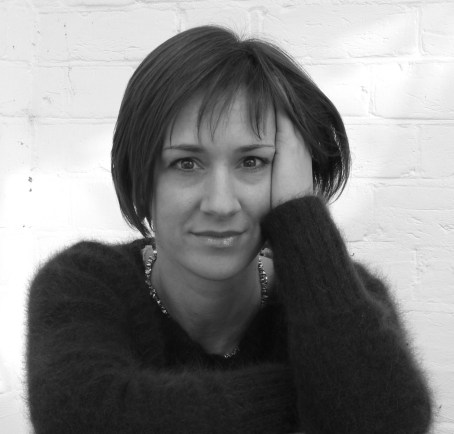
Hailed by The Bookseller as ‘One to Watch’, Jane Davis is the author of eight novels.

Jane spent her twenties and the first part of her thirties chasing promotions at work, but when she achieved what she’d set out to do, she discovered that it wasn’t what she wanted after all. It was then that she turned to writing.

Her debut, Half-truths & White Lies, won the Daily Mail First Novel Award 2008. Of her subsequent three novels, Compulsion Reads wrote, ‘Davis is a phenomenal writer, whose ability to create well-rounded characters that are easy to relate to feels effortless’. Her 2015 novel, An Unknown Woman, was Writing Magazine’s Self-published Book of the Year 2016 and has been shortlisted for two further awards.

Jane lives in Carshalton, Surrey with her Formula 1 obsessed, star-gazing, beer-brewing partner, surrounded by growing piles of paperbacks, CDs and general chaos. When she isn’t writing, you may spot her disappearing up a mountain with a camera in hand. Her favourite description of fiction is ‘made-up truth’.

Blurb

Twenty years of change. One person who cares

A photograph of a barn owl in flight.

“The wings, all spread out and that? They’re kind of like an angel’s.” He’s right.It’s Aimee’s owl, Aimee’s angel.

Times have changed. Jim Stevens teaches history. Haunted by his own, he still believes everyone can learn from the past.

14-year-old Shamayal Thomas trusts no one. Not the family, not the gang. And at school, trusting people is forbidden.

“If you decide you gotta pick up that phone, you tell me first so that I can disappear myself. Because I ain’t havin’ none of that.”

The best way to avoid trouble, thinks Ayisha Emmanuelle, is to avoid confrontation. As an inner-city schoolteacher, she does a whole lot of avoidance.

One shocking event – a playground stabbing – leaves a life hanging in the balance. Two teachers risk their careers to help a boy who has nothing. Three worlds intersect and connect, regardless of the rules. History doesn’t always repeat itself.

A powerful exploration of the ache of loss set in a landscape where broken people can heal each other.

‘All the heartbreak of A Kestrel for a Knave (Kes) and then some. Imagine Billy Casper living in South London in the 1990s.’

Universal buy link for A Funeral for an Owl is https://books2read.com/u/4DoGRk

Amazon UK paperback https://www.amazon.co.uk/gp/product/1493504088

Also by the Author

Half-truths & White Lies

I Stopped Time

These Fragile Things

An Unchoreographed Life

An Unknown Woman

My Counterfeit Self

Smash all the Windows

Contact

Website: https://jane-davis.co.uk

Facebook page: https://www.facebook.com/JaneDavisAuthorPage

Twitter: https://twitter.com/janedavisauthor

Pinterest: http://pinterest.com/janeeleanordavi/boards/
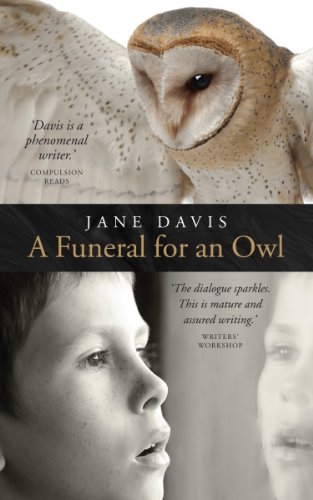
February Indie Book of the Month; A Funeral For An Owl by Jane Davis

It’s the end of the month, so that means it’s Indie Book of the Month time here on my blog. This is a new feature for 2018, where each month I will highlight the best indie book I read. This month please let me introduce you to another award-winning writer, Jane Davis. I first discovered Jane’s writing when another author I admire, recommended her book An Unchoreographed Life. I read it and loved it; it ticked every box for me as a reader. For this reason I was very keen to read A Funeral For An Owl and it did not disappoint at all. When I read books, I want good writing and a good plot, something to keep me turning the pages, but I also want to feel invested in the characters. I want to feel strongly about them, I want to worry about them and wish I knew them. Jane’s characters satisfy this need for me. It left me feeling I am in safe hands with her as  writer and will enjoy anything she writes because of this.

So, here is the blurb for A Funeral For An Owl;

A schoolyard stabbing sends wingbeats echoing from the past.

One shocking event. Two teachers risk their careers to help a boy who has nothing. Three worlds intersect and collide.

‘If you want to laugh and cry and stamp and cheer – all in the space of a few hours – then this book is the one for you.’ Bookmuse

The best way to avoid trouble, thinks Ayisha Emmanuelle, is to avoid confrontation. As an inner-city schoolteacher, she does a whole lot of avoidance.

14-year-old Shamayal Thomas trusts no one. Not the family, not the gang. And at school, trusting people is forbidden.

Jim Stevens teaches history. Haunted by his own, he still believes everyone can learn from the past. History doesn’t always have to repeat itself.

A powerful exploration of the ache of loss set in a landscape where broken people can heal each other.

Fresh, funny, heartbreaking and real, this original and compassionate study of when to break the rules and why is perfect for fans of Maggie O’Farrell, Rachel Joyce and Ali Smith.

“A perfect balance of gritty and feel-good.” society that is supposed to protect the most vulnerable.”

And here is my Amazon/Goodreads review;

“Having previously read another novel by this author, I was keen to read more and A Funeral For An Owl did not disappoint. In fact, it ticked so many boxes for me as a reader that I instantly pre-ordered the author’s new book which is out in the Spring, and I will be working my way through her backlist without a doubt. The plot of this book revolves around Jim, a history teacher who is stabbed while trying to protect a pupil at school, his colleague Ayisha who witnesses the attack, and Shamayal, a fourteen-year-old pupil Jim has befriended. Jim helps the boy one rainy night and a friendship grows between them, which is of course, very much against the rules. On the surface, it may seem like Jim and Shamayal have little in common, but it turns out Jim grew up in the same block of flats on the same notorious council estate and suffered many of the same issues Shymayal is dealing with. They even have a friend in common, Bins, a local misfit who knows everyone on the estate by the nick-names he gives them but is unable to recognise faces. With Jim in hospital, Ayisha comes to his aid and discovers the unlikely friendship between him and the boy. At first, she is very disapproving but as the story continues she finds herself drawn deeper into the lives of Jim and Shamayal. This book does an excellent job of weaving the past with the present. In 1992, Jim was a twelve-year-old boy with a penchant for bird-watching. His father is in prison, his older brother has been thrown out, and the estate is rife with danger from gangs. One day, Jim finds a teenage girl in his bird-spotting place. The mysterious Aimee White provides the thread that holds the past and present together. Jim’s friendship with her, the funeral for the owl and what happened to her, are things that have haunted Jim throughout his life. The reason this book ticked every box for me was that the plot kept me turning the pages, and the characters kept me there as I became increasingly engrossed in their lives. I wanted to find out what happened to Aimee, I wanted Ayisha and Jim to recognise the attraction between them, and I desperately wanted things to turn out well for Shamayal, who was probably my favourite character. A brilliant book, so well-written and compelling. I highly recommend it and this author!”

41n4bzwX3pL.jpg

Other Indies I’ve Enjoyed This Month;

The Finest Hat In The Whole World by Colleen A. Parkinson

Best Traditionally Published Book of The Month;

Release by Patrick Ness


The Joys and the Perils of Working on Multiple Projects

It’s never my intention to have multiple projects on the go, but almost since the beginning of my publishing journey, this is the way it’s worked out. Currently, I’m juggling a few things at the same time. Elliot Pie’s Guide To Human Nature is finished, but I’ve sent it out to a small list of publishers. While waiting for rejection, I’m planning my self-publishing launch of this book. A Song For Bill Robinson was sent to beta readers for the first time and I just received the first piece of feedback from a reader. I am now responding to this with a 6th edit of the book. Meanwhile, I made a decision to reduce the planned trilogy to two books by moving the main event of book three to the end of book two. This is in progress. And then there is the four-book series I promised myself I would not start until all these other things were finished! But that’s proving difficult, and I have recently succumbed to writing five chapters and indulging in some research…

I never plan on working like this, and in fact, I’m not sure it’s a good idea at all! I often experience what I would describe as a nervous stomach throughout the day. Unless there is something specific I am worried about, I have no option but to blame it on the thought of my evening writing.

Have you ever juggled more than one writing project? Or would this be your worst nightmare? Here are 5 perils of working this way, followed by 5 joys, because in my opinion, it is fraught with both.

girl-1940244_640

Perils

  1. Not Finishing – This is a genuine concern. It is the reason I rarely finished anything when I was a kid. During the inevitable slump, my mind would be drawn to a new story and off I would go. This has also happened to me as an adult writer, hence the half-written sequels to The Mess Of Me and The Tree Of Rebels.
  2. Distraction – Working on more than one writing project can be hugely distracting. If your mind is being pulled in more than one direction, it can be really tough to sit down and actually get some words out. It’s not easy to concentrate or commit to one story when you have others calling for your attention. Sometimes I start the evening working on one book, and finish the evening on another, which can feel quite frustrating as if nothing is really getting done.
  3. Panic – This is a definite peril and one I experience regularly. I get a nervous feeling in my stomach like it is constantly turning over on itself. Sometimes it feels like I cannot breathe and I take an extra big breath just to be sure. I’m not exactly sure why I’m nervous about my writing, but I always feel better once I am sat down doing it. I can only imagine that the feeling of panic comes from my struggle to do too much.
  4. Spreading Too Thin – Working on multiple projects could potentially dilute the quality of your work. Lack of concentration, distraction, panic, self-doubt can all be heightened when attempting to do too much at once. This could lead to a reduced quality of your writing, which is something I worry about a lot.
  5. Burn Out – Worst case scenario, working on too many projects can lead to burn out and exhaustion. It could spark off writers’ block. You could become utterly stuck, afraid to move on. I’ve experienced this before, and the only good thing about it is that it does finally force me to slow the hell down.

But what about the joys? Are there any good points about working on multiple projects? Can it be beneficial despite all the above? I might be crazy, but I do think so…

thought-2123970_640

Joys

  1. Excitement – Writing is exciting. It should be. I know half the reason I get such butterflies in my stomach is that I am excited to get writing. It’s exhilarating to put words to paper, to create and evolve characters, to give them lives, to shape and control their existence, to create worlds and spark drama and emotion. A new project is undeniably more exciting than an old one, which may be wearing thin. I like to stay excited and working on multiple projects keeps it going.
  2. Not Losing Ideas/Words – Now I know the rule is to never assume you will remember a good idea if you do not write it down. How many writers have made that mistake? You must write it down! It’s entirely possible to save future ideas by jotting the gist of it down somewhere safe, then getting back to the project in hand. But what if more words start to come? What if vague characters start to evolve into solid ones? What if they start to present you with conversations and dialogue? There is no way you will remember it all if you don’t write it down! And then before you know it…
  3. Keeps Things Fresh – Editing and revising a novel can go on for years. Writing the rough first draft is fairly easy compared to all that is to come. All the editing, re-reading, rewriting, revising, cutting, rewording and killing of darlings. Editing can be a challenge but it can quickly become dull, and even a torture. Here’s where starting another project can be helpful. Writing something fresh and new! It helps to be disciplined though. I only allow myself a chapter of a new book if I have edited four chapters of the current book, for example. Don’t jump ship! Stay on board and then reward yourself with a little bit of something fresh and new…
  4. Fills In Time Between Beta Readers – If you are anything like me, you will send your novel out to beta readers at different times. I usually have three rounds of beta reads, and I will work on the book in between. But when it’s out, I can’t work on it. What am I going to do? Sit around and twiddle my thumbs? It could be months! So I get my teeth into another project. As soon as the other book comes back from a beta, I down tools and get right back to it, always treating the one further along as the priority.
  5. Increases Productivity – In the indie age, productivity and brand are key. The more books you write, the more brand you create, the more trust you build with readers. Working on multiple projects increased productivity, there is no doubt about that. Simply put, more books are written.

So, over to you guys! What do you think? Do you work on multiple projects? If so, how do you stay sane? How do you stay on track and get it all done? Do you only ever work on one book at a time? Please feel free to share and comment!

Interview With Author Miriam Hastings

As you know, I’ve started a new feature on this blog where I pick the best Indie book I read that month, share it with you and then interview the author. The best book I read in January 2018 was The Minotaur Hunt by the award-winning Miriam Hastings as highlighed in this post. Miriam kindly agreed to an interview and here it is! You can find Miriam’s bio and links at the end of this post.

Miriam Hastings.jpg

1. When did you first know you wanted to be a writer? Why do you write?

I never made a conscious decision to be a writer, I need to write and always have. I have been making up stories ever since I can remember and writing them down from the moment I learned to write.

I have always had a vivid imagination and when I was a child I spent a lot of time in fantasy worlds that I created. I think I write fiction as an adult to meet the same needs I had then. This is partly a need to escape from reality when it’s too unbearable, but also a need to address the problems life poses by approaching them from a more creative angle. Writing is a way of taking control of reality because you can shape it and reshape it through words, expressing your own experience and vision of the world and, through doing that, you can transform reality into something greater.

2. Can you tell us about The Minotaur Hunt – what inspired you to write this particular book?

I wrote The Minotaur Hunt in my late 20s (it was first published when I was 31). I suffered from an extreme anxiety disorder as an adolescent, caused by childhood trauma, and was admitted to an adult acute ward when I was 14 and kept there for three and a half months. I was admitted to hospital again when I was 23.

Later, after I was 26, while I was writing the novel, I worked with people who had been moved out of the big asylums like Bradley. First I was working in a MIND day centre and then in a group home.

I was also studying for a part-time BA degree and designing and hand painting ceramic tiles, so it was an extremely busy period in my life! I used to write for half an hour every evening – I doubt The Minotaur Hunt would have been written if I hadn’t done that! But it was as if I had no choice – I felt driven to write the novel no matter what else I was doing at the time.

Throughout my 30s and 40s, I continued working part-time in the field of mental health, both doing therapeutic work with service users and also teaching on courses for mental health professionals, e.g. training courses for psychiatric nurses, social workers, psychologists, etc.

I wrote The Minotaur Hunt because I wanted to help people understand what it feels like to suffer from mental distress and to be labelled as “mad” or “mentally ill”, and the way it renders you totally illegitimate within society, so that your feelings and experiences are dismissed and pathologised, your experience of past trauma is disbelieved, and the social and family problems causing your distress are ignored and never addressed.

I also wanted to help bring about change within the psychiatric system because I had both experienced and witnessed so much abuse.

Looking back on it, I’m amazed at my own naiveté and arrogance – that I imagined my novel could change such a vast and impervious system! Sadly, I don’t think the closing of the big Victorian asylums has changed attitudes or brought about improvements in the way service users are treated, as I once hoped.

3. What is your writing process? How does it all come together?

In the years when I was studying and teaching it was often hard to find the time to write regularly. Now I like to write for at least an hour or two every day, but I am disabled with a progressive degenerative illness and these days my major problem is living in chronic pain and suffering from stiffness and weakness in my hands and wrists which make the physical act of writing difficult. I have to rely largely on voice recognition. I have a dictaphone that I use for making notes and for capturing ideas. I can download my notes to the computer from my dictaphone, although this involves a lot of correction and editing so it isn’t always useful.

When I first begin a novel, sometimes I have to be disciplined and make myself work on it every day but once I’ve become really involved in the story and the characters, I can’t wait to start writing each morning.

When I begin a novel I rarely start at the beginning – I don’t usually know where the beginning will be! I think writing a novel is like doing a large complicated jigsaw puzzle. I know what I’m aiming for but I don’t tackle the whole picture at once, just a small area at a time, as I might concentrate on the sky when doing a jigsaw. I recognize and build up connections gradually. Once I am about halfway through, it becomes much easier – sections begin to fit together and I see the whole work taking shape. I find the important thing is to keep writing; I don’t let myself get stuck over Chapter 2 if I could easily write Chapter 6. I know Chapter 2 will become clearer later, a novel is a long piece of work, I think if you don’t keep writing, it will never come into existence at all so it’s important to be disciplined. Occasionally I know how I want to begin but often the beginning and the end don’t become clear in my mind until I’ve written the rest of the book.

This sometimes applies to short stories as well, but I tend to write short stories in a more straightforward chronological manner from beginning to end; however the first and last paragraphs are the last things I work on because it’s vitally important to get them right in a short story – even more than in a novel.

Writing a novel is very different to writing a short story and to some extent it takes different skills. When I am writing a novel I need to know as much as possible about the characters and their lives, whether I’m going to use that information in the novel or not. However, when I’m writing a short story I don’t necessarily know everything about the character or their life.

4. What is more important to you, the characters or the plot?

I think my writing is more character-driven than plot-driven. The characters, their psychological make-up, their relationships, the life experiences that have made them who they are, interest me most. The plot is vitally important, of course, but mainly in relation to the characters and the way it affects them.

6. Do you have a day job, and if so, does it help your writing in any way?

For several years, as well as running therapeutic groups, I was a part-time lecturer at Birkbeck College, University of London, teaching post-colonial and cross-cultural women’s literature, and creative writing for personal development.

I think working with people has always fed into my writing because people fascinate me. I can’t imagine how I would create my characters if I didn’t know how people think and feel, and something of the richness of their lives.

After I became too disabled to work for a college or other institutions, I began teaching from home and running writing groups; also leading guided creative writing for personal development both in groups and for individuals.

Sadly, I’m able to do very little work now – less and less each year as my health problems increase – but I still run some writing workshops at home.

7. Do you write with a theme or a message in mind, and if so, what might it be?

I have always seen writing as a political act, however, I don’t necessarily set out to express a particular message. I don’t consciously write stories to give a message so much as to express a vision. On the other hand, the outsider is a constant theme in my work, and in all my writing the main protagonist is in some way an outsider.

8. What are you working on at the moment?

I have just finished a novel, The Dowager’s Dream, set on the north coast of Scotland during the brutal clearances in the region. The story was partly inspired by the lives of my great, great-grandmothers, Margaret MacKenzie and Christine Patterson, also by an extraordinary account written in 1809 by the Minister’s daughter of Reay, describing a mermaid she saw in Sandside Bay, Caithness – but the mermaid in The Dowager’s Dream is not pretty, being a dark symbol of both sexual and cultural repression. For several years I was researching the Highland clearances and themes of dispossession and ethnic cleansing are central to the novel.

Now I have several ideas for novels which I’m working on until it becomes clear which one I want to concentrate upon! There is a thriller (my first!) set in Cornwall; a novel about a group of young people living in short-life housing; and finally, a novel about three young sisters, which is exploring the secrets and taboos that all families hide.

I’m also working on a short story about Emily Bronte which I’ve been struggling with for quite some time.

9.Can you tell us about your publishing experiences so far? 

I was very fortunate with The Minotaur Hunt because the first publisher I approached, the Harvester Press, accepted it straightaway, and then it won the Mind Book of the Year Award which helped promote it. The Harvester press were a small independent publishers who mostly published literary criticism for universities but also some literary fiction. Unfortunately, they were taken over by a big multinational corporation, Simon & Schuster, soon after The Minotaur Hunt was published who closed down Harvester’s fiction list leaving me without a publisher. It was about the time that publishing changed a lot, following the ending of the net book agreement, most independent publishing houses were gradually taken over by a few huge multinationals that were totally profit centred. Mostly because of winning the award, The Minotaur Hunt sold out in hardback, although small numbers have usually been available through eBay, but I couldn’t find any other publisher to take it on. A few years ago I decided to write a new epilogue as it was 20 years since it was first published. I was inspired by Angela Carter’s “afterword” to her early novel, Love, written years after it was published. In my Afterword I revisit all the characters to see what has happened to them in the years since the novel finished. First of all I published this revised edition of the novel on Kindle and Kobo, and then in September I published it as a paperback.

I have written five novels since The Minotaur Hunt but sadly none of them have been published. I have published several short stories and poems in anthologies and literary magazines. I had a collection of short stories, Demon Lovers, shortlisted for the Scott Award in 2010 and I’m planning to self publish that as it so difficult to get short stories published. I have already published three short stories on Kindle and Kobo, The Doll and Other Stories: Strange Tales. I think it’s really sad that so few publishers, including small independent presses, publish short stories. I love reading short stories myself and I know lots of other people do too.

10.Do you find it hard to say goodbye to your characters? If so, which character from The Minotaur Hunt would you revisit if you could?

I love all my characters, even the minor ones and the unattractive ones, and I never forget them. As I said above, I have already revisited the characters from The Minotaur Hunt in the new epilogue I’ve written.

11. Tell us what inspires your writing

Anything that stimulates my imagination! Inspiration comes from all manner of things; I am always getting ideas for short stories and novels – some of which I will discard later but many I keep and return to; sometimes after several years.

I always begin with an idea, sometimes with a story I have heard or read, often this might be taken from history or from myth or legend. I’m a highly political person (with a small p!) and I’m always gripped by stories of injustice, abuse, alienation or persecution – these are the kind of stories I always want to tell (as with the Highland Clearances).

12.What is your approach to marketing and self-promotion?

This is the part of writing that have always found most difficult. I hate it! And I am really bad at it. When I first wrote The Minotaur Hunt I went about practically apologising for having had the temerity to write a novel!

I am getting better at it, partly because I’ve realised I must, given the extreme commercialisation of the publishing world today. I do have a website and a Facebook author page.

At the moment I’m approaching literary agents with my latest novel, The Dowager’s Dream, but so far I’ve had no luck. One of them was very enthusiastic at first but decided in the end that it wasn’t for him.

If none of them are interested, I will try some small presses before publishing it independently.

Miriam’s Bio;

For several years I worked in the field of mental health in a variety of roles. I ran therapeutic workshops for survivors of childhood trauma. I taught on community links courses and ran consultancy and personal development courses for mental health service clients, and training courses and workshops for mental health professionals.

I also worked part-time for the Faculty of Continuing Education at Birkbeck College, University of London, teaching a course for women in creative writing for personal development, and also teaching modern literature, cross-cultural and postcolonial literature.

I’m disabled by a progressive degenerative disease so now I work from home as a freelance tutor in literature and creative writing. I still run therapeutic creative writing workshops and offer individual sessions in writing for personal development and self-exploration.

I have had work published, including fiction, literary reviews and mental health articles. My first novel, The Minotaur Hunt, was published by the Harvester Press and won the MIND Book of the Year Award, a revised edition is now available as a paperback and on Kindle and Kobo. In 2010, I had a collection of short stories, Demon Lovers, shortlisted for the Scott Award (Salt publishing), three of these stories are published on Kindle and Kobo as The Doll and other stories: Strange Tales.

Connect with Miriam;

Facebook

Twitter

Website