Something Happened In Lakeside View is the result of over 80 children working together collaboratively to vote on a project, create a town, vote on a common theme and then all write their own stories or poems set there…
We started the project last summer term and all the pieces had been submitted by January. It is now available in ebook and paperback across multiple platforms.
Here is the blurb:
Welcome to Lakeside View, a pretty little town much like any other. Or is it?
Scratch under the surface and you will find a place full of secrets and shadows.
A place full of darkness, magic, ancient curses and hidden horrors. Who would live in a town like this? Many people have come and gone and some have left behind their testimonies.
What happened in Lakeside View? Read on to find out.
This is an anthology of stories and poems written by the young people who attend creative writing clubs with Chasing Driftwood Writing Group.
Don’t forget to leave a review on your platform of choice if you do read it. And please be aware this is a creepy horror-based book that might not be suitable for those under 10 or sensitive readers.
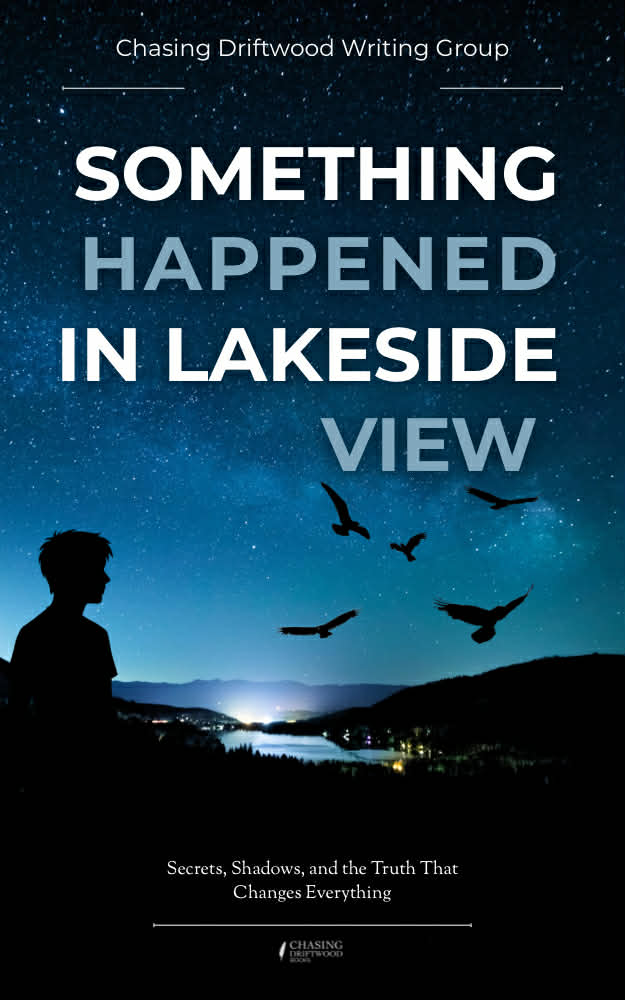
cover for the anthology my students have written! Links coming soon! Image is mine
I blogged last week about the endless editing facing me after writing so many books and having them at various stages of drafts. This always seems to happen to me! I write and write and write, start new books when I have not yet published other books, and then at some point I inevitably end up with a lot of editing jobs… A seemingly endless list of books and projects to edit.
The thing is, I might just be as obsessive about editing as I am about writing. It has utterly consumed me this week and I’ve managed to tick off two of the biggest jobs I had.
Something Happened In Lakeside View is an anthology of connected short stories penned by the children I work with and this week I finished the final edits. I am now in the process of setting it up for publication and hopefully this time next week I will have buy links ready for anyone interested!
Here is the blurb by the way:
Welcome to Lakeside View, a pretty little town much like any other. Or is it?
Scratch under the surface and you will find a place full of secrets and shadows.
A place full of darkness, magic, ancient curses and hidden horrors. Who would live in a town like this? Many people have come and gone and some have left behind their testimonies.
What happened in Lakeside View? Read on to find out.
This is an anthology of stories and poems written by the young people who attend creative writing clubs with me at Chasing Driftwood Writing Group.
It felt like a huge weight had lifted when I declared that editing job done! In fact, the whole project has been very time consuming to put together so I should, in theory, have some more time on my hands for a bit.
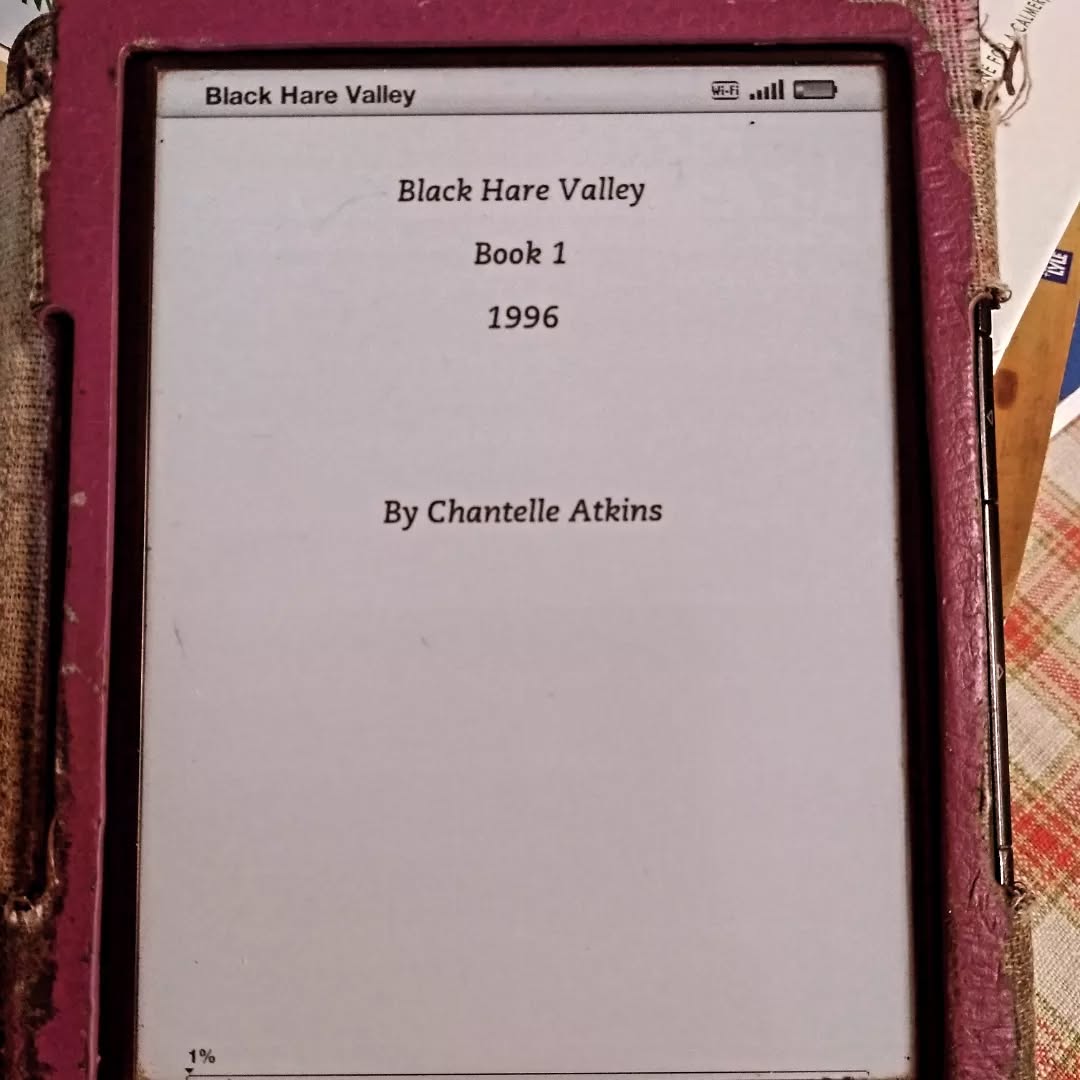
The second big editing job was going through my editor’s edits on Black Hare Valley Book 1: 1996. I also got this done this week! I am now doing a final proofread/check through on my Kindle to mop up any lingering typos. Again, it feels like a weight has been lifted with that big job done.
These two books are priority for getting ready to publish or setting up to publish, so that will now take precedence over any other editing jobs I have. However, I am still slowly going through the second draft, or read-through draft, of The Dark Finds You Part 3. I still have a lot of misgivings about this one… But reading through and making little changes is helping me figure out the problems it might have!
So, on it goes… But at least the big ones are done for now!
When it comes to endless editing that just cannot be put off, I tend to just get my head down and crack on with it. I’ve had my Kindle with me at all times this week, so I have been editing in the car while I wait to go into work, and I have been editing in the evening, and then editing again before bed when normally I would be reading or watching TV. There’s simply no other way to get it done other than just get on with it!
Ahh yes, the direct consequence of writing too many books in a row without breathing! I now have an endless list of editing jobs to get through! This is both good and bad. It’s good because it means more books moving closer to being publication ready. It’s also good news because I do kind of like editing…
It’s bad news because all this editing has to take priority and I am absolutely, unequivocally, not allowed to start writing any new books! It’s bad news because fresh new writing is without a doubt my favourite aspect of writing and I won’t be able to feel that again for a while. I do have some ideas for short stories based in the Black Hare Valley universe, however, so I will probably be able to satisfy the itch of writing with those and perhaps more essays and poems on Medium.
Below is the list of editing jobs I now need to focus on. As I write this, however, I have ticked the first one off. This morning I finished going through the edits for Black Hare Valley Book 1 from my editor. I will now send it to my Kindle for a final read through. I have also sent Black Hare Valley Book 2 to my Kindle and will tackle the fifth draft of that immediately after…
Yesterday, I also finished the Kindle edits of the book my writing clubs have written. I now need to amend those edits on the Word document before starting the process of setting the book up for publication.
Editing jobs:
Black Hare Valley Book 1 : 1996 – edits from my editor = DONE!
Something Happened in Lakeside View – a book my students have written, I am currently editing via a Kindle check through, then I’ll do final edits on the document
The Dark Finds You Part 3: second draft/read through edit to see what I actually wrote and determine if it is any good.
Black Hare Valley Book 2 : 1966 – this one now needs to be sent to my Kindle for draft 5/ read through/check edit
Black Hare Valley Books 3/4/5 : all also need to get sent to Kindle for draft 5/read through/check edit
The Dark Finds You Part 2: needs its sixth edit plus some changes I’ve recently decided to make, then it might be ready to go to the editor
The 7th Child – second draft/rewrite – I’ll get to this in a while but it will be more of a rewrite than a second draft so I am putting it off while the above takes priority!
Ugh, I feel tired just thinking about it all. But there is no point moaning! I did this to myself! And the sooner I get on with it, the sooner the books can all be published, the sooner I can start writing new ones!
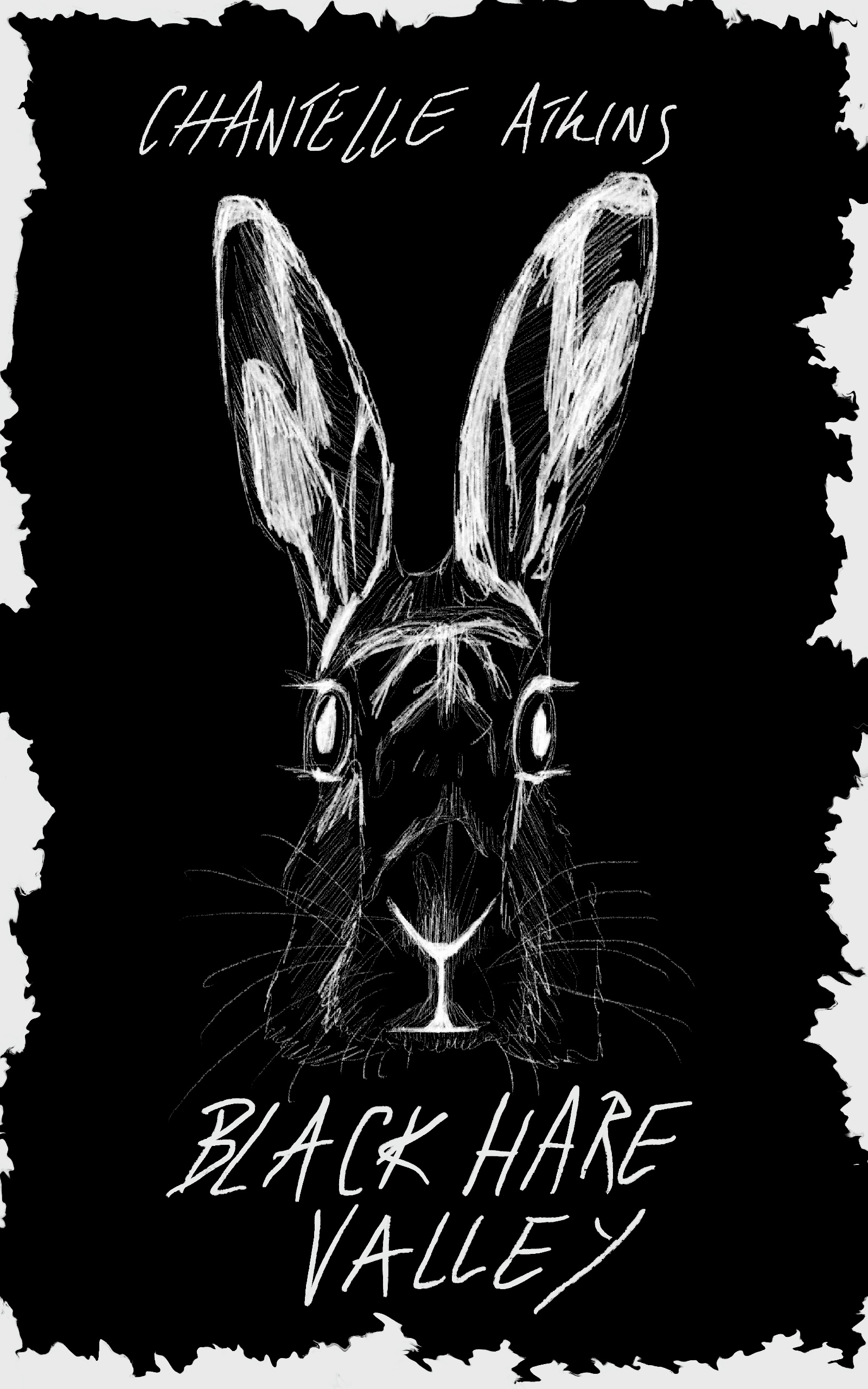
rough cover idea for Black Hare Valley – image is mine
If you’re a regular reader here on my blog you will already know that I tend to juggle multiple writing projects at the same time. I cannot seem to just focus on one book until it is published and then start the next one. Instead, I’ll have one ‘priority’ book which is closest to being ready for release, one that is written and going through various edits and drafts, and usually one I am writing fresh…
This often proves to be a huge headache and mildly stressful but I’ve accepted it. I think I am mostly driven by a haunting fear of dying before I write and release all the books in my head. I’m just trying to get the job done.
Anyway, my most recent release was The Dark Finds You – a gritty crime thriller connected to lots of my other books. It was supposed to be the final book in a shared universe, a crossover book which would pull together and tie up various character’s storylines with a brand new plot.
That was all great until I started reading the paperback proof just to check it and suddenly got a whole new idea for a part two! I could not resist and ended up penning that book over Christmas. It’s now awaiting its sixth draft, and of course, part two led me to part three… The Dark Finds You has become a trilogy. So much for tying up that universe! I guess I just love these characters too much.
That led me to a dilemma. The next book due to be released after The Dark Finds You was Black Hare Valley Book 1. I had planned to release it on May 1st 2026 and then spread the 5 book series out over a year or two. But it suddenly felt weird, interrupting one now unfinished universe to introduce a brand new, and very different, universe.
So, I decided to delay releasing Black Hare Valley for now and concentrate on getting The Dark Finds You trilogy done. Part Three has just been finished in the first draft and I figured within a six to nine month period I could get them up to scratch and publish directly after The Dark Finds You.
That seemed to make sense!
But last weekend I had another wobble and found myself doubting that decision. And I think I have changed my mind again…
The reasons for doubting the decision are as follows:
I’ve really been missing Black Hare Valley! I think this was acerbated by book one coming back from my editor with lovely comments and not too much work to do re editing my end. I just kind of want to get stuck in now and get it done. I’ve been thinking about these characters and missing them. I am genuinely looking forward to doing the edits.
I’ve had various doubts about The Dark Finds You parts 2 and 3… I think it’s just because they’re still quite new. I’ve 99% happy with part 2 and about 80% happy with part 3, but I’ve only just finished the first draft, so that’s to be expected. Usually I do the second draft and like the book much more than I expect to. This is probably just a little confidence crisis, but it makes me want to go back to Black Hare Valley until I can figure it out…
Towards the end of the first draft of The Dark Finds You part 3 I started to slow down. I just wasn’t feeling it the way I wanted to and I am still not sure why. A reluctance to write is unusual for me and normally means something is not quite right somewhere and I just need to figure out what it is.
I wonder if it really matters what order I release them in? Black Hare Valley is nearly ready to go, so why wait? The Dark Finds You trilogy might now be trickier than I imagined to get right and I don’t know how long that will take.
So, with all that in mind, I think I have decided to postpone release of the rest of The Dark Finds You trilogy and just get going with Black Hare Valley instead. I am not sure yet whether I will release all five books in the series and then go back to The Dark Finds You, or whether I will go back and forth between the two very different worlds!
 The Glorious Outsiders