Found Poetry For Reluctant Poets – Why It’s The Go-To Activity For Myself and the Kids I Work With

This piece was originally published on Medium!

Image by ShonEjai from Pixabay

Found poetry is one of my favourite activities to do with the young people I work with. It never fails to inspire even the most reluctant writers and it will usually lure in the children who are adamant that they hate poetry. Because I’ve spent a lot of time researching it, experimenting with it and preparing classes with it, it has quickly become my favourite type of poetry too.

There are a lot of reasons for this and there are many different types of found poetry. I will get to both these points in just a minute.

But for now, let’s quickly dive into what it is about poetry that puts people off in the first place. I can only approach this analysis from a personal point of view and from the things poetry-wary children and teenagers have told me over the years.

For me, and often for the youngsters I work with, poetry is something that is forced on them. I work with school children and home-educated children, most of whom also study poetry for English Literature and Language classes. It differs a lot — overall, the home-ed kids have a lot more say in their curriculum but often still have an aversion to poetry, whereas the school children have no choice in what they are taught. For this reason, poetry is forced upon them. They might grow to like it or even love it, but they don’t have a choice in studying it.

This in itself is often enough to put them off. I often encounter children in my sessions who just want to write what they want to write and don’t appreciate being dragged from their amazing story idea to focus on poetry they don’t care about. They are defensive already; their backs are up.

Also, some of the poetry inflicted on school children in particular is, lets be honest, hard to swallow. It’s been a long time since I was at school but I clearly recall studying poems that meant nothing to me and had no impact on me. In short, I could not relate to them. I often found them too long, too boring, too flowery and wordy. I was put off. If the words themselves had to be translated for me to understand, I was put off even more.

This isn’t the case for everyone and of course, there are some beautiful, in fact stunning, poems out there that deserve to be studied for centuries to come.

And this leads us to the second problem. Poetry can be intimidating.

We read things like Do Not Go Gentle Into That Good Night by Dylan Thomas, The Waste Land by T.S Eliot and She Walks In Beauty by Lord Byron, and we are in awe, instantly feeling we can’t compete, nor should we ever try. Poetry can be beautiful, engaging and life-affirming. Like all writing, poetry can change the world. It can certainly change your life.

When I ask young people why they don’t like poetry they usually give the same reasons I used to for not liking poetry:

It’s boring.

It’s inaccessible.

It’s intimidating.

It’s not relatable.

It’s hard. (This is the complaint I hear the most from poetry-averse kids!)

It’s too complicated/wordy/long…

The first time I really fell in love with poetry and felt like I could actually write it too was when I discovered Charles Bukowski. I had already read and loved some of his books so it seemed a natural step to check out his poetry and I was blown away. So much so that I have lines from two of his poems tattooed on my arms.

Reading Bukowski made me want to write poems — finally! Reading Bukowski made me feel like I could. Like poetry was for me too.

It was so freeing. Why? Because he didn’t care what anyone thought, he didn’t try to impress anyone, he didn’t even try to impress himself. He didn’t follow rules, he just wrote from the heart. That is my favourite kind of poetry and I’m always ecstatic when I discover pieces like that.

But let’s get back to found poetry and why it works so well for reluctant poets like me and the kids I work with.

Here are a few of the forms and briefly how to do them:

Blackout poetry — you find some old newspapers, magazines, unwanted books, posters, leaflets — anything you can get your hands on. You get a big fat marker pen and start eliminating words. You look for words lost and stranded between the chunks of black you are creating.

Magnetic poetry — a really fun form of found poetry. There are various themed sets you can buy online. I currently have a nature themed one and a horror/gothic themed one. They come in cute little boxes and kids can spread them out and see what words draw their eye. They can make list poems, haikus, anything they like, and it’s always lovely to see their faces light up when the magnets create something beautiful for them.

Haicubes — I have a set of these but we don’t just use them to create haiku poems, we use them for any type of poetry and sometimes even as writing prompts or story starters. It’s basically a huge set of dice with random words on and a few with themes. Kids can pile them up, line them up or pick random ones to inspire longer sentences.

Found poetry from the environment — there are two ways I approach this in my writing clubs. One, I bring in a bag full of words and phrases I have cut out of magazines, posters, leaflets and newspapers. I cut out anything that catches my eye and it is quite addictive. I like to have as many as possible. Some will be single words. Some will be whole sentences. Some are more like headlines or sub-titles. I spread them out on the desks and let the kids rifle through them. The idea is to pick any words that call out to them and see what that inspires. We have had some fantastic poems made this way.

The other way is to use the environment itself. This is fairly easy in the school building as there are posters and notice boards everywhere! They can wander around with a clipboard and pen, picking up words and phrases and writing them down. They then sit down and try to reorder them into a poem.

Cut-up/fold-up poetry — this is currently my favourite form of found poetry as you will see if you look through my poems on Medium! I discovered fold-up poetry about two years ago when researching ideas for my clubs. The one I came across asks writers to divide a piece of paper into four boxes. You write a list of everything you can see in one box, everything you can hear in another, followed by everything you can smell in the third and then in the last box, everything you can taste. You then try to pick at least two lines from each box, add to them, rework them if you like, and try to arrange the eight lines into a poem. It helps to try and pick out themes; for example, I was recently on a road trip and the weather was atrocious, so lots of my senses boxes had lines about the rain, how it sounded and so on. The poem ended up with a definite theme and I called it Driving Conditions. However, I have to admit that the fold-up technique using the senses can be quite tricky in a classroom or Zoom setting. So, since then, we have been making up our own boxes and breaking the rules.

We choose as many lines as we like, for example. Perhaps you get lines from each box or perhaps one box gets ignored completely; it doesn’t matter. The idea is to pick a strong first line and then see where it takes you.

You can title the boxes with anything you like.

Try writing things you love in box one, in box two write things you hate, in box three write things you fear, and in box four write things you dream of. You can change it up anyway you like!

Personally I always like to have a box with things I can hear in it and love writing these poems on long road trips. Probably because I can see and hear different things than normal on a road trip. The ‘hear’ one is a favourite of mine as we always have music on, and random lines will leap out at me and get written into a box. I try to pick the lines that could be said by anyone, as obviously you have to be aware of plagiarsm or copyright infringement. One of my lines in a recent poem was ‘I’d rather die’ which came from a Lana del Rey song we were playing. I added ‘love hurts’ in front of it and made a new line with a different meaning.

There are so many ways of playing around with found poetry and I think it’s incredibly freeing. You can approach the page with a blank mind and no ideas, because eventually you will find the words and the ideas floating around you.

For young writers who dislike poetry, this is a fantastic mode of persausion. They don’t actually have to come up with the words themselves; they just have to find them. Most of the time, I see this lead to a real increase in confidence with poetry, which is wonderful.

Check out a few of my found poems below and why not give it a try?

Wanderlust – a cut-up poem

excluded from running wild
never our land
check your barriers
and thank you for driving carefully
the road gets tough
mixing petrol fumes with coffee and cream
follow the white lines
across a patchwork land
praying the car won’t die
lights coming towards us
ignite our wanderlust
the sea, behind green hills
mist rolling down the valleys
love hurts, I’d rather die
so I carved out a quiet
little
life
for
myself

The Future Is Coming – a cut-up poem

Why do people ruin everything?
wildfires — no water
rusted, barbed wire coiled like snakes
sharp stones underfoot
but we cleared up the broken glass
falling over, getting splashed
this place is hungry
the current trickles under the fallen log
let’s trespass, let’s explore
what’s that noise?
The future — it’s coming
run

Mum, Am I Weird? Yes Darling, Because All The Best People Are

Image by Gerd Altmann from Pixabay

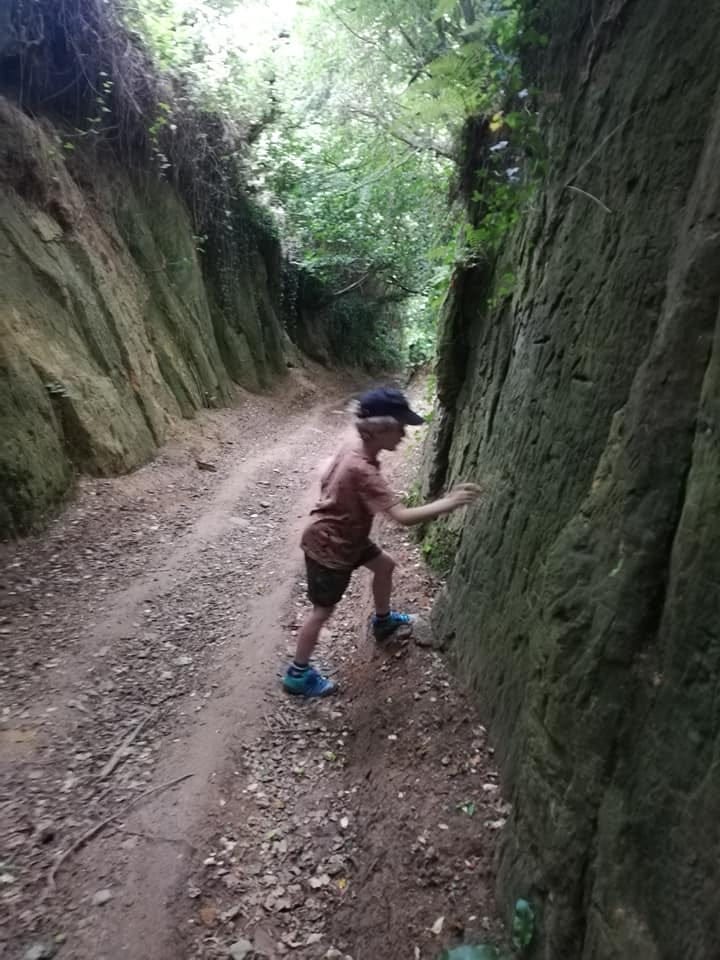
My son is nine and for the past few years he has often stopped mid-sentence and asked me this question: ‘Mum, am I weird?’

For the record, he isn’t overtly weird, well, not in my opinion. He gets on really well at school and finds it easy to make friends. He is known for being able to make people laugh and since he started school at aged four, his teachers have always told me that he is kind, empathetic and very diplomatic. I expect part of that is his experience of being the youngest of four children.

At home, however, he is free to let all his weird out whenever he wants. We all are. In fact, we often have conversations where we debate who is the weirdest in our family of six. Most of the time, they all agree that it’s me, but my youngest son is often next. Our ‘weirdness’ takes many forms and is often the source of belly-aching laughter and a fair amount of teasing. I think it’s what makes us, us and I wouldn’t change a thing. However, I suspect that at school, to be labelled ‘weird’ is not a good thing. I can recall that from my own schooldays. No one wants to be the weird kid. No one wants to stand out.

What things mark a person as ‘weird’? Often its the way they dress; perhaps in a wacky or eccentric or unusual fashion. Perhaps its their hair. Maybe its something to do with their social or conversational skills. Sometimes its because of their hobbies.

I don’t think my son looks or acts ‘weird’ in any way, and yet he keeps asking me this question.

I tell him he is eccentric, one of a kind, and memorable! When he was small he had a host of imaginary friends he would make up long and complex stories for. Even as a toddler he pretended to carry around a creature known as ‘Hock’ who sadly died one day when my son sat in the pushchair and squashed him. I tried to say Hock was fine but my son insisted he was dead and even carried his dead body home! I once caught him running a bath by himself for another ‘friend’ and at the dinner table he would have us all in hysterics with his stories about made-up characters. He even had accents for some of them.

My son is obsessed with music. When he was only one, he danced non-stop to Peter Hook from Joy Division at a local music festival. This was in the rain. He just kept going and going. At the same age, I videoed him reaching up to the CD player in the kitchen to turn the volume up on a song. I have videos of him dancing on tables, dancing at restaurants, dancing on holidays and rocking his highchair back and forth violently, yet in tune to the music! When he started nursery at three, he’d get a bit anxious on the way there, but if I played ‘Birds’ by Eels, he would cheer up instantly. As a newborn baby, I could only get him to sleep in the car if I played ‘Hold on’ by Tom Waits.

These days his favourite band is The Clash, but he is also obsessed with Tom Waits, Beck, Blur, Oasis, The Black Keys, Talking Heads, Bob Dylan, Bob Marley and many more! He has his own CD player next to his bed and falls asleep with a CD playing. He fills up notebooks with information about bands and singers and because he wants to be in a band himself, he has even designed his first four album covers.

There is absolutely nothing he does not know about Joe Strummer.

Yes, he is a little unusual. At home, he lets out his ‘noises’, as he calls them. He developed a habit of releasing strange noises sporadically during the Covid lockdowns. Home-schooling him was interesting and I often videoed him doing his work whilst making random noises and movements. I researched Tourette’s Syndrome and even spoke to a health professional about the possibility of him having it. Going back to school seemed to cure most of it and school have never seen or heard the noises we still sometimes get at home.

He gets very easily distracted and although he is almost ten, I still have to direct him with getting dressed, brushing his teeth etc. I have to tell him to do these things over and over again, as he will forget seconds after you saying it. He is so bright though, the sunshine in all our eyes, he lights up every room he walks into and has a beautiful habit of taking people under his wing if he feels they are a bit left out. He will then talk to them endlessly about music, but adults love this! Everyone comments on his unique personality. He can be hard work, but he’s so pure at the same time, there is just no malice in him at all.

He’s very creative, always doodling in various notebooks. Recently, while waiting to go into school, he whispered to me how interesting all the details were. I asked what he meant and he started pointing out things like the treads on car tires and the reflections in puddles. It was such a sweet moment. A few years back, we were driving to school and he was watching the world go by the windows and suddenly announced how the world was better when it was green. He was only little, but his words reflected my own thoughts, and I felt, as I always do, what good company he is. I always tell him he is ‘good value’. He asks what I mean and I say, you just give so much, I get more than I paid for! I can’t wait to find out what his future holds, yet it saddens me when he worries about being ‘weird.’

But as I constantly tell him, all the best people are!

All those singers and songwriters he idolises at such a young age, they were different too. I bet they often thought of themselves as ‘weird’. ‘Normal’ people don’t tend to be as creative. You’ve got to be a little bit weird to be an artist of some sort. I tell him it is something to be proud of.

And it is.

I know how weird I am. (No one else knows the extent of it!) But I love myself anyway. I’m my own best friend. I’m good company for myself. I couldn’t write books and poems if I wasn’t weird and eccentric….

I hope my son soon realises the same.

I wouldn’t change a single thing about him.

The Best Life Advice I Ever Had Came From A Character I Created: Prove Them Wrong, A Mantra For Misfits

This article was previously published on Medium!

It’s probably a bit weird to take life tips from a character you created yourself, but hey, I’m a writer, and we all know how weird they are. Besides, my characters are real to me. I talk to them every day, play their scenes like movies in my head at night, and yes, I take life advice from them. Why? Because they’re the best friends I never had and they’re right.  

Let’s jump back to the beginning.

Back to me, aged twelve: painfully shy, chubby; always the odd one out, at home, at school, or even just walking down the street. I was already addicted to writing and much preferred it to real life. Every day I’d run home from school, dash up to my bedroom, put on my favourite music and start writing.

At aged twelve, I had this one story I was totally obsessed with.

You know what it’s like when you’re a kid of that age and you really fall in love with a band? Or a song? Or an actor on TV? You obsess over them, paste their posters to your bedroom wall, watch everything they’re in or buy every album they release? They’re all you can think about?

Well, that was me and this story.

And I was kind of ashamed of it. My family and friends knew I loved writing and some of them vaguely knew what sort of stuff I was working on, but the gist of it, the details and, more importantly, the characters, were all mine. I felt very protective of them, like they were my guilty secret. The extent of my obsession was embarrassing to me.

I wrote the story aged twelve and it was the longest story I’d written so far. It was hand-written at the first, scribbled onto lined notepaper and held in a ring-binder folder. I showed it to my English teacher at school and got a merit certificate in assembly. I was very, very proud of it. When I saved up and bought my electric typewriter, I painstakingly rewrote it again and printed it out.

Oh boy, did I feel like a real author then!

I rewrote that book again and again. I just couldn’t leave it alone. I’d start other stories, sometimes very similar ones, but I’d always go back to that one. Every night I’d watch my characters in my head, listen to them talk and come up with more scenes. I did a big rewrite aged sixteen and another aged nineteen and finally, when I was in my thirties, I realised time was running out and I needed to get it done.

I rewrote it again, published it and before I knew it, it had grown into a five-book series which now has a spin-off book on the way. The series is also part of a bigger universe of inter-connected books.

So, you can probably see by now how obsessed I was with these characters and this story.

I guess, as a lonely, awkward, introverted weirdo of a kid, I found a way to belong. I built my own world and filled it with friends.

Anyway, on to the life advice.

There is a scene in the first book where my main character, Danny, is feeling defeated and negative. It’s partly because of his home-life and it’s partly because he and his friends have been stereotyped as bad kids and troublemakers in their town. Because of this, when he and best friend Michael try to secure lawn-mowing work to make their home-lives easier, they are refused by everyone they ask.

Both boys have a rough time at home. Both struggle at school. Both are obsessed with the music of the time. (Early nineties.) They are the best of friends and throughout the series they go through some incredibly difficult, scary and dark times together.

Through it all, Michael is always the positive one. The optimist. Danny suffers from darker thoughts and is drawn to self-destruction.

When complaining about his life, his family, and the posh people in town who won’t let them cut their lawns, Danny is at a very low ebb. He is feeling miserable and thwarted by everything.

Michael teases him, laughs at him and tells him to stop complaining.

‘Prove them wrong,’ he says.

Three simple words but they have stuck with me ever since. Three simple words that I wish someone had said to me when I was a confused and troubled teenager. Three simple words I put into the mouth of a fictional character created in my own mind. Three words I live by every day.

Prove them wrong.

In many ways, those three words form the main theme of the books. I didn’t know that at the time, aged twelve. They were just the type of words that Michael would say to cheer Danny up. But throughout the books, Michael stays true to his advice and refuses to give up on Danny until he believes it too. If they think you’re a troublemaker, he says to Danny, prove them wrong. If your mother thinks you are stupid, prove her wrong. If this town thinks you will never amount to anything, prove the whole damn place wrong. 

Prove them wrong. I think about those words all the time. Its not about revenge or holding grudges, it’s about holding your head up high and sticking to your values, your beliefs and your dreams.

When I was a kid, people tried to talk me out of being a writer. People laughed at me, ridiculed me and didn’t believe in me. I was an extremely sensitive child and by the time I entered my twenties, I had given up on writing. My dreams had been eroded by real life and the pressure to be sensible and get a real job.

I didn’t allow myself to think much about writing, but every time I did, I felt so sad and hollow inside, like a chunk of what made me who I was had been clawed out.

It took a while, but Michael’s words, his advice, eventually won me over. He was right all along, after all. When people think badly of you, look down on you, judge you or laugh at you, the very best thing you can do is prove them wrong.

Do it anyway.

Do it for you, so that you can smile when you think of the thing that you love, the thing that defines you, the thing you would always rather be doing, the thing that makes you, you.

Do it anyway and prove them wrong.

Throughout my life that has been the perfect mantra for a misfit like me.

Thanks for reading! If you are interested in Michael’s advice and the story behind it, here is a link to the first book in the series. Please note that I am currently revamping this series and adding fresh front matter to the books with a suggested reading order for the connected books in this universe. That should not impact your enjoyment should you read them now though!

https://amzn.eu/d/cYlh2AQ: The Best Life Advice I Ever Had Came From A Character I Created: Prove Them Wrong, A Mantra For Misfits

My Medium Experience Updated Plus Top Tips For Success

Image by Anna from Pixabay

Two months ago I posted about my experiences on the writer’s platform Medium, so far. To briefly recap, I first joined the site in April – finally giving in after other writers had been suggesting I try it for some time. I signed up to the paid membership because I knew if I didn’t fully commit, it would fall off my radar and get ignored. Knowing I was paying five dollars a month to the platform would, hopefully, encourage me to be active.

It did, though for April and May I was very quiet – time was spent just adding my About Me story and reading and researching publications that would be a good fit. You need to reach 100 followers to meet the Medium Partner Programme criteria, so that was another incentive to read, follow and comment on other writer’s work. I was pleased to discover there are many excellent writers on the site and it was not the chore I had envisioned reading and enjoying articles. I got to 100 followers by August and received my first payment from Medium in October. This was just over two dollars and was payment for what I had written in September.

In November my payment was just over eight dollars. At this time, I was enjoying the platform so much, I hadn’t actually examined my stats page yet. However, when I received a payment in December for $189 dollars, I was astounded! Luckily for me, I had been boosted in October, and again in November. Your story, if written well and received well, may be chosen to be boosted by the editors of the publication you had it published in. Looking at my stats, it’s obvious that while some of my poems and pieces of flash fiction have made me a few cents or a few dollars, my boosted pieces have made me a lot more. So, the trick is to get boosted if you can, but I’ll come to that in a bit.

I didn’t expect my January payment to be the same but it turned out to be even more. I was paid $249 dollars which is around £193. Amazing! Looking at my stats, I was reminded that in December I was boosted three times.

So far in January, I have published eleven pieces and obviously, my aim was to get boosted again if I could. I was delighted to discover I was boosted just last week! Now, that doesn’t automatically secure me a large payment. It still needs more reads and responses and at the moment it has less than my other boosted pieces.

The stats page is fascinating and I am learning more about Medium every day, but here is a quick run down of my top tips so far!

  • Once you’ve reached 100 followers and posted a certain amount of content, you can start getting paid so this is when you need to start paying attention to your stats if you haven’t already. It shows you how many reads, views and responses each published piece had and it shows you how much each piece earns you. This should help unravel the mystery of why some pieces make you more money than others.
  • I suggest submitting to publications. That is what has worked for me so far, but I am sure other writers might say different. There are millions on there so it’s just a case of looking for writers and content that are a good fit with your own. For example, I like writing about women’s issues such as motherhood, family relationships and the perimenopause, so Modern Women is a great fit for me. There are other similar publications and you can ask to write for as many as you like. In terms of poetry, I am a writer for three poetry only publications, and two that are a mix of poems, stories and articles. I submit to particular ones depending very much on the style, format and content of my poem.
  • Research the publications! Very important. Read as many of their published pieces as you can. Get a feel for their writers and their readers. Check their submission guidelines very carefully. Once you feel your work would fit in, ask to be a writer and hopefully you will be added. Some are stricter and fussier than others. Very large publications obviously have a bigger readership but I assume that makes it harder to be boosted, I’m not sure. At the moment, I am satisfied with how it is working out for me in the eight smaller pubs I write for. At some point, I may try getting added to bigger ones but at the moment, its not a high priority. I am still finding my way and don’t want to give myself too much pressure.
  • Make sure you format correctly! Publications have specific requirements but formatting your title and sub-title correctly are universal, so remember to do that. You simply highlight the first letter of your title then click on a big T to make it a title. For the sub-title, you do the same but click on the smaller t. You then need to add a main image and it gives you an option to upload one of your own, one from Unsplash or one from elsewhere. Make sure you credit it and make sure it fits with your piece and draws the reader in.
  • Pick alluring titles that make people curious to know more. My boosted titles so far have been: Less Is more: The Most Important Lesson The Perimenopause Has Taught Me; An Emotional Haircut: At Age 45, I Finally Like My Hair (my most read and highest paying piece!) I Was The All-Seeing Eye: But Who Saw Me? ; Take It From A True Cry-Baby: It’s Far Healthier To Let It Out Then To Keep It In; One Toothbrush: A Tale of Days Gone By (previously published on this blog!); and finally, I See You, Single White Eyebrow Hair: And You Don’t Scare Me At All (again, previously published here, updated, shortened and reworked for Medium.)
  • Make sure you send your piece to the right publication! Know your pubs and know them well.
  • Leave it overnight before submitting – I’ll write a piece, read it through, edit a bit, read it again and then leave it overnight. The next day I will always find bits I want to sharpen up or edit.
  • Be authentic and write from the heart – This is just what has worked for me so far. When I look at my boosted pieces, and other articles or poems that have done well on Medium, I can see a common thread; writing from the heart. I would say my style and content on Medium is exactly the same as it is here on my blog. My essay style pieces are usually about life, relationships, obstacles, mental health, parenting, etc. I write from the heart, I write as me. I don’t try to be anything I am not. I don’t try to impress anyone. Writing advice style articles are popular but there are so many… I’ve earned a bit from these sorts of pieces, but the ones that have got me the most views and earned me the most money are the universal ones, the ones people can relate to. It works both ways. The pieces I am more likely to comment on or highlight are the ones I can relate to. Everyone wants to feel understood, after all. So, if you’ve got something to say, a point to raise, a life obstacle to discuss, then do it.

I am still learning a lot about Medium and I’m sure I’ll update my progress again at some point. I can definitely see it as something I want to stick with though – something I am happy to devote time and energy to.