How To Find Hope In A World Falling Apart

I was contacted this week by a younger writer who wanted to know how I was able to keep writing when dealing with my own doomerism. In case you are not familiar with the term ‘doomerism’, it basically describes people who have a fatalistic and pessimistic view of the future of humanity. I’d never heard of the term but it makes perfect sense, particularly for younger people. It’s all right for the rest of us, isn’t it? Chances are, if you’re over forty, you’ve had an education, found a partner, maybe had kids, you have a home and a career and if the whole world ended tomorrow, at least you had a life for a while. At least you had the chance to experience a certain amount of things. Younger people quite rightly fear that they won’t get the chance. Everywhere you look, everything is very bad. For creative people this can be a real problem. How can you sit down and write poems or stories when you’re convinced the world will end before you get a chance to share them?

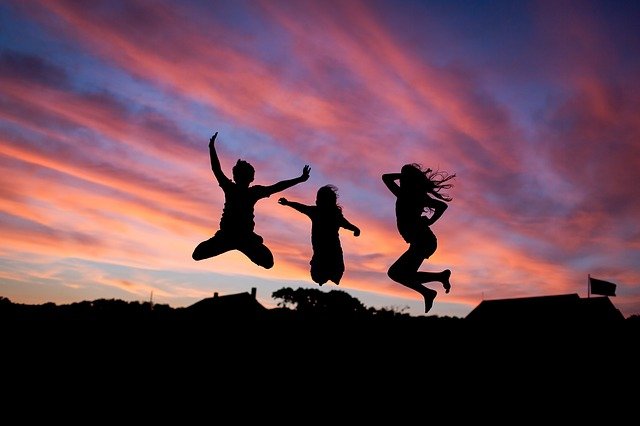
Image by Dorothe from Pixabay

To answer this, first of all let’s take a quick look at the reasons young people are experiencing doomerism.

  • Climate change – probably the biggest concern for young people today. This summer has really brought it home. Wildfires, droughts, water shortages, crop failure… These things are happening and happening on our own doorsteps. The UK is having its driest summer since 1935 and recently broke the record of highest temperature recorded when we tipped over 40 degrees. We are used to being a wet green country, not a parched dry one. Many counties here have hosepipe bans and restrictions in place and although some rain has now arrived, the dry weather is predicted to go on until October. We had a dry winter last year and if we get another one, we are in real trouble.
  • The cost of living – another worldwide issue, but one that is really affecting people right now where I live. One of the big supermarkets is about to introduce a buy now-pay later scheme for food shopping. Seriously. Wages are falling as inflation is spiralling. It is becoming impossible here for young people to rent a home, let alone buy one. Our money is not even stretching to cover the basics which means more and more people are working just to live and life should not be like that. It’s depressing. Especially for young people.
  • Fuel crisis – whichever way you look at it, we are in trouble. The big companies are raking in record profits while UK households are seeing their bills soar to levels that will be simply unaffordable for most. The war in Ukraine has added to the problem with some European countries planning to ration gas amid fears of power shortages and cuts.
  • Threat of nuclear war – We haven’t been this close to possible nuclear war since the 1980’s and it’s terrifying.

I could probably go on! But I think the list above covers the big ones and hints towards their implications such as food shortages, famine, decimation and extinction of wildlife, recession…

So, not a lot to feel hopeful about maybe? And how the hell could anyone put pen to paper with all this fear running around their head? I mean, with this shit to look forward, why put an effort into anything? It’s all pointless, right?

Nope.

Not to me. And here is why.

  1. You are alive. Whether your life is what you imagined or hoped it would be, whether everything feels hopeless or not, whether you are rich or poor, fat or thin, tall or short, you are alive. You exist. You are here. You didn’t get flushed down the toilet, you weren’t lost to a miscarriage, you didn’t die in the womb or when being born, or as an infant. None of us know how much time we have here but while we have it, we ought to grab it with both hands and make the most of it. Easier said than done, I know, but every now and then just think about it. You are alive. You are the only you. No one else like you has ever existed and no one else ever will. You are a one off.
  2. You are young. A lot can happen in a short time. A lot can happen in a lifetime. It sucks to be born in such a turbulent times but people have been born in worse times. Don’t let it beat you. Refuse to. Fight back any way you can. Be resilient. Be tough as hell. You deserve a life and to be happy just like the rest of us. You haven’t got it as easy as previous generations but you can change it.
  3. Economic and societal systems change. They have before and they will again. We are currently, in my view, at the end stage of capitalism. It’s eating itself and destroying the planet and it can’t go on much longer. But we used to live under other systems and we can do again. Nothing stays forever. Everything has its time and then time moves on. I think we are in for a lot of chaos due to capitalism, what it has done to the planet and to us, but something else will emerge because it always does.
  4. It gets worse before it gets better. I truly believe this. Sadly, humans seem to have to let things get really, really bad before they wake up to what is going on and start to demand change. That’s far harder when the establishment control most of the media but eventually people’s lives become so opposite to what the media is peddling, that they realise they have been duped. This is happening right now with people waking up to the fact energy and water companies should never have been privatised and run for profit. It might take a while to change things to help people, but it all starts with public opinion shifting and it is.
  5. When things are scary, knowledge is power. I like to know what is going on so that I can prepare for the worst case scenario. I’m not exactly a dooms day prepper. I don’t have an underground bunker, weapons or a hazmat suit stashed in the wardrobe, but I do like to be prepared as much as I can. It makes me feel better, less helpless. When Russia invaded Ukraine and there was fearful talk of a nuclear war, I started researching how to survive one. I keep a survival notebook full of tips on how to find water, filtrate and sterilise it, different ways to start fires, build shelters, and so on. I add to it all the time. Anything that might be handy. I buy more basic foods than I need just to keep up a good supply. It might be useless, it might be nowhere near enough, but it is something and it is better than doing nothing because it makes me feel less helpless. One major thing everyone should get to grips with right now is growing their own food and collecting their own water. Hopefully this record breaking summer has woken people up to that.
  6. Words can change the world. Think about the power of words and books to change the world and shift opinions. It’s staggering. Stories are what bring us together and stories help humans interpret the world and respond to it. Writing and other creative pursuits are so important during difficult times. As a writer, you have the power to hold a mirror up to society and let people know what is going on.
  7. Writing is therapeutic. It really is! But you have to do it and commit to sticking to it to really feel the benefits. If you give up on writing or allow doomerism to put you off and consider it pointless, then you’re going to feel even worse. Writing can help you, so let it. Write about your fears, your hopes, your anger, your disappointment. Pour your thoughts, emotions and dreams into characters and stories that will carry the weight for you.
  8. Writing allows an escape. Just like reading, when times are tough, writing allows you an escape into another world. I love my other worlds and I feel the longing to escape to them whenever I’ve had a stressful day. Those worlds are your creations and you can control them and vanish into them any time you like.
  9. Don’t lose hope. Despite everything, we have to hold on to hope. Sometimes it feels like the world is full of bad people and not worth saving but I think tough times bring out the best in people; something more primal and ancient emerges when our backs are against the wall. I always remember a quote I once came across that said whenever you see a tragedy, look for the people who are helping. It’s simple but true. Cars crash on the road, people stop, phone the emergency services, run in to help if they can. Natural disasters occur and people rush in to save strangers. Everywhere that something terrible happens, you will see ordinary people helping others. It is in our instincts to help and protect each other and I still believe that most people are good.
  10. Fight back. Join a political party that shares your concerns for the future. Volunteer, spread the word, or just bring up the conversation with your family, workmates or in your place of education. Conversations need to be had about where we are all going so why not start them? You might just make a few people think about it for the first time. In short, if you give up, the bad guys win and we can’t let them do that.

I hope this is a helpful list to any young people feeling understandably anxious about the future right now. Is there anything you would add to it? Feel free to comment and share!

One Toothbrush – A Tale of Days Gone By

At my mother’s house, there is just one toothbrush in the bathroom. And I think about that a lot.

I noticed it a few months ago and it hit me hard. I haven’t been able to stop thinking about it since. It’s become a sort of marker in my mind of life, death, time and family. I realised that one toothbrush is my future.

My mother brought up four children, five if you count the one that wasn’t even hers. At one time she would have brushed her teeth at the end of the day, weary, perhaps frazzled, and there would have been seven brushes in the pot. Then six. Then five when my oldest sister left home. Then four when my father left. Then three, two and then finally, one day, (surely a day that was hugely significant and heartrending for her, but didn’t seem to register at all in my mind…) there was one.

And one day, this will happen to me. Assuming I outlive my husband, after all my children have grown up and left home, it will be just me. Where once there were six toothbrushes, there will only be one. Mine.

And now I think about this every time I brush my teeth and look at their brushes, one less already since my eldest left home for University. One less again when my next daughter leaves in September… One by one, they will all fly the nest and one day, it will be just me.

I think about how that will feel…

Sometimes when I’m really tired, when the demands have come thick and fast, when I crave just a few peaceful minutes to myself to pull myself back together, I look forward to being alone. I’m quite a solitary person and I don’t mind my own company at all. As the years go by I find myself becoming even more introverted, and even less likely to socialise or mingle with crowds. I imagine what it will be like to wake up to a quiet, still house. To go to sleep at the end of the day alone. Sometimes it doesn’t bother me at all. Other times, it fills me with shock and dread. Shock because it slams home how short and fleeting this one life really is, and dread because I sometimes feel motherhood has defined me, so who will I be when they have all gone?

I guess I will find out, just like my mother did.

That single toothbrush caught me off guard. Made me see my mother in a new light. I had never stopped, not once, to think about how she must have felt as we one by one drifted away. I had never, until that moment, stopped to wonder if she ever feels lonely, living alone. Waking up alone, going to bed alone. I felt a surge of guilt and then a surge of fear. That solitary toothbrush stood for so much. A life lived in love, giving more than taking, nurturing, protecting, feeding and clothing and then at the end of it all, sitting alone in a small house, with one of everything.

I wonder how often she looks around and thinks there used to be lots of pairs of shoes in the hall, lots of coats on the hook, lots of mugs in the cupboard, lots of voices and songs and footsteps and calls in the night. I wonder if she wakes up in the morning and thinks, what shall I do today? Who needs me? Is it liberating or lonely? Or both?

I will one day find out.

I have loved being a mother. But I have also understood that a big part of being a mother is learning to let go, almost as soon as you hold them for the first time. They grow so fast and growing is always a form of leaving. They start to crawl, then walk, then run. One day they pull their hand out of yours in case their friends see. One day they tell you not to kiss them in public anymore. One day they ask if they can go out on their bike without you. One day they leave home and you have no idea where they are or what they are doing most of the time, and you have to live with it. Because they have to do it.

At the moment, my eldest is almost twenty and living in another country. I miss her but I want her to do exactly what she is doing. My second eldest will be leaving soon too. My household will shrink again. My eldest son will be going into his final year of school next month and will be making decisions about what he wants to do with his life next. He doesn’t need me for much these days, but I am very lucky that he does still want me. My littlest baby is no longer a baby, no longer so little. He grows taller every time he walks in the room. He has started to strive for independence lately; taking showers by himself instead of me running him a bath, riding his bike down the lane alone, rushing ahead of me to prove he can do things. It’s even harder letting go of the littlest one, but let go I must.

And what I must also do is prepare myself for the time when they have all gone. When I wake up to a quiet, still house just as my mother does. When I go to bed alone and hear no voices or footsteps in the night. For a time when I barely have to run the washing machine. For a time when I only buy the food that I like. For a time when I no longer walk around the house picking up stray shoes, bags, books and toys. For a time when I don’t find random piles of stones and sticks in strange places. For a time when at the end of the day, there is just one toothbrush and me.

I hope the way I feel is pride tinged with sadness, a dose of nostalgia mixed with relief that my time is my own. Imagine how much more writing I will get done! I hope this is how my mother feels at the end of the day when she reaches for that solitary toothbrush. I hope she feels a surge of pride for bringing us into the world and then sending us on our way, fully equipped. I hope she knows it was a job well done, despite the hard times and tough times. I think that I should tell her how hard that one toothbrush hit me, how much it made me think of the speedy retreat of days gone by.

The Most Important Writing Rule

There are so many writing rules out there and plenty of disagreement about which ones are worth adhering to and which ones should just be ignored. Some of the most famous ones are the ‘write every day’ rule and the ‘write what you know’ rule – both of which are widely misinterpreted! But there are plenty of others too and new ones pop up all the time. But I think the most important one has been forgotten somewhere along the way.

Writing is hard. It should be hard because anything worth doing, anything with the potential to change the world, shouldn’t come too easily. Writing is something you work at. Natural talent helps a lot but all writers improve the more they write, and all writers should be keen to improve their craft as they go along, acknowledging their weak areas, feedback from readers and professionals and so on.

What I’ve noticed lately though is that ‘writing is hard’ seems to dominate the writing community more and more. I see a lot of negative memes and posts about writing and it worries me. Writing is hard, don’t get me wrong. From that clumsy first draft where you are crawling through the dark trying to find the plot, to those final, tedious proofreads and edits where you think you will go crazy if you ever have to read through this thing again. Writing is hard because the right words don’t always come easily and writing is hard because sometimes characters take a while to become fully realised and alive. Writing is hard because marketing and advertising are expensive and not within everyone’s reach. Writing is hard because all too often your nearest and dearest don’t support your book babies. We get it. Writing is and should be hard.

But we are forgetting the most important thing, the thing that makes writing less hard and less all of the things mentioned above! Writing should be fun! Writing should be enjoyable. Writing should make you feel better about being human and living in this world. If it’s not fun, not enjoyable, why the hell are you doing it?

I have to admit, I just don’t understand it when I see so many writers moaning about how hard it is to write and how they procrastinate for hours or days at a time, how they have to be dragged kicking and screaming into their writing chair. There are so many memes out there that seem to suggest writing a book is nothing short of torture…

I just don’t get it…

If it feels that bad, if you hate it that much… why are you doing it?

When did the joy of writing and creating worlds get eroded? It’s tough out there, believe me, I know. Low sales and reviews can be soul destroying and jealousy and imposter syndrome creep in when you see other writers doing better than you. No doubt there is a tough side to this. I often say I could happily give up on the publishing and selling side of books, because that is the toughest bit, but the writing bit? Hell no! Not ever… You would have to drag me kicking and screaming from my writing desk and you still wouldn’t win.

Image by fancycrave1 from Pixabay

Writing should be joyous, freeing and life affirming. I couldn’t do it if it made me feel worse. Real life is there for that! Writing is the escape… The chance to disappear and build your own universe, create heroes and villains, twisty plots to make your readers gasp and endings that are just too perfect. It’s not easy, but it should be fun. It should be more than fun. It should be utterly glorious. It should be something that excites you, something that makes you long for the moment you sit down and write…

In all the disappointment, self-doubt, endless edits and fruitless marketing, let’s not forget why we started this. Let’s not forget why we write. The most important writing rule in my opinion is it ought to be fun.

Creating A Universe

Writing is fun, challenging, therapeutic, cathartic and exciting for many reasons, and I have posted before about why I love writing so much. But I was thinking the other day about something that has begun to happen by accident with me and my writing. And that is creating a universe.

Now, if you are writing a fantasy, sci-fi, dystopian or even a horror story, then you’ll be well aware of the need to create a universe. What do we mean by universe? By ‘universe’ we mean a fictional world made up of locations, events and characters that differ from this world.

Image by WikiImages from Pixabay

As you can see, this makes perfect sense when writing in certain genres. You need to create a specific world because your story is not set in this one. However, creating a universe within writing can also mean something else. For example, stories set in the same town or place, whether real or imagined, or stories using the same characters but in separate stories, or characters that cross over from one story to another. Think of spin-offs, for example!

This is something that has happened quite by accident to me. Most of my books now exist in the same universe to some extent. And the universe keeps growing.

Out of the fifteen books I have published, eleven of them are set in the same ‘universe’ and are in some ways connected to each other. These books are The Boy With The Thorn In His Side 5-part series, The Mess Of Me, Elliot Pie’s Guide to Human Nature, the Holds End trilogy: A Song For Bill Robinson, Emily’s Baby and The Search for Summer, and This Is Nowhere.

This Is Nowhere is slightly different because it is the only book I’ve written where I’ve kept the locations real. It is set where I currently live and I have used the same houses, streets and other locations and kept everything as it actually is in real life. However, it does connect to the other ten books mentioned because the location is used for part of the story in Elliot Pie’s Guide to Human Nature, and one of the characters lives next door to characters from This Is Nowhere.

So, how do the other ten books exist in their own universe? The main way is through location. In all those books I have mostly used places and locations that actually exist and I have changed the names, or fictionalised them. For example, I used to live on a council estate called Townsend. In A Song For Bill Robinson and the rest of the trilogy, I’ve changed the name to Holds End but kept most of it the same. In The Boy With The Thorn In His Side series and the Holds End trilogy, I use a location called Belfield Park. This is loosely based on an area nearby known as Boscombe. In The Boy With The Thorn In His Side series and in The Mess Of Me I created a seaside town called Redchurch, which is pretty much a fictionalised version of my area, Christchurch.

I didn’t create this universe intentionally, but linking up my books in different ways has always been really enjoyable, and those links just keep getting stronger. For example, when writing The Mess Of Me, I thought it would be interesting to have the main characters mention and discuss the violent incident that happened between Danny and his stepfather, Howard, in The Boy With The Thorn In His Side books. The Mess Of Me is set after this series, but the incident happened locally to them and Danny is somewhat of a legend or hero in their area. He even went to the same school as them and scratched his name into a park bench they know of.

Elliot Pie lives on the Holds End estate, and is actually a neighbour of Bill Robinson and his family. Elliot’s mother pops up briefly in Emily’s Baby, and Bill is seen by Elliot striding away from their street with his guitar on his back. Elliot also travels to Redchurch and Belfield Park in his story, as well as Hurn, which is a real place (my village) and is the main location for This Is Nowhere. In my upcoming four book series The Day The Earth Turned, I have used Hurn and Christchurch as my main locations, and have changed Hurn to Heron and Christchurch is again, Redchurch.

I find it makes it easier for me to fictionalise locations I already know. It’s easier to describe them and get across the tone of them if they are places I am familiar with, but fictionalising them makes it even more fun. I can add things that are not there, for example, things that I need in my story, and I can play around with them and bend them to my advantage. I usually change the names, though sometimes keep them the same. For example, Barrack road in Redchurch is mentioned in a few of my books, and this is a real road.

The universe also contains infamous places such as Chaos, the nightclub Danny discovers in Belfield Park when he is a teenager. It plays a large role in the series, and eventually, as an adult, Danny becomes the DJ and owner of the club. In the Holds End trilogy, Chaos is mentioned as the club to play in if you are a new band and want to try and get signed. Bill Robinson’s band eventually get an audition, followed by several gigs at the club, which plays live music on certain nights. They even meet an older version of Danny, who appears briefly in a few scenes.

As you can imagine this is tremendous fun. I love all my characters; they are in fact my best friends. To play with them and move them around this fictional universe I have accidentally created, is the best thing ever. It is starting to feel like a real place, a separate place I can go to when this world creates stress or anxiety. At the moment I am working on the spin-off book to The Boy With The Thorn In His Side series, so I am in my element and quite addicted to it.

I’m back in the same universe, with some of the same characters and events, and of course, places like Redchurch, Belfield Park and Chaos are all popping up here and there. It’s like having a secret place that is all mine, that I created and am in complete control of. There is something really quite special and exciting about that.

This universe doesn’t have a name. I guess it is just Chantelle’s world, where most of my characters live. There is another universe on the horizon though. I created a town called Black Hare Valley when I recently penned the first draft of a YA supernatural story. It’s having a rest at the moment, but I am very keen and excited to get back to it when the time is right. It really is very separate and different to my other universe and I can’t see any way these characters could link up or cross over with my others, but I do feel like the Black Hare universe could continue to grow. With this one, it would be through time. I have vague plans, depending on how things go, of course, to eventually extend this story with prequels and sequels, set in the same town, the same universe, but at different points in time.

I’m still learning a lot about creating a universe in writing, because I only recently realised that’s what I have done. My top tips so far would be these:

  • be consistent. When writing a new story set in the same universe, you are going to need to go back to the old ones and check you are keeping location, road names etc the same
  • keep an eye on the timeline. For the same reason you need to keep track of place names, you need to make sure events happen at the right time, if you have already mentioned them in other stories.
  • read through previous stories to remind yourself of the characters and to get a feel for them again if they are going to show up somewhere else
  • don’t link up stories or characters for the sake of it. There has to be a point to it, for example, it made sense for Danny to appear in Holds End because Bill is a singer and Danny’s club hires live bands
  • make sure each story works just as well on its own. It is great fun creating a universe where the same characters can link up or appear in each other’s lives at different times, but each story has to stand on its own two feet as well… I’m very conscious of this at the moment with my spin off book. These characters showed up half way through book five and we only had a glimpse of their personalities and back stories. In this book we are seeing how they ended up at that point and got mixed up in Danny’s criminal activities, so there is a lot more back story and character development. And although there are scenes that cross over, I am writing them purely from these characters points of view, as this is their story, not Danny’s.

I hope you’ve enjoyed hearing about the universe I didn’t realise I was creating! Has this ever happened to you? If you write, do you enjoy linking your stories up in some way? If you’re a reader, do you like it when you find books that are connected to each other by location or character? Feel free to leave a comment!