Disconnected (everything is a bit shit…)

I would apologise for the sweary title but I’m afraid I’m not going to. If you’ve read any of my books you probably don’t have a problem with swearing, and if swearing offends you, you obviously won’t read this post. It makes me laugh when people say swear words show a lack of vocabulary. That is missing the point entirely. Swear words exist for impact. An ‘oh dear’ is just not going to cut it sometimes. A ‘damn’ or a ‘for goodness sake’ is just not going to help. Have you seen the world lately? I rest my case. It’s not just bad, unfortunate, problematic or sad… it’s shit. Very, shit. With that out of the way this is a post about our recent long break from power and WiFi…

On the day Storm Eunice was due to hit I made all the necessary preparations. I made sure everything was secure in the garden, moved anything that might get knocked over and tied things down. Inside the house I charged up our phones, laptops and our battery pack. I made sure we had wood for the log-burner and dug out our supply of candles. We knew, living here, that we would get a power cut. And we did. Before it even got really windy, our power went out on Friday morning.

Image by khaase from Pixabay

We expected maybe a 24 hour cut, maybe something a little longer as the storm continue to batter the country, quickly followed by two more, but we ended up without power for 5 full days. Most of the village was affected and by day 4 the Salvation Army had set up a tent in the area to provide people with hot food and drink.

We were more fortunate than others as we have a gas oven so could boil pans of water for hot drinks and were still able to cook our food. Plus we had the log burner to keep warm. It was half-term though so the kids were home from school and were definitely struggling by day 5 without the technology they have got so used to.

The hardest part for me was the lack of light. Workwise I didn’t have any clubs that week anyway. I couldn’t market my books, blog or do anything much on social media unless I paid for more phone data. I kept myself busy by starting to write a new book. I have a few ongoing WIPS but they are all on the laptop so I had to start something new and it really kept me sane. I picked up a notebook where I had ideas, character bios and a map for a future story and just started writing it. It soon became an addiction and I’ve almost written half a book now! I felt I was better able to cope than the kids as I am old enough to remember the world without social media, phones and Netflix. I read and I wrote a lot but that got hard after dark. It doesn’t matter how many battery operated fairy lights you string up or how many candles you light, you still can’t see well. I ended up writing with fairy lights around my shoulders to light up my page!

We got by by playing a lot of The Walking Dead monopoly, and by listening to the radio. They were both life-savers, as was the power pack that charged our phones up a few more times before it died. The frustrating thing was the lack of action getting us connected. We could see that a tree had split on the bridge near our house and all the cables for internet and power were dangling in the river, but days went by before anyone arrived to assess it. We had no communication from the power companies either so we had no way of knowing when it would be fixed. By day 5 I really had had enough and when it came back on, we all jumped for joy. Then we realised that fixing the internet was another whole problem…

We ended up having 2 weeks without the internet. Lots of neighbours were back on but three of us were affected by the cables in the river and nothing seemed to get done about it. It was tough because all the kids have homework set online these days and my daughter is in the final stint of her A-Levels so was getting stressed about lack of access. They had to go to other people’s houses to work and I even spent one morning at a neighbours house catching up on emails, banking and so on. I also had to cancel my Zoom clubs for that week. A lot of us in the area were appalled by the lack of communication and action from the companies involved. It’s very complicated to even work out what company owns what lines or what bit of pavement. One company kept telling us there was a not a fault, even though we had no power, and this was apparently because another company had not told them there was a fault. They blamed each other and we couldn’t seem to get anywhere! See? Shit! And just try getting through to a human on the phone… It doesn’t matter what or who you are phoning these days, you’ve got to be on hold for at least 20 minutes and then talk to automated voices. The whole thing was incredibly frustrating and cost us a lot of money.

During that time I felt so disconnected from the rest of the world. We have become so used to having the world and any information we require at our fingertips, the answer to any question within our phone, any movie or TV show or song right there whenever we want one. The radio really was a blessing – being able to listen to the news, as horrible and heartbreaking as it was, made us feel a bit more connected. It also made us feel fortunate. We might have had some time without power and WiFi but we were safe in our homes, with food, with jobs and cars, with each other, and without the fear of being invaded or bombed.

All I can say right now, is what a world! It just seems to go from bad to worse… Everything feels so fragile. The cost of living crisis, the spiralling costs of fuel and gas and food. We are grateful for so much but we are also reminded that nothing is easy anymore. In fact, everything feels a bit shit. Just as we were figuring out how to cut back more, stretch things over to meet the rising costs of petrol and heating, our landlords decided to put our rent up by almost £300 a month. We are currently trying to negotiate this and come up with a way to cover it. It just seems like pure greed. At a time like this, you would hope people would be kind but it seems many just want to be sure their own incomes are not affected. We are looking at options to move but that is not easy as the kids are all settled in schools/college etc and there is nothing else we can afford locally. I just keep thinking, there has to be an answer somewhere. There has to be some hope…

When I was offline I didn’t miss my phone that much. I felt like I was getting a break from the onslaught of bad news and negativity. To some extent, it was nice not knowing what was going on out there. I also realised just how much time I waste scrolling through my phone. Okay, I do use my phone for work related stuff, for making graphics for my books and for emailing parents for my clubs and so on, but I am also guilty of mindlessly scrolling down my news feed on Facebook or Google. It’s a sort of addiction, I suppose. Once you start rolling its hard to stop, hard to know how to break free.

Without WiFi, I realised how much I ‘check’ my phone. I kept picking it up and looking at it, only to remember there was nothing to look at. I honestly did this so often! And with that out of the equation I got so much more writing done.

The book I started writing (Black Hare Valley – more on that another day!) became my Netflix replacement. I wrote in it whenever I could during the day but the fun part was taking it up to bed with me and writing it when I would normally be watching Netflix. Now that I have Netflix back, I’m not sure I want it. They too have just announced another price hike. Maybe that is the next thing to cut back on. As we pay our TV licence, we can watch via apps on our phones, such as BBC iplayer, My5 and All4. We are also both trying to get more work to cover the rent increase, which makes me feel quite resentful. We won’t see the benefit of the extra work and stress – it will just go in the landlord’s pocket.

Everything is a bit shit. There is just no escaping it. Maybe we are heading to some kind of tipping point. Sometimes I think that things have to get much worse before they can get better. Eventually, something has to give. So many people are suffering at the moment while the rich just get richer. I think we need a big fundamental change. We need a fairer society, that’s for sure. At the moment, its the people with the least money who are taking the hardest hits, and that cannot be fair.

Feeling disconnected was a good thing and a bad. I got a break from the troubles of this world and I got to escape to a world of my own creation. I wish I could do that for good.

Indie Author Interview: M.J. Mallon

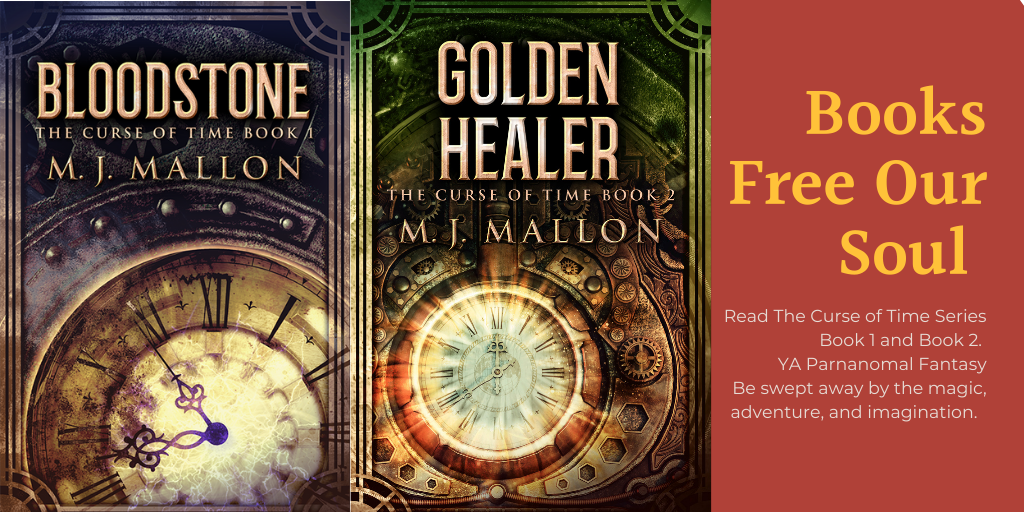
Today on the blog we have an author interview with YA author M.J. Mallon. Here, she tells us about her brand new release, Golden Healer, which is the second book in a YA paranormal fantasy series. Links are at the end of the interview. A huge thank you to M.J. Mallon for joining us.

  1. Congratulations on the launch of your new book. Can you tell us a bit about it?

Many thanks Chantelle, I’m delighted to be here today to talk about my new book Golden Healer, the 2nd in my YA paranormal fantasy series The Curse of Time. The story is largely influenced by magical realism and has a strange, mysterious aspect to it.. Magic realism, ‘is characterized by the matter-of-fact inclusion of fantastic or mythical elements into seemingly realistic fiction’

So, in the otherwise normal day-to-day setting of Cambridge, UK, I imagined a hidden crystal cottage with powerful wizard stones, a girl trapped in a mirror, and a beautiful boy of shadows who brings temptation, conflict and uncertainty.

In Book One Bloodstone, the main protagonist, teenager Amelina Scott, is creatively inclined, she paints, writes poetry and is a gifted musician. Her crystal infused paints bring the painted ‘creature,’ (the caretaker of the cottage,) alive. She is guided by the owner Leanne to discover her gifts as a Krystallos, able to wield the power of the wizard stones to restore her family’s happiness. There are many sub-themes, mysteries, and interpretations of the story. The relentlessness of time, deception, who to trust, and mental health issues, ( including entrapment by our mental health issues – represented by the mirror girl Esme’s dialogues discussing self harm.) In book two, further adventures continue and Amelina discovers more about the roller coaster of time and Ryder’s shadow demonic side.

2. What age group is it at aimed at?

It’s aimed at teenagers going through the turmoil of those years. But many adults have also enjoyed reading the tale, with its poetic, (each chapter begins with a poem,) and philosophical aspects.

3. Where did the idea for the book come from?

Juniper Artland’s crystal grotto by Anya Gallaccio: https://www.jupiterartland.org/art/anya-gallaccio-the-light-pours-out-of-me/ The Corpus Christi Chronophage clock invented by John C Taylor, OBE. https://www.johnctaylor.com/the-chronophage/corpus-chronophage/

A witch’s black cat that visited me in my garden! Oscar Wilde’s, a picture of Dorian Gray Musical aspects courtesy of my hubby, a keen guitarist who wanted to be in a band when he was younger.

4. This is the 2nd book in the series – do you know how many there will be?

I think perhaps three. There are three Chronophage clocks, the grasshopper, the midsummer fly and the dragon!

5. Your main character is very creative – what made you write her this way?

Perhaps because my creativity has been stifled for many years and I wanted to break free of my dreary day job! When I was younger I suffered with anxiety and depression because I wasn’t doing what I wanted to.

6. What are you working on at the moment?

I have lots of projects on the go… A short vampire paranormal story which I’d like to develop, a poetry book, and the 3rd book in this series.

7. What do you most enjoy about writing YA?

I like to keep young! My hubby always teases me that I think I will live forever.

8. What would you say are your main character’s main strengths and weaknesses?

Strengths: determination to succeed, restore and keep her family safe from unhappiness. Weakness: she can be a little selfish and immature at times. But, less so, as she becomes older and more wiser.

9. How did you approach the world-building needed for the fantasy/paranormal genre?

I don’t tend to plot but maybe I should! The world building grew from bursts of imaginative energy. There are pros and cons, when imagination is allowed free rein. Biggest downside – lots of edits!

10. Can you recommend any similar books for young readers?

It’s quite unique, so somewhat difficult to say… But there are similarities to Philip Pullman’s His Dark Materials, or at least a poet/tutor, at my last job told me so. That was a huge compliment as I love this series, exploring the fight between good and evil, wisdom and darkness in a philosophical way, as is also the case with my Curse of Time series.

Also, in some ways, it has similarities to the surreal wackiness of Alice in Wonderland… a story I love!

Thank you M.J. Mallon for joining us on The Glorious Outsiders today. If you would like to find out more about her and her books, the links are below!

Universal book link: https://books2read.com/u/mgjY67

Facebook Page: https://www.facebook.com/mjmallonauthor

Blog/Website: https://mjmallon.com/

Amazon Author Page: https://www.amazon.co.uk/M-J-Mallon/e/B074CGNK4L?ref=sr_ntt_srch_lnk_1&qid=1644576276&sr=8-1

10 Things I’ve Learned Working With Young Writers

I’ve been working with young writers since I started my company, Chasing Driftwood Writing Group in 2015. I was no stranger to working with children as I was a childminder for five years and as a mum of four myself, I’ve always felt quite confident dealing with young people. At the moment, I run seven writing clubs for children aged between 7 and 16. I have four physical, in-person clubs and I have three clubs on Zoom. These clubs cater for schoolchildren and home educated children. Currently I’m working with fifty young writers every week. It’s a privilege combining my love of writing with working with kids, and I consider myself very lucky. There are of course many challenges and here are ten things I have learnt from working with young writers:

Image by NeiFo from Pixabay
  1. Drawing is writing too – quite often when a child is new to a club, they will ask if they can just draw. I never mind this, as it’s amazing how much writing can evolve from drawing. They might start off just scribbling or drawing something that interests them, but more often than not, they will get an idea from the drawing and will start to talk about a possible story. Sometimes allowing drawing can form part of a deal too. Younger writers are not keen on writing too much but often I can get them to write a paragraph, then go back to their drawing and so on. They often surprise themselves when they start to write as well as draw!
  2. How quickly they improve year from year – it never fails to amaze me how quickly young writers mature. It’s always exciting to note the improvements in their writing skills. Just little things like them starting to self-edit, picking up on repetitive phrases and words for instance, or using body movements in place of dialogue tags. It’s amazing how fast their storytelling skills mature from one year to the next.
  3. Talking is writing too – sometimes talking is writing and it’s good for young writers to realise this. Talking about writing with other writers can be so helpful. If one child is a bit stuck and we start talking about it, suggesting ways to move forward or to generate more ideas, or to get the plot moving again, it’s still writing! There might be less words on paper but often they have learnt a lot more.
  4. Give them options, not instructions – I learnt early on that running my writing clubs ‘my way’ was not going to work for every child. There are children who thrive on instructions and being told what to do, and don’t mind coming into a session, finding out what the tasks are and getting on with them. But there are children who come bursting in with their wonderful new ideas who then feel completely deflated that we have something else planned. For this reason, I always have options. There is never just one task, or a one size fits all approach to my clubs. For example, we have been trying creative non-fiction in a lot of my clubs lately and I always give them a list of prompts to choose from. Some kids whizz quickly through the whole list, responding with short paragraphs to each one and some spend the whole session on one prompt. They definitely prefer having choices! One of their favourite things is to have different writing activities on each table so that they can move around the room and try different things.
  5. Eventually it sinks in – Young writers tend to get a head full of ideas and want to write their story instantly. Inevitably, they often get stuck or run out of steam so I’m always trying to impress on them the importance of character development and plotting, which can happen alongside the actual writing, but certainly can’t be ignored. I often meet resistence to this and it can take time for it to sink in. The moment when a child shows you their plot ideas or their character bios or their map for their location, when you haven’t asked them to do it, is a very special one indeed! Eventually it does all start to sink in.
  6. They take things off on own tangent and that’s a good thing – as I mentioned already, talking about writing can be just as beneficial as actually getting words down on paper. And sometimes talking within a writing group can help children get unstuck. Often I find, I have planned a session with structured activities I aim to take them through together, and the whole thing will get hijacked by young writers going off on their own tangents. It might be an idea they suddenly get that they just have to share. It might be something I have mentioned has sparked off a memory about something else. Or it might be that my suggestions lead them in a direction I had not anticipated. Either way, as long as they are writing and getting excited about writing, I really don’t mind at all!
  7. How surprised they are when you say they are a good writer – This always gets to me. When you listen to something they have written, or they pass you something they want you to read and you reply with positive feedback and tell them they are good at writing, they always get this wide-eyed look of surprise on their face. In our groups we focus on writing for fun and don’t focus too much on grammar, spelling or punctuation. We do of course edit and encourage young writers to self-edit and we do mention correct spellings and grammar, but they are not tested and not pushed. If a child hands me a story or a poem with incorrect spelling, I still tell them they are a good writer, because they are.
  8. Some of them are natural writers, which is very exciting – I think all children are natural storytellers, just as they are natural artists and dancers. It is human to create and it is very human to make up stories and pass them on. Some children come along to writing groups and start to improve their skills very quickly, for example learning how to use dialogue, how to fully develop their characters, how to utilise back story and so on. And some children come along as almost fully formed perfect little writers. Actually, perfect is the wrong word. Natural, is closer to what I mean. They instinctively know how to structure a story, how to reveal character and how to build tension. It’s so natural that they don’t even realise they are doing it. I find this very exciting!
  9. Jumping from idea to idea is okay – I’d have to say that the one thing most of my young writers have in common is how much they jump from one idea to the next. I do try to encourage them to stick with a story and finish it, and everything we work on from character to plot, is aimed at helping them achieve this. However, I never mind when they get bored of a story and come up with a new idea. Having a lot of ideas is very exciting for them and I’d hate to get in the way of new ideas spilling out whenever they need to. I always insist that they keep everything they write somewhere safe, so that if an idea has not worked out, they can come back to it another time. I also encourage them to write down all their ideas for other stories, if they are sticking to the same one. Keep those ideas safe and the more you have, the better! Writing is very much like a tap, I think. Once you have turned it on, it wants to keep flowing. Your mind is finding new ideas to explore for you and that is a good thing.
  10. The quietest ones sometimes have the loudest minds – My writing clubs can be noisy excitable places at times! It can be a challenge keeping the noise down so that the quieter students can focus on their writing. Some children are very creative and like to talk about it and share it around. While some are quieter and like to keep it to themselves. I tend to find that the really quiet ones, the ones that keep their heads down and write away endlessly in a corner, have the loudest minds when their work is finally revealed. They have so much going on in there that they just have to focus on getting it down on paper.

I think I could add more than ten things I have learned from working with young writers, but that will cover it for now! It is a challenging but rewarding job. One of the best feelings is when a parent emails to say their child is writing more at home now, of their own accord, or that their teachers have noticed their writing has improved in school. Another fantastic feeling is when children bring in finished work they have been doing at home. They are always so proud if they have seen a story through to the end. Introducing them to new things is also really exciting. Getting children to enjoy non-fiction or poetry, for example, feels amazing! You can’t win them all and you can’t please them all, but I aim to keep the clubs as varied and exciting and as challenging as possible. Sometimes I look at these kids and wonder who will be a best selling novelist one day!

How To Handle A Long To-Write-List

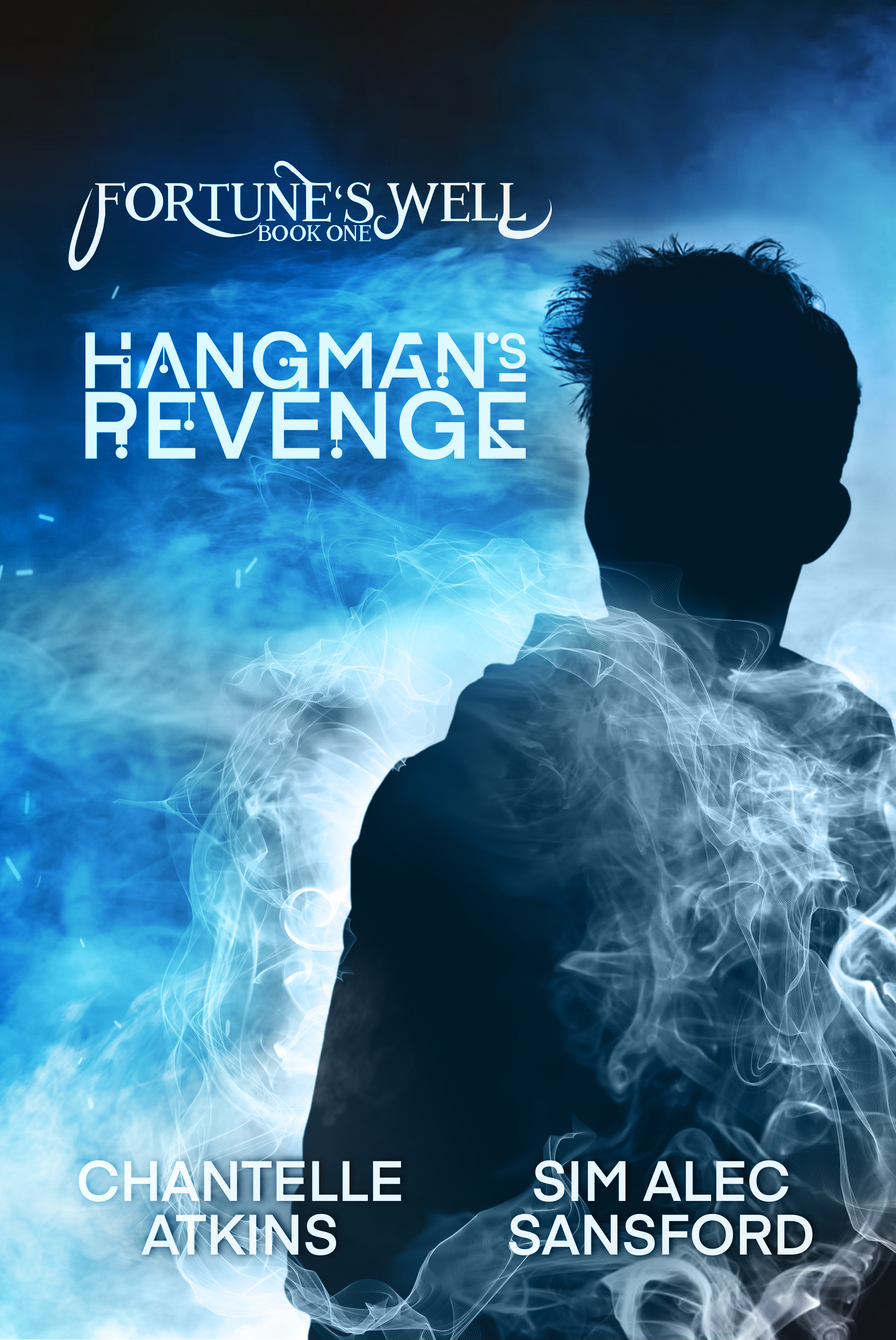
I’ve blogged before about how to juggle multiple writing projects at the same time. For me, it’s almost impossible to work on one thing at a time and I used to worry about this. I don’t anymore. There is always a priority project, one that is the closest to being ready for publication, and that’s the one I work on first every single night. However, new ideas spring up all the time, and if I don’t write them down I run the risk of forgetting an important detail. Also, when I’m stuck in a long editing/rewriting/revising process for a written book, my mind craves fresh, new exciting writing. I decided long ago to just go with it and accept that it’s always going to be this way. At the moment, for example, I’m editing/revising my 4-book YA post-apocalyptic series The Day The Earth Turned. This should be the final edit before it goes to the proofreader and as all four books are completed and almost ready, there is no fresh, new writing involved anymore. I’m also going through the same process with the YA trilogy I’ve co-written with Sim Sansford. Book one is with the proofreader and we’re getting the other two books ready to go after that. These two projects are the priority, but I want to write new stuff as well!

But having a lot of ideas, or a long -to-write-list can be distracting. New ideas can derail you from current projects, and at the same time, if you ignore new ideas until you’ve got time for them, you could easily forget important details or forget the whole idea entire entirely!

When a new idea comes along, it can feel so bright and exciting, that it becomes tempting to quit or ‘rest’ your current WIP and jump to the new one. Young writers do this a lot, and so they should – writing should be vibrant and exciting and I think young minds should respond to the influx of ideas they’re getting. However, if you’re a published author, you need to stick to your goals and work through them one at a time, or it can all become a bit of a mess.

My 8-book to-write-list

So, this is how I handle it. I prioritise one project until it is published, but also allow myself to work on something new a few times a week, and jot ideas down in notebooks for future books. Currently, I’m working on the first draft of what will stand as a spin-off book to The Boy With The Thorn In His Side series. (Working title, At Night They Played In The Road.) I’m at chapter twenty-three and only write it every now and then, but it’s constantly on my mind and will definitely be the next one to bump up to priority position. I am also scribbling a diary style story into a notebook every now and then. This is my Zombie apocalypse story which is honestly just a bit of fun at the moment, and a long way down the list to take seriously. I can’t resist adding to it every now and then though.

The other day I decided to organise all my future book ideas into a sensible to-write-list. You can see in the image that I have eight future novels outlined. I’m not exactly sure of the order these will be prioritised in. Sometimes books at the end of the list get louder and push their way forward, shoving others out of the way as they do. I just hope I don’t get any more ideas, as this list is plenty to keep me going for several years! I’ve listed them below in the order I THINK I will tackle them and added a brief description of the book idea and how far developed it is at the moment.

Working title: At Night They Played In The Road. A spin-off to my 5-book series The Boy With The Thorn In His Side. Written 23 chapters so far and characters are developing well. Notebook contains plot ideas and structure, character bios, and chapter outlines so far.
The Mess Of Us: The long awaited sequel to my debut YA novel The Mess Of Me. Written about half of it in first draft. Know exactly what’s going to happen. Notebook contains ideas for the plot, chapter outlines so far and half of a hand-written first draft.
We Hate The Cool Kids: (working title) I wrote this a few years ago! The first draft is done, except the ending needs some sorting out. It came out of nowhere and just wrote itself into a notebook, longhand. I haven’t gone back to it yet because it jumped the queue and I wanted to concentrate on publishing The Holds End trilogy and The Day The Earth Turned series. It will be great to get back to this soonish as it is basically done and ready for it’s 2nd draft! It’s a YA psychological thriller. Notebook contains character bios, plot ideas and structure and chapter outlines, as well as almost the whole book written in longhand.
I’ve popped it here in the list but it might jump the queue a bit and it should get done fast as two of us will be writing it! A year ago Sim and I started writing a YA supernatural trilogy together and it’s now done and each book is heading one by one to the proofreader. Once we’ve done final, final edits on that, we will start this together! It sprung from a short story I wrote. The idea grew and grew and it’s definitely one Sim and I could make work. It’ll be another YA. Post-apocalyptic/dystopian, possibly?? Notebook contains the short story the idea came from, character bios, plot ideas and a possible introduction.
A few years ago me and my son were writing fanfiction together when I had the idea for an ‘IT’ style horror series about unlikely young heroes battling evil in their strange little town. We drew an intricate map of the fictional town and I started writing plot ideas and character bios. My son then lost interest and I tucked it all away for another day. This story has grown a lot since then and its one I am really excited to start! I’d say Black Hare Valley will be a YA supernatural/paranormal/horror series. Notebook contains a huge fold-out map of the fictional town, character bios, ideas for the plot and research on local folklore and legends.
Diary Of The Undead came about thanks to my obsession with The Walking Dead, which started a year ago when I first watched it! A few months ago I got the idea for a diary style book from the POV of an unlikely teen hero and couldn’t resist starting it. I’ve nearly filled an entire notebook but it will be some time before I treat this one as a priority. I will continue to add to it when I feel like it. It’ll be a YA horror series. Notebook contains character bios and plot ideas and almost a whole notebook of the first draft in longhand.
This image has an empty alt attribute; its file name is 271812543_4674392729263890_6121548804389490490_n.jpg
This book has been growing in my mind for a few years, but all I ever really had was a large, dysfunctional family and the death of a child. I have a lot more than that now so it got it own notebook the other day and I’ve started adding character bios already. I came up with the title quickly the other day but it will probably change. It’ll be some years before this one gets written! It will be a psychological thriller/family mystery aimed at adults. Notebook contains basic plot idea, ideas to explore, structure ideas and a few character bios.

This image has an empty alt attribute; its file name is 271785787_4674392725930557_4293487203447839916_n.jpg
This is last on the list as it’s calling to me the least but who knows? It might climb higher. This is an idea based on a book I almost finished writing when I was in my late teens. It didn’t have a title back then but was essentially about a terrible crime and the revenge that follows. I’ll use the same characters I had back then and the basic storyline, but it will flick between the past and the present now and will probably fit the adult thriller market. Notebook contains character bios and basic plot ideas I had from back then.

Sorting each book idea out like this has really helped me feel in control. Not all of them had notebooks and some of them were just ideas and characters floating around in my head. I feel like I’ve contained them somewhat now! And the good thing is, I can add to these notebooks any time I get ideas for plot, character or dialogue. This means that when each book finally gets its turn, it will feel like getting in touch with an old friend. Everything will be in place to get going.

Do you have a long to-write list? How do you take care of future ideas? Feel free to comment and share!