Guest Post #2; Dreaming Of Another World

Dreaming of Another World is a brand new feature on my blog, inspired by a piece I wrote a few weeks ago. Following on from my post Dreaming of Another World, I wondered if other creatives felt the same as me, that another world is possible and could just be glimpsed during lockdown. I reached out to other authors, wondering what their reactions to lockdown were in terms of the future. Has it made them want something different? Has it made them change the way they are living, for instance? Do they have daydreams, like me, about a different way of life? Each week I hope to post a response to these musings from guest authors and bloggers. This could be stories, poems, essays or personal pieces. This second piece is from author Lily Hayden. To find out more about Lily click on the link at the end of the piece.

Dreaming of another world- Lily Hayden

Headphones in and eyes down, I spent my commute dreaming of a world where I didn’t race from a school run to jam myself aboard a packed and late train that spilled us out at a hectic station. My head would be full of all the things I would do ‘if I had time’ as I was swept up in a sea of commuters like a dull, drab shoal of fish swimming past the now-familiar rough sleepers and brimming commercial bins, dodging the puddles from cleaners hosing down the pavement outside the strip of bars and restaurants until I reached my office to sit at a desk for nine hours exchanging eye rolls with my colleagues as we counted down the days to the weekend with the same lethargic lack of enthusiasm; “Ugh, Monday!”, “How is it only Tuesday?”, “Happy Hump day.”, “One more day!” and finally “Thank God it’s Friday!”.

My head, like the commuter fish around me, would be full of all the wonderful things I could do if I wasn’t a slave to the rat-race.

“I’d love to go vegan,” I’d lie to myself as I inhaled my fourth coffee before midday. “I just haven’t got the time to meal plan!”

Same for exercising. Not a chance could I fit gym time in amongst juggling work, writing and raising four children and numerous animals.

“Love the concept of zero waste!” I’d shrug as I clicked through an Eco page on Instagram in my lunchbreak. “But who’s got time to go searching for all that? I can barely manage one big shop on the weekend.”

“We should do more with the kids,” I’d say to my husband as we flopped down exhausted on the sofa on a Friday night, feeling the familiar pang of guilt as they all disappeared off to their rooms once the takeaway had been devoured. “If only we had more time!”

And then suddenly we had time.

“This is so strange,” we would repeat to various neighbours that we only ever saw in passing as we all flew from school runs to work on a never-ending hamster-wheel of rush, rush, rush.

We played games in the street at a social distance and went for walks in the woods that I’d never set foot in despite living on their doorstep for thirty-seven years. We baked, and we gardened, and we sat in the sun. We made little schedules for the children, and the big ones helped the little ones with their schoolwork. We skimmed stones in the river and explored the fields and the forests. We went from driving every day to once a week, and I thought about the carbon footprint reduction.
80,000 people commute into Cardiff every day for work with an average commute of 19 miles taking 48 minutes according to various sources. That’s 1.5 million commuter miles on train, bus and car pumping out tens of thousands of tonnes of CO2 every year.

“Did you know Cardiff is the fourth most polluted city in relation to size?”

“If half of those commuters worked from home, imagine the impact to pollution!”

Imagine! The world could start to repair the damage we’d done to it!

We had enough time to watch the news, to really watch it and talk about it, rather than scroll past on our way to work, the gym, drinks, dinner with just an apathetic ‘how awful’… And we had time to take to the streets chanting ‘no justice, no peace’ when we woke to the reality of the cycle of oppression that we had been complicit in. Strangers united to topple statues of terrible men who did terrible things in the name of profit and power.

We clapped for the nurses that work gruelling shifts putting their own lives at risk to care for others, but all they wanted was fair pay and protective equipment to keep them safe. Of all the people in powerful positions, a football player was the one to convince our Prime Minister that while schools stayed closed to the majority, children would go hungry without their free school meal. The staggering reality of poverty in our country felt like a dirty, little secret had been exposed.

But not everyone could stay home and breathe. A hotchpotch of roles were marked as essential alongside the obviously necessary ones as businesses interpreted the loose rules to suit their pockets, and instead of question the necessity we ordered takeaways, and everything from Amazon, we queued to buy paint from B & Q, and the country sold out of hot tubs.

And then we began to grow bored of entertaining ourselves. By nature, humans are sociable creatures; we missed our friends and our family, and worried that the children needed the routine of schools. By the end of June, mixed messages teased of our ‘playgrounds’ re-opening, and we craved our postponed holidays, desperate to jam a facemask on to jet off to foreign shores the minute the planes took off, or gather outside the pub to clutch that first ice-cold pint or queue to fill a basket in Primark. We were chomping at the bit to get back to ‘normal’.

The emotional need for normality was exacerbated by the very real fear that there would be economic repercussions of the wheel not turning and millions of worker bees furloughed; businesses would fold, and jobs would be lost forever. With fear in our hearts, we will jump back on the treadmill as soon as the whistle is blown. It’s likely that we’ll never have this chance to collectively stop again in this lifetime.

Imagine though if that was the last chance that the world was willing to give us.

On Monday I could be back on that train, headphones in and eyes down; the only thing that would have changed would be the facemasks we are wearing, and wouldn’t that be a horrible, horrible waste. Over forty thousand people have died, and tens of thousands are still recovering from a very serious and debilitating illness.

We cannot let this be for nothing.

I know it wasn’t just me on the train dreaming of having the time to be better, having the time to care, to educate myself, to read, to share, to connect, to donate, to question the morality of the society I live in. I don’t want to go back to seeing my own children for just a hectic hour each morning and evening, missing their lives so that I can pay to keep the roof over their head. My husband took over sixty business flights last year, we drove maybe twenty thousand miles of car journeys. I don’t want to contribute to the destruction of our planet anymore. I don’t want to be shocked when I read that over one million children in the UK rely on free school meals or scroll past news of more racial injustice because I’m too exhausted to be angry. I know that it’s not just me on the train dreaming of a slower pace, more time and deeper connections.

I dream of a world where we learn from the lessons we’ve been taught.

Thank you so much to Lily for this wonderful and thought-provoking piece. If you would like to find to find out more about Lily’s writing, please follow the links below! And if you would like to contribute to this feature with a non-fiction or a fictional piece do please get in touch!

Link to author page and bio: https://www.amazon.co.uk/Lily-

Hayden/e/B07CR8KF7D%3Fref=dbs_a_mng_rwt_scns_share

Guest Post; Dreaming of Another World

Welcome to a brand new feature on my blog; Dreaming of Another World. A regular slot handed over to fellow authors and bloggers. Following on from my post Dreaming of Another World, I wondered if other creatives felt the same as me, that another world is possible and could just be glimpsed during lockdown. I reached out to other authors, wondering what their reactions to lockdown were in terms of the future. Has it made them want something different? Has it made them change the way they are living, for instance? Do they have daydreams, like me, about a different way of life? Each week I hope to post a response to these musings from guest authors and bloggers. This could be stories, poems, essays or personal pieces. Our first piece is from author Grahame Peace. You can find out where to follow Grahame at the end of the blog post!

After months of planning, my partner and I, along with my youngest sister and her husband, had been looking forward to travelling to Nice in early April to celebrate my other sisters sixtieth birthday with her family. In May we also had plans to go to Paris with friends and realise a lifelong dream and visit Versailles. All that came to a sudden halt in late March 2020 due to the lockdown in the UK and across Europe due to Covid-19. Along with that, we had to cancel theatre trips, meeting up with friends and family, and our regular trips to the gym.

I’m sixty-two and suffer from asthma and allergies, putting me in one of the Covid-19 high-risk groups. Funnily enough, my partner and I had both been ill in late November 2019, we’d never experienced an illness like it, and as information came to light about the coronavirus, we are both convinced we had it. We had all the symptoms, although, without testing, we’ll never know. One good thing came out of that, once we were feeling better, we both rushed for flu vaccinations, and we’ll be going for another as soon as they become available in September.

None of us could predict what would happen next as the lockdown started here in the UK and across the world. I retired from my job in the National Health Service (NHS) in 2014, so I know first-hand the many daily challenges facing NHS and social care staff, how I feel for my hard-working, and often undervalued NHS and social care colleagues. It’s good to see them finally being valued and getting recognition for their work; one can only hope they get all the resources they need and are going to need in the future.

Since retiring writing has been my fulltime (F/T) occupation, and I treat it like a F/T job, working every day for several hours at my computer. The lockdown had no immediate impact on me from a work perspective. My partner was soon put of furlough but was used to working from home, so being at home every day wasn’t unusual. A positive outcome from that meant those jobs in the house and garden could now receive our full attention, not that there were many. During lockdown, my youngest sister and her husband have built two greenhouses and created a fantastic vegetable garden; they even discovered a hidden stream on their land.

Like many, I became obsessed with the news as well as trying to find out as much as I could about the virus. I was distracted and found it hard to concentrate on my writing. I still do, although I persevere. But how dire the news has been, with the daily death toll not just here in the UK but around the world. Along with awful predictions about what life could be like for years to come, and the worry for many as they lose their jobs. I still find it impossible to make any future plans, and I’m grateful to have my writing to keep me occupied; it’s also a much-needed distraction as I lose myself in imaginary worlds. I have a vivid imagination, which is both a good and a bad thing!

During the lockdown, we’ve hardly seen friends and family, but thank goodness for Zoom, what a fantastic piece of technology, it’s like something out of my favourite childhood TV programme ‘Thunderbirds’. We’ve tried to entertain ourselves with lots of reading, internet shopping, re-watching most of our extensive DVD collection and binge-watching various TV shows and series. Along with long daily walks in the countryside, even in the pouring rain, just to keep moving and get out of the house and into the fresh air. We also started shopping for our elderly neighbours. How I feel for people shielding who live on their own; they don’t see anyone for days on end as one day merges into the next.

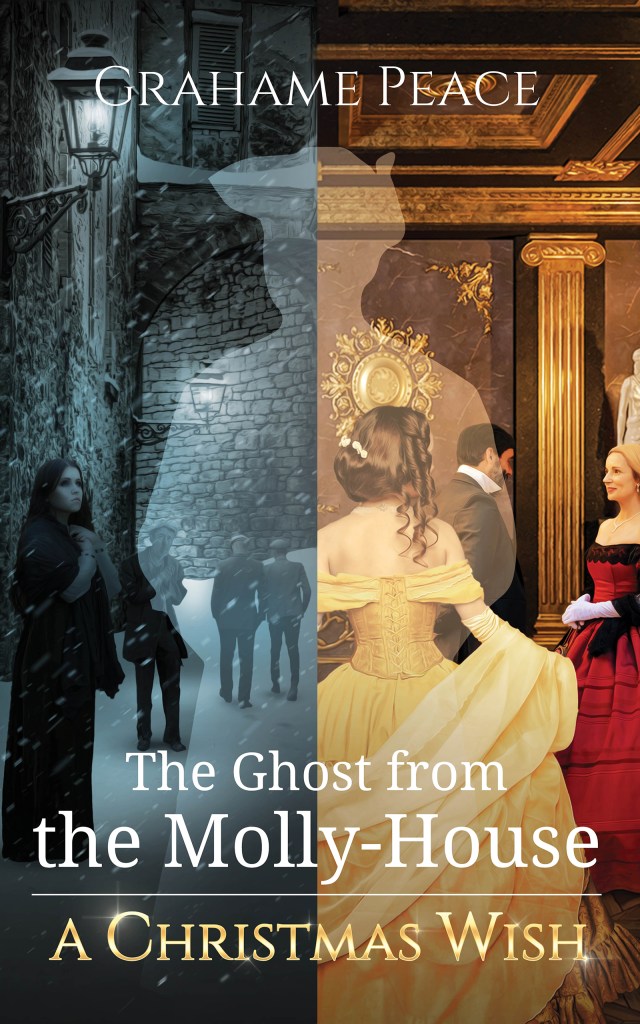
During the lockdown, I finished and published my tenth book, The Ghost from the Molly-House. A Christmas Wish, this is book seven in the series and set in 1850 in Victorian London. As with all my books, I did a lot of historical research into the period, it truly was a world of the haves and have nots. Doing all the research helped me to realise that even with a global pandemic, how lucky we are to live in 2020. Life was grim and incredibly cruel in Victorian times, but that’s history for you! I’m now busy researching and working on my next book, The Ghost from the Molly House. Lady Fenella and the Fleet Diamonds, which is set in 1937. I hope it will be out later in the year.

Life is slowly returning to some form of normality, my partner started work again on 20th July, and things are opening up again. Not that I have any desire to go anywhere or back to the gym until I see how things unfold in the coming weeks, particularly as we’re starting to see spikes of Covid-19 cases all around the world. I’ve even started cutting my own hair; and going to a supermarket feels anxiety-provoking with panic buying, social distancing, long queues, plastic screens, hand sanitiser, and now face masks; I dread it, but needs must.

For me, one of the good things about the lockdown has been nature, the wildlife in the garden, the bird song in the morning, and the considerable reduction in pollution and traffic on the roads. I’m sure that’s had a positive impact on my asthma; for a period, I even stopped using my inhalers. It also created a sense of community; our neighbours have all come together. We had an outdoor, socially distanced VE Day celebration, which turned out to be a lovely evening enjoyed by all.

One downside I’ve witnessed has been litter. As I’ve walked through the countryside and watched the news, I’ve been astounded by all the litter, and rubbish people leave everywhere. Things like drinks cans, beer and plastic bottles, garden and building waste, and, of course, fast food packaging, without a thought for the environment and the poor people who have to clear up after them, it’s staggering.

Seeing how some political leaders have behaved over Covid-19, has made me feel increasingly worried about the future. I base that opinion on their actions, political spin, and fake news. It’s not inspired confidence, just at a time when the world needs to come and work together. The pandemic has brought out the best and worst in human nature with incredible acts of kindness, but also unbelievable acts of selfishness.

They say, ‘every cloud has a silver lining’, I do hope this pandemic will prove to be a wakeup call to everyone in the fragile world we live in; we can’t live in isolation, we’re all part of a global economy and like it or not, what happens in one part of the world, has an impact everywhere else. The days of things like the British Empire are long gone. Lockdown hasn’t made me dream of a new world; it’s just highlighted the need for the world I’ve always dreamed about; a world of peace, harmony, tolerance, respect, kindness, love, consideration, and equality. But someone somewhere will always want the last fish in the sea.

Thank you so much to Grahame for writing this piece for my new feature. You can follow him via the links below! If you are interested in writing a piece for Dreaming of Another World then please get in touch. I am looking for stories, poems, essays and non-fiction on the theme of another world. Did lockdown inspire you to change your ways or even your life? Would you like to see a change in society after Covid 19? What are your hopes and fears for the future? Anything written in response to Covid 19 and/or the climate emergency will be considered! Many thanks.

Website: https://www.grahamepeaceauthor.com/ Amazon UK Page: https://www.amazon.co.uk/Grahame-Peace/e/B00JNA07HE/ref=dp_byline_cont_pop_ebooks_1 Facebook: https://www.facebook.com/gpeaceauthor Twitter: https://twitter.com/GrahamePeace

Indie Author of The Month; Jane Davis

Welcome to another Indie Author of The Month post! This time please welcome award-winning author Jane Davis to the blog. I have followed Jane for a while on social media and have read a number of her novels. I enjoyed each one tremendously. Jane has just released a brand new novel, At The Stroke of Nine O’clock, and is here today to tell us all about it, as well as her publishing journey so far, her writing process and advice to aspiring writers. Enjoy!

1.Tell us about your latest release. What is it about and who is it aimed at?

My latest release is called At the Stroke of Nine O’Clock. I haven’t perfected my elevator pitch on this yet. The short answer to the question ‘What is it about?’ is that it’s a timeless story of sex, class and murder.

My inspiration for the book was the discovery that the subjects of three biographies I read back to back each had a connection with Ruth Ellis, the last woman to be hanged in Great Britain. My fascination with Ruth Ellis stems from my teens, when I first saw the same photographs that were splashed across the front pages that spewed from the presses when production resumed in 1955 after a month-long newspaper strike. With a four-million-pound loss to recoup, the papers needed something sensational to fight back with, and Ruth’s story was newspaper gold. ‘Platinum blonde ex-model shoots racing-boy lover.’ By the end of the day, in every pub and Lyon’s Corner House, around every dinner table, on front doorsteps and over garden fences, talk was of one subject and one subject only.

The reason for my initial fascination with Ruth Ellis is almost as complicated as she herself was. It’s difficult to accuse those who paid £30 for a seat in the Old Bailey’s public gallery of treating personal tragedy as entertainment, without acknowledging something of the same motivation. At the same time there was something truly shocking about the fact that the last hanging in Great Britain took place as recently as 1965. This was the world I inherited.

For me, the tragedy of the Ruth Ellis story is that, because she admitted that she intended to kill David Blakely, the trial lawyers had little interest in why she did it, the very question that has had me gripped. To a writer, cause and effect is everything.

I didn’t want to put myself in Ruth’s head, so instead I explored some of the same issues she faced through my characters, three very different women, who all have a very personal reason to say, ‘There but for the grace of God go I’ when they learn of Ruth’s fate.

As for who it’s aimed at, one of my readers wrote, ‘Jane Davis straddles the contemporary and historical genres with grace and aplomb, while combining the very best of literary and women’s fiction.’ So my hope is that it will have fairly broad appeal.

2. Tell us about your publishing journey so far.

My publishing journey began before the advent of self-publishing, when the Done Thing for a writer was to secure the services of a literary agent. Which I did. But that agent was unable to place my first novel. (There was an offer and a contract but before I could sign the contract the publisher who had offered the terms was bought up by another publisher, so that was the end of that). There, my journey diverted. Unbeknown to my agent, I entered my second novel in a competition, the aim of which was to find the next Joanne Harris. And I won! Half Truths and White Lies was the result.

Unfortunately (as you may have guessed), I didn’t turn out to be the next Joanne Harris. Transworld published my book under their women’s fiction imprint. I didn’t challenge their decision because I was very green and had no idea of the implications of this. When I submitted my follow-up novel to them, they turned it down because it wasn’t women’s fiction.

There followed several years of trying to find homes for my next three novels. During this time people began to speak about self-publishing in hushed tones. I paid good money for the advice that no self-respecting author would even consider it. But by 2012, I was on the verge of giving up. Before I jacked it all in, I decided that I should see for myself. I booked a ticket for a self-publishing conference. The rest is history.

3. When did you first know you wanted to be a writer?

I didn’t put pen to paper until my mid-thirties. I was quite an artistic child, but I left school at the age of 16 without any idea what I wanted to do. (Being an artist didn’t seem like a very practical plan.) In those days what you did was to go to the Job Centre and say, ‘I’d like a job please,’ and they would look through their index cards to see what was available. I was sent to work in an insurance company. I enjoyed being treated like an adult and earning my own money, so I stayed put. When the time came to apply for another job, my experience was in insurance and so those were the jobs I applied for. I chased promotion after promotion but I was also busy doing all of things that you do as a young adult (buying a flat, DIY, doomed relationships). But I found that I craved a creative outlet. I had been mulling an idea around in my head for a while and, on a two bottles of wine evening, I said out loud that I was thinking of writing a book. After that, there really is no option but to do it.

4. What is your writing process? (How do you plot a book, come up with characters, find motivation etc?)

Do you know, a couple of weeks ago, I was interviewed by an eleven-year-old for a schools project and she asked me that very same question! I had to admit that I don’t have a process. Instead every book seems to require its own approach. Sometimes I start writing with only the germ of an idea. (When writing My Counterfeit Self, for example, I simply decided that I was going to write about the life of a poet, and the only reason I did that was because readers who reviewed my previous book said that my prose was poetic.) Generally, I work on the characters, put myself inside their heads and allow them to take over. Some projects seem to demand extensive research, but I tend to be aware when the research is just a form of a procrastination and it’s time to face the blank page. Several interviewers have put it to me that in XYZ novel, I was trying to get a certain message across. The truth is that, whatever my chosen subject matter, I use the process of writing to explore my feelings on the subject. That doesn’t mean that the views expressed in the book are necessarily my own. Perhaps I need: The view expressed on this novel are the views of the characters and not the author.

5. What has been the most positive thing about your publishing journey so far?

I’m extremely proud of the two awards I’ve won, which acknowledge not only the quality of writing, but self-publishing standards. (Writing Magazine’s Self-Publishing Book of the Year Award 2016 and the Selfies (best independently published work of fiction) Award 2019.) I think it’s so important that professionalism in self-published is honoured, and to recognise that self-publishing doesn’t mean DIY. A team of thirty-five people are behind my books, both professionals and unpaid beta readers who provide invaluable feedback about early drafts.

6. What has been the most negative thing about your publishing journey so far?

I must admit that it was probably having A Funeral for an Owl rejected by Transworld. But it’s a novel I’m incredibly fond of, and self-publishing enabled me to put it out there.

7. Who is your favourite character from your own books and why?

That’s like asking me to choose a favourite child! If forced, I’d have to say Lucy Forrester, my main character from My Counterfeit Self. She’s a cross between Edith Sitwell and Vivienne Westwood. I enjoyed watching her grow from childhood polio victim, from poet to political activist and, in later life, into a reluctant style icon. I was very proud when readers said that they’d Googled her and were surprised to learn that she wasn’t a real person.

8. Where do your ideas come from?

A variety of places. On two occasions now, I’ve been inspired by an episode of the arts series, Imagine. My 2018 novel Smash all the Windows came from a place of outrage. (It was my reaction to a news report.) But I also have a love of photography, and I’m regularly inspired by photographs.

9. What can we expect from you next?

I have an idea for a novel, but the other project that I’ve had on the go for the past eighteen months is the diary I kept about caring for my father who had dementia. (He passed away in April.) I am not quite sure what I should do with it yet, except that I would like to do something.

One in fifteen adults over the age of 65 suffers from some form of dementia. That’s 793,333 people. By the time you reach the age of 80, the odds increase to one in six (approximately 533,333 people). And yet talking about dementia seems to be taboo.

I have so many incredible anecdotes that might provide reassurance to those whose relatives have a diagnosis, but another approach would be to produce a more serious work of non-fiction about how little help is available for the army of unpaid carers who are looking after family members. My 81-year-old mother was my father’s full-time carer (and believe me, it was a 24-four-hour-a-day job), and was not always in good health herself. In October 2018 she was hospitalised with a very serious infection that came about because she had neglected her own healthcare needs. She should have been entitled to a carer herself for six weeks. This was never forthcoming. Instead, she was straight back into the role of caring for my father.

Here is a short extract:

14th October 2018, middle of the night. I am staying at the house because Mum has just come out of hospital. Dad up and dressed.

12.30am

Dad cutting out newspaper clippings, looks very tired.

Jane: Hello, Dad. I could have sworn I put you to bed two hours ago.

Dad: Where did you come from?

Jane: I was asleep in the bedroom at the back.

Dad: Yes, but who are you?

Jane: I’m Jane. Your daughter.

Dad: Jane? (Incredulous)

Jane: Come on, let me show you. (I take Dad to the hall and point to my photograph.)

Dad: That’s you?

Jane: That’s me. 26 years ago.

Dad: Are you sure? (Looks closely at me.) But your hair is all funny. (Tries to flatten it down.)

Jane: I expect I need to brush it.

Dad: He’s one of mine (points to Bernard). Birmingham.

Jane: To be fair, I think we’re all yours. Bernard, Anne…

Dad: Oh, Anne is very good.

Jane: Jane, Louise…

Dad: Yes, Louise. She came.

Jane: …and Daniel.

Dad: Scotland.

Jane: That’s right. Daniel in Edinburgh.

Dad: (Happy now) Shall we have a nice cup of coffee and some of the little round things? (He means biscuits.)

Jane: I think we should both go to bed. It’s the middle of the night.

Dad: I know. It’s ridiculous!

Jane: It’s very dark outside.

Dad: Because of the rain. (For the last two days, I have been telling Dad it is dark in the daytime because it has been raining. Now I regret it.)

Jane: How about it? Shall we go upstairs to bed?

Dad: Shhhh. If you have some blankets, you can still be very cosy. Come on, let me show you. (Shows me his recliner in the sitting room.) You sleep here.

Jane: How about you sit down, Dad, and I’ll do the blankets for you?

Dad: But when is the coffee?

Jane: You sit down and I’ll tuck you in and make you a nice coffee.

Dad: Oh, (nonchalant), I suppose so.

Dad is fast asleep by the time I bring his coffee.

2.30 a.m. Dad is ‘restoring’ one of his father’s self-portraits with Blu-tack.

Jane: Hello, I see you’re up again.

Dad: We have to put it in the holes. One, two three, four, five, six, seven. And we press it in and then we leave it for a few days.

Jane: Perhaps we could do that in the morning. It’s the middle the night.

Dad: Yes! (Very happy)

Jane: I really think you should try and have some sleep, otherwise you’ll be very tired tomorrow.

Dad: (Holds my head and gives me a Latin blessing). You worry too much.

Jane: I probably do.

Dad: Where is the person who makes the porridge?

Jane: Mum? I hope she’s fast asleep.

Mum: (Standing on staircase.) No, she isn’t!

Now we are all up in the kitchen and it is the middle of the night. I decide that one of us really has to go to bed so that Dad does not think we should all be up. Mum insists it is me.

Next day, Dad up bright and breezy at 6.00am. Meanwhile Mum and I are exhausted.

10. Tell us three fun facts about you

I was kicked out of the brownies for refusing to play the game of ladders on health and safety grounds. (I was right. Someone broke their ankle the following week.) I got my revenge by becoming a Cub Scout leader.

I once played James Galway’s golden flute.

My mother plays recorder on the Finger of Fudge advert. (My apologies to persons of a certain age for the earworm.) https://www.youtube.com/watch?v=nC9BBLSZZdQ

11. What is the best advice you could give to aspiring writers?

I learned so much from the process of writing my first novel, my advice is just do it!

A huge thanks to Jane for coming on the blog to talk about her new release. If you are keen to find out more, you can find her bio below followed by her book and social media links!

Hailed by The Bookseller as ‘One to Watch’, Jane Davis is the author of nine thought-provoking novels.

Jane spent her twenties and the first part of her thirties chasing promotions at work, but when she achieved what she’d set out to do, she discovered that it wasn’t what she wanted after all. It was then that she turned to writing.Her debut, Half-truths & White Lies, won the Daily Mail First Novel Award 2008. Of her subsequent three novels, Compulsion Reads wrote, ‘Davis is a phenomenal writer, whose ability to create well-rounded characters that are easy to relate to feels effortless’. Her 2015 novel, An Unknown Woman, was Writing Magazine’s Self-published Book of the Year 2016 and has been shortlisted for two further awards. Smash all the Windows was the inaugural winner of the Selfies (best independently-published work of fiction) award 2019.

Jane lives in Carshalton, Surrey with her Formula 1 obsessed, star-gazing, beer-brewing partner, surrounded by growing piles of paperbacks, CDs and general chaos. When she isn’t writing, you may spot her disappearing up a mountain with a camera in hand. Her favourite description of fiction is ‘made-up truth’.

Links and Social Media;

Books2Read Universal Link: https://books2read.com/u/brWppZ Amazon Link https://www.amazon.co.uk/dp/B08B1PCTC1 Smashwords link https://www.smashwords.com/books/view/1027278 Kobo https://www.kobo.com/us/en/ebook/at-the-stroke-of-nine-o-clock Apple https://books.apple.com/gb/book/at-the-stroke-of-nine-oclock/id1518038645 Goodreads link https://www.goodreads.com/book/show/53955188-at-the-stroke-of-nine-o-clockMy social media links are: Website: https://jane-davis.co.uk Facebook page: https://www.facebook.com/JaneDavisAuthorPage Twitter: https://twitter.com/janedavisauthor Pinterest: http://pinterest.com/janeeleanordavi/boards/

Dreaming Of Another World

On the 17th of March 2020 I was sat in my car about to go into a primary school to run an after-school writing club. I checked my phone and found an email from one of the other schools I work at, stating that schools would be closing at the end of the week and all clubs were cancelled. I felt a whoosh of fear and shock and checked my news feed for more information, all of which confirmed that the government were closing schools and putting us into lockdown due to the outbreak of Covid 19. It was probably the most surreal moment of my life. I went into the school and ran the club and I haven’t seen those children since. I haven’t been able to work since either, apart from a few bits online. I can’t yet go back to the libraries, museums, halls and schools I normally work in.

At the end of that week, life changed for everyone over night, just like that. I blogged about it almost instantly because it was just so strange, so historical and unprecedented and because writing about it helped me to make sense of it. Here’s the link to that post; https://chantelleatkins.com/2020/03/18/and-just-like-that-everything-changed/

And then, being the highly adaptable creatures we often forget we are, we all just got on with it. We worked from home, or we didn’t work, we home schooled our confused children, we stayed in, we entertained ourselves, we thanked fuck the internet existed and we very slowly but surely got used to a new normal. Humans are adaptable. We’ve proved that. Perhaps we’ve all realised how resilient we are capable of being. At the start of this, I blogged about how everything had changed over night, I blogged about the ups and downs of home schooling and I blogged about how weird had become the new normal, as well as the positives I hoped could come out of the pause in our lives.

Life is for many of us, slowly returning to normal. At the start of lockdown, it was eerily quiet in our garden, with barely any cars sailing by. Instead we had a constant flow of walkers and cyclists. Now it’s back to normal and that’s a bit sad. But I’m one of them now, aren’t I? Doing the school run again.

And I can’t help feel a bit lost and sad. Don’t get me wrong. I want all of my children to return to their normal lives and I am desperate to get back to my writing clubs and workshops. I just can’t help comparing the stillness, the silence, the gentle creep of Mother Nature reclaiming what is hers, at the start of lockdown, to the way it was before Covid 19 stopped us all in our tracks.

But the return to everything else makes me feel sad. Driving here and there, constantly in traffic and adding to the fumes that are heating up our only planet. Racing against the clock to get it all done, pick everyone up and get everyone where they need to be, dreading getting up and it all starting again.

What we were doing to the planet before Covid 19 was wrong. All of it was wrong. And we knew that…yet we couldn’t or wouldn’t change. And then lockdown… clear skies, grounded planes, silent roads, birdsong, sheep playing on roundabouts and deer walking down the streets, dolphins in the canals of Venice…so many beautiful, beautiful sights. And in our homes, we became creative. We sought out more and more ways to entertain ourselves and our children. We got into gardening! And self-sufficiency! We worried about where food came from and whether we could get any. Our eyes were being opened and we found we were not helpless. We had power.

I’ve always been into gardening, with varying degrees of success. I think it is actually one of the most therapeutic and simultaneously rebellious things you can do. It’s hopeful. To believe in a garden is to believe in tomorrow, they say. And that is so true…. On my darkest days, when life weighs so heavy I can’t breathe…I need my garden, I need fresh air and grass and dirt under my nails. If I plant something, I am optimistic. I am hopeful. And I am clawing back power. We used to feed ourselves; we had that power and that connection with Mother Nature, and not even that long ago. But we’ve lost it, moved so far away from it we forgot it was even possible.

And to care about this planet we have to feel connected to it! We have to feel part of it, part of everything and we have to believe that everything has a right to be here, to be treated with respect and dignity.

And during lockdown, the most amazing things happened. People started growing again. There was a massive increase in people buying seeds and plants and greenhouses. I was overjoyed to see this, even among my friends and family and social media contacts. People were discovering, many of them for the first time, how addictive gardening is. People were getting excited about growing a lettuce or picking their own strawberries. There was also an increase in people getting chickens for the first time. And undoubtedly, there has been an increase in people exploring their local wild places and perhaps fully appreciating the natural world for the first time too. Pond dipping, bird watching, identifying trees and leaves, bug hunting, walking and hiking and playing in rock pools. I have seen so much of this going on and it’s absolutely heartwarming.

But what now? Do we all go back to our ordinary lives and forget any of this happened? I really hope not. I really hope people continue to think about where their food comes from, continue to grow some of it themselves, continue to make ethical consumer choices, continue to do their bit to fight climate change, continue to respect animals and wildlife, continue to walk and cycle if they can and so on. Because I don’t know about you but I am constantly dreaming of another world.

Another world where we are connected to wildlife and nature, where we respect and value and protect it above all else. Where money and wealth are not idolised or deemed more important than human happiness and dignity.

Sometimes I go there in my mind and wonder if I can make it possible, even just for me and my family. It’s perhaps not realistic, but something I can’t stop thinking about it. I call it my basic life. Because going back to basics is what I crave. In my basic life, I live in a log cabin in the middle of nowhere, surrounded by trees and rivers and streams and meadows. I grow all my own food and keep ducks and chickens and perhaps a few goats.

I have solar panels, wind turbines and a well. I have orchards. I go out each day and forage for food. I cook everything from scratch. I only go to the nearest town once a month for other supplies. I only have limited access to the internet. My kids are home schooled and spend their days swimming in rivers, climbing trees and learning survival skills. We sit around the fire outside at night under the stars, swapping stories and jokes.

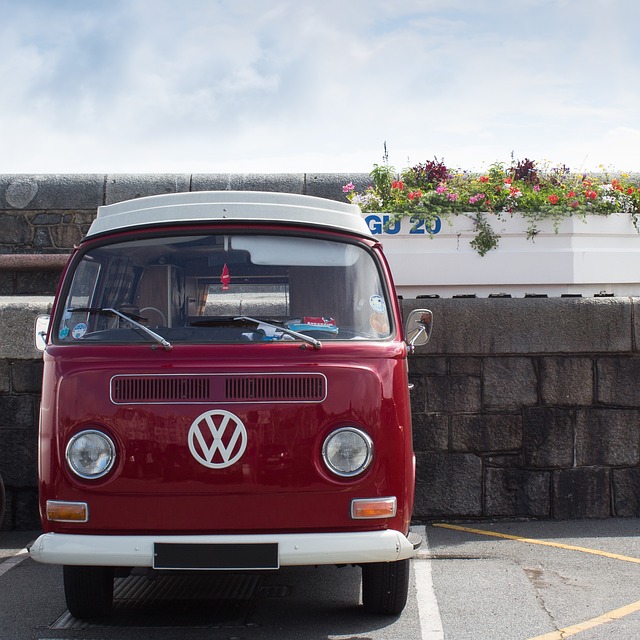
I spend my time growing food, tending the animals and the children, writing, reading and listening to music and we are all at peace and at one with the Universe. Did I also mention our only means of transport is a battered VW campervan?

Haha, just a pipedream, but I like it. I go there in my head at night. I try to build up little parts of it in my real life, such as extending my vegetable plot so I can grow even more next year.

I dream of my basic life and another world while fearing and grieving for this one.

What about you? What do you hope changes when this is all over? Do you think this will ever be over? What do you think should change? Will you be changing anything in your own life? What kind of other world do you dream about?