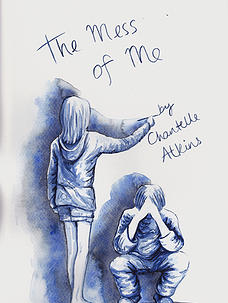
When I’m Thinner…(The Mess Of Me)

The Mess Of Me was never meant to happen. It was never a plan, or a decision that I made. I was busy rewriting my novel The Boy With The Thorn In His Side; a book and a plot which had been with me for over twenty years. It was finally, blessedly getting its time. It was happening. I was writing again. I didn’t know who it would be aimed at, and I certainly did not see myself as a Young Adult writer. No, Lou Carling was not wanted, or invited, or planned. She just showed up one day, and the funny thing was, she had lots of things to say, which were sort of similar to things I wanted to say.

I know that if I look up and see his face, then I won’t be able to say any of the things I am thinking. Is that the way it is for everyone? Or are there some lucky people who are able to voice their exact thoughts and feelings in such a way, that everyone understands them instantly?’

She was hard to ignore, but I tried for a while, because I so needed to get The Boy With The Thorn In His Side done. It had been bugging me for years.  Like a lot of the characters that end up in my books, sixteen year old Lou wouldn’t go away, or shut up. She was a persistent voice in my head during dog walks and time alone. I started listening to her more and more, and God, she made me smile.

I could be so much more, but I can’t seem to be bothered. I want to do nothing. Be nothing. Have nothing to say….I am stuck I suppose. I am jammed. I am unable to move on. I am oddly incapable of development. But I am very good at shrinking.’ 

And so I gave in. The Mess Of Me was written very quickly, during a three month period of rest from The Boy. The Boy was with one of my beta readers, and so I had a window…

Lou didn’t even give me a plot to start with. She was extremely fond of swearing, and she had a cynical, narrow-eyed way of looking at the world she lived in. Her world was small, and reminded me of the one I grew up in. Council estate, identical houses, playparks and graffiti.

I think, look at this here, this is my entire life! This is it, right here. This park, and this field, and school, and the walk over the bridge to get there, and the town, and the bus ride in, and the Priory church and a terraced house, and noisy neighbours, and the parade of shops, and everyone knowing who you are, and where you live, and the working men’s club, and the car parks and the alley ways, and the Provident loan lady and the Avon calling, and the Christmas hampers that take all year to pay for.’

The more she talked and moaned and bitched, the more of her life I could see unfolding behind her. I could see her so clearly, and knew her so well by the time I started writing the book for her. And it was for her. It was to shut her up and get her out of my head, but it was more than that. I wanted to build a plot and a world and story around her character, and the way she masked self-loathing with scorn and contempt for just about everyone and everything.

The truth is, she reminded me a lot of me at that age. How I was convinced that everything would be better when I was thinner. I would be happier, more popular, things would go right, I would know who I was and what I was doing. All of that, and more. In short, life was on hold until I got thinner, and when I did get thinner, everything would be perfect and I would know what satisfaction felt like. I would know what it felt like to look in the mirror and smile and be proud. I truly and naively believed that being thinner would solve all of my problems.

I was all grown up with kids of my own when Lou started talking to me about her problems, but right away, she brought back so many memories I had forgotten. Like her, I can remember having a ‘never again’ moment with a doughnut.

I can still remember the day I snapped. I can still remember the jam doughnut that I crushed inside my fist, instead of inside my mouth. I guess it made me feel stronger somehow, more in control, more savage. Less of a fat loser.’ 

I was house sitting for my mum’s friend, and she had MTV, which was excellent, because we didn’t. This was back in the day when MTV was just the one channel that played music videos every day. I saw the video for the Aerosmith song ‘Cryin’, the one with Alicia Silverstone in it. I remember thinking how pretty and blonde and thin and perfect she was. I sat there on the sofa, eating doughnuts, and feeling the reality of my own squidgy flesh trapping me in a body I loathed and wanted rid of. I knew it was not going to happen by thinking about it, or moaning about it, or crying about it. I had to actually do something about it. And if I did something about it, one day I could be like the girl in the video. And everything would be better when I was as thin as her…

Lou was funny and sad. She was bitter and cynical and snarling in my head, and she sounded so much like me, and she thought a lot like me too, but she was braver. She was bolder, smarter and funnier than me. When I was her age I kept my mouth shut and my feelings to myself. Lou was less likely to do this, and it was such sweet relief to let her take over for a while, to let her loose. Like me, she also allowed the words she could not say or contain inside her head, to spill out across the walls of her teenage bedroom.

Life is fucked up in broken wellies…’

As she loses more weight, Lou discovers a power she never knew she owned. It starts innocently enough, with a calorie controlled diet, and a new found enthusiasm for jogging. But as the weight begins to fall off, Lou finds it then becomes harder and harder to eat. In fact, just thinking about food grips her with fear. She starts to avoid it. She skips meals and she lies. And as she gets thinner and thinner, she experiences an increase in attention from friends, family and boys.

Her best friend Joe and his older brother Travis start to show an interest in her. They even fight over her at a drunken party. Her best friend/enemy Marianne, encourages her to lose more weight and stick to her diet.

Over the course of the summer between school and college, life unravels fast for Lou, Joe and Marianne. The drama centres around Joe’s decision to help deliver drugs for his older brothers. Leon and Travis are paying him attention for the first time in his life, which makes him risk everything in order to help them. Lou is pulled into the drama and the madness, and all the time, quietly in the background, she continues to lose weight. At one point, she catches sight of her face in the mirror and for a brief moment does not recognise herself at all.

But then I realise that it is me, it is my face I am staring back at, and how very peculiar not to recognise myself? I do not know whether to feel glad or sad, and I suppose that I feel plenty of both.’

The book starts with her lying in bed and running her hands over the bumps of her hip-bones and ribs. She wonders if she will be happy when she is as thin as she wants to be. I can remember doing the same thing at the end of the day, when the hunger was at its angriest. I would feel the lumps and bumps of bones rather than fat, and I would feel calmed and affirmed.

Like Lou, I had been a chubby youngster. I surprised myself as much as anyone else the day I said ‘no’ to pudding. But once the word ‘no’ came out of my mouth, I realised that I could say it and mean it. It became easier and easier to say. No. Would you like a second helping? No thank you. Would you like ice cream? No thanks.

The ‘no’ was my friend, and on my side. Unlike everyone else, it wanted to help me reach my goals. The trouble was, the ‘no’ voice gets louder and more insistent. The ‘no’ starts to speak up more and more and more. So that you go to prepare a healthy breakfast, and the voice says ‘no, you don’t need that’. Or you tuck into your dinner, a smaller portion than normal, of course, and straight away, the voice pipes up; no, don’t do it. No. You can’t have that. It gets harder and harder to ignore that voice.

For fans of the book, I can confirm that a sequel has been started, but is on hold while I complete other projects. I do however, know exactly what happens and the entire book is plotted out. Titled The Mess Of Us, the book is set two years on from the first book. Are Lou and Joe together, or are they still just friends? How has Joe’s personality been effected by the ordeal he suffered towards the end of the first book? Does Lou still worry about her weight?

I stand sideways and run one hand over the bumps of my ribs, and for some reason this just makes me collapse in tears, because when I look at her, when I look back, I can still see fat where it shouldn’t be.’

It would be unrealistic to suggest that Lou’s eating problems have magically vanished. Readers of the book will know that she does manage to get herself together towards the end of the book, partly due to the intervention of her mother, and partly due to what happens to Joe making her realise other things are more important.’

Like Lou, I grew up and got to grips with things. Like Lou, I never totally succumbed to my inner demons; instead I fought them off and pushed the ‘no’ voice away. Not all people who experience eating disorders are able to do this. I was lucky enough to receive help which enabled me make sense of so many things, and made me realise what I wanted out of life. Funnily enough, even at that young age, the thing I wanted most of all was to be a mother, and I knew that my ridiculous eating habits were damaging my chances to be one. I had something to work for, something to hold onto. Motherhood is explored in The Mess Of Me, and in the sequel too, but in different ways and for different reasons…

I’ve always said having kids saved me. I became in awe of my body. I was proud of it. I didn’t hate it anymore, and even more importantly than that, once I had daughters I felt a responsibility not to pass my body issues on to them. In our house, we try to focus on health and happiness, not looks. But it is hard, in this society, which still values the thinness of women so much. You only have to look at the way the media portrays women; focusing on whether they have lost or gained weight, what dress they are wearing, what haircut they have, rather than on the job for which they are famous.

I’ve had four children, and my body is not what it was. Time and child bearing have taken their toll, and rightly so. I am not hung up on it anymore, but I would be lying if the ‘no’ voice had completely gone away. Just as it would be unrealistic to expect Lou to have completely recovered between the two books, it’s unrealistic to expect anyone who has experienced eating disorders to be over them forever. Like other forms of addiction and compulsive behaviour, these things become part of you, and to a certain extent, they are always there. There are days that go badly, days when you feel down, days when you look in the mirror and that gloating little voice pops up to whisper in your ear; ‘things would be so much better if you were thinner…’

The Mess Of Me happened because Lou Carling invaded my head space and bitched about everything that annoyed her. Parents. Friends. School. Having to grow up. Everything. Funnily enough, the book jumped the queue and ended up being published before The Boy… It was ready to go, and became my debut novel in 2013. At the time I still wasn’t sure who was meant to read it, or who it was aimed at. These days, I am extremely proud to call it a Young Adult coming-of-age novel, and although I do write books aimed at adults as well, they always seem to have young people in them too. Weird.
The Mess of Me by Chantelle Atkins

The Writer; A Cautionary Tale

stack-letters-447579_1280

When she was a child, they told her to always have a Plan B. A back-up. Making up stories, putting down words; it was not enough to get by on. It was all right now, they said, as a hobby or a pastime, but as you get older, you will need more than that to survive.

She was never much good at anything else. Her mind wasn’t on it. They called her a dreamer and a book worm. Her mind wandered, wouldn’t settle or steady. So she flitted about, whilst they let her, from the real world and the world of her own construction. As she passed through her teenage years, she dare not tell anyone that she had a head full of voices. That they came to her at night, nudging her awake. They spoke to her in the daytime too. Their words and lives constantly interrupting her own. For this reason, she found it hard to communicate with real people, because the made-up ones were always butting in. Conversations grew too noisy and overcrowded, so she started to retreat.

Writing was her addiction, and she was a slave to it in those days. She would rush home from school, up to her room, to safety and to everything that was hers. Nothing else ever seemed as real to her as the stories she made up. In her twenties, with drink in hand, she wrote more than she had ever written before. She didn’t think about showing anyone anything, because it was all for her. She gave herself to it entirely, let it devour her completely. But this could not last, because real life was getting louder now, keeping her up and destroying her sleep.

You need to pay the bills, they told her, sort yourself out and get your head out of the clouds. No more messing about.

The woman grew up, as they asked her to do, but she never really felt comfortable in adult clothing. It always felt a bit like playing dressing up. But she played along, and played the role, and she wrote less and less, and started to believe what they told her; that it was pointless, a waste of her time.

A sense of quiet relief fell over her when the writing ended. She realised she had left it all behind now, and she was able to give herself to office duties, and court shoes, pencil skirts and handbags. The job and the home and the husband and the children and it was all a sort of happy, busy, merry-go-round. Years became nothing, time was fading out behind her, and the treadmill ran faster as the grey hairs crept in, and the lines on her face deepened.

Everything was fine in this life, in this world. She didn’t have time for writing because everyone knew there was not much time. Life was short and there was a lot to do and a short time to do it in. Because bills had to be paid, and beds had to be made, and children had to be ferried here and there, and husbands had to be fed and listened to, and dogs had to be walked, and shopping had to be bought and put away again inside the cupboards, and cobwebs had to be knocked down, and clothes had to be hung out to dry. She sounded just like everyone else when she joked about how much there was to do, how there was not enough time in the day, how a woman’s work was never done…

The only time she floundered, paused, breathed, and broke, was when an old friend or family member remembered her mad writing and asked her; whatever happened to all that? Oh and how that hurt and knocked her sideways, but anyway, life went on regardless, nights turned into days, and days ended too soon, and she was always too tired to think about anything else.

Until the day she was bored, and picked up a book instead of a celebrity magazine, and she took it to bed with her and read it, instead of watching a celebrity reality show. She couldn’t put it down, and then it came back to her, the words, the glorious, wonderful, beautiful words, the putting together of letters, the making of sentences, the evoking of feeling and thought, the making sense of this terrible, angry, pointless world.

She felt left out, left behind, shut out of her own mind, clawing and desperate to catch up. She picked up a notepad and pen the very next day and before she had even written a word, they were all there. The old stories, the people, the lives she had invented, they were all still there, itching and swelling to be heard. She thought, maybe, just maybe, it won’t hurt anyone, will it?

Still, she hid the pen and paper under the mattress and told no one what she had let loose. In time, the untold stories built up, woke up and pressed forward harder and harder, shouting out indignantly; how could you forget about us? She was writing more and more, and telling people too, and though they still scorned and dismissed, she did not care. She only listened now to the stories inside her head, begging to finally be released and set free. The pressure was magnificent and terrifying in its enormity and intensity.

But she wrote them, and emptied herself again and again, and her husband got cross and neglected, so she told him when I am done, you can have me back again.

But she did not know that it couldn’t be turned off now that it had been switched on again. The off switch was broken. The voices, the stories, the lies, fears and loves could not be shut up or holed up again, and when she was done, she was not done. For more stories came to take their place, more thoughts and ideas filled her head, and soon she was taking days off work and staying up late into the night, and writing more and more and more.

She was living and breathing it, and her husband grumbled that she was addicted, and that he would be off soon if the cobwebs got any bigger. But she didn’t care. She could barely see him or hear him now. The children had grown up and left home, and moved on, and she didn’t need to run them here and there anymore. She didn’t need to iron their school clothes on a Sunday night, or pack their lunchboxes every evening. She felt free.

But with freedom, came terror, as she realised that no matter how long she lived, there would never be enough time in life to write all of the books, to tell all of the stories. She had picked open an old wound that would now never heal. She had submitted to a hunger that could now never be satisfied. The more she wrote, the more she wanted to write, the more she needed to write. It became an agony to be away from her work. It was torture to enter real life, the real world and she flashed through it as quickly as she could, before rushing back to her stories.

The husband left one night in a fit of rage. She did not hear the door slam. She carried on writing long into the night. She slept less and less, because sleeping was time away from writing. She ate less and less, because eating was time away from writing. She didn’t pay the bills anymore, so they came to take away her things. She didn’t bat an eye when they carried out the items that now meant nothing to her. She barely reacted, burying herself in books and pens and paper.

They removed her from the house one cold and sunny day. She was wild-haired and wide-eyed and blinking at the sky. She wandered away with her notepad and pen, leaving everything behind her, feeling nothing except the desire to get the next words down. She wandered down to the beach and made a shelter there to write in.

One day she ran out of paper and pens and had no money left to buy more. By now she was lost to everyone, except herself and her words.

Her husband, taking pity, went to see her one day. He stood up on the cliff and tried to spot her down below on the sand. Finally, catching movement, he saw her there. Her hair was down to her backside, flaming in the sun, wild and scraggy, like the clothes she wore. He started to come down the steps towards her, keeping his eyes on her, wondering what she was doing out there on the sand.

As he got closer, he could finally see. The writer woman had a long stick in her hands. The writer woman was writing in the sand. Every time the waves washed up and onto the shore, the words were washed away, but she did not react, she merely wrote more.

(Author’s note; I wrote this in response to my husband’s joke that I am addicted to writing. He said why don’t you write a story about a woman that is driven mad by her need to write?)

Do You Remember? Child of The 80’s

Do you remember being a child? Do you remember riding in the back of the van with no seats, let alone any seatbelts? Do you remember going over the bumps on Matchams Lane, feeling your stomach hit your throat, laughing in delight and fear? Do you remember the market, with the loud-mouthed traders in fingerless gloves? Do you remember the chips in cones? Do you remember trailing behind, never buying anything, wondering why you were even there? Do you remember Dad talking to a man about a Rottweiler? Do you remember getting lost? Do you remember the woman who found you and how Mum clung to you after that? Do you remember the hysteria of the toy truck at Christmas? The man with the microphone, who would shout out the price of the toys, before slinging them out to the grasping hands of the gathered crowds? The way the dolls in boxes would bob along the people, passed back, like a back-to-front stage dive? And the men with the denim aprons around their waists, that would wade into the crowd to snatch the notes from the hands of the buyers? Do you remember the excitement? Do you remember the sweet stall with the brown paper bags? Sitting in the back of the van for another bumpy ride home, and the brown paper bag is all yours.

When you are a child, you don’t believe that you will ever become an adult. It doesn’t matter what anyone says, it doesn’t matter that time passes, and weekends end, and school starts again every dreary, stomach churning Monday morning. You don’t believe you will ever get any older. You don’t believe you will ever really grow up. For such a long time, that doesn’t feel like any time, it feels like nothing changes. You’re a child. Summer lasts forever. Christmas morning is the most exciting moment of your life. Your mother and father are tall, like all adults they are above you and beyond you. Voices in the distance. You are never going to be like them. It won’t happen to you.

But then it did.

Except I think we are really pretending. Playing a game. Winging it. Playing Mums and dads. Dress up. Driving cars is insane. I catch myself making faces in the mirror. Because, who let me do this? I’m a fraud and a fake. When something dramatic happens, I automatically look around for an adult, and then I think…oh shit… Same thing happens when I look in the mirror. Oh shit.

Do you remember Christmas, back then? I remember big sister and Mum pinning decorations to the ceiling. I thought they stayed like that; draping down to the floor. I used to sit and stare at fairy lights on the tree and think I could cry with how pretty and sad they are. Do you remember the Christmas hampers? The meat one was boring, but the small one was fun. Boxes of Roses and Matchsticks and packets of custard and chocolate fingers and double lollies. Things that were put away out of reach. Do you remember the thrill of unpacking them on the lounge floor? And Christmas Eve when we could barely sleep…and finding the full stocking in the morning, and it was so stretched and heavy and bumped down the stairs behind us…And there were always extra people, and though I hovered in the background, I was always watching and learning, and the house seemed loud and alive, and do you remember Dad was always happy when he had a drink? I remember satsumas wrapped in paper in trays in the kitchen. Nanny smoking. Pennies in the pudding. Plastic reindeer on the Christmas cake, and the plastic Father Christmas with his sleigh and presents sat on top of the TV, and the cardboard stockings with cotton wool fluff pinned to the walls of the kitchen. And that lametta stuff. Everywhere.

Do you remember Dad? In his green overalls. I never see anyone in those anymore. He lived in them. He smelled of oil and roll ups and do you remember his tin of tobacco and papers? I used to steal from it when I was twelve. I thought it was cool to be like him, to make a cigarette and smoke it out of the window. Do you remember him and Bob? Always out on the close, under cars or with their heads in the engines? I remember pretending to be crocodiles on our skateboards and paddling around the close as if it were a river. Our bikes were horses that we rode up the Green. We parked them under the monkey trees and used our pen knives to make spears out of sticks. The biggest Oak overlooked the road and I remember sitting up there alone and feeling like a wild thing.

Do you remember the allotments? I could see them from my bedroom window. I remember summer breezes on my bare brown arms. I remember watching the man with the black Labradors wheeling his wheelbarrow over there. He was grumpy. Grown-ups were always grumpy. They told you off for riding bikes too near their cars. They told you off for setting the conifer hedge on fire.

Do you remember TV? Roland Rat and Gordon the Gopher. Wackaday and Timmy Mallet. Morph and Willow the Wisp. Danger Mouse and Jaime and

imagesrat

The Magic Torch. Cities of Gold. Grange Hill. Do you remember getting a video player for the first time and renting out tapes from the shop? I think Karate Kid was the first film we ever watched. Do you remember staying up late to watch WWC wrestling? Do you remember sleepovers in my room on the top bunk? Top of the Pops? Thumbs up and thumbs down? Big hair and glitter. The Saturday Chart Show.

I looked through the fence once and got red ants all over my face. I spun around in the garden in a green summer dress with the bow tied at the front. I crawled down the gap between the hedge and the car in the garden, and played with plastic farm animals. We chalked on the coal bunker, a home, a house, a TV, an oven. We dug holes and made them into traps. I used to lie on the floor outside of my big sisters room and listen to her music. Duran Duran and Madonna. She had Peirrot the clown all over the place.

Do you remember Nanny’s house? Do you remember the winding concrete steps? Grandad’s marrows? The game we used to play like a relay, where one of us would push the next one on, down the hill, along the ledge, the wall and drop. Do you remember tatty deck chairs and daring each other to go and ask her for an ice cream? Do you remember shelling peas on the doorstep? Stan’s awful driving and how cross she would get with him? The playroom upstairs that we divided up with clothes airers? Tea sets on the landing. Sleeping over. Hot chocolate and buttered toast and dressing gowns.

How the years tumbled by in slow motion. Not for them, but for us. How growing up was never a definite option. How making a decision was a distant potential. I used to play Dog Breed top trumps and pin the dogs up underneath my cabin bed. Lego bricks on the bedroom floor. Gloworms spelling out words in the dark. Dad crawling in to scare us. Sitting on the landing when I was supposed to be in bed, listening in on the adult conversations. Because I would never be one.

Do you remember the farm? Bet you remember it better than me. I remember grassy trails and broken glass. Cars and oil and men and overalls.

That was where the men always were. At the farm. Never even knew where the farm was.

But I remember one night in the van on the way home from somewhere I don’t remember, and for some, unknown reason, I was sat in the front with dad and he was telling me about the stars. I can’t really remember what he said. I can’t remember what infinite knowledge he passed onto me while pointing them out. I can just remember the shock I felt when I realised that he cared about something. I can just remember watching his face and noting the details of it; the side parting and the flop and the way you could see how handsome he once was, and the way you could see how Mum could have loved him so much. I just remember that he looked at me. I just remember that he spoke to me, just me, and I just remember that I wanted to know the right things to say and do, to keep him there, in that moment. And I remember how he always had polos.

Me and The Music

lp-376551_1280

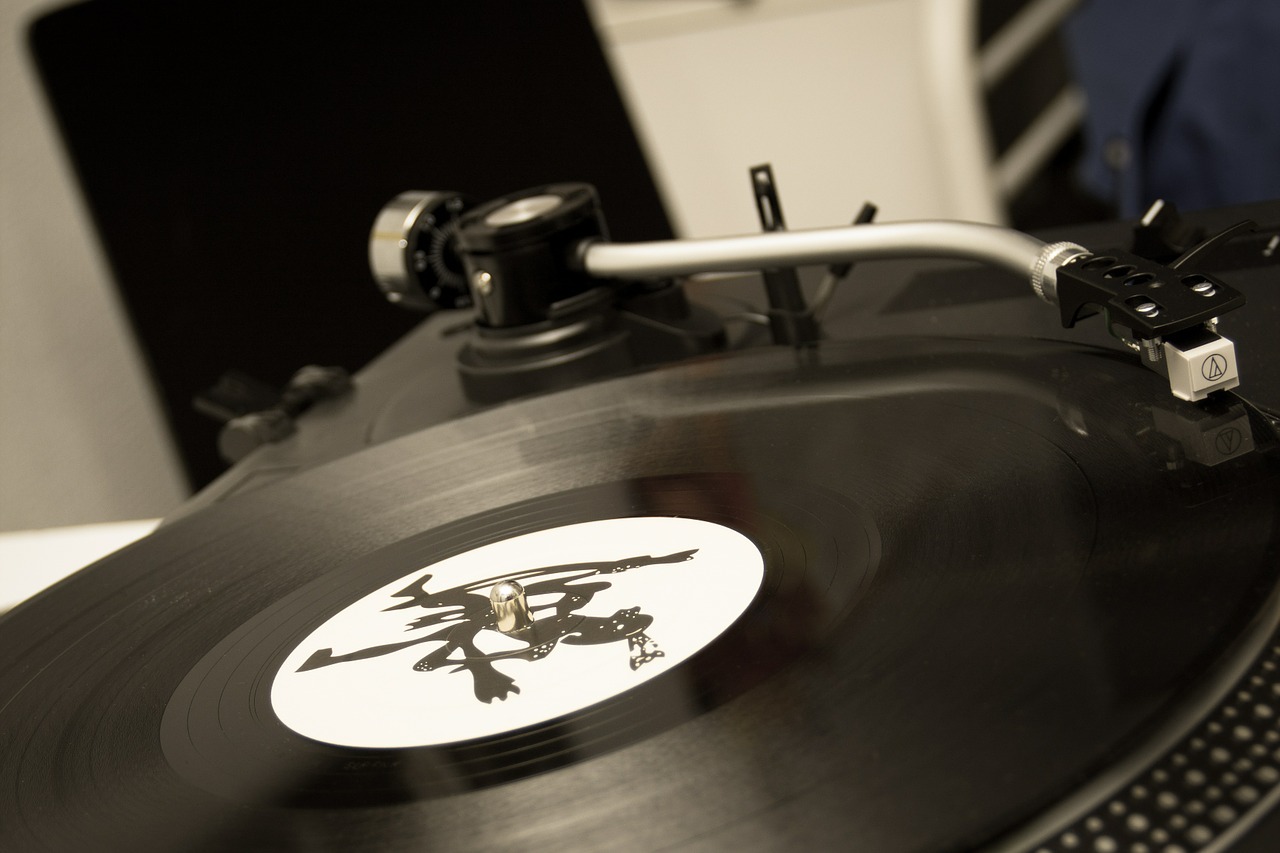
Me and the music and the writing, we are linked, we are circular. Each feeds into the other. My mind is always full of both. I often feel that music should be constantly with me, and when I was a kid, I tried to make this so. Music in my bedroom, music in the kitchen where I used to sit next to the radio to write my stories, and music in my head. I still recall the agony of dying batteries in a Walkman. My favourite song whining slowly to a halt. Rummaging through the junk drawer in the hope that the loose batteries rolling around at the bottom would fit, and have enough juice left to keep the songs going.

When I look back at my writing, music has always been there too. Often without me knowing, it has shaped and influenced my writing, as well as who I am. When I was fourteen I wrote a book about a boy living in 1960’s America, during the Vietnam War. There is no doubt in my mind that my love of sixties music influenced me to write this particular story, and the songs and bands I had fallen in love with, are dotted throughout the manuscript. In my head, the book was in fact a movie, with an awesome soundtrack. Songs like All Along The Watchtower by Jimi Hendrix, White Rabbit by Jefferson Airplane and Ruby Tuesday by The Rolling Stones all had their place. I had songs for fight scenes. I had songs for when the gang were running from the cops. I had druggy songs, and hippy songs, and I had Thank You For The Days by The Kinks, In My Life by The Beatles, and Catch The Wind by Donavan. In my head I could see it all and hear it all and it was perfect.

When I look back, I see everything in terms of what music was there for me. I remember buying a Bob Dylan cassette from HMV when I was about twelve. I used to write the lyrics inside my diaries and my school books. I even used to scrawl lyrics that meant something to me onto the surface of my desk at school with a compass. I remember a friend I was slightly in awe of playing me Guns ‘N’ Roses, and watching the videos for Welcome To The Jungle and You Could Be Mine on MTV at her house. I felt like an outsider peering in. It was something; but it wasn’t mine.

When I first saw the video to Smells Like Teen Spirit I thought Kurt Cobain was the most beautiful person I had ever seen. It was something I did not really understand. I bought the single on 7 inch vinyl from my local supermarket and played it as loud as I dared in my room. When I was sixteen Britpop exploded and I found something all mine. When I rewrote The Boy With The Thorn In His Side twenty years after it was first penned, I went back and made Danny’s journey through music my own. From Guns ‘N’ Roses to Nirvana, from the sixties to the nineties, with The Smiths and The Clash in between. It was my soundtrack and I am still adding to it.

Whatever music I am into most at the time, seems to seep into my writing. I had written a significant first draft of This Is Nowhere whilst listening to a lot of Neil Young vinyl. It suddenly seemed to make perfect sense that Jake’s mysterious mother Kate would have loved his music too. At the moment I am listening to a lot of Frank Turner. I have not made my latest protagonist Elliot Pie, a mad music fan, but I am curious to know how this phase will influence his character and the book.

The music has always been with me. I can’t go long without it. I can’t bear the silence or the hollowness that sometimes creeps in. A tight stomach is alleviated by jangling guitars. A worried mind unburdened by pounding drums, building up and up and up and up. The right chords, the right words, the right order, tingling down my spine, making me smile even when I really don’t want to. Music makes you move, it makes you remember how to breathe. It lifts your mood, sets you free, makes you remember you are alive and that great and beautiful things can happen.

When I was a kid I used to lie on my bedroom floor with the speakers on either side of my head. I was trying to locate every part of the song. I was trying to take it apart, understand every piece of it. I was trying to distinguish which instruments came in where, and I could never really understand it, and I still can’t, but I am still listening.

I still insist on loud music in the car. I search the CD collection before I leave the house, seeking out whatever my mood demands. The radio is on all day. Old music brings back a thousand memories. New music opens up possibilities. Makes me feel jealous of the young. If I am down sometimes I want to wallow in it, I want Creep and Fake Plastic Trees and Motorcycle Emptiness, and if I am angry I might want to stay angry, I might want Postively 4th Street or Karma Police or anything by The Smiths. If I want to be lifted up, if I want to feel instantly positive, I turn to The Stone Roses and Oasis. She Bangs The Drums and I can’t stop smiling and drumming. I Am The Resurrection as loud as can be with no interruptions, otherwise I have to go back to the start and try it again. It can’t be messed up. Gotta hear it all. Live Forever is my favourite song in the world, quite possibly. It’s simple and it’s basic but it’s got everything I need. It gets me right there. It says it all. I just wanna’ fly…

Nearly all of my writing has music in it somewhere. The Boy With The Thorn In His Side is a dark and hard hitting story, but is lifted up by Danny’s love for music. He gets to do what I have always wanted; work in a record shop. In The Mess Of Me Joe runs drugs for his brothers in order to save up for a drum kit. In the sequel he will have formed his band and be trying to get noticed.

Music helps me write. It gets the juices flowing. Lyrics inspire stories and invoke characters inside my head. I imagine that all my characters have a soundtrack; music that defines their life and their story. Songs that are all theirs. Songs they sung when they were sad and lost, songs that gave them hope and guts when they needed it most, songs they fell in love to, songs they had their first kiss to…

Me and the music, tapping away. I remember when I was nineteen, and I hadn’t gone to University like I’d planned, and I had a shit job cleaning offices, and my mother had this terrible man living with her, and all my friends had left and gone to Uni, and everything was over, everything was standing still. I remember drinking every night, alone in my room, just me and the music and my trusty old word processor. All I needed was a constant supply of CD’s and paper. I wrote non-stop, all through the night. I wrote whatever came into my head, streams of consciousness and near unconsciousness. I felt like if the music ever stopped then I would die. The music kept the words coming, one after the other, rushing out of me, releasing me from anger and disgust and fear of the future and the whole world. I could make sense of it; or at least keep the worst fear at bay, if I just kept writing, just kept listening to guitars and drums and lyrics.

Now I walk around and I don’t often like the sound of the world. I want to tape a soundtrack over it all. Life is much cooler if you are constantly singing along. If there are constantly words inside your head.

Sometimes I get a nervous feeling in my stomach and for a moment or two, I don’t know why. I can’t work it out. There is nothing to be nervous about. I am not about to do anything scary or important. But the feeling is there nonetheless. It’s like a breath I cannot take. Like the next move has been prevented and I’m stuck. It’s not horrible, or terrible, but it is strange and comes at any time, following me about my life, sudden tightness, sudden urge to take a deep long breath and try again.The other day I finally worked out what it is. It’s my stomach nose-diving, lurching, crunching up small, and its because its wondering what song comes next. What part of life is about to unfold.

Songs are stories. Songs are full of people. Songs are full of love, and fear, and regret and confusion and pure, relentless joy. My writing needs them all. The desperate ones, the depressing ones, the uplifting ones, the soul destroying ones, the ones that shine… They all help me write.

“I’d hear a song, and it would cause this utterly jolting and physical reaction inside of me. It would take me over and it would take me somewhere else. Set all kinds of things off inside of me. Some songs, they drag you down with them, they take your hand very gently and ease you out of the sunshine. They want you to feel their pain, and they want the shivers to run through you as all your hairs stand on end.And then there are the songs that set your hair on fire, and I mean, they fill you up with indescribably joyous energy, the kind that makes you believe you will live forever. Primal Scream’s Movin’ On Up was one of those for me during that time. When I heard that, or sung along to that at Chaos, my heart was exploding with hope, let me tell you, my body felt like it had wings, my soul knew that nothing bad could ever happen to any of us, ever again. Music can do that you know.”  – Danny, “The Boy With The Thorn In His Side” http://www.amazon.co.uk/Boy-Thorn-His-Side-ebook/dp/B00W8DLGKA/ref=sr_1_1?s=digital-text&ie=UTF8&qid=1431972783&sr=1-1&keywords=the+boy+with+the+thorn+in+his+side