Indie Author Of The Month; Mick Williams

Welcome to another Indie Author of The Month post! At the end of every month I will be interviewing and generally drawing attention to a fellow indie author I have come across on the internet. For April, I welcome Mick Williams to the blog. Mick is an author I have had the pleasure of knowing online for a few years now. I’ve read a few of his books and he has also read a few of mine. Mick is a very versatile author who writes in multiple genres. He really does have something for everyone! His books are fast-paced and full of adventure. Read on for more.
1. Tell us about your latest release. What is it about and who is it aimed at?

My latest book is called Hope’s Game, a story about a man named Charlie who has lost everything and is offered the chance to earn £10,000 by taking part in research for a new Artificial Intelligence project. Of course, he has no choice but to take part and goes on a life-changing, sometimes harrowing journey. If I had to categorise it, I’d say it’s a little like the Black Mirror TV show… it seems like it should be sci-fi, but it really isn’t, it has all kinds of things in it. Based on that, it’s aimed at pretty much anyone, although I wouldn’t want younger readers to see it, Charlie goes through some tough times!

Hope's Game by [Mick Williams]

2. Tell us about your publishing journey so far.

I’ve been writing forever, and it wasn’t until I attended a conference in America that I plucked up the courage to go for it! My first book, A Reason to Grieve, was self-published and, if I’m to be honest, was written as a dare since I’m a fan of action and it’s more of a romantic comedy! Something must have worked, though – it’s still my best reviewed book and people still mention the characters to me and demand a sequel! After that, I finally wrote an action/adventure book called A Guy Walks into a Bar. When it was completed, I printed out two copies (old style, at home!) and handed them to two people who had offered me a ton of advice. One of them was the wonderful author, Tony Acree. Little did I know, he also ran a publishing company. We met for lunch, where I expected some nice food, company and advice, and I walked away with a contract! I now have four books published through Hydra Publications.
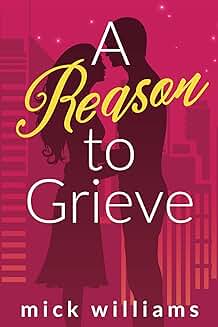
A Reason to Grieve

3. When did you first know you wanted to be a writer?

At junior school. I’ve always written. English Language was my favourite subject at school and it followed me home every day. I made my own comics, short story books, magazines – you name it, I tried it. I can’t begin to explain the feeling I had when I opened the box that contained my first ‘proper’ book, and it still gives me chills after a further five!

4. What is your typical writing day like?

Ha! I would LOVE to be able to say that I have a typical writing day. Unless I’m on holiday, no two seem the same. I work a full-time job, so I have to MAKE time to write, otherwise it doesn’t happen. As I write this, we’re (hopefully) in the middle of the Coronavirus pandemic. Out of all the horrific negatives that come with it, the first positive I considered was that I might be stuck at home with the entire day to write but, no, my company has me working a full week from home! So, I set the alarm for as early as I dare and write before I get ready for work. It can get frustrating, since my brain never shuts off and I usually get my best ideas when I can’t do much but jot them down.

5. What is your writing process? (how do you plot a book, come up with characters, find motivation etc)

The honest answer is that I don’t really have a process! In terms of plot, I think I’ve tried something different for every book I’ve written. I do TRY to put together an outline (Reason to Grieve, Exodus and Hope’s Game were done on an Excel spreadsheet, Whatever it Takes and A Guy Walks into a Bar were a bunch of handwritten notes, and Callie’s Eyes was a pile of research and a ‘wing it’ approach!). I’m currently playing with the corkboard feature in a program called Scrivener for the sequel to Exodus, which is cool since I can swap, shift and change things as I go and see the whole picture, but I’m also ‘winging it’ on another story, AND writing random scenes for the sequel to A Reason to Grieve!!

Exodus: An Old Farts Club Story (The Old Farts Club Book 1) by [Mick Williams]

Characters are everywhere! Some are people I know, or see when I’m out and about. I sometimes ‘cast’ my characters as if they were in a film, then I can play their scenes in my head and have an idea of who they are and how they’d react to different situations. A couple of the characters in Reason to Grieve were based on characters from a show called ‘Coupling’, and the lead character in Whatever it Takes is based on a customer who came into the store I worked in when I lived in Kentucky. He loved to hunt and was a perfect Cory Keller!

Since I normally know my characters before I start writing, a lot of the time their actions are dictated by what that their personalities would actually do. I have an idea of where I need them to go, but I let their actions take them there… it seems much more natural to let them take over than have me try to force them. If they sometimes surprise you when you read them, you should have them in your head when you write them!!

I remember an author friend saying ‘vomit your first draft onto the page and then sift through the chunks’… I struggle to do that. I normally write a chapter, then go over it and nit-pick it to death. It slows me down but, by the time I’m ready for the next chapter, I’m fully immersed in that world and those characters. It also helps with continuity. Once I’ve completed the first draft (in my fashion), I’ll go through it again and flesh it out with description and emotion. Then, I’ll go again and check it for grammar, punctuation and the dreaded typo. Typos ALWAYS slip through, so then I’ll send it to trusted readers who’ll send back their thoughts. I’ll go through it yet again and either make necessary changes, or decide that what I’d written originally is still the best way to say what I want to say. After that, it’s about as good as it can get at the time, and it’s time to let go and send your story into the world.

6. What has been the most positive thing about your publishing journey so far?

Two things. Mainly, the people. I’ve met some amazing people on this journey. Writers are, for the most part, incredibly supportive of one another. More so, I think, than in most other professions. I have a ridiculous amount of writer friends who are always there for support, encouragement and, as importantly, honest criticism. I’d be lost without them. I’ve also gained some really cool readers who stay in touch to see what I’m up to and, again, offer support and encouragement.

Then, there’s the writing itself. Some days it’s easy, others it seems impossible, but it’s always there. Being able to sit and tell stories is something we’ve done since time began – I get to do it whenever I can. The feeling of opening a new completed book, of seeing a review on Amazon, of writing a particularly satisfying scene… they’re all incredible feelings and something that never gets old. To be able to transport someone from this world into another, even if only for a short time, is fantastic. We read books so that we can check out different worlds without moving. What a gift to be able to supply that world!

7. What has been the most negative thing about your publishing journey so far?

That’s easy – marketing! I love to write but each time I release a book, with the exception of my loyal readers, few people see it and it vanishes into the ether with the tens of thousands of other books that were released at the same time. I love the writing process, but really struggle with advertising and pushing things about me and the fact that I have a new book out (just so you know – I HAVE A NEW BOOK OUT… the link is here somewhere!). I’ve signed up for so many courses and programs, and have so many books on the subject but, when I release a new book, I’m so eager to get stuck in to the next one that I neglect to let folks know about it.

8. What can we expect from you next?

Scarily, three things!! I’m working on a sequel to the award winning Exodus, an adventure/thriller series about a group of army veterans called The Old Farts Club – think of an ‘up-to-date A-Team’! I also started to write a first-person story about a guy who works in retail and gets tired of the abuse the public throws at him – so he embraces his dark side to deal with it. That one came to me after binge watching ‘You’ on Netflix! And, after so many requests, I dipped back into the world of my first book, A Reason to Grieve, to carry on the story of Tom, Emma and their friends; a complete contrast since it’s a romantic comedy. I have enough words between the three of them for a complete book, but my publisher has suggested that I concentrate on one at a time, so Sarge and the rest of The Old Farts are currently engaged on an adventure and have flown from Kentucky to deepest Scotland to save a friend’s life

9. Who is your favourite character and why?
That’s a tough question!

Doris, from A Reason to Grieve, is the only character that I’ve shed tears over, so that must mean something. I truly love her spirit and her blunt way of giving advice to the younger characters. If i can be like Doris when I’m approaching seventy (but without the blue rinse!), I’ll be a happy man.

I do also love Paul Howard from A Guy Walks Into a Bar – he’s just an average man who finds himself in an extraordinary adventure. He’s resourceful and witty…and he gets to hang out with the other cool characters.

Then there’s blind Callie from Callie’s Eyes, and Hope from Hope’s Game…did I mention this was a tough question?
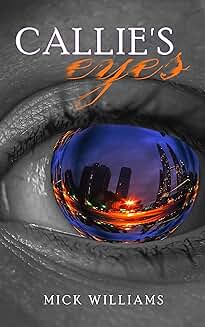
Callie's Eyes: How do you convince someone you can see the future, when you can't see at all?


10. Where do you get your ideas from?

Everywhere! News and magazine articles, people watching, overhearing things people say (not eavesdropping, mind, overhearing; apparently, there’s a difference!) and, in the case of Callie’s Eyes, a dream. Most of the story, including Callie’s name, happened in a dream and it was one of those fortunate times when I woke with it still at the front of my mind. I jotted it all down on a Post-It note and picked it up in the morning. Hope’s Game is based on a screenplay from a very good and talented friend of mine, Craig Ostrouchow. Whatever It Takes came out of a conversation with a hunter in Kentucky. A Reason to Grieve came from an old workmate who’d browse the obituaries every morning before work to see if he found anyone from his old school in there. A Guy Walks Into a Bar came from people watching – in a hotel bar, and Exodus came from a holiday in Jamaica when we visited Bob Marley’s compound and got to drive through the Jamaican townships and countryside.
So, like I said…everywhere!

Whatever It Takes

11. Tell us three fun facts about you

Haha – what was I saying about pushing ‘me’?? Erm… okay –

1. I LOVE music. Alongside reading, writing and family, music is everything. Genesis are my favourite band, and Jude Cole is my favourite artist. If it wasn’t for Jude Cole, I would not have met my wife (if you’d like the full story, join my FB page ‘mick williams author’ and message me and I’ll tell you, it’s a long story!). Truth be known, there isn’t much music I don’t like, I go from punk and pop to rock and reggae and everything in between! MP3s and streaming mean that music is everywhere now. The only thing I miss is the album format. Now that we can stream everything, music seems to be piecemeal where, before, a good album was constructed to flow and have peaks and troughs. Just like books.

2. I have two very cool cats name Thud and Crash. Thud adopted me when we lived in Kentucky. My American brother and my adopted second wife have a house that overlooks a golf course. One cold winter, after a Mexican meal and one or two (or five or ten) drinks, we were hanging around in the kitchen when my wife heard a noise outside. I went out to check it out and was eventually ‘ankle-bumped’ by a dirty, freezing-cold kitten. The end of his tail was broken, and his ears were riddled with mites. At the time, I wasn’t really a ‘cat person’, but our option was to either take him home or put him back into the cold. When we found that he’d been dumped, we had no choice but to adopt him, and now he’s my writing companion (he’s actually on my author pic on A Guy Walks into a Bar!). I call him the OC (Original Cat) since we also adopted another furry fella from the animal shelter to keep Thud company. This ginger tabby is the most lovable animal I’ve ever met and has a habit of nuzzling against you and then falling over to let you fuss him. We had to call him Crash. I should really put their pictures on my FB page and website!!

3. I’m not an army brat, but I’ve lived (I think) in thirteen different places, on either side of the Atlantic, and I’m getting ready to move again once restrictions are lifted! I think this time, once we find somewhere, that’s it! I’m ready to sit still now!!

12. What is the best advice you could give to aspiring writers?

Write what makes you happy. I read a lot about ‘writing to market’, but a) markets seem to shift constantly and b) that seems too much like work! I love to write, and I write what’s in my head, not what I think people might like to read. I’ve been fortunate to find people that like to read what’s in my head which, I suppose, makes them as crazy as me! It won’t ever fund my retirement, but it’ll make my retirement a lot more fun.

Read. A lot. Reading is writer homework. See how the books you enjoy actually work. Why did that scene make you smile? Why is your heart pumping a little faster after finishing that chapter? Good writers don’t hide how they make their magic, it’s right there on the page. Love or loathe him, but no one creates worlds better than Stephen King. How? Description and character. By the end of a SK book, you’ve lived in that town and you know those folks. They’re as real as you and I… that’s why it bothers you so much when he does nasty things to them! Learn from the best.

And, remember that rules are made for bending. While there are definite do’s and don’ts, no one will write your story the way you will. I remember reading somewhere that sentences should vary in length (which I agree with 100%), but that they shouldn’t be overly long. I’ve just finished the latest number one bestseller by Lee Child. There’s a sentence in there that runs at over ONE HUNDRED words (his previous best was 81 – I counted!). This breaks every rule under the sun, but it worked. And Reacher still had time to get the job done

And, finally – just enjoy it. If no one else reads a word of what you’ve written – you have. And I’ll bet it felt great.

Thank you so much to Mick for doing this interview! If you would like to find out more about Mick and his books (and I highly recommend that you do) you can follow him here;

Get in touch: Website – http://www.mickwilliamsauthor.com

Facebook – mick williams author

Twitter – mickwilliamsauthor

Email – mickwilliamsauthor@gmail.com
Indie Author Of The Month; K.M. Allan

I used to do a feature on my blog called Indie Book of The Month. Like a lot of things it started with good intentions and then fell by the wayside. Basically, I used to interview an indie author if I had read and enjoyed their book and I’d post the interview plus the author’s links on here. I’d like to do more to support fellow indie authors, as I know so many and they are often very talented yet under-rated or unknown authors. It’s a constant struggle for indie authors to get their books seen so anything we can do to help each other is a bonus. With that in mind, I’ve changed the feature to Indie Author Of The Month. These will still mostly be authors I have read myself, but not exclusively. They will certainly all be authors I follow and whose content I enjoy. So, please may I introduce you to the lovely K.M. Allan who I have been following for a while now. Her debut YA novel Blackbirch: The Beginning came out last month and I enjoyed it very much.

1) Tell us about your latest release. What is it about and who is it aimed at?

It’s called Blackbirch: The Beginning and it’s the first book in a four-book Fantasy YA series. It centers around 17-year-old Josh Taylor, who has suffered a family tragedy and been forced to move back to the town he was born in, but can no longer remember. It’s not the only thing he’s forgotten, and when he starts having weird dreams about monsters and magic, long-buried secrets and danger wreck havoc with his life. It’s for 14 year-olds and above.

2) Tell us about your publishing journey so far.

It’s been a long one. I’ve been writing this series on and off since 2001, and started querying it back in 2015. After 22 rejections, it was signed with a small press in 2019, but it wasn’t a good fit and we parted ways. I then decided to self-publish, about a month before release, and that was a real learning curve. I have enjoyed it, though, and now the first book is finally out in the world.

3) When did you first know you wanted to be a writer?

I can’t remember wanting to be anything else. I’ve always been a big reader and wanting to write stories was just a natural progression.

4) What is your typical writing day like?

Since June 2019 I’ve been writing at 6am with the #6amAusWriters on Twitter, so my day always starts by checking in with them and doing something writing-related for at least an hour. After that, it all depends on what’s happening during the rest of the day. I basically try to write whenever I can sit down at my keyboard. Some days that’s only for ten minutes, other days I’m lucky enough to write for hours.

5) What is your writing process? (how do you plot a book, come up with characters, find motivation etc)

I’m a total pantser, so I rarely plot, especially a first draft. I’ll start with an idea for a scene or a piece of dialogue and write until I come up with something I can work with. I get a lot of ideas taking walks, or just doing something boring like cleaning and letting my mind wander. Motivation is probably something I struggle with the most, but I find having a routine and writing schedule (i.e blogging on Tuesdays, editing Wednesdays, writing one chapter a day) helps.

6) What has been the most positive thing about your publishing journey so far?

The support. I’ve been part of the writing community through social media for 5 years, and my writing blog for the last 3, and the support I got from these communities when my book was released really blew me away.

7) What has been the most negative thing about your publishing journey so far?

Definitely the technical process of publishing a book. There’s a lot of things to learn, and some of it is not immediately clear. It can be very time consuming and frustrating.

8) What can we expect from you next?

I am planning to release each book in the series 6 months apart, so what’s next is book 2. I plan to get that out in July, and it’s with an editor now. In the meantime, I’m working on writing/editing books 3 and 4.

9) Tell us three fun facts about you

I am an identical twin. I believe there is a Simpsons reference for every situation in life. I can’t not finish a book or a movie, even if they’re bad.

10) What is the best advice you could give to aspiring writers?

Everyone has their own writing journey, find yours and don’t compare it to others. Work out how you write best, stick to it, and remember that you can always learn more.

Thank you so much to K.M. Allan for allowing us a glimpse into her writing life. If you would like to find out more about her and her writing, please follow the links below. Blackbirch: The Beginning is available in ebook and paperback and I can guarantee it is a great read and a fantastic start to a series!

Author Bio

K.M. Allan is an identical twin, but not the evil one. When she’s not writing, she likes to read, binge-watch too much TV, and take more photos than she will ever humanly need. Visit her blog at www.kmallan.com to discover the secrets of the universe, or at the very least, some good writing tips.

Book Links

https://kmallan.com/blackbirch/

Social Media Links

https://www.facebook.com/k.m.allan.author

https://www.instagram.com/k.m.allan_writer

https://twitter.com/KMAllan_writer

Interview With Emily Williams, Author of Rafferty Lincoln Loves…

Last month I picked Emily Williams‘ wonderful young adult book, Rafferty Lincoln Loves… as my Indie Book of The Month. Emily kindly agreed to an interview, so here she is answering questions about the inspiration behind the book, how it was researched and what to expect next from her!

1. Can you tell us where the idea for Rafferty Lincoln Loves…came from?

The idea for the novel came from wanting to write a novel about horses but one that appealed to an older audience. The main plotline involved the missing racehorse Profits Red Ridge, however, the character of Rafferty took over. I let the story lead me along as I was writing but had the overarching plotline drawn out beforehand. The character subplots led in all sorts of exciting directions!

The themes developed as I was writing. I knew high-school-years were always going to be difficult to write about and Rafferty Lincoln Loves… delves into some sensitive topics. I wanted to capture high school from the perspective of one student, Rafferty, but then him discovering what it would be like to experience high school from other circles.

2- Did you enjoy reading books about horses when you were a teenager?

I loved them! Although, I found it difficult to find many aimed at the older teen and so I read books for younger children. I wanted to fill that gap in the market by writing my own horsey novel aimed at older teens.

3-Did you have to do much research for this book and if so how did you do it?

There were parts of the novel that needed research and other parts that I used my own knowledge.

I had some input from a police officer friend and from a friend working in social services. I used quite a lot of my own horsey knowledge but had limited knowledge of racing, so these parts were researched. School life in the novel was based on my own experiences coupled with more modern day experiences with the invention of social media etc and how that affects children. I asked teenagers for their opinions on these aspects!

4- What do you hope young readers get from this book?

I hope they get a more modern day feel to the traditional horsey novel; more current and relevant to their lives. I hope the ending of the novel leaves them empowered about issues at school and how to resolve them and not let them fester.

5- Can you tell us what you are working on next?

I started a psychological thriller last year. It follows a high school girl revising for her exams and watching the house opposite whilst she studies, as new neighbours move in. It’s more an adult book than young adult despite the age of the characters. There are more mature and dark themes running through the novel. I am still trying to add my lighter element of humour too to break it up.

I am really enjoying writing the novel, but put it aside for a couple of months whilst I concentrated on the publication of Rafferty Lincoln Loves… I hope it’ll be released next year, along with another I have developing in the pipeline!

6- Were there any particular challenges in writing a YA book?

I hadn’t written a Young Adult novel before and was worried I’d find it very challenging. However, once the character of Rafferty was established, he took over and the book pretty much wrote itself. There were some tricky themes covered and I worried about covering these sensitively but with the frank openness of a teenager. I hope I managed that! I loved writing a novel involving horses and was very excited about the whole novel from start to finish.

7- What has been your approach to marketing Rafferty Lincoln Loves…?

Marketing is always tricky. I planned the marketing for the novel well in advance and gave out advance review copies early to get reader opinions. The novel has appeared in a couple of magazines and local papers. I hope to spread the message about the novel far and wide to support the charity.

All proceeds from the novel are being donated to, The British Thoroughbred Retraining Centre. The charities ambassador, Frankie Dettori MBE, has supported the book by writing the foreword and the charity themselves have been supportive in sharing the novel

8- What is your favourite YA book and why?

There are several that I love but my favourite is, The Perks Of Being A Wallflower. It captures adolescence in a lighthearted manner but with gritty underlying themes.

9- Did you always know the ending for the book or did it change as you wrote it?

I had the ending in mind, however, one of the characters really came alive as I was writing so he had a larger part in the ending than I planned. It came together even better than I hoped it would and more emotional.

10-How did you write this book? What was the process like?

I start with a plot and then find suitable characters. The plot is always easier than finding unique characters that fit the story. The characters do lead the plot totally astray from what I originally planned but I’m okay with that. I sometimes gently bring them back to the main plot but let them have their own time. Often other themes I hadn’t anticipated arrive and make the novel better, deeper and more interesting. Themes of high school bullying and rumour spreading surfaces in Rafferty Lincoln Loves… which I hadn’t originally planned for.

I love the writing process and once I’m fully into a story, I whizz along really enjoying the writing. The early stages I find difficult like I am with the novel I am currently writing, but with Rafferty Lincoln Loves… I was submerged in the storyline very quickly.

Thank you so much for agreeing to an interview, Emily! Good luck with Rafferty Lincoln Loves… and I’m very much looking forward to your next novel!

Interview with Mark Gillespie; Author Of Black Storm

Last month I picked Black Storm by Mark Gillespie as my indie book of the month. Mark is an extremely proficient author, with a terriific work ethic. He kindly agreed to an interview and here it is!

  1. For those who are not familiar with your work, how would you best describe your genre?

I call it Apocalyptic Pulp Fiction. But Post-Apocalyptic fiction is the most recognisable term for my kind of thing. There’s dystopian and horror elements in there too. I’ve dabbled previously with other genres (Alternate History) but if someone were to pin me to the wall, brandish a knife in my face and demand a straightforward answer (it could happen!), I’d look them in the eye and tell them that post-apocalyptic fiction is what I do.

  1. When did you first know you wanted to be a writer?

I’ve always enjoyed writing but it was very much a background thing until I reached my early thirties. Stories and song – that’s been my thing in this life. Between the ages of 15 and about 30, I dedicated my life to song and to working as a musician in the UK and Ireland. I had a great time but the music thing fizzled out for me about 2010/2011. Work dried up. I fell out of love with the business of being a musician.

It was time for a change.

Later on, I went to uni as a mature student, studying English and History. When I picked up a book called The Heath Introduction to Fiction and read some of the short stories in there, a light bulb went on in my head. I felt the buzz again.

Real job? Forget it…I was going to be a writer!

  1. Can you tell us about your publishing experiences and journey so far?

I’m indie published. I’ve never submitted a manuscript to an agent or publisher because by the time I was ready to do so (2015), I felt that indie publishing was the best model for me. I wanted to make a living from my writing and I felt that indie was my best chance of doing so.

I’m not interested in sitting in anyone’s electronic slush pile.

Having said that, I accept that indie publishing isn’t for everyone. It’s so much work! I would encourage new authors to research their publishing options and figure out what’s the best model for them. Knowledge is power. Know what you’re getting into and why. If it’s indie, be prepared for a very steep learning curve and always remember to bring your creative and business hats to the table. And make sure it’s you’re A-game.

I’ve made a lot of mistakes along the way but I think I’m getting better at this.

  1. Tell us about Black Storm, what inspired this book?

The initial trigger for Black Storm was something I read online a couple of years ago. I can’t quite remember if it was in a news article or on a forum or whatever – but I read something about a woman in America who’d been spotted walking through a town or a suburb dressed in old-fashioned mourning clothes. It sounded like she was doing an epic solo trek or something like that.

It was just so random and it struck me as noteworthy. I wonder sometimes if I imagined this because I can’t find any trace of it online (Yep, I just Googled it again!)

Whatever it was, that was the seed for the character of the Black Widow. I took note and it stuck. That was the beginning of Black Storm – it all began with the Black Widow.

51d31ZwvjML

  1. You are a remarkably proficient indie writer, can you tell us how you manage to publish books so quickly? What is your process?

I’m lucky that I have the time to dedicate to writing. But I also make good use of that time. A regular working day is between 10-15 hours, which includes both creative and business stuff (creative early, business later).

I get up at 5.30am most mornings and go to bed about 11ish on average. Apart from walking the dog, exercising (super important for authors!) and eating, the work takes up most of my time.

I always have an A project (a book in the later stages of editing) and a B project (ideas, brainstorming) on the go. That’s important for moving onto the next thing. I would hate to finish a book and have nothing but a blank page waiting. That would probably floor me.

In order to be prolific, you have to make sacrifices. What’s eating up your writing time? What can you give up? Nobody said it was all fun and games.

Working long hours is a habit for me now. That’s probably how I get the books out so fast – I try to release something every two months. I also write shorter books at about 50,000 words average. I know that I can’t keep that pace up for the rest of my life however. And I wouldn’t want to. There’s more to life than just work. Much more!

  1. What usually comes first for you? The character or the plot?

I start with a situation that intrigues me. More often than not, it revolves around a ‘what if?’ question.

With Black Storm, that question is what if human beings had been targeted for extermination by an unknown power? We exterminate other species all the time, but what if the tables were turned. What if it happened to us?

With the Future of London books, it’s what if the London riots hadn’t stopped?

Answering the questions is fun.

Character and plot come later. But it’s that initial idea, that question that hopefully will get the juices flowing. If I’m excited there’s a good chance that someone else will be too.

  1. Do you write your books with a particular theme or message in mind and if so, what is it?

I never start with a message or theme. It’s only somewhere within the writing process that it becomes clear to me what that message might be. And there always is one, at least from my perspective. From another person’s point of view, there might be a different message altogether. That’s the joy of individual interpretation. We take the text, soak it up with all our baggage and find a meaning that’s unique to us.

I discover what I’m writing about by writing about it. But it always starts from an entertainment perspective. Is this fun? Is this worth reading about? Can I stay with this from start to finish?

Themes, messages, and the deep stuff – they come from the unconscious. They take care of themselves and appear when they’re good and ready.

  1. Do you have a day job and if so does it help your writing in any way?

My day job is writing.

I’ve done a few jobs now (worked in hardware, written freelance sports articles, been a bouncer). But I’ve never worked so hard in all my life as I do now. Music was tough. Writing is tough. Anything creative is brutal and yet some people look in from the outside and assume it’s a breeze because it’s a passion and it’s associated with leisure/entertainment.

A few years back I was amused to see that the readers of a major newspaper had voted being an author as their ideal job. No doubt they had visions of sitting in a log cabin surrounded by gorgeous scenery. They saw themselves sitting in front of a typewriter, a turtleneck sweater on, a pipe hanging out of their mouths, and a Che Guevara beret on their heads. And the words would pour out of their minds fast and easy. And that’s all there is to it – another masterpiece in the bag.

They haven’t got a clue.

  1. Tell us about your next release

Black Fever is the next release. It’s the second of the Black Storm books, which follows the fortunes of father and daughter, Cody and Rachel MacLeod, as they try to navigate their way through a mysterious apocalyptic event, the Black Storm, which has plunged the world into darkness and despair.

Fingers crossed, Black Fever will be out on May 15th.

  1. What is the most valuable thing you have learned as an indie writer so far?

The number one lesson is perseverance.

It’s so hard at times being an indie author and you’ll feel like giving up a thousand times. And that’s just in one morning! Too often, it feels like a mountain of work with only a crumb of reward in return.

But keep going. If you truly believe you’re on the right path, keep grinding it out. Work hard, but work smart. Learn from others. Join Facebook groups like 20Books to 50K. Read books on indie publishing, writing and story craft, marketing etc…

Absorb the wisdom of others. You’ll find it if you look for it. And if you have any to share, then share it. The indie author community is a friendly one and we’re willing to help those in need. This is how we all grow.

You can find out more about Mark and his books here;

Website

Instagram

Facebook

Twitter