What Happens When Pen Hits Paper? – I Am Me, and I Am Free

This piece was previously published on Medium!

Image by Bruno from Pixabay

What happens when pen hits paper is I am home. I am me. I am also not here, because I am free.

I am in a world of my own creation — multiple worlds even, interconnected universes I invented myself for my own enjoyment and entertainment. That’s one of the things that happens when pen hits paper. I am entertaining myself.

When pen hits paper, words just flow, almost as if they are not mine, almost as if something else is taking control. Often, it’s the characters. I don’t know how or why they fill me so much, until I feel fit to bursting, about to explode, but they do. They always have done.

They suggest the stories; they have so much to say. I go where they lead me, though I try to plan ahead, jotting down ideas for the next few chapters. But what happens a lot of the time is the words take on a life of their own. They do their own thing. I feel disconnected sometimes, especially when I reread words I have written. Sometimes I cannot remember writing them. I am not sure that was me. 

When pen hits paper, everything is let loose. Set free. Every detail, every observation, all the conversations overhead, the people watched and the emotions absorbed. The weather, the seasons, the landscape, the beauty and the tragedy. I never quite realise how much is pent up inside of me until pen hits paper and it all rushes out.

When pen hits paper I feel a release. I experience true freedom. I am making magic. Life feels limitless. Joyous. Glorious. I know why I am here. I know who I am. I am never more me than when I am writing.

When pen hits paper I am rebelling. I am breaking the rules. I am escaping reality and living within dreams. I am exploring difficult subjects, dipping toes into the darkness, asking questions, upsetting the status quo…

When pen hits paper anything can happen.

When pen hits paper I sit back and enjoy the ride, never knowing where I will end up.

When pen hits paper I have hope in a better world, a better day, a better me.

When pen hits paper, I start writing and I never want to stop…

Medium A Year On – Unexpected Success Plus A Warning Not To Be Complacent

Image by Joshua Woroniecki from Pixabay

I’ve been writing and publishing on Medium for over a year now and thought I’d write an update post on how it’s going but first I need to highlight the biggest negative for me so far.

Not having enough time to write my blog!

To be fair, I can’t blame Medium entirely for that – although obviously it’s more tempting to publish stories, poems, articles and essays on a platform that pays rather than my blog, but Medium doesn’t mind pieces being republished so again, so I can in theory repost things here.

The trouble is time and the constant, never-ending juggling act that is being an indie author, or indeed, any author, I suspect.

Recently I’ve been updating all my old books and this has been very time consuming, but it needed to be done. Some have had new covers, some have had extra edits and some have just been tightened up and updated in other ways. I’ve done it now, although I’ve yet to finish uploading new paperback versions to Amazon, but all the ebooks have been updated there and on Draft 2 Digital.

This means I’m now free to get on with preparing the next three books for release. More on that another day!

The thing is though, there is only so much I can do. Being an author involves marketing, promoting, writing, editing, submitting, revising, rewriting and trying to build and maintain your author platform. These are all balls I need to keep spinning in the air – not to mention being a mum, running a house and having a day job – so inevitably, there is always a ball or two getting dropped.

Lately, that’s been this blog!

I hope to rectify that today with this Medium update and over the next few weeks I will probably republish some popular Medium articles, stories and poems here just to get me going again.

So, a year after I joined Medium, how is it going?

It’s going well. Very well. I joined the Partner Program in September 2023 and was paid in October for my first three paid pieces. I just about covered my membership fee! In October 2023 I got boosted for the first time so my November payment was a lot bigger. That month I published six pieces of writing and the lowest payment was $0.18 for an article about different types of writers, while the highest paid was $57.49 for my first boosted piece.

I posted fifteen pieces of writing in November 2023 and got boosted again. An article about a haircut, of all things, made me $127.32. The lowest paid that month was $0.27 for a poem. December 2023 was an even better month for me when I got boosted three times. These boosts make a huge difference to payments. My three boosted posts earned me, $69.11, $78.10 and $81.59, but my other pieces were well received that month too. For example, an article that was not boosted still earned me $7.13 and a few others earned me between $2 and $5 dollars. It all adds up!

By this point I was extremely grateful and excited to be boosted but I was starting to worry about it too. Obviously boosted posts are shown to more readers, so that boosts your reads and views, and hence your payment. It also encourages people to read your other pieces so I tend to notice views and reads go up for unboosted writing too. Even now, looking at my older stats to write this blog post, I can see that some of my first pieces of writing have earned me more money since I originally shared them.

Why was I worrying about the boosts? Well, for a few reasons. I currently have 936 followers but like most social media and writing platforms, those followers do no automatically transfer into reads and views. Often, I assume, people follow you in the hope you will follow back. Without boosts, my posts were varying between $0.18 at the lowest and $7.13 at the highest. Like I said, it all adds up, but the boosts seem to make a huge difference.

Obviously, getting paid for your writing is a dream come true. It makes you feel validated and like your writing is worth getting paid for. It made me feel really good to know these payments were going towards paying our bills and rent, for example, but I was wary of relying on it. Of course, I was tempted to dream; maybe if I really put the effort in, in years to come I could give up my day job and just be a full time writer on Medium and with my books. That was always the dream and it suddenly seemed almost feasible…

Luckily, I didn’t let myself get carried away. I was still relying on those boosts and I figured my luck would run out at some point.

However, January was another good month. I got boosted three times again. At the end of this post you’ll find a list of my boosted articles in case, like me, you’re trying to figure out what types of writing gain boosts on Medium! I think I’m starting to figure it out but that in itself brings its own issues. I didn’t want to start trying to write with a boost in mind, but it was hard not to!

My lowest paid piece in January was zero for a poem, closely followed by $0.06 for another poem! My highest paid was a boosted article, $90.04, and my highest unboosted article made me $8.01.

February 2024 was crazy! I responded to a prompt about pet ownership with an article questioning the ethics of it and detailing my own increasing uneasiness about pet ownership and it got boosted. It’s my biggest earner to date, probably because it was so controversial. It earned me $231.49 and the most amount of comments I’d ever had, not all of them nice! This was an eye opener for me. It demonstrated that relatable topics people agree or disagree strongly with are probably a good way to secure views and reads, but it also showed me that people will read an article, totally misunderstand it and then leave slightly unhinged comments on it. In the end, I started thanking the critics for making me more money!

I had another post boosted that month but it made me a mere $26.11 so it just goes to show that even getting boosted isn’t a guarantee of hundreds of reads.

March was another crazy month. I got boosted three times, making me $66.78, $92.68 and $107.73.

April was a wake up call.

It had all been going so well! My earnings had been increasing every month and I had started to factor them into our spending and outgoings, in other words, I’d started counting on them. In April I posted twelve times and did not get boosted. I earned roughly $50 and the highest paid piece was actually a piece of flash fiction I wrote in response to a prompt. That earned me $7.08 but everything else was dire that month.

I was worried. I feared the bubble had burst. I looked at my posts and tried to figure out what was wrong with them. I was really proud of some of them but they just fell flat, barely got any reads. I did see other people saying the same thing about April though, so I don’t think it was just me that saw things slow down. Weird.

But it was a wake up call I probably needed. I need to think of Medium earnings as bonus, extra money, not something to be relied on. I cannot take getting boosted for granted and I don’t want to write with boosts in mind. So I am trying to forge a way forward by posting poems and stories when they come to me, writing about anything I am thinking or experiencing at the moment and by responding to the many wonderful prompts and challenges.

May, so far, is going well. I’ve been boosted three times and I’ve published thirteen pieces of writing. My highest paid piece for May is currently on $151.43. Not bad! And I was really surprised the other pieces got boosted.

So, the update is that Medium continues to be a wonderful platform for writers and readers. Members are still overwhelmingly supportive and kind, and it is still well worth the time I spend on it. The downsides are of course, accepting that some months you will earn a lot less than others, and that dedicating so much time to Medium means I drop the ball on other things, like this blog!

Anyway, I will be back next week as there is lots of writing related news to share and plenty of posts on Medium I can repost here for you!

But as promised, here is a list of the articles that got boosted:

Less Is More – The Most Important Lesson The Perimenopause Has Taught Me

An Emotional Haircut – At Age 45 I Finally Like My Hair

I Was The All-Seeing Eye – But Who Saw Me?

Take It From A True Cry-Baby – It’s Far Healthier To Let It Out Than To Keep It In

One Toothbrush – A Tale of Days Gone By

I See You, Single White Eyebrow Hair – And You Don’t Scare Me At All

The Best Life Advice I Ever Had Came From A Character I Created – Prove Them Wrong, A Mantra For Misfits

Why Do The Women In My Family Insist On Talking About Weight? – Breaking Free From Focusing on ‘Fat’

I’ve Been An Animal Love My Whole Life But I’m Not Sure I’ll Own Pets Again – Getting To Grips With The Ethics of ‘Owning’ Animals

All We Can Ever Strive To Do Is A Better Job Than Our Parents – On Loving Ourselves and Our Children

Does Losing our ‘Stuff’ Mean We Are Less Us? – On downsizing our lives and letting go of the past

Why Do I Write? – Because In Many Ways It Feels Like A Rebellious Act

Child’s Play or Telling Stories? – Children’s Play Proves We All Begin As Storytellers

Mental Health and The Perimenopause – A Second Puberty But With Far Less Support – mental health challenges at either end of my life and the difference in support available

Being A Mother Saved Me From Myself – Parenting Made Me A Better Person

Standing At A Crossroads In My Life Is Not Terrifying Anymore – when middle-age gives you the gift of trusting yourself

These boosted pieces all have a few things in common, which is interesting:

They are all articles or essays, rather than poems, stories or flash fiction.

They are all personal and emotional stories where I am extremely honest.

They are all about universal and relatable topics, such as ageing, womanhood, parenthood, childhood, body image, life lessons and life changes.

Something to think about anyway!

See you next week!

The Day The Earth Turned Series Is Complete!

This feels so good!

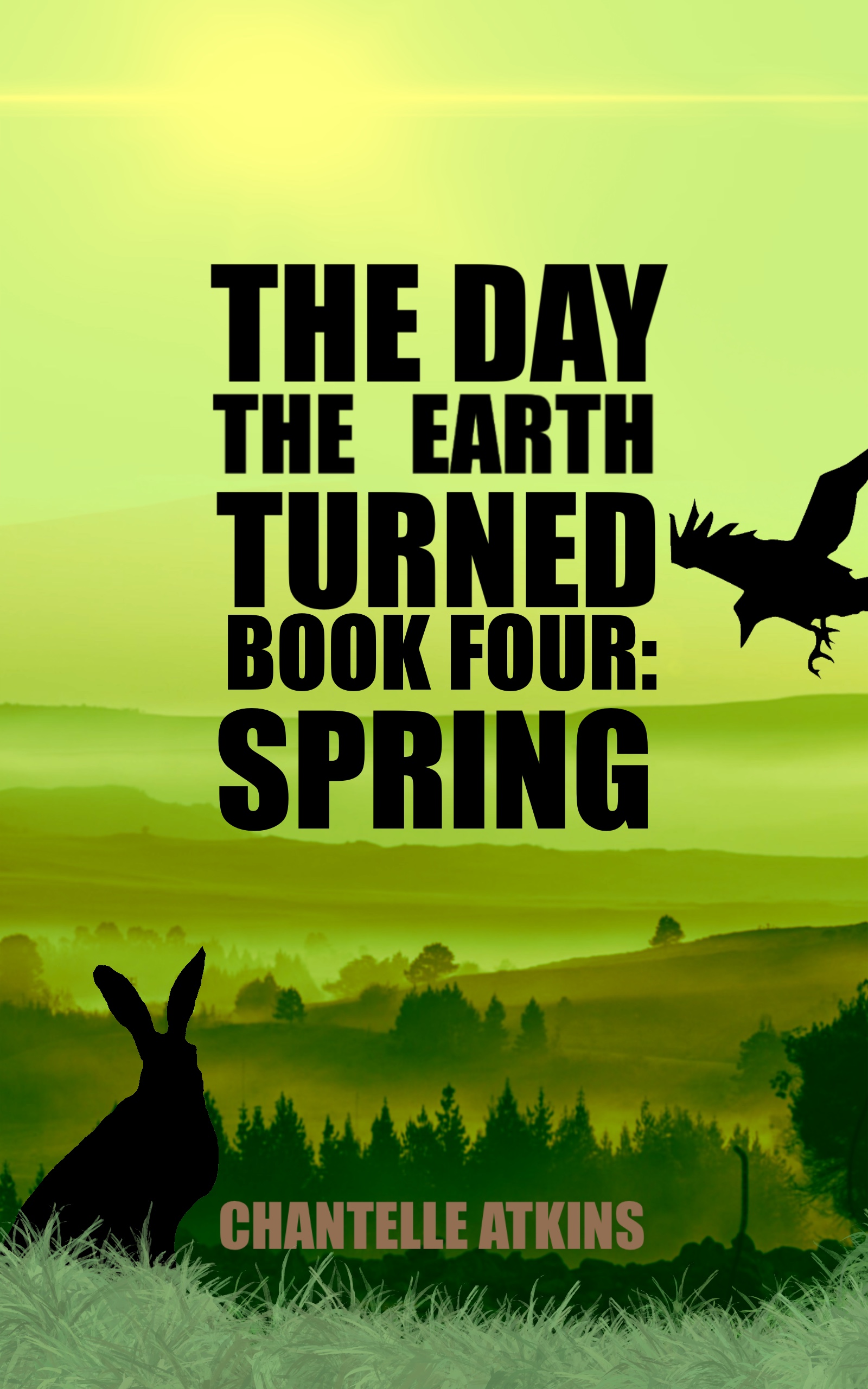
Today is publication day for The Day The Earth Turned Book 4: Spring, the fourth, and final installment in my YA post-apocalyptic/climate horror series.

It’s twice as exciting, because it’s not just the publication day for a book, it’s the completion of a series. I can now let it go (aside from marketing it) and believe me, that frees up so much space and energy in my head for other books.

I will kiss it a fond goodbye and move on, and there is so much screaming for my attention right now!

The Day The Earth Turned series started as an idea when I was very, very angry. It was about five years ago when we found out the land directly behind us was earmarked to be developed. Our landlord owns that land and a lot of land in this area, and for many years, it had been quarried. The diggers moved around from field to field, digging it up for sand, then letting it all go wild again.

When we first moved in, fourteen years ago, the land behind us was a field used for horses. There is a strip of woodland down the middle, and on the other side, more fields which were used for growing corn or wheat. Not long after we moved in, they quarried the fields right behind us. It was sad at the time to see the grass torn up, but grass does grow back quickly, and once the job was done, that’s exactly what happened. Now, years later, it’s a beautiful field surrounded by hedges and trees, and the best spot to watch the sun go down.

We often watch deer out there and when the centre floods in the winter, we get ducks and geese on the water and the sunsets are even more spectacular.

Needless to say, we were horrified by the thought of them building on it. They have now reached the last plot to be quarried and after that, the whole area is up for grabs. The landowner has made millions out of allowing it to be quarried for so long, but he obviously wants to keep milking it for more money. Rich people are just never rich enough, right?

The first idea put forward by various developers who started circling like sharks, was a fake water lagoon. It would involve digging up all the fields, pouring concrete over them and constructing a huge water park tourist attraction. Goodbye deer, badgers, rabbits, hares, voles, shrews, weasels, stoats and all the other wildlife we have spotted there over the years…

There were instant objections – the roads around here are not built to cope with that many visitors and during a local parish meeting, the council admitted that our lanes (narrow hedge-lined country lanes that loop around this land) would have to be widened to allow more vehicles and prevent the main road becoming even more congested.

I wept. I really did. Our lanes are lined with mature hedges and beautiful ancient oak trees. Like the fields behind them, they provide homes and food for so much wildlife.

I’d walk the lanes with my dogs, my eyes filling with tears as I imagined the pointless destruction. We live less than ten minutes from the beach, for Christ’s sake. Why does anyone need a fake lagoon?

The answer is, we don’t.

But people have to make money out of land, right? It can’t possibly be rewilded, left to nature, left to provide vital habitats for one of the most nature-depleted countries in the world!

Ugh. It sickened me and it still does. The good news is, another water park with a very similar design has just been approved not far from here, so there is no way now this one will go through. That just means they’ll decide to build something else on it though.

For now, it’s safe. The deer can roam through the copse and the badgers can frolic in the moonlight. For now, it’s left alone.

When we heard about the development plans, I started thinking, if only nature could fight back! If only the wildlife could develop a higher state of consciousness, thought even. They would be full of rage. They would hate us. If Mother Nature was a conscious entity, she would want revenge. She would want to cull us.

And that’s where the idea came from.

I imagined the world, the earth itself, turning on us. It would start with the adults as they’ve got the most blood on their hands. It would wipe them out with multiple pandemics, and along with that, animals and plants would start attacking us and killing us to save themselves.

I wanted to write a post-apocalyptic story and I thought it would be far more interesting if all the adults were killed and only the children were left.

How would they survive without the adults? Without food and resources, without transport, without school, without law, without medicine? Would they turn on each other or pull together? Would they be able to figure out a better way to live on this earth?

I knew early on that I wanted the animals to have their say and that’s why there are often chapters from the point of view of an animal or bird.

It wasn’t easy to write. It never is when I get the concept and plot before the characters. Notes, ideas and character bios started being added to a notebook about five years ago, and eventually that became a bigger notebook once I started writing it. It was in past tense at one point and then I switched it to present. That was tedious!

But overall, I am incredibly proud of this series. The reviews are so positive. It really seems to strike a chord with people. I hope readers enjoy the ending!

And as for seeing these characters again in the future, I’ll just say, never say never! There is a part of me that is very curious about what happened next….

But right now, there are three more books waiting to be polished up and published!

Thank you to everyone who has supported this series. From my wonderful beta readers, arc readers, fellow authors and bloggers, and to my wonderful editor/proofreader who is an absolute star. I am so grateful to you all. The indie community is a wonderfully welcoming and supportive one. Thank you also to my son, Dylan for designing the front covers for me! They’re perfect!

Here’s the series link if you’re curious about diving in and finding out what happens to young people without adults when the very land beneath their feet is turning on them: https://www.amazon.co.uk/dp/B0CBW3D8VL?binding=kindle_edition&ref=dbs_dp_rwt_sb_pc_tkin

Found Poetry For Reluctant Poets – Why It’s The Go-To Activity For Myself and the Kids I Work With

This piece was originally published on Medium!

Image by ShonEjai from Pixabay

Found poetry is one of my favourite activities to do with the young people I work with. It never fails to inspire even the most reluctant writers and it will usually lure in the children who are adamant that they hate poetry. Because I’ve spent a lot of time researching it, experimenting with it and preparing classes with it, it has quickly become my favourite type of poetry too.

There are a lot of reasons for this and there are many different types of found poetry. I will get to both these points in just a minute.

But for now, let’s quickly dive into what it is about poetry that puts people off in the first place. I can only approach this analysis from a personal point of view and from the things poetry-wary children and teenagers have told me over the years.

For me, and often for the youngsters I work with, poetry is something that is forced on them. I work with school children and home-educated children, most of whom also study poetry for English Literature and Language classes. It differs a lot — overall, the home-ed kids have a lot more say in their curriculum but often still have an aversion to poetry, whereas the school children have no choice in what they are taught. For this reason, poetry is forced upon them. They might grow to like it or even love it, but they don’t have a choice in studying it.

This in itself is often enough to put them off. I often encounter children in my sessions who just want to write what they want to write and don’t appreciate being dragged from their amazing story idea to focus on poetry they don’t care about. They are defensive already; their backs are up.

Also, some of the poetry inflicted on school children in particular is, lets be honest, hard to swallow. It’s been a long time since I was at school but I clearly recall studying poems that meant nothing to me and had no impact on me. In short, I could not relate to them. I often found them too long, too boring, too flowery and wordy. I was put off. If the words themselves had to be translated for me to understand, I was put off even more.

This isn’t the case for everyone and of course, there are some beautiful, in fact stunning, poems out there that deserve to be studied for centuries to come.

And this leads us to the second problem. Poetry can be intimidating.

We read things like Do Not Go Gentle Into That Good Night by Dylan Thomas, The Waste Land by T.S Eliot and She Walks In Beauty by Lord Byron, and we are in awe, instantly feeling we can’t compete, nor should we ever try. Poetry can be beautiful, engaging and life-affirming. Like all writing, poetry can change the world. It can certainly change your life.

When I ask young people why they don’t like poetry they usually give the same reasons I used to for not liking poetry:

It’s boring.

It’s inaccessible.

It’s intimidating.

It’s not relatable.

It’s hard. (This is the complaint I hear the most from poetry-averse kids!)

It’s too complicated/wordy/long…

The first time I really fell in love with poetry and felt like I could actually write it too was when I discovered Charles Bukowski. I had already read and loved some of his books so it seemed a natural step to check out his poetry and I was blown away. So much so that I have lines from two of his poems tattooed on my arms.

Reading Bukowski made me want to write poems — finally! Reading Bukowski made me feel like I could. Like poetry was for me too.

It was so freeing. Why? Because he didn’t care what anyone thought, he didn’t try to impress anyone, he didn’t even try to impress himself. He didn’t follow rules, he just wrote from the heart. That is my favourite kind of poetry and I’m always ecstatic when I discover pieces like that.

But let’s get back to found poetry and why it works so well for reluctant poets like me and the kids I work with.

Here are a few of the forms and briefly how to do them:

Blackout poetry — you find some old newspapers, magazines, unwanted books, posters, leaflets — anything you can get your hands on. You get a big fat marker pen and start eliminating words. You look for words lost and stranded between the chunks of black you are creating.

Magnetic poetry — a really fun form of found poetry. There are various themed sets you can buy online. I currently have a nature themed one and a horror/gothic themed one. They come in cute little boxes and kids can spread them out and see what words draw their eye. They can make list poems, haikus, anything they like, and it’s always lovely to see their faces light up when the magnets create something beautiful for them.

Haicubes — I have a set of these but we don’t just use them to create haiku poems, we use them for any type of poetry and sometimes even as writing prompts or story starters. It’s basically a huge set of dice with random words on and a few with themes. Kids can pile them up, line them up or pick random ones to inspire longer sentences.

Found poetry from the environment — there are two ways I approach this in my writing clubs. One, I bring in a bag full of words and phrases I have cut out of magazines, posters, leaflets and newspapers. I cut out anything that catches my eye and it is quite addictive. I like to have as many as possible. Some will be single words. Some will be whole sentences. Some are more like headlines or sub-titles. I spread them out on the desks and let the kids rifle through them. The idea is to pick any words that call out to them and see what that inspires. We have had some fantastic poems made this way.

The other way is to use the environment itself. This is fairly easy in the school building as there are posters and notice boards everywhere! They can wander around with a clipboard and pen, picking up words and phrases and writing them down. They then sit down and try to reorder them into a poem.

Cut-up/fold-up poetry — this is currently my favourite form of found poetry as you will see if you look through my poems on Medium! I discovered fold-up poetry about two years ago when researching ideas for my clubs. The one I came across asks writers to divide a piece of paper into four boxes. You write a list of everything you can see in one box, everything you can hear in another, followed by everything you can smell in the third and then in the last box, everything you can taste. You then try to pick at least two lines from each box, add to them, rework them if you like, and try to arrange the eight lines into a poem. It helps to try and pick out themes; for example, I was recently on a road trip and the weather was atrocious, so lots of my senses boxes had lines about the rain, how it sounded and so on. The poem ended up with a definite theme and I called it Driving Conditions. However, I have to admit that the fold-up technique using the senses can be quite tricky in a classroom or Zoom setting. So, since then, we have been making up our own boxes and breaking the rules.

We choose as many lines as we like, for example. Perhaps you get lines from each box or perhaps one box gets ignored completely; it doesn’t matter. The idea is to pick a strong first line and then see where it takes you.

You can title the boxes with anything you like.

Try writing things you love in box one, in box two write things you hate, in box three write things you fear, and in box four write things you dream of. You can change it up anyway you like!

Personally I always like to have a box with things I can hear in it and love writing these poems on long road trips. Probably because I can see and hear different things than normal on a road trip. The ‘hear’ one is a favourite of mine as we always have music on, and random lines will leap out at me and get written into a box. I try to pick the lines that could be said by anyone, as obviously you have to be aware of plagiarsm or copyright infringement. One of my lines in a recent poem was ‘I’d rather die’ which came from a Lana del Rey song we were playing. I added ‘love hurts’ in front of it and made a new line with a different meaning.

There are so many ways of playing around with found poetry and I think it’s incredibly freeing. You can approach the page with a blank mind and no ideas, because eventually you will find the words and the ideas floating around you.

For young writers who dislike poetry, this is a fantastic mode of persausion. They don’t actually have to come up with the words themselves; they just have to find them. Most of the time, I see this lead to a real increase in confidence with poetry, which is wonderful.

Check out a few of my found poems below and why not give it a try?

Wanderlust – a cut-up poem

excluded from running wild
never our land
check your barriers
and thank you for driving carefully
the road gets tough
mixing petrol fumes with coffee and cream
follow the white lines
across a patchwork land
praying the car won’t die
lights coming towards us
ignite our wanderlust
the sea, behind green hills
mist rolling down the valleys
love hurts, I’d rather die
so I carved out a quiet
little
life
for
myself

The Future Is Coming – a cut-up poem

Why do people ruin everything?
wildfires — no water
rusted, barbed wire coiled like snakes
sharp stones underfoot
but we cleared up the broken glass
falling over, getting splashed
this place is hungry
the current trickles under the fallen log
let’s trespass, let’s explore
what’s that noise?
The future — it’s coming
run