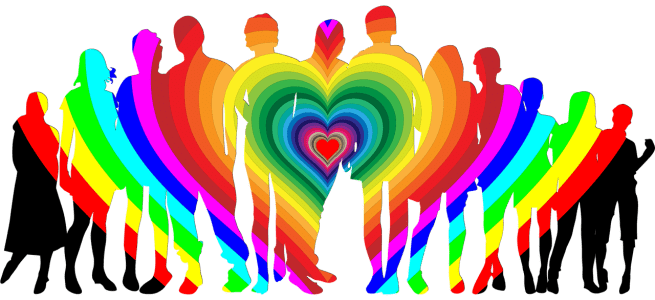
Diversity In Books

About a year ago I noticed something about my books. I realised that all of my characters were white and straight, with the exception of the head teacher in The Boy With The Thorn In His Side. Or at least they were white in my head; obviously readers may have imagined them differently. I have to admit I felt a bit ashamed by this. It was never intentional of course, not to write about more diverse characters, it’s just that I’ve always lived in a very white area, where everyone I grew up with was white and so on. As for writing characters that were gay, this had also never occurred to me, I guess, because I’m not gay.

After realising this, I decided to change the ethnicity of my main character Elliot in Elliot Pie’s Guide To Human nature. It wasn’t a huge change. I just mentioned that his absent father was Indonesian, making him mixed race, with dark skin and hair, unlike his mother who has blonde hair and fair skin. Not much is made of this in the book. It did, however, tie in nicely with the hatred his mother Laura feels for the people who live in her claustrophobic neighbourhood, such as Tony, who likes to knock on people’s doors to warn them there are immigrants living behind them.

At the time, I spoke to a lot of other people about the topic of diversity in books. My daughters thought I was right to change Elliot’s ethnicity, and were quite appalled that all my characters so far had been white and straight. Other people said to change his ethnicity seemed a bit like a token gesture, and if he was white in my head I should leave him like that. I’ve since thought about the decision in other ways too. For instance, does a white writer have any right to write about a character who has a different cultural background to them? I would argue that they do, as long as they have done their research if research is needed. In this case, it was not. Racism is not an issue for Elliot, only his mother, who cannot stand the Little England mentality of people like Tony. His mother is in a state of despair about the state of the world, and for example, cannot understand the callous attitude people are having towards the refugee crisis.

I decided to leave Elliot as mixed race and think about it again later. If he persisted as blonde-haired and blue-eyed in my head, then I would change him back. But for me now, after about a million drafts, he is darker skinned than his mother, with very dark hair. He’s become this Elliot in my head, so I’m pretty sure that’s the way he’s going to stay.

While Elliot Pie was with beta readers, I took a break from it and wrote a rough draft of a YA novel about an alcoholic teenage singer. I’ve blogged about this story idea in the post  Untold Stories , as the original story was one I penned aged 16 and then discovered in an old suitcase under my bed. In the original story, again, everyone was white, straight and working class. In this new version, as I was writing it, the characters changed. One of the secondary characters became gay, and the main character, Bill became bisexual. Well, I say bisexual, but this is not entirely confirmed by the end of the novel, and he certainly doesn’t waste any time feeling confused or upset about what he is or isn’t. He just has a lot of fun kissing his best friends, one of whom is female and one of whom is male.

Now, again, why did I do this? I think there are several reasons. I think because diversity in books has been on my mind. It’s been on my mind because I too have noticed how many of the books I read contain, straight white characters and this has started to annoy me. It’s been on my mind because of my children, who are, to my great pride, growing up to be the sort of people who are accepting of anyone of any culture, ethnicity or sexual preference. In many ways, my children educate me on the issues facing the LGBT community. Plus, I feel that with recent political events, and the horrific rise of hate crimes against ethnic minorities and LGBT  people, we all have a responsibility to stand up for equality and decency and kindness.

With all this on my mind in recent months, it’s no wonder it crept into this rough first draft. It was not intentional, but rather an organic and natural progression. It felt right for the characters and added to their storylines hugely.  Have I got it right? Who knows at this point? I will see how it all reads once I get around to the second draft.

And as for Elliot Pie’s ethnicity, this still feels like the right thing for the book. So, what do you think? As readers, do you feel the books you read have enough diverse characters? Is diversity in books important to you? Do you ever feel certain groups in society or ignored,

So, what do you think? As readers, do you feel the books you read have enough diverse characters? Is diversity in books important to you? Do you ever feel certain groups in society are ignored, sidelined or stereotyped in literature? What about you writers? Do you write about diverse characters, and if you do, is it intentional or natural? Do you tend to write about characters who are similar to yourself? Or do you feel writers have a responsibility to open people’s minds up to other lives, cultures and backgrounds? I would love to know your thoughts, so please feel free to join in the conversation!
Message and Themes; What Are You Trying To Say?

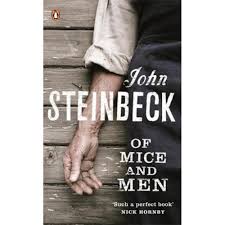
When I was at school, English Literature was always my favourite subject. I was a total book-worm who dreamed of becoming an author, so you can kind of see why I adored English Literature. Reading books, talking about books and writing about books was my idea of heaven. Having said that, there was always one part of the subject that annoyed me at times. When analysing a text, the teacher would often ask us to think about what message the author was trying to get across. It was a question akin to the equally confusing one; what are the themes of the novel? I remember thinking, I bet the author didn’t know there was a message or a theme, or that we would try to work one out. I always considered that Shakespeare, Bronte and Steinbeck just wrote books because they had great ideas, great characters, and could string some pretty awesome sentences together.

But English Lit demands we find the messages and the themes, and yes, when you pick apart a text and analyse it within a classroom setting, you do tend to find them. But were they intended? I suppose I’m asking, did the author write the book with a theme or a message in mind? Or is it the reader who later determines what the potential messages are? I mean, did Steinbeck write Of Mice and Men because he had something to say about society or human nature? When I was a kid, I thought not. But it turns out I was wrong;

In every bit of honest writing in the world there is a base theme. Try to understand men, if you understand each other you will be kind to each other. Knowing a man well never leads to hate and nearly always leads to love. There are shorter means, many of them. There is writing promoting social change, writing punishing injustice, writing in celebration of heroism, but always that base theme. Try to understand each other.

John Steinbeck in his 1938 journal entry
I remember trying to distinguish the themes of the novel when I was at school. What seemed so obvious to the teacher, had to be pointed out to us. I haven’t read the book since then, but it is on my to-read list as part of a reading challenge I’m undertaking, where one of the books has to be one I read in school. But I think I will see things differently now.
Why? Because I am approaching my fourth decade and I’ve seen enough of life, love, people and society to know that Of Mice and Men is not ‘just a story’ as I once mistakenly believed. It’s a book about dreams and aspirations, loneliness and solitude and the author had plenty to say about all of these things. I am now the writer I hoped I would be, and writing books is a fascinating process, which involves the seed of an idea germinating into an intricate plot full of characters who become real to you and set up camp in your head. But more than that, writing is about what you want to say to the world.
I’ve been thinking about this a lot lately after I received feedback from a beta on my still unfinished novel Elliot Pie’s Guide To Human Nature. One of the things she picked up on was the messages or themes of the book, and in particular, her observation that some of the characters had views very similar to my own. She felt this at times made the narrative somewhat preachy, or at least, it was in danger of heading in that direction.
I had to stop and think about what she meant. None of the characters are me, or based on me, or anyone I know. I plucked them up out of the thin air to build around the character and story of Elliot, who I really did know and believe in.
However, I have to admit that unintentionally, or at least sub-consciously, bits and pieces of the writer and the writer’s viewpoints seep into the writing. I knew what this book was about, and I knew from the beginning what I was trying to say, so as you can see, I have come a long way from my previous scepticism that books did not contain deliberate messages. On the contrary, I have had something to say in all of my books, and I think it very much depends on what is going on in my life at that time. For this book in particular, Elliot and his mother are like the two sides of me. One side is heartbroken and terrified about the state of our world and wants to withdraw from it all, while the other side is perpetually hopeful and joyful, determined to the best in everything.
So is this a good thing or a bad thing? I think my beta was right to point out the danger of appearing preachy in the narrative. I certainly don’t want my books to come across that way. I have to be sure it is the character’s viewpoint being explored, not the author’s. I have to be conscious of what is being portrayed as ‘right’ or ‘wrong.’ So at the moment, I am going through the book again, with the beta’s notes beside me. Sometimes it just needs a tweak, some words rearranged or deleted. Sometimes I don’t need to do anything because I think the character truly believes in what they are saying, and in doing so is remaining true to character.
This brings me to another question, though. Do people pick up books looking for messages or themes? Do most readers notice them, even if they are supposed to be there? I suspect that what one reader picks up as a message or theme, is very different to anothers. Do readers want to be spoken to in this way? I don’t think many people pick up a book looking for clarity or persuasion. I think they pick up books looking for stories. And stories involve people and their messy human lives, and messy human lives contain messages, whether intentional or not. Because they are written by one person, created by one person, and whether they were totally aware of it or not at the time, that person had something to say.
So, what do you think? As a reader, do you choose a book because of the message it seems to be conveying? Do you notice the themes of a novel as you are reading it, or do they become obvious to you afterward? Do you ever feel like the writer is trying to tell you something about the world or about life? Does this every feel like you are being preached to?
And what about you writers? Do you know what you are trying to say before you start to write the book, or does the message reveal itself to you in time? Are you aware of any themes in your book, and again, are these intentional? Do you ever worry that you are trying too hard to get a message across?
Please feel free to join in the conversation!
Growing Your Own; A Positive Rebellion

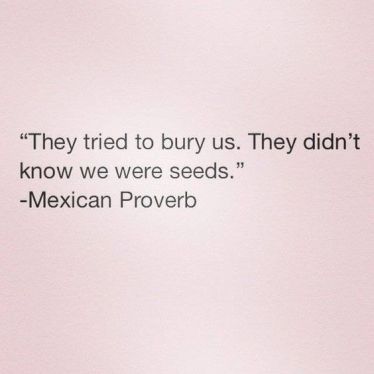
Gardening is a lot like writing. It starts with a seed, and with love, care, attention, commitment and imagination, it grows into something much, much more. For me, gardening and writing are similar because they both involve creating something positive and injecting it into the world. They both make the world brighter and better. They both involve hope, love and rebellion.

seedsproverb

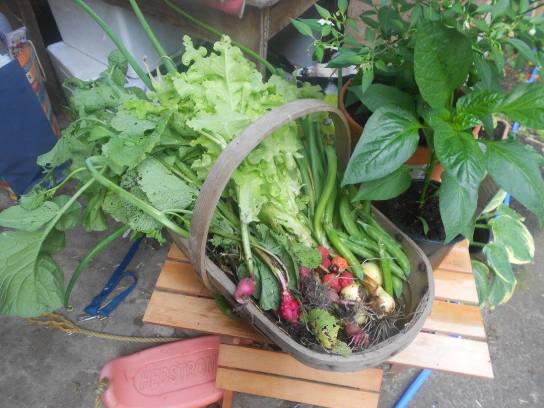
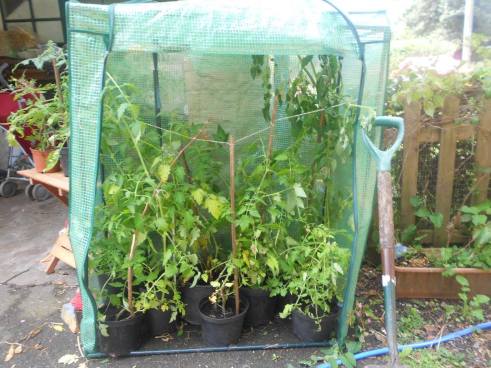
I’ve always been attracted to gardening. My parents grew vegetables when I was a kid, and so did my grandparents. I have fond memories of sitting on cool concrete steps with a plastic bowl on my lap, popping peas from their pods. There is nothing in this world quite as divine as the pungent scent of a full grown tomato plant. As soon as I had my own place, I started growing my own. There is something so deliciously simple and satisfying about planting a seed and growing it into a plant, from which you can pick and eat food. If you’ve never had the pleasure, I can assure you it’s an incredible feeling. Like all is well with the world. Like you’ve just solved all the world’s problems, by tugging out a handful of carrots and shaking the dirt from their roots. It never fails to make me smile, the sight of home grown food, picked and ready to eat. It just makes you want to sit back and go ‘ahh’.

13920054_1231406820211914_1274144773204141057_o.jpg


We live in tumultuous times. There are many days when I want to avoid the news, for fear of what will dismay or horrify me next. I sometimes wish I could turn the clock back for all of us, back to a simpler time, where we all grew our own food, worked the fields, and reaped what we sowed.

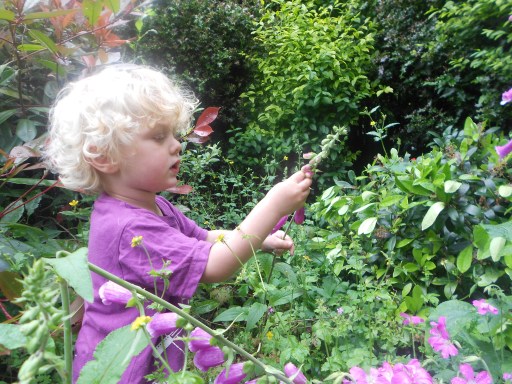
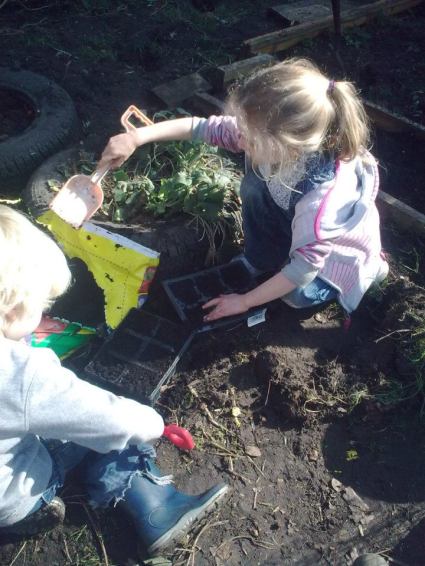
When I am feeling distraught, just like writing, gardening will make me feel better. I forces me to take a deep breath, it forces me to get on with things, to get on with life, and to do something positive. Getting my hands dirty, feeling the soil under my finger nails, pushing seeds into the earth, it all helps me to feel grounded again and more in control. Being outside, kneeling in the dirt, choosing what to plant, putting my back into turning over the earth, it helps me remember where I come from, where we all come from. Gardening is therapeutic; I keep telling people this. I get my little man out there with me, and I want him to feel the earth and take care of the seeds, and tend them and watch them grow. Right now, I can’t think of anything more important for him to know and understand.

dscn3095

Gardening grounds me, calms me and satisfies me. From the beginning, it is a labour of love and good intentions. I have the old adage of ‘you reap what you sow’ in mind nearly always, for I know I will get back what I put in. The seeds are the hope, you see. Like new life, bursting with potential. A freshly dug and turned over plot is like the womb, spongey and fresh, eager to provide and sustain. It’s exciting from the first moment you plant the seed. When it rears its head, it’s like birth. You care for it, water it, protect it and finally, you are rewarded with food. The cycle of life right there. And around it goes again, the plant itself providing the seeds from which to start the whole process again.

13923592_1231407403545189_8560900702571823766_o.jpg

When I’m in my garden, I’m calmer and happier, but I am also filled with grit and determination. For I am taking back control. Working the land, growing our own food used to be the norm. It was how we survived. But over time the food industry grew into a monstrous thing, delivering us convenience, but taking away so many other things. What have we traded, what have we compromised on in order to be able to do all our shopping under one huge roof? We’ve not only handed over control of the food chain to massive faceless corporations, we’ve compromised on animal cruelty and environmental damage and destruction. We’ve increased waste massively, through packaging, delivery, and distribution. We’ve lost contact with what is put into our food, what it actually is, where it comes from, and what or who has suffered in order for us to have it exactly as we demand it.

When you try to grow your own food, you remember how it used to be, how it could be again, how important it is to get back that control and to reconnect our roots with the earth we walk on. We have no respect for nature when we are removed from it. When all the hard work is done for us, when we have no idea how foods are made or what is in them, or what damage has been done to the planet in order to obtain them. I believe it’s crucial we teach our children where food comes from. Reconnecting them with the earth and their own wild roots is going to become increasingly important.

429116_371518756200729_1266579260_n.jpg

It’s not easy for everyone to grow their own food. Not everyone has the space and barely anyone has the time. But in years to come, I truly believe it’s going to become imperative to learn how. We are going to struggle to feed people on this planet for many reasons. Climate change may be the biggest challenge of our generation, endless war, struggling economies and falling wages will all take their toll. I’m sure I’m not the only one who has noticed that food prices are rising.

Growing your own food, planting a vegetable patch, may be just about the most positive and rebellious thing we can do right now. It’s two fingers up to the establishment, it’s a break away from slavery to the supermarkets, and a refusal to be complicit in animal cruelty, environmental destruction and the taking from those who have less.

Growing your own is saying, go away, I don’t need you, I can do this on my own. I’ve got a new motto this year in my house. It’s ‘I won’t buy it, if I can make it myself.’ Now this only applies to food so far, and is a work in process, but a good intention heading in the right direction. I’m digging my heels in and saying no. I don’t need to buy supermarket naan bread when I make a curry, because I can save the packaging and make my own. I don’t need to buy pizzas, or jam, or pastries or pies, sauces, breads, cakes or biscuits, because I can make my own.

I need to be outside right now. This world is breaking my heart and filling me with terror. I need to be planting things, growing things, nurturing things. I need to be responsible for new life and hope and potential. I need to believe that good things can happen if you are a good person. I need to believe that there is a possibility for a greener, brighter future for my children.

When I am writing or gardening, I am reminded that I still have power.


The Many Roles That Make Up Who We Are

Last Tuesday was a fairly busy day for me.

I got up around 6am with my two-year-old, as is the norm. We had breakfast, got dressed, let the chickens and ducks out and fed and watered them all. Then we had our usual little mooch down the lane with the dogs. Back home, I had my coffee and he had a hot chocolate to warm up. These things happen every day.

20170219_085234


After that, I left the house with my fourteen-year-old and drove us to the local community hall where I was running a writing workshop for 7-16 year olds. I do this every school holiday with my Chasing Driftwood Writing Group business . I slipped off my ‘mum’ hat and popped on my teaching one, welcoming the children in, talking about writing and getting the workshop started. Once it was over, my daughter helped me put the tables and chairs away, and I was Mum again.

We arrived home and I slipped further into the usual role of Mum, with my toddler who had missed me. I only had time to eat some lunch, placate him with brief cuddles and chat, before I had to get back into the car to drive to another job. This time it was within my other role as a dog walker. I’ve only gone back to this fairly recently, but it was what I was doing before I had my youngest child. Back then, it was the perfect day job to tie in with writing. In between walking dogs, I wrote.

I put on my wellies and mucky dog walking coat, collected the dogs from their home and set off across the muddied fields of Throop, adjacent to the river, as usual, in total awe at the beauty of my surroundings. I was yet another me. The dog loving me. Never happier than when in the company of these lolling, wagging, slobbering beasts. Dogs are an obsession to me as much as reading, writing and music. They make me who I am, and who I have always been, and when I am walking along with them, lost in my own head, smiling at their antics, I am reminded of who I was as a child and of what I dearly wanted. To be a writer and to work with animals.

20170208_113514

While I walked, I slipped between dog walker and writer mode, throwing their ball and tossing them treats, as I thought up blog posts and articles and snippets of short stories in my head. Every now and then, as is standard, I had to tap something into my phone notebook in case I forgot it later.For this time, I was not Mum or writing teacher, I was myself, I was Chan.

Back home, a brief rest and then it was time to walk my own doggies again. I was definitely tired by then, and had just recieved a text from a good friend reminding me that it was drinks tonight. I had totally forgotten and instantly I thought no, I can’t, it’s been a busy day and I really need to do some writing and get an early night…At the same time, I desperately wanted to go. This is a group of friends I made through being a mum. Our 9 year olds have all been friends for the last five years, and our friendships have grown over that time. We try and meet up every now and again outside of school, as these days, we are seeing less and less of each other within the school environment. The boys are getting older and wanting more independence, and we’ve all noticed we now see less and less of the usual mums in the playground, as we increasingly drop the kids off and leave them to it.

I made myself go out and socialise, as it is not something I do very often. Like most writers, I’m an introvert at heart and love nothing more than my own company, my own imagination, and to round off the night, a good book. I was so glad I went, though, as I was able to enjoy a few glasses of wine, and strip off all the roles I had played in the day and all the many ‘hats’ I had worn. With the workday over, children in bed, and partners at home, we were all able to have a good moan and a catch-up, a bit of essential ‘me’ time!

This was a busy day, but not an unusual one and it got me thinking about how the roles we play make up who we are. But who is the real you? Are we ever really our true selves, or just different versions of us, presented in different ways, for different reasons? It got me thinking about the next week ahead. On the Friday I was lucky enough to be interviewed on BBC Radio Solent as part of their Dorset Lives section. I was incredibly nervous, but yet when I listened back, I was overwhelmed by how calm, confident and professional I sounded talking about my writing and why I set up my Chasing Driftwood business. I couldn’t believe that was actually me! I mean, was it actually me? Or just the version of myself I knew I had to present in order to get through that particular situation? It was certainly not the same me that gets ratty with my kids at home, or wanders by the river, splattered with mud, throwing balls for dogs! This week I will going into a local school for a meeting about a proposed school writing project, inspired by another writer, but put forward by me for this area. Yet again, I am sure the ‘me’ I put forward during this meeting is going to be different. Professional and confident, but she is also going to need to be warm and passionate about the project and how it could benefit the school.

Is there ever a true us? Does a real me exist? Is it the one who is left when I am totally alone, beholden to no one, with nothing expected of me? Or is it the one who chats to other mums inside the school gates? The one who drifts off inside her own head when out with her dogs? The one who runs the bath, and picks up the dirty clothes and makes the lunch boxes for the next school day? Or the one who plans writing workshops and presentations?

I guess I am or have slowly become all of these roles, and all of these people. They are all me, when I need them to be me. They are all parts of who I am and what make me an individual. Some of them did not use to exist at all, but now, here they are. Here I am. All these different faces and demeanours and personas. How very odd when you think about it!

So, what about you? Who is the real you? How many roles do you play out in your busy life? How many hats do you have to wear? Please feel free to comment and join in the conversation! I would love to hear from you!