Self-publishing; Good times, bad times, and ugly truths

I am writing to you from a place of confusion. I’m unsure about so many things that I feel the need to write them down to make sense of them. The one thing I am sure about is this; I am a writer and I need to write. I will always be a writer and I will always need to write. Everything else is a muddle.

Let me try to explain. When I got back into writing in 2011, I had a decade of wasted years lying behind me. Don’t get me wrong, these years were not wasted in my personal life. I was bringing up small children and earning a wage. I was too exhausted to write. Or so I told myself. The real reason? I was too afraid to take it further. I was too shy, too anxious, too introverted and too protective of my work to send it out to agents and publishers. Ahh, I can breathe a sigh of relief now that’s off my chest!

Once I started writing again, nothing would stand in my way. Not a new job, or a new baby. And at some point in 2013 my attitude towards publishing changed. I got braver. I’d shared some work on here and had some good feedback from a few very early followers. So I started sending the two books I had written, The Mess Of Me and The Boy With The Thorn In His Side out to agents and publishers. I wrote massive lists of both and worked my way through them. It was, of course, depressing and demoralising, but I felt I had to do it. I never expected any of them to like my work, and in many ways, it felt like a rites of passage to go through this.

Self-publishing presented itself to me and appeared to be the answer to all of my problems. I didn’t need to torture myself by waiting for inevitable rejection anymore. I didn’t have to stress over how to word a query or an email. I could take full control and get my books out there on my terms. Brilliant.
philosoraptor-self-publishing-you-say-i-think-this-could-work-out-well

It was exciting to start with. I felt like I had accomplished something. I had realised a dream. I had written and published my books! I wasn’t too fussed about sales or money as that had never been my motivation, and in those early, hazy days, I was just excited.

Of course, reality soon set in, and over the last four years I have had one hell of a bumpy ride and made many mistakes. I’m actually embarrassed now to look back on the early days. I had no idea about front covers. I had no idea about social media, building an author platform or promoting my work. I soon bumped back to earth and started the real hard graft that is the life of an indie author.

Let me tell you the reality of being an indie author.

It’s good and it’s bad. It’s pretty and it’s ugly. I love it and I hate it.

Indie authors do everything themselves. Yes, they may hire editors and front cover designers. If they have oodles of spare money they may pay for adverts and promotions too. There is nothing more evil to me than the saying ‘you have to spend money, to make money.’ That’s the crappest thing ever to say to someone who has no money.

Indie authors offer their work for free. This happens in very few other areas of life. But people expect it now. They expect freebies and offers and giveaways. We expect reviews and recommendations in return but rarely get them. In essence, being an indie is like giving your all, your everything, your blood sweat and tears, and then getting very, very little back. And again, I don’t just mean sales. I keep my books priced low because I want people to be able to afford them. I give free books and stories away with my newsletter and I post free stories on Wattpad and I do the odd giveaway.

Indie authors work extremely hard. They’ll have families, and other jobs, and still keep plugging away, writing more books, building their platform, increasing their content, remaining active on social media, trying new things all of the time in the hope it enables their books to become visible. They don’t want to spam people, they don’t want to beg. They have to learn how to self-promote without getting on people’s nerves. They have to deal with people thinking they are totally wasting their time.
insanity-wolf-buy-my-books-buy-my-books

Let me be clear once again; it’s not about the money. It’s about the connection. I write books because I want people to read them. I love that connection. I love passing my stories on. I love receiving messages about how people related or reacted to the characters.

Right now I feel like I am betraying the indie scene, because I am trying the traditional route again with the next two books. I started the process the other night with The Tree Of Rebels and was instantly reminded of why I hated it so much last time. Ugh. It’s scary. I kept thinking, just self-pub it! Why are you doing this to yourself again? You’ve been here and done this! You’ve moved on! You’ve grown! You’re indie and proud! You know how to do it now, how to get the right cover, the right blurb, the right marketing plan…Yes I do, but I am also, really, really tired. My confidence is at an all time low. I am not making that connection with people. I am banging my head against a brick wall.

So, here I am again. Researching publishers and putting my heart in the firing line. I already had one rejection the day after I started this! I expect many more to come. Maybe I feel I need to do this. Give it one last try. Because I am not succeeding as an indie. I am getting better as a writer, and I am getting better at all the things you need to do to be an indie, but I am not succeeding where I really wish to, which is gaining new readers and forging that connection.

I see other authors getting promoted with their publishers and I want a piece of that action. I admit it. I am envious. I am filled with longing. I am practically drooling for the same number of sales and reviews. I want what they’ve got and I am afraid that my efforts as an indie will never be enough to get it.

So, heart in mouth, I will try the traditional route again.

But no fear, I will self-pub these books if I get nowhere. I promise you. I will self-pub the god damn hell out of them! I will market and promote the holy fuck out of them! I absolutely promise you that. I promise myself that. I will come back harder and faster and stronger.

There is no giving up. Not ever.

Either way, I will keep writing and getting better at it and if I self-pub again I will never give up trying to find more readers. This is not a post about quitting. This is a post about the realities of finding success as an indie. And by success, I mean a growing readership.

It’s just at the moment, I am tired of the indie ups and downs. The good days followed by the bad days. The endless hope that one day it will all be worth it…

And in a weird kind of way, submitting to publishers has already made me appreciate being an indie…it’s already made me feel that surge of pride and passion again about everything indie authors do, and are…I love the indie scene, I really do. I have read countless amazing books, in fact, I rarely read traditionally published books these days, because there is so much talent in the indie pool. It just makes me sad that so many of them are not getting the recognition they deserve.

Over to you. What do you think? Do you love being an indie? Is it what you thought it would be? How do you keep going when times are tough? I would love to hear your thoughts on everything I have talked about today. Join the conversation, have a moan if you need to..and then we will all get back to the writing!
Message and Themes; What Are You Trying To Say?

When I was at school, English Literature was always my favourite subject. I was a total book-worm who dreamed of becoming an author, so you can kind of see why I adored English Literature. Reading books, talking about books and writing about books was my idea of heaven. Having said that, there was always one part of the subject that annoyed me at times. When analysing a text, the teacher would often ask us to think about what message the author was trying to get across. It was a question akin to the equally confusing one; what are the themes of the novel? I remember thinking, I bet the author didn’t know there was a message or a theme, or that we would try to work one out. I always considered that Shakespeare, Bronte and Steinbeck just wrote books because they had great ideas, great characters, and could string some pretty awesome sentences together.

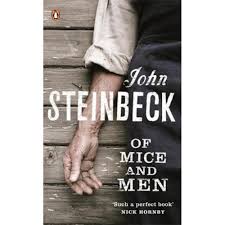
But English Lit demands we find the messages and the themes, and yes, when you pick apart a text and analyse it within a classroom setting, you do tend to find them. But were they intended? I suppose I’m asking, did the author write the book with a theme or a message in mind? Or is it the reader who later determines what the potential messages are? I mean, did Steinbeck write Of Mice and Men because he had something to say about society or human nature? When I was a kid, I thought not. But it turns out I was wrong;

In every bit of honest writing in the world there is a base theme. Try to understand men, if you understand each other you will be kind to each other. Knowing a man well never leads to hate and nearly always leads to love. There are shorter means, many of them. There is writing promoting social change, writing punishing injustice, writing in celebration of heroism, but always that base theme. Try to understand each other.

John Steinbeck in his 1938 journal entry
I remember trying to distinguish the themes of the novel when I was at school. What seemed so obvious to the teacher, had to be pointed out to us. I haven’t read the book since then, but it is on my to-read list as part of a reading challenge I’m undertaking, where one of the books has to be one I read in school. But I think I will see things differently now.
Why? Because I am approaching my fourth decade and I’ve seen enough of life, love, people and society to know that Of Mice and Men is not ‘just a story’ as I once mistakenly believed. It’s a book about dreams and aspirations, loneliness and solitude and the author had plenty to say about all of these things. I am now the writer I hoped I would be, and writing books is a fascinating process, which involves the seed of an idea germinating into an intricate plot full of characters who become real to you and set up camp in your head. But more than that, writing is about what you want to say to the world.
I’ve been thinking about this a lot lately after I received feedback from a beta on my still unfinished novel Elliot Pie’s Guide To Human Nature. One of the things she picked up on was the messages or themes of the book, and in particular, her observation that some of the characters had views very similar to my own. She felt this at times made the narrative somewhat preachy, or at least, it was in danger of heading in that direction.
I had to stop and think about what she meant. None of the characters are me, or based on me, or anyone I know. I plucked them up out of the thin air to build around the character and story of Elliot, who I really did know and believe in.
However, I have to admit that unintentionally, or at least sub-consciously, bits and pieces of the writer and the writer’s viewpoints seep into the writing. I knew what this book was about, and I knew from the beginning what I was trying to say, so as you can see, I have come a long way from my previous scepticism that books did not contain deliberate messages. On the contrary, I have had something to say in all of my books, and I think it very much depends on what is going on in my life at that time. For this book in particular, Elliot and his mother are like the two sides of me. One side is heartbroken and terrified about the state of our world and wants to withdraw from it all, while the other side is perpetually hopeful and joyful, determined to the best in everything.
So is this a good thing or a bad thing? I think my beta was right to point out the danger of appearing preachy in the narrative. I certainly don’t want my books to come across that way. I have to be sure it is the character’s viewpoint being explored, not the author’s. I have to be conscious of what is being portrayed as ‘right’ or ‘wrong.’ So at the moment, I am going through the book again, with the beta’s notes beside me. Sometimes it just needs a tweak, some words rearranged or deleted. Sometimes I don’t need to do anything because I think the character truly believes in what they are saying, and in doing so is remaining true to character.
This brings me to another question, though. Do people pick up books looking for messages or themes? Do most readers notice them, even if they are supposed to be there? I suspect that what one reader picks up as a message or theme, is very different to anothers. Do readers want to be spoken to in this way? I don’t think many people pick up a book looking for clarity or persuasion. I think they pick up books looking for stories. And stories involve people and their messy human lives, and messy human lives contain messages, whether intentional or not. Because they are written by one person, created by one person, and whether they were totally aware of it or not at the time, that person had something to say.
So, what do you think? As a reader, do you choose a book because of the message it seems to be conveying? Do you notice the themes of a novel as you are reading it, or do they become obvious to you afterward? Do you ever feel like the writer is trying to tell you something about the world or about life? Does this every feel like you are being preached to?
And what about you writers? Do you know what you are trying to say before you start to write the book, or does the message reveal itself to you in time? Are you aware of any themes in your book, and again, are these intentional? Do you ever worry that you are trying too hard to get a message across?
Please feel free to join in the conversation!

Social Media, Distraction and Guilt

Me and social media have had a bumpy ride to date. There was the initial stand off, followed by sluggish efforts, which were then followed by a relationship that can only be described as love/hate. In this day and age, social media is essential for indie authors who want to connect with more readers and build a following. I accepted this early on, but I didn’t have to like it. It felt really odd in the beginning. I needed to be active on as many sites as possible, but didn’t really want to be on any. The whole networking thing was a complete mystery to me and I didn’t know where to start. And then when I did make the brave move of starting this blog, joining Twitter and setting up a Facebook author page, I found I had two main problems. I didn’t know what to post and when I did post, I was just talking to myself!

Is there anybodyout there-.jpg

These days things are very different. I’m happy to report I now have a far more positive and realistic relationship with social media. I have my little following, for which I am extremely grateful. I have learned what to post and when to post, and hopefully, I maintain likes, follows and engagement, by posting interesting things!

The problem I have these days is a little different, and it might be one you are familiar with. Social media, now that I have fully embraced it, is one major distraction, for which I feel endless amounts of guilt. Know the feeling?

i-havent-had-56u62s


As a new author, I started with this blog, Facebook and Twitter, but I obviously wanted to spread the word far and wide, so I collected a few more here and there. Goodreads, LinkedIn, Pinterest and Wattpad. And just last week, I added a shiny new one to the social media collection, Instagram.

I thought it would kick me up the bum a bit to try a new one. Nothing ventured, nothing gained, and all that. And as I already mentioned, the problem I have these days is rather different to the one I had in the beginning, where I viewed promoting via social media as a kind of cold sell out that somehow devalued what I was trying to do. These days, the problem is it is too tempting to be on as many as possible and for as long as possible!

It’s great that I genuinely enjoy social media these days, but it can be incredibly addictive and it can be hard to strike the right balance.

A while back I deleted Facebook from my phone as I was scrolling through my feed and posting things all through the day, and this was making me feel constantly depressed and angry about the state of the world, as well as terribly guilty for being on my phone whilst I have a beautiful little boy to care for.

I felt much better after it was gone. I limited myself to social media in the evenings only, a bit before writing and a bit after.

But now I’ve got Instagram on the phone. And…um, Facebook is back too.

I have to be strong though, and keep reminding myself that I am on both of them for business, ie book promoting reasons, only. I don’t have the time to go scrolling through feeds all day and missing time with my child. If I only have a few minutes here and there in the evening, then that’s all I’m going to get. Of course, I would love to spend hours and hours on social media, finding interesting articles on Twitter and Medium to share to my pages. I would love to be pinning all day and adding to my boards, and I won’t even go into how joining Instagram has had me viewing everything in hashtags since last week. It’s just weird!

social-media-updates

So, how to you avoid getting totally distracted by social media and then feeling guilty as a result? My advice is to set yourself rules and stick to them!

You don’t need to post on all of them, all of the time. I posted on Instagram for the first time a few days ago. I decided to start off I would post a series of photos in the style of a ‘day in the life’ type thing, I took pictures of things that happen in my life every day, ie walking dogs, baking, gardening, parenting, and at the and of the busy day, writing followed by reading. This was really fun to do. But now I intend to leave it alone until I next think of something worth posting, for example, scenes that inspire or are in my books, front covers, extracts of work, events and so on. I don’t want to get addicted to it as a site.

The same applies to Pinterest. It is very addictive and a lot of fun to play around with, but I only dip in and out when I need to. This is the sort of site you can totally ignore until you need to make use of it. I update the boards when I have a reason to, and will be paying much more attention to the site when I have a new book to launch and promote.

There are going to be times when it is much more important to use certain social media sites, such as when a new book is coming together or about to be launched. But my advice would be the rest of the time, to stick to the three that you deal with daily or weekly, and take a break from the rest.

It’s not a good idea to dip in and out of all of them for example, so if Facebook and Twitter are your thing, then stick with them, and post consistently and engagingly in order to build a loyal following. Just don’t feel like you have to be doing this all day every day with ALL of the sites you are on.

My last piece of advice? Give yourself one day or night totally OFF. I’m the sort of person that would be writing all day every day if I could. I hate not writing and when I am not writing, I always wish I was writing and I am constantly thinking about writing. This includes time spent increasing my social media content. But once a week I turn it all off and step away from the wi-fi. It’s a no go area, and it really does me the world of good. I curl up with my kids, leave my phone off, watch TV and chill out.

It genuinely feels like a day off ‘work’ and of course, we all need those.

Please feel free to comment or share! How many social media sites are you on? Do you feel guilty about the amount of time you spend on them? How do you strike a balance between work, social media and home life?


Beta Readers; How and Why?

Several months ago I was convinced that my new novel, Elliot Pie’s Guide To Human Nature was ready. I sent it to a tried and trusted beta reader who very patiently and kindly informed me that it really wasn’t. I listened, realised she was right, and tackled it again. And again. And…well, you know how it goes. Finally, a few more months down the line, I thought, okay, this is it, I’m happy, really happy! I’d addressed all of her concerns and it was definitely a much better book. I then sent it to another beta reader, quite arrogantly expecting her to gush with excitement about how ready it was. She didn’t. It wasn’t. Repeating these things to my husband, he asked a very important question. How do I know the beta readers are right?

This is an excellent question and one worth addressing. But first of all what should you look for in beta readers and why do you even need them?

You need them because you are far too close and subjectively involved in your marvellous work of art to see its flaws. It is very difficult for an author who is in love with their story, to be able to see where the pace is too slow, or the information repetitive. You may not realise how much of you and your beliefs and opinions are seeping into the book. You may not realise that there is too much dialogue, or not enough. It is your baby, your child, your masterpiece. Yes, your relationship with it is up and down. You love it and then you hate it. You are filled with self-doubt one moment, only to be surging with confidence the next. Either way, you need beta readers to bring your down to earth. You need them to tell you what is good about the book and what is not so good about the book. Of course, you don’t have to accept their advice, and you certainly don’t have to act on it, but to release a book or submit it to publishers without using beta readers would be, in my opinion, insane.

So, what should you look for in a beta reader? I think this is quite a personal thing and may also depend on your genre of writing, but here are the things I look for and require in my beta readers.

  • they need to have already read my work and connected with it
  • they need to be somewhat connected to me and my life, and have some knowledge of my beliefs etc
  • they need to be highly educated, or at least way better at grammar than I am!
  • they need to be an avid reader, someone who consumes books like an addiction
  • they need to be open to most genres, not snobbish or narrow-minded
  • they need to be breathtakingly honest and not scared to offend
  • they need to be able to understand how a book could be made better
  • they need to be prepared to read the book at least twice and make notes

What sort of things should a beta reader be looking out for when reading your work? Well, again this is very personal, but I will explain the way I often approach it. With Elliot Pie, I wrote the book quite naturally, just letting it flow as you do with a clumsy first draft, worrying about the finer details later. I finished the very first messy draft just over a year ago, and I honestly didn’t think it would need too much more work! This goes to show how blind you can be about your own writing. I did a few more drafts before sending it to the first beta. At this point I was looking for opinions on the plot and the actual story and on the characters. Did they work? Were they real enough etc? What about the structure of the plot and the flow of the narration?

What I got back was very interesting and resulted in me changing a lot of the chapters around. The beta had loved the characters (yay!) and the story but she found the pace too slow in the middle of the book and she guessed the ending. Not too big a problem, as it’s not supposed to be a real twist at the end or anything, but she did help me work out ways I could knock the readers off course a bit. She was also right about the pace. It was too slow in the middle and lots of it needed to go.

Job done. I attacked the book again, and again and again. Each time I went through it, I cut bits out, added bits, fleshed the characters out more, and wrote lists as I went which consisted of the things I still needed to do when this draft was done. I considered my work done when the lists ended. As far as I was concerned I could do no more. Yes it would need some more proofreading and a few more read throughs, but I was happy. More than happy.

I sent it to the second beta reader as she is my biggest critic and I knew she would be intensely honest. There was no way she would hold back if there was anything about it she thought could be better. We ended up having several Skype chats while she went through her very detailed notes on the novel. I made lists, nodded and listened. The more she talked, the more I realised how right she was, and the more I felt my own subconcious misgivings becoming unearthed. Everything she said about the book was true. I had written it in both first and third person. A bit of a challenge, yes, but that was just the way the story presented itself to me in the first draft and so I went with it and ended up sticking with it. This meant that all of Elliot’s, (the 12-year-old protagonist) perspective is in the first person. We are entirely inside his head. And in my opinion, that’s a wonderful place to be. I find him interesting and funny and amusing, you see. Of course I do, I created him! But would the reader think the same? Or would they find the narrative repetitive as he talked them through his little world? Was I telling them far too much detail when a lot of it could be shown rather than told, or omitted altogether?

I sat and nodded grimly and knew that my beta was right. I had climbed inside his head and got lost there. I was way too close and way too involved. I loved him too much but I needed to get back out and get some distance. I suggested changing his view to third person and the beta had thought the same thing. The more we thrashed it out, the more I realised how many problems this would solve. I actually began to get excited. There were other issues too, aside from POV, but I won’t go into them now as they will probably pop up in another blog post.

We talked about how I’d had a similar problem with The Boy With The Thorn In His Side. (Again, this is where history, friendship and connection aid the beta/writer relationship) Originally written in the third person, from all the characters point of view, it was eventually rewritten into the first person, and from two points of view. At the time I was both terrified and excited to take this machete to my work, to slice it up and stitch it back together again, to tell the story in a totally different way. I knew I would lose tons of scenes and perspectives and dialogue and this saddened me beyond belief. But it worked.

With Elliot I have the same problem but in reverse. I need to lose the first person, get some distance from Elliot and tell the story in a different way. There is a lot of work to be done, but the groundwork is all there. The second beta also loved the actual story, the plot and the characters and found the pace just right.

I am so glad I gave it to her to dissect. But back to the original question? How do I know she is right? How do I know either of them are right? I know because as soon as they voiced their opinions, I knew I had been thinking the same thing all along. All they did was confirm what I already knew deep down inside. I just didn’t want to admit it to myself, because admitting it meant even more work, even more drafts, even more editing and proofreading, and it means the other books that are on hold waiting for this one to be done have to keep waiting and waiting and cramming my mind and driving me insane! I wanted the book to be ready so badly I had convinced myself it was.

But I can’t let a book go until I am sure it is the best it can be, and in my case, my betas are there to help me get to that point. I can’t thank them enough for the time and effort they invest in me and my books. I trust them implicitly and I know I am extremely lucky to have them.

But what about you? Do you use beta readers and if so how did you find them? What do you look for in a beta? Have they ever felt differently to you about a book being ready for release? How have they helped your books reach their full potential? Have they ever been totally wrong? Please feel free to comment and share!