10 Top Tips For 2016

10 Top-Tips For 2016

Another year is over, and a new one is already upon us. Did you achieve your writing goals in 2015? Or did the year pass you by too quickly, with life getting in the way of writing success? Don’t let another year fly by, without achieving your dream. Make sure you are continuously moving forward; whether it is getting that novel written, growing an audience, or keeping an eye on new trends. Here are some tips to help your writing progress in 2016.

1) Write. It sounds obvious, doesn’t it? But it so often needs saying. First and foremost, above all else, if you are a writer, or if you wish to be a writer, then you must write. Personally I advise every day, even if it is just a little bit. Just a few sentences or a paragraph, maybe just a few rough notes, or a to-do list. Write something. Even if it is a blog post or a secret diary entry detailing your fears, just do it, just write something, anything. Just write. The more you write, the more you need to write. This is true. The more you exercise your craft, the more your head will fill with more. No excuses. No moaning. Just do it. Write and don’t stop. Let it become your addiction.

2) Make time. You have to demand the time and then guard it fiercely. When I started writing again after a long break where small children and work took up all of my time and energy, I had to give up other things I thought I cared about. TV went, reading magazines went, falling asleep on the sofa after the kids were in bed, went too. It turned out I didn’t care about those things as much as I thought. Once writing had a hold of me again, that was it. It had its hooks in and was not going to let go. Good. This is how it should be and this is how it needs to be. If you only have an hour a day, that’s fine. Grab it with both hands and make it count. Whatever time you can get, hold onto it and use it every day without fail, no excuses.

3)Find a writing group. This can be online or in real life. You need people around you to kick your backside along every now and again, offer feedback and inspiration and genuine advice. Friends and family may not be useful for this! Writers who attend groups are far more productive than those who don’t.

4)Treat writing like a job. I know, it sounds boring, and writing is meant to be fun, isn’t it? Well, yes and no. It is fun and should be fun, after all it is your passion and your dream, but if you don’t treat it seriously, it won’t happen. I resisted this idea to start with, but now I embrace it entirely. Whatever time you dedicate to writing, imagine it is your job, and you need to turn up, work hard, and get results. You can’t just slack off or call in sick. You have to go, whether you feel like it or not. You will be amazed at the difference this makes. I do all my writing in the evenings, and get anything from 1-3 hours. I give myself Saturdays off, and it does feel liberating not to put the laptop on for that one evening. But the rest of the week, I mean business!

5)Write weekly to-do lists to keep you on track. Daily ones become stressful, weekly ones are more flexible. Every Sunday night, sit down and write a list of goals you would like to complete this week. From writing a few new chapters, to emailing bloggers who might review your book, whatever it is, write them down. It feels very satisfying to tick them off, and it helps keep you focused. You won’t forget to do something if you write it down. If the list is not completed by the following Friday, then just add the things you missed to the new weeks list, and carry on. This way you will always do everything you intend to do, but in a relaxed and realistic way.

6)Know Your Audience. Another idea I resisted to begin with. I wrote what came into my head, and my audience would surely find me, right? Wrong. It’s hard to sell books, very hard, and it does help if you know who you are writing for and what type of people will like your book. This does not mean that people outside of this target audience are to be ignored, or repelled. Of course not. Many of the people who have really embraced my books have been far from the type I imagined would, but still, growing an audience is hard work. There is so much to choose from out there, it helps to narrow it down a bit. Who should you aim at specifically and how should you do this?

7) Not finished your book yet? Start building an author platform anyway. I’m serious. Do it now, or you will wish you had later. This doesn’t have to be all online, this can involve real life as well, such as having business cards made up to hand out, or getting involved in local author events and groups. But online is where the bulk of it will happen these days. Don’t worry about the fact your book is unfinished. Drag people along for the ride. Start a blog and post extracts. Join Twitter and Facebook and get them linked to each other and also to your blog. That way anything you post on your author page about your writing will get automatically tweeted, and vice versa. This will help you grow your followers and likes. Look at Wattpad for posting work in hope of getting feedback. Again, share posts to your blog, Facebook and Twitter to save time. Start storyboards on Pinterest, or boards for books you like and books that are similar to yours. This can also be linked to Twitter and so on. Your book does not have to be ready and published to start growing an audience, and making connections. You can start now, and the sooner the better.

8) Go for long walks. In my experience, the best and only way to conquer writers block, is to walk. If you have a dog, take them and get away from other people, away from roads and noise and distractions. If you don’t have a dog, walk anyway. Get out in the fresh air, get close to nature, just exist, and before you know it your mind will naturally start to wander. You will find ideas coming and going in waves. Whenever I struggle with a chapter, or feel I don’t quite know a character, or if I feel intimidated by the ideas I’ve had to begin with, I walk and walk and walk. It all happens on walks! Conversations, dialogues, insights about characters and why they behave as they do, new plot twists I never saw coming, brand new books, sequels, you name it! It gets a bit stressful when it really kicks off, because I get scared I will forget something on the way home!

9) Be careful with your money. We’re not all rich, and we don’t all have lots of spare cash to spend on professional book covers, editors and promotional packages. There are so many sites out there now set up to help authors, and a lot of them want money. This is not to say you can get it all done for free, and if there is anything you should spend money on if you do have it, it is a professional editor, but do be wary. There are a lot of people making money out of writers these days, and you should think very carefully and do your research before parting with your hard earned cash. There is a lot of promotional work you can do yourself for free; you just have to be smart and consistent and determined about it. Social media is free, running a blog is free, and I would highly recommend playing around on Canva.com for graphics, book covers and so on, which is also free!

10) Think Local AND Global. Don’t neglect either. Reach out locally, hand out cards, leaflets, put up posters, join groups, seek out other creative types and keep an eye on local events, book fairs, clubs, contests and so on. It will all help to spread the word, and also help you make those all important connections. Think globally because this is the way forward, the next thing to tackle. Consider having your books translated into other languages, and in audio form as well. Keep an eye on trends in other countries, and make your book eye catching and compatible with the ever growing trend of reading on a smartphone.

Above all else, decide on your goals, write them down and stick them somewhere you can see them every day. Don’t let 2016 be another year where writing gets pushed into the sidelines and neglected. Don’t fall out of the habit, or make the mistake of thinking it is a waste of your time. Everyone deserves a dream, but making them come true takes hard work!stack-letters-447579_1280
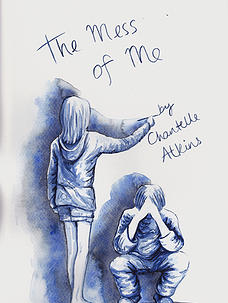
When I’m Thinner…(The Mess Of Me)

The Mess Of Me was never meant to happen. It was never a plan, or a decision that I made. I was busy rewriting my novel The Boy With The Thorn In His Side; a book and a plot which had been with me for over twenty years. It was finally, blessedly getting its time. It was happening. I was writing again. I didn’t know who it would be aimed at, and I certainly did not see myself as a Young Adult writer. No, Lou Carling was not wanted, or invited, or planned. She just showed up one day, and the funny thing was, she had lots of things to say, which were sort of similar to things I wanted to say.

I know that if I look up and see his face, then I won’t be able to say any of the things I am thinking. Is that the way it is for everyone? Or are there some lucky people who are able to voice their exact thoughts and feelings in such a way, that everyone understands them instantly?’

She was hard to ignore, but I tried for a while, because I so needed to get The Boy With The Thorn In His Side done. It had been bugging me for years.  Like a lot of the characters that end up in my books, sixteen year old Lou wouldn’t go away, or shut up. She was a persistent voice in my head during dog walks and time alone. I started listening to her more and more, and God, she made me smile.

I could be so much more, but I can’t seem to be bothered. I want to do nothing. Be nothing. Have nothing to say….I am stuck I suppose. I am jammed. I am unable to move on. I am oddly incapable of development. But I am very good at shrinking.’ 

And so I gave in. The Mess Of Me was written very quickly, during a three month period of rest from The Boy. The Boy was with one of my beta readers, and so I had a window…

Lou didn’t even give me a plot to start with. She was extremely fond of swearing, and she had a cynical, narrow-eyed way of looking at the world she lived in. Her world was small, and reminded me of the one I grew up in. Council estate, identical houses, playparks and graffiti.

I think, look at this here, this is my entire life! This is it, right here. This park, and this field, and school, and the walk over the bridge to get there, and the town, and the bus ride in, and the Priory church and a terraced house, and noisy neighbours, and the parade of shops, and everyone knowing who you are, and where you live, and the working men’s club, and the car parks and the alley ways, and the Provident loan lady and the Avon calling, and the Christmas hampers that take all year to pay for.’

The more she talked and moaned and bitched, the more of her life I could see unfolding behind her. I could see her so clearly, and knew her so well by the time I started writing the book for her. And it was for her. It was to shut her up and get her out of my head, but it was more than that. I wanted to build a plot and a world and story around her character, and the way she masked self-loathing with scorn and contempt for just about everyone and everything.

The truth is, she reminded me a lot of me at that age. How I was convinced that everything would be better when I was thinner. I would be happier, more popular, things would go right, I would know who I was and what I was doing. All of that, and more. In short, life was on hold until I got thinner, and when I did get thinner, everything would be perfect and I would know what satisfaction felt like. I would know what it felt like to look in the mirror and smile and be proud. I truly and naively believed that being thinner would solve all of my problems.

I was all grown up with kids of my own when Lou started talking to me about her problems, but right away, she brought back so many memories I had forgotten. Like her, I can remember having a ‘never again’ moment with a doughnut.

I can still remember the day I snapped. I can still remember the jam doughnut that I crushed inside my fist, instead of inside my mouth. I guess it made me feel stronger somehow, more in control, more savage. Less of a fat loser.’ 

I was house sitting for my mum’s friend, and she had MTV, which was excellent, because we didn’t. This was back in the day when MTV was just the one channel that played music videos every day. I saw the video for the Aerosmith song ‘Cryin’, the one with Alicia Silverstone in it. I remember thinking how pretty and blonde and thin and perfect she was. I sat there on the sofa, eating doughnuts, and feeling the reality of my own squidgy flesh trapping me in a body I loathed and wanted rid of. I knew it was not going to happen by thinking about it, or moaning about it, or crying about it. I had to actually do something about it. And if I did something about it, one day I could be like the girl in the video. And everything would be better when I was as thin as her…

Lou was funny and sad. She was bitter and cynical and snarling in my head, and she sounded so much like me, and she thought a lot like me too, but she was braver. She was bolder, smarter and funnier than me. When I was her age I kept my mouth shut and my feelings to myself. Lou was less likely to do this, and it was such sweet relief to let her take over for a while, to let her loose. Like me, she also allowed the words she could not say or contain inside her head, to spill out across the walls of her teenage bedroom.

Life is fucked up in broken wellies…’

As she loses more weight, Lou discovers a power she never knew she owned. It starts innocently enough, with a calorie controlled diet, and a new found enthusiasm for jogging. But as the weight begins to fall off, Lou finds it then becomes harder and harder to eat. In fact, just thinking about food grips her with fear. She starts to avoid it. She skips meals and she lies. And as she gets thinner and thinner, she experiences an increase in attention from friends, family and boys.

Her best friend Joe and his older brother Travis start to show an interest in her. They even fight over her at a drunken party. Her best friend/enemy Marianne, encourages her to lose more weight and stick to her diet.

Over the course of the summer between school and college, life unravels fast for Lou, Joe and Marianne. The drama centres around Joe’s decision to help deliver drugs for his older brothers. Leon and Travis are paying him attention for the first time in his life, which makes him risk everything in order to help them. Lou is pulled into the drama and the madness, and all the time, quietly in the background, she continues to lose weight. At one point, she catches sight of her face in the mirror and for a brief moment does not recognise herself at all.

But then I realise that it is me, it is my face I am staring back at, and how very peculiar not to recognise myself? I do not know whether to feel glad or sad, and I suppose that I feel plenty of both.’

The book starts with her lying in bed and running her hands over the bumps of her hip-bones and ribs. She wonders if she will be happy when she is as thin as she wants to be. I can remember doing the same thing at the end of the day, when the hunger was at its angriest. I would feel the lumps and bumps of bones rather than fat, and I would feel calmed and affirmed.

Like Lou, I had been a chubby youngster. I surprised myself as much as anyone else the day I said ‘no’ to pudding. But once the word ‘no’ came out of my mouth, I realised that I could say it and mean it. It became easier and easier to say. No. Would you like a second helping? No thank you. Would you like ice cream? No thanks.

The ‘no’ was my friend, and on my side. Unlike everyone else, it wanted to help me reach my goals. The trouble was, the ‘no’ voice gets louder and more insistent. The ‘no’ starts to speak up more and more and more. So that you go to prepare a healthy breakfast, and the voice says ‘no, you don’t need that’. Or you tuck into your dinner, a smaller portion than normal, of course, and straight away, the voice pipes up; no, don’t do it. No. You can’t have that. It gets harder and harder to ignore that voice.

For fans of the book, I can confirm that a sequel has been started, but is on hold while I complete other projects. I do however, know exactly what happens and the entire book is plotted out. Titled The Mess Of Us, the book is set two years on from the first book. Are Lou and Joe together, or are they still just friends? How has Joe’s personality been effected by the ordeal he suffered towards the end of the first book? Does Lou still worry about her weight?

I stand sideways and run one hand over the bumps of my ribs, and for some reason this just makes me collapse in tears, because when I look at her, when I look back, I can still see fat where it shouldn’t be.’

It would be unrealistic to suggest that Lou’s eating problems have magically vanished. Readers of the book will know that she does manage to get herself together towards the end of the book, partly due to the intervention of her mother, and partly due to what happens to Joe making her realise other things are more important.’

Like Lou, I grew up and got to grips with things. Like Lou, I never totally succumbed to my inner demons; instead I fought them off and pushed the ‘no’ voice away. Not all people who experience eating disorders are able to do this. I was lucky enough to receive help which enabled me make sense of so many things, and made me realise what I wanted out of life. Funnily enough, even at that young age, the thing I wanted most of all was to be a mother, and I knew that my ridiculous eating habits were damaging my chances to be one. I had something to work for, something to hold onto. Motherhood is explored in The Mess Of Me, and in the sequel too, but in different ways and for different reasons…

I’ve always said having kids saved me. I became in awe of my body. I was proud of it. I didn’t hate it anymore, and even more importantly than that, once I had daughters I felt a responsibility not to pass my body issues on to them. In our house, we try to focus on health and happiness, not looks. But it is hard, in this society, which still values the thinness of women so much. You only have to look at the way the media portrays women; focusing on whether they have lost or gained weight, what dress they are wearing, what haircut they have, rather than on the job for which they are famous.

I’ve had four children, and my body is not what it was. Time and child bearing have taken their toll, and rightly so. I am not hung up on it anymore, but I would be lying if the ‘no’ voice had completely gone away. Just as it would be unrealistic to expect Lou to have completely recovered between the two books, it’s unrealistic to expect anyone who has experienced eating disorders to be over them forever. Like other forms of addiction and compulsive behaviour, these things become part of you, and to a certain extent, they are always there. There are days that go badly, days when you feel down, days when you look in the mirror and that gloating little voice pops up to whisper in your ear; ‘things would be so much better if you were thinner…’

The Mess Of Me happened because Lou Carling invaded my head space and bitched about everything that annoyed her. Parents. Friends. School. Having to grow up. Everything. Funnily enough, the book jumped the queue and ended up being published before The Boy… It was ready to go, and became my debut novel in 2013. At the time I still wasn’t sure who was meant to read it, or who it was aimed at. These days, I am extremely proud to call it a Young Adult coming-of-age novel, and although I do write books aimed at adults as well, they always seem to have young people in them too. Weird.

The Mess of Me by Chantelle Atkins