Why I’m Deleting Apps and Returning My Phone To Just Being a Phone

And how I will still maintain an online author presence
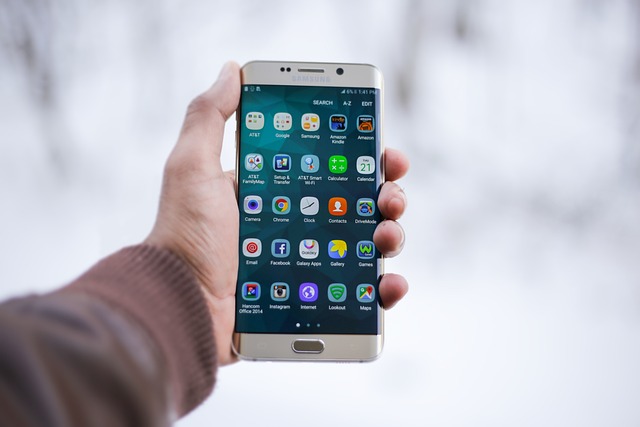
Image by Pexels from Pixabay

Do you remember when you got your first mobile phone? I guess everyone does. I was twenty, it was 1998 and my friends had collectively bought me one for my birthday. I hadn’t expressed any longing for one – at that point it was still relatively rare for people to have one – but some of my friends had had phones for a while and they wanted me to join in. It was a nice gift. A chunky little pay-as-you-go Nokia.

It was a novelty to start with. Kind of fun to send a text or get a phone call. They couldn’t connect to the internet and most of us hadn’t even started using the web yet. We had no need to. Those early phones could not take photos either. They had chunky push buttons and you had to pay for cool ring-tones.

We were innocent in our acceptance of them. We had no idea where it would all lead; how much easier it would make our lives, how addicted we would become.

Back then, we didn’t take them everywhere with us. It was still entirely acceptable not to own one. We all still had landlines and still knew the numbers of our loved ones by heart. Twenty-seven years later we are slowly waking up to the fact that our phones, and what we now have on them, are addictive. We are slowly waking up to the fact that giving a smart phone to a child can be extremely detrimental to their mental health.

Ten, twenty years from now, where will we be? Will we see phones and contracts with health warnings on them like we do with alcohol and tobacco? There is a push among some countries, and within many schools and parenting communities to limit the use of smartphones for young people and there is a growing movement of people who want to disconnect from the hold their phone has on them.

And I’m one of them.

I’ve been wanting to do something about it for some time. The way my phone took over my life was slow, insidious. It’s not until you look back and remember how it was that you see how far it has come. I wasn’t interested in mobile phones to start with. Like I said, my friends bought me my first one. I remember my first camera phone. It would have been around 2004 because I recall trying to take photos of my two young daughters with it. Every photo was blurry because they couldn’t sit still.

I’ve never been that impressed by phones. I always had this one friend that got really excited about them and was always upgrading and talking about the next big thing, but I was never in a hurry to upgrade mine. Every phone I’ve ever had I’ve kept until it eventually died. Camera phones were soon all the rage and before long the cameras were actually good. Phones also had torches and calculators on them now.

My friends connected to the internet with their phones years before I did. I was still getting my head around the internet itself back in 2007 when we got our first family laptop.

I didn’t get Facebook until around 2009 and the only reason I did was because a mum at school was telling me about her virtual farm. At the time we were renting a very small house with a very small garden and I didn’t have much room to grow things. A virtual farm sounded fun and it was, so I joined Facebook just to play Farmville!

I soon got lured in by connecting with friends, old and new. I soon started following various pages that connected to my interests. At this point I still had a rubbish camera phone and was using an actual camera connected to the laptop to upload photos.

Fast forward to when my fourth child was born in 2014, and everything had changed. I now had apps on my phone. Facebook and Instagram and my email account. I now had various author pages I needed to update each day. I could buy straight from Amazon using my phone. I could take cute photos of my newborn and upload them instantly to my socials.

I was now addicted to my phone.

I didn’t realise it at first, of course. I took it everywhere with me just like everyone else. It was a source of comfort and safety, peace of mind. Phone boxes have become scarce. No one can remember anyone’s numbers anymore and if you break down in the middle of nowhere you are going to need a phone.

But without me knowing, an addiction had formed.

An addiction that started as soon as I woke up in the morning and the very first thing I did was check my phone. I’d then settle down with my breakfast and check it again, this time answering any messages on Facebook Messenger, text, or WhatsApp. Then I’d check TimeHop. Followed by Facebook and Instagram notifications which inevitably led to me scrolling mindlessly for far too long. I’d break the scrolling to check the news. Not on the TV like the old days – on my phone. Then I’d check my emails. All before getting dressed.

Once I’d got dressed and woke the kids up and completed a few other morning chores, I was right back on my phone again, this time with a coffee on the go. Checking those apps again. Scrolling again. Quite often getting angry or depressed again.

And that’s how the day would carry on. In between work, travel and household chores, I would check my phone. I didn’t even know what I was checking for but it had become such a habit that I didn’t notice it at first. My hand moving towards my phone all the time, almost of its own accord.

If we were watching a TV programme and adverts came on, I’d pick up my phone. If a programme was a bit dull, I’d look at my phone. Waiting in the car to pick my son up from school, I’d check my phone.

In recent years it began to annoy me.

We can all agree that the entire world had gone to shit and who knows how much worse its going to get. Checking my phone now caused me to feel utter despair. Utter helplessness. My phone was making me angry and sad. Looking at my phone was constantly ruining my day.

And then there is how instantly contactable they make you. If you’ve got a few apps on there, anyone can ping you a message or tag you in something at any time, day or night. I would groan at the messages. Groan at the emails. Roll my eyes at the notifications and the things people send you for no reason. I’d constantly sneer at people’s feeds and posts. Constantly feel annoyed by people, by the world, by everything.

Yet I couldn’t stop looking!

Doing something even though you know it is causing you harm? If that’s not addiction, I don’t know what else.

Something had to change. I read The Way Home by Mark Boyle just before Christmas and it tapped into everything that was frustrating me about the modern world. I don’t think my family would let me run away to live in a cabin in the woods with no technology, but reading that book made me long for a more simple life again.

At first I tried not looking at my phone so much. Every time my hand reached for it, I would tune into what I was doing and stop myself. More often than not I would have already opened an app and started scrolling though before I remembered I was trying to wean myself off.

I’d force myself away mid-scroll, but the itch to return was still there. Fear of missing out, I suppose. Plus the ingrained habit of constantly reading and seeing what everyone else is up to at every moment of the day, and me sharing what I’m doing, thinking and feeling. At some point we stopped talking to people in real life and started sharing our private lives across social media.

Social media has become increasingly toxic. It’s not a nice place to be. The majority of these platforms are owned by pretty despicable people with pretty deplorable morals. They can also change the game any time they like. Despite being billionaires, they want you to pay for ads to boost your posts. Visibility for author pages is constantly dwindling unless you can afford to pay. And then there’s AI slop and the enshittification of the entire internet…

I think that’s what did it for me in the end.

I left Twitter and joined Bluesky. I’ve upped my game on Substack, while trying to remain busy on Medium and here on my blog. None of these apps are on my phone.

Next came the culling. I did it when I was feeling angry; when I was thinking about Zuckerberg caving to Trump who thinks right-wingers are unfairly fact-checked on Facebook; when I was thinking about Spotify donating to Trump and being terrible for the music industry, when I was fed up of people messaging me, tagging me, sending me things.

So, I did it. First Facebook Messenger from my phone, followed a few days later by Facebook itself and Spotify. It’s a start.

I thought it would be hard. I thought losing all my playlists would sting. I thought not constantly knowing what’s happening on Facebook would worry me, but in the end it hurt far less than I had anticipated. Snip. Gone.

Now every time I reach for my phone I almost instantly put it back down because there is far less to check or get sucked into. I still have Instagram for the moment. That’s because it’s an author page linked to my Facebook author page, so if I post book related stuff there it will automatically show up on my author page on Facebook without me having to go on Facebook. My plan is to delete both if my followers and engagement on Bluesky and Substack overtake my followers on Facebook.

People can only message me now if they have my phone number! It’s bliss. And I still have plenty of time in the morning and/or evening to ‘check’ Facebook on my laptop, and to post to Substack and Bluesky.

It’s a start! I hope to go further. I’d like to make my phone just a phone again, but it’s not easy when you have books to sell. And it’s not easy weaning yourself off such an entrenched addiction!

My phone no longer has the same hold over me. I can’t doom scroll anymore. I can read the news, or not. I can check Instagram and post book stuff, or not. That’s about it.

It feels good. Like freedom. Like sanity!

I also have a lot more time for other things. Instead of scrolling on my phone, I pick up a book instead or get more writing done. I’ve started planting seeds for the garden and I am slowly redecorating our entire house. I don’t think I’d have time for all this if I was as addicted to my phone as I was…

How about you? Does your phone control your life? Could you live without it? Are there a few apps you could delete? Do you think we are starting to see a backlash against social media platforms?
Indie Writers Are The Bravest Writers I Know

Image by Alexa from Pixabay

Last week I posted about how risk and courage go hand in hand with writing and I stand by that. It is incredibly brave to write at all and even braver to share that with the world. But in my view and in my experience, indie writers are perhaps the bravest of all.

Let’s look at what indie writers willingly put themselves through in order to get their stories out there for you to read and let’s also remind ourselves of what is involved in being an indie author these days.

  • First, the indie writer writes and finishes their book. This is in contrast to the 97% of people who start writing a book and never finish it.
  • Before becoming an indie, most but not all indie writers try the traditional route. They will have sent out to hundreds of agents and hundreds of small presses. They may have entered numerous competitions. Anything to try and get a foot in the trad door. But to no avail. They don’t give up there though. That’s how brave they are. They are not quitters.
  • They decide to go indie. This means different things to different people but ultimately it means the author is in control of their book, including the editing and proofreading, the blurb, the front cover and marketing it. Scary and brave, especially in the beginning!
  • If they haven’t already, they will start and build multiple social media pages with their blog or website at the forefront of their news and writing. This takes a lot of time and commitment and it is hard starting with 0 followers, yet they do it anyway, even if they are talking to themselves most of the time!
  • When it comes to their book, they will do multiple drafts if they care about the craft of writing and they will send it out to beta readers for honest feedback.
  • They’ll respond to this feedback and revise the book again. More edits may follow until they are happy enough to send it to an editor and/or proofreader.
  • Meanwhile, they’ll be battling with the blurb, sourcing possible front covers at reasonable prices or learning how to make their own.
  • They will start learning how to market their book. They will start trying to figure out where and who their audience is. This is both time consuming and scary. Writers are introverts at heart so it takes some guts to start shouting, look at me! Read my book!
  • Once the book is back from the editor they will do final edits and proofreads and then decide on a release date
  • They’ll also decide whether to go exclusive with Amazon and make sure their book is available on multiple platforms in multiple formats.
  • They will set up a pre-order for the book and start marketing as best they can!
  • In reality, most of them won’t make back the money they have spent getting it this far, but that won’t stop the indie author. They will already be writing the next one.
  • Sadly, the majority of the indie author’s close friends and family won’t buy, read, review or even respond to their exciting book news, so they will have to rely on the kindness of strangers and random readers on the internet.
  • The indie writer might be feeling quite demoralised by now, but they’ll keep going. Brave, you see.
  • The indie writer faces endless hurdles. In order to market their book they need money and if they don’t have money, they have to do whatever they can for free. This puts them at an instant disadvantage but it won’t stop them. No way. They are resilient and will find a way to keep going.
  • The hurdles never stop coming and they just seem to be getting worse. They now have to compete with AI as well as other authors, and traditionally published authors. A bit of a slap in the face, if you ask me, but the indie writer won’t give up or give in. Especially not to bots! No way. The indie author is here to stay.

I think I could go on for a while listing the hurdles indie writers face, and the very many ways in which they prove themselves to be the bravest of writers. They overcome rejection and keep going. They learn how to produce, format and market their own book, and don’t give up even if it fails. They are largely unsupported by family and friends, but don’t let that stop them and now they have AI coming for their jobs…

I mean, maybe we’re all just a bit mad, rather than brave!

What do you think?

For Writers, Risk and Courage Come Hand In Hand

It’s never been tougher than it is right now…

Image by Public Co from Pixabay

Being a creative person and sharing what you create is risky. While creating art, writing, dancing or acting are all very human things, all part of our desire to tell stories and express what is inside of us, sharing them with the world is something else. What starts as pure pleasure can easily morph into something that induces fear, self-doubt and regret, even horror.

Undoubtedly, when you put time, effort and money into creating something that might not be appreciated or even noticed, there is a high level of risk attached. You might regret what you’ve shared. You might hate it. You might feel embarrassed of your attempts. You might receive negative feedback that hurts so much you never want to write again. You might become swamped with imposter syndrome. In short, you might fail.

But time and again writers do it anyway and perhaps they are especially brave for this or perhaps they just don’t have a choice in the matter. I’m inclined to think compulsion and obsession have more to do with it than courage. But we can’t deny it’s both brave and risky to share a little piece of your soul with the world.

There is also courage in the act itself — in putting pen to paper. There is risk around every corner. Risk staring right back at you from the horror and the challenge of the empty page or blank screen. There is a world of words and ideas in your head but the courage it takes to attempt to put them into some sort of order, to allow yourself to open up and let them pour out of you, is something else.

It hurts, to make art, to write, to allow yourself to be open, raw and vulnerable. It’s uncomfortable at times, to be that in tune with your feelings and emotions. Writing involves looking inwards as much as looking outwards. Writing is scary because it has the potential to go so horribly wrong. Writing is risky because transferring it to page or screen can feel utterly impossible, yet we do it, again and again. Writing is like magic, like witchcraft. Writing is the one thing that can allow us to truly know ourselves and explore the entire world and all of history and space at the same time. Writing is the thing that makes us feel free. Writing is the thing that makes us human. (Or at least it used to be until AI came along.)

It’s not easy to write a story, a poem, a novel. It takes real guts to dig your own claws into your own weak skin in order to reveal what’s underneath. It’s having the audacity to believe little old nobody you actually has something to say. It’s feeling the never-ending itch to unleash ideas and characters and made-up worlds from inside of you. And for what reason? What purpose? A lot of the time, we don’t even know.

There is so much fear involved in writing that some writers never even put pen to paper. There is so much risk involved in writing that some writers never ever finish the book they’ve been working on. So much courage is needed that many writers give up entirely, often before they’ve ever really started.

And who can blame them?

It’s a tough world out there. Despite relying heavily on every area of the arts to survive this life, humans have never been particularly good at appreciating or valuing creative pursuits.

The arts are generally underfunded and undervalued and this often means adults and educators actively discourage young people from trying to make a living from the arts. Sometimes it feels like everything is stacked up against you from the very start. Actually, screw that. The truth is everything is stacked up against you from the very start.

I remember my friends, relatives and teachers applauding my stories when I was a kid. But that congratulations and encouragement only went so far. The arts were, after all, a hobby, something to do for fun, to pass the time and to entertain yourself. Not something to make a living out of. It took me a long time to claw my way back from that but these days I’m happy to say I earn my living from the arts and I encourage kids to as well.

You might even argue that we live in a society that actively discourages people from being creative. And hey, now we have AI taking over art, do we even really need creative people anymore?

That’s a depressing thought but it’s one that leads me back to courage and risk, because these days being creative and sharing it with the world is increasingly risky, and therefore increasingly brave. Creative people are going to have to fight even harder to be seen and heard thanks to AI.

Are publishing companies going to be even more reluctant to sign up new writers when they have AI at their disposal? Are we going to see an upwards trend in big companies replacing all kinds of writers with AI because of the amount of money it will save them? Is AI going to get so good that soon readers will be unable to tell the difference between it and human told stories? Will readers even care?

Querying agents and publishers is risky and scary and it always has been — wasting time you don’t have and knowing that the chances of ‘making it’ are very slim. It takes a huge amount of courage to send out queries only to get rejected again and again.

Independent publishing has given many talented writers a chance to go alone and bring in their own readers, but it carries its own risks. You need money to put out a professional product and you’ll often find that family and friends still don’t take you seriously because you don’t have a traditional publishing deal.

You risk everything when you decide to write and share it with the world. You risk humiliation, rejection, ridicule and dismissal. You risk losing money, losing faith, losing self-belief and determination. You risk being misunderstood and misinterpreted. You risk the door being slammed in your face. You risk bad reviews and low sales. You risk no one taking you seriously. You risk writing for no reason, for no money, no reward, no praise.

But if you are truly a writer, you do it anyway.

And you always will.

If you are a real writer, you won’t be dissuaded by any of that because who can realistically piss on your fireworks? No one. Because you know. You know how vital it is. If you truly love writing, you will do it anyway. Despite all of the above, and in spite of all of the above. If you love writing, you will do it anyway because there is never any other choice. Because to do it anyway is the biggest fuck you possible to all of the above and after all, what is it to be human, but to fall down and get back up again, again and again?

If you really mean it, you’ll do it. You’ll squash AI generated stories with your little finger. You’ll rise above it. You’ll keep doing it. You’ll listen to the voices in your head, you’ll drift off and zone out time and time again, you’ll create worlds you can disappear into whenever you like, you’ll laugh and sing and dance and write for the pure damn thrill of it. For the pure damn joy.

It won’t matter if you never get paid, never get noticed, never get seen, never get respected. It won’t matter and it won’t stop you. Because everything inside of you is exploding like fireworks and that makes you different from everyone else out there. That makes you special.

You’re a writer. It is insanely risky and unbelievably brave.

And that’s why you’ll do it anyway.

Social Media Fatigue, AI Slop and the Enshittification of the Internet

I’ve Had Enough – But Where Do We Go From Here?

Image by TyliJura from Pixabay

I learnt a new word this week: enshittification.

I came across it in an article and it struck such a chord I looked it up. Wikipedia describes it as: “Enshittification, also known as crapification and platform decay, is a pattern in which online products and services decline in quality. Initially, vendors create high-quality offerings to attract users, then they degrade those offerings to better serve business customers, and finally degrade their services to users and business customers to maximize profits for shareholders.”

And wow, doesn’t that just sum up the late stage of capitalism we are in right now? Late stage capitalism = end of the world, if you’re feeling really gloomy.

But in all seriousness, it kind of adds up to that, doesn’t it? As the above quote explains, huge companies, the elite, the ultra rich, the CEOs and shareholders, the governments, the rulers and the polluters are paying no heed whatsoever to the plight of the world, the natural environment or human suffering. It’s as if they can see the burning end coming and are trying to hoard as much wealth and security as possible in preparation for when end days really arrive. They’ll be fine in their bunkers while everything collapses around the rest of us.

But let’s go back to my new favourite word. I’d been feeling this way about social media for some time. I even wrote a poem on Medium about it and I’ve posted it at the end just for fun. I recently read a book called The Way Home by Mark Boyle, which is about one man shunning the modern world and technology to live in a self-made cabin in the woods and survive by himself. By the time I’d devoured it I wanted to do the exact same thing myself. I soon realised I couldn’t, of course. You need money to buy land and be left alone. Plus, how could I sell my books or get paid for my writing if I gave up technology? I am trapped. We are all trapped.

That depressed me but I decided to fight back by cutting down my use of tech. I’ve started leaving my phone behind, for example. No, I don’t mean when I leave the house, I don’t have the guts for that yet, but I mean when I move from room to room. Yes, like a lot of us, that’s how glued to my phone I normally am. It’s always in my back pocket. It’s an addiction, let’s be honest.

But it’s an addiction that we all seem to hate and grumble about constantly. Twitter, now known as X, has seen a huge exodus to rival Bluesky in response to Elon Musk’s support for Trump. That includes me, by the way. Facebook has just announced they’re getting rid of the fact-checking facility. So, in the name of free speech, we’ll now be subjected to a tidal wave of lies and misinformation, not to mention hate speech and more political interference from certain wealthy quarters.

Facebook has been declining for some time too and I can see it soon going the same way as X. It is my intention to start building my content up on other platforms from now on.

Medium was a lifeline for a while. In a few months I’ll have been on there for two years and for the majority of that time it has surpassed my expectations. It’s paid me for my writing, rewarded me for my words, made me feel appreciated and valued. But then AI came along and ruined it all. These days Medium is fast becoming another platform I need but actively loathe going on.

All right, it’s not that bad yet. I’m getting good at spotting, blocking and reporting the huge amount of spammers, scammers and bots that now stalk it, but it’s still depressing, not to mention time consuming to have to do this. Reads, views and earnings are down for everyone. People are leaving in droves. It’s becoming impossible to determine what is human written and what is AI generated and Medium didn’t seem to be doing anything to discourage the barrage of AI slop, until today that is. I’ve just edited this blog post and luckily before I published it, because Medium have just emailed its subscribers updating them on their approach to AI slop, spammers and scammers.

I felt a huge sense of relief reading the email. They do seem to be very much aware of the frustrations we’ve been having, even down to the generic ‘nice’ or ‘good’ or ‘follow me’ comments we get on our articles from people who have not read them. The rules for Medium are clearly presented as follows, and anyone who breaks them is being suspended and/or removed. Yay!

  • creating multiple accounts to engage with yourself and generate earnings
  • using responses solely to drive attention to your stories with the intention of creating reciprocal earnings
  • writing responses, clapping, following, or highlighting solely to generate earnings
  • using AI-generated content to earn money for stories and responses in the Partner Program

I don’t know where writers go from here. I sometimes feel like our time is running short. Why will anyone hire a real human writer if they can get AI to do the job for them? Stories, poems, essays, articles, copy, ghost-writing, you name it, AI can do it.

And it was already hard enough for writers, both trad published and indie. Hard and getting harder. So, what do we do? Where do we go?

Well, we don’t give up, that’s for sure. We seek out better places. For me, that means returning humbly to the safety of my blog. I am now adding my blog link to every piece I publish on Medium and since joining Bluesky, I am also cross-posting my blog pieces to there. My blog is mine and I control it. That’s something to value these days and I predict the humble blog will see a rise in popularity and usage in the next few years as writers turn away from the enshittification of social media platforms.

I’m on Substack but need to up my game. I’m still working out how best to use it, because although it is tempting to repost Medium and blog pieces there, this seems a bit dull. I don’t know. Maybe I’ll use it to serialise my next book? I’m not sure. At the moment I’m just using it for my newsletter and I’ve only posted two so far, so there is work to be done.

Bluesky so far is mostly a breath of fresh air. We’ll see though. I’ll definitely be posting there more often and if it takes off along with Substack, then I predict I’ll use Instagram and Facebook far less.

That’s my way of handling it anyway. We can’t give up, that’s for sure. Though I truly felt like it when I was told by one of the kids in my writing clubs this week that their teacher had been showing them how to use AI to write stories. They all thought this was wonderful while I was horrified. They couldn’t understand my horror so I changed the subject. They’re too young for me to rant at but I wanted to ask them what they thought would happen to me teaching them writing, if they could use AI to do the same thing? I’d be out of a job, surely?

I also wanted to ask them if they didn’t see it as cheating, because I do. We’ve got this far without AI churning out stories and poems for us. Why are we so quick to hand our imagination over to huge nameless companies? And yes I know that tools such as Grammarly and even the spell check function on Word are technically AI, but, and you can fight me on this, using a tool to check your spelling and grammar, is not the same as using a tool to form a sentence or a paragraph for you.

It frustrates me. Writing should be hard! It should take your blood sweat and tears! It should enrage and frustrate you because once you get through that and figure it out for yourself, it will excite and thrill you. Can you say the same thing about AI? I doubt it. When you are praised for a piece of writing, can you really take the credit? Can you really feel proud?

Pride. Imagination. Working through those humps and blocks. Thrashing out ideas. Rearranging sentences. Cutting out repetitive words. Are we really going to let AI do the hard work for us?

Well, I’m not.

I’m a writer and I write and I will continue to do so even if things continue to get harder.

What are your thoughts on all this? I’d love to know so feel free to drop a comment…

Sick Of Social Media

I’m sick of social media
it makes me feel sick
dehydrated, disconnected
draining my empathy
til all that I can see
is how I don’t want to be
so please don’t message me
don’t chase me up
don’t hound me down
don’t send me a reel
or assume my time is yours to steal
don’t leave me a voice-note
don’t tell me how to vote
don’t message me a random link
and expect me to click it
don’t pretend to know anyone
don’t pretend you are having fun
don’t say things to strangers online
that would get you battered in real life
don’t send thoughts and prayers
don’t pretend that you care
or that your sympathy isn’t reserved
for some countries more than others
don’t ask me to follow you
don’t assume I want to know you
don’t offer me a service
or expect me to want this
don’t assume I am interested
or that your life has me invested
I’m sick of social media
it is making me sick
dehydrated, disconnected
blunting my sympathy
til all that I can see
is who I don’t want to be