At Night We Played In The Road – Out Today!!

It is publication day for my latest novel, At Night We Played In The Road!

I honestly feel like I have let this book down by not promoting it enough but all summer I have been glued to Medium and other things. I have been working on the current WIP Black Hare Valley when I can, but even that has taken a back seat to Medium! I have just launched my own publication on Medium, The Wild Writers Club, so that has been taking up some time, as well as writing for others.

However, I am super proud of this latest book and the way it connects to a bigger universe of books. If you don’t already know, it is a spin-off from The Boy With The Thorn In His Side series and although it will give you spoilers for that series, it can be read as a standalone.

It also connects to books I have already written as well as the next two books to come out.

You will find the blurb and the link below, but first I’m sharing a wonderful review that just came in from Karen J Mossman’s World of Stories blog. Karen is a wonderful writer, blogger and a great support to indie authors like me, so do check out her blog and her reviews!

Here is the review:

The story begins when Tom the youngest child is a baby and his single father tries to kill him. Alfie is there just in time and the little boy continues to protect his brother as they grow up.

Their father manufactures drugs to sell, this means a chaotic life for the young boys. They find themselves in different foster homes, and even that is fraught with danger.

At Night We Played In The Road, is a powerful and heartbreaking story. But, it’s also a tale of courage and brotherly love. Right and wrong, good and evil present themselves. Some people are born inherently bad, and lure others in. Good people get drawn into bad situations and this is Alfie. I championed him right through to the stiy’sy satisfying conclusion.

This is a big book with over 500 pages. Personally, I prefer shorter reads, but if you don’t mind you are in for a treat.

The author has a wonderful way with words and her writing is compelling. It’s worth checking her out as Chantelle Atkins has a great selection of books. Many cross over or connect with each other in a way I’ve never seen anyone do before.

And here is a link to read a free sample of the book:

As always, your support is invaluable to me, an indie author on a very limited budget!

My Next Book Is Out Next Month!

It’s Friday – usually my blog-posting day, so what better news to share than new book news!

This will be my twenty-second release but honestly, it never gets old. It is still just as much of a thrill!

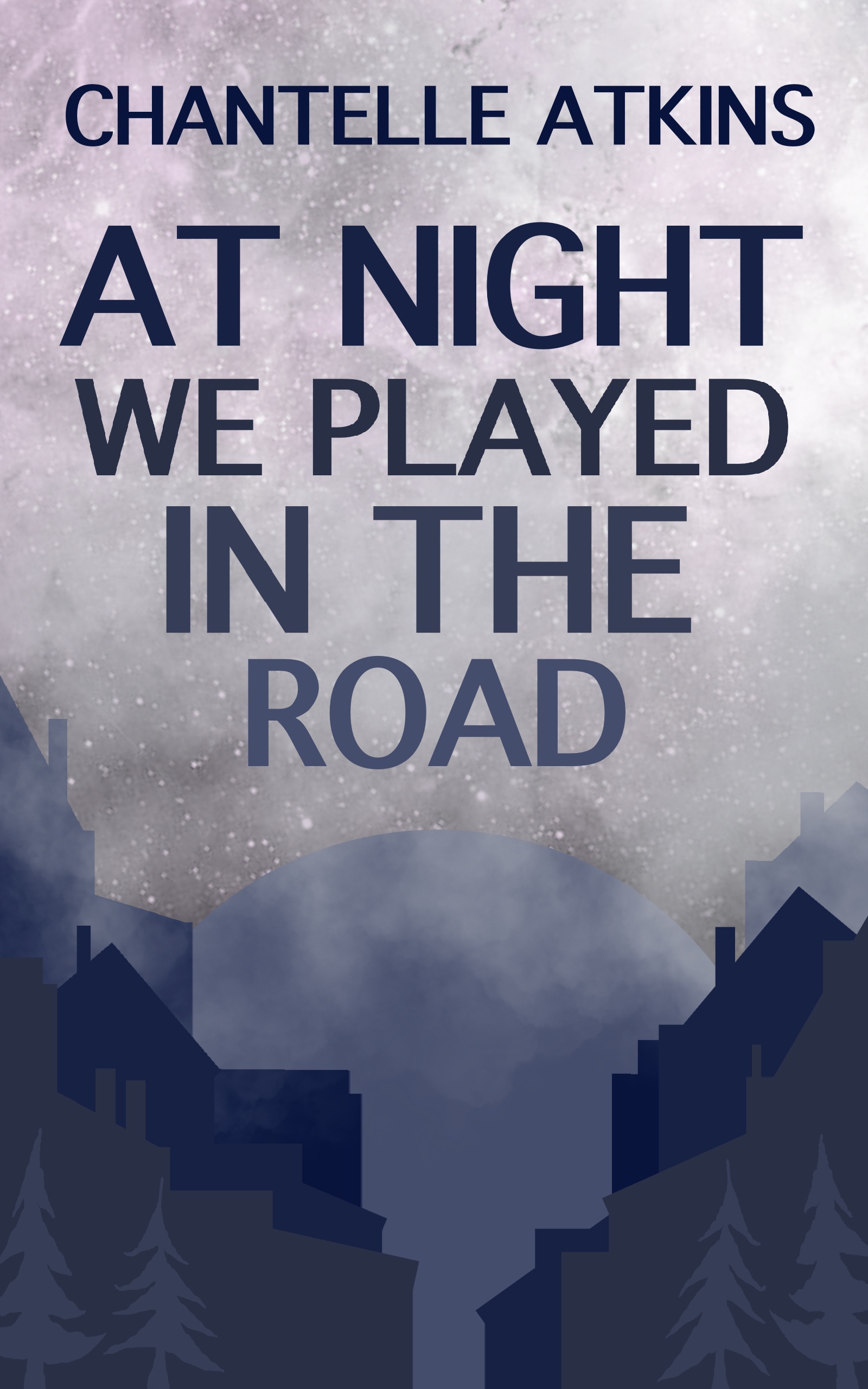
First, what do you think of the cover? I used my son again – he did the amazing book covers for The Day The Earth Turned series and he also recently updated The Mess Of Me and The Tree Of Rebels for me. This one was so hard to get right though! We went through three other designs before we settled on this one and even then we kept changing our minds about colour schemes. In the end, I think we got it right. It is dark and moody but also quite beautiful and I hope that is what readers will think of the book itself.

At Night We Played In The Road is a spin-off book from The Boy With The Thorn In His Side series and I got the idea about four years ago. At the time I was revamping and adding to that series and in part five I had introduced two brothers called Tom and Alfie Lane. They have small but significant parts in that story and it was obvious that they had an interesting back story to tell. They are drawn into a life of crime, but how and why? I wanted to go back to the beginning and find out what led them to that place.

Here is the blurb:

When Tom Lane was born, he accidentally killed his mother and in the process, his father’s love.

Determined to protect Tom from their father’s criminal business, older brother Alfie must become Tom’s father, mother and protector. It’s the two of them against the world until the day Tom chooses a life of crime over Alfie’s dream of a normal life.

Ten years later the estranged brothers are reunited when a violent gang bring Tom to Alfie’s door with a gun to his head.

Tom’s partners in crime have turned on him and he needs his brother to save him one more time…

A darkly brooding story of brotherly love, belongings and the beginnings that shape who we become.

And here is the opening paragraph:

The first time Alfie Lane had to think fast to save his brother’s life, he was five years old. That moment haunted his childhood, yet, in the years that followed, Alfie somehow found a way to bury the terrible memory. In fact, he has not thought of it since he was a kid, and, as it comes to him now, this fact alone seems somehow more strange, frightening, and catastrophic than the gun being held to his brother’s head. How could he have forgotten?

The preorder link: https://amzn.eu/d/0czWhf1a

Stay tuned because next week I will be sharing the inspiration and ideas behind this book and its characters!

Dancing In The Dark Won’t Keep Us Alive – short story/future novel idea

Last week I responded to a prompt on Medium and wrote this short story using two characters I had already created for a potential future novel. The prompt was musical; you had to choose a song title and/or lyrics to respond to and I picked Dancing In The Dark by Bruce Springsteen. For some reason the characters of Cody and Anya popped into my head as I feel like their entire story is very much a dance through the dark… This is a very rough and shortened version of how I think they will first meet and put their dark plans into action. See what you think!

Image by DelilanVan from Pixabay

When the newsflash ended our eyes met across the cafe table. The coffee he had offered in apology for kicking my bag across the floor had been barely touched, and suddenly I had no appetite for it.

I didn’t know his name yet, but the great scrawny scarecrow of a man raised his eyebrows at me. ‘Don’t tell me that surprises you.’

I glanced back at the TV, which had moved onto commentary and coverage of the protests already building up outside parliament. I scanned the cafe and saw the other customers frozen in shock, their foreheads furrowed, their lips moving without speaking.

‘He really said that?’ the waitress behind the counter questioned, before dismay and anger filled her face. ‘Jesus Christ, I voted for that lot! He really bloody said that, didn’t he?’ She looked our way, shaking her head in fury.

I smiled and nodded. ‘He really did say that.’

The scarecrow cleared his throat, his eyes on me. ‘Cody,’ he said, with a wink. ‘And you are?’

‘Anya,’ I told him, ‘and no, it doesn’t surprise me. Nothing surprises me anymore. The better question is, what are we going to do about it?’

A huge grin lit up his face. ‘Now you’re talking. I knew you were my kind of girl.’

Maybe he was flirting, who knows? It was one of those moments for sure. Life-changing — and everyone in that cafe felt it. There was something heavy in the air, yet it was crackling with electricity and Cody was staring at me in pure hunger. It felt like we were standing on the edge of the universe and somehow, though I knew we wouldn’t survive, I was ready for it. Ready for something.

‘What did he say?’ one of the old women by the window asked, her voice cracked and trembling. ‘What did he say about us?’

‘Why are they surprised?’ Cody lowered his voice, leaning in closer. ‘It’s hardly a shock, is it? Extremely rich and powerful person doesn’t give a shit about the rest of us? Jesus, where the hell have these people been living?’

I nodded, still grinning. He was right. I was right. Suddenly, we were right. Everything was happening. There was a crash out the back and a frustrated scream from the waitress.

‘What’s the point in anything then?’ one of the other old women asked.

‘It’s all kicking off now,’ someone else commented.

Cody and I looked back at the TV. Sure enough there were violent protests breaking out all over the country. We saw police leaping out of vans, batons raised. We saw crowds charging down the streets of London. We saw windows being smashed.

‘I need to close up!’ the waitress yelled from somewhere. ‘We all need to go home!’

Cody held out his hand. ‘Care to dance?’

‘Dance?’ I took his hand. It was weathered and warm. He was a walking talking scarecrow with his straw-like blond hair sticking out from under his grey beanie. Under his black duffel coat I glimpsed a white t-shirt with The Clash emblazoned across it.

‘This could be the end,’ he said with another wink. He scooped up my bag and handed it to me and we left the cafe arm in arm, staring into each other’s eyes. ‘And if it is, I’d love to dance with you, Anya.’

‘Everyone always thinks it’s the end,’ I quipped, as we pushed through the doors and out into the rain. It soaked us in seconds but neither of us cared. We pulled our coats around us, linked arms again and started to walk along the side of the harbour.

‘True. There will be outrage and protests for a few days, then everyone will go back home and back to work like the good little sheep they are.’

‘Indeed they will. They’ll probably even vote for him again next time.’

‘His career won’t be over,’ Cody agreed. ‘He’ll find a way to milk it and monetize it. They always do. He’ll be on Celebrity Big Brother before you know it, winning the viewers over.’

‘You can almost predict it. Still,’ I caught his eye, ‘it was a hell of a thing to get caught saying.’

‘Yeah, but at the same time any reasonably intelligent person knew already, right? Yet somehow it’s a genuine shock to some people that the establishment don’t give a damn about them.’ Cody laughed and shrugged skinny shoulders under his heavy coat.

‘So, a dance?’ I reminded him.

‘Somewhere chaotic,’ he mused, looking around. ‘Somewhere we can watch the world end.’

‘Or plot its downfall?’

He flashed another dazzling smile. ‘Now you’re talking.’

‘Hilsborough Hill?’ I suggested, nodding to the rolling green hills that looked down on us and out to sea. ‘It’ll be beautiful up there this time of night.’

‘And just us, dancing in the rain.’

We set off, hand in hand, two perfectly dysfunctional strangers. While the small seaside town exploded in outrage behind us, we followed the harbour-side until we started to climb the majestic hills that looked down on it all. As we walked we heard glass shattering as windows were smashed in, cars screeching and crashing, people shouting, sirens blaring.

I agreed with Cody. It wouldn’t last long.

The Deputy Prime Minister’s cruel, cold words would be washed over in the days that followed. The media would brush them off and rewrite them. The truth would be painted over with another more digestible one. The tabloids would turn on the protesters and paint them as the true aggressors. Others would watch the violence from home and feel frightened and isolated. The excuses would begin.

He didn’t mean it. It was taken out of context. He’s only saying what we’re all thinking! I mean, come on, he’s not wrong, is he? He was only joking! No one can take a joke these days! He’s getting cancelled, that’s what it is. And anyway, he was right, wasn’t he?

The media would find a new story. They would wash it all away but I knew the truth wasn’t going anywhere. We knew. We had always known. He had confirmed our worst fears and he had, for the first time in a politician’s life, spoken the truth.

At the top of the hill the wind and rain swirled around us and Cody and I embraced.

‘It’s nice to meet you, Anya.’

‘You too. Feels like fate.’

‘It really does. What a day! And life is so short.’

‘It is. Just look at them.’

We looked. We saw the little town glittering back at us, small untidy lives and unfilled ambitions and dreams only glimpsed at night. We wouldn’t be like them, like slaves to the system. We would be free.

‘I’ve never felt so free,’ he said to me then. ‘I’m thankful to that twisted bastard for finally saying it.’

‘We were right all along,’ I replied and he nodded, pulling me into his chest. I could feel the bumps of his ribs and I watched the wind pulling at his hair, trying to free it from the woolen hat.

We held onto each other and danced. The darkness consumed us and the hill we stood on felt like nothing, like it wasn’t even there. The rain soaked us, the wind battered us and still we danced, out eyes closed, our bodies pressed together.

‘I’ve got an idea,’ he said then.

‘What is it?’

‘I’m getting sick of waiting,’ he said with a yawn. ‘Sick of waiting for the goddamn apocalypse. Even this won’t bring it you know. Not fast anyway, not fast enough for me. There will still be jobs and money and bills, right to the bitter end.’

‘You’re right,’ I said, looking up into his face. ‘Tomorrow they’ll all get in their cars and drive to work to make the money to pay the bills and then they’ll get old and die and never realise they were a slave to bastards like that. That he laughed at them all along.’

‘They’ll deny it,’ nodded Cody, ‘even to themselves. But I say, how about we wake them up?’

‘How do you mean?’

‘I’ve been thinking about starting a movement. Anya, you and me, and a few others. There’s nothing left to lose, you know? He said it himself. We heard him say it in his own words.’

Yes, we caused climate change and we knew it all along and we didn’t careand we still don’t care!’ I repeated the words Giles Forbes-Roberts had been caught on camera exclaiming with such arrogance, such gleeful light in his eyes.

They’re all going to die anyway,’ Cody continued, repeating the MP’s words and mocking his Eton bred accent. ‘That’s just the way it is. Jesus Christ, up here we all just wish it would hurry up, you know? Less of them would be better for us, that’s what we always say.’

Let them die,’ I grinned, ‘we’re quite happy to just let them die.’

Cody threw back his head and copied the raucous drunken laughter of the MP as he lounged against the bar with champagne in hand and no idea the young lady he was talking to was recording his every word.

Let them die!’ I shouted, spinning with Cody, dancing in the dark as if nothing could touch us. ‘Why don’t they just hurry up and die?’

‘Do you want to hear about my movement then?’ Cody asked, holding me close as we rocked and swayed to the music of the waves smashing the rugged cliffs below.

‘If it involves violence towards people like Giles, I’d love to.’
Dirty Little Feet: What Followed Us Back From The Holloway (a short story)

This short story was recently posted on Medium where it sadly didn’t get a lot of reads. I thought it was a better story than a similar one I posted called Into The Green. That one got boosted and has earned me nearly £30, but I prefer this one. See what you think!

Dirty Little Feet

It was cool and dark in the Holloway – our impatient bare feet slipped effortlessly into the tracks laid down by our ancestors. Their faces were etched into the earth and the clay – their long-dead eyes followed our movements from the walls as we darted along the ancient track.

Our feet thundered upon theirs, our laughter mingled with echoes of their own as we sprang down the tunnel, splashing through cool streams, our toes curling into claggy mud. The walls of the Holloway sheltered us as we ran. This space was our fortress, our underground lair, our tunnel system, our playground. It was our link to the past.

Above us the trees linked hands; their vibrant green canopy a roof above our heads, bursts of late evening sunlight fragmented by trembling leaves. All around us, the stillness of time. We laughed and played as if time did not exist for us and down there, it didn’t. We wouldn’t grow old, we wouldn’t age or decay or die. Much like everything else that lived in the Holloway, we were eternal.

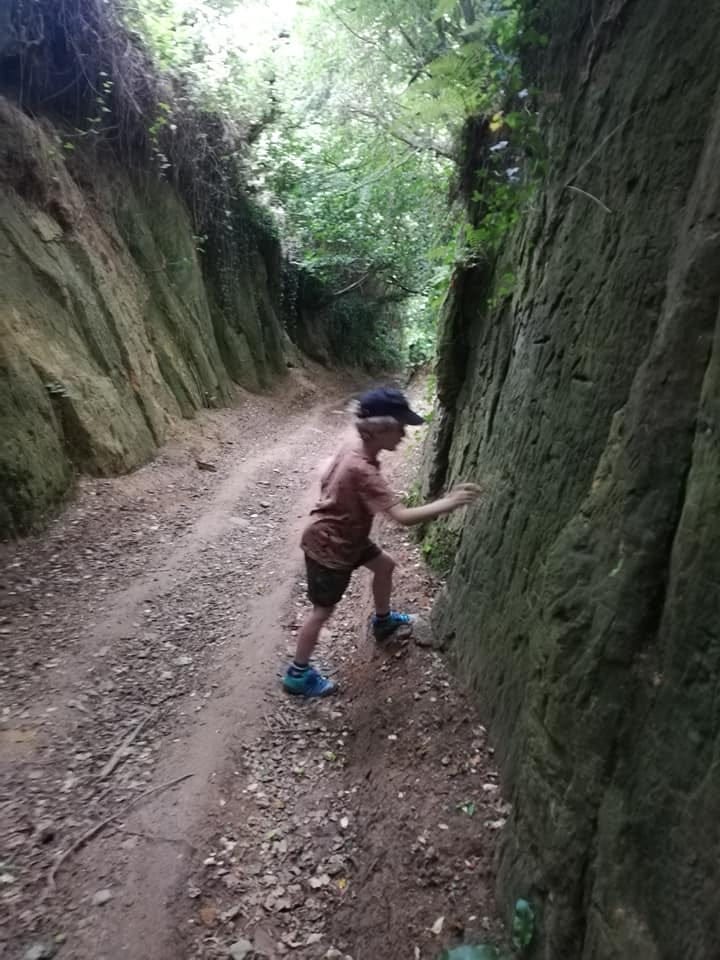
Photo is mine

But as dusk fell, we knew we were breaking a rule passed down by our parents and grandparents: don’t linger in the Holloway after sundown or you risk inviting one of the old back home with you.

To us, rules were made to be broken and returning home after sundown offered a delicious risk we could not resist. That evening, my siblings — twins, George and Arthur, Grace, the oldest and I, the youngest — stayed longer than we should.

Still, it was not quite dark by the time the old warnings infiltrated our consciences and prickled the hairs on the back of our necks. We scuttled out, hand in hand, giggling as our muddy feet raced back up the centuries old track, reaching for gnarled roots and boughs to lead us home and leaving the faces of our ancestors on the walls behind us.

Photo is mine

We tore across the sheep field — their eyes glittering back at us in the semi-darkness, and we returned home, leaving tell-tale muddy footprints across the kitchen tiles.

Grace washed away the evidence of our childish rebellion and come morning, we all thought our indiscretion had gone unnoticed by Mother.

Not so.

She was raging as she swept her old mop across the tiles where small brown footprints could be seen trailing in from the back door and stopping in the middle of the kitchen. We denied they were ours (ours had been a criss-cross pattern made by four sets of feet…) but it did no good. We were banned from the Holloway and given arduous chores to complete to make it up to her.

Later that day we heard her scream in rage once again; the noise drawing us out of our sulking to witness yet another trail of muddied prints on her floor. Who had defied her? It was my George who pointed out that the prints were far smaller than ours. He made me, the youngest, stand next to them to prove his point. My feet were small but not that small.

Mother’s face paled.

We watched as she sank into the nearest chair and stared dully at nothing. Then;

‘You stupid, stupid children. Why didn’t you listen to us? Why can’t you ever just listen?’

We swapped guilty glances, then released a collective gasp when a childish giggle echoed gleefully around us. We all froze. I reached for Grace and gripped her hand in mine. Tears shone in our mother’s eyes.

We all heard the sudden drumming — at first like a steady heartbeat, then louder, boom, boom, boom, until it faded out into something that was closer to a soft pattering.

Footsteps.

‘You’ll never get rid of it. We’ll have to move!’ Our mother wept again, dropping her head into her hands.

We were silent as we watched her get up and solemnly slosh the mop over the footprints. Still, we didn’t fully realise what we had done, even then. The dirty little footprints came back again and again. As fast as Mother washed them away, they would reappear. Sometimes they came in from the door and just stopped. Sometimes they made circles, as if the culprit was spinning around and around. Sometimes they ran up the walls and across the kitchen surfaces.

Next came the smell.

It started in the kitchen — a musty, earthy, swampy sort of smell. Mother was in despair. She claimed the house would never be clean again. She punished us with more chores and often we would hear her on the phone begging to be rehoused. We would fall into bed exhausted every night.

And that’s when the drumming would begin.

Footsteps at first, light and gleeful, teasing, dancing. Then they would build up. Harder, faster, angrier. Tearing up and down the stairs while we huddled in our beds, our breath frozen in our chests. Our eyes met in the darkness. We had done this. This was all our fault.

The dirty little feet stomped and thumped. Up and down the stairs, across the landing, into our rooms and around our beds while we quivered under the covers, clutching hands. Cold laughter echoed through the house as it kept us awake night after night.

Then one night, I woke up, muddled and sweating from a dream where the thing that followed us from the Holloway was smiling at me from the shadows. It had black holes for eyes and a wide sneering mouth and its skin was as white as bone.

I heard something new.

A frantic pounding. The panicked drumming of tiny angry heels. I ran to my window and there it was — I saw it for the first time. I saw its feet. Small, dirty, they beat as if in a great tantrum against my window pane from the outside. Had it somehow found itself shut out again? There was a great sadness emanating from it, a lonely desperation in its incessant thudding.

‘What do you want?’ I asked it, but the feet continued to kick. I pressed my hands to the glass. I wanted to see it properly. I wanted to see what had followed us home. I wanted to know why. It refused to show its face. Only two dirty little feet were visible and when I finally flung open the window, they were gone too.

In the morning, my mother looked disheveled as she started packing up our things. We had led a simple life there in the little stone cottage and it only took a few hours to pack up our lives and move out. Us children were bereft to be leaving the place we loved.

We trooped down to the Holloway to say our goodbyes but we did not go in. Instead, we held hands at the entrance, our heads lowered in sorrow. We stared at the ancient path, created by the constant tread of endless feet and rolling cartwheels, pushed into the earth deeper and deeper over centuries of old. Our own feet had pressed into it. Our own blood had flowed into the earth and the mud. Our laughter had echoed down the track and up into the giant trees and now we had to say goodbye.

The new home was nice. Small and neat, on the outskirts of the nearest town. Our walk to school was quicker, at least. We were happy there for a year until one morning we awoke to the sound of our mother screaming.

The screams were followed by wails, which soon dissolved into hopeless sobs.

When we ran down to comfort her, we all stopped just outside the kitchen, too afraid to step in.

The kitchen floor was covered in the gleeful dancing footprints of two dirty little feet.

Thank you for reading! I’ve wanted to write a story set in a Holloway since I visited the fascinating Hell Lane in Symondsbury, Dorset, UK. West Dorset is predominantly sandstone so has several Holloways. The name comes from the anglo-saxon word ‘sunken road’ and they are believed to be at least 300 years old with some traced back to the iron age. At one point they would have been trails to drive cattle along, popular highways if you like, to move people, goods and livestock from one place to another. They would have been ground level tracks back then but eventually centuries of human and animal feet and the wheels of carts would have eroded the soft earth and widened it, with help from the water running off the surrounding land. These days many Holloways are 20 or 30 feet deep. They are mysterious and magical places, eerily silent and still and you can’t help feel a real connection to the past as you follow the ancient paths so many centuries of feet have trodden.