Guest Post #2; Dreaming Of Another World

Dreaming of Another World is a brand new feature on my blog, inspired by a piece I wrote a few weeks ago. Following on from my post Dreaming of Another World, I wondered if other creatives felt the same as me, that another world is possible and could just be glimpsed during lockdown. I reached out to other authors, wondering what their reactions to lockdown were in terms of the future. Has it made them want something different? Has it made them change the way they are living, for instance? Do they have daydreams, like me, about a different way of life? Each week I hope to post a response to these musings from guest authors and bloggers. This could be stories, poems, essays or personal pieces. This second piece is from author Lily Hayden. To find out more about Lily click on the link at the end of the piece.

Dreaming of another world- Lily Hayden

Headphones in and eyes down, I spent my commute dreaming of a world where I didn’t race from a school run to jam myself aboard a packed and late train that spilled us out at a hectic station. My head would be full of all the things I would do ‘if I had time’ as I was swept up in a sea of commuters like a dull, drab shoal of fish swimming past the now-familiar rough sleepers and brimming commercial bins, dodging the puddles from cleaners hosing down the pavement outside the strip of bars and restaurants until I reached my office to sit at a desk for nine hours exchanging eye rolls with my colleagues as we counted down the days to the weekend with the same lethargic lack of enthusiasm; “Ugh, Monday!”, “How is it only Tuesday?”, “Happy Hump day.”, “One more day!” and finally “Thank God it’s Friday!”.

My head, like the commuter fish around me, would be full of all the wonderful things I could do if I wasn’t a slave to the rat-race.

“I’d love to go vegan,” I’d lie to myself as I inhaled my fourth coffee before midday. “I just haven’t got the time to meal plan!”

Same for exercising. Not a chance could I fit gym time in amongst juggling work, writing and raising four children and numerous animals.

“Love the concept of zero waste!” I’d shrug as I clicked through an Eco page on Instagram in my lunchbreak. “But who’s got time to go searching for all that? I can barely manage one big shop on the weekend.”

“We should do more with the kids,” I’d say to my husband as we flopped down exhausted on the sofa on a Friday night, feeling the familiar pang of guilt as they all disappeared off to their rooms once the takeaway had been devoured. “If only we had more time!”

And then suddenly we had time.

“This is so strange,” we would repeat to various neighbours that we only ever saw in passing as we all flew from school runs to work on a never-ending hamster-wheel of rush, rush, rush.

We played games in the street at a social distance and went for walks in the woods that I’d never set foot in despite living on their doorstep for thirty-seven years. We baked, and we gardened, and we sat in the sun. We made little schedules for the children, and the big ones helped the little ones with their schoolwork. We skimmed stones in the river and explored the fields and the forests. We went from driving every day to once a week, and I thought about the carbon footprint reduction.

80,000 people commute into Cardiff every day for work with an average commute of 19 miles taking 48 minutes according to various sources. That’s 1.5 million commuter miles on train, bus and car pumping out tens of thousands of tonnes of CO2 every year.

“Did you know Cardiff is the fourth most polluted city in relation to size?”

“If half of those commuters worked from home, imagine the impact to pollution!”

Imagine! The world could start to repair the damage we’d done to it!

We had enough time to watch the news, to really watch it and talk about it, rather than scroll past on our way to work, the gym, drinks, dinner with just an apathetic ‘how awful’… And we had time to take to the streets chanting ‘no justice, no peace’ when we woke to the reality of the cycle of oppression that we had been complicit in. Strangers united to topple statues of terrible men who did terrible things in the name of profit and power.

We clapped for the nurses that work gruelling shifts putting their own lives at risk to care for others, but all they wanted was fair pay and protective equipment to keep them safe. Of all the people in powerful positions, a football player was the one to convince our Prime Minister that while schools stayed closed to the majority, children would go hungry without their free school meal. The staggering reality of poverty in our country felt like a dirty, little secret had been exposed.

But not everyone could stay home and breathe. A hotchpotch of roles were marked as essential alongside the obviously necessary ones as businesses interpreted the loose rules to suit their pockets, and instead of question the necessity we ordered takeaways, and everything from Amazon, we queued to buy paint from B & Q, and the country sold out of hot tubs.

And then we began to grow bored of entertaining ourselves. By nature, humans are sociable creatures; we missed our friends and our family, and worried that the children needed the routine of schools. By the end of June, mixed messages teased of our ‘playgrounds’ re-opening, and we craved our postponed holidays, desperate to jam a facemask on to jet off to foreign shores the minute the planes took off, or gather outside the pub to clutch that first ice-cold pint or queue to fill a basket in Primark. We were chomping at the bit to get back to ‘normal’.

The emotional need for normality was exacerbated by the very real fear that there would be economic repercussions of the wheel not turning and millions of worker bees furloughed; businesses would fold, and jobs would be lost forever. With fear in our hearts, we will jump back on the treadmill as soon as the whistle is blown. It’s likely that we’ll never have this chance to collectively stop again in this lifetime.

Imagine though if that was the last chance that the world was willing to give us.

On Monday I could be back on that train, headphones in and eyes down; the only thing that would have changed would be the facemasks we are wearing, and wouldn’t that be a horrible, horrible waste. Over forty thousand people have died, and tens of thousands are still recovering from a very serious and debilitating illness.

We cannot let this be for nothing.

I know it wasn’t just me on the train dreaming of having the time to be better, having the time to care, to educate myself, to read, to share, to connect, to donate, to question the morality of the society I live in. I don’t want to go back to seeing my own children for just a hectic hour each morning and evening, missing their lives so that I can pay to keep the roof over their head. My husband took over sixty business flights last year, we drove maybe twenty thousand miles of car journeys. I don’t want to contribute to the destruction of our planet anymore. I don’t want to be shocked when I read that over one million children in the UK rely on free school meals or scroll past news of more racial injustice because I’m too exhausted to be angry. I know that it’s not just me on the train dreaming of a slower pace, more time and deeper connections.

I dream of a world where we learn from the lessons we’ve been taught.

Thank you so much to Lily for this wonderful and thought-provoking piece. If you would like to find to find out more about Lily’s writing, please follow the links below! And if you would like to contribute to this feature with a non-fiction or a fictional piece do please get in touch!

Link to author page and bio: https://www.amazon.co.uk/Lily-

Hayden/e/B07CR8KF7D%3Fref=dbs_a_mng_rwt_scns_share

Guest Post; Dreaming of Another World

Welcome to a brand new feature on my blog; Dreaming of Another World. A regular slot handed over to fellow authors and bloggers. Following on from my post Dreaming of Another World, I wondered if other creatives felt the same as me, that another world is possible and could just be glimpsed during lockdown. I reached out to other authors, wondering what their reactions to lockdown were in terms of the future. Has it made them want something different? Has it made them change the way they are living, for instance? Do they have daydreams, like me, about a different way of life? Each week I hope to post a response to these musings from guest authors and bloggers. This could be stories, poems, essays or personal pieces. Our first piece is from author Grahame Peace. You can find out where to follow Grahame at the end of the blog post!

After months of planning, my partner and I, along with my youngest sister and her husband, had been looking forward to travelling to Nice in early April to celebrate my other sisters sixtieth birthday with her family. In May we also had plans to go to Paris with friends and realise a lifelong dream and visit Versailles. All that came to a sudden halt in late March 2020 due to the lockdown in the UK and across Europe due to Covid-19. Along with that, we had to cancel theatre trips, meeting up with friends and family, and our regular trips to the gym.

I’m sixty-two and suffer from asthma and allergies, putting me in one of the Covid-19 high-risk groups. Funnily enough, my partner and I had both been ill in late November 2019, we’d never experienced an illness like it, and as information came to light about the coronavirus, we are both convinced we had it. We had all the symptoms, although, without testing, we’ll never know. One good thing came out of that, once we were feeling better, we both rushed for flu vaccinations, and we’ll be going for another as soon as they become available in September.

None of us could predict what would happen next as the lockdown started here in the UK and across the world. I retired from my job in the National Health Service (NHS) in 2014, so I know first-hand the many daily challenges facing NHS and social care staff, how I feel for my hard-working, and often undervalued NHS and social care colleagues. It’s good to see them finally being valued and getting recognition for their work; one can only hope they get all the resources they need and are going to need in the future.

Since retiring writing has been my fulltime (F/T) occupation, and I treat it like a F/T job, working every day for several hours at my computer. The lockdown had no immediate impact on me from a work perspective. My partner was soon put of furlough but was used to working from home, so being at home every day wasn’t unusual. A positive outcome from that meant those jobs in the house and garden could now receive our full attention, not that there were many. During lockdown, my youngest sister and her husband have built two greenhouses and created a fantastic vegetable garden; they even discovered a hidden stream on their land.

Like many, I became obsessed with the news as well as trying to find out as much as I could about the virus. I was distracted and found it hard to concentrate on my writing. I still do, although I persevere. But how dire the news has been, with the daily death toll not just here in the UK but around the world. Along with awful predictions about what life could be like for years to come, and the worry for many as they lose their jobs. I still find it impossible to make any future plans, and I’m grateful to have my writing to keep me occupied; it’s also a much-needed distraction as I lose myself in imaginary worlds. I have a vivid imagination, which is both a good and a bad thing!

During the lockdown, we’ve hardly seen friends and family, but thank goodness for Zoom, what a fantastic piece of technology, it’s like something out of my favourite childhood TV programme ‘Thunderbirds’. We’ve tried to entertain ourselves with lots of reading, internet shopping, re-watching most of our extensive DVD collection and binge-watching various TV shows and series. Along with long daily walks in the countryside, even in the pouring rain, just to keep moving and get out of the house and into the fresh air. We also started shopping for our elderly neighbours. How I feel for people shielding who live on their own; they don’t see anyone for days on end as one day merges into the next.

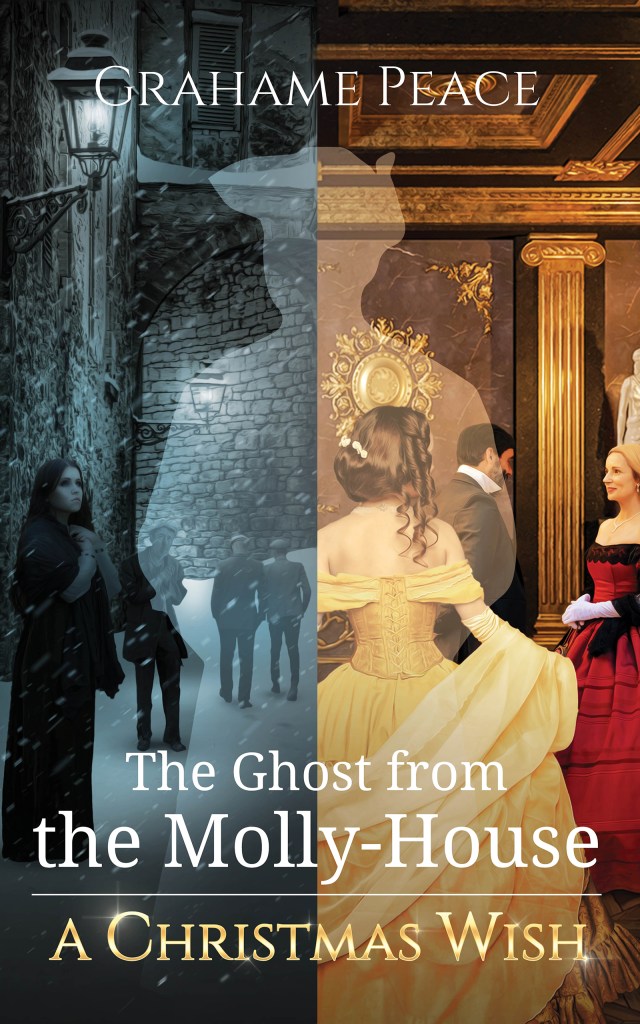
During the lockdown, I finished and published my tenth book, The Ghost from the Molly-House. A Christmas Wish, this is book seven in the series and set in 1850 in Victorian London. As with all my books, I did a lot of historical research into the period, it truly was a world of the haves and have nots. Doing all the research helped me to realise that even with a global pandemic, how lucky we are to live in 2020. Life was grim and incredibly cruel in Victorian times, but that’s history for you! I’m now busy researching and working on my next book, The Ghost from the Molly House. Lady Fenella and the Fleet Diamonds, which is set in 1937. I hope it will be out later in the year.

Life is slowly returning to some form of normality, my partner started work again on 20th July, and things are opening up again. Not that I have any desire to go anywhere or back to the gym until I see how things unfold in the coming weeks, particularly as we’re starting to see spikes of Covid-19 cases all around the world. I’ve even started cutting my own hair; and going to a supermarket feels anxiety-provoking with panic buying, social distancing, long queues, plastic screens, hand sanitiser, and now face masks; I dread it, but needs must.

For me, one of the good things about the lockdown has been nature, the wildlife in the garden, the bird song in the morning, and the considerable reduction in pollution and traffic on the roads. I’m sure that’s had a positive impact on my asthma; for a period, I even stopped using my inhalers. It also created a sense of community; our neighbours have all come together. We had an outdoor, socially distanced VE Day celebration, which turned out to be a lovely evening enjoyed by all.

One downside I’ve witnessed has been litter. As I’ve walked through the countryside and watched the news, I’ve been astounded by all the litter, and rubbish people leave everywhere. Things like drinks cans, beer and plastic bottles, garden and building waste, and, of course, fast food packaging, without a thought for the environment and the poor people who have to clear up after them, it’s staggering.

Seeing how some political leaders have behaved over Covid-19, has made me feel increasingly worried about the future. I base that opinion on their actions, political spin, and fake news. It’s not inspired confidence, just at a time when the world needs to come and work together. The pandemic has brought out the best and worst in human nature with incredible acts of kindness, but also unbelievable acts of selfishness.

They say, ‘every cloud has a silver lining’, I do hope this pandemic will prove to be a wakeup call to everyone in the fragile world we live in; we can’t live in isolation, we’re all part of a global economy and like it or not, what happens in one part of the world, has an impact everywhere else. The days of things like the British Empire are long gone. Lockdown hasn’t made me dream of a new world; it’s just highlighted the need for the world I’ve always dreamed about; a world of peace, harmony, tolerance, respect, kindness, love, consideration, and equality. But someone somewhere will always want the last fish in the sea.

Thank you so much to Grahame for writing this piece for my new feature. You can follow him via the links below! If you are interested in writing a piece for Dreaming of Another World then please get in touch. I am looking for stories, poems, essays and non-fiction on the theme of another world. Did lockdown inspire you to change your ways or even your life? Would you like to see a change in society after Covid 19? What are your hopes and fears for the future? Anything written in response to Covid 19 and/or the climate emergency will be considered! Many thanks.

Website: https://www.grahamepeaceauthor.com/ Amazon UK Page: https://www.amazon.co.uk/Grahame-Peace/e/B00JNA07HE/ref=dp_byline_cont_pop_ebooks_1 Facebook: https://www.facebook.com/gpeaceauthor Twitter: https://twitter.com/GrahamePeace

Indie Author Of The Month; Kim M Watt

Hello and welcome to another Indie Author of The Month post! At the end of each month I highlight an indie author I happen to think is rather wonderful. This is usually because I have read their books and been following them online for some time. For June, please welcome author Kim M Watt. First, let me say that Kim writes books I wouldn’t normally make a beeline for. Humour and fantasy. Not that I don’t like either, but I’m usually more drawn to YA or gritty, dark kinds of books. I was attracted to Kim’s books because of the snippets and graphics she posts on social media, all of which made me smile and want to give these unusual books a go. I have particularly fallen in love with her Gobbelino London series. To find out more, read on!

1. Tell us about your latest release. What is it about and who is it aimed at?

My latest book is Gobbelino London & a Contagion of Zombies, which is book two in the Gobbelino London series. It’s an immensely fun series to write, about the adventures of a feline PI and his human sidekick on the streets of Leeds. Contagion is (surprise!) about an unexpected rising of the dead, resulting in stress-baking reapers, irate magicians, zombie chickens, and some issues of undeadness for our team. It’s aimed at anyone who enjoys a light take on the PI genre, heavily salted with mayhem, humour, and cat hair.

2. Tell us about your publishing journey so far.

I’ve had a few attempts at traditional publishing (starting with a truly terrible vampire novel at 16), but a few years ago I became interested in indie publishing. I like the degree of control it affords the author, and as I’m a reasonably fast writer it also suits me. Plus, as my stories are a bit … quirky, shall we say? Weird has also been used… Anyhow, they don’t fit any one genre that well, so it’s tricky to sell them traditionally. So indie just seemed like a good fit all round. I published my first cozy mystery with dragons about 18 months ago, and it’s just been a really interesting and fun learning curve ever since.

3. When did you first know you wanted to be a writer?

Ooh, always! I grew up on a boat in the South Pacific for quite a few years, so was on the NZ correspondence schooling system. Those being the days of very slow post, we sometimes lost incoming coursework. My solution was to write (and illustrate) a book of short stories. Although I may have been trying to avoid my mum’s maths questions by saying I was writing, too.

4. What is your typical writing day like?

I’m really lucky in that I’m able to write fulltime at the moment, so a typical day for me is up around 6 (earlier if the cat feels I’m slacking on food duty), work out or run, breakfast, then write for about 4 to 5 hours. I don’t write every day, but when I’m on writing or rewriting, that’s my time frame to hopefully get a couple of chapters done. I’m not too hard and fast on word counts, but that’s my goal. The rest of the day is then blog posts, social media, newsletters – whatever else needs doing.

5. What is your writing process? (how do you plot a book, come up with characters, find motivation etc)

Right. Yes. My process. *Tries to look like she knows what she’s talking about*

My process is … messy. I’ve tried really hard to learn to plot, and have done everything from plot gardening to circle-y things to Beat Sheets and everything else I’ve come across, including using a small forest’s worth of Post-it notes (I’m sorry, trees).

My conclusion is that it doesn’t work for me, certainly not in the first draft. My best writing is to have a start point and a vague idea of where I want to end up, then I just start writing. I find by hand works really well, or fast typing without correcting anything (and I’m a terrible typist. It’s almost as bad as my handwriting). The characters tell me about themselves as I go along, and that tends to shape the story. I’m mostly just along for the ride at this stage.

I then go back for at least one major rewrite before I send the story out to beta readers, and that’s where I use a Beat Sheet as a reference point to make sure I’m hitting plot points at about where I should be. Motivation is rarely a problem when I work this way – by the time I start writing I’ve usually had an idea rolling around in my head for a few weeks or months, and I have so much fun watching it take shape on the page that I look forward to sitting down. When I try to plot, on the other hand … not so much fun.

6. What has been the most positive thing about your publishing journey so far?

The online writing community. It’s the most supportive and wonderful collection of people – it makes me feel so lucky to be a part of it. I also love how social media means you can chat to readers – it makes the whole process so personal and lovely.

7. What has been the most negative thing about your publishing journey so far?

I’m not sure I’d call it negative exactly, but it’s All The Other Stuff you have to learn – from formatting to figuring out what you want covers to look like to trying to work out why your website suddenly started eating all your photos. There’s a lot!

8. Who is your favourite character from your own books and why?

Aw, that’s hard! I love all of them for different reasons. Gobbelino because he’s just such a cat, and so much fun to write. Beaufort because he’s so optimistic and gentle and fierce all at once. Glenda, who joined the Apocalypse on her Vespa, and who hasn’t told me her full story yet, but I know she will.

9. Where do your ideas come from?

An amazing amount come from Twitter. Gobbelino London started as one of those games that go around – the name of your first pet plus the last place you went on holiday. The Beaufort Scales series was a combination of a tweet I misread (it was about being barbecued by dragons if you went near their hoard, and I thought it was about dragons hoarding barbecues) and a strange discussion with my dad regarding the Beaufort Scale. Anything can be an idea, really.

10. What can we expect from you next?

I have the third Gobbelino London book due out in August, and a fifth Beaufort book towards the end of the year.

11. Tell us three fun facts about you

This is the hardest question yet!

– I’m originally from New Zealand, but haven’t actually lived there all that much.

– The Little Furry Muse (aka Layla the cat, and inspiration behind many snarky feline characters) has been with me for over 10 years, and in that time has lived in three different countries, ten houses, and two campervans.

– I’ve had all sorts of non-writing jobs, including teaching SCUBA diving, teaching sailing, cooking on sailing yachts in the Caribbean, and being bosun on a superyacht. Writing’s still the most fun.

12. What is the best advice you could give to aspiring writers?

Finish your writing. Accept it won’t be perfect, but know when you’ve done the best you can, and put it down. Otherwise you’ll be adding dragons and taking away pixies for another 326 drafts. And celebrate everything. Every draft, every rewrite, every edit. They all deserve celebrating.

Plus drop the “aspiring” bit, unless you’ve actually not written anything at all yet. And in that case – just start. That’s the scariest bit, so just start anywhere. And then you’re a writer 🙂

Thank you so much for inviting me to interview!

Thanks so much Kim for joining me on the blog. If you would like to find out more about Kim and her books, the links are below!

Website: https://kmwatt.com/

Books links: https://kmwatt.com/my-books/

Indie Author Of The Month; Paula Harmon

Welcome to another Indie Author of The Month post! This time please welcome the marvellously versatile and prolific indie author Paula Harmon. As well as writing fantastic novels and short stories, Paula was also one of the wonderful people behind Blandford’s first ever literary festival last November. I was honoured to be asked to get involved and it was a fantastic event I hope they are all very proud of. I can’t wait for the next one! Here Paula talks about where her ideas come from, what her writing process is and more. Enjoy.

  1. Tell us about your latest release. What is it about and who is it aimed at?

The Wrong Sort To Die’ will be out as an e-book on 30th June 2020.

It’s a historical mystery set in June 1910.

Fighting her corner in a man’s world, Dr Margaret Demeray works as a pathologist in a London hospital for the poor. Suppressing her worry that she’s breaching confidentiality, Margaret gives a stranger called Fox information about a dead down-and-out, in the hope he’ll use it to raise awareness of bad working conditions.

But when a second man appears to die the same way, Margaret starts to wonder why the enigmatic Fox keeps turning up to ask ever more complex questions.

She decides to work alone, uncertain of his motives and wary of her attraction to him.

Once she starts investigating however, her home is burgled, she’s attacked in broad daylight and a close friend becomes distant.

Fox offers the chance to forge an alliance, saying he knows why the men have died but needs her to find out what is killing them and who is behind it.

Yet how come the closer she gets to him the more danger she faces? And how can a memory she’d buried possibly be linked to the deaths?

Margaret must discover the truth before someone – known or unknown – silences her for good.Margaret Demeray was a minor character in the Caster and Fleet series set in the 1890s where she first appeared as feisty teenager. There was no chance she was going to let her older sister get away with all the fun. It would be suitable for anyone who enjoys writers like Ann Granger, Anne Perry, Clara Benson and like a strong-minded female lead.Tell us about your publishing journey so far.

2. Tell us about your publishing journey so far.

I published two collections of short stories in 2016, followed by a memoir about my father in 2017. In 2018, I published my first novel ‘Murder Britannica’ which is a historical mystery set in Roman-Britain in AD190. The sequel ‘Murder Durnovaria’ set the following year in Roman Dorchester came out late 2019. I published a joint collection of short fantasy stories called ‘Weird and Peculiar Tales’ with Val Portelli. With Liz Hedgecock, I co-wrote the Caster and Fleet series – six historical mysteries set in 1890s London which start with ‘The Case of the Black Tulips’. They’re about two young women, frustrated with the restrictions in their lives who end up in partnership solving mysteries.

3. When did you first know you wanted to be a writer?

When I was very small, if I was sent to bed early as a punishment I was always quite glad as it gave me the chance to tell myself stories. (For as long as we shared a bedroom, I used to drive my younger sister up the wall by doing this under my breath when she was trying to go to sleep.) Creative writing was my favourite subject at school and I’d always meant to be a writer. Earning a living, then having a family got in the way to start but I thought I’d finally have time and space when my youngest child started school.  However, a relocation and change of working pattern meant my dream was dashed. Then in 2015, someone encouraged me to enter a competition and join a writers’ group. After that I sort of thought ‘if I don’t just get on with it whether I have time and space or not, I’ll never do it’ and I did.

4.What is your typical writing day like?

I work full-time and writing tends to have to fit round work. I try to write for one day at the weekend as well as fitting in an hour a day otherwise. I’d write on train journeys as I did a lot of commuting up till March. The current Covid-19 situation makes things less easy since, although I’m still working, I spend that ‘hour after work’ catching up by video with my mother and sister. But on the other hand, I’ve had nowhere to go at weekends and been able to get on with writing instead. Although, as for many, the coronavirus situation itself has a scrambled my brain a little.

5. What is your writing process? (how do you plot a book, come up with characters, find motivation etc)

I tend to start off with a short scene in my head – a person or people in a location doing something apparently ordinary and then I have to work out who they are and what’s extraordinary about it or what’s going to happen next. I usually start with two characters and seem to end up with a million – really not sure why! Once I know who the people are, I then work out where they are, when they’re living and what time of year it is. If it’s set in another era, I’ll do a little light research to find out what was going on at the time in case I need to factor that in.  Generally once I find the ‘shape’ of the story, I know how it will start and end and roughly who wants what and what is stopping them from getting it. I usually write that down and then an outline of what ought to happen roughly at each stage of the book. Then I just start and see what happens. I quite often end up completely reorganising the middle, though the beginning and end don’t usually change. I find out more and more about the characters as I go long – they become ‘real’ and that sometimes alters what the core of the story is about in terms of what they learn about themselves or their world.

6. What has been the most positive thing about your publishing journey so far?

Hearing that people enjoy what you’ve written – that it’s touched them or made them laugh – is wonderful. But for myself, even if I write something that not many people read, somehow tapping into the part of my brain that demands to write stories is a wonderful mental release.

7. What has been the most negative thing about your publishing journey so far?Marketing is very hard work. Most writers by nature are rather introverted. I’m not sure I always come across that way at work, but the minute I start talking about my books, I’m overwhelmed with shyness. It always feels like I’m exposing a part of myself, which I suppose I am – since most characters have elements of the author in them. (That’s a little alarming when I think of some of my characters.)

8. Who is your favourite character from your own books and why?

That’s really hard to answer and tends to depend on what I’m working on at the moment! Margaret Demeray’s outgoing and determined nature leads her to want to make the world a fairer place, but it hides a vulnerability. She’s drawn in part from some of the rather feisty women in my family, none of whom let anyone tell them what they could or couldn’t do. But I confess her tendency to lose her temper and say the wrong thing when she does is definitely me.

But I can’t help loving Lucretia – one of the main (and from her perspective) most misunderstood characters in the Murder Britannica series. It never ceases to astound her that people don’t realise just how important she is, but she remains full of hope that not only will she become even richer very soon but that she’ll find if not love then passion – it’s just annoying that people around her keep dying in suspicious circumstances.

9. Where do your ideas come from?

I really don’t know! They just turn up. I’ve always had very vivid dreams and quite often that’s where they come from, and I’m also a terrible day-dreamer. I love places of transit like stations where you can think ‘what if I got on a different train and went somewhere else entirely? or what if the train went back in time? or what if an old friend/enemy sat down next to me? or…’ I sort of apply that in other contexts and see what unfolds. ‘Murder Britannica’ started as a paragraph where Lucretia is having a snide and critical conversation with her daughter-in-law. It just came to me one lunch-time and I wrote it down. It was years before the rest fell into place. With ‘The Wrong Sort To Die’, I started knowing that Margaret had qualified as a doctor in about 1898 and wondered what she’d done after that. I knew she’d have a thirst for justice and equality but also suspected she wouldn’t be much good at bedside manner, so wondered what she’d do and decided she’d probably work in a charitable hospital in the pathology department. I decided what year the story would take place in and by chance, saw something on TV about that era which gave me a germ of a background for the plot – most of the general public thinks they’re living in a golden age of peace with new inventions and social change but meanwhile, the government is preparing for war. What might that mean for the people Margaret wants to help?

10. What can we expect from you next?

Next on the list will be the third in the ‘Murder Britannica’ series. While ‘Murder Durnovaria’ was set in Roman Dorchester, the third book is set in a small town near a river which is roughly located where modern day Blandford is. It’s midwinter and Lucretia’s nephew Fabio will do anything to avoid being forced into an arranged marriage, even look into strange goings on in a small town where it’s hard to know who’s on whose side.

11. Tell us three fun facts about youI can make something out of next to nothing whether it’s a meal or a costume; I don’t take myself remotely seriously; according to family legend I have a medieval ancestor who caught a ‘whale’ off London bridge.

12. What is the best advice you could give to aspiring writers?

Don’t give up. Keep writing things even if you don’t finish them, they may come into their own one day and if not then they’re worth it just for the practice. Maybe today is the right day and maybe it’s not. One day you’ll just get on with it, regardless of whether you really have the space or time. Everything you experience, witness and live through can inform your writing whether it’s serious or funny or thought-provoking. Within legal limits – be a people watcher!

Thank you so much to Paula for agreeing to be interviewed on my blog! |If you would like to find out more about Pauls and her books, her bio and links are below!

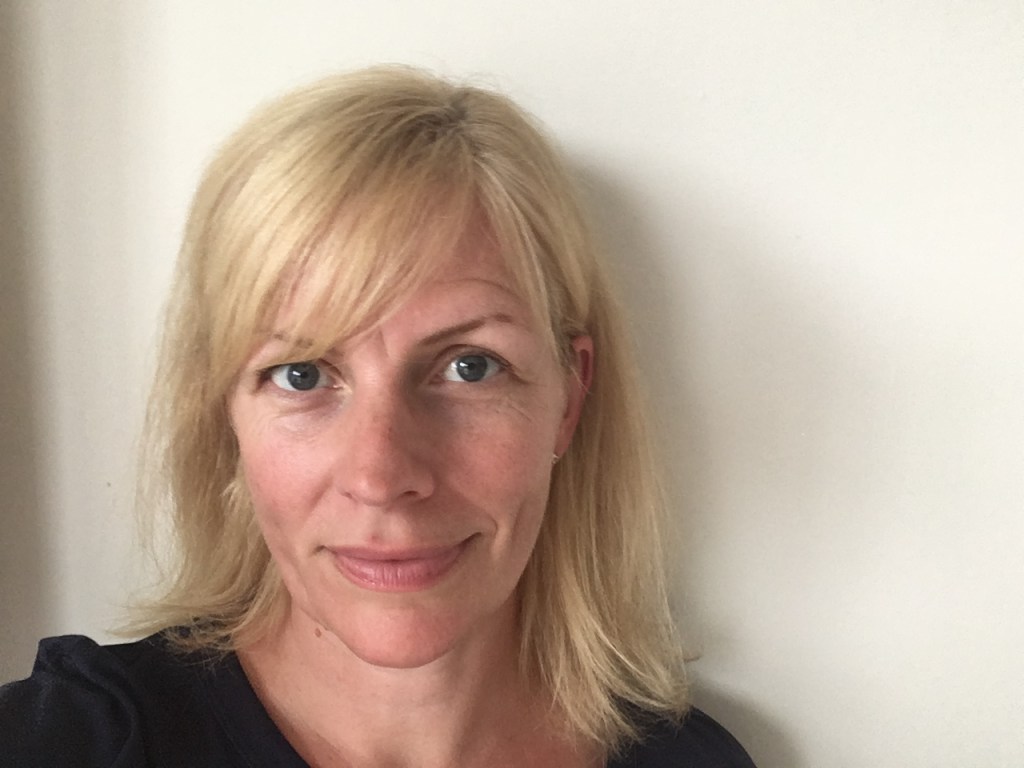
Paula Harmon was born in North London to parents of English, Scottish and Irish descent. Perhaps feeling the need to add a Welsh connection, her father relocated the family every two years from country town to country town moving slowly westwards until they settled in South Wales when Paula was eight. She later graduated from Chichester University before making her home in Gloucestershire and then Dorset where she has lived since 2005.

She is a civil servant, married with two children at university. Paula has several writing projects underway and wonders where the housework fairies are, because the house is a mess and she can’t think why.

https://paulaharmondownes.wordpress.com

https://www.facebook.com/pg/paulaharmonwrites

viewauthor.at/PHAuthorpage

Murder Britannica

It’s AD 190 in Southern Britain. Lucretia won’t let her get-rich-quick scheme be undermined by minor things like her husband’s death. But a gruesome discovery leads wise-woman Tryssa to start asking awkward questions.

Murder Durnovaria

It’s AD 191. Lucretia last saw Durnovaria as a teenager. Now she’s back to claim an inheritance. Who could imagine an old ring bought in the forum could bring lead to Tryssa having to help local magistrate Amicus discover who would rather kill than reveal long-buried truths.

The Wrong Sort To Die

London 1910. Dr Margaret Demeray is approached by a stranger called Fox to help find out what’s killed two impoverished men. How can a memory she’d buried possibly be linked to the deaths? And how come the closer she gets to Fox the more danger she faces herself?

The Cluttering Discombobulator

Can everything be fixed with duct tape? Dad thinks so. The story of one man’s battle against common sense and the family caught up in the chaos around him.

Kindling

Secrets and mysteries, strangers and friends. Stories as varied and changing as British skies.

The Advent Calendar

Christmas without the hype says it is – stories for midwinter.

The Quest

In a parallel universe, Dorissa and Menilly, descendants of the distrusted dragon people, are desperate to find their runaway brother in a fog-bound city, which simmers with unrest and deceit.

The Seaside Dragon

For 7-11 year olds. When Laura and Jane go on holiday to a remote cottage, the worst they expect is no wifi. The last thing they expect is to be battling strange creatures with an ancient grudge.

The Case of the Black Tulips (with Liz Hedgecock)

When Katherine Demeray opens a letter addressed to her missing father, little does she imagine that she will find herself in partnership with socialite Connie Swift, racing against time to solve mysteries and right wrongs. (This is the first of six Caster & Fleet Mysteries)

Weird and Peculiar Tales (with Val Portelli)

Short stories from this world and beyond.