I see you, single white eyebrow hair!

Yes, I see you. There’s no hiding from me. Not that you were trying to hide that much anyway. I mean, how could I not notice you? One bright white hair sticking up in the middle of all the black ones? You weren’t exactly trying to be anonymous, were you? No, in fact, I rather feel your flamboyant combination of stark white colour and blatant lack of respect for the order hairs lay in, was more of a giant fuck you, to be honest!

But that’s okay. I can take it! I’m a big girl. And you know that already don’t you? And anyway, I hate to piss on your party parade, little white eyebrow hair, but you were beaten to it by a couple of head hair a few years ago! So there! And there have been a few more since then, believe me. So you weren’t such a shock, I’m sorry to say. You looked sort of weird and out of place though, so I plucked you out and examined you, and I expect you’ll be glad to hear your brief existence as part of my body did encourage me to stand and consider the passing of my time.

But the white hairs on my head was a bigger deal. Because those little bastards crept up on me. They took me by surprise, unlike you. Those hairs got me in a right little spin. They had me thinking about age and death for weeks! But you, I’m not so sure. I feel like I will just shrug you off. You see, back then, I was a few years into my thirties. And let me tell you, shocking white eyebrow hair, your early thirties are a time of massive denial and self-delusion.

You’ve just come out of your twenties and you can’t quite believe you’ve actually crossed the threshold into your thirties. It doesn’t seem real. Or fair. Twenties sounds so nice, doesn’t it? No one really wants to be a teenager forever, not with all the angst and insecurity, but your twenties are fantastic. You’re still young. You look young! You feel young. Old age feels a million years away; something that can never touch you. Then you roll on into your third decade, and it feels like quite a beating if I’m honest.  Quite a shock to the system.

I remember when I was heading out of my twenties. Being thirtysomething distressed and confused me. As that big 3-0 approached, I started looking around at other women of that age. How was I supposed to dress? How should I act? I felt like I had to leave my old scruffy, student style clothes behind me and try to appear a bit more polished. I genuinely thought this!

Early thirties is a strange time. You tell yourself you are still young, and of course, you still feel exactly the same. We never really change much on the inside. But you are suddenly confronted with one hard, cold fact. Entering your third decade is the beginning of the end of being young. Of course, it doesn’t happen overnight. You don’t suddenly wake up with crows feet and saggy arms, thank God. You don’t suddenly turn grey or develop arthritis. But it’s the start…or the end.

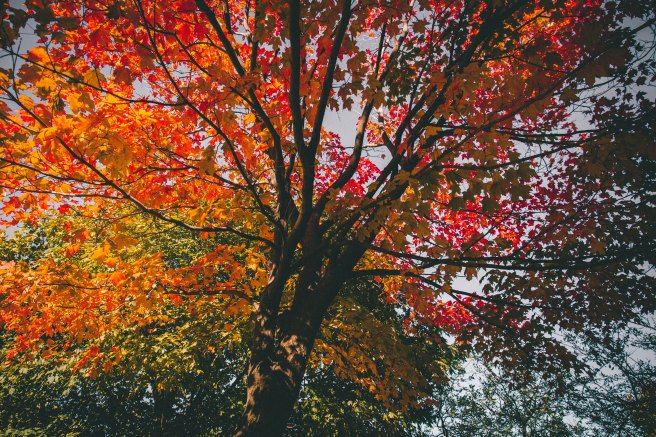
And towards the end of your thirties? There is no denying it. You’re a woman now, not a girl. You’re approaching middle-age, something you never, ever, ever thought would happen to you. You see, we witness the changes of the seasons. We watch leaves turn yellow and brown. We see them twist and twirl in the air as they fall to the ground. We kick through them and watch them turn to mulch. We see their decay but not our own. The new buds start the process again. Another season. Another Spring. Followed by another Summer, and Autumn, and so on.

Realising the world sees you as an adult, is weird. I still don’t feel like one. I always think people are older than me and feel genuinely shocked when I find out they are my age. I mean, they’re old…I’m not? 
doneadulting26

Those first white hairs were amusing to me. I pulled them out and looked them over. I was pleased by them, oddly. I liked that they were bright white, not grey. And I feel the same way about you, white eyebrow hair. So funny how things go full circle! I was so blonde when I was a toddler, my hair was almost white. To think one day I will have white hair and white eyebrows and eyelashes is really sort of exciting. I can just about see myself if I stare hard enough.

When I stop to think about it, and yes, okay, I admit the appearance of white hairs like yourself, does inevitably cause me to ponder…I really think I am okay with getting older.

There’s something I always think about and that’s how lucky I am to be here in the first place. You know, out of all those eggs and all those sperms, and all those opportunities for life to exist or not, I made it through. I saw a video this week where a guy was saying you have more chance of winning the lottery 10 times than you do of getting a life in the first place. I’m not sure if that’s true, but I agree with the sentiment. It’s mind-boggling if you think about it.

Getting older, spotting wrinkles and white hairs, it does make you feel a little sad, a little bit nostalgic. Of course, I stare at my face in the mirror and try to see the younger me. I hear songs that take me back, I experience memories out of the blue, ones I had forgotten. I think, how nice it would be to go back to that time. To do that again. But I would never really want to go back. To go back would be to lose who I am now. The years that have passed have shaped and moulded me into who I am now, someone I mostly quite like!

I think the whole fucking thing is amazing. This life. Getting up every morning and placing your feet down on the floor. Feeling the rain on your face. Facing the dark. Watching the shadows. Catching the light. Feeling the endless earthy beat of the world beneath your feet. Knowing love. Holding tight. Inhaling embraces. Star gazing. Paddling. Holding hands. It’s beautiful and amazing that we have the gift to look back, to remember and feel the emotions of the past. And it’s exciting and enthralling that we have the vision to look forward, to dream and imagine and hope. And it’s breathtaking when you think about it, that we have this same, one moment that we live in perpetually. Just us. Inside our skull. Looking out. What do you see?

For me, life is full of small, perfect moments. Of bare feet on warm concrete. Sitting on the doorstep with a hot cup of coffee. Watching birds fly in and out of the hedgerow. Finger nails filled with dirt. The sun setting and rising. Listening to the rain at night. Getting lost in a good book. Falling asleep beside your child. Smelling their hair. Knowing that nothing lasts forever, least of all you. But you can wake and walk and sleep and dream and live and love, day after beautiful day, until it ends.

So, you don’t scare me little white eyebrow hair. You don’t worry me. In fact, you make me smile. There will be more of you along, I know. One day I will give up plucking you out and I will let the white takeover. And that will be okay.
fineas-anton-150827.jpg


Author Interview: Emily Williams

Emily Williams has written an endearing and emotional debut novel about the enduring and powerful love between mother and unborn child. Letters To Eloise is a book that had me smiling in recognition, and wiping away the tears. The narrator, Flora, is a student who falls pregnant and begins to write heartfelt letters to her unborn baby daughter, who she names Eloise. The story weaves the past with the present, as Flora deals with an unexpected pregnancy, unsuitable men, and heartbreak. The ending was one I did not see coming and I would highly recommend this charming tearjerker. Emily kindly agreed to an interview, and here she talks about the inspiration for her debut novel, her experience of publishing so far and her plans for the future…

IMG_3343.JPG

1) Can you tell us about your writing and publishing journey so far?

Letters to Eloise has become a very special novel to me. The journey has been a long one and started quite a few years ago. I started the novel when I had the initial idea five years ago, which I jotted down into a notebook and then onto post-it notes. These post-it notes then formed the timeline of the letters for the whole novel.

I choose the epistolary element for Letters to Eloise as I have always enjoyed reading books that contain diary entries or letters so felt this would fit Flora’s situation perfectly. I liked that she had someone real to write to, someone to pour out her emotions. I loved writing every single letter and making sure that the plot linked up through Flora’s narrative.

I was at a time in my life where I desperately wanted a family but wasn’t in a situation where this was possible, so I wrote Letters to Eloise as an outlet to that. The novel took so long to write as, unexpectedly, I also fell pregnant like protagonist Flora. I had just finished the first draft, and when dealing with all things pregnancy related, I found that I couldn’t read or even look at the book so it was put aside!

Luckily, I did return to the novel after my second child, a daughter, last July. I finally completed my long journey to publication; however, my journey isn’t over and now continues with my new projects.

I am very excited about my next two novels.

2) How would you describe your debut novel Letters To Eloise?

I find it hard to describe my own novel! I will combine some of the lovely words from reviews to make a sentence – a heart-breaking yet warm, witty and touching love story.

I like writing things a bit different and enjoyed writing Letters to Eloise in letter format.

3) What has been the hardest part of your publishing journey?

The hardest part has been learning all the formatting and other details that go with publishing an eBook and paperback. I have had to learn everything from scratch, which although hard, I have really enjoyed! The other hard bits have been the marketing side and embracing social media.

Everything is still such a learning curve at the moment.

4) What do you feel has been the best part of your publishing journey?

Each time I read a review, it has all been worth it. I’ve been so lucky to receive such lovely reviews and reading them makes me smile. I am so pleased that others enjoy my writing and have loved Letters to Eloise.

5) Do you have any advice or tips for new writers about to hit publish?

Don’t rush! Before you hit publish, make sure you have been through the novel with a fine toothcomb. Ensure you have rested your book for a while to look at it again with fresh eyes. Hitting publish doesn’t just end the process though, there’s plenty more work to do! I wish I had organised beta readers and blog tours etc earlier, so be prepared well in advance.

6) Tell us about your writing process. How does a typical day go?

During the day, if any ideas come to me, I use the notes app on my phone to jot down any ideas or post-it notes. Then in the evening (when the kids are safely tucked in bed out the way!), I look back through my notes. I have a chapter’s grid, which keeps track of the order of the novel and any chapters I need to add in. With both Letters to Eloise and now with my current novel, I don’t write the chapters in order. I like to pick and choose what to write which helps with writers block!

I then write for a couple hours in the evening or until at least one chapter is finished. I re-read before saving! The next day I will re-read and edit the work and carry on with another chapter!

7) What are you working on right now? What else can we expect from you?

I am working on a charity novel entitled ‘The Subtle Art of Keeping a Racehorse.’ The proceeds from the novel will go to two horse charities, one of which is the Thoroughbred Rehabilitation Centre. The story is a YA book about teenagers, a missing racehorse, secrets, lies and chaos!

I am also working on another adult novel, more of a psychological thriller than a romance, but will be just as emotional as Letters to Eloise.

8) Who are your favourite authors?

Favourite authors would include Cecelia Ahern, who creates amazingly imaginative worlds for her characters that I can picture myself in. Her stories have strong characters with a magical element of fantasy to them. She too has inspired me to think outside the box! Sheila O’Flanagan writes very clearly about the families in her stories and her characters emotions. There are many, many authors who inspire me and all the books I have read as a child have made me the writer and reader I am today.

I was, and still am sometimes, a massive pony book fan and still have all my childhood pony stories, especially Patricia Leitch novels. I am hoping my son and daughter will love reading them too!

9) Tell us about your long-term goals and dreams

I would love to be a full-time writer and live in the countryside with all our animals. We are hoping to move to the country or even to France soon, to run a small business. I hope that my writing can pay the bills!

10) Tell us 3 interesting things about either yourself or your novel

1. I have no funny bones! After a riding accident I had surgery on both my arms which moved the nerve that causes the funny bone sensation! I find writing difficult now so hand-write or use a Dictaphone if they are particularly painful.

2. The protagonist in Letters to Eloise is called Flora, short for Florence. I called my daughter Florence too. I wasn’t allowed to call her Eloise, so Eloise is a pet cockatiel I have in my aviary!

3. I have never ever been to the hairdresser! My hair does need a good chop but I’m still scared to go!

image1.jpeg

Bio; Emily Williams lives by the seaside in West Sussex with her family and a menagerie of small pets. After graduating from Sussex University with a BA in Psychology, Emily trained as a primary school teacher and teaches in a local school. Letters to Eloise is her debut novel.

Links; You can follow Emily on FacebookTwitter

Things I Fail At On Social Media

When I first started my indie author journey, I had a very rocky relationship with social media. In truth, I didn’t like it or understand it. But over the last few years, I have stuck with it, worked hard at it, and yes, even grown to enjoy it. However, I do still feel like I am not quite getting it right. I’d say I am definitely most comfortable on Facebook, still don’t understand Twitter, and really need to learn how to better utilise the ones I enjoy such as Instagram and Pinterest. Sometimes I feel like I have no idea what I am doing! Here is a list of things I currently and consistently fail at;

  • What to add when I Tweet. I see other people write some brilliant tweets. I know you’re meant to ask a question or come at it from another angle, not just retweet the post without comment, but all to often I click share to Twitter and then sit there for ages thinking what can I say about this? Great post? I really liked this article? Great tips here? Read this? And then I give up because life is passing me by and I just hit Tweet.
  • Remembering what hashtags to use. I really should list them and stick them on my wall. I remember #amwriting but that’s about it! And I know you shouldn’t go over crazy on hashtags anyway, but again, how many to use? How many are too many? Which ones are the most useful or relevant? Sometimes I have a moment of clarity but mostly I pick a few boring ones and hit share feeling like a total Twitter loser.
  • Twitter in general. I really want to like Twitter and get more out of it. Every now and then I do make a conscious effort to play the game right. I do understand that like with all social media sites you’ve got to give, in order to expect anything back and you’ve got to build relationships not just tweet but never comment, share or engage in return. I get it. I just don’t have time for it. It’s more fun on Facebook for some reason so I find myself retreating there.
  • Making memes. Some writers/bloggers are soooooo good at this. I am terrible. I can never find the right picture and if I do I can never think of a witty line for it. I am one of those people who can’t be funny if I try. I’m only funny when I don’t mean to be.
  • Finding images. I hate looking for images. For Pinterest, or the blog or anything. I know images are good because they make your post more visual and interesting but bloodyhell it takes a lot of time searching for the right ones, and they never seem to be quite right.
  • Knowing how much time to spend on it. It’s always a bit hit and miss with me. I can get very easily distracted by Facebook and Pinterest, and to a certain extent Twitter if I actually go on it, but knowing whether this is time well spent or not is never a certainty. I’m very good at blogging on a weekly basis and keeping my Facebook author page busy, but the rest of it is totally inconsistent. Maybe that doesn’t matter, or maybe I should be spending equal amounts of time on each site?
  • Turning social media into sales. Then again, this is a tricky one. How do you know your social media engagement has resulted in sales unless people tell you? There is the shop button now on my Facebook page, which is helpful and depressing in equal measures. But other than that…? Who knows what is working and what is not?

I’d like to get better at all of these things. How about you? What are your social media strengths and weaknesses? Please feel free to share and comment! And let me know what has worked for you!


Message and Themes; What Are You Trying To Say?

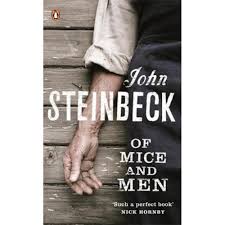
When I was at school, English Literature was always my favourite subject. I was a total book-worm who dreamed of becoming an author, so you can kind of see why I adored English Literature. Reading books, talking about books and writing about books was my idea of heaven. Having said that, there was always one part of the subject that annoyed me at times. When analysing a text, the teacher would often ask us to think about what message the author was trying to get across. It was a question akin to the equally confusing one; what are the themes of the novel? I remember thinking, I bet the author didn’t know there was a message or a theme, or that we would try to work one out. I always considered that Shakespeare, Bronte and Steinbeck just wrote books because they had great ideas, great characters, and could string some pretty awesome sentences together.

But English Lit demands we find the messages and the themes, and yes, when you pick apart a text and analyse it within a classroom setting, you do tend to find them. But were they intended? I suppose I’m asking, did the author write the book with a theme or a message in mind? Or is it the reader who later determines what the potential messages are? I mean, did Steinbeck write Of Mice and Men because he had something to say about society or human nature? When I was a kid, I thought not. But it turns out I was wrong;

In every bit of honest writing in the world there is a base theme. Try to understand men, if you understand each other you will be kind to each other. Knowing a man well never leads to hate and nearly always leads to love. There are shorter means, many of them. There is writing promoting social change, writing punishing injustice, writing in celebration of heroism, but always that base theme. Try to understand each other.

John Steinbeck in his 1938 journal entry
I remember trying to distinguish the themes of the novel when I was at school. What seemed so obvious to the teacher, had to be pointed out to us. I haven’t read the book since then, but it is on my to-read list as part of a reading challenge I’m undertaking, where one of the books has to be one I read in school. But I think I will see things differently now.
Why? Because I am approaching my fourth decade and I’ve seen enough of life, love, people and society to know that Of Mice and Men is not ‘just a story’ as I once mistakenly believed. It’s a book about dreams and aspirations, loneliness and solitude and the author had plenty to say about all of these things. I am now the writer I hoped I would be, and writing books is a fascinating process, which involves the seed of an idea germinating into an intricate plot full of characters who become real to you and set up camp in your head. But more than that, writing is about what you want to say to the world.
I’ve been thinking about this a lot lately after I received feedback from a beta on my still unfinished novel Elliot Pie’s Guide To Human Nature. One of the things she picked up on was the messages or themes of the book, and in particular, her observation that some of the characters had views very similar to my own. She felt this at times made the narrative somewhat preachy, or at least, it was in danger of heading in that direction.
I had to stop and think about what she meant. None of the characters are me, or based on me, or anyone I know. I plucked them up out of the thin air to build around the character and story of Elliot, who I really did know and believe in.
However, I have to admit that unintentionally, or at least sub-consciously, bits and pieces of the writer and the writer’s viewpoints seep into the writing. I knew what this book was about, and I knew from the beginning what I was trying to say, so as you can see, I have come a long way from my previous scepticism that books did not contain deliberate messages. On the contrary, I have had something to say in all of my books, and I think it very much depends on what is going on in my life at that time. For this book in particular, Elliot and his mother are like the two sides of me. One side is heartbroken and terrified about the state of our world and wants to withdraw from it all, while the other side is perpetually hopeful and joyful, determined to the best in everything.
So is this a good thing or a bad thing? I think my beta was right to point out the danger of appearing preachy in the narrative. I certainly don’t want my books to come across that way. I have to be sure it is the character’s viewpoint being explored, not the author’s. I have to be conscious of what is being portrayed as ‘right’ or ‘wrong.’ So at the moment, I am going through the book again, with the beta’s notes beside me. Sometimes it just needs a tweak, some words rearranged or deleted. Sometimes I don’t need to do anything because I think the character truly believes in what they are saying, and in doing so is remaining true to character.
This brings me to another question, though. Do people pick up books looking for messages or themes? Do most readers notice them, even if they are supposed to be there? I suspect that what one reader picks up as a message or theme, is very different to anothers. Do readers want to be spoken to in this way? I don’t think many people pick up a book looking for clarity or persuasion. I think they pick up books looking for stories. And stories involve people and their messy human lives, and messy human lives contain messages, whether intentional or not. Because they are written by one person, created by one person, and whether they were totally aware of it or not at the time, that person had something to say.
So, what do you think? As a reader, do you choose a book because of the message it seems to be conveying? Do you notice the themes of a novel as you are reading it, or do they become obvious to you afterward? Do you ever feel like the writer is trying to tell you something about the world or about life? Does this every feel like you are being preached to?
And what about you writers? Do you know what you are trying to say before you start to write the book, or does the message reveal itself to you in time? Are you aware of any themes in your book, and again, are these intentional? Do you ever worry that you are trying too hard to get a message across?
Please feel free to join in the conversation!