Author Interview; Robin Gregory

Today I am so excited to share my interview with award winning author Robin Gregory. Robin was born in Florida but grew up in California. She has worked as a journalist, a lay minister and an infant massage instructor for mothers and babies at risk. Her debut novel The Improbable Wonders Of Moojie Littleman is a beautiful and unique coming-of-age story, a mystical adventure, and quite simply one of the best books I have read in some time. Robin’s book has won the Gelett Burgess Children’s Book of the Year Award 2015, the IPPY Gold Medal – Best Cover Design – 2015, and is currently a finalist in Foreword Reviews – Indiefab Best Books of the Year and a finalist in the International Book Awards- Fiction – Young Adult 2016. Read on to find out more about Moojie Littleman and the inspiration behind it!

1-  The  Improbable  Wonders  of  Moojie  Littleman  is  a  unique  blend  of  magical   realism  and  coming  of  age.  Can  you  tell  us  how  the  book  came  about?  Where  did   the  idea  come  from?

Mostly,  my  son  inspired  the  book.  But  so  much  of  my  own  childhood  went  into  the   mix.  I  was  one  of  eight  kids  growing  up  in  a  pretty  messed  up  Catholic  family.  This   led  to  a  lot  of  heartache,  loneliness  and  feelings  of  “not  belonging.”  I  buried  most   of  those  feelings  for  a  long  time,  then  spent  twenty  years  trying  to  figure  out  why  I   was  so  unhappy.  The  healing  of  these  early  wounds  really  began  when  my   husband  and  I  adopted  a  baby  with  special  needs.  The  “not  belonging”  feelings   surfaced  when  I  witnessed  how  others  excluded  him.  His  daily  struggles  have  been   ongoing,  and  yet,  he  is  the  most  kindhearted,  courageous,  and  bright  boy  I  have   ever  known.  He  has  taught  me  to  forgive  the  past,  and  to  look  for  the  good  in   everyone  I  meet,  starting  with  those  who  exclude  him  or  look  down  at  him.

2-­How  would  you  best  describe  your  genre?  Was  there  an  intention  to  blend   genres,  or  did  the  story  just  evolve  that  way?

Oh  boy.  This  was  a  hard  one  for  me.  I  cringe  at  labels—any  kind  of  labels.  The   human  mind  wants  to  label  everything,  doesn’t  it?  It  wants  to  name,  package,  box   and  brand.  I  have  learned  that  one  of  the  best  ways  to  find  inner  peace  and   happiness  is  to  abstain  from  doing  this.  Our  opinions  are  vastly  limiting  and   troublesome.  MOOJIE  LITTLEMAN  is  about  coming  of  age,  but  also  about  spiritual   awakening.  The  book  would  probably  fall  best  into  the  “Visionary”  category,  but   few  bookstores  have  a  shelf  for  that.  Magical  Realism  works  better  as  a  category   than  Fantasy  since  the  story  is  grounded  in  physical  reality  while  encompassing   mystical  themes.  And  Magical  Realism  gave  me  a  way  to  climb  into  Moojie’s  skin,   and  live  from  a  soulful  point  of  view,  not  just  physical.  I  wrote  the  story  for  fluent   readers  of  all  ages,  but  my  publisher,  editors  and  agent  convinced  me  to  market  it   as  Young  Adult.  They  were  looking  at  Moojie’s  age,  the  PG  rating,  and  the  allusions   to  The  Odyssey,  which  students  in  the  US  study  from  age  12  to  18.  It  pleases  me  to   no  end  that  the  book  has  won  awards  in  Young  Adult  and  Adult  categories.

3-­ Do  you  have  any  personal  beliefs  or  passions  that  influenced  the  book?

To  expand  a  little  on  the  first  question,  my  spiritual  practice  has  been  key  to   shaping  the  story.  I  believe  we  are  all  coming  of  age  spiritually;  that  is  why  we  are   attending  what  a  friend  of  mind  calls  “Earth  School.”  In  the  past  twenty-­one  years,   I  have  seen  all  kinds  of  healing,  and  have  come  to  the  realization  that  nothing  is   incurable.  Several  of  the  so-­called  miracles  in  the  story  actually  did  occur  in  my   life.  A  part  of  me  has  been  wanting  to  teach  others  that  what  they  consider  to  be   miracles  are  perfectly  natural  events.  The  key  to  accessing  miracles  lies  in  our   ability  to  give  up  limiting  beliefs,  judgments  and  labels—to  stop  naming  things,   conditions  and  people  as  “good  or  bad.”  Even  Shakespeare  knew  way  back  that  we   evaluate  others  according  to  our  own  self-­image.  It  is  important  to  remember  that   messed  up  folks  are  doing  the  best  they  can.  Those  who  have  been  mistreated,   mistreat  others.  We  begin  to  stop  the  crazy  cycle  of  fear  and  hatred  by  knowing   and  living  this.  I  am  not  suggesting  that  people  should  not  be  imprisoned  for  their   crimes.  I  am  saying  that  if  we  fear  and  hate  them,  we  are  part  of  the  ongoing   problem.  People  who  fail  to  love  do  so  because  they  do  not  know  how  to  love.   MOOJIE’s  story  is  a  parable  to  help  others  examine  their  actions  and  beliefs.  To   help  stop  the  cycle  of  hatred  toward  oneself  and  others.  Compassion  is  a  mighty   healing  balm.

4-­ Tell  us  about  your  writing  process.  Are  you  a  plotter  or  someone  who  starts   writing,  and  waits  to  see  where  it  will  go?

It  may  have  been  a  great  disadvantage  to  write  MOOJIE  by  the  seat  of  my  pants.  I   had  about  500  pages  before  I  took  a  serious  look  at  story  structure.  Blake  Snyder’s   SAVE  THE  CAT,  a  book  on  scriptwriting,  and  John  Truby’s  THE  ANATOMY  OF  A   STORY,  helped  me  revise  pacing,  action  and  character  arcs.  Would  I  have  saved   myself  years  of  rewriting  had  I  had  a  clearer  vision  of  plotting  in  the  beginning?  Oh   yeah.    But,  what  can  you  do?  Sometimes  you  sit  down  to  write  and  the  bloody     characters  just  take  over.  They  just  do  not  behave  at  all.  Not  very  decent  of  them,   is  it?

5-­ All  the  characters  in  Moojie  Littleman  were  memorable  and  well  drawn  -­  tell  us   how  you  managed  to  create  such  realistic  and  believable  characters?  Are  any   based  on  people  in  real  life?

Thank  you  so  much.  You  know,  from  the  time  I  started  imagining  the  story,  I  was   taking  mental  notes  on  people.  What  was  it  that  made  them  interesting?  What   are  they  pretending  not  to  know?  How  do  language  and  appearance  reveal  their   deeper  beliefs?  And  mostly,  how  are  they  shaping  their  world  through  choices?   Almost  every  character  in  the  book  is  a  composite  of  those  observations,  warts   and  all.  Life  is  not  easy  for  anyone.  I  did  not  want  to  present  characters  as  good  or   bad  as  much  as  being  in  differing  stages  of  awakening.  Each  has  their  own  inner-­ outer  struggle;  each  has  their  limitations  to  overcome.  Like  many  of  us,  they  fail  to   live  up  to  their  own  expectations.  I  ended  up  loving  them  all  for  who  they  are,  and   who  they  are  not.

6-­ Moojie  himself  was  incredibly  endearing.  Is  his  story  over?  Or  will  there  be  any   further  stories?  

I  am  so  glad  you  feel  that  way  about  Moojie!  When  I  set  out  to  write  the  story,  I   knew  that  fictional  characters  with  physical  or  mental  challenges  are  rarely  given   front  and  center  stage.  They  are  usually  confined  to  secondary  roles.  I  felt  it  was   absolutely  imperative  that  Moojie  steal  the  readers’  hearts.  My  son,  who  has  been   blessed  with  amazing  charisma,  helped  a  lot  with  this.  I  would  love  for  Moojie’s   story  to  continue.  Now  that  I  am  acquainted  with  the  characters,  I  know  how  to   take  better  charge  of  them.  I  will  insist  that  they  go  play  elsewhere  while  I  rough­out  the  plot.  Ha!

7-­When  did  you  first  know  you  wanted  to  be  a  writer?

This  question  always  makes  me  smile.  I  often  hear  about  writers  who  knew  of   their  calling  before  they  cut  their  first  teeth.  Not  in  my  case.  I  had  a  tough  time   learning  to  read,  and  a  mother  of  eight  children  has  no  time  to  read  to  her  litter.   My  father  was  a  pilot  in  the  Korean  and  Vietnam  Wars,  and  mostly  gone.  I  didn’t   start  reading  fluently  till  high  school.  My  life  changed  when  I  discovered  Kana  and   Hemingway.  As  a  teenager  living  in  a  perpetual  state  of  underwater,  I  turned  to   journaling  to  save  me  from  the  emotional  tsunamis.  That  led  to  short  stories,   poetry,  and  eventually  longer  fiction.  I  never  thought  of  myself  as  a  writer.  Writing   was  just  something  I  did.

I  love  what  Robertson  Davies,  the  Canadian  novelist,  once  said:  “There  is   absolutely  no  point  in  sitting  down  to  write  a  book  unless  you  feel  that  you  must   write  that  book,  or  else  go  mad,  or  die.”

8-­ Tell  us  about  your  writing  and  publishing  journey  so  far  -­  which  paths  you  have   followed  and  why?

When  I  graduated  from  college,  I  took  an  internship  at  a  local  newspaper.  It  was   fantastic!  I  learned  to  get  that  first  draft  down—and  fast.  That  led  to  writing   freelance  articles,  and  book  and  movie  reviews.  Then  I  wrote  my  first  screenplay   and  novel.  They  were  pretty  awful.  But  they  taught  me  a  lot-­mostly  humility.   Writng  is  like  being  in  the  circus.  You  have  to  jump  though  hurdles  the  same  way   acrobats  jump  through  burning  hoops  in  order  to  learn  how  not  to  make  mistakes   that  get  you  burned.
It  took  thirteen  years  to  write  MOOJIE.  Thirteen  years  because  I  had  to  evolve  in   order  to  deliver  the  story  in  the  manner  it  deserved.  During  that  time,  the  book   has  been  workshopped,  shared  with  a  number  of  alpha  and  beta  readers,  put   through  2  manuscript  consultations  and  edited  by  five  pros.  After  submitting  to   agents  and  getting  nowhere,  I  contacted  publishers  directly.  Three  publishers   offered  me  sub-­standard  contracts,  which  I  turned  down.  (Thank  heavens  SCBWI,   a  writer’s  org  that  I  belong  to,  provided  a  manual  with  standard  publishing   contracts.  Holy  moly!  Publishers  will    take  your  skivvies  if  you  let  them!)  I  wanted   to  keep  my  rights,  to  choose  my  cover,  and  be  the  one  to  decide  when  the  book   was  ready  to  print,  among  other  things.  While  researching  my  options,  I   discovered  Wyatt MacKenzie  Publishing,  Inc.  (h=p:// http://www.wymacpublishing.com/),  a  traditional  publishing  house  that,  for  20  years  has   offered  consultation  and  assistance  to  indie  authors.  I  contacted  some  of  their   authors,  and  they  gave  stellar  reviews.  After  an  hour  consultation  with  Nancy   Cleary,  the  publisher,  I  knew  the  indie  consulting  program  was  right  for  me.  And  it   has  been  fantastic!  I  can’t  say  enough  about  Nancy’s  guidance,  respect,  support,   and  expertise.

9-­ What  advice  would  you  give  to  a  new  author  who  is  about  to  launch  their  new   book?

I  am  assuming  that  the  author  wants  to  be  a  pro.  In  this,  she  has  already  had  her   book  read/reviewed  by  at  least  10  people—beyond  buddies  or  family  members,   who  will  love  every  word  you  write  no  ma=er  what.  I  am  assuming  she  values   brutally  honest  feedback  because  that  is  the  way  the  public  is.  I  am  assuming  that   she  has  listened  to  the  feedback,  and  revised  for  clarity  and  tightness.  I  am   assuming  that  she  has  given  the  book  plenty  of  time  to  ripen.  Right  down  to  the   last  day  before  I  sent  my  book  to  the  presses,  I  was  deleting  or  rewriting  passages   if  they  didn’t  sparkle.  The  editor  had  to  practically  tie  me  down  to  get  me  to  let  go   of  the  manuscript.
That  said:
—  If  you  want  your  book  to  make  a  dent  in  sales,  your  manuscript  must  be   professionally  edited  and  proofed.  The  cover  (front  and  back)  needs  to  be  equally   polished  and  interesting.  Yes,  this  costs  money.  But  if  you  do  not  include  this  in   your  budget,  you  might  as  well  not  spend  the  money  to  publish  (unless  you  are   merely  doing  it  for  family  &  friends).  As  most  of  us  know  by  now,  the  key  to   marketing  rests  upon  getting  reviews.  If  your  cover  isn’t  delicious,  and  your  editing   is  sloppy,  people  won’t  even  sign  up  for  free  copies.  There  are  simply  too  many   other  professional  books  to  choose  from.  A  cover  created  by  your  amazingly   talented  brother  who  won  a  ribbon  in  the  high  school  art  fair,  might  be  beautiful,   but  can  it  stand  up  to  the  covers  on  booksellers’  shelves?  If  not,  your  book  will   probably  disappear  into  cyber  space  with  millions  of  others  whose  authors  were  a   little  too  anxious  to  go  to  press.
—  Start  marketing  your  book  four  months  before  the  release  date.  Yep.  Four   months!  Send  it  to  pro  reviewers  (Kirkus,  Foreword,  Publisher’s  Weekly).  Enter  it   in  contests.  Do  a  few  giveaways.  Create  an  audience  on  social  networks  by  posting   samples,  sharing  news  and  reviewing  similar  books.  This  will  give  you  a  chance  to   build  up  a  pre-­order  list  on  Amazon.  It  is  only  the  beginning.  And  it  is  crucial.

10-­Tell  us  a  bit  about  your  next  release. What are you working on right now?

While  playing  with  a  MOOJIE  sequel,  I  am  also  writing  a  collection  of  inspirational   prayer-­poems  and  a  guide  to  spiritual  healing.  There’s  also  the  audio  book  project   of  MOOJIE,  through  ACX.com.  It’s  an  amazing  process.  I  have  to  give  Amazon   kudos  for  providing  such  a  user-­friendly  service.  However,  my  reader  has  stepped   away  from  the  project  to  sort  out  personal  problems,  so  the  release  is  delayed.

11-­ What  would  you  like  readers  to  take  away  from  The  Improbable  Wonders  of   Moojie  Littleman?

I  would  love  for  my  dear  readers  to  realize  that  freedom  is  a  choice.  No  ma=er   what  difficulties  we  face,  be  it  loneliness,  physical  or  mental  problems,  lack  of   opportunity,  not  enough  money,  lousy  parents,  even  homelessness,  there  is  a   Source  of  unconditional  love  available  to  each  of  us.  We  can  grow  through  joy   rather  than  pain  and  suffering.    It  takes  effort  and  trust  to  rewire  our  thinking,  but   we  can  open  ourselves  to  receive  miracles  that  freely  and  gladly  offered.  When   this  Immaculate  Heart  is  felt  in  the  still,  deep  pool  of  our  being,  we  can  begin  to   experience  joy  and  freedom  beyond  your  wildest  dreams.  I  know  this  is  true.  I   have  lived  it.

Robin, thank you so much for agreeing to do this interview!

You can find out more about Robin by following her on social media;

Facebook

Website

Goodreads

Twitter


Author Interview; Ashley Rice

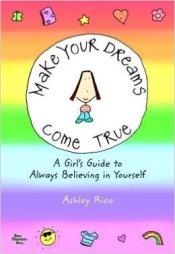
Welcome to my latest author interview! Today I would like to introduce you to Dallas-based author/illustrator Ashley Rice. Ashley has created several popular illustrated books, including You Are An Incredible Kid, Girls Rule, and You Are A Girl Who Totally Rocks. Ashley’s latest release is Make Your Dreams Come True. Ashley’s mix of artwork, poetry, songs, real life experiences and positive messages are loved by tween and teen girls (and boys!)  worldwide. Her work also appears on her bestselling line of greeting cards, as well as bookmarks, fridge magnets and so on. It was a pleasure to speak to Ashley, who is a dog lover like myself!

41OGhjG2iZL._SX258_BO1%2c204%2c203%2c200_

1) Who are your books aimed at, and how would you best describe your books?

Most of my books are written for tweens (9-12 year olds) and, more specifically, with tween girls in mind… but I also have a book called For an Incredible Kid, for example, which could be for anyone. I’ve also gotten messages and emails from older girls and women who will tell me how one of the girl power books helped them out in some way, so really the books are for anyone and everyone who finds that, in their own way, she or he can get something out of them.

2) What first inspired you to write these sorts of books?

I’ve always believed that a girl in the world could do anything, and, as I was growing up, and more specifically when I was older and actually got out into the “real world,” I was surprised whenever I would meet someone who wasn’t aware of that fact — whether it was a male friend or acquaintance who hadn’t gotten the message yet about the “girl power” movement, but especially when it was a girl who wasn’t aware of all the possibilities that were waiting for her out there that she hadn’t yet discovered. You have to believe in those possibilities and in your own personal sense of empowerment before those possibilities can turn into real, solid opportunities that can work for you in your life. So I thought it was important to reach girls like that — or, really, just to get the word out to let all girls know just how talented they truly are. And how amazing their lives will be if they keep on believing in the beauty of their dreams. That’s why I wrote the girl power poems, which were then turned into books.

3) How do you decide on the theme for each book?

Sometimes this is an idea that I think of, other times the idea will be based on a suggestion from my editor.

4) Do you often get feedback from children and if so, what do they say to you about your books?

I do get feedback from girls from time to time. Usually when they contact me it’s to tell me why they liked one of my books. Sometimes they will share with me something personal such as how that book helped them to better deal with some specific problem they were having. Those kinds of letters touch me the most and really mean a lot to me!

5) How do you promote your work?

I haven’t really done much in the way of promotion in the past but am starting to do things like interviews now. I do have a blog on my goodreads author page where I’ll post an update whenever something significant happens to me — like whenever a new book of mine comes out. I also have a web page. It’s at http://www.ashleyrice.net.

6) What are you working on right now?

I’m working on some new poems for girls on different “rules” they can make for themselves to live by, and how they can then use those principles they relate to the most to help guide them in their lives.

7) Where do you see yourself and your work in 5 years time? 

I plan to keep on writing and illustrating books along with doing my greeting card line. I have a new calendar coming out next year… hopefully many more books, etc. will follow after that! All I know is that, whatever happens, I’ll keep on writing, illustrating.

8) Did you always want to be a writer/illustrator?

I always wanted to be a writer (since I was 7) and I always drew characters and other things – mostly just doodling — but I didn’t think I was talented or skilled enough to work as an illustrator. I just illustrated my first original poems (which I was turning in to my greeting card publisher to be published as possible greeting cards) as a way to show my employer what types of images I thought could look good alongside my poems if they in fact decided to make those poems into cards. I thought they would then have a “real” artist copy my drawings — or adapt them, really – using their own, professional style. It surprised me when my publisher said they liked my artwork and planned to publish the designs I’d made as-is.

IMG_1404.JPG

9) What advice would you give to young people who wish to follow in your footsteps?

Work hard, believe in what you do, know that anything is possible for you if you are true to yourself, but most of all: never give up! (Even when it’s hard).

10) What inspires you to write/draw?

I get a lot of ideas from browsing articles, etc – whether in bookstores or on the Internet. But I tend to get ideas from anything, really – when I’m walking my dogs and just thinking while surrounded by nature something might come up in my mind that makes me want to write the words down (which is why I always carry my phone with its electronic notepad with me anywhere I go!)… thoughts and ideas can happen that way, or can be inspired by doing something like watching a movie.

11) Tell us three interesting facts about you

I live in a historic neighborhood (with arts and crafts style houses mostly houses built in the early early 1900’s)… and I really love that!

Before moving back here (to Dallas) I used to live in a community in Boston that was all artists’ lofts, and which had originally been a giant piano factory. You had to have two different artistic recommendations to get in, which meant that your neighbors were artists too (so you could help each other out, etc). That made for an interesting time! Also, to live there, we had to paint the outside of our front doors in a style that we liked a lot – mine was hot pink with a hand-drawn blue flower on it, for example. It took like seven hours for me to do though!

I often volunteer at an animal shelter during lunch… but sometimes it’s too hard for me to leave my own dogs at home to go and do that so I just skip it… but on the days when I do go I have a lot of fun and it feels good to help some other animals out… mostly the work involves “socializing” the dogs and cats at the shelter… which basically means playing with them a lot!

12) Who are you inspired/influenced by?

Shel Silverstein, Dr. Seuss, Todd Parr, Adrienne Rich, to name a few.. along with all of the other writers and artists who also work for my publisher and are amazing!

Thanks so much for the interview Ashley! Good luck with the latest book.

You can find out more about Ashley’s inspiring work on her blog/website ashleyrice.net

Look out for another interview coming soon!


Interview With Author Alec John Belle

Welcome to my second author-to-author interview. This time I am really excited to introduce a great new talent. Alec John Belle is only seventeen years old and already has two novels, Before I Break and Forbidden Darkness under his belt. I came across Alec on Facebook and liked the sound of Before I Break, which is a novel dealing with homophobia among teenagers, as well as issues such as self-harm and suicide. I decided to check it out and was suitably impressed. Alec has self-published both his books, but has just recently been snapped up by a small press. Personally I think if Alec can write this well at only seventeen, he is definitely an author worth watching! Over to Alec.

1)      How old were you when you first started writing?

I was in fifth grade when I first started writing.  I was obsessed with the Goosebumps books by R.L. Stine and one day in class we had a free write, where we could write about anything we wanted.  I decided to write a horror short story about a kid who goes to see a fortune teller who makes all his wishes come true.  My teacher was shocked at how well it was written for a 10 year old, so she asked me to write more.  That year I won a writing award for school for another story I’d written about a human who woke up to realize they were an alien.  It was then that I knew I wanted to be a writer.

2)      How would you describe your work?

The best way to describe my work would be “gritty and raw”.  My first book, Before I Break, explored topics such as bullying, discrimination, LGBT teens, self harm, suicide, and a few others that would be spoilers.  It really was a lot to write, and sometimes even I had to take breaks because it was too much to take in.

My new series, in the paranormal YA genre, called The Forbidden Darkness Chronicles, follows similar topics.  It’s about a girl who discovers she is a Monster Hunter one year after her best friend’s attempted suicide.  In the series, there’s a physical entity called Darkness that feeds off of negative emotions, such as depression, anxietym bipolar, etc.  That’s what makes the Darkness strong.  Once again, with a less realistic approach, there are still real world topics that make it fall under “gritty and raw”.

3)      What is your writing process/routine?

This may sound weird, but I actually don’t have one. For me, it’s just whenever I get the urge.  I may go a week without writing, then one day feel the push.  People think that actually means it takes me longer to write a book, but when I do write, I make up fot missing days.  I can write the first draft somewhere between 1-3 months.

Also, I’m a night owl.  So all of my good writing is done at night.

4)      What are you working on right now?

Both of my books, Before I Break and Forbidden Darkness  (the first in my new series), are being reprinted under the publishing house, Booktrope.  While going through that process, I am working on the second book in The Forbidden Darkness Chronicles, titled Shadow’s Wings.

5)      What else have you got planned for the future?

The Forbidden Darkness Chronicles will have 8 books, plus some short stories in between I hope.  I also am hoping to make Before I Break a trilogy.  The second Before I Break novel, titled Once I Fall, is kind of on the back burner for now, but I’ll get back to it eventually.

6)      What is your approach to self-promotion?

Self-promotion is the hardest part about being a writer.  For me, I just post on social media about my books ALL the time, especially my WordPress site.  It’s helped bring in some new readers.

7)      Where do you get your ideas from?

My ideas are usually pretty random.  I got the idea for The Forbidden Darkness Chronicles in 7th grade when I was on a Hayride at a Halloween event.  That idea sat in my head for years, which created a story that now needs 8 books.

Before I Break came to me one day when sitting in Spanish class when I went to public school.  Suddenly, a question popped into my mind: “What if a homophobic straight male became friends with another guy without knowing the other guy was gay?”  Then next thing you know, the whole story just flooded into my head, including the ending.  I knew exactly what would happen at the end by the time class was over.

8)      What would be your advice be to other young writers?

My advice, as cliche as it may sound, is to keep writing.  Write your heart out.  Think your idea is stupid?  Write it.  Think your idea isn’t good enough? Write it.  Think it’s too controversial?  Guess what?  Write it.  Don’t let anyone tell you what you can and can’t write. If I did, Before I Break and Forbidden Darkness wouldn’t be Amazon Bestsellers.

9)      What advice would you give to a writer embarking on the independent path?

It’s difficult.  It took months for Before I Break to hit the Bestseller list on Amazon.  You also won’t make the New York Times Bestseller List.  But you will build a fan base.  It won’t come overnight and you’ll need to try and try and try and try before you start selling even one book a day, but it’s so worth it.  Trust me.

10)   Can you describe your highs and low so far?

The highs have included a few.  The first high was getting my book published.  Before I Break came in the mail and it was so overwhelming.  Same with Forbidden Darkness.  Another high was making the Amazon Bestseller List.  I cried when that happened because it was so overwhelming, and while some say the Amazon Bestseller List means nothing, it does.  I also love book signings and being able to meet new readers and talk about some of these issues.  It gives me great joy being a figure some people look up to.

The only real low is not many sales.  As an indie author, the sales haven’t been that great, but they’ve been alright.  Self-promotion is difficult.  I just hope that with my books being reprinted under Booktrope, my sales will start to get better.

You can connect with Alec on Facebook; http://www.facebook.com/alecbellefanpage

or follow his blog here; http://alecjohnbelle.wordpress.com/

Find my previous author-to-author interview with Kate Rigby here; https://chantelleatkins.wordpress.com/2015/02/11/interview-with-author-kate-rigby/

Interview with Author Kate Rigby

I am so excited to share with you my very first author-to-author interview! I discovered author Kate Rigby very recently through the indie promotion site iAuthor. It appeared that I was adding my books to all the same themes as hers, so I jotted down her name as an author I would like to check out. After finding her author page on Facebook I made contact and started reading her books. I have read three and loved every one of them. Luckily for me she has a huge back catalogue! Kate’s books appealed to me as they are the sort of stories I am always looking for and can never find. In short, as a reader they tick all my boxes. Great plots, characters to fall in love with, and gritty stories to really get your teeth into. Kate has kindly agreed to this interview, and as an author with experience in traditional and indie publishing, I really think this makes interesting reading for authors and readers as well. Enjoy!

1) You’ve been traditionally published and self-published. Can you tell us a bit about how your publishing journey first began?

Yes, it began in the 1980s when I’d finished my first novel, then called ‘Where A Shadow Played’ which took me five years to complete. My mother was a major influence as she was writing a novel when I was 17, so the idea of novel-writing wasn’t an alien concept. I was able to pick her brains and get lots of tips from her. I began sending that novel out in 1984 but in the meantime started writing another in the university summer holidays. That was ‘Fall Of The Flamingo Circus’ which was ready to be sent out early 1988. My mum had given me the name of a publishing company in Worcestershire – I think I’d already sent my first novel there which had been rejected so I was quite surprised (and thrilled to bits) when they accepted ‘Fall Of The Flamingo Circus’ straight off. Once it was in hardback later in 1988, they sold paperback rights to Allison & Busby. The paperback version came out in 1990 as did the American hardback version. I wasn’t able to capitalise on that early success however and my follow-up novel required a lot of work. I should have concentrated on that and put the time in but I didn’t and so I lost the opportunity. But that’s me all over – I feared success.

2) How would you describe your work?

Character-driven and a bit quirky or gritty – often retro – and often dealing with hard-hitting issues: drugs, child abuse, disability, mental health issues, and a common theme is about the experience of being an outsider in society. I like to think the themes I write about are timeless and universal, regardless of the setting or era.

3) What is your writing process/routine?

I’m not one of these people who sets out to write 1000 words a day or whatever, although I admire people who do. A lot of my time at the moment is spent updating older work or converting to digital or promoting. I think in this day and age, more than ever, it’s important to have a routine as there are so many online distractions that were never there years ago. I think this is why my latest novel took so long to complete! I also have a reduced window than I did, say, ten or twenty years ago in that I have Fibromyalgia and Chronic Fatigue.

4) What are you working on right now?

At the moment I’m just finalising an update to ‘Down The Tubes’ ready for the paperback version.

5) What else have you got planned for the future?

For the last few years I’ve been trying to get my backlist into digital and paperback format – most are available digitally, but only a few are in paperback as several are no longer in print. But I still have two novels written some time ago that need to be revised and uploaded. One or both of those are my priority, although my latest completed novel is with a small press at the moment. I have already sent it to one small press and will try one more – if nobody bites I will self-publish that one too. I also have more plans for ‘Little Guides’ along the lines of ‘Little Guide To Unhip’ and at the moment I’m keeping a sort of campaign diary. I would like to get that into some sort of shape but I’m not sure whether to have that as fiction or non-fiction yet. I think it is all too current and distressing to think about so I’ve put it to a back shelf in my mind.

6) What is your approach to self-promotion?

It is a necessary evil these days, even for those traditionally published unless they are bestsellers and have a successful marketing machine behind them. I wrote a blog about this in late 2010 and have just re-read it – my views haven’t changed that much on the subject! I felt like a chugger then and I still do! I don’t like leaping out at people and saying ‘here is my book – buy it’. It is more than slightly alien to many if not most of us and yet we’re told this is what we should be doing in this day and age. I suppose I have developed a more ‘out there’ approach: blogging, building a website, supporting other writers, posting samples of my writing on various writing sites and social media although you still get this feeling it’s a drop in the virtual ocean.

It’s all about getting a balance : between visibility on the one hand but not over- saturation on the other. Obviously zero-promotion won’t get you very far these days, visibility is important, but it’s a fine line between just-enough exposure and too much. I take the view that if people want something enough, they’ll buy it. I do like the joy of discovering books for myself or on recommendation by friends with similar tastes. Over-exposure or people endlessly plugging their books (or other people’s) can have the opposite affect on me. I’m sure it’s a two-way street with my work as well. The sales I’ve secured are, as far as I’m aware, from people who are genuinely interested, and if they’re genuinely interested they’ll find out how to buy it, I hope. I don’t want to turn them off.

I do find employing a bit of humour helps with self-promotion. For instance, most of my threads die but my most successful one in the Amazon fora was called ‘Reverse Promotion’. This was where we sold ourselves short and tried to put readers off our books – it was all very tongue-in-cheek so that we didn’t take ourselves too seriously. Whether it sold any more books is another matter but it was fun to do.

The upside to self-promotion is discovering authors and books you wouldn’t have otherwise discovered. This often happens in more indirect ways than blatant self-promotion, for example, meeting on writers sites, Facebook Groups, as well as mutual support by blogging and reviewing and interviewing other authors.

7) Where do you get your ideas from?

Now you’re asking! I think I get my ideas from a variety of places, usually life or inspiring books or TV programmes. But there is no rule of thumb. Often it’s the character that comes first and in order for a character to come alive they need to be in context or situation. My sister and I have always invented characters and have been able to enact them, so that can bring them to life too – the way they speak, their interests, their backgrounds, where they come from etc.

8) You have an extensive back catalogue, but do you have a favourite book among them? Or character?

I think my favourites are where I’ve lived and breathed the characters prior to the books being written. Those characters would be Hassan and Leila (Far Cry From The Turquoise Room – they also appear in Seaview Terrace), Terry (Suckers n Scallies) Michael (Down The Tubes) and ‘Lauren’ (Fall Of The Flamingo Circus). But I also like some of the shorter novellas eg Break Point and Lost The Plot.

9) What would your advice be to young writers?

I’d say write because you have no choice, because you’re passionate about it and feel compelled to do it. If you’re only writing because you want to make a name for yourself or be a bestseller you’re likely to be disappointed and there are far more easier paths to fame and fortune! Be prepared to edit and hone your craft as you would any other. They say it’s 10% inspiration and 90% perspiration and I think that’s a valuable maxim. I’m sure young writers could teach me a thing or two as well.

10) What advice would you give a writer determined to follow the traditional publishing path?

Be prepared for disappointments. That said, a lot will depend on your genre, your persistence, your willingness to be adaptable and to follow market trends. There is always that element of luck, being in the right place at the right time with the right story. I don’t really feel suitably qualified to advise as I’ve only been traditionally published once and that was in a different era. I think I fall down on being adaptable and writing for a commercial genre. I tend to write what I want!

11) What advice would you give to a writer embarking on the independent path?

I think a lot of the advice holds true for both traditional and indie publishing these days, as the lines between them blur more and more. Unless you’re published by one of the big six, I think you have to be prepared to put in a lot of the leg work yourself in terms of

marketing. This does disadvantage those who write in a niche genre, have health problems or don’t have business acumen (I tick all these boxes!). Or those that have a day job or other family commitments. I guess that’s most of us!

12) Who is your favourite author?

This is one of the hardest questions! A friend of mine recently asked several of my family to name our favourite 60s record and I told her it was impossible to name one. Books can be a bit like that although it should be slightly easier to find a favourite author. Being a slow reader, I’ve rarely read a whole author’s works but such that I’ve read, my favourite authors include: Jon McGregor, James Bowen, Sylvia Plath, Ali Smith, Gerald Hansen, Alexander McCall Smith, Jane Gardam, Toni Morrison, Stacey Danson, Kat Ward, Sue Monk Kidd and many more. I like to savour books. Get under their skin.

I’d like to thank Chantelle Atkins for giving me this opportunity.

If you would like to find out more about Kate and her books please check her out her Amazon author page here; http://www.amazon.co.uk/Kate-Rigby/e/B001KDR9GE/ref=sr_ntt_srch_lnk_1?qid=1423664127&sr=8-1

And her Facebook page here; http://www.facebook.com/pages/Kate-Rigby-Books/127908180613508?fref=ts