My Writing Ban Didn’t Last Long…

Some months ago I gave myself a writing ban. I had so many projects on the go, all at different stages, plus new ideas invading my mind all the time and I just had to make myself stop.

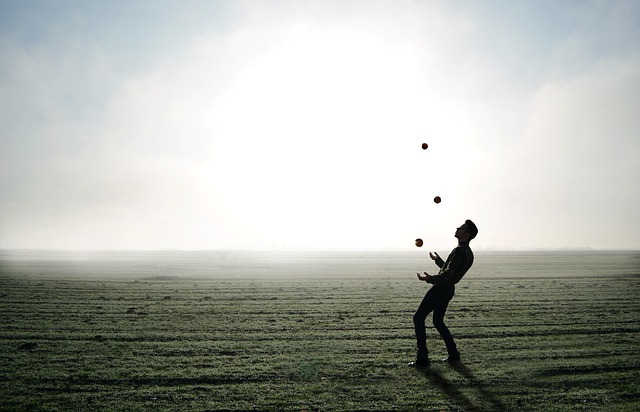
Juggling multiple writing projects seems to be the way I work. It used to worry me a lot. I used to think it was not a good thing; not for me or my writing. Then I realised that it was all working out, in its own haphazard way. Having a few things running alongside each other doesn’t seem to stop the books getting written or published, so why was I worrying so much?

Image by Theodor Moise from Pixabay

The thing is, I write books quickly. I might get the idea a few years before I get around to starting it, and by then I’ll have all the character bios in place, plus most of the plot and locations, research and so on. But once I start it, once I sit and write the title followed by ‘chapter one’, I am usually on a roll. Three months for a first draft is my average although last year I completed a first draft in seven weeks. That was a particularly addictive book to write!

Now, it might only take me a few months to write a book, but it obviously takes far longer than that to get it ready for publication. Once the first draft is done, there is the second, third, fourth and so on… revisions and editing, sometimes rewriting whole chunks or changing the tense or the perspective. That’s followed by beta reader feedback, yet more edits and revisions and then it’s off to the editor and proofreader…. more edits after that.

By now I’ll be working on blurbs and thinking about front cover designs. All of this takes time… Far more time than it took to write the first draft of the book. Usually, it will take between one and three years for me to publish a book after the first draft has been written.

What tends to happen with me is I can’t not write while my book is with beta readers or the editor. I can’t just sit there and do nothing. There is always another idea waiting for its turn, always another host of noisy characters demanding my attention.

So, while I’m waiting, I’ll write another book…

And eventually they really start to build up!

Image by Leopictures from Pixabay

Hence why I gave myself a writing ban. I was allowed to write flash fiction, poetry, articles and blog posts, but I wasn’t allowed to work on any new books or start writing any of my new ideas. And the reason for the ban was the amount of finished books I was waiting to publish. I don’t want to just churn them out, you see – I want to give each book the launch it deserves and that also takes time.

I had The Day The Earth Turned series ready to go. My plan was to release each book during the season it’s named after, so Book 1: Summer was released in June and Book 2: Autumn will be released in October. In between writing and editing that series, I also finished my sequel to The Mess Of Me, The Mess Of Us and the spin-off book from The Boy With The Thorn In His Side series, At Night We Played In The Road. These two books are part of a bigger universe and are connected to each other and the Holds End Trilogy and Elliot Pie’s Guide To Human Nature. Because of these connections, I then had a new idea for a sort of crossover book, that would pull some of these characters together in one final story, ending their stories and the story of that universe… (You’ve guessed it, that was the addictive, 7-week book!)

I also typed up a zombie apocalypse book I’d started to pen in a notebook… It’s not finished but I wanted to type it up to keep it safe.

For about two years now I’ve also been adding notes/ideas and character bios to a notebook for a future book which will be called The 7th Child. As usual, I can’t ignore what pops into my head about this book, so I have to write things down in the notebook and just recently I ended up writing the first two chapters because, well, they were in my head. I’ve left it there though because although I know exactly what happens in this book, I haven’t quite figured out how to tell the story yet. So, I’m fine to leave this one alone until this becomes clear to me.

Image by 6689062 from Pixabay

My writing ban was now on very shaky ground… And finally, last week, I gave in completely.

Now, to be fair, I am not writing something new. It doesn’t work that way with me anyway. As I’ve already said, I’ll map out ideas, characters and plots for years sometimes before I get enough to start writing the first draft…

But about a year and a half ago I started writing a book called Black Hare Valley. It was another one I’d had in my mind for a few years. It had its own notebook as they always do. It even had a huge, beautiful map my son and I drew together when creating the town. We experienced a two week power-cut because of a storm and during that time I decided to start writing the book in notebooks. I didn’t have much of the plot ironed out, to be honest, but that didn’t seem to matter. It was one of those delicious and exciting books that just wrote itself. I soon had five large notebooks filled with the first draft and the book was out of my head.

Last week I realised that I didn’t really have anything to ‘work on’, other than any articles or poems that were in my head… I felt a bit lost.

I love getting absorbed in my own worlds. It’s what I most love about being a writer. I was missing that pull, missing having one world and its characters dominating my thoughts, following me about all day.

I thought… well, it won’t hurt, will it?

I need to type it up at some point. At least then it will be safely backed up on my laptop…

I’m not writing something new, am I? I’m just typing up…

Of course now I am well and truly lost. I have been sucked into Black Hare Valley just as I was when I wrote it the first time. I love it. I am so, so happy. I think my writing ban was a stupid idea! I might as well keep writing in my usual obsessive way. It’s the only way I’ll get all these books out of my head before I die!

So, the writing ban didn’t hold. And I’m much happier!

Next week I’ll be blogging about something strange I’ve noticed about writing though… It’ll be interesting to see if anyone else has experienced the same thing.

See you then and thanks for reading!

10 Ways To Bring Characters Alive

I’ve been thinking a lot about characters lately…

I’ve read a lot of books over the summer, all well-written with brilliant plots – most were solid 4 star reads, but in most of them there was something really lacking for me. Fully drawn, relatable characters. It’s not entirely fair to criticise the books for this though, as how we feel about characters in books is a very unique and personal thing. The books that I found rather lacking in characters I could really root for would have presented no such problem for another reader. I think its just me. Considering I’m quite introverted and anti-social in real life, in books it would appear I am looking for escapism via people as well as places and situations… Finding characters I really love is apparently really important to me.

With that in mind, here are my top 10 things to consider when creating a character for the first time:

  1. Their back story – I think this gets a bit neglected sometimes. Authors will mention it if its relevant to the plot but sometimes a person’s back story is relevant to understanding the person they are as well, and both should be considered when writing a character. Back story includes the following things: their family, their hometown, their childhood and any relevant incidents that occurred previously. It’s basically everything that happened to the character before the story started. This is important for an author to figure out because everything that happened to a person helps create the person they now are. We are a product of our past experiences, from our schooldays to our first crush, to the way our parents treated us to the way they treated each other, whether we were rich or poor, healthy or sick… It all adds up to character and can help the reader understand the character’s behaviour and motivations.
  2. Their likes/dislikes – An obvious one, but one I do see authors neglecting at times. We all have likes and dislikes, and I’m not just talking about foods we love or hate, or sports we love or hate – I’m talking about other, more universal things. We all have things that annoy us, for example, things we can’t tolerate, things that set our teeth on edge. And we all have things we love, things we are passionate about, maybe even things we would die for… As an author, you need to know all of them, even if they don’t get mentioned specifically in the story. Again, likes and dislikes make up who we are and they can really help set a character apart from all the others.
  3. Their bad habits/flaws – We must also remember that our characters cannot and should not be perfect. Yes, they might be the hero of the tale, they might be hugely talented, ridiculously clever, or remarkably kind and selfless… But that’s not the whole story, is it? They can’t be perfect because that’s not relatable. Readers want to see flaws, even little ones, because it reminds us the character is a human just like us and flawed, just like us. Believe me, this makes us like them more! It could be anything from being clumsy, or socially awkward, to being messy at home, or absent-minded in the company of others. Maybe they are bad at listening, are too judgemental or too quick to temper. Maybe they don’t take things seriously enough, or are constantly running from their problems. Perhaps they just swear too much or pick their nose! Whatever is is, give them some quirks and bad habits to make them seem more real.
  4. Their ability to change – If you put your character through a lot, they should change. Character development is crucial to ensuring readers care about characters. If they start off stubborn and rude and end up the same, they haven’t learnt anything, which makes the plot feel a bit pointless. Undoubtedly, what you put them through as a writer ought to change them as a person. Perhaps they start off shy, introverted and stubborn but the plot forces them to come out of their shell and face the world. Perhaps they are big-headed and think they are always right, and the story changes this as it progresses. It might only be in subtle ways, but to ensure our characters are realistic, we need to allow the journey to change them, just as it changes us in real life.
  5. The way they see the world and whether it changes – Similar to the above – their worldview may be shaped by the back story we have already mentioned, or it may be shaped by their bad habits and flaws and the kind of person they are. Either way, the way they see the world may change as they navigate the plot. This might extend to other characters; for example, perhaps they start off with a heart of gold, and somewhat naive, but by the end of the story, the world has hardened them and toughened them up. Or perhaps it’s the other way around.
  6. The way they see themselves and whether it changes – Often authors neglect to consider how their character sees themselves. My favourite thing to consider about antagonists, for example, is that they are often the protagonist in their own eyes… They think they are right, just as the hero does. How does your character feel about themselves? What do they think when they look in the mirror? What do they like and dislike about themselves? Consider this to make them seem more real and also how the plot might change how they feel about themselves.
  7. Their cultural preferences – Slightly more complex than their world view, this considers their cultural preferences in terms of music, film, TV, hobbies and interests. What a person likes to read, for example, can say quite a lot about them! Equally, alluding to their favourite band or song will give the reader a glimpse of their personality in a subtle way. It’s these little details that make us human and set us apart from each other, so don’t forget them when building a character.
  8. The way they dress – Similar to the above, don’t forget to put thought and care into the way they dress. What does it say about them? Describing someone putting on a suit will give the reader some clues as to this characters personality, job and lifestyle, to some extent. Just as having them pull on muddy boots, or tie their hair in a messy bun, will suggest something else. We are all guilty of judging others by their appearance and this can be fun to play around with in writing. A heavily tattooed character blaring out heavy metal might lull the reader into expecting a type of person, whereas the truth could be very different. Having said that, we do dress how we feel and our clothes often reflect our interests and hobbies… so it can be a really useful tool to build character without saying too much.
  9. The way they talk – Before creating a character, and particularly if you are new to character building, I strongly suggest you spend as much time as you can observing conversations. Conversations you are having with others, and conversations you overhear, as both are vital in highlighting the unique ways we talk. Consider, for example, that people often change the way they talk depending on who they are talking to. A surly teenager, for example, might snap at their mother in the morning, but be full of excitement and passion when they are walking to school with their best friend. Not only that, we all have different ways of talking. Some people interrupt and talk over people – what does this suggest to the reader? Some people trail off and look away… what could this mean? Some people only say the bare minimum, while others talk far too much. We tend to have phrases we use out of habit, so think about that too. You can weave different parts of people in real life into one character.
  10. What they want/what is driving them – This is such an important part to character creation but one I do think gets forgotten sometimes. Obviously, the plot provides the character with a purpose and a reason to act or react. As authors, we have to keep this in mind at all times, because just as back story, and world-view and flaws will drive a character’s behaviour, what they actually want will drive it even more. For the story to reach a conclusion, what the character wants must be vital enough to keep them going. If they give up, the story dies. Something is driving and pushing them forward and it’s best to consider this in terms of an inner and outer journey. On the outside, something has caught their attention or compelled them to react. On the inside, something is giving them the strength to keep going. We are all driven by something in life and what that is will play a huge part in your character’s behaviour. It is perhaps the most important thing for an author to know about their character!

Thanks for reading! Feel free to drop a comment or share. I’d love to know your thoughts on characters in books. Do you have a favourite and why? Have you read a book where the plot was perfect but the characters felt flat? Let me know!

Character Interview: Julie from Timelines

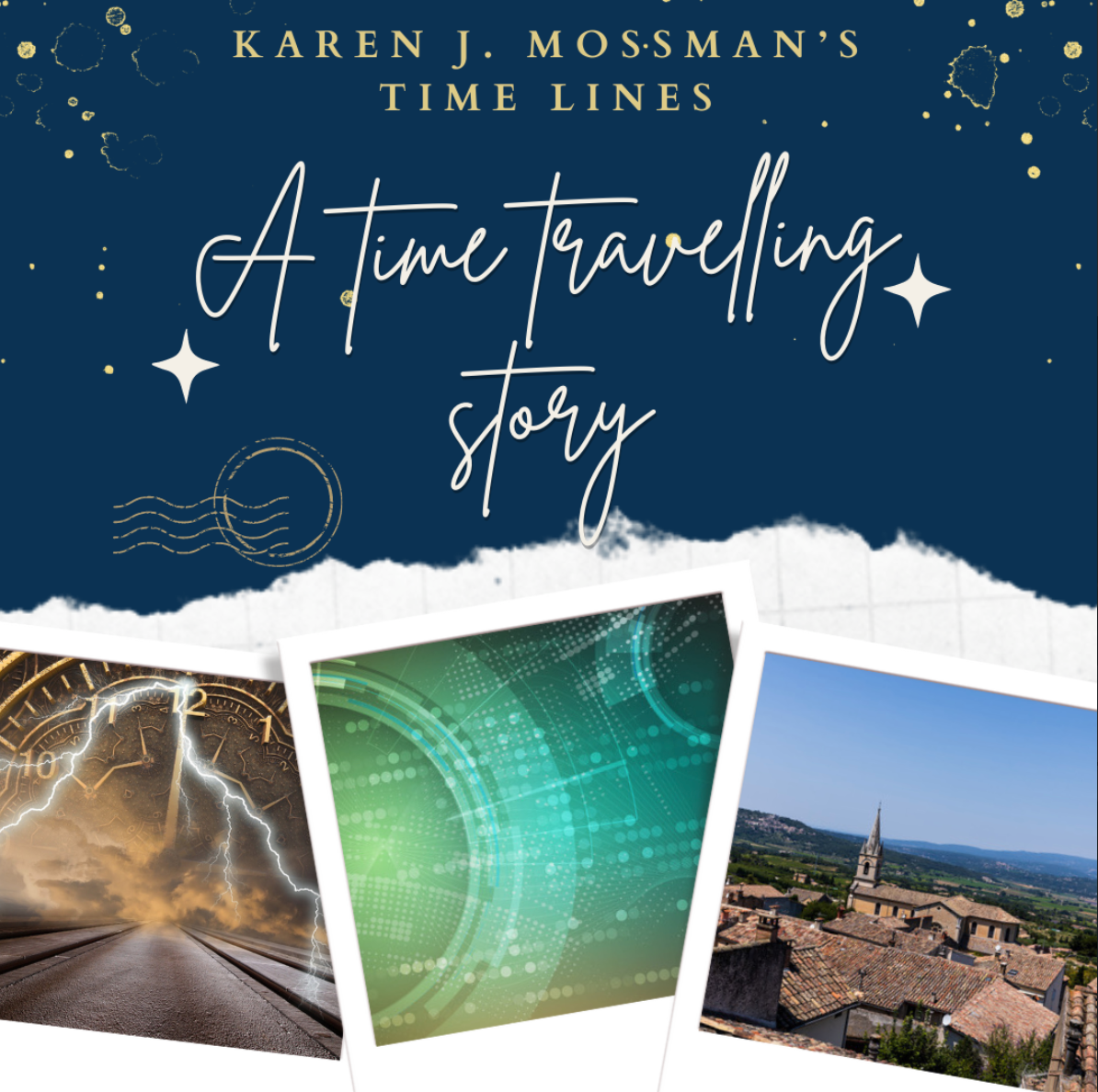
Welcome to another character interview on The Glorious Outsiders, where we are obsessively addicted to good books and memorable characters! At the start of each month I post an interview with a character from a book I have enjoyed and for September that book is Timelines, the latest release from author Karen J. Mossman. I recently enjoyed this book, which is a quick read that leaves you desperate for more! It’s also a great introduction to Karen’s writing and style so I’d recommend it as a place to start if you’d like to try out her work. I hope you enjoy this interview with the main character, Julie! At the end you will find links to the book and Karen’s social media platforms!

  1. How old are you?

Hi I’m Julie and I am 28 years old.

2. Where do you come from?

I guess I could say I come from your future.

3. Where do you live? Describe it to us

I live and work in the West Sector. The world is divided into four, North, East, South and West. I live in the year 3326, where the world is very different from yours from what it once was.

4. Do you have a family, if so tell us about them

I have mother, but that’s all. She is a good person, but as I live and work on the base, I see very little of her. My work colleagues are my family.

5. Who is your best friend and why?

Ricardo. He and I time hop together. He knows me better than anyone else and we look out for each other.

6. What are your talents?

I don’t know if you would call them talents, but I’m good at my job. Not everyone can do it. We travel to the past and are invisible. We have no tangible form. We cannot interact, take anything with us, or bring anything back. We are basically an observer who reports back past atrocities, this helps our world credit rating. We cannot dwell on what we see or become emotional about it. I have been told that is a talent, but it’s not really. We are highly trained personnel.

7. What do you think people think of you?

They think that I am good at my job and I am. If I wasn’t, I wouldn’t be able to do it.

8. What’s your biggest fear?

That something will go wrong with our time hop. Nothing has ever gone wrong, until this now.

9. What’s your biggest hope?

That there would not be so much fighting between the sectors. The East or the worst, but the other have their problems. It is only us in the West who are sensible and fair.

10. Is there anything about your life you would change?

No, absolutely nothing. It is a great honour to see our history first hand. To witness what it was like for people back then.

11. Where would you like to be in 5 years time?

I don’t have any aspirations to get further in my job. Time Traveling is the ultimate and everyone else aspires to it.

12. Do you have any regrets?

With this trip going wrong, I became emotionally involved. This gave me regrets that lingered long after. I wanted to help the people who were being rounded up and killed. I felt their fear and it will lingers inside me forever.

13. How would you like to be remembered?

As someone who was good at her job and not for how I reacted when I returned as an emotional wreck.

14. What are your hobbies/how do you relax?

I like to read. We have a vast digital library and I particularly enjoy reading fiction based on the places I’ve visited. It brings me closer to my ancestors and I get to experience and feel as they did in their time. Although, I must say when I experienced it first hand and felt the emotional value, it put me off reading for a long time.

Thank you very much for having me. I must add that you find can find out more about my story on a video made by Norns Triad Publications. They now offer this service to other authors. More information here – https://nornstriad.com/services/norns-video-production/

Book Description

Time travel can be a useful resource, but what if something unexpected goes wrong? In the year 3236, the government uses time travel to document the mistakes of the past. It’s a way to gain power in the present by learning from history. During a leap back to WWII, Astro-archeologist Julie finds her safe projection hasn’t gone as planned. Instead of the ethereal presence she’s supposed to be, she’s actually visible. What will that mean when she stumbles upon a small village being raided by German soldiers? Faced with death all around her, Julie has to find her way back to the future. But when she returns, will she be the same person she was? Or will the paradoxes of time travel change her life forever?

Universal Link https://geni.us/TimeLines

Publication Date 30th August

Website karenjmossman.com

Find our more about Karen and her social media links are here – https://nornstriad.com/authors/karen-j-mossman/

Excerpt

A displacement like this had never happened before. Ricardo and I were both seasoned travellers, and neither of us experienced anything like this. The anomaly was more cause for concern than my response to it, but even more reason for me to pull myself together.

I forced open my eyes. Not only did I want to see my colleagues, but I also needed to reassure myself that I really was home. It comforted me to hope everything had somehow been a dream.

With a whoosh, the sliding doors to the hospital bay opened. Stepping inside, Ricardo gently laid me on a bed.

Exhausted, my eyes closed again the second I hit the sheets. Darkness consumed me as I slipped into unconsciousness.

Who Are Your Apocalypse Gang?

In two weeks my new novel The Day The Earth Turned, Book 1:Summer will be released! In this post I would like to introduce you to some of the characters but I’d also like to ask you a question. Imagine the world is ending, or at least the world as we know it is. It could be for any reason: perhaps war, climate change, alien invasion, or zombies on the rise! Let’s say you’re smart and you survive only to find yourself in a wasteland of a world, something now difficult, almost impossible to navigate. You need to find safety; shelter, food and water. You need sharp survival skills or you won’t last much longer! You need other people. Who would you want by your side and why? Feel free to let me know in the comments! I’d love to know who your apocalypse gang would be and why!

Image by Moshe Harosh from Pixabay

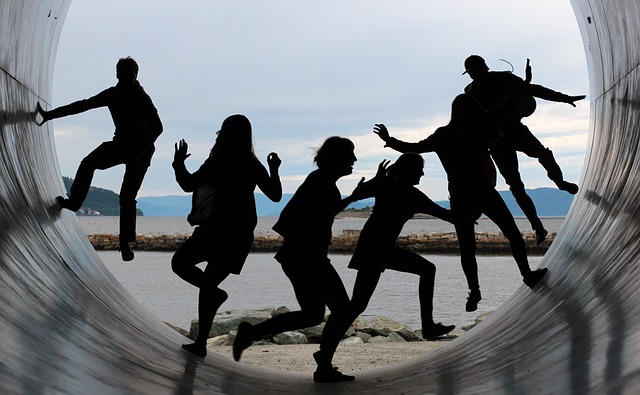
As for me, I’d definitely want some of these kids on my side!

Meet Gus:

When we first meet 15 year-old Gus, he appears rather deranged.

‘There’s none left you know!’ he bellows at her then, suddenly motionless on the opposite side of the road, his arms down; his face pale and moonlike through the wall of rain and hail. ‘They’re all dead! It’s just us now!’ He laughs, turning in a circle with his arms spread to either side. He looks round and meaty, she thinks, in his saturated vest top, and pyjama bottoms. ‘This is all ours!’

He’s not sorry that the adults are all dead and he’s soon on a mission to kill any remaining ones. The main thing Gus wants however, is power and control. He seizes his chance when it comes and soon becomes the official leader of the Moors Close group. As the story progresses we learn more about his background, and we start to see the other, softer, side of Gus that Chess champions. He can be kind, he can be reasoned with and above all, he is a true survivor.

Meet Reuben:

When we first meet 14 year-old Reuben, we also view him through the eyes of Chess. She knows him only vaguely from the school bus and has stopped other kids bullying him on more than one occasion.

She looks up. It’s the Carter boy, dragging something behind him. His chest is bare, and his dark hair slick with sweat. He looks her way and shouts at her,          

Something is happening!’

He isn’t wrong.

She doesn’t answer, and he keeps going. With the dog back inside, Chess locks the door and wanders to the kitchen window. The Carter boy has gone, but the dead grey man is still there. What had he wanted? Help? She feels half tempted to run after the Carter boy to find out what he knows, but he is a bit weird. Everyone says it. His whole family is weird, they say. His mother was a hippy sort who died too young, he didn’t go to school and his grandfather has dead animals hung up inside the shed.

Like Gus, Reuben is also a survivor who isn’t too sorry to see the world has shed itself of adults. His grandfather has somehow survived the cull so far, so he has reason to feel optimistic. He is a realist but also a dreamer. Gentle and kind to people and wildlife, he hates Gus for bullying him in the past and the two quickly set up opposing sides in the village.

Meet Chess:

Chess is the first character we meet – four weeks after her parents went to the hospital and never came back, she now has to face the fact she is alone with her 6 year-old sister, Josie. Chess is a strong character who adapts quickly to a world without adults, but that doesn’t stop her from missing the old world and grieving for the future she no longer has.

But blaming her dead parents for their predicament is a pointless waste of energy and Chess understands on some level that she needs to make a room for them inside her head. A room where she can put them for a while and shut the door on them. Of course, she wants to throw herself down and cry and scream. She wants to run to the hospital and see if by any chance, they survived, but she knows it is useless. She is responsible for herself and Josie and that means keeping them alive until another adult arrives to take care of them. And Chess does believe that someone will come. Police, or the army, something like that. Adults in positions of authority. It’s just a matter of being patient and keeping them fed until then.

Chess has great leadership qualities and has potential as a diplomatic figure in a world without adults. She tries hard to unite the opposing factions that emerge and is always thinking ahead.

Meet John:

John is an anomaly – an adult who has not been killed by any of the deadly viruses that swept the world, culling the adults and leaving the children alone. A down to earth, practical, blunt and old-fashioned kind of guy, he took Reuben in when his mother was dying of cancer and has been a father figure to him since. John is deeply connected to the earth and believes nature will show them the way forward.

‘We were prepared,’ John continues. ‘We’ve been aiming for full self-sufficiency for a long time. Mind you, don’t mean things aren’t gonna be tough. Really tough. There’s medicine for one thing. We’ve stockpiled, but that don’t mean we know what to do with half of it!’ He chuckles deep in his belly and shakes his head. ‘And if crops fail…there’s water supplies…I’m guessing you’re just starting to feel the enormity of it all, eh?’

John sees it as his duty to build a community for the children, to bring them together and teach them the skills they need to survive. He can be authortarian at times, but he has their best interests at heart.

Meet George:

George does not come from Heron. He is just passing through when he runs into Gus and his gang after a disgusting incident with a crow.

 George’s mouth falls open and drool slips from his tongue. He wonders how easily you can go insane. He wonders for the millionth time what he is made of, how tough he is, how easily he will die or how hard he will fight to live. As he slept, an army of flies has laid eggs in his wounds and the crow has been feasting on a squirming, wriggling occupation of hundreds of fat white maggots.

George is a bit of a loner who becomes attached to Reuben. He is kind and moral, and adaptable. Though he misses his dead family, they taught him well and prepared him as best they could for life without them. He is a tough, outsdoorsy type with some good survival skills.

Meet Charlotte:

Charlotte is also passing through the village of Heron, where she stops to bury her dead boyfriend and finds a lone toddler called Iris. She ends up staying in the village.

Charlotte hoists the child to her other hip and follows the rag-tag group down another lane called Pig Shoot. Since burying her boyfriend and finding the child, Charlotte has wandered aimlessly around the area in search of life. She is down to one water bottle and a squashed cucumber sandwich. Her head aches from crying, her legs feel weak and she is sure her feet have blisters on top of blisters.

Charlotte is an older teen, who was travelling the world with her boyfriend before the pandemics started to hit. She is mature, wise, patient and forward thinking. She misses the old world and hopes to eventually regain some of what they have lost.

There are many other characters to meet in the series, including rich kid Grace who can’t decide whose side she wants to be on, and sinister Lily, a 10 year-old with an interest in torture – but the characters mentioned above are the ones I’d want on my side!

What about you?

Oh and if you’re keen to read the series, Book 1: Summer can be preordered from Amazon here:

https://www.amazon.co.uk/Day-Earth-Turned-Book-Summer-ebook/dp/B0C5MP91J7/ref=sr_1_2?keywords=chantelle+atkins&qid=1686304018&sr=8-2: Who Are Your Apocalypse Gang?