Who Are Your Apocalypse Gang?

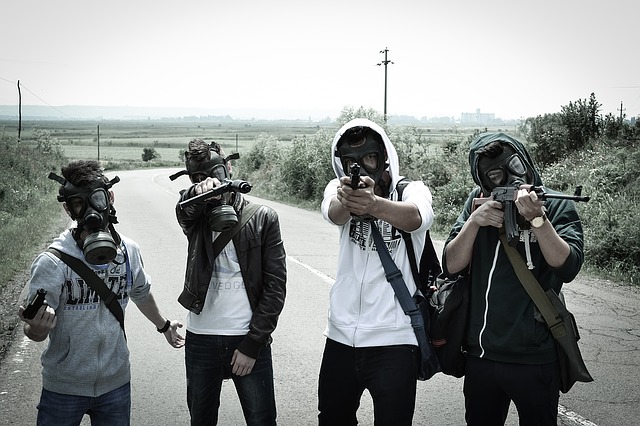
In two weeks my new novel The Day The Earth Turned, Book 1:Summer will be released! In this post I would like to introduce you to some of the characters but I’d also like to ask you a question. Imagine the world is ending, or at least the world as we know it is. It could be for any reason: perhaps war, climate change, alien invasion, or zombies on the rise! Let’s say you’re smart and you survive only to find yourself in a wasteland of a world, something now difficult, almost impossible to navigate. You need to find safety; shelter, food and water. You need sharp survival skills or you won’t last much longer! You need other people. Who would you want by your side and why? Feel free to let me know in the comments! I’d love to know who your apocalypse gang would be and why!
Image by Moshe Harosh from Pixabay

As for me, I’d definitely want some of these kids on my side!

Meet Gus:

When we first meet 15 year-old Gus, he appears rather deranged.

‘There’s none left you know!’ he bellows at her then, suddenly motionless on the opposite side of the road, his arms down; his face pale and moonlike through the wall of rain and hail. ‘They’re all dead! It’s just us now!’ He laughs, turning in a circle with his arms spread to either side. He looks round and meaty, she thinks, in his saturated vest top, and pyjama bottoms. ‘This is all ours!’

He’s not sorry that the adults are all dead and he’s soon on a mission to kill any remaining ones. The main thing Gus wants however, is power and control. He seizes his chance when it comes and soon becomes the official leader of the Moors Close group. As the story progresses we learn more about his background, and we start to see the other, softer, side of Gus that Chess champions. He can be kind, he can be reasoned with and above all, he is a true survivor.

Meet Reuben:

When we first meet 14 year-old Reuben, we also view him through the eyes of Chess. She knows him only vaguely from the school bus and has stopped other kids bullying him on more than one occasion.

She looks up. It’s the Carter boy, dragging something behind him. His chest is bare, and his dark hair slick with sweat. He looks her way and shouts at her,          

Something is happening!’

He isn’t wrong.

She doesn’t answer, and he keeps going. With the dog back inside, Chess locks the door and wanders to the kitchen window. The Carter boy has gone, but the dead grey man is still there. What had he wanted? Help? She feels half tempted to run after the Carter boy to find out what he knows, but he is a bit weird. Everyone says it. His whole family is weird, they say. His mother was a hippy sort who died too young, he didn’t go to school and his grandfather has dead animals hung up inside the shed.

Like Gus, Reuben is also a survivor who isn’t too sorry to see the world has shed itself of adults. His grandfather has somehow survived the cull so far, so he has reason to feel optimistic. He is a realist but also a dreamer. Gentle and kind to people and wildlife, he hates Gus for bullying him in the past and the two quickly set up opposing sides in the village.

Meet Chess:

Chess is the first character we meet – four weeks after her parents went to the hospital and never came back, she now has to face the fact she is alone with her 6 year-old sister, Josie. Chess is a strong character who adapts quickly to a world without adults, but that doesn’t stop her from missing the old world and grieving for the future she no longer has.

But blaming her dead parents for their predicament is a pointless waste of energy and Chess understands on some level that she needs to make a room for them inside her head. A room where she can put them for a while and shut the door on them. Of course, she wants to throw herself down and cry and scream. She wants to run to the hospital and see if by any chance, they survived, but she knows it is useless. She is responsible for herself and Josie and that means keeping them alive until another adult arrives to take care of them. And Chess does believe that someone will come. Police, or the army, something like that. Adults in positions of authority. It’s just a matter of being patient and keeping them fed until then.

Chess has great leadership qualities and has potential as a diplomatic figure in a world without adults. She tries hard to unite the opposing factions that emerge and is always thinking ahead.

Meet John:

John is an anomaly – an adult who has not been killed by any of the deadly viruses that swept the world, culling the adults and leaving the children alone. A down to earth, practical, blunt and old-fashioned kind of guy, he took Reuben in when his mother was dying of cancer and has been a father figure to him since. John is deeply connected to the earth and believes nature will show them the way forward.

‘We were prepared,’ John continues. ‘We’ve been aiming for full self-sufficiency for a long time. Mind you, don’t mean things aren’t gonna be tough. Really tough. There’s medicine for one thing. We’ve stockpiled, but that don’t mean we know what to do with half of it!’ He chuckles deep in his belly and shakes his head. ‘And if crops fail…there’s water supplies…I’m guessing you’re just starting to feel the enormity of it all, eh?’

John sees it as his duty to build a community for the children, to bring them together and teach them the skills they need to survive. He can be authortarian at times, but he has their best interests at heart.

Meet George:

George does not come from Heron. He is just passing through when he runs into Gus and his gang after a disgusting incident with a crow.

 George’s mouth falls open and drool slips from his tongue. He wonders how easily you can go insane. He wonders for the millionth time what he is made of, how tough he is, how easily he will die or how hard he will fight to live. As he slept, an army of flies has laid eggs in his wounds and the crow has been feasting on a squirming, wriggling occupation of hundreds of fat white maggots.

George is a bit of a loner who becomes attached to Reuben. He is kind and moral, and adaptable. Though he misses his dead family, they taught him well and prepared him as best they could for life without them. He is a tough, outsdoorsy type with some good survival skills.

Meet Charlotte:

Charlotte is also passing through the village of Heron, where she stops to bury her dead boyfriend and finds a lone toddler called Iris. She ends up staying in the village.

Charlotte hoists the child to her other hip and follows the rag-tag group down another lane called Pig Shoot. Since burying her boyfriend and finding the child, Charlotte has wandered aimlessly around the area in search of life. She is down to one water bottle and a squashed cucumber sandwich. Her head aches from crying, her legs feel weak and she is sure her feet have blisters on top of blisters.

Charlotte is an older teen, who was travelling the world with her boyfriend before the pandemics started to hit. She is mature, wise, patient and forward thinking. She misses the old world and hopes to eventually regain some of what they have lost.

There are many other characters to meet in the series, including rich kid Grace who can’t decide whose side she wants to be on, and sinister Lily, a 10 year-old with an interest in torture – but the characters mentioned above are the ones I’d want on my side!

What about you?

Oh and if you’re keen to read the series, Book 1: Summer can be preordered from Amazon here:

https://www.amazon.co.uk/Day-Earth-Turned-Book-Summer-ebook/dp/B0C5MP91J7/ref=sr_1_2?keywords=chantelle+atkins&qid=1686304018&sr=8-2: Who Are Your Apocalypse Gang?
November Writing Challenge: Addiction

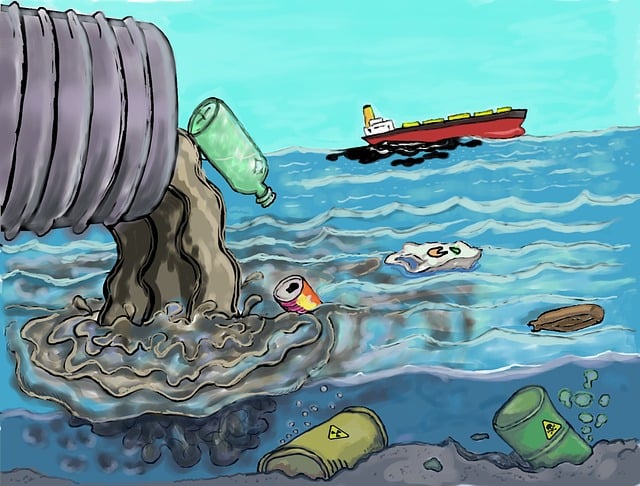
At the start of every month I ask my Facebook followers to suggest some writing prompts and challenges and then I post the one I chose at the end of the month. This time I picked ‘Addiction’ which was a one word prompt. What came to mind was a list poem so here it is:

Image by Rilson S. Avelar from Pixabay

Addiction

Addicted to dinosaur remains

Fossilised ideas

Dirty pleasures

Heating homes

Running cars

Getting there faster

Building roads

To better boost business

Addicted to plastic

To the convenience of forgetting

It sits in the earth forever

We breathe it in

Drink it, eat it

Feed it to babies

It flutters in trees

It drifts on the seas

Around the neck of a seal

The beak of a bird

In the stomach of a whale

Addicted to shiny new things

Neat front lawns

Weeds killed efficiently

Packages delivered on time

Addicted to right now

Addicted to cheap food

To burgers and nuggets

And penned in pigs

To horror and murder

Mined diamonds

iPhones and slavery

To turning a blind eye

To what doesn’t concern us

Addicted to capitalism

To what we need, what we want

To infinite growth on a finite planet

To investment

But not in nature

But not in the wild

Addicted to believing we are important

To slaughtered hedgerows

Felled trees

Filthy oceans

Polluted rivers

Addicted to ourselves

To speed, to need, to want, to greed

Unable to see

Addicted to the end

How To Find Hope In A World Falling Apart

I was contacted this week by a younger writer who wanted to know how I was able to keep writing when dealing with my own doomerism. In case you are not familiar with the term ‘doomerism’, it basically describes people who have a fatalistic and pessimistic view of the future of humanity. I’d never heard of the term but it makes perfect sense, particularly for younger people. It’s all right for the rest of us, isn’t it? Chances are, if you’re over forty, you’ve had an education, found a partner, maybe had kids, you have a home and a career and if the whole world ended tomorrow, at least you had a life for a while. At least you had the chance to experience a certain amount of things. Younger people quite rightly fear that they won’t get the chance. Everywhere you look, everything is very bad. For creative people this can be a real problem. How can you sit down and write poems or stories when you’re convinced the world will end before you get a chance to share them?

Image by Dorothe from Pixabay

To answer this, first of all let’s take a quick look at the reasons young people are experiencing doomerism.

  • Climate change – probably the biggest concern for young people today. This summer has really brought it home. Wildfires, droughts, water shortages, crop failure… These things are happening and happening on our own doorsteps. The UK is having its driest summer since 1935 and recently broke the record of highest temperature recorded when we tipped over 40 degrees. We are used to being a wet green country, not a parched dry one. Many counties here have hosepipe bans and restrictions in place and although some rain has now arrived, the dry weather is predicted to go on until October. We had a dry winter last year and if we get another one, we are in real trouble.
  • The cost of living – another worldwide issue, but one that is really affecting people right now where I live. One of the big supermarkets is about to introduce a buy now-pay later scheme for food shopping. Seriously. Wages are falling as inflation is spiralling. It is becoming impossible here for young people to rent a home, let alone buy one. Our money is not even stretching to cover the basics which means more and more people are working just to live and life should not be like that. It’s depressing. Especially for young people.
  • Fuel crisis – whichever way you look at it, we are in trouble. The big companies are raking in record profits while UK households are seeing their bills soar to levels that will be simply unaffordable for most. The war in Ukraine has added to the problem with some European countries planning to ration gas amid fears of power shortages and cuts.
  • Threat of nuclear war – We haven’t been this close to possible nuclear war since the 1980’s and it’s terrifying.

I could probably go on! But I think the list above covers the big ones and hints towards their implications such as food shortages, famine, decimation and extinction of wildlife, recession…

So, not a lot to feel hopeful about maybe? And how the hell could anyone put pen to paper with all this fear running around their head? I mean, with this shit to look forward, why put an effort into anything? It’s all pointless, right?

Nope.

Not to me. And here is why.

  1. You are alive. Whether your life is what you imagined or hoped it would be, whether everything feels hopeless or not, whether you are rich or poor, fat or thin, tall or short, you are alive. You exist. You are here. You didn’t get flushed down the toilet, you weren’t lost to a miscarriage, you didn’t die in the womb or when being born, or as an infant. None of us know how much time we have here but while we have it, we ought to grab it with both hands and make the most of it. Easier said than done, I know, but every now and then just think about it. You are alive. You are the only you. No one else like you has ever existed and no one else ever will. You are a one off.
  2. You are young. A lot can happen in a short time. A lot can happen in a lifetime. It sucks to be born in such a turbulent times but people have been born in worse times. Don’t let it beat you. Refuse to. Fight back any way you can. Be resilient. Be tough as hell. You deserve a life and to be happy just like the rest of us. You haven’t got it as easy as previous generations but you can change it.
  3. Economic and societal systems change. They have before and they will again. We are currently, in my view, at the end stage of capitalism. It’s eating itself and destroying the planet and it can’t go on much longer. But we used to live under other systems and we can do again. Nothing stays forever. Everything has its time and then time moves on. I think we are in for a lot of chaos due to capitalism, what it has done to the planet and to us, but something else will emerge because it always does.
  4. It gets worse before it gets better. I truly believe this. Sadly, humans seem to have to let things get really, really bad before they wake up to what is going on and start to demand change. That’s far harder when the establishment control most of the media but eventually people’s lives become so opposite to what the media is peddling, that they realise they have been duped. This is happening right now with people waking up to the fact energy and water companies should never have been privatised and run for profit. It might take a while to change things to help people, but it all starts with public opinion shifting and it is.
  5. When things are scary, knowledge is power. I like to know what is going on so that I can prepare for the worst case scenario. I’m not exactly a dooms day prepper. I don’t have an underground bunker, weapons or a hazmat suit stashed in the wardrobe, but I do like to be prepared as much as I can. It makes me feel better, less helpless. When Russia invaded Ukraine and there was fearful talk of a nuclear war, I started researching how to survive one. I keep a survival notebook full of tips on how to find water, filtrate and sterilise it, different ways to start fires, build shelters, and so on. I add to it all the time. Anything that might be handy. I buy more basic foods than I need just to keep up a good supply. It might be useless, it might be nowhere near enough, but it is something and it is better than doing nothing because it makes me feel less helpless. One major thing everyone should get to grips with right now is growing their own food and collecting their own water. Hopefully this record breaking summer has woken people up to that.
  6. Words can change the world. Think about the power of words and books to change the world and shift opinions. It’s staggering. Stories are what bring us together and stories help humans interpret the world and respond to it. Writing and other creative pursuits are so important during difficult times. As a writer, you have the power to hold a mirror up to society and let people know what is going on.
  7. Writing is therapeutic. It really is! But you have to do it and commit to sticking to it to really feel the benefits. If you give up on writing or allow doomerism to put you off and consider it pointless, then you’re going to feel even worse. Writing can help you, so let it. Write about your fears, your hopes, your anger, your disappointment. Pour your thoughts, emotions and dreams into characters and stories that will carry the weight for you.
  8. Writing allows an escape. Just like reading, when times are tough, writing allows you an escape into another world. I love my other worlds and I feel the longing to escape to them whenever I’ve had a stressful day. Those worlds are your creations and you can control them and vanish into them any time you like.
  9. Don’t lose hope. Despite everything, we have to hold on to hope. Sometimes it feels like the world is full of bad people and not worth saving but I think tough times bring out the best in people; something more primal and ancient emerges when our backs are against the wall. I always remember a quote I once came across that said whenever you see a tragedy, look for the people who are helping. It’s simple but true. Cars crash on the road, people stop, phone the emergency services, run in to help if they can. Natural disasters occur and people rush in to save strangers. Everywhere that something terrible happens, you will see ordinary people helping others. It is in our instincts to help and protect each other and I still believe that most people are good.
  10. Fight back. Join a political party that shares your concerns for the future. Volunteer, spread the word, or just bring up the conversation with your family, workmates or in your place of education. Conversations need to be had about where we are all going so why not start them? You might just make a few people think about it for the first time. In short, if you give up, the bad guys win and we can’t let them do that.

I hope this is a helpful list to any young people feeling understandably anxious about the future right now. Is there anything you would add to it? Feel free to comment and share!

Post-Apocalyptic Fascination

Ever since I watched Maximum Overdrive when I was a kid, I have been fascinated by post-apocalyptic fiction and drama. Developed from a short story by Stephen King, Maximum Overdrive explores how a group of survivors come together after machines start turning on the humans who made them. Not your usual post-apocalyptic concept, but it still explored how a small group are left when everyone around them has perished. I remember pretending it was real when I walked my dogs around the fields where we lived. I’d pretend I was the only soul left alive in the area and I’d pretend to be grossed out by dead bodies and gruesome finds, while I plotted in my head how I would continue to survive in this new world.

Image by George Tudor from Pixabay

As a huge Stephen King fan I inevitably went on to devour The Stand – a thumping great book about an apocalypse caused by a virus. I found it so fascinating I read it twice! Everything about it intrigued me. From the outbreak of the virus and the horrific details of how quickly it spread and decimated the population, to the individual stories of the people who survived and how they came together, to the rise of good people and bad people and the ultimate battle between them.

Currently, I am watching The Walking Dead for the first time and I am almost at the end of season 10. I’m utterly addicted! A zombie apocalypse is an even more gory and frightening one, but again, it is the human stories that fascinate me – from survival of the early outbreak, to the hopes and fears of groups trying to find safe places and barricade the walkers out, to the inevitable bad humans who are arguably more revolting and dangerous than the walkers, to the fascinating survival skills the humans pick up or develop along the way. I genuinely feel like should a real end-of-the-world situation arise, I would be better prepared thanks to watching this TV show!

I am also currently writing my own post-apocalyptic series and it’s been great fun but also incredibly challenging. I have delved into dystopia before, with The Tree Of Rebels set far in the future after wars have nearly obliterated the human race, but this is the first time I have attempted post-apocalyptic fiction that starts as the tragedy unravels. It’s challenging because it’s been in my head for so long and I have read and watched so many post-apocalyptic books and films, that I feel a bit intimidated. I so want to get it right that sometimes I struggle to write it at all!

I have however written the first two books and I am half way through book three. Because there is a good chance I will want to go back and alter things I am not releasing any of them until all four books are ready. But writing it, and watching The Walking Dead got me thinking – what is it about this particular genre that fascinates us so much? It’s hugely popular – you only have to look at the various Walking Dead spin-offs in action or in the pipeline, to see that the end of the world as we know it is a big business. Here are a few reasons I think the genre is so popular:

  1. Dissatisfaction with this world – I don’t think anyone would swap this world for one over-run by walkers, deadly viruses, or rampaging robots, but even so, I do think a dissatisfaction and anxiety about the society we live in fuels our interest in post-apocalyptic fiction. Characters in post-apocalyptic dramas tend to find a new way of doing things. Once they have survived long enough to start rebuilding, they tend to rebuild in a different way as if they have learned from the mistakes of the past, and I think we are curious about this. If everything was razed to the ground and we had to start again, what kind of society would we work to build? I think most of us would opt for a kinder, fairer more environmentally friendly one and that’s interesting to think about.
  2. Curiosity about how we would react – they say you never truly know how you would react to extreme danger, pain, fear, or the threat of death. We simply have no idea whether we would die easily or become a true survivor. Would we hide away crying, or would we come out fighting? In post-apocalyptic fiction and drama, the weak don’t tend to last long. Characters make stupid mistakes and fall victim to all kinds of terrible deaths. We like to think we would do better. We would be smarter, faster, stronger and more adaptable, but would we? Wondering about this fuels our need to watch and read the genre.
  3. Fascination with survival skills – in a post-apocalyptic world, characters are forced to go back to basics. Walking instead of driving, using horses instead of cars, building shelters, hunting animals for food, fishing, setting traps, filtering water so it’s safe to drink and so on. In our modern lives we don’t need to do any of these things and we tend not to worry about food or oil running out, but maybe we should. We used to be better connected to nature and we used to do all those things to survive. Things are far too easy for us now and we are softer because of it. Watching post-apocalyptic shows and reading the genre makes us more aware of the need for such survival skills. Anyone with these skills is going to have a better chance of survival and I think we enjoy picking up a few tips, just in case!
  4. Boredom – I think to a certain extent us humans grow bored of the society we live in. Once you are in the never ending circle of work, pay bills, work, buy food, work, work, work, you wonder if a different kind of life is possible. In post-apocalyptic situations, the characters are freed from the drudgery of the work/money hamster wheel and they can do whatever they like. Life might be dangerous, but it’s certainly never boring.
  5. Disillusion with the human race – now, I would obviously never advocate population control or the mass death of humans! But like a lot of people, I am endlessly disappointed with the human race. I am frustrated and saddened that they continue to vote for selfish, rich people who continue to wreck the planet. I hate to see our wildlife being decimated, our continuous consumption pushing the planet to the brink. If we are not careful, we’ll have a post-apocalyptic situation on our hands sooner than we think. Human beings can be wonderful, but they are also frustratingly stupid and selfish. I see this more and more around me and I weep for what we are doing to Mother Nature. I can’t help thinking she would be better off without us here. I think we enjoy the genre for this reason too. In books and films where the majority of the population have perished, we get to see what the world would be like without most of here, without us wrecking and polluting, using and abusing it.
  6. The need to go back to basics – I’ve blogged before about my strange desire for a far more basic life. If I could, I would withdraw from society almost completely. If I could live in a little house or cabin far away from humanity, with woods and fields and a stream around me, I would go in a shot. I would go off-grid and get back to nature. I enjoy watching and reading this aspect in post-apocalyptic shows and books. People living basic lives, at one with nature, far away from anyone else.
  7. Preparation for the future – sadly I think this might be one of the main reasons the post-apocalyptic genre is so popular. We are faced with climate change disaster and ecological disaster, not to mention soil disaster, and the possibility of more pandemics. Wow – sometimes I wonder how any of us get up and get through the day with all that hanging over our heads! It plays on my mind constantly. I have no idea what will happen but I have very little hope that the powerful people in charge will do the right thing. I think millions of us will suffer and die as things get worse in the coming years and for young people, the situation is even more dire and depressing. Maybe we are fascinated with the genre because we are trying to prepare ourselves for what may be coming our way.

What about you? Are you a fan of post-apocalyptic fiction and drama or is it something you avoid? Do you have a favourite post-apocalyptic TV show, film or book? Let me know in the comments!