For Writers, Risk and Courage Come Hand In Hand

It’s never been tougher than it is right now…

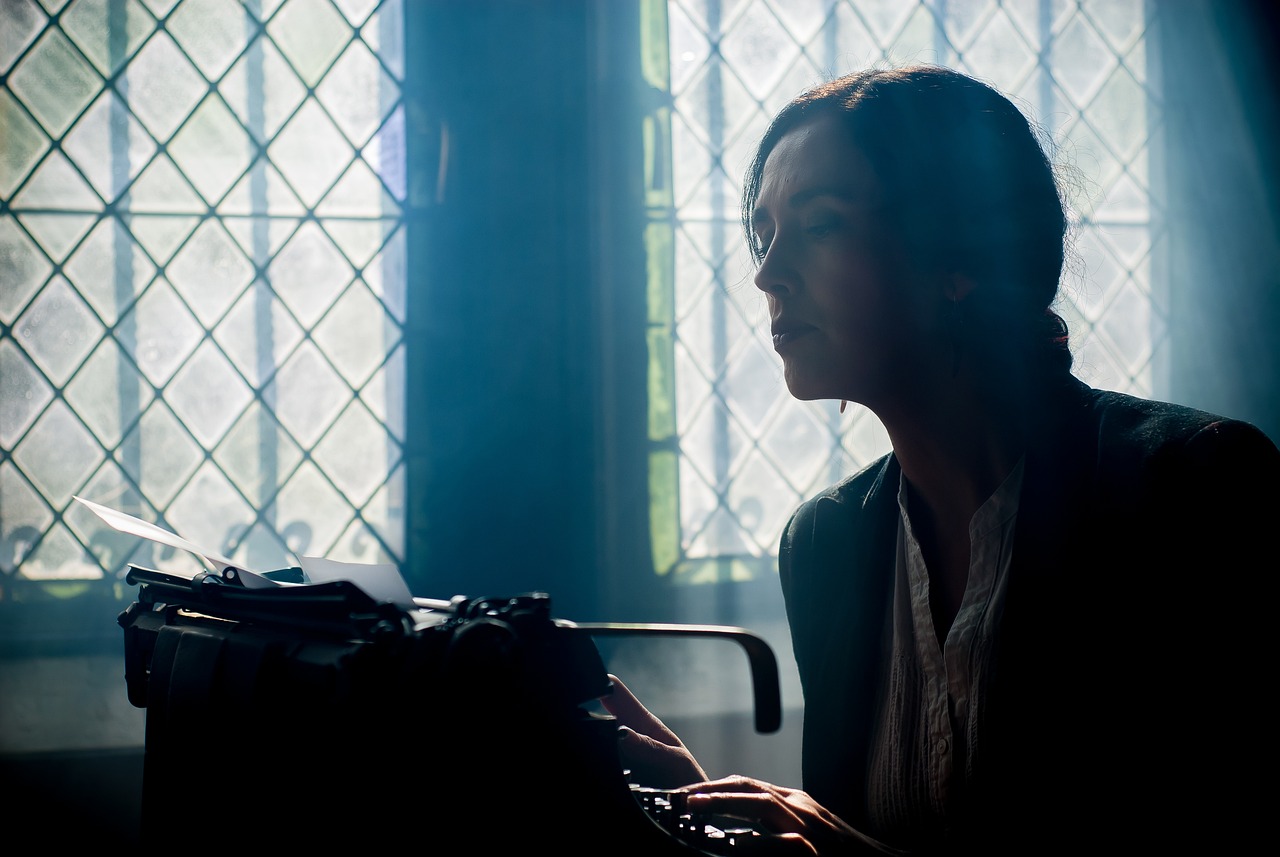
Image by Public Co from Pixabay

Being a creative person and sharing what you create is risky. While creating art, writing, dancing or acting are all very human things, all part of our desire to tell stories and express what is inside of us, sharing them with the world is something else. What starts as pure pleasure can easily morph into something that induces fear, self-doubt and regret, even horror.

Undoubtedly, when you put time, effort and money into creating something that might not be appreciated or even noticed, there is a high level of risk attached. You might regret what you’ve shared. You might hate it. You might feel embarrassed of your attempts. You might receive negative feedback that hurts so much you never want to write again. You might become swamped with imposter syndrome. In short, you might fail.

But time and again writers do it anyway and perhaps they are especially brave for this or perhaps they just don’t have a choice in the matter. I’m inclined to think compulsion and obsession have more to do with it than courage. But we can’t deny it’s both brave and risky to share a little piece of your soul with the world.

There is also courage in the act itself — in putting pen to paper. There is risk around every corner. Risk staring right back at you from the horror and the challenge of the empty page or blank screen. There is a world of words and ideas in your head but the courage it takes to attempt to put them into some sort of order, to allow yourself to open up and let them pour out of you, is something else.

It hurts, to make art, to write, to allow yourself to be open, raw and vulnerable. It’s uncomfortable at times, to be that in tune with your feelings and emotions. Writing involves looking inwards as much as looking outwards. Writing is scary because it has the potential to go so horribly wrong. Writing is risky because transferring it to page or screen can feel utterly impossible, yet we do it, again and again. Writing is like magic, like witchcraft. Writing is the one thing that can allow us to truly know ourselves and explore the entire world and all of history and space at the same time. Writing is the thing that makes us feel free. Writing is the thing that makes us human. (Or at least it used to be until AI came along.)

It’s not easy to write a story, a poem, a novel. It takes real guts to dig your own claws into your own weak skin in order to reveal what’s underneath. It’s having the audacity to believe little old nobody you actually has something to say. It’s feeling the never-ending itch to unleash ideas and characters and made-up worlds from inside of you. And for what reason? What purpose? A lot of the time, we don’t even know.

There is so much fear involved in writing that some writers never even put pen to paper. There is so much risk involved in writing that some writers never ever finish the book they’ve been working on. So much courage is needed that many writers give up entirely, often before they’ve ever really started.

And who can blame them?

It’s a tough world out there. Despite relying heavily on every area of the arts to survive this life, humans have never been particularly good at appreciating or valuing creative pursuits.

The arts are generally underfunded and undervalued and this often means adults and educators actively discourage young people from trying to make a living from the arts. Sometimes it feels like everything is stacked up against you from the very start. Actually, screw that. The truth is everything is stacked up against you from the very start.

I remember my friends, relatives and teachers applauding my stories when I was a kid. But that congratulations and encouragement only went so far. The arts were, after all, a hobby, something to do for fun, to pass the time and to entertain yourself. Not something to make a living out of. It took me a long time to claw my way back from that but these days I’m happy to say I earn my living from the arts and I encourage kids to as well.

You might even argue that we live in a society that actively discourages people from being creative. And hey, now we have AI taking over art, do we even really need creative people anymore?

That’s a depressing thought but it’s one that leads me back to courage and risk, because these days being creative and sharing it with the world is increasingly risky, and therefore increasingly brave. Creative people are going to have to fight even harder to be seen and heard thanks to AI.

Are publishing companies going to be even more reluctant to sign up new writers when they have AI at their disposal? Are we going to see an upwards trend in big companies replacing all kinds of writers with AI because of the amount of money it will save them? Is AI going to get so good that soon readers will be unable to tell the difference between it and human told stories? Will readers even care?

Querying agents and publishers is risky and scary and it always has been — wasting time you don’t have and knowing that the chances of ‘making it’ are very slim. It takes a huge amount of courage to send out queries only to get rejected again and again.

Independent publishing has given many talented writers a chance to go alone and bring in their own readers, but it carries its own risks. You need money to put out a professional product and you’ll often find that family and friends still don’t take you seriously because you don’t have a traditional publishing deal.

You risk everything when you decide to write and share it with the world. You risk humiliation, rejection, ridicule and dismissal. You risk losing money, losing faith, losing self-belief and determination. You risk being misunderstood and misinterpreted. You risk the door being slammed in your face. You risk bad reviews and low sales. You risk no one taking you seriously. You risk writing for no reason, for no money, no reward, no praise.

But if you are truly a writer, you do it anyway.

And you always will.

If you are a real writer, you won’t be dissuaded by any of that because who can realistically piss on your fireworks? No one. Because you know. You know how vital it is. If you truly love writing, you will do it anyway. Despite all of the above, and in spite of all of the above. If you love writing, you will do it anyway because there is never any other choice. Because to do it anyway is the biggest fuck you possible to all of the above and after all, what is it to be human, but to fall down and get back up again, again and again?

If you really mean it, you’ll do it. You’ll squash AI generated stories with your little finger. You’ll rise above it. You’ll keep doing it. You’ll listen to the voices in your head, you’ll drift off and zone out time and time again, you’ll create worlds you can disappear into whenever you like, you’ll laugh and sing and dance and write for the pure damn thrill of it. For the pure damn joy.

It won’t matter if you never get paid, never get noticed, never get seen, never get respected. It won’t matter and it won’t stop you. Because everything inside of you is exploding like fireworks and that makes you different from everyone else out there. That makes you special.

You’re a writer. It is insanely risky and unbelievably brave.

And that’s why you’ll do it anyway.
If You’re Planning More Than Writing, You’re Going To Miss Out

A balance between actual writing and preparation is what to aim for

Image by Yerson Retamal from Pixabay

I’ve been running my own creative writing business for over ten years now. I used to run creative writing workshops for adults and kids, but these days I just concentrate on the kids. My writing clubs are run on Zoom or in person via after-school clubs, and my clubs are always full. My school clubs all have waiting lists. It thrills me to know there is a thirst for writing among young people and I love my job.

However, in all the years I have worked with young people and with adults, whether its running clubs and workshops, or taking part in literary and writing festivals, there is a phenomena I always come across and it always, always worries me.

The over-planner.

The writer, whatever their age, who plans, plots, preps and then plans, plots and preps some more. Often this process, for older writers at least, has been going on for decades. I have met countless adults who are still working on a book they had the idea for as a youngster. I fully understand that life gets in the way. That happened to me and I had a ten year break where I did not write at all. I also understand that self-doubt gets in the way and even money gets in the way.

Let’s not doubt that writing a book, finishing a book and publishing a book is a hard road to hoe.

But many writers seem to be self-sabotaging themselves from the beginning and I am curious to know why.

Within my writing groups, I come across three types of writer.

One, the writer who loves writing, happily responds to every and any prompt or challenge, writes short sharp things, declares them done and then moves on to the next.  These writers are a joy, and I predict that as they get older they will settle down to something a bit longer, something that takes more of their time, but for the moment they are having fun and more importantly, they are finishing things. 

The second type I come across is the ‘have a million stories on the go at once but rarely finish one’ writer the ‘have a million stories on the go at once but rarely finish one’ writer, and again, this is very common with young writers. I used to do this myself. I always tell them not to worry. Having too much to write is not a bad thing, it shows how much is going on inside your head and it also demonstrates that the writer is constantly being stimulated and inspired by the world around them. Great stuff. I have every faith that this writer too will eventually find a story they are passionate about and will stick with it and finish it.

The third type is the ‘have an amazing idea, have created an entire universe, but can’t stop planning and prepping’ writer. This one worries me and in my groups, I keep an eye on these ones as it is a tricky trap to escape from once you fall into it.

There is perfectionism at work here and we all know perfectionism can stop us writing. I think these writers are able to write regularly but everything becomes about planning the book more than writing the book.

Often it’s a complex story, perhaps one that has been with them a long time. It means a lot to them and they want to get it right and do it justice. And of course over time, the writer changes and matures and evolves, so they go back over their writing again and again noticing things they can improve. There is nothing wrong with doing this as a young writer by the way. In fact I would advise against publishing books at a very young age because undoubtedly your writing will get better as you get older.

But I come across a lot of adults with amazing stories they’ve been working on for years, yet they are still not ready to publish. This isn’t about them trying to find an agent, or trying to decide what publishing route to choose, this is about them not thinking the story is ready at all. This is about them working on it, planning, preparing, researching, plotting forever and ever…and never letting go of it to move on to the next thing.

For some reason they can’t quite let it go. They can’t quite share it or declare it finished. Or perhaps they can’t quite write it, because the planning has totally absorbed them and taken over. Some writers are natural planners. They like to plan everything out before they start. I’m talking full plot, sub-plots, intricate character profiles, location research, general research and much more. They often end up with a vast body of work which is undoubtedly impressive, but the story has still not been written.

My advice to this kind of writer is always the same. I always tell the young people in my writing groups that planning and plotting should be a balancing act alongside actual writing — dipping your toe in the water, if you like.

Some writers hate planning and just want to dive right in but I encourage them to do just the minimal amount. At least a plot idea, or brainstorm, at least a character bio or a vague idea for the location. Get that down then start writing. When you get stuck, go back to planning. Does this character need more fleshing out, for example? More back story or motivation? Do you now need to research the location a bit more so you’re not just winging it?

Planning and writing can go hand in hand and happen alongside each other. But they need each other. We cannot have a great story without a bit of planning and we cannot have a great story if we never write it because we are too hung up on the preparation.

Personally, I like to have a vague plot and my characters sorted first,  then the location and after that I start writing. I always like to know what’s roughly going to happen in the next chapter or two and that is enough to keep me going. The story and the characters undoubtedly change and evolve as I write and that is part of the beauty that too much planning can sometimes rob us of.

I don’t like knowing everything before I start – I like finding out as I go along.

But I also won’t start with a blank slate because I’d get stuck really quickly.

It’s all about balance.

For those who don’t finish, who spent maybe years planning and plotting and adding to their body of preparatory work, just consider how fast life goes. Please. On day it will be too late. How sad is that? My greatest fear is dying before I tell all the stories in my head. My goal is to get them all written and published before I die. I can’t think of a greater pain for a writer than bearing untold stories!

Once something is written, once something is out of your head and your planning notebooks, you can make it better. You cannot edit a blank page. You cannot improve a story that has not been written. You’ve got to become comfortable with the process of a first draft.

This is perhaps something some writers struggle with.

A first draft is you telling yourself the story. It should be basic and clumsy. Ugly, even. You should wince a little when writing it, but you should not let that stop you. You are building something for the first time. You are finding your way and if you start writing it, believe me, the characters and the world you have created will start to help tell it for you. A process will begin. Something simultaneously controlled by you and in control of you.

It’s magic, I promise.

I cringe at my first drafts but no one is ever going to see them. I don’t know my characters that well yet, despite the bios I’ve created. It feels clunky and unnatural when they speak or act, but I push forward. I tell the story. Once it is done I go back over it and wow, often its better than I thought it was! But if you don’t ever write the first draft, how will you know?

To the over-planners I say this. A first draft is your friend. A first draft is your starting point. A first draft is a promise. A first draft has so much potential and once it is written in all its stumbling unsure glory, you can sharpen up those perfectionist and over-planning skills and put them to use.

Preparation, notes, ideas, research and snippets are no good all on their own. Plus, you are missing out on the best part of writing if you never get past this stage — writing ‘The End’ and cracking open a bottle of bubbly to celebrate before the real hard work starts…

Go on. Stop planning. Write.