Mum, Am I Weird? Yes Darling, Because All The Best People Are

Image by Gerd Altmann from Pixabay

My son is nine and for the past few years he has often stopped mid-sentence and asked me this question: ‘Mum, am I weird?’

For the record, he isn’t overtly weird, well, not in my opinion. He gets on really well at school and finds it easy to make friends. He is known for being able to make people laugh and since he started school at aged four, his teachers have always told me that he is kind, empathetic and very diplomatic. I expect part of that is his experience of being the youngest of four children.

At home, however, he is free to let all his weird out whenever he wants. We all are. In fact, we often have conversations where we debate who is the weirdest in our family of six. Most of the time, they all agree that it’s me, but my youngest son is often next. Our ‘weirdness’ takes many forms and is often the source of belly-aching laughter and a fair amount of teasing. I think it’s what makes us, us and I wouldn’t change a thing. However, I suspect that at school, to be labelled ‘weird’ is not a good thing. I can recall that from my own schooldays. No one wants to be the weird kid. No one wants to stand out.

What things mark a person as ‘weird’? Often its the way they dress; perhaps in a wacky or eccentric or unusual fashion. Perhaps its their hair. Maybe its something to do with their social or conversational skills. Sometimes its because of their hobbies.

I don’t think my son looks or acts ‘weird’ in any way, and yet he keeps asking me this question.

I tell him he is eccentric, one of a kind, and memorable! When he was small he had a host of imaginary friends he would make up long and complex stories for. Even as a toddler he pretended to carry around a creature known as ‘Hock’ who sadly died one day when my son sat in the pushchair and squashed him. I tried to say Hock was fine but my son insisted he was dead and even carried his dead body home! I once caught him running a bath by himself for another ‘friend’ and at the dinner table he would have us all in hysterics with his stories about made-up characters. He even had accents for some of them.

My son is obsessed with music. When he was only one, he danced non-stop to Peter Hook from Joy Division at a local music festival. This was in the rain. He just kept going and going. At the same age, I videoed him reaching up to the CD player in the kitchen to turn the volume up on a song. I have videos of him dancing on tables, dancing at restaurants, dancing on holidays and rocking his highchair back and forth violently, yet in tune to the music! When he started nursery at three, he’d get a bit anxious on the way there, but if I played ‘Birds’ by Eels, he would cheer up instantly. As a newborn baby, I could only get him to sleep in the car if I played ‘Hold on’ by Tom Waits.

These days his favourite band is The Clash, but he is also obsessed with Tom Waits, Beck, Blur, Oasis, The Black Keys, Talking Heads, Bob Dylan, Bob Marley and many more! He has his own CD player next to his bed and falls asleep with a CD playing. He fills up notebooks with information about bands and singers and because he wants to be in a band himself, he has even designed his first four album covers.

There is absolutely nothing he does not know about Joe Strummer.

Yes, he is a little unusual. At home, he lets out his ‘noises’, as he calls them. He developed a habit of releasing strange noises sporadically during the Covid lockdowns. Home-schooling him was interesting and I often videoed him doing his work whilst making random noises and movements. I researched Tourette’s Syndrome and even spoke to a health professional about the possibility of him having it. Going back to school seemed to cure most of it and school have never seen or heard the noises we still sometimes get at home.

He gets very easily distracted and although he is almost ten, I still have to direct him with getting dressed, brushing his teeth etc. I have to tell him to do these things over and over again, as he will forget seconds after you saying it. He is so bright though, the sunshine in all our eyes, he lights up every room he walks into and has a beautiful habit of taking people under his wing if he feels they are a bit left out. He will then talk to them endlessly about music, but adults love this! Everyone comments on his unique personality. He can be hard work, but he’s so pure at the same time, there is just no malice in him at all.

He’s very creative, always doodling in various notebooks. Recently, while waiting to go into school, he whispered to me how interesting all the details were. I asked what he meant and he started pointing out things like the treads on car tires and the reflections in puddles. It was such a sweet moment. A few years back, we were driving to school and he was watching the world go by the windows and suddenly announced how the world was better when it was green. He was only little, but his words reflected my own thoughts, and I felt, as I always do, what good company he is. I always tell him he is ‘good value’. He asks what I mean and I say, you just give so much, I get more than I paid for! I can’t wait to find out what his future holds, yet it saddens me when he worries about being ‘weird.’

But as I constantly tell him, all the best people are!

All those singers and songwriters he idolises at such a young age, they were different too. I bet they often thought of themselves as ‘weird’. ‘Normal’ people don’t tend to be as creative. You’ve got to be a little bit weird to be an artist of some sort. I tell him it is something to be proud of.

And it is.

I know how weird I am. (No one else knows the extent of it!) But I love myself anyway. I’m my own best friend. I’m good company for myself. I couldn’t write books and poems if I wasn’t weird and eccentric….

I hope my son soon realises the same.

I wouldn’t change a single thing about him.

Guest Post #4 – Dreaming Of Another World

Dreaming of Another World is a new feature on my blog, inspired by a piece I wrote last month. I wondered if other creatives felt like me during lockdown…that another world could just be glimpsed as the pollution cleared and the traffic stilled. I reached out to writers and bloggers to ask how lockdown affected their vision for the future. Has the experience changed them or the way they live their life and if so, how? The next guest post is from author Celia Micklefield. Here she discusses how anger often got in the way of her writing during lockdown…

My Covid Year

I give my sincere thanks to Chantelle for the opportunity to put my thoughts together and write this piece. Since February my ‘Covid-World’ experience has been bugging me. I haven’t been able to organise my thinking or my writing for quite some time now. As a result, my work-in-progress, A Measured Man isn’t as close to The End as it should be. That isn’t because I don’t know the plot. I know it very well. But, actually writing it has been beyond me.

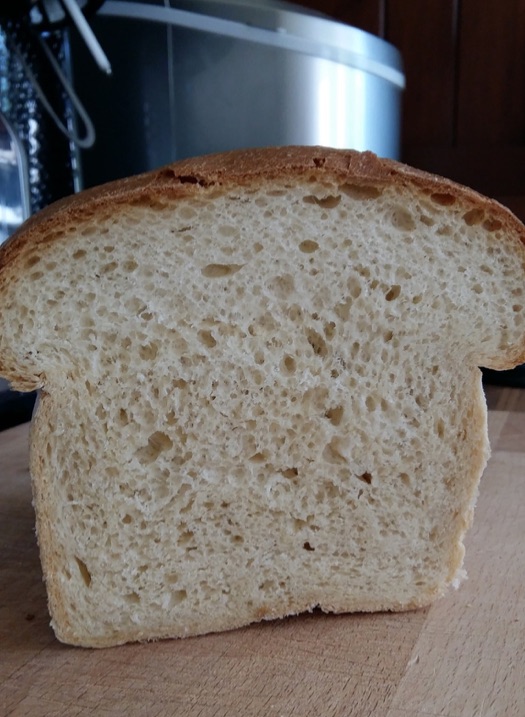
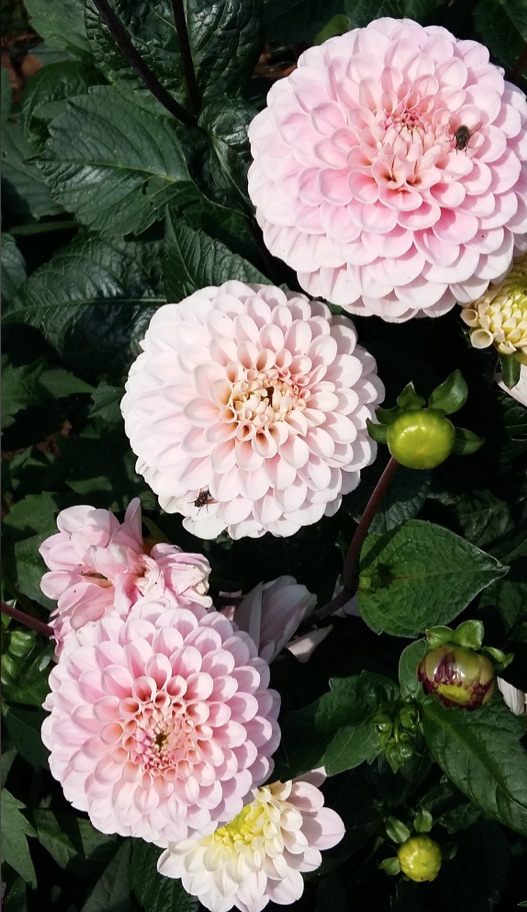
Instead, I’ve been on a mission to bake the perfect loaf of bread, grow the juiciest fruit and vegetables and keep my dahlias pristinely dead-headed and voluptuous. I’ve needed physical occupation. Even though my CRPS (Complex Regional Pain Syndrome) lays me low some days I’ve wanted to be doing something as long as it didn’t involve too much thinking. CRPS affects my immune system. Neurological pain wears you out and inflames your entire nervous system. I usually catch everything that’s doing the rounds so at the outset of this new virus I knew I’d have to be careful. I couldn’t settle though, to work at my next novel. I wasn’t able to sit still. Beating up a lump of dough and slicing green beans or hacking off wilted flower heads replaced my normal daily activities. I think it’s because I’ve been angry.

Lockdown loaf!

I don’t want to get too political. As a writer of fiction it isn’t appropriate and I wouldn’t want to alienate potential readers. My characters can have strongly-held views: Celia Micklefield, the author very rarely comments but as myself, Celia Smith, I can’t help wondering what happened to common sense last winter. Viruses don’t travel by themselves: they need a host. People carry them. So why didn’t we stop people travelling way back in February to give us more time to prepare for the inevitable? We were completely without the means or even a decent plan to cope with such an emergency even though a 2016 exercise had pointed out the risks and pitfalls. So, we fell into the pit and panicked.

I began ‘shielding’ long before the instruction. Similarly, the local care home went into lockdown and banned visiting. They already had their own stock of PPE. They refused to take in anyone from hospital even though they’d been instructed to do so. Their staff don’t use public transport because there isn’t any to reach many of our villages. We’ve been lucky being quite isolated here in Norfolk. We recorded a relatively low number of casualties in the population and in care homes but we expect the recent influx of holiday makers will change all that.

It seems the current pandemic has brought out the best and worst of humanity. Some thought their holiday was more important than the risk of spreading disease. Many chose to ignore guidelines and did as they pleased. Yet there have been stories of amazing selflessness and goodwill. People were more patient in the supermarket, even in the car park. Our two local pubs organised food parcel deliveries for folk who had to stay at home. Eventually my partner and I were allowed to visit his mother at the care home where we sat, appropriately distanced and wearing masks in the garden marquee. We worry what will happen when the money from the sale of her house runs out. It still winds me up that single people (her husband died two years ago) diagnosed with any form of dementia have to sell their home to pay for their care. Imagine if cancer patients were treated the same -or any other chronic condition? Surely there’d be a revolution.

Maybe that’s what we need: a revolution. Not in the violent battle sense but in our values and attitudes. I’m reminded of what the anthropologist, Margaret Mead said about the earliest signs of civilisation in ancient cultures. Her students expected her to name things like cooking pots, fishing hooks and simple tools. Instead she explained how skeletal evidence of a broken femur which had then healed was the first sign of civilisation. Animals who break a leg do not survive long enough in the wild for the bone to heal. They can’t run from danger or hunt for food and drink. A healed human femur shows that somebody else stayed with the person who was in difficulty, helped them to safety and tended them until they were well again. Have some of us forgotten that it’s in our genes to be compassionate and offer kindness to others?

I grieve for society. In a speech in 1977 U.S. Vice President Hubert Humphrey said the following:

“The moral test of government is how that government treats those who are in the dawn of life, the children; those who are in the twilight of life, the elderly; those who are in the shadows of life; the sick, the needy and the handicapped.”

I believe this year has shown us just how broken we are. We cannot continue to build our world systems of government based on a need for continuing economic growth that mostly benefits those already rich. How can we keep on building luxury apartments when there are so many without any home at all? Why are we still buying products wrapped in plastic? Why do so many people always want the latest upgrade of everything? I haven’t even mentioned climate change. That’s an even bigger catastrophe waiting to happen.

Sociologists say it takes 50 years to change people’s attitudes. If that’s the case I won’t be alive to see the changes I’d wish for but maybe I’ve witnessed the beginning of it. Hooray for the young people who successfully forced the U-turn on the ridiculous algorithm designed to give students results for an exam they didn’t have the opportunity to sit. Three cheers for the shoppers in my local supermarket who refuse to use the self-scan machines because somebody lost the chance of a job at an extra cash out. Good for you if you didn’t buy any clothes you didn’t really need this year.

See? I told you I was angry. People I thought I knew well have shocked me with their selfishness. People in the public eye have stunned me with their incompetence. There now, I’ve got it off my chest. Maybe I can get back to novel writing soon. In the meantime I must concentrate on the positives of my personal Covid year: I bake loaves of bread I can be proud of and my dahlias are show-stoppers.

Author biography

I first began writing in earnest after I retired from teaching and went to live in the south of France. I sold short stories to a UK women’s magazine and was offered a contract by the first literary agent who read samples of Trobairitz the Storyteller, my second novel. Unfortunately it didn’t work out. I was so disappointed I decided to continue self-publishing as I had with my first novel, Patterns of Our Lives. I suppose you could classify my work as Women’s Fiction but they’re all different sub genres: a saga set partly during WW2, literary fiction, a psychological mystery, dark humour. I love reading a variety of genres and I think I’d be bored if I had to write the same kind of book every time.

When I started out I knew nothing about book bloggers, blog tours and the like and just kept writing not really going about marketing my work in any sort of sensible way at all and missing out on building important relationships. A series of difficult circumstances brought me back to the UK to live with friends where I wrote my only non fiction book, People Who Hurt, abusers and codependents looking for answers, a book to help others understand the nature of toxic relationships.

Now I live a quiet life in Norfolk near the east coast of England and I’m content looking after my vegetable garden and writing, albeit slowly. I have a neurological condition called CRPS (Complex Regional Pain Syndrome) which developed while I was living in France after I was hit and knocked down by a careless driver. My bones mended but my central nervous system didn’t. Pain is my constant companion but I’ve learned how to deal with it. On low pain days I write as much as I can.

I have a website http://www.celiamicklefield.com and a Facebook author page in my author name. You’re very welcome to visit and maybe leave a comment.

My three novels and two collections of short stories are available on all Amazon platforms. I hope to make a better job of marketing my fourth novel, A Measured Man when it’s ready.

Link to Amazon UK page

Thank you so much to Celia for taking the time to write a guest post for this feature! I really appreciate it. It’s proving to be incredibly interesting to find out how other writers felt during the lockdown about society in general and where we go from here. If you would like to write a fiction or non-fiction piece for the blog on the theme Dreaming of Another World then do get in touch!