The Hitchhiker

A creepy short story

Image by Nils from Pixabay

He walked alone on the road ahead.

Arthur wondered if they all spotted the man at the same time, because it seemed that way. His mother, sitting forward in the passenger seat beside his father, lifting a finger, pointing. His father’s head jutting forward and a single surprised word falling from his lips.

‘Oh.’

And Arthur, his eyes widening as the figure came into sight, emerging out of the darkness ahead. He sat forward too, his fingers curling around the edge of the seat, his breath shortening in his throat.

The figure was tall, broad in the shoulders and wore a long dark coat and a wide brimmed hat. It made a strange sight, thought Arthur, as the car drew closer. Almost looked like a walking scarecrow. The man was using a stick to walk, leaning on it heavily as he trudged along.

‘We should stop,’ his mother said sweetly, as the rain hammered against the windscreen. ‘It’s so awful out there, Frank.’

Arthur saw his father nod, agreeing that it was.

‘No!’ he said sharply from the back seat. ‘We shouldn’t stop!’

His mother looked back at him with a frown and pouting lips. ‘Darling, it’s all right. He probably just needs a lift into town. We’re passing through on the way home. We can just drop him off.’

Arthur felt his teeth clench together. He shook his head at her but no words would come out. Instead all he could do was stare ahead at the figure on the road, as his father slowed the car. His heart throbbed weakly under his winter clothes and his eyes strained in their sockets as his mouth gaped wordlessly. Arthur had no way to articulate the raw fear he felt coursing through his small body.

‘It’s the right thing to do on a night like this,’ his father agreed, as the car caught up with the figure in the road. He rolled his window down as they drew parallel. ‘Do you need a lift, young fella?’

The man stopped walking and looked back at them in surprise. Arthur’s father stopped the car and put it into neutral. The stranger leaned down to see them all better. His eye caught Arthur’s and a smile crept slowly across his narrow face. It was too dark to see well, but Arthur saw sharp cheekbones and large teeth revealed behind thin lips when the man smiled.

‘That would be amazing, how kind of you!’ the stranger enthused. ‘I missed the bus, didn’t I? Was meant to be up in the mountains by evening, but that’s not going to happen now.’

‘What’s in the mountains?’ Arthur’s mother asked, her tone friendly while Arthur’s guts churned and writhed inside him.

‘My sister and her family,’ the man replied. ‘I’m spending a few weeks with them.’

‘Come on, get in,’ Arthur’s father prompted. ‘It’s getting worse out there. There’s meant to be a storm coming, you know.’ He nodded to the trees at the side of the road whipping wildly back and forth as a cold wind screamed through them.

‘Thank you!’ The stranger opened the back door and slid in beside Arthur. Rainwater flew as he took off his hat. ‘You okay, son?’ he asked him, patting his leg in a friendly gesture. ‘Look like you’ve seen a ghost.’

‘Oh, he’s just shy!’ Arthur’s mother laughed. ‘That’s Arthur, I’m Clara and my husband is Frank. It’s a pleasure to meet you.’

‘You too,’ said the man, as the car started off again. ‘I’ve been hitchhiking across the country and rarely have I met a family as friendly and kind as yours.’

Clara beamed at him. ‘That’s just lovely. Thank you, sir.’

‘We only live on the other side of town,’ Frank said then. ‘We can drop you off there if you like?’

‘But everything will be closed,’ said Clara. ‘What with the storm coming in.’

They drove on in silence for a while. Arthur sat rigidly, his eyes fixed on the silent black road. He felt the man relax beside him, leaning back slightly, his legs spread, his hands loose in his lap and the walking stick between them. Outside, the rain grew harder and fiercer and strong winds began to rock the car.

‘This is nasty,’ grumbled Frank, slowing down. ‘But we should make it, all right.’

‘Perhaps you could stay at ours tonight?’ Clara said then, turning to smile at the hitchhiker.

‘He’s a stranger!’ Arthur burst out, his gaze flicking between his mother and the man beside him. He side-eyed the man with a frown, but the man just shrugged.

His mother’s mouth fell open. ‘Arthur, don’t be so rude! What has got into you?’

The man waved a hand. ‘No, no, he’s right. I am a stranger and I couldn’t possibly put you to any more trouble. Town will be fine. I’m sure I’ll find somewhere open.’

‘Have you called your sister?’ Arthur asked him then, his voice thin and strangled with fear. ‘Have you got a phone?’

The man slid his hand into the pocket of his thick dark coat and brought out a slim mobile phone. ‘It’s dead, I’m afraid. Battery died hours back. It’s fine, honestly. I’ll be there by morning, no doubt.’

Arthur nodded silently. The car rolled on. The rain and wind intensified and as they drove through town, it became harder and harder to see.

‘Perhaps we should pull over, Frank,’ said Clara, looking nervously ahead.

‘Everything’s closed, as expected,’ Frank replied, grimacing back at her. He looked in the wing-mirror to catch the stranger’s eye. ‘Sir, we can’t leave you here in this weather. Come back to ours until the worst of it passes. We’ll light a fire, cook food, get warm. Then I can drive you up to the mountains in the morning if you like?’

Arthur wanted to look at the stranger. He wanted to shake his head at his parents and beg them, no, no, no, please no, but he couldn’t move. His lips quivered around his gritted teeth and his fingers dug into the seat so tightly his knuckles ached. It seemed like he had forgotten how to breathe.

The strange laughed softly. ‘I don’t think I can turn down such a kind offer. Thank you so much. That would be amazing.’

With the decision made, Arthur’s father drove on, following the black road until the town was far behind them. The stranger started to talk, engaging his parents in a conversation that ranged from bad weather, to unreliable public services, to how annoying his sister could be sometimes. The three adults laughed and swapped jokes and by the time they turned off the main road and rumbled onto the bumpy track that led to home, they seemed to have relaxed with each other.

Arthur’s bad feeling, meanwhile, bloomed in his chest until he felt like he had been drenched in ice.

The car stopped outside the house. ‘It’s a beauty!’ the stranger declared, looking up at the three storey Victorian building.

‘It’s a work in progress!’ Clara replied, unclipping her seat-belt. ‘We’re gradually updating and modernising it. It’s been in Frank’s family for generations, you know!’

‘I can’t wait to see inside,’ replied the stranger.

One by one they hopped out of the car and dashed through the driving rain into the house. Frank quickly set to work lighting a fire in the living-room while Clara hoisted a large iron kettle onto the stove to boil water for hot drinks.

‘I’ll start a soup,’ she called from the kitchen as the two men and Arthur knelt in front of the fledgling fire. ‘Warm us all up!’

‘This is wonderful,’ the stranger smiled, flames flickering in his eyes as he turned his face to Arthur and winked.

Arthur stared back at him. It was too late now and he knew it. A cold feeling spread through him and the pit of his stomach filled with dread but there was nothing he could do. Not now. Something awful was about to happen to them all and there was nothing he could do to stop it.

Arthur moved backwards when his father picked up the fire poker and brought it down onto the back of the hitchhiker’s head. The stranger never saw it coming, which Arthur supposed was a blessing. Sometimes they knew. Sometimes they changed their minds in the car, panicked or got a bad feeling but even then, there was no escape. Sometimes they turned their head at the last second and saw the poker coming. Sometimes they fought and bit and scratched and screamed and thrashed on the floor, but it always ended the same.

Later that night, Arthur sat in front of the fire while his parents watched TV from the sofa behind him. Their bellies were full. Their teeth stained red. Leg and arm bones joined the logs glowing on the fire and Arthur’s small belly was full of vegetables and flesh.

The Shallows – a creepy short story

This is a story originally posted in my Medium publication, The Wild Writers Club!

The Shallows

July tipped into August.

It did so lazily, like the slow sticky drips from a forgotten ice cream.

The hot weather had dulled and bloated us. Like fat lazy flies we could not move. And the days all had that endless quality, like every hour was twice the length and we had stopped being ruled by clocks, and time.

We existed in our own timeless purposeless bubble. The sun had moved and taken our shade from it. The trampoline where we had lounged all afternoon was now a sun trap.

It was the heat and the boredom that drove us to the river. Not the big river, where there would be chaos and kayaks and fishermen and teenagers dunking each other under the water. We headed to the little river, to the shallows.

We strolled down the hot lane, shaded intermittently by oaks and limes and sycamores. They provided blessed shadows as our bare feet burned on the road.

No cars. No noise save the drone of a gigantic dragonfly.

We dragged sticks behind us and thought about how hot it was. It was always too hot to speak, so Pippa and I had almost given it up. Sometimes all we could think to say was how hot it was. Sometimes summer seemed to go on forever and you started to forget how to live in the normal world.

We took the left at Twisty Corners and it was still too hot to talk, despite the darkness that suddenly enveloped us from the trees above and around. They created a tunnel and we ambled down it sluggishly. Pippa was a year younger than me but we were both on the brink of something else.

‘You’re like a pair of foals,’ our dad always said, ‘all legs.’

We were caught in that no man’s land between childhood and adolescence. Everything the adults said and did suddenly annoyed us, yet we still tucked a soft toy under our arms when we went to bed at night.

We traipsed over the stone bridge, pausing lethargically to throw a stick in and watch it float out on the other side. There was nothing to say. Nothing to think. We plodded down the muddy bank, wincing as the overgrown nettles swiped our skin. And there it was. The shallows.

The water flowed slowly from under the bridge, then veered left channeling through a narrow stretch, the banks too high to climb. That way lay madness, I thought, but didn’t know why.

In front of us a great expanse of shining water undulated with the gentle current and we stood and marveled at it, at the way the light came through the canopy of hazel trees and lit up the shallows like a sprinkling of fairy lights.

The shallows had its own light; a unique blend of red and gold as the dappled sunlight broke through the leaves and filtered through water to the red earth below. We stood side by side, our toes curling into the mud, staring at it as if in a trance. Time slowed and we breathed in unison. I was about to tell Pippa I was bored when she gripped my arm and pointed.

‘What’s that under the tree?’

I looked to the right where a fallen tree stretched from one bank to the other. It came down a few years back and was slowly rotting away as the river washed over it in the winter and under it in the summer. Sometimes we’d sit there with our feet in the water, watching the tiny fish swim by as the electric blue damselflies flitted under the bridge.

view of a river shaded by trees with a fallen log across it and a stone bridge just visible beyond
my own photo

Pippa’s grip tightened. I pulled away and started to wade through the water. There was something lodged under the tree. It looked like a pile of clothes, inflated by the water; dark blue material ballooning against the gentle tide.

‘Someone’s thrown rubbish in again,’ I muttered, reaching the fallen tree.

It was then that I got the prickling sensation on the back of my neck. I put a hand there, self-soothing, but the feeling persisted until I lifted my gaze and saw the man standing on the bridge. I looked back at Pippa and shrugged. She splashed towards me and we stood side by side again, a united force.

I still held a stick and poked at the bundle of clothes with it. I felt self-conscious doing it, as the man on the bridge looked on, but when I gazed up again to see if he was still watching us, he wasn’t there. I nudged my sister.

‘Where’d he go?’

She shrugged and used her own stick to help me with the bundle of clothes. We used the sticks like hooks, trying to free the bundle which had become wedged under the log. We did it lazily, carelessly, poking and jabbing at this thing that had jarred our peaceful vision of the shallows.

That was when we realised it was not just a bundle of clothes.

It suddenly sprung free and floated by. Pippa and I turned slowly to watch it go. We were weary from the heat, as if all our senses and brain functions had been slowed down by sticky sweat. We saw the blue material followed by dark legs. We saw bare feet. We didn’t see a head.

We stood in the shallows, frozen. Our arms hung by our sides, our knuckles skimming the cold water, our fingers still curled loosely around our poking sticks. We didn’t say a word as we watched it go.

It passed the deep spot, the bit that always fooled our terrier Binx when he was alive. He’d paddle out brashly before suddenly finding no land beneath his paws as it dipped away brutally, trying to drown him. He’d sputter and panic and swim back and then he’d make the same mistake again next time.

It moved faster there, the current stronger, but ultimately driving it to the left, towards the narrow channel that we knew eventually met with the huge monster of the river Stour. It was sinking too; the water and the debris were filling the materials, dragging it down.

Still, we watched, Pippa and I, not saying a word, barely breathing as if we were not really there, and I could almost believe that to be true if it weren’t for the tiny sticklebacks circling my toes. I could almost believe if I closed my eyes and then opened them again slowly, I would find myself spreadeagled on my bed with the sun slanting down on me, or face down on the trampoline, exhausted by the endless heat.

The body moved on with some speed, spinning just once as it knocked against the end of another fallen tree. That was the moment I told myself I should have moved. I should have splashed my way over to the other tree, climbed on and made my way to the end. I could have hooked it again then. I could have snagged it and stopped it and Pippa could have called the police.

But it was like I knew I never would.

None of it felt real.

It looked less like a body now, just some blue material still visible as the current drove it towards the narrow stretch. I knew if it went down there we would not be able to follow. The water was unknowable, dark depths promising no foot holds or forgiveness. The banks were steep and slippy and we could never see where it ended. There was a darkness to that place, where the shallows became the deep. We never ventured there.

I also knew if it went down there it would more than likely sink or get snagged on something again, and I knew that no one would ever find it. No one would ever know. And there was something dark and delicious about that knowing.

I thought Pippa might say something. I thought she might cry out, pull my hand or say something. But she didn’t. When I turned my head to look at her, her expression was slack and dull. There was no wonder in her eyes, only a blunted acceptance. Her forehead shone with sweat and I watched a bead of moisture form on her top lip.

When I looked back for the body, it had gone.

I heard a noise escape Pippa. A long, low exhalation of breath.

Then another noise behind us.

I looked over my shoulder and the man was there again. He was wearing a blue shirt and dark trousers. He was staring right at us, some kind of intent in his expression that told me he was about to open his mouth and speak to us, and for some inexplicable reason, this possibility filled me with dread.

I gripped my sister’s hand and yanked her until she moved. Together we splashed back to the flat sandy bank, still holding our sticks. We didn’t look at the man as we crept away, skirting the large clutch of nettles that surrounded the ash tree. On the other side, I peeked out like a rabbit checking the land from its burrow. The bridge was clear. The man was gone.

We started running, our bare wet feet slapping across the old stony bridge where the man had stood just moments before.

Still, we didn’t speak. To speak would be to give it a reality I knew instinctively to avoid. As I rushed us home, as Pippa and I ran hand in hand up the sun-baked lane, the sun punishing us every time there was a gap in the shade from the oaks, I felt a roaring dread that Pippa would open her mouth and speak. I thought perhaps I would punch her in the mouth if she tried to.

By the time we reached home and shoved open the wooden gate, we were drenched in sweat and feeling giddy. We closed it behind us and felt the dread drop away from us. We threw down our sticks and didn’t look at each other as we made our way around to the back garden.

The trampoline was still in full sun so we plodded over to the far right corner of the garden without speaking. There was always this unsaid thing between me and Pippa. We could go hours without talking and still be completely in tune with each other. She was the one who dragged a blanket from the washing line, bone dry and starched stiff from the sun. She threw it on the grass under the sycamore tree and we dropped down on our bellies, our feet kicking at the sky as we buried our faces in our sticky arms.

‘Everything all right?’ we heard a voice call from the house.

We raised our heads long enough to see that it was our father, home early from work, his glasses pushed up on his head as he squinted across the garden at us.

I met Pippa’s eye and knew just what she was thinking. It was so tempting not to answer him. It would be so easy just to smirk at each other, lie back down and ignore him. And we knew he would just accept it. Just shrug his shoulders as if it must be his own fault. Or worse, he would wander over, hands in pockets, hopeful expression on his face.

I decided to end it before it began. I didn’t know why he seemed scared of us lately but it was tiring to say the least. I didn’t want him to amble over to us and try to evoke conversation. It was always too hot and there was nothing to say.

I waved at him. ‘Fine, Dad! We’re just tired!’

‘Been out all day gallivanting, eh?’ he yelled back.

Pippa shot me a scowl. ‘Gallivanting?’ she hissed under her breath.

‘Yeah, something like that!’

Satisfied, he waved again then ducked back inside the house. We both knew he would reappear at some point, perhaps carrying cold drinks on a tray in an attempt to bribe us into words.

We dropped our heads, closed our eyes and breathed. I felt the relentless sun beating down on everything and knew it was too hot to talk of it, too hot to even think of it.

And more than anything, it was simply too late.

Dirty Little Feet: What Followed Us Back From The Holloway (a short story)

This short story was recently posted on Medium where it sadly didn’t get a lot of reads. I thought it was a better story than a similar one I posted called Into The Green. That one got boosted and has earned me nearly £30, but I prefer this one. See what you think!

Dirty Little Feet

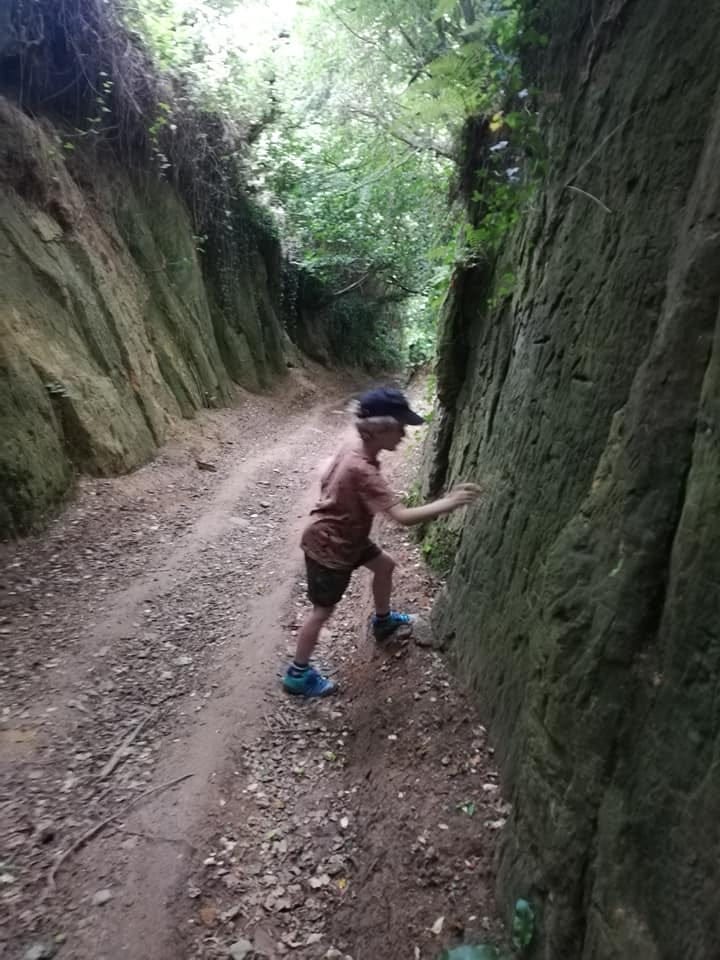
It was cool and dark in the Holloway – our impatient bare feet slipped effortlessly into the tracks laid down by our ancestors. Their faces were etched into the earth and the clay – their long-dead eyes followed our movements from the walls as we darted along the ancient track.

Our feet thundered upon theirs, our laughter mingled with echoes of their own as we sprang down the tunnel, splashing through cool streams, our toes curling into claggy mud. The walls of the Holloway sheltered us as we ran. This space was our fortress, our underground lair, our tunnel system, our playground. It was our link to the past.

Above us the trees linked hands; their vibrant green canopy a roof above our heads, bursts of late evening sunlight fragmented by trembling leaves. All around us, the stillness of time. We laughed and played as if time did not exist for us and down there, it didn’t. We wouldn’t grow old, we wouldn’t age or decay or die. Much like everything else that lived in the Holloway, we were eternal.

Photo is mine

But as dusk fell, we knew we were breaking a rule passed down by our parents and grandparents: don’t linger in the Holloway after sundown or you risk inviting one of the old back home with you.

To us, rules were made to be broken and returning home after sundown offered a delicious risk we could not resist. That evening, my siblings — twins, George and Arthur, Grace, the oldest and I, the youngest — stayed longer than we should.

Still, it was not quite dark by the time the old warnings infiltrated our consciences and prickled the hairs on the back of our necks. We scuttled out, hand in hand, giggling as our muddy feet raced back up the centuries old track, reaching for gnarled roots and boughs to lead us home and leaving the faces of our ancestors on the walls behind us.

Photo is mine

We tore across the sheep field — their eyes glittering back at us in the semi-darkness, and we returned home, leaving tell-tale muddy footprints across the kitchen tiles.

Grace washed away the evidence of our childish rebellion and come morning, we all thought our indiscretion had gone unnoticed by Mother.

Not so.

She was raging as she swept her old mop across the tiles where small brown footprints could be seen trailing in from the back door and stopping in the middle of the kitchen. We denied they were ours (ours had been a criss-cross pattern made by four sets of feet…) but it did no good. We were banned from the Holloway and given arduous chores to complete to make it up to her.

Later that day we heard her scream in rage once again; the noise drawing us out of our sulking to witness yet another trail of muddied prints on her floor. Who had defied her? It was my George who pointed out that the prints were far smaller than ours. He made me, the youngest, stand next to them to prove his point. My feet were small but not that small.

Mother’s face paled.

We watched as she sank into the nearest chair and stared dully at nothing. Then;

‘You stupid, stupid children. Why didn’t you listen to us? Why can’t you ever just listen?’

We swapped guilty glances, then released a collective gasp when a childish giggle echoed gleefully around us. We all froze. I reached for Grace and gripped her hand in mine. Tears shone in our mother’s eyes.

We all heard the sudden drumming — at first like a steady heartbeat, then louder, boom, boom, boom, until it faded out into something that was closer to a soft pattering.

Footsteps.

‘You’ll never get rid of it. We’ll have to move!’ Our mother wept again, dropping her head into her hands.

We were silent as we watched her get up and solemnly slosh the mop over the footprints. Still, we didn’t fully realise what we had done, even then. The dirty little footprints came back again and again. As fast as Mother washed them away, they would reappear. Sometimes they came in from the door and just stopped. Sometimes they made circles, as if the culprit was spinning around and around. Sometimes they ran up the walls and across the kitchen surfaces.

Next came the smell.

It started in the kitchen — a musty, earthy, swampy sort of smell. Mother was in despair. She claimed the house would never be clean again. She punished us with more chores and often we would hear her on the phone begging to be rehoused. We would fall into bed exhausted every night.

And that’s when the drumming would begin.

Footsteps at first, light and gleeful, teasing, dancing. Then they would build up. Harder, faster, angrier. Tearing up and down the stairs while we huddled in our beds, our breath frozen in our chests. Our eyes met in the darkness. We had done this. This was all our fault.

The dirty little feet stomped and thumped. Up and down the stairs, across the landing, into our rooms and around our beds while we quivered under the covers, clutching hands. Cold laughter echoed through the house as it kept us awake night after night.

Then one night, I woke up, muddled and sweating from a dream where the thing that followed us from the Holloway was smiling at me from the shadows. It had black holes for eyes and a wide sneering mouth and its skin was as white as bone.

I heard something new.

A frantic pounding. The panicked drumming of tiny angry heels. I ran to my window and there it was — I saw it for the first time. I saw its feet. Small, dirty, they beat as if in a great tantrum against my window pane from the outside. Had it somehow found itself shut out again? There was a great sadness emanating from it, a lonely desperation in its incessant thudding.

‘What do you want?’ I asked it, but the feet continued to kick. I pressed my hands to the glass. I wanted to see it properly. I wanted to see what had followed us home. I wanted to know why. It refused to show its face. Only two dirty little feet were visible and when I finally flung open the window, they were gone too.

In the morning, my mother looked disheveled as she started packing up our things. We had led a simple life there in the little stone cottage and it only took a few hours to pack up our lives and move out. Us children were bereft to be leaving the place we loved.

We trooped down to the Holloway to say our goodbyes but we did not go in. Instead, we held hands at the entrance, our heads lowered in sorrow. We stared at the ancient path, created by the constant tread of endless feet and rolling cartwheels, pushed into the earth deeper and deeper over centuries of old. Our own feet had pressed into it. Our own blood had flowed into the earth and the mud. Our laughter had echoed down the track and up into the giant trees and now we had to say goodbye.

The new home was nice. Small and neat, on the outskirts of the nearest town. Our walk to school was quicker, at least. We were happy there for a year until one morning we awoke to the sound of our mother screaming.

The screams were followed by wails, which soon dissolved into hopeless sobs.

When we ran down to comfort her, we all stopped just outside the kitchen, too afraid to step in.

The kitchen floor was covered in the gleeful dancing footprints of two dirty little feet.

Thank you for reading! I’ve wanted to write a story set in a Holloway since I visited the fascinating Hell Lane in Symondsbury, Dorset, UK. West Dorset is predominantly sandstone so has several Holloways. The name comes from the anglo-saxon word ‘sunken road’ and they are believed to be at least 300 years old with some traced back to the iron age. At one point they would have been trails to drive cattle along, popular highways if you like, to move people, goods and livestock from one place to another. They would have been ground level tracks back then but eventually centuries of human and animal feet and the wheels of carts would have eroded the soft earth and widened it, with help from the water running off the surrounding land. These days many Holloways are 20 or 30 feet deep. They are mysterious and magical places, eerily silent and still and you can’t help feel a real connection to the past as you follow the ancient paths so many centuries of feet have trodden.

August Writing Challenge: Face In The Crowd

At the end of July I asked my Facebook page followers to give me some more random writing prompts to respond to and I had a great selection to choose from. I ended up blending two together for this weird little story. Author Paula Harmon suggested a story set within a crowd and author Sim Sansford posted a creepy picture of a faceless woman with faceless masks hanging on the wall behind her. I also played around with second person POV which was great fun! Please note, this is only a second draft and I will definitely be rewriting this story at some point, maybe even making it a bit longer.

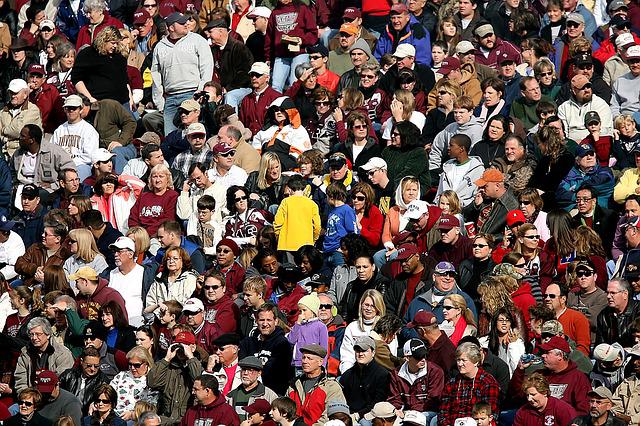
Image by Keith Johnston from Pixabay

Face In The Crowd

You won’t see her coming.

Except maybe out of the corner of your eye…

And by then it will be too late anyway.

She seems to know who she wants; you see. She is a predator, stalking you, and you are the prey. Nothing more, nothing less.

Let me take you back to the last crowd you found yourself in. Heart already pounding faster than it should, prickles of cold sweat erupting on the back of your neck, while something tight and spiky curls into a hard ball inside your guts. You’ve felt it before. Bad things happen in crowded places. A human is never so alone as when lost in a crowd. You remember them all. Different types of crowds, none of them safe.

School assembly, remember that? Trapped on a hard varnished floor with your knees tucked up under your nose so that you don’t touch the people on either side of you. Not your friends. Never your friends. To the left, to the right, in front of you and close behind, surrounded, fenced in, unable to breathe. Always too hot. No way out. Panic beating its small wings inside your chest as your outward face insists that nothing is wrong here.

Supermarket queues… Not as hemmed in, but still, the heads bob too close before you and one glance over your shoulder reveals a horrifying snake of people behind you. You swallow fear and bite back the urge to run, because how weird would that be? Suddenly barging through, shoulders crashing into backs, pushing, shoving, running, running. You’d never be able to go back if you did that.

Christmas crowds: the hopeless horror of a shop wedged tight with angry, entitled bodies. You give up and go home and shop online. You don’t like crowds. Never have. Festival crowds. You gave those a go. Outside, fresh air, music thumping through your veins, alcohol and friendship spurring you on. You thought, I can do this! But then you made the mistake of looking behind you, seeing the impossible volume of human life, jumping, shoving, screaming, living, too fast, too hard, too close. You stumbled when they pushed and the pushing didn’t stop. You tried to pick yourself back up, breathless with fear, but they kept coming, trampling, not seeing you, because you had ceased to exist.

Remember, that was the first time you saw her?

Weaving her way through the herd with feline eyes, swivelling to take in every view; hunting someone down. She was tall, you remember that. Towering above the revellers yet hunched over to disguise it. Her neck swanlike, or snakelike. A small mouth, or no mouth. She pushed through them, not touching anyone, moving like oil, her pupils gliding eerily from side to side, until she reached out with a long hand, longer fingers, nails curled over and mottled grey. You saw her touch someone but you didn’t see what happened next because the crowd surged and you almost died.

That’s why I don’t like crowds, you tell anyone that will listen, I am not antisocial, just emotionally scarred from nearly dying. Broken ribs are nothing to laugh about you remind yourself when that chilly fear settles across your shoulders, telling you to turn around and go home.

Today the crowd bustle before you. They have taken over the entire square. It’s market day; you should have known. You shake your head at your own stupidity and lack of foresight. But you did the best you could – remember that – moving to a quiet seaside town, dead in the winter, smells faintly of salt and vinegar – humming with tourists in the summer but that’s when you stay home or go out on your boat. No risk of a crowd out on the water.

Today, market day, the crowd moves like a messy unified thing, a squirming mass of warm bodies and haircuts, small lives, red faces, sweat stains. You hate it. But you need to go to the post office, right on the other side. You sigh heavily, dramatically, your annoyance with these people’s existence out of proportion to their right to exist just like you. You’d fire a rocket launcher at them if you could. You still remember being trod into the mud. You shudder.

But you move. You have to. You can do this. They’re just people.

You step forward and before you are even ready, before you have taken the obligatory deep breath and shaken out your limbs, pulled your bag closer across your chest, the crowd sweep you up and take you.

This is what you resent.

This makes you wish you had a grenade in your coat pocket.

The inescapable claustrophobic nature of the crowd. Of people.

Just people, you tell yourself, but you know that’s not true. They’re not just people, not just this or that. Never underestimate them. Never expect the best. Instead, always prepare for the worst. For sickening body odour and hairstyles freeze dried into place, for sharp elbows and fat shoulders. For feet that trample your own. For bags that whack you out of your space. For bodies, thick and long and selfish and demanding, all moving, and moving you whether you want to be moved or not.

You grit your teeth put your head down and push through.

And then you see her.

Like you did when you were down in the mud.

Tall, hunched, otherworldly in her movements, she glides along, coming for something, someone. Lank pale hair hangs over her shoulders. She has her back to you, every bump in her elongated spine visible through the thin colourless dress she wears. Her arms are at her sides, the elbows jagged, the forearms raised and at the end of the wrists her long thin hands hang, fingers dripping, nails curled.

Your breath catches in your throat and you freeze, unable to breathe or move. Your scalp seems to contract and tighten under your hair and your entire body floods with ice cold fear. It feels like the world has stopped but it is just you, frozen while the crowd moves and circles around you. Unbelievably, they seem oblivious to the strange, hunched form who hunts among them. She doesn’t touch them as she glides between warm bodies and not one of them looks at her or senses her dark presence.

You want to scream out, do something. You open your mouth but nothing emerges except a cold puff of air. You stare in agony as the colours of ordinary life swirl around her and then slowly, you see her reaching out. For she has chosen someone, a woman. A small petite woman with bright red hair wearing a spotty blue and white raincoat.

The hunched woman reaches for her, claw like hand sinking into unwilling flesh and there is a small, awful moment when the woman with the red hair stops and turns and stares in haunting clarity up at the collector. But it is fleeting, a microsecond of agonizing helpless horror and then it is over.

The red-haired woman walks away unscathed, slouching through the crowd with her bag on her shoulder, none the worse. Until she passes you and you see that she no longer has a face.

But no, maybe you imagined it. You are seeing things. Panicking. It’s all this stupid claustrophobic fear that you have no control over. You find yourself moving, pushing through, determined to make it to the post office, determined to brush this off, brush it away.

But as you move through the crowd, you see her again. She is still hunting. Still collecting faces. She towers over the people, glassy eyes swivelling in hollow sockets until another catches her eye. Not you, not you, no, thank God. She does not look at you because if she did you know you would be helpless, unable to run.

This time she makes her way over to a young man chatting on his mobile phone. He is powering through the crowd in a hooded jacket and black jeans. He is smiling, laughing as he focuses only on his conversation. He is easy prey, too distracted to feel her sliding towards him. He freezes when she touches him and you see the same dull dawning horror explode behind his eyes before it’s over. His face is gone and he moves on, still talking.

You make it to the post office and shove your way, sweating, through the doors. You can’t get out of that crowd quick enough. You cower at the window, behind shelves of envelopes and pens. You peer out, determined to hide until the whole thing has dispersed. You won’t go out there again, not with that many people, not with her out there stealing faces.

‘Are you all right?’ a worried voice asks from your shoulder.

You glance at the little man who wears a tight expression on his weathered face. ‘Yes,’ you swallow hard and reply shakily. ‘I’m sorry but I’m not good with crowds. Do you mind if I wait in here for a bit until I feel a little better?’

He nods and smiles in sympathy and leaves you alone.

You peer back out at the ever moving, swirling, humming crowd of life. The shoulders and heads, the hats and coats, the faces and the faceless.

I will be needing more writing prompts for my September challenge so feel free to post any here!