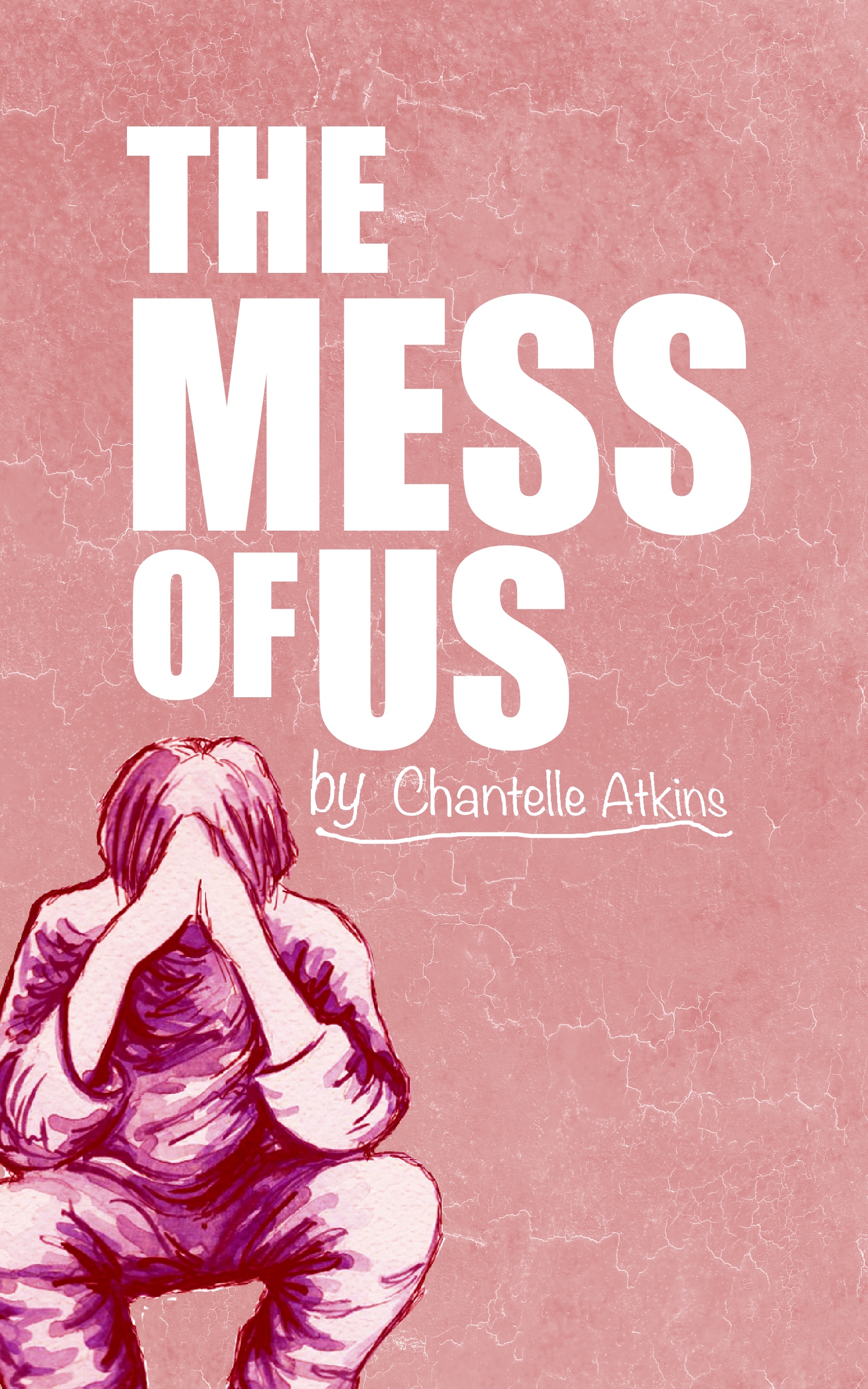
The Mess Of Us is Available to Preorder!

The sequel to my debut novel, The Mess Of Me, is coming soon.

Exciting news! The Mess Of Us is nearly here! Over ten years have passed since I published my debut YA novel, The Mess Of Me, but I’m delighted to share that the sequel can now be preordered on Amazon! I only have the ebook set up at the moment and it is currently discounted at just 99p. I will have the paperback version set up soon, followed by both ebook and paperback on multiple platforms.

Here is the blurb:

“Dear World, so, obviously we made a mess of it. Inevitably. Otherwise I wouldn’t be writing to you again, would I?”

What do you do when the man who beat your boyfriend into a coma is about to be released from prison? What do you do when that man is your boyfriend’s older brother who wants to make amends?

Now a couple, Lou and Joe are struggling to get over the traumatic events of two years ago. When Joe’s brother Leon is released from prison, they must decide if either of them are able to forgive and forget what he did.
Meanwhile, an unexpected pregnancy throws their lives into chaos and when tragedy reawakens Lou’s self-destructive tendencies, she faces losing everything they have built. Can she fight her body image demons once again? Can either of them trust Leon? As Joe and Lou try to decide whether bad people can truly change, they are about to have one mess of a summer.

This sequel has been a long time coming but as you know, I have been very busy writing and publishing other books within this universe, as well as The Day The Earth Turned series. November saw the release of At Night We Played In The Road, which is a spin-off from The Boy With The Thorn In His Side series, and The Mess Of Us, which also connects to these books, will be released on February 14th 2025.

There will then be one final book in this universe, The Dark finds You, which I hope to release in the summer of 2025. That book is a crossover book, taking characters from lots of the other books in order to tie up all their stories.

For example, at the end of The Mess Of Us you might wonder what happens next to Leon, whose redemption arc is a pivotal plot point of the book, and you will find out in The Dark Finds You. This final book will basically pick up where The Mess Of Us ends!

If you are new to my books and are interested in gritty, character led stories that share a universe, this is the suggested reading order of the books:

The Boy With The Thorn In His Side series
The Mess Of Me
Elliot Pie’s Guide To Human Nature
The Holds End trilogy
At Night We Played In The Road
The Mess Of Us
The Dark Finds You

It was a lot of fun being back with these characters again. The sequel had been building quietly in my head for a few years, and what concerned me most was Leon’s release from prison. How would Joe and Lou react to this? Would Leon want to apologise to Joe for what he did to him? And would Joe and Lou be able to forgive and forget what happened? I was curious about Leon as a character. In The Mess Of Me he is painted, quite rightly, as a total villain. However, towards the end of the book he commits a vile crime on the same day he saves someone’s life. I found that really interesting to explore and The Mess Of Us started to form in my head.

I hope you enjoy it and as always, thank you so much for following my journey!

Why Do So Many Authors Forget To Create Characters?

It genuinely puzzles me…

Image by JULIO VICENTE from Pixabay

I read a lot. A few books a week usually. I have a to-read-list in a notebook and I jot down the titles of anything I come across on social media or anything recommended to me that sounds like my kind of thing. I am a bit fussy – I’ll admit that – but there isn’t much I won’t read other than romance and erotica. I’m not mad keen on fantasy in its typical form but I will read anything paranormal, supernatural or magical.

I don’t consider myself a reading snob. I do have a few favourite authors of whom I will happily devour every new release they put out. I’m not majorly into the classics and I read graphic novels and comic books as well as traditional books.

But there is one thing that annoys me and frustrates me more than anything else and I just keep coming across it – more often than not in traditionally published books with amazing sales and thousands of reviews…

Authors who forget to create characters!

Now, bear with me. Obviously these authors don’t pen books with no characters, expecting the location and plot to carry themselves. But it does feel a bit like this:

Author checklist

location: researched, described beautifully – check

plot – ironed out, checked over, worked through, twists and turns, no plot holes – check

research into topic – yup, done – check

writing skills/talent – yep, can string a sentence together and construct a story – check

characters – oh, they’ll do. – check

NOOOOO!

They won’t do. ‘Any old character’ will not do. I’m genuinely getting sick of it so excuse me if this comes across as a bit of a rant. Before I talk about the lack of characterisation that has driven me crazy lately in numerous books I’ve read, (and I won’t be naming them, to be fair to the authors) let me first tell you about a book that has got its characters right.

I am currently reading Deadly Animals by Marie Tierney. It’s a crime thriller about a serial killer and its set in 1980s Birmingham, UK. It’s the author’s debut novel which I find incredibly exciting as I would happily read anything else she releases. I won’t go into the plot too much but essentially the main character is a 13 year-old girl called Ava, who has the unusual hobby of searching for and studying dead animals. It’s while doing this she comes across the body of the first victim, a teenage boy she knew. Ava is quite simply a memorable character. She is smart, wise beyond her years, fiercely loyal to her friends and her dysfunctional family, and she is constantly one step ahead of the police in solving the crimes. However, the other characters are also wonderfully drawn. Her best friend John has his own personality, life and background, as do the two detectives Delahaye and Lines. I would argue that Delahaye is another main character along with Ava, but Lines is just as well realised.

Let me put it simply. There are two detectives investigating and they have different personalities. You know, like real people do in real life. They look different but they also sound different. I can tell them apart and I don’t just mean by their different names. They have particular ways of saying things, little gestures or mannerisms that are mentioned here and there, they have different ways of responding to the brutal scenes they witness and so on. These characters will stay in my head for a long time and although the plot is brilliant and the writing gorgeous, personally, I need to care about the characters to care about the plot.

Is it just me?

I keep imagining how I would feel about this book if the author had not created her characters so vividly. I would want to know who was killing the children and why and I would enjoy the investigation’s progress in revealing the killer. I’d appreciate the location and research gone into the story and plot. But would I care about Ava? About John, and Delayhaye and Lines? No. I wouldn’t.

And when you don’t care about the characters it makes it very hard to care what happens next…

Okay, onto the books that annoyed me recently. There have been too many but I’m going to talk about two. The first was marketed as a found footage style horror story. The blurb intrigued me and I bought it because it came up in a book group I’m in on Facebook. I added it to my to-read list months ago and finally got around to reading it recently. The story was interesting. A reporter who fears losing her job asks if she can investigate some footage that has gone viral online and her boss agrees.

The main character decides to head to the last known location of the missing friends (on her own) to find out. Despite numerous warnings and red flags on the way, (the locals are either vile to her, downright creepy and pervy, or try to tell her to go home) but she ignores them and gets to the location, which by the way, is totally secluded. I was already tiring of this character. Why would you do that? Why would you go alone?

Anyway, what then follows was a series of bad decisions on her part and the whole story stepped up a gear as she began to unravel what was going on. The plot itself was fine. It had twists and turns. I didn’t guess what was going on. But I truly did not care…

There were times when the main character was running for her life, or hiding from danger, or crying down the phone and there were times when it seemed she was about to be killed… but I did not care. I had no attachment to her whatsoever in fact I started to wish she would get killed because there was just no point in her. Zero.

The other characters were just as bad. You couldn’t tell them apart. They had different genders and different names, if that helps? That was about it. Oh, they looked different. You know, some girls had blonde pixie cuts and some boys has brown curly hair or whatever. But when they spoke they all sounded the same.

What the author did here was come up with a good horror story – a bit of a Blair Witch, if you like, and there is nothing wrong with that. What the author did not do was create any characters. He gave them names, but the main character, for example, could have been anyone. I could not tell you a single thing about her personality other than her vocation and that in my opinion she was a bit dim to go out there on her own.

Okay, the next one was similar. It was a crime thriller and part of a series. Needless to say, I won’t be reading any more in the series and I am genuinely confused about the amount of positive reviews these books have. The writing was fine, the locations were fine, the plot was fine. It involved two private investigators, one man, one woman, who I believe appear in all the books. This time they had been hired to try and solve the cold case of a missing teenage girl. There were two notorious and now behind bars, serial killers in that area at time, which made it a tad interesting. But also, I guessed really early on who had actually killed the girl.

But back to the characters. The man and the woman. That was the only way I could tell them apart. She had a son. He also had no personality and said things that any of them could have said. None of them had any mannerisms or nuances of personality. There was some back story, obviously, as its part of a series, but that didn’t seem to help give them personalities. If you met these people in real life you would be bored stiff in minutes. They were so forgettable, so banal, so pointless…

I just didn’t care.

But maybe it’s just me? Plenty of reviewers seemed to love these books but personally, I want to feel something for the characters, even if its hate and loathing! I want them to stand out from each other and everyone else. I want them to have back story, past trauma, motivations and hidden desires. I want them to be flawed and interesting and funny and smart, and, well, anything that makes them human!

I won’t be going back to those authors to find any of that.

I truly think there are two types of writers out there. Those who come up with a great idea, a concept, a plot and a way to weave it all together. They then have to shove some characters into the plot to do the heavy lifting.

And there are those that come up with everything, maybe not all at once, but bit by bit, both plot and characters developing alongside each other. Those that know the story is the character. The character is the story.

There would be no story without the character. Yes, work on the plot, weave that magic, keep the reader hooked, write beautifully and do your research… yes, yes, yes. But please, please, for the love of my sanity, remember to create the characters as well. And put the same amount of effort into them!

Genuinely though – is it just me?
If You’re Planning More Than Writing, You’re Going To Miss Out

A balance between actual writing and preparation is what to aim for

Image by Yerson Retamal from Pixabay

I’ve been running my own creative writing business for over ten years now. I used to run creative writing workshops for adults and kids, but these days I just concentrate on the kids. My writing clubs are run on Zoom or in person via after-school clubs, and my clubs are always full. My school clubs all have waiting lists. It thrills me to know there is a thirst for writing among young people and I love my job.

However, in all the years I have worked with young people and with adults, whether its running clubs and workshops, or taking part in literary and writing festivals, there is a phenomena I always come across and it always, always worries me.

The over-planner.

The writer, whatever their age, who plans, plots, preps and then plans, plots and preps some more. Often this process, for older writers at least, has been going on for decades. I have met countless adults who are still working on a book they had the idea for as a youngster. I fully understand that life gets in the way. That happened to me and I had a ten year break where I did not write at all. I also understand that self-doubt gets in the way and even money gets in the way.

Let’s not doubt that writing a book, finishing a book and publishing a book is a hard road to hoe.

But many writers seem to be self-sabotaging themselves from the beginning and I am curious to know why.

Within my writing groups, I come across three types of writer.

One, the writer who loves writing, happily responds to every and any prompt or challenge, writes short sharp things, declares them done and then moves on to the next.  These writers are a joy, and I predict that as they get older they will settle down to something a bit longer, something that takes more of their time, but for the moment they are having fun and more importantly, they are finishing things. 

The second type I come across is the ‘have a million stories on the go at once but rarely finish one’ writer the ‘have a million stories on the go at once but rarely finish one’ writer, and again, this is very common with young writers. I used to do this myself. I always tell them not to worry. Having too much to write is not a bad thing, it shows how much is going on inside your head and it also demonstrates that the writer is constantly being stimulated and inspired by the world around them. Great stuff. I have every faith that this writer too will eventually find a story they are passionate about and will stick with it and finish it.

The third type is the ‘have an amazing idea, have created an entire universe, but can’t stop planning and prepping’ writer. This one worries me and in my groups, I keep an eye on these ones as it is a tricky trap to escape from once you fall into it.

There is perfectionism at work here and we all know perfectionism can stop us writing. I think these writers are able to write regularly but everything becomes about planning the book more than writing the book.

Often it’s a complex story, perhaps one that has been with them a long time. It means a lot to them and they want to get it right and do it justice. And of course over time, the writer changes and matures and evolves, so they go back over their writing again and again noticing things they can improve. There is nothing wrong with doing this as a young writer by the way. In fact I would advise against publishing books at a very young age because undoubtedly your writing will get better as you get older.

But I come across a lot of adults with amazing stories they’ve been working on for years, yet they are still not ready to publish. This isn’t about them trying to find an agent, or trying to decide what publishing route to choose, this is about them not thinking the story is ready at all. This is about them working on it, planning, preparing, researching, plotting forever and ever…and never letting go of it to move on to the next thing.

For some reason they can’t quite let it go. They can’t quite share it or declare it finished. Or perhaps they can’t quite write it, because the planning has totally absorbed them and taken over. Some writers are natural planners. They like to plan everything out before they start. I’m talking full plot, sub-plots, intricate character profiles, location research, general research and much more. They often end up with a vast body of work which is undoubtedly impressive, but the story has still not been written.

My advice to this kind of writer is always the same. I always tell the young people in my writing groups that planning and plotting should be a balancing act alongside actual writing — dipping your toe in the water, if you like.

Some writers hate planning and just want to dive right in but I encourage them to do just the minimal amount. At least a plot idea, or brainstorm, at least a character bio or a vague idea for the location. Get that down then start writing. When you get stuck, go back to planning. Does this character need more fleshing out, for example? More back story or motivation? Do you now need to research the location a bit more so you’re not just winging it?

Planning and writing can go hand in hand and happen alongside each other. But they need each other. We cannot have a great story without a bit of planning and we cannot have a great story if we never write it because we are too hung up on the preparation.

Personally, I like to have a vague plot and my characters sorted first,  then the location and after that I start writing. I always like to know what’s roughly going to happen in the next chapter or two and that is enough to keep me going. The story and the characters undoubtedly change and evolve as I write and that is part of the beauty that too much planning can sometimes rob us of.

I don’t like knowing everything before I start – I like finding out as I go along.

But I also won’t start with a blank slate because I’d get stuck really quickly.

It’s all about balance.

For those who don’t finish, who spent maybe years planning and plotting and adding to their body of preparatory work, just consider how fast life goes. Please. On day it will be too late. How sad is that? My greatest fear is dying before I tell all the stories in my head. My goal is to get them all written and published before I die. I can’t think of a greater pain for a writer than bearing untold stories!

Once something is written, once something is out of your head and your planning notebooks, you can make it better. You cannot edit a blank page. You cannot improve a story that has not been written. You’ve got to become comfortable with the process of a first draft.

This is perhaps something some writers struggle with.

A first draft is you telling yourself the story. It should be basic and clumsy. Ugly, even. You should wince a little when writing it, but you should not let that stop you. You are building something for the first time. You are finding your way and if you start writing it, believe me, the characters and the world you have created will start to help tell it for you. A process will begin. Something simultaneously controlled by you and in control of you.

It’s magic, I promise.

I cringe at my first drafts but no one is ever going to see them. I don’t know my characters that well yet, despite the bios I’ve created. It feels clunky and unnatural when they speak or act, but I push forward. I tell the story. Once it is done I go back over it and wow, often its better than I thought it was! But if you don’t ever write the first draft, how will you know?

To the over-planners I say this. A first draft is your friend. A first draft is your starting point. A first draft is a promise. A first draft has so much potential and once it is written in all its stumbling unsure glory, you can sharpen up those perfectionist and over-planning skills and put them to use.

Preparation, notes, ideas, research and snippets are no good all on their own. Plus, you are missing out on the best part of writing if you never get past this stage — writing ‘The End’ and cracking open a bottle of bubbly to celebrate before the real hard work starts…

Go on. Stop planning. Write.

Peeling Back The Layers of Black Hare Valley

Writing the companion books is revealing secrets and aiding the development of my main book’s characters.

It is official.

I am in love with Black Hare Valley.

I have created a universe I am in awe of and addicted to. It has grown and evolved into something far more beautiful and complex than I ever expected, and I am enjoying myself as a writer immensely.

The story has grown from the map me and my son created for fun during lockdown, into what will be a three book series jumping backwards and forwards in time. When my son and I created Black Hare Valley’s physical form, I had no idea what characters would emerge from it, and at that point I had no plot either. I knew I wanted it to be a creepy little town with very dark secrets, and I knew I wanted my main characters to be teenage misfits forced together to try and solve the mystery of a missing boy. But that was it.

Four years later and I cannot believe how it has grown. It seems to have a life of its own right now and I am just along for the ride. Not a day goes by when I don’t come across a secret, a reveal, or an aspect of a character I had not been aware of before. There is a lot of work to do here, but I feel like I am building something very special.

So, what do I mean by peeling back the layers?

When you start to write a book, you usually start with a location, (I had that in great detail) characters, (they started to come to me one by one before I began writing) and a plot. It was the plot I was lacking, but one day I got the first chapter in my head. I knew how the book started. I knew which characters I could introduce by writing these scenes and I knew that as soon as I started writing them, it would take off by itself. And it did.

Once I had those first few chapters and had introduced the main characters, Jesse, Paddy, Jaime, Ralph and Willow, then everything else just flowed. I still didn’t know exactly what was going to happen or why. I knew one of them would go missing and the rest would team up to try and find out why. I knew they would come up against a sinister neighbourhood watch committee made up of the fearsome Sergeant Mayfield, Mayor Margaret Sumner, Vicar Greg Roberts, Head-teacher Edward Bishop, librarian Eugenie Spires and a few more. A few chapters later I knew that my committee of adults in power were very dangerous indeed.

More began to unravel as I wrote the first draft, but even at the end of it, I still didn’t have half of what I do today. I knew the committee were ancient and had been stealing and potentially killing children for centuries in order to preserve their immortality and the town’s, but I didn’t know why or how. That all came much, much later.

With the first, second and even third draft of the first book set in 1996, I had the bare bones. The characters were growing and evolving, the location was spot on, and the how’s and why’s were starting to come together.

Somewhere along the line I began to wonder if these characters own parents had experienced similar things when they were teenagers in the 1960s. At first, I just rewrote some of the scenes with the parents to try and hint that they had also investigated the committee and also grieved a missing child, but of course, once I had that in motion, more and more stories began to rise up. The layers were unpeeling one by one.

These revelations made the 1996 book much better but also set in motion ideas for a smaller, companion book set in 1966. That then made me wonder about 2026… Which of my 1996 characters would still be in the town? What would they remember? While things appear to be solved at the end of book one, are they really?

This was incredibly exciting and led me to where I am now.

Book one (1996) begins on May Day with a child going missing. A group of unlikely teens then band together to try to find the missing boy and in the process reveal dark and dangerous secrets about their beautiful town. They also discover that children have been going missing in Black Hare Valley for a long time. Every thirty years in fact… By the end of the book the group have figured almost everything out, found out what happened to missing Paddy and fought back, to some degree. Everything is calm. They’ve got what they wanted but they still don’t know everything…

Book two (1996) also begins on May Day with another child going missing, this time the May Queen. Her sister, Angie Radley, joins forces with some other teens to try and look for her and in the process they also discover some very strange and frightening things about their town. These teens are directly related to the teens in 1996. Angie Radley is the mother of main character Jesse Archer in 1996. Nicky Archer is Jesse’s father. Lizzie Wilkins is Willow’s mother. Frankie Maxwell is Ralph’s father. Some of these characters are still alive in 1996 but they are not much help to that group of teens… By the end of this book, we have had some reveals and the group have been split up and discouraged from investigating further. There is also a reveal in this book about the character who is the most to blame for the missing children…

Book three (2026) also starts on May Day, and we meet Lila Archer, Jesse Archer’s niece and Nicky Archer’s granddaughter. She’s up to no good and soon involves herself when another child goes missing. Some of our 1996 teens are still alive. Some are not. Some of them remember what happened in ’96 and some do not. But in order to solve the mystery once and for all and put a permanent stop to the committee, they must remember what happened in ’96 and ’66…

That’s where I am right now – with the whole of book three pretty much planned out and just waiting to be written. Once I have done the messy first draft of that I’ll return to editing the first book…

Exciting times!

I have now finished the rough first draft of 1996 and I am almost half way through 2026. I know where I am going and how to get there! It feels amazing…

It really does feel like one basic idea revealed itself to be simply one layer upon a multitude of connections. I am so excited about this series!