3 Weird And Wonderful Things About Writing

I noticed something weird about writing lately and this prompted me to think about how weird and wonderful writing it is. Am I just very weird or does anyone else relate to these?

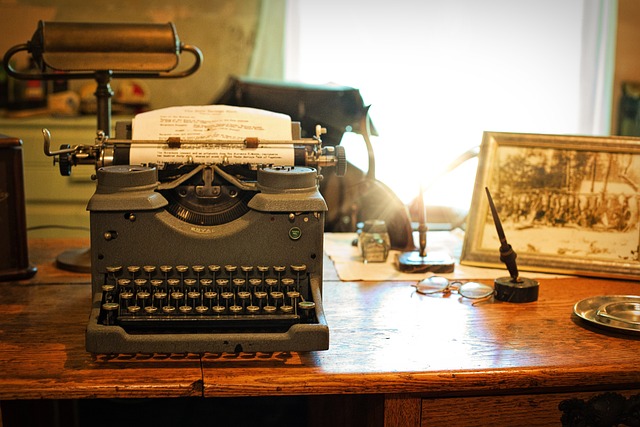
Image by Jill Wellington from Pixabay
  1. When I read something I wrote, I can’t remember writing it – I’ve always been somewhat aware of this but just recently I really noticed it and it struck me as very weird. If I pick up any of my published books and read an extract, I am always more impressed than I was at the time of writing it. It feels like someone else, someone better than me, wrote it. I can’t really remember writing those exact words, even though the plot and the characters are utterly mine and will live on in my head forever. Just last week I started typing up my Black Hare Valley story. This was the one I’d had in my head and in planning for a few years but ended up writing in longhand about a year and a half ago when a prolonged power cut meant I couldn’t carry on with stories I had on my laptop. I remember writing Black Hare Valley mainly because all the plot ideas came to me while walking. At the time petrol prices had gone through the roof and I was trying to walk more than drive. It was during this long walks to work that this book wrote itself chapter by chapter in my head. Then once it was done, I put the notebooks aside and had to forget about it. Now I’m typing it up and reading what I wrote it genuinely feels very strange; like someone else wrote it. I know the words are mine (when I can decipher the handwriting!) but I have no memory of writing them, or the thought process behind putting each sentence together. Typing it up feels like I am discovering this story for the first time even though it has been in my head for so long.
  2. When a world becomes so real, I can’t wait to get there – I’ve not had this experience for a while because I’ve been editing various books for so long, so it was a lovely but weird surprise when this started to happen with Black Hare Valley. It took a long time to build this world; starting with the drawing of a large map of the fictional town. It’s a valley town, surrounded by iron age hill forts and it has everything from a school, post office, vets, cafes and pubs, library, theatre, police station, church and so on. It was a lot of fun to create and after the map came the character bios. As I created each character I could then add where they lived to the map and this in turn sparked of plot ideas and scenes. This made writing it so much fun as every time a character moved from one place to another I could check on the map which way they would go. It really made the whole place come alive and now that I’m typing it up, I am right back there again. Every night when I go up to write, I feel excited to be returning to Black Hare Valley, this strange, beautiful and terrifying place I created. For me right now, it is entirely real.
  3. When a book writes itself – I love it when this happens but it’s not always the way it works for me when I write books. Sometimes characters will arrive, presenting drama and plot and I’ll have to figure out how to start it, where to start it and how to divide the story up into chapters. I’ll normally do a certain amount of planning before I start, but then once writing commences, the writing and planning run alongside each other, usually with me knowing at least the next few scenes and then working it out again as I go along. But sometimes, something really weird and wonderful happens. It happened recently with a book that will be ready for publication next year and it happened when I was writing Black Hare Valley for the first time. It’s like once I pick up the pen, something else takes over. The pen moves faster than my mind; I feel a bit like I’m in a trance, being controlled by something else. The next words are spilling out before I’ve even had a moment to consider them or hesitate. It’s like the story wants to be written so much it just writes itself. I feel almost disconnected at times, like I’m the reader waiting on the sidelines to enjoy the result.

There are a lot more things about writing I’d consider both weird and wonderful but these three really struck me lately. How about you? Have you experienced any of these things? Or are there other things you find weird and wonderful about writing? Feel free to let me know in the comments.

My Writing Ban Didn’t Last Long…

Some months ago I gave myself a writing ban. I had so many projects on the go, all at different stages, plus new ideas invading my mind all the time and I just had to make myself stop.

Juggling multiple writing projects seems to be the way I work. It used to worry me a lot. I used to think it was not a good thing; not for me or my writing. Then I realised that it was all working out, in its own haphazard way. Having a few things running alongside each other doesn’t seem to stop the books getting written or published, so why was I worrying so much?

Image by Theodor Moise from Pixabay

The thing is, I write books quickly. I might get the idea a few years before I get around to starting it, and by then I’ll have all the character bios in place, plus most of the plot and locations, research and so on. But once I start it, once I sit and write the title followed by ‘chapter one’, I am usually on a roll. Three months for a first draft is my average although last year I completed a first draft in seven weeks. That was a particularly addictive book to write!

Now, it might only take me a few months to write a book, but it obviously takes far longer than that to get it ready for publication. Once the first draft is done, there is the second, third, fourth and so on… revisions and editing, sometimes rewriting whole chunks or changing the tense or the perspective. That’s followed by beta reader feedback, yet more edits and revisions and then it’s off to the editor and proofreader…. more edits after that.

By now I’ll be working on blurbs and thinking about front cover designs. All of this takes time… Far more time than it took to write the first draft of the book. Usually, it will take between one and three years for me to publish a book after the first draft has been written.

What tends to happen with me is I can’t not write while my book is with beta readers or the editor. I can’t just sit there and do nothing. There is always another idea waiting for its turn, always another host of noisy characters demanding my attention.

So, while I’m waiting, I’ll write another book…

And eventually they really start to build up!

Image by Leopictures from Pixabay

Hence why I gave myself a writing ban. I was allowed to write flash fiction, poetry, articles and blog posts, but I wasn’t allowed to work on any new books or start writing any of my new ideas. And the reason for the ban was the amount of finished books I was waiting to publish. I don’t want to just churn them out, you see – I want to give each book the launch it deserves and that also takes time.

I had The Day The Earth Turned series ready to go. My plan was to release each book during the season it’s named after, so Book 1: Summer was released in June and Book 2: Autumn will be released in October. In between writing and editing that series, I also finished my sequel to The Mess Of Me, The Mess Of Us and the spin-off book from The Boy With The Thorn In His Side series, At Night We Played In The Road. These two books are part of a bigger universe and are connected to each other and the Holds End Trilogy and Elliot Pie’s Guide To Human Nature. Because of these connections, I then had a new idea for a sort of crossover book, that would pull some of these characters together in one final story, ending their stories and the story of that universe… (You’ve guessed it, that was the addictive, 7-week book!)

I also typed up a zombie apocalypse book I’d started to pen in a notebook… It’s not finished but I wanted to type it up to keep it safe.

For about two years now I’ve also been adding notes/ideas and character bios to a notebook for a future book which will be called The 7th Child. As usual, I can’t ignore what pops into my head about this book, so I have to write things down in the notebook and just recently I ended up writing the first two chapters because, well, they were in my head. I’ve left it there though because although I know exactly what happens in this book, I haven’t quite figured out how to tell the story yet. So, I’m fine to leave this one alone until this becomes clear to me.

Image by 6689062 from Pixabay

My writing ban was now on very shaky ground… And finally, last week, I gave in completely.

Now, to be fair, I am not writing something new. It doesn’t work that way with me anyway. As I’ve already said, I’ll map out ideas, characters and plots for years sometimes before I get enough to start writing the first draft…

But about a year and a half ago I started writing a book called Black Hare Valley. It was another one I’d had in my mind for a few years. It had its own notebook as they always do. It even had a huge, beautiful map my son and I drew together when creating the town. We experienced a two week power-cut because of a storm and during that time I decided to start writing the book in notebooks. I didn’t have much of the plot ironed out, to be honest, but that didn’t seem to matter. It was one of those delicious and exciting books that just wrote itself. I soon had five large notebooks filled with the first draft and the book was out of my head.

Last week I realised that I didn’t really have anything to ‘work on’, other than any articles or poems that were in my head… I felt a bit lost.

I love getting absorbed in my own worlds. It’s what I most love about being a writer. I was missing that pull, missing having one world and its characters dominating my thoughts, following me about all day.

I thought… well, it won’t hurt, will it?

I need to type it up at some point. At least then it will be safely backed up on my laptop…

I’m not writing something new, am I? I’m just typing up…

Of course now I am well and truly lost. I have been sucked into Black Hare Valley just as I was when I wrote it the first time. I love it. I am so, so happy. I think my writing ban was a stupid idea! I might as well keep writing in my usual obsessive way. It’s the only way I’ll get all these books out of my head before I die!

So, the writing ban didn’t hold. And I’m much happier!

Next week I’ll be blogging about something strange I’ve noticed about writing though… It’ll be interesting to see if anyone else has experienced the same thing.

See you then and thanks for reading!

10 Ways To Bring Characters Alive

I’ve been thinking a lot about characters lately…

I’ve read a lot of books over the summer, all well-written with brilliant plots – most were solid 4 star reads, but in most of them there was something really lacking for me. Fully drawn, relatable characters. It’s not entirely fair to criticise the books for this though, as how we feel about characters in books is a very unique and personal thing. The books that I found rather lacking in characters I could really root for would have presented no such problem for another reader. I think its just me. Considering I’m quite introverted and anti-social in real life, in books it would appear I am looking for escapism via people as well as places and situations… Finding characters I really love is apparently really important to me.

With that in mind, here are my top 10 things to consider when creating a character for the first time:

  1. Their back story – I think this gets a bit neglected sometimes. Authors will mention it if its relevant to the plot but sometimes a person’s back story is relevant to understanding the person they are as well, and both should be considered when writing a character. Back story includes the following things: their family, their hometown, their childhood and any relevant incidents that occurred previously. It’s basically everything that happened to the character before the story started. This is important for an author to figure out because everything that happened to a person helps create the person they now are. We are a product of our past experiences, from our schooldays to our first crush, to the way our parents treated us to the way they treated each other, whether we were rich or poor, healthy or sick… It all adds up to character and can help the reader understand the character’s behaviour and motivations.
  2. Their likes/dislikes – An obvious one, but one I do see authors neglecting at times. We all have likes and dislikes, and I’m not just talking about foods we love or hate, or sports we love or hate – I’m talking about other, more universal things. We all have things that annoy us, for example, things we can’t tolerate, things that set our teeth on edge. And we all have things we love, things we are passionate about, maybe even things we would die for… As an author, you need to know all of them, even if they don’t get mentioned specifically in the story. Again, likes and dislikes make up who we are and they can really help set a character apart from all the others.
  3. Their bad habits/flaws – We must also remember that our characters cannot and should not be perfect. Yes, they might be the hero of the tale, they might be hugely talented, ridiculously clever, or remarkably kind and selfless… But that’s not the whole story, is it? They can’t be perfect because that’s not relatable. Readers want to see flaws, even little ones, because it reminds us the character is a human just like us and flawed, just like us. Believe me, this makes us like them more! It could be anything from being clumsy, or socially awkward, to being messy at home, or absent-minded in the company of others. Maybe they are bad at listening, are too judgemental or too quick to temper. Maybe they don’t take things seriously enough, or are constantly running from their problems. Perhaps they just swear too much or pick their nose! Whatever is is, give them some quirks and bad habits to make them seem more real.
  4. Their ability to change – If you put your character through a lot, they should change. Character development is crucial to ensuring readers care about characters. If they start off stubborn and rude and end up the same, they haven’t learnt anything, which makes the plot feel a bit pointless. Undoubtedly, what you put them through as a writer ought to change them as a person. Perhaps they start off shy, introverted and stubborn but the plot forces them to come out of their shell and face the world. Perhaps they are big-headed and think they are always right, and the story changes this as it progresses. It might only be in subtle ways, but to ensure our characters are realistic, we need to allow the journey to change them, just as it changes us in real life.
  5. The way they see the world and whether it changes – Similar to the above – their worldview may be shaped by the back story we have already mentioned, or it may be shaped by their bad habits and flaws and the kind of person they are. Either way, the way they see the world may change as they navigate the plot. This might extend to other characters; for example, perhaps they start off with a heart of gold, and somewhat naive, but by the end of the story, the world has hardened them and toughened them up. Or perhaps it’s the other way around.
  6. The way they see themselves and whether it changes – Often authors neglect to consider how their character sees themselves. My favourite thing to consider about antagonists, for example, is that they are often the protagonist in their own eyes… They think they are right, just as the hero does. How does your character feel about themselves? What do they think when they look in the mirror? What do they like and dislike about themselves? Consider this to make them seem more real and also how the plot might change how they feel about themselves.
  7. Their cultural preferences – Slightly more complex than their world view, this considers their cultural preferences in terms of music, film, TV, hobbies and interests. What a person likes to read, for example, can say quite a lot about them! Equally, alluding to their favourite band or song will give the reader a glimpse of their personality in a subtle way. It’s these little details that make us human and set us apart from each other, so don’t forget them when building a character.
  8. The way they dress – Similar to the above, don’t forget to put thought and care into the way they dress. What does it say about them? Describing someone putting on a suit will give the reader some clues as to this characters personality, job and lifestyle, to some extent. Just as having them pull on muddy boots, or tie their hair in a messy bun, will suggest something else. We are all guilty of judging others by their appearance and this can be fun to play around with in writing. A heavily tattooed character blaring out heavy metal might lull the reader into expecting a type of person, whereas the truth could be very different. Having said that, we do dress how we feel and our clothes often reflect our interests and hobbies… so it can be a really useful tool to build character without saying too much.
  9. The way they talk – Before creating a character, and particularly if you are new to character building, I strongly suggest you spend as much time as you can observing conversations. Conversations you are having with others, and conversations you overhear, as both are vital in highlighting the unique ways we talk. Consider, for example, that people often change the way they talk depending on who they are talking to. A surly teenager, for example, might snap at their mother in the morning, but be full of excitement and passion when they are walking to school with their best friend. Not only that, we all have different ways of talking. Some people interrupt and talk over people – what does this suggest to the reader? Some people trail off and look away… what could this mean? Some people only say the bare minimum, while others talk far too much. We tend to have phrases we use out of habit, so think about that too. You can weave different parts of people in real life into one character.
  10. What they want/what is driving them – This is such an important part to character creation but one I do think gets forgotten sometimes. Obviously, the plot provides the character with a purpose and a reason to act or react. As authors, we have to keep this in mind at all times, because just as back story, and world-view and flaws will drive a character’s behaviour, what they actually want will drive it even more. For the story to reach a conclusion, what the character wants must be vital enough to keep them going. If they give up, the story dies. Something is driving and pushing them forward and it’s best to consider this in terms of an inner and outer journey. On the outside, something has caught their attention or compelled them to react. On the inside, something is giving them the strength to keep going. We are all driven by something in life and what that is will play a huge part in your character’s behaviour. It is perhaps the most important thing for an author to know about their character!

Thanks for reading! Feel free to drop a comment or share. I’d love to know your thoughts on characters in books. Do you have a favourite and why? Have you read a book where the plot was perfect but the characters felt flat? Let me know!

My Entire To-Write List Is In Action!

Image by Fathromi Ramdlon from Pixabay

In January 2022 I wrote a blog about how I handle having such a long to-write list. Part of coping with so many book ideas is allocating a notebook for each one, so that I can jot down title, blurb ideas, plots, character bios and so on. At that point I was putting the final touches to The Day The Earth Turned series, and the Fortune’s Well trilogy co-written with Sim Sansford. The trilogy is now out and the first book in The Day The Earth Turned series is also out! The other books in the series are also finished and waiting for their release dates.

In the meantime, I’ve been doing my usual crazy thing of writing/editing/jotting ideas and thinking about multiple writing projects at the same time! No change there then, but I don’t worry about it anymore. It’s just the way my mind works.

However, I did suddenly realise the other day that my entire to-write list is now in action. Every book is in some state of progress and even better than that – I have not had any new ideas!!!!

Awesome!

I feel like I can now relax and enjoy getting these books finished and released. They will certainly keep me busy over the next few years!

To keep you updated, here is a list of my to-write list and the stage each one is currently at (I’ve listed them in the order I expect to release them in):

At Night We Played In The Road – the spin-off book from The Boy With The Thorn In His Side series. Works as a standalone but does give spoilers for part 5 of The Boy series… It’s written, it’s had six drafts, its been to beta readers and I’ve responded to feedback. It’s currently with my editor and I’ve already worked on a few structural edits she suggested. I plan to release around May 2024.

The Mess Of Us – long awaited sequel to my debut novel The Mess Of Me. It’s had five drafts and I’m just about to start draft six before sending it to beta readers! Hope to release summer 2024.

The Dark Finds You – the unexpected crossover book that ends the stories in The Boy With The Thorn In His Side universe – brings characters from The Mess Of Me/Us, the Holds End trilogy and Elliot Pie’s Guide To Human Nature together in one storyline with Danny from The Boy series… It’s had five drafts and I absolutely love it. Probably the easiest most addictive book I’ve ever written. I hope to release end of autumn 2024.

Black Hare Valley – written in long-hand in five notebooks, wrote ‘The End’ about a year ago and haven’t touched it since, but I will be diving into the second draft of this once the books above are completely finished and ready for release.

Diary of the Undead – started in a notebook a few years ago then put aside, I recently picked it up again and decided to type up what I had. This led to a few more chapters but I then put it aside to concentrate on everything else!

We hate The Cool Kids – still awaiting a second draft and it’s been about five years now, but I’ll get to it when I can.

The 7th Child – in progress because I have the whole plot nailed down, plus the characters are evolving on a daily basis and I’m adding bits of plot etc too. I’ve also written the first chapter.

The Few – a series to cowrite with Sim Sansford – we recently kicked this off with the first few chapters done!

And that’s it. All the books waiting in notebooks and all the books in my head all in some state of action. I’m really pleased about this but do you know what I’m most pleased about??

Not having any new ideas!!!