The Tree Of Rebels and Disconnection From Nature

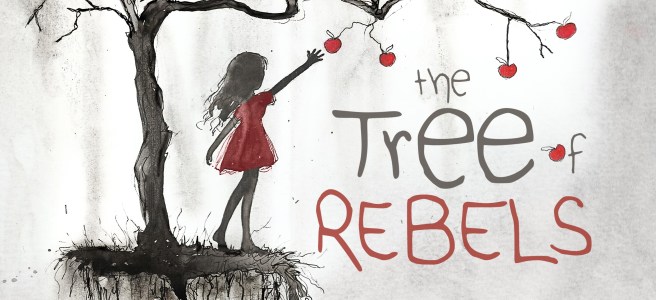
So it’s finally here! The day has finally arrived! Sometimes when in the middle of writing and rewriting and crafting a book, publication day can feel like an impossibility. Something so far in the future it feels like it will never happen. The Tree Of Rebels felt like an impossible thing more than once. This was a very tough book to write and one I had a constant love/hate relationship with. It’s very different from my other books and I wrote it with an audience in mind, something I’d never done before.

As I’ve mentioned before, the seed of this book was sown while scrolling through Facebook one day. I’d kept seeing these petitions to sign to stop Monsanto patenting seeds. I didn’t understand a lot of it, but what I did read and digest alarmed me and got the cogs turning in my head. I’ve often thought about nature and who owns it. Have you ever walked through the woods or across a field, only to be stopped by a fence and a Private Property sign? Have you ever stood on a high hill and looked down at the landscape and realised how restricted our movements actually are? How the paths and roads have been laid out for you and how signs and fences stop us roaming as we once did?

The more I thought about large corporations owning seeds and nature and having that control over the food chain, the more I imagined a frightening dystopian world where growing your own food is banned. This might seem like a far fetched idea right now, but for some people this is already becoming a reality. Believe it or not, there are places in America where people are not allowed to have backyard gardens or chickens. Where people can be arrested for attempting to gather rainwater. The frightening future is already on its way…
13920054_1231406820211914_1274144773204141057_o

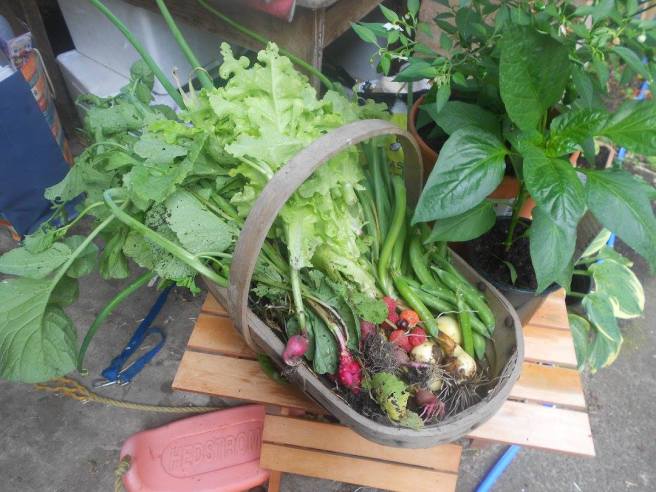
Distrustful of GMO’s, hormones in meat, anti-biotics in milk and pesticides on fruit and vegetable, more and more people are turning to growing their own food. Self-sufficiency is becoming popular again, and you can’t deny this is a form of rebellion, of taking back control. It’s vital for our planet too. The meat and dairy industry is literally killing the earth.

Dystopian future in mind, I already knew I wanted to write a young adult book. The protagonist, 13-year-old Lissie had been evolving in my imagination for some time, and now she finally had a place to play and grow. The book undoubtedly evolved into something more than I had envisioned. It’s not just about seeds or a post-apocalyptic future, it’s about rebellion, questioning the status quo, defying your parents and searching for the truth, no matter who it hurts. All classic issues in the complicated journey of growing up.

But one of the main messages I hope people pick up from this book if they do indeed pick up any is the consequences of becoming disconnected from nature.

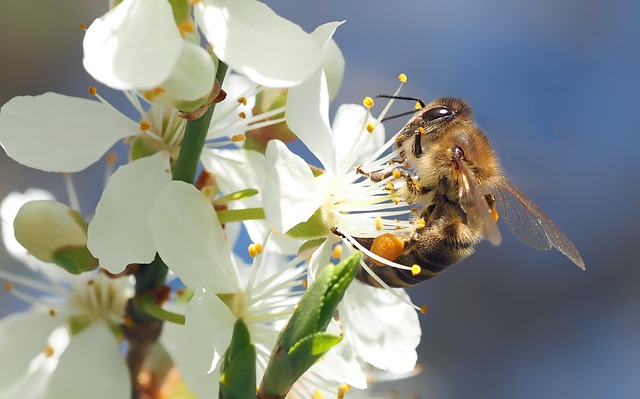
I’ve always been a bit of a dreamer. A head in the clouds type of girl. I love nothing more than a walk down the lane, to the river, or across the fields, the common, or the woods. Something special happens to us when we are in nature, when we walk barefoot upon the earth, when we touch trees, smell leaves and view flowers and wild animals. Sometimes I think I might be a bit odd. I have very strong urges to touch and hug trees. They call to me, they really do. Once I lay my hand on the trunk of an ancient Oak, I find it very hard to pull away. I can’t get over the fact they are helping me to breathe! They are eating pollution. Without them, we would all die. The same goes for the humble bee and other vital pollinators. We simply cannot afford to ignore nature. We are nature. And I truly worry that many of us have forgotten.
bee-on-cherry-blossoms-1403010_640

Where I live is very beautiful, but I fear that others do not see it. When they race their cars down the narrow lane and hurl their rubbish into the bushes, I fear they never linger long enough to see the beauty and majesty of the trees. I fear they have no clue that they would die if the trees were not there. I’m fascinated by the unseen lives of birds, insects, and animals. I’ll stare at birds in the sky, watching their flight, hearing their cry, wondering where they are going and where they live and what they do. I want to know. I want to be part of their world. Sometimes I feel like I am trespassing. Especially come dusk when the bats start circling and the owls start hooting. This is their time, not mine. How they must despise us, I often think.
branch-1753745_640.jpg

I think the thing we are often missing is gratitude and wonder. I am in awe of nature which makes me want to protect and nurture it. Sadly, others just don’t see it at all. In truth, this means they do not see themselves. They are disconnected from it, therefore they don’t care about it or appreciate it. If you don’t care about something, or see the value in it, you’re not going to go out of your way to protect it, are you?

In Lissie’s world, the people are taken care of. They are housed and fed and educated and worked. There is no war or violence. They have returned to traditional ways, fearful of the technological world that enabled war and destruction to almost wipe out the entire human race. But in order to keep them contained, the people are separate from nature. Food is grown and delivered to them. Animals are raised in domes . Unwanted plants are circled and torn up. Wild animals are feared and killed. They know very little of the natural world. And this is all sold to them as the perfect world. A society without war and hunger and homelessness. A safe, sheltered, catered for life. It’s Lissie who resists this version of life and strives to find out more about the outside world. A true rebel, spurred on by the dying words of her Great-Grandmother, she seeks the truth. What happened to the Old World? Who destroyed it and why?

Please feel free to leave a comment! What are your fears for the future? Do you enjoy reading post-apocalyptic or dystopian books, and if so why? How do you feel about the issues of humans becoming disconnected from nature? What can we do about any of it? I would love to hear your thoughts!
 

Character Interview – Lissie Turner; The Tree Of Rebels

1 ) Tell us what your positive character traits are

I’m loyal…well, some people might disagree with that. But I know I’m loyal to my friends. I’m a dreamer. My parents wouldn’t call that a positive thing, but my Great-Grandmother would. I’m fast! I am the fastest girl in Province 5! I’m fierce when I need to be and I won’t be bullied.

2)What would you say are your negative character traits?

That I’m a dreamer…I have my head in the clouds and I’m not ready to be an adult yet. That I’m nosy and stubborn. I’m rebellious, although I only found that out recently.

3) What are your current ambitions or dreams?

I want to get out of Province 5. I dream about other places and people and other ways of life. I want to know more about how and why the Old World died and I want to have a say in the future. I don’t like everything I see here at home, and I want to explore, try things out, question things.

4) What are your fears?

My fears are that I will never leave the Province or find out what happened to the Old World. I fear I will let my parents down, no matter what I do. I fear destroying my family and being all alone. I also fear the truth. I know we are not being told the truth here and that scares me. Life is pretty good here. No one complains. Everyone has everything they need and everything is calm and peaceful. But I know it’s all based on lies. Sometimes I think the truth scares me more than anything.

5) Do you have any enemies?

Yes, Saul Lancaster has been my enemy for as long as I can remember. I could never work it out before, because his father, the Governor here in Province 5 seems to really think highly of my family and even gave me special duties in his garden. But Saul hates me and has had it in for me since we were little kids. He’s a bully and I despise him. If he ever ends up in charge of this place, he’ll be the worst Governor ever! As for Soren Lancaster, his father, I think he might be my enemy too. He’s trying very hard to keep me on side, but he knows I know things I shouldn’t. He knows I am dangerous.

6) Tell us about your best friend

Ned is my best friend. His parents are friends with mine. I’ve always had to stick up for him because of people like Saul, and because his parents don’t seem to notice he is even alive. Their first son died, you see, and although Ned came along, they never got over t and can’t seem to see him at all. Poor Ned. He’s the best friend ever. He’s not scared of anything. He’s like me. He just wants to be excited, he just wants to ask questions and know stuff! we’re in this together. I feel bad about getting him into trouble too but he says he doesn’t care.

7) What’s your biggest secret?

My biggest secret is my Great-Grandmother’s diary. She wrote it when she was a girl like me, so it’s our only bit of history. It’s a true account of what it was like in the Old World where they had online and cars and stuff like that! It’s so fascinating to read, I just can’t put it down. There are wars going on all over the place and they’re on the run now because they got in trouble for growing their own food! I’m learning so much about how things used to be and how things ended up like this.

8) Do you have any regrets?

Hmm, not yet. I do feel guilty. I feel guilty about lying to my parents, hiding the diary and going outside of the Province. I feel guilty that I am not what they want me to be. But I don’t regret any of it. Not yet.

9) Where do you see yourself 5 years from now?

Well, if nothing changes, I will be living in my own hut, probably coupled and probably with a child. I will be working for Animal Control or the hospital like my parents. I will be just like them. But if everything changes? Who knows? I could be out there! Free. I could be wandering around, setting up camp, sleeping under the stars, like Aisha and the other rebels. I could be a rebel. I think I am a rebel.

10 Reasons I Love Writing and Reading YA

On the 11th August my next book The Tree Of Rebels will be released as an ebook. (The paperback is already available!) This will be my sixth release and my fourth YA book. My books fall into both the adult and young adult genres. I never really decide which it will be; that’s a job for my characters. It just so happens that all of my characters tend to be young adults, and in fact, even in my adult books, the young adult voice is very present.  When it comes to reading, I’m not too fussy about genre. I recently devoured horror, crime thriller, literary fiction, autobiography and YA. But it’s fair to say that I am more consistently drawn to YA books, to read and to write.  Here are my reasons for being in love with reading and writing YA;

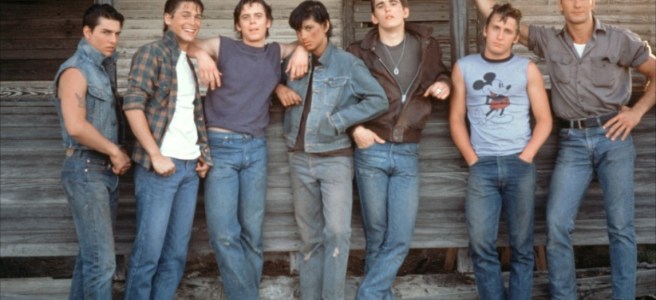
  1. Inspiration – When I was a kid, the first books I ever really fell in love with were The Catcher In The Rye and The Outsiders. I had enjoyed many books as a child, and I had been writing stories for as long as I could remember, but those two books affected me in a way the childhood books had not. I fell into those books and got lost. I fell in love with the characters and saw them as utterly real. I could totally empathise with the feelings, emotions, and scenarios of both books. I loved the style and the voice they were written in. More than any other books I can remember, those two made me want to be a writer. I emulated them in my teens, writing similar stories with similar characters. From that point on I was always searching for books as good as those. I’m still not sure I’ve found any to top them.
  2. Nostalgia – For that reason, YA evokes nostalgia in me. YA books make me remember the surge of enthusiasm and inspiration I got from that genre when I was a teenager. They take me back to that time and remind me of the impact books can have on your life. This I think, draws me towards reading and writing YA. I’m not a rose tinted glasses kind of person by any means, but I do love a bit of nostalgia!
  3. Feeling Young – There is this. Not that I feel old. I really don’t. In my head, I am still a kid, and I always assume people are older than me and certainly wiser. I still feel new sometimes. I still feel like I have so much to learn. I like reading and writing about young people because I still feel like one of them! What I see in the mirror is not what I see in my head. When I read a really good YA book, I can totally recall what it feels like to be that young. I particularly love a good coming-of-age story. I think being a young adult is a totally unique time in your life. Too many people embrace adulthood too quickly and tend to put up walls, separating their generation from the ones below them. (You only have to look at the amount of millennial bashing that goes on!) I think YA books are important for this reason. They remind you of what it is like to be young, conflicted, confused, with those huge highs and lows, mixed with fear, ambition, self-doubt and hope. If you can read YA and feel young again, perhaps it helps build a bridge between generations.
  4. YA is so varied – This is true. YA is a genre with so many sub-genres and I love them all. I’ll even read Romance, if its YA! Horror, dystopian, post-apocalyptic, coming-of-age, historical, thriller… Having young adult characters just seems to make all these genres better.
  5. YA is fast paced – of course, there are exceptions, but generally I find YA books move pretty fast. Not that I mind a slow moving book. I’m not particularly drawn in by the ‘page-turner’ claim, but YA does tend to grip me. I can’t think of too many YA books I’ve read where I haven’t wanted to start a new chapter as soon as I’ve finished the one I’m on. (Michael Grant Gone series and Unwind dystology comes to mind!!)
  6. Gritty, edgy themes – I don’t want to be bored when I read or write. I want subjects I can really get my teeth into. YA has these in abundance. Frightening dystopian futures, post-apocalyptic disasters, family drama, domestic abuse, substance abuse, self-harm, suicide, bullying, running away, sexuality, sexual awakening, poverty, race relations and more, YA is all about tackling difficult issues head on. As a reader and a writer, this is the stuff I yearn for.
  7. Characters that come alive – I struggle with characters in some adult books because I can’t relate to them. Like I already mentioned, I don’t feel like I am nearly 40, so I find it hard to relate to middle aged characters. I consider myself working class, and so much adult fiction is written by and about middle class people. YA offers a wider spectrum of characters who are flawed, still growing, changing and learning. This in itself makes them relatable and interesting. I’m thinking of Holden Caulfield and Ponyboy Curtis, but also Charlie (The Perks of Being A Wallflower), Katniss (The Hunger Games,) Theodore Finch (All The Bright Places) Leisel (The Book Theif) Jonas (The Giver) Todd and Viola (Walking Chaos Trilogy) and so many more! I really struggle to think of a character from an adult book that has stayed in my head…
  8. You are not alone – Reading YA as a teenager is a life saver. Whatever struggles you might be going through, you are going to find a YA character going through the same thing. There is a YA book out there that is going to help you and show you that you are not alone. This is so important when you are young
  9. Packs an emotional punch – The reason I love writing and reading YA books so much, is the emotional journey they take me on. Writing young characters opens up so many possibilities for reaction and action and motivation when you are throwing dramatic situations at them. They don’t just have the plot journey to go on, they have their own inner, coming-of-age journey going on as well, which I find, magnifies the emotions of everything else! YA books tend to pack an emotional truth and are not afraid to venture into dark or emotional territory. I need this when I am reading, and I find this cathartic when I am writing. What can I throw at these young people and how will they react? How will they change and grow and develop as the story unfolds?
  10. Offers hope – YA books may stray into dark waters, but they are never afraid to offer hope. The characters, being young, tend to veer on the optimistic side. They are not tired or jaded by life yet. They are not cynical. They believe things will get better. These books may not all have happy endings, but you can guarantee most will be fuelled by hope…

Over to you folks! What do you think about YA books? Do you have a favourite from your youth? Or have you discovered any great ones in adulthood? (PS – here are 12 of my favourite ones off the top of my head!)

  1. The Outsiders – S.E Hinton
  2. The Catcher In The Rye – J.D Salinger
  3. The Chaos Walking Trilogy – Patrick Ness
  4. The Unwind Dystology – Neal Shusterman
  5. The Gone series – Michael Grant
  6. The Giver (quartet) Lois Lowry
  7. The Book Theif – Markus Zusak
  8. The Hate U Give – Angie Thomas
  9. All The Bright Places – Jennifer Niven
  10. The Perks of Being A Wallflower – Stephen Chbosky
  11. The Shock of The Fall – Nathan Filer
  12. Vernon God Little – DBC Pierre


Dear Newbie Indie Author…

pranam-gurung-116984.jpg

Dear Newbie Indie Author at the start of your journey….Panic not. Though everywhere you turn there are rules, and experts, and advice, and do’s and don’ts. Remember that all those who are further along than you, were once where you are now. If I could give any advice to me when I was a newbie indie author, it would go something like this;

  • Attend a course, workshop or conference. Something that fills you with wisdom and ambition. Something that makes you dream and hope and long to get your words out into the world. Something where dreams are balanced with a hefty dose of reality and an honest account of how hard it is likely to be.
  • Remember that Rome was not built in a day, so neither will your author platform. Be aware of it, learn about it, but don’t panic about it yet. It will grow with you, in time.
  • Be brave. But only when you are ready. There is no rush and no reason to change your personality or try to be something you are not. Tip your toes in the water with a Facebook author page, or a Twitter account. Play around with things, lurking around the edges until it feels right to dive in.
  • Don’t feel like you have to be on every social media site, stretching yourself too thin, whiling away precious hours by attempting to engage with them all. There is simply no point. Choose two or three and make sure one is your blog/website. Give these your attention, and enjoy them. Think of them as your own little projects, little mini businesses. Little acorns that will one day grow into Oak trees!
  • It’s fine if you are just talking to yourself. Everyone starts off like that. It’s not a waste of time! Think of it as practice. You can be uninhibited, knowing that barely anyone is there. Practice your voice, try things out, have a giggle. By the time your audience has grown, you will be far more comfortable in the role.
  • Make your blog whatever you want it to be. Some writers just blog about writing. That’s fine. Some blog about other issues, political, social, personal, and that’s fine too. Some blog weekly, some once in a blue moon. It’s all fine. Do what its comfortable for you. A blog is for your writing and writing should always be fun. If it doesn’t feel fun, don’t force it. Try something else.
  • Don’t compare yourself to others. We’ve all taken different paths. There will always be writers with more money to spend, more contacts to enlist, more gift of the gab, more luck, more everything. But you are the only one who can tell your story in your way. Hold your head up high and try not to play the comparison game with anyone.
  • Don’t get eaten up with jealousy. When you see others succeed, be glad for them and then try to work out how they did it.
  • Don’t expect your family and friends to rush out and buy your book. Don’t expect many of them to understand what the hell you are doing. Find fellow writers to help you through the frustration and elation that is to come.
  • Remember that the only way to succeed is to never, ever quit.
  • Remember that success means something different to everyone, and only you can decide what it means to you.
  • Be prepared to be work hard, to treat writing like a job, to put in the hours, to find time for promotion and writing, to try new things when nothing is working, to feel like giving up, to want to bang your head against the wall, to want to throw your laptop out of the window, to scream at people to just please buy your bloody book and to go to bed and not be able to sleep for the ideas, thoughts, doubts and frustrations whirling in your head.
  • Be realistic. Dream big with your feet still on the ground. Keep your day job and be proud of it. Write because you have to, because the ideas and the words and the characters are too big to contain in just your head alone, and because you want to share them, to let others feel like you do. Write because you love it, because you live it and breathe it, because it excites you and makes you feel like you are living more than one life. Don’t write to get rich. Don’t write to impress anyone. Write because there is no choice not to write.
  • Know that you’ve got to put the work in to see the results. That inevitably and eventually, you reap what you sow. Little steps sometimes take you further than big ones. Sometimes the only way you realise how far you have come is when you stand still and look back to where you started.
  • Don’t spam people. Don’t become a robot hitting everyone who follows you with a buy my book link or plea. Engage with them. Forge relationships. It isn’t all about you. Don’t follow other people just so they follow you back. Think about why you are following them.
  • Don’t play the numbers game. Likes and follows mean nothing if people are not engaged with your voice and your style and what you have on offer. It’s not about the amount, it’s about the quality.
  • Don’t only post an update when you have a book out. Build an audience. Give them something to read, debate, join in with and get excited about. Then ask them to buy your book.
  • Be proud. You’re doing something some people only dream of. Do you know how many people say they would like to write a book, but never actually do it? You’ve done it. You’ve proved yourself and realised a dream. That’s pretty cool. And be proud of going indie. It’s not an easy road. But it is an incredibly creative and innovative one. Who knows where it might lead? Who knows what skills you will require? What contacts you will make? What friends you will find? What effect you will have on those that read your work? Who knows where you will be one year, or five years, or ten years from now? The possibilities are endless so dream big and work hard. Don’t moan, don’t back out, get on with it, and make it happen.

(Credit to Pranam Gurung for the image.)

Please feel free to comment and share. What advice would you give to a new indie author? What do you wish you had known in the beginning? Anything you would do differently?