November Writing Challenge: Addiction

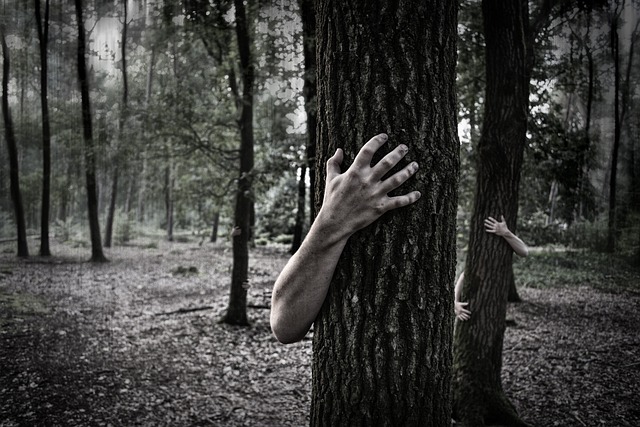
At the start of every month I ask my Facebook followers to suggest some writing prompts and challenges and then I post the one I chose at the end of the month. This time I picked ‘Addiction’ which was a one word prompt. What came to mind was a list poem so here it is:

Image by Rilson S. Avelar from Pixabay

Addiction

Addicted to dinosaur remains

Fossilised ideas

Dirty pleasures

Heating homes

Running cars

Getting there faster

Building roads

To better boost business

Addicted to plastic

To the convenience of forgetting

It sits in the earth forever

We breathe it in

Drink it, eat it

Feed it to babies

It flutters in trees

It drifts on the seas

Around the neck of a seal

The beak of a bird

In the stomach of a whale

Addicted to shiny new things

Neat front lawns

Weeds killed efficiently

Packages delivered on time

Addicted to right now

Addicted to cheap food

To burgers and nuggets

And penned in pigs

To horror and murder

Mined diamonds

iPhones and slavery

To turning a blind eye

To what doesn’t concern us

Addicted to capitalism

To what we need, what we want

To infinite growth on a finite planet

To investment

But not in nature

But not in the wild

Addicted to believing we are important

To slaughtered hedgerows

Felled trees

Filthy oceans

Polluted rivers

Addicted to ourselves

To speed, to need, to want, to greed

Unable to see

Addicted to the end

Lessons Learnt From Young Writers

I am extremely privileged to work with young writers for my job with Chasing Driftwood Writing Group. I run seven clubs every week, catering to home-educated children and within schools as after-school clubs. Some are on Zoom and some are in-person. I work with children aged between 7 and 16, though sometimes younger and older. I’ve been doing this since 2015 and in that time, though I like to think I have taught them a thing or two about writing, it’s also true that they have taught me. Here are some lessons I have learnt from young writers.

  1. Self-belief is key – One of the things I love about young writers is that so far they are entirely untouched by cynicism. There is a lot of negativity within the writing world and I have blogged about it before. A lot of adult writers, for example, get jaded and worn out, think it’s not worth it, they’ll never make it, never sell any books etc etc… but young writers don’t think like that at all. They’ll quite happily declare that they’ve started writing a book and it’s going to be a series and they’re going to get it published and become an author. They truly believe it and so they should!
  2. The stories in your head are just as important as the ones you write down – One thing I can tell you about young writers is that their heads are just full of the most amazing stories. The tricky bit is getting them to write it all down! Of course – it’s physically and mentally taxing for young children to fill reams and reams of paper with handwriting, and most of them have not yet mastered fast typing on a laptop, so I spend a lot of time listening. Sometimes I help them out by writing it down as they explain it to me. I find it fascinating how much their imaginations conjure up! One young writer recently told me about some missing cats who had their pictures on wanted posters. This started off as a fake article as we have been working on article-writing. It soon morphed into a wonderful story about magical rainbow cats that have been stolen, and since they have vanished, the world has no colour and everything is black and white. Another was reluctant to write his story down but told me it was about a mythical creature that died mysteriously in an alley-way and its death opened up a portal to another world, and since it died there can be no happiness in the normal world. Another told me a story where children wake up to find that everyone but them have been turned into tiny sand-timers counting down to some sort of disaster. The children have to solve the mystery to save the world. Just brilliant! Sometimes my job involves encouraging them to put pen to paper and sometimes my job is simply listening in wonder.
  3. It’s okay to let things go off tangent – This might be one of the biggest things they have taught me. I plan my half-term topics and most of the clubs will tackle the same topic at the same time. I usually plan the sessions in advance – for example, with article writing in schools, we started by talking about what an article is, who had read one, why etc – then moved on to creating our own crazy headlines. This involved lots of very dramatic words laid out on a table for them to move around. We had some brilliant creations such as Cats Are Broken, Donut Monsters Are Taking Over The World and Dragon’s Map of The Road Less Travelled… The idea after that was they would attempt to write a fake article to go with their chosen fake headline. Some of the children did this, writing a lead or intro under their headline, drawing a fake ‘photo’ even conducting fake interviews, whereas some of them vanished on a tangent for a story idea. I didn’t mind this at all. It would have been lovely to get them all to write the story in article style, but when an idea runs and runs, who am I to stop it? The end result was a mixture of article style stories and actual stories.
  4. Everything is open to interpretation – It quite often transpires that my plans go awry with young writers. They inevitably interpret things differently and ask to do something slightly different and within reason, I like to accommodate this. Sometimes I’ll set a task and then when the results come in, it will become obvious how differently they have interpreted it. Again, there is nothing wrong with this and I think it shows the depth of their individual imaginations.
  5. A support network is everything – One thing I have noticed over the years is that the more children talk about writing and share their writing, the more other children will do the same. I try to encourage them to share their work, either by reading it out or by allowing me to. They can be shy about this so I never force anyone. I have noticed, however, that they are naturally very supportive of and impressed by each other. Our Zoom groups for instance are full of supportive and kind comments in the chat and they seem to love listening to each-other’s stories. In the school groups, as they grow in confidence they love reading their work out loud to the whole class and sometimes I end up with a small mob surrounding me begging to read theirs out! I think this shows that writers do need support and the more they can get, the better. When you feel supported and valued, when your efforts are noticed and appreciated, you tend to try even harder.
  6. Above all else, writing should be fun – This is such an important one and I think us older writers tend to forget this. Once we are bogged down in editing, proofreading, submitting, marketing and promoting, we find ourselves surrounded by some of the negative aspects of the writing world. I think there are far too many negative writer stereotypes out there and it’s easy to fall prey to that mindset. Writing is hard, it’s a torture, why do we do it to ourselves? I’m happy to tell you that children don’t see it that way at all. For them, it’s storytelling and telling stories is fun. It definitely helps to remind ourselves of this from time to time!

So, What Do You Write?

So, what do you write? An innocent enough question, yet one that tends to fill most writers with instant fear and panic. Unless, of course, you’re one of the sensible ones who only writes in one easy to categorise genre. Oh, how nice that must be; to be able to answer quickly and succinctly, ‘I write romance,’ or ‘I write crime thrillers.’

For those of us who write in multiple genres, this is the question we dread people asking. Imagine the scene. You’re getting to know someone, or chatting to a stranger to pass the time at a bus stop or in the doctor’s waiting area. They ask politely what you do for a living and you say you’re a writer. (You probably wave a dismissive hand almost immediately and tell them that you also have a day job…) Or maybe they already know you’re a writer, maybe someone told them and they’re asking out of curiosity. They like to read, you see, so of course they want to know what you write. And you freeze. You look for an easy, quick answer, as neither of you want to drag this out too long, but there isn’t one. So, you start mumbling incoherent sentences about, ‘a bit of this and a bit of that…’ Before you know it, their eyes have glazed over and they no longer take you seriously, if they ever did.

I have always dreaded this question. When I first started publishing my work, I had no idea what genre my books were or how to categorise them. Amazon and other platforms force you to think about this if you haven’t already. You need to allocate your book a category and you need to choose keywords, for example. My first novel was YA but I didn’t actually realise it at the time – I had just written the story that was in my head, and at that time, I had no plan to market it towards a certain audience. Obviously, since then I’ve learned a lot and I now realise how important genre is in marketing your book, from the cover, to the title and the blurb.

My next books were The Boy With The Thorn In His Side series and I still struggle to explain what genre this is! The main character is thirteen in the first book, but twenty-four in the fifth, so I can’t really call it YA. It has a lot of crime and drama, but I would say the psychological elements are stronger. Having said that I wouldn’t really want to call is a psychological thriller. It has elements of suspense and horror, plus coming-of-age. Heaven help anyone who asks me what it’s about…. They’ll be stuck there a while.

Not being sure of genre or category is one problem, but what if you also continue to release books in different genres? It makes it hard to build a loyal audience, that’s for sure.

After that series, I released This Is Nowhere. At heart it’s a family mystery – the main character returns home to try and discover what happened to his mother who vanished when he was a boy – but it’s also an examination of mental health and in our ability to find meaning in life. Tricky. After that I wrote The Tree Of Rebels, probably the one and only time I decided to write a book to fit the market. At the time YA dystopian books were becoming very popular and as I had an idea for one, I decided to write it and market it as such. It ended up being the hardest book to write for that reason. Like someone was watching over my shoulder the entire time.

Since then I have released Elliot Pie’s Guide To Human Nature, a book I still find hard to categorise. Its literary fiction; character driven with a young narrator, yet its not YA. My YA trilogy Holds End was easier to classify as YA, but it’s also a mix of things; coming-of-age, crime, drama, thriller, murder mystery…

I’ve released two short story and poetry collections, and two books so far in a co-written YA supernatural/paranormal series. I’m currently editing The Day The Earth Turned series which is YA post-apocalyptic, and I’ve written first drafts for more crime/drama/thrillers and a YA horror/fantasy… That’s not to mention the zombie apocalypse story I started a while back, and the family mystery/psychological thriller I’m making notes for…

It would be great to write in one genre. It would make life far easier for me. I would be able to call myself a horror writer or a crime writer and I would be able to market my blog and social media pages with this in mind. I would be able to work on building a loyal following of readers who know what to expect from me. Instead, the small amount of readers I do attract, never know what to expect next. YA supernatural, followed by YA post-apocalyptic, followed by gritty, crime drama?

There’s no doubt writing in multiple genres makes it harder to market and sell books. It’s almost as if people don’t take you as seriously as the writer that always writes to one genre… I’m not sure why.

I have come to the conclusion that I shouldn’t waste too much time worrying about it. Sales and reviews are hard to come by, but ideas certainly aren’t. My head is full of them. And whether the next idea is a murder mystery, a post-apocalyptic horror, or a story about shape shifters, I don’t think I’ll be ignoring it. How could I?

In many ways, writing in multiple genres keeps things fresh and new. I’m having fun so hopefully my readers are too. And there are a few things that all my books do have in common and I’m not too shy to mention them here. They are all a little on the dark side, often examining the worst elements of human nature, and they are all very character driven. My aim is to make you fall in love with my characters as much as I have. So, if you like things a bit dark and you want to make some new friends you will wish were real, you’ve come to the right place.

And the next time I get asked what I write, do you know what? I am going to hold my head up high and tell them the truth. That I write in many genres, and therefore, have something for everyone, no matter your tastes!

National Poetry Day: The Green Man

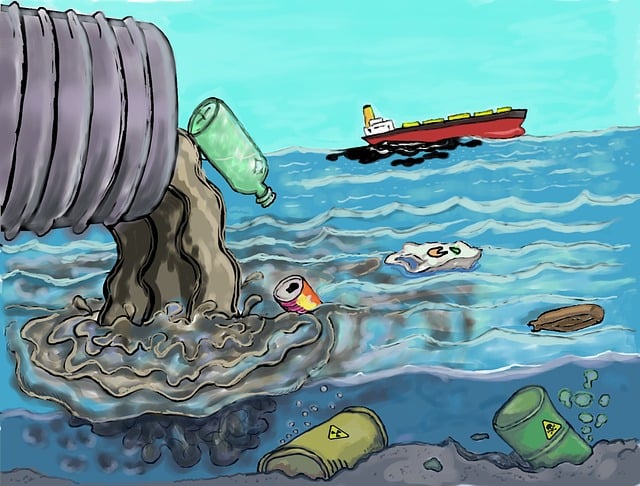
Image by Simon Wijers from Pixabay

She walked in the woods to be alone

To shed tears with her head bowed low

The sun burned through the trees like an eye

Fir trees swayed against an autumn sky

Beneath the earth lay tree root bones

A grave of leaves, pine needles, and fir cones

She took photos so the memories would last

Ferns, silver birch, ash and oak watched her pass

She felt the woods watching and imagined the lives

Of pixies, fairies, and trolls, left alone to thrive

And as she wandered curiously through their woodland home

She pictured the green man sat upon his throne

She returned home with dry eyes, her burden now undone

Then she looked at the pictures and saw a figure in every one

Behind the trees, within the trees, a grinning silhouette

When she thought she’d been alone he’d been following her every step

A gnarled finger like a twisted root tapped upon the window pane

Polished black eyes in a face of green, The Green Man was his name

She opened her mouth to scream but it filled up with moss

Roots snaked in and choked her until her life was lost