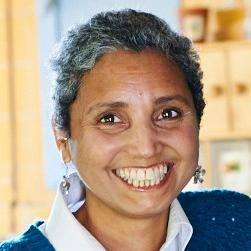
Author Interview; Rae Stoltenkamp

Welcome to my latest indie author interview, this time with author Rae Stoltenkamp. I first came across Rae when we were both authors on the now defunct indie publishing platform Autharium. I read her excellent  crime thriller  Six Dead Men and will soon be diving into her new venture, the first in a young adult series, Where Rainbows Hide. In this interview Rae talks about her writing and publishing journey so far, tells us about her writing process and offers her advice to writers about to embark on the indie route!

Q1 Tell us about your writing and publishing journey so far;

In 2006 I made the firm decision to leave teaching and write on a more full time basis. When I told my dad of my decision he didn’t blink an eye and supported me without a moment’s hesitation. In 2012 my dad died and my rebellious streak asserted itself in a desire to do something to honour his passing. I had a completed novel (Six Dead Men) which I was editing whilst sending letters and emails to agents and publishers – getting the usual rejection mail as expected. His death prompted me to do SOMETHING more concrete with my novel. Unbelievably, an opportunity arose to publish in e-book format without any expenditure on my part at all (Autharium). At that time e-publishing was a much debated topic and people were convinced it would have no place in the world. I thought, “Well, what the heck – it’s not costing me a penny.” Tons of no risk no gain sayings crossed my mind: Nothing ventured nothing gained If you’re not willing to risk the unusual you’ll have to settle for ordinary For who that dare not undertake, by right he shall no profit take So I forged ahead. I didn’t have the slightest clue what I was doing but the e-book went into the world and I told my friends and family all about it. I made the sum total of £12 in royalties and could not have been prouder.

Q2 When did the writing bug first grip hold of you?
I first got the writing bug around age 12 but started with incredibly soppy poetry that always rhymed. From 13 onwards wrote angst ridden teenage poetry which is so embarrassing I probably shouldn’t even mention the existence of it. Then ventured into short stories around age 14 and started on my first novel called Panthra.
Q3 Tell is a bit about Six Dead Men. Where did the idea for the story come from?
It’s quite sad really. I’d been to a neighbour’s party and met a rather nice guy. We ended up snogging for quite some time. Afterwards he asked for my number and I was certain he’d call but then he didn’t. I just put it down to the way things go sometimes. But a few weeks later my neighbour called me in, sat me down, made me a cup of tea and was generally acting very anxious. He then told me that the lovely man had been killed in a tragic accident. It may have been the shock but I found myself thinking it was probably my kisses which cursed him. And so was born the premise for Six Dead Men.
Q4 How would you describe your genre and your style?
My preferred genre is Magic Realism. I’m intrigued by how much in life can seem totally inexplicable. This genre allows me to explore this and helps me to delve into characters’ minds to look at how they may think or behave or be affected by circumstances and influences. My style is influenced by writers like Toni Morrison and the poet Maya Angelou. I love how these writers use the rhythm, feel and sound of words to get a message across in a dramatic way. I also equally love the element of melodrama you get in work by Austen and the Brontes. My YA books are all Science Fiction as they have a strong eco message which lends itself to this genre. It was also one of my mother’s favourite genres so I have a great soft spot for it. I guess my YA books are mostly a tribute to her.
Q5 You write in adult and YA genres, can you explain to us how this works? Does the character come first, or it is usually the plot?
As I’ve already said, Six Dead Men was born out of a personal experience so the character was built around this. I thought long and hard about the names as I wanted them to be significant. With my WIP; the prequel to Six Dead Men, the character came first. In fact I woke one morning with her words in my mind. Her voice was strong and clear and I had to race to scribble them all down. My YA novels always seem to be story led but I’ve recently found that characters are beginning to demand I tell their story in greater detail. As this is a series of books on the same topic I don’t have to think about the plot so much – it is almost a foregone conclusion. So it seems natural that I can now focus more on characters and what they feel, think and ultimately do.
Q6 Can you tell us about your writing process? What is an average writing day like for you?
I teach at a local charity 3 days a week so only have 2 dedicated writing days a week. I also volunteer one evening a week and tutor in the evenings the rest of the week. So I usually get up around 6:30am. After a coffee I get stuck right in. I have to set the timer on my phone as I often forget to have breakfast. After breakfast I get straight back into it and work until about 2pm. The afternoons are reserved for meetings or any marketing which needs doing. If I have no meetings scheduled I write until about 3 or 4pm then call it quits for the day. I’m currently thinking of moving all my marketing activities to a Saturday as this will free up more writing time as I want to crack on with several projects.
Q7 What are you working on at the moment?
My current WIPs are: 1. The prequel to Six Dead Men 2. A series of short stories based around characters in Six Dead Men and its prequel 3. The sequel to Where Rainbows Hide 4. The sequel to The Lonely Dragon.
Q8 What would you say have been the best and the worst parts of being an indie author?
The best part is writing about things that matter to me and seeing them in print. There is no worst part as it allows me to do something which makes me feel incredibly fulfilled. Sometimes the precariousness of the financial side can cause sleepless nights but when I’m deep into a project and the words are flowing on the page, I get such a sense of rightness that the worry simply falls away.
Q9 What advice would you give to anyone about to embark on the indie publishing route?
Only go down this route if you have great support from friends or family or both. Trying to do it all alone is a very hard road. Be prepared to put the hours in. No-one will be standing over you to make it happen – you’ll have to do that all on your own. Join a body like the Alliance of Independent Authors as they have a wealth of information which is invaluable. And finally – know your product and your audience then market accordingly.
Q10 What are your hopes and dreams for the future with regards to your writing? What would you like to achieve?
My hope is that within 5 years I will be able to earn a living from my writing and give up tutoring in the evenings so I can spend more time with friends and family. I would then wish to publish any writing for children for free.
Q11 Who are your favourite authors and why?
My favourite authors make up a very long list so I’ll just do my top 10: Jane Austen, The Brontes, George Eliot, Toni Morrison, Louis de Bernieres, John Steinbeck, Terry Pratchett, Joanne Harris, Neil Gaiman and Jacqueline Wilson The Brontes, Austen and Eliot because of the element of melodrama they bring to a cracking good story. de Bernieres because he opens up unexpected worlds in my mind. Pratchett and Gaiman because they tackle serious topics but also make me laugh out loud. Morrison, Harris and Steinbeck for their beautiful use of language. Finally, Wilson as she tackles issues so very relevant to children in this day and age and does it with great sensitivity.
Q12 Tell us three interesting facts about yourself
Not sure these are particularly interesting but here goes: 1. I absolutely loath white trainers – don’t know why, just do 2. I don’t like being given cut flowers as a present as they only serve to remind me that they are already dead and only good for the compost heap now. 3. I love watching garden make-over programmes even though I am the worst gardener on the planet and never even go into my own.
Thanks so much Rae!

Rae Stoltenkamp was born in South Africa and came to England in 1987 to visit family. She liked the weather so much she stayed. After a writing holiday in Greece she had an epiphany and realised she should be writing on a more full time basis. It was probably heat stroke since she hadn’t had sun in a while. She then studied writing at City Lit with the poet Caroline Natzler and is now a writer, blogger and former English teacher living in South London.

Currently Rae also works with www.inkhead.co.uk , teaching creative writing courses to children. This has inspired her to work on a children’s book called The Lonely Dragon. She is writing and editing several projects simultaneously, including a series of YA Science Fiction novels and the sequel to The Lonely Dragon.

Rae has a passion for Argentine Tango and when she is not chained to her desk and laptop, can often be seen tripping the light fantastic with her tango friends. She has also recently discovered the delights of Lindy Hop and is laughing her way through this style of dance.

https://www.facebook.com/raestoltenkamp.author

http://raestoltenkamp.blogspot.co.uk/

https://twitter.com/Raedenewrites

10 Things I Hate, 10 Things I Love About Being an Indie

The other day I was putting a blog post together and frantically searching the internet for suitable images for laughter inspiring memes. I like to try and make my own in case I get into any trouble, but I’m really not that good at it. I kind of have an idea in my head which never seems to  work out! Anyway, it was tedious and it annoyed me, just like Facebook annoys me every time it limits my post reach to a tiny amount of people. So I decided to write a list of the things that annoy me about being an indie author. And of course, to counteract the negative list, I had to come up with a positive one as well. Please feel free to add yours in the comments!

10 Things I Hate

  1. Creating amusing memes to add to blog posts, because it is time-consuming and I am crap at it.
  2. Finding or creating ‘fun’ images to help boost my Facebook reach every time I update my page because I am also crap at it
  3. Asking for reviews. Tedious, repetitive and pretty ineffective
  4. Having to be good at tech stuff ie formatting, because I am not
  5. Facebook showing only 3 people my exciting update, despite the addition of a funny meme/image
  6. Indie writers who do nothing to promote their books or build a platform, and then moan about never selling any books
  7. Indies who do not support other indies in any way, but constantly ask for support
  8. How much everything costs (I’m talking paid promotions and paid reviews)
  9. Having to write the synopsis
  10. People thinking your books must be crap because ‘anyone’ can self-publish


10 Things That Are Actually Quite Cool

  1. Designing front covers, and working with very cool people (and Canva!) to get your ideas out of your head and onto your book
  2. Connecting with other indies, who totally understand what you’re going through
  3. Connecting with readers, who message you about your book, article or blog to say what it meant to them
  4. Being the master of your own destiny!
  5. Learning how to run a business
  6. Embracing social media. Hated it to start with, sort of love it now
  7. Thinking up new and inventive ways to promote your books
  8. Breaking the rules
  9. Knowing you are getting better at all of it
  10. Perpetual hope that some kind of success is on its way!


Over to you guys! What do you love and what do you hate about being an indie author?

Do you ever think about how far you have come? Or if you are at the beginning of your journey, what are your biggest fears? What are you most excited about? To those further along, what would you do differently? What lessons have you learned?

Guest Post: Anthony Morgan Clark

Hello lovely followers, it’s time for another guest post! This month please let me introduce you to British indie horror and sci-fi writer Anthony Morgan Clark. Anthony  has just recently released a spine chilling short story collection The Soul Bazaar, (cover designed, incidentally by the wonderful Justine at Jakeart1 who has also designed some of mine!) and he is also the author of the epic The Complete Tor. Here he talks about why he chose the indie path and why it’s what works best for him at the moment…


“So when are you getting a book deal, then?”

Many people to whom I’ve spoken about my writing assume that writers fall into two categories: the ‘serious’ writer who spends months or years slaving over the perfect manuscript to use as a tool to pursue a publishing contract; or the hobbyist who writes occasionally, is more interested in self-expression than success, who publishes their work on their website or Facebook page and throws out a Kindle book every so often because, well, what else do you do with all that writing – and who knows, it might even make a few quid. The digital equivalent of vanity press authors.

Of course, the advent of the e-reader and print-on-demand services has thrown this reality (if not the perception) into disarray. Self-publishers now exist in a mixed-up spectrum rather a single category, ranging from the aforementioned hobbyists to the top-level pros who essentially constitute small presses themselves through their outsourcing of editors, proofers, cover designers, formatters and advertisers.

Me, I sit somewhere in the middle of that. I’ve learned to proof and edit my own work, though am happy to take feedback from beta readers. I possess none of the artistic skill needed to create the visuals on my book covers, but do assemble them myself using paint.net (a free Photoshop equivalent) or Canva. I have a very limited marketing budget at present, but use my writing and copywriting knowledge to draw attention to my books. I am far from being a hobbyist. Not that there’s anything wrong with that, but my goal is for my writing to be my main source of income. But does that mean I would welcome a publishing contract? After all, I have four titles already published. All of my published work has received strong reviews. I’ve two further horror novels outlined and am working on a third. As a horror author, I have an existing market a well-funded and well-connected marketing department could tap into.

So, given that my existing releases have not garnered the sales I’d like, it would make sense chase a contract with my upcoming manuscript, right? Maybe. Maybe not. Aside from the hurdles involved, from finding an agent to the insistence of some agents and publishers that a script is ‘professionally’ edited (whatever the hell that means), to the unbearable turnaround times, there’s also the amount of control I’d need to give up.

More often than not I’m a horror author. Any publisher would market me as such. Given the content of The Tor and The Soul Bazaar, that would be sensible. Even more so, if they asked to see my unpublished outlines for Swarm or my current untitled WIP, a supernatural horror. The problem is, I’m not just a horror author. Reformed may have horror elements, but it is mostly a sci-fi. The same is true of The Graveyard, another plotted WIP (that will be having its title changed!). I also have enough short stories for another collection, covering a range of styles from sci-fi to comedy to social commentary to literary/speculative fiction. The entire publication will be a tangential sequel-of-sorts to the final short story in The Soul Bazaar.

How many publishers would be comfortable marketing a collection of shorts, none of which crossover but are still collectively a sequel to a short story which is itself an offshoot of a trilogy of novellas? Or would be happy to spend time and money promoting non-genre (or different genre) works by someone they’ve pegged as a horror author? Even those that would are likely to insist on a pen name. Which I won’t do. Because all my works are interlinked. For example, several characters from The Tor appear in other short stories in The Soul Bazaar, including Symeon. Symeon is an archivist and a collector of stories, and it is this idea which binds together all the stories in my as-yet-unpublished collection. The Krahe family from The Tor appear in Tremere, a novel existing only in a notebook on my shelf. The Rutenger Corporation own the technology driving the majority of Reformed, but also run the vivisection clinic from Swarm, the deep-space tech of Graveyard, and the AI tech in some of the stories from that future collection. In addition, there’s ‘5304’, a code that crops up more than once in Reformed, The Soul Bazaar, The Tor, Swarm, and a number of other short stories. I can’t even begin to tell you what that’s about… Then there’s the length of the product.

I enjoy working quickly, and after the four hundred pages or so of The Tor I’m looking forward to working through all those ideas and outlines I constructed whilst editing The Tor. A few of them (Swarm, Graveyard) I expect will run to the length of shorter novels such as Herbert’s The Dark, or King’s Salem’s Lot. Other ideas, such as my story about a female serial killer, or the sequel to Reformed, I’d expect to become novellas. How many publishing houses market books of that length anymore?

As an author, I want to push and test my writing abilities. I want to experiment with different genres, styles, and techniques. If I fall on my face doing so, then so be it. I want to choose what I write, how much I write, when I release it. I want to choose how long I spend promoting my release before moving on to the next project. I want to choose who does the art for my covers. I don’t want to be a manufacturer, penned in to my own little niche, making product after product for the marketing department. So I choose to self-publish. Ultimately publishers are gatekeepers. And who needs gatekeepers now there are no gates? I may have started out as an indie by default, but I think I’ll choose to remain one for a long while yet.

Thanks Anthony! You can find out more about Anthony and his books by following him on Twitter  and Facebook

Over to you! Writers, have you chosen the indie or the traditional path, and what has led you to this decision? Perhaps you have tried both? What do you think are the pro’s and cons of each publishing path?

Don’t forget I am always looking out for new guest posts on my blog! If you have something to say that is related to writing or your writing journey, then please get in touch. Alternatively, if you have something to say which relates to my theme of glorious outsiders, then let me know! I am happy to consider blog posts, poems, short stories, novel extracts and more!


Indies!! What The Hell Are We Doing?

Indie writers, if you’re anything like me, you ask yourself the same question on a regular basis. It looks a bit like this;

headinhands

I’m sure my family think I am mad. None of this really pays off, let’s be honest. My husband chuckles when I declare I am going onto the laptop to ‘work’. He thinks I am crazy for giving myself so much stress.After all, it’s not like I have a boss breathing down my neck! I don’t actually have to do any of this, do I?

He can’t understand when I announce that ‘I have a lot to do tonight’. To explain, it usually goes a bit like this; ‘I’ve got to finalise the short story for the newsletter and I’ve got to fiddle with the template, plus I’ve got to share the newsletter link to my page before it goes out, so I can try to pick up a few more subscribers, then I’ve got to go over this week’s blog, because that goes out tomorrow and I haven’t added images yet, and I’ve really got to start hitting some book review blogs and I’ve really got to start submitting to some competitions, but I’ve got to finish this book too, and plan this other one…’

And I’m sure he’s thinking; um no, you don’t actually have to do any of that. You could have a night off and watch TV or something.

Indies, I’m sure you can relate to how I feel when I regularly ask myself; what the hell am I doing? Why am I doing this? Why am I writing another short story to add to another newsletter than only 19 out of 34 people will even open, and out of those 19, only 2 will go on to open the file and hopefully read the story? Why am I sharing my thoughts, my progress and my blog posts to Facebook so that it can show them to only 23 people out of 1027? Why am I asking for reviews when I might as well be banging my head against a brick wall? Why am I writing a book when the ones I have released already barely sell? Why do I constantly feel like I am fighting a losing battle? Why am I forever looking for the holy grail of ‘making it’ as writer? Will I even know it when I find it? Why the hell am I doing this to myself?

71989118

I think it’s common to feel thwarted, frustrated and downhearted as an indie writer. You constantly swing between feeling like an outsider, and feeling proud to be doing it your own way. You feel like you have something to prove, when surely having a nice, fat traditional publishing contract, would be all the proof you’d need? As an indie, you keep one eye on the sales, you pester and beg for reviews, you enter competitions, and do all you can to promote without becoming an annoying spammer. You lose yourself in social media, and it is all for your books. Sharing interesting writer advice to Twitter, pinning funny writing quotes and making storyboards for your books on Pinterest, running events and giveaways on your Facebook page, and starting an email newsletter to try to gain a decent, loyal following. You do it all, don’t you? And wonder when on earth it’s going to pay off…

How do you know when you have succeeded? How do you measure achievement when you’ve chosen the indie path?

Maybe it’s enough money to live on, or to at least pay a few bills. Maybe it’s some level of fame, recognition or critical acclaim? Maybe it’s wonderful reviews, or just a nice, steady trickle of sales? Maybe it’s just becoming a better writer.

Sometimes I have to stand back and force myself to ask some awkward questions. What if I never sell lots of books? What if I never get the amount of reviews they say you need to get Amazon on side? What if I never win an award? What if I never get any recognition or any level of success?

Would I stop doing it?

No.

Never. And when I remember this, I think, fuck it, and keep going.

And what is success anyway? Yes, more reviews, more sales, an award or too etc, would all be lovely. Of course they would. They would make it all worthwhile. They would help justify the hours, the blood sweat and tears and sanity invested in all this. They would help alleviate the crippling self doubt and the gloomy, why am I bothering days.

But you can measure success in other, smaller ways too.

Such as, where was I a year ago? Or two? How about six?

Well, six years ago I was still working on the early drafts of The Boy With The Thorn In His Side, having dragged it out from the dusty suitcase under my bed where it had been living since I last worked on it aged 16. With my then youngest child starting school, I’d felt the strongest urge ever to get writing again, as that book had just never stopped talking to me.

In the years that followed that decision, I’ve published four novels and one short story collection. I’ve finished two more novels and am working on getting them released soon. I’ve started a Facebook author page and slowly but surely reached over 1,000 likes. I started this blog which also has over 1000 lovely followers. I’ve had many articles about writing published by Author’s Publish. I’ve fallen back in love with writing short stories. I’ve started my own writing business, Chasing Driftwood, running adult writing group and children’s creative writing workshops. I’ve been asked to run several workshops for children and adults by the Dorset Writer’s Network. I’ve become a reviewer for Underground Book Reviews, where I actually get paid to read books! There is so much more I want to do too, such as working regularly with schools, running workshops for aspiring authors and after school writing clubs. I want to write all of the books in my head! And if that’s not the main motivation for all of this craziness, then I don’t know what is!

Plus, I have a confession. I do moan, I do lose heart, I do get frustrated and I do have ‘I’m just gonna’ give up’ days, but do you know what? The truth is I actually enjoy all the craziness that goes with being an indie. I’m proud to be doing it my way, I’m proud to be learning from my mistakes, I’m proud to be getting stronger and more confident, I’m proud of the sales and reviews that I have, and the messages from readers. And as for all the other stuff; Pinterest, tweeting, author page, email newsletter…yeah, I have to admit it is all quite fun. Admit it!! It is fun!! Plus, writing blog posts, learning how to master social media, attempting articles and short stories, will all help make you a better writer. You may be doing them for promotional reasons, but the process is going to help your writing in the end, so that’s a win-win!

preview

Now, over to you, fellow Outsiders. How often do you feel like quitting? How do you really feel about being an indie? How do you measure your own success? Do you enjoy all the promotional activities that go with being an indie, or are they a curse? Please feel free to comment and share! 🙂