Indie Survival Kit

Indie Survival Kit

When I first started out as an independently published author in 2013, I had no idea what was going to happen. I had no idea what I was doing, and it took me a long time to figure out what I needed to know. There is a lot of help and support out there for indies, if you know where to look, but it’s very difficult to find the time to research, when you are already spending a lot of time writing. With this in mind, here is an Indie Survival Kit. A list of things you will need! Imagine you are about to pack a bag and start a long, unknown journey. These are the things you might need to pack.

The Right Attitude.

You need grit, determination and self-belief. You need to believe your story is worth telling, and that you have the skills to tell it. You will need to grow a thick skin, and become good at self-promotion. You might wish you could just sit at home writing and not have to bother with the rest of it, but you can’t. Not if you want to succeed. So roll up your sleeves, open up your mind and get working.

Community.

Surround yourself with like-minded people. Become part of the author community. Read other authors and reach out to them, connect, support and join forces, as together you are stronger. It’s not all about you, and if you think it is, you won’t get very far. It’s amazing how supportive and helpful other author’s can be, so make sure you are involved. Invite authors to post on your social media pages, or on your blog or website, and offer to do the same for you. Interviews are always very popular and interesting to both writers and readers!

Social Media Checklist

Have you signed up to at least three social media sites? One of these should be your blog/website. Do you blog regularly? At least twice a month, although ideally more? Are you visible on social media? Do people know who you are, or have they forgotten about you because you haven’t posted anything interesting lately? Has Facebook assumed your fans are bored, and has unliked the page on their behalf? Keep things fresh and fun, start debates, run contests, let people know about your struggles and successes, link up your sites to save time, share articles of interest and so on! Do this daily, as much as you can and don’t neglect it.

Reviews

Seek them out. Go after them. Don’t just rely on friends and family, or on the assumption that readers will remember to review. They rarely do. Go to review sites, and be prepared to pay for some and to be put on waiting lists for the ones that are free. The same applies for bloggers. Research them, make lists and do this weekly to build up those reviews. Remember that reviews help your book move forward; they encourage readers to buy and they convince Amazon to take your book more seriously.

Courses

Keep your skills up to date. Join writing groups online and in real life. Take courses. Udemy and FutureLearn are great sites that often have deals and freebies, so grab the offers when you can. Keep your skills sharpened and work to constantly improve your craft.

Audience

Be patient, but work on growing your fanbase at all times. Use your blog, Wattpad, Street Teams and social media sites to interact and connect with readers. Ask their opinions, share sneak peeks, freebies and competitions, share your ups and downs, your decision making processes and so on. Stay positive and upbeat. They will feel like they are on the journey with you. Offer free samples and short stories at the back of your books, or on your blog.

Resources

Look for free or cheap to help keep costs down. Canva.com is a great site for graphics and posters. You can create social media graphics, memes, posters, leaflets and even ebook covers on there. iAuthor is free, and is a great way to find the readers who are looking for your type of book. You simply add your books to the extremely diverse ‘themes’, or even make up your own. Wattpad is free, and is a great way to find readers and get feedback. Fiverr is a site where you can pay people as little as $5 for file conversions, artwork and more.

Follow the right people

There are so many great sites and pages out there for writers, it’s hard to know where to start. But do start. Follow organisations that will provide you with the information you need, so that you do’t have to go looking for it. The Alliance of Independent Authors, Author Unlimited, Writer’s Digest, The Writer’s Circle and Positive Writer are just some of the many pages/groups I follow to pick up tips and up to date information on the writing world.

Income streams

Find other ways to make money out of writing. Ads on your blog, sending articles to sites who pay, short story submissions and competitions are all great options. You can also get paid work as a book reviewer. There are so many sites  popping up now to provide reviews for indies and these sites also need reviewers! Offer editing and/or formatting to other indies, or even front cover design, graphics and art work if you are up to it. Many writers also make additional money by going into schools to run workshops, or by offering workshops to other writers. You can also do this online and sell the content. Copy writing, ghost writing, ad writing, all are other ways to pick up income through writing.

Promotion

As an indie, you will more than likely have a love/hate relationship with the promotion of your books. You know you need to do it, but you don’t know how. You know you must figure it out in order for readers to know you exist, but all you really want to do is write. I think the sooner you get to grips with promotion and accept it as part of the deal, the better. It can even become fun. Your blog for instance, should be fun. After all, it should be your little stage, your platform to talk about anything you want to talk about. Again, social media should be fun, and it can be if you engage with it and make time for it. Set aside one day a week when you concentrate on promoting your books. I advise setting up a website/blog early on and making sure it is as professional as possible, after all it may be the main landing point for readers interested in your books. Everything else can come from here; your links to social media, links to your books and your style of writing itself. Set up a subscribe by email button, and another button that collects emails for a fan newsletter. Do this as soon as possible so that you can start building an email list of people who are genuinely interested in your writing. You can then treat them to freebies, sneak peeks and special events and you are on the way to building an audience.

These suggestions are all simple and relatively cheap, and they are all things I wish I had known before I started.

I’ve Slowed Down A Bit…(and that’s a good thing)

For the past few weeks, I’ve felt a bit like I am on holiday. This weird, and decidedly naughty feeling has crept over me every day since I handed The Tree Of Rebels back over to my top beta reader. For those that have been following the whole saga, it was meant to be the final, final, draft, but I then decided to hand it over again, and attack it one more time once I get it back. This was meant to be a moment of relief; I’d hand over one project, (the one that’s been driving me crazy) and jump straight into the next one. The next one is the second draft of my novel Elliot Pie’s Guide To Human Nature, a book that was consistently calling to me and generally interrupting the flow of things while I worked on The Tree Of Rebels.

You’d think I was gagging to finally, really get my teeth into that one, and you would be right. I was, and I still am. But something made me stop. It’s been two and a half weeks now since I parted company with The Tree Of Rebels, and I have still not dived into the next book, despite how much I want to.

You see, normally I would have. I would have started that second draft the very next day. I would have divided up my time and my attention, between that, and the million other things I constantly need to do, just like normal. I would have split my time in half each evening; half the time for Elliot Pie, half the time for ‘other things’, such as my short story collection, proposed articles for Author’s Publish, my preparation for the kids writing workshops I run, reviews for Underground Book Reviews, and not to mention, the big fat ugly elephant which sits and reeks constantly in my room. Promo stuff.

Promo stuff; like sorting out my websites, like finishing the process of getting all my books re-available in ebook and paperback after my indie publisher went bust in February, like researching and submitting to review sites, like building an email list, like figuring out how to best ‘sponsor’ a post on my Facebook author page, and so on and so on…

Basically, I have a constant back-list of ugly things to do, and I am constantly putting them off. Why? Because the characters in my head are so totally real, vibrant and alive, that I actually feel physically sick and guilty if I ignore them. Add to that, the very real and crawling in the pit of my belly panic that I have that I will die before I ever get time to write all of the books I want to write… I mean, really, there is just not enough life…

Anyway, I don’t know what, but something happened. Maybe common sense invaded my fucked up writer’s mind and beat the characters over the head with a club to make them shut up. Maybe I just got really tired of juggling lots of balls, and lets face it, seeing very, very little financial reward for any of it. It’s time to get real. It’s time to grow up…well, just a little bit. I love writing. I love it with every fibre and essence of my being. It is completely and utterly who I am, who I have always been, and all I ever want to be. But I can’t just sit and write my books. I have to figure out a way to sell them. I have to give the right amount of attention to other income streams.

So that’s what I’ve been doing. Grown-up stuff. I’ve finished the short story collection and at some point this week I fully intend to upload it to KDP. I’ve set up my email list, and the very lovely subscribers to it will be getting a new and exclusive short story very soon, and many other goodies and sneak peeks in future newsletters. (If you are interested you can sign up here ) I’ve been adding bits to this site  and to my Chasing Driftwood site. I’ve submitted some articles, drafted a review and proposed an author interview. I’m all prepped and ready for my next two kids workshops and my adult writing group.

I’ve been turning the laptop off at nine or ten pm each night. I’ve been curling up on the sofa to watch old X-Files with my kids while they are on Easter holiday. I’ve felt calm and unpanicked, and like I am on holiday! And all because I have pushed the novel writing aside…the thing I love the most…

And yes, all of this time, Elliot Pie has been there. Dear, sweet little Elliot. Who has waited so long to get my full attention, who is there whenever I set foot on my beloved wild common with the dogs, chatting away, thinking his thoughts, writing his lists, trying to think up ways to convince his mum that the world is not such a bad place… He has whispered, and he has giggled, and he has sighed sadly and wandered off again to leave me to it. I am mental, because I really do love him. He is real. Like they all are.

But slowing down has been good for me. Elliot will still be there when I am ready. I am trying to convince myself that I am ignoring him in order to build a better future for him! (See…? Totally fucked up writer’s mind.)


Author Interview; Keith Gillison

Welcome to another indie author interview! If you missed the last interview I posted, it was with indie author Joel Dennstedt,  during which he told me all about the inspiration behind his novels, and how manages to keep writing alongside his constant travels. Next up is Keith Gillison, a British author I discovered recently. His debut novel The Boss Killers is a dark and twisted satire about one man’s desire to dispose of his vile boss. Intrigued? You should be, it’s a hell of a story!
1) Your novel, The Boss Killers is a dark satire about one man’s desire to kill his terrible boss. Could you tell us where you got the idea from? 

I’d love to say I did lots of research, spotted a niche area ripe for exploiting and then painstakingly plotted the novel out. However, I was walking through the splendid grounds of a public school in Dorset when this scene played out in my head of a man having his annual appraisal and in his mind he’s saying all the things he really wants to say to his jobsworth boss. I just liked the idea and wanted to know what would happen next so took the idea from there as a starting point and ran with it. The hammer came from an actual former boss who, on my first day, showed me a hammer he kept in his desk, which I’m pretty sure was intended as a threat.

2)Did you always know you wanted to be a writer?

When I was at school for some reason I actually enjoyed writing essays. In my career in marketing I wrote a lot of business copy for promotional materials and websites. I liked writing but never tried my hand at creative writing, I was one of those people who thought ‘one day I’ll write a book’ while secretly knowing that it was a pipe dream and I’d never do anything about it. Nine years ago that changed when I lost my sister to cancer. I thought I couldn’t look myself in the mirror if I didn’t at least try my best to write that book.

3)What has your journey as a writer been like so far? How would you describe the experience?

It’s been a tough journey. At the same time my sister was dying of cancer I was very ill. My energy levels were getting worse and then one day I was out in Dorchester, I sat down at a bench and couldn’t move any part of my body. I was eventually diagnosed with Chronic Fatigue Syndrome (also known as ME) and nearly ended up in a wheelchair. I’ve battled back but have still had frequent bouts of chronic illness for the last 10 years. During this time I also had two children, moved home and wrote a novel. It took me a long time to write it because I was ill so much so there were long periods when I couldn’t write. Also, I wrote the entire novel before I attended my first writing class, which probably isn’t the wisest way of doing things. At first I really struggled writing the novel, as I’d never even written a short story before but I persevered and then one weekend I wrote this scene, what would become The House of Lard chapter, and I thought ‘Woah, where did that come from?’ It was like I’d opened this door into my imagination and suddenly I felt like I might actually be able to do this.

I’ve had ups and downs, I’ve won a writing competition and had short stories published in magazines and anthologies, and been broadcast on local radio, as well as plenty of rejections along the way. I’d say I’m more confident in my own ability now and have learnt some of my blind spots and areas I need to work on but I’m still learning.

4) What made you decide to take the self-publishing route?
I contacted a number of agents initially and was rejected by some, others didn’t even bother to reply. I had some nice rejections but I found the process of waiting an interminable amount of time (always longer than their guaranteed reply period!) very frustrating. I found myself in the position of having a decision to make – did I want to spend the next however many years sending my novel off to publishers and agents or did I genuinely want people to be able to read it. I was impatient to start working on other writing projects as well and I didn’t spend all that time and effort writing my novel to sit on my computer forever so I went for self-publishing. I think people need to ask themselves that question – do you want people to read your work? If the answer is yes then there is nothing stopping you doing it yourself through self-publishing.

5) What would you say is the best thing about being an indie writer?
You can do whatever you want. Nobody is telling you what to do or when to do it, you have the freedom to just go ahead and publish and while the process is a lot of hard work, you also learn a lot and gain valuable skills. It’s a feeling of freedom to not be dependent on other people, knowing you can just do it all yourself. You don’t have to be one of those people who says ‘I wrote a novel but couldn’t get it published so I gave up.’ Self-publishing means when you are rejected by publishers it’s not the end of the road. It’s better that some people read your work than nobody.

6)What would you say are the worst things about being an indie writer?
It would still be good to not have to do everything yourself. As a self-published author you have to do all the promotion of the book yourself and there are times when I’d rather have someone do that for me so I could just concentrate on writing. It’s also irritating that sometimes the self-published tag is perceived as meaning lower quality which is an unfair generalisation. I’m sure there are some poor self-published novels, but I’ve also read plenty of traditionally published novels that were utter tripe.

7) Do you have any top tips for indie survival?

In the words of a well-known sports clothing brand; just do it. It’s an amazing feeling to have your work published and out there for everyone to read. The biggest piece of advice I can give is – believe in your work. As an indie author you have to fight to get attention for your work and you’ll get disappointments along the way but if you truly believe in your work then you’ll know that people just need to read it. Don’t expect it to be easy though, there are millions of books and authors out there but you know something they don’t – your book is awesome! And keep going, it might take you longer to get where you want to be but you can still get there

8)What are you working on at the moment?

I injured my arm in December and typing is still painful now so at the moment I’m mostly writing short stories and flash fiction, with a view to an anthology later this year. I’m about 40,000 words into another novel and I have plans for several others as well. I’ll get back to the novel when I can write more intensively again without the severity of pain.

9) How would you describe your genre and style?
Humour tends to be my natural style of writing, with a leaning towards dark and surreal or ridiculous humour. I love taking an idea and stretching it way beyond what anybody would consider normal. I’d like to think of my writing as very original and different from everything else out there.

10) Who are your influences/fave authors?

Terry Pratchett is a huge hero of mine. I love the humour in his writing and he has some of the greatest fictional characters of all time. Lord Vetinari is a particular favourite, as are Granny Weatherwax and Cut-my-own-throat-Dibbler. Pratchett takes you on amazing journeys of the imagination and he combines great humour with brilliant storytelling.

11) what are your dreams/hopes for the future?

The ultimate dream would be to be able to make a decent living out of writing novels, be a bestselling novelist. I’m sure all authors would want that. I’d just like to write more novels and feel that I’d told the stories in my head as I wanted to and that people enjoyed them. I don’t want to be accused of literature but it would be nice to be recognised as a writer that readers regard as entertaining and original.

12) Tell us about your writing routine/process – how does it work?

I write the old fashioned way – pen and paper and then I type it up later. It adds to the time but I just can’t get any creative juices flowing staring at a screen. There is something special about just a pen and paper and your imagination, you can go anywhere, be anyone and do anything. Pen and paper also means being able to write anywhere without the need for technology. I’m continually scribbling bits at the side and adding arrows so the page is organised chaos. Ideally I like to be alone and somewhere quiet and then just write for a few hours. I have found it difficult to find a quiet place, even libraries aren’t quiet anymore, sometimes I’ve written in my car and bits of the novel were written at kids soft play places but I wouldn’t recommend that. I don’t edit as I go, just write it all out, including the rubbish bits, it’s important to keep the flow and once I’m on a roll I’ll keep writing until I’ve either got to the end of a story for a short story or the end of a scene or chapter for a novel. I don’t like to leave a scene or story half-finished, I’d rather wait until next time. I usually write a few notes at the top of the page, pointers of things I want to include but I don’t plan anything out in detail, I like to just picture the scene in my mind and then write it.

13) Tell us three interesting things about you

1/ I’m a decent table tennis player. I’ve played for my county at both junior and senior level. I spent my youth travelling around the country playing in table tennis tournaments.
2/ I suffer from acute anxiety and have frequent panic attacks.
3/ My background is in marketing. I have a management degree from Aston University and a postgrad diploma from the Chartered Institute of Marketing. I once worked for a woodland burial ground and funeral directors, selling burial plots to the general public and steel mortuary trays to funeral directors. That was a conversation stopper; ‘So what do you do?’ ‘I work for a funeral director’. Many a tumbleweed moment was had.
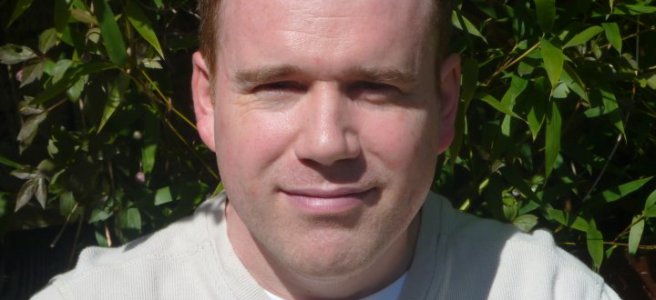
 Keith Gillison is 40 years old and lives in Dorset, but is originally from Birkenhead on Merseyside. He is married with two children. A graduate of Aston University and the Chartered Institute of Marketing, he spent 17 years working in marketing. He published his first novel, The Boss Killers, in 2015. He also writes short stories and flash fiction and has been published in magazines, anthologies and online.
Find out more at thebosskillers.com or follow Keith on Facebook and Twitter

Final Draft? Patience is the key…

Last Friday I finally finished the final draft of my YA novel The Tree Of Rebels. Yes, yes, yes, it is done! It is finished at last! Or is it? I’ve lost count of how many drafts and rewrites it has been through now. I’ve blogged about a fair few of them! I decided to change the tense from present to past, and I also added some new scenes. Then I went through it all again, with what felt like a very gentle and enjoyable edit. Correcting typos here and there.Small corrections. Nothing major. And I finally liked it!

As I may have mentioned once or twice before, I’ve had a love/hate relationship with this novel since I first got the idea for it. I ignored the idea for a while because it would mean writing a book way out of my comfort zone. When I finally started it, I suddenly got another really good and important idea for another book, which wanted to interrupt this one. I didn’t let it, and forced myself on, which in hindsight, was probably the wrong thing to do. I do wonder if I ought to have listened to the loudest voice, put Tree of Rebels to one side and gone with Elliot Pie when he was at his most demanding…

But anyway, I didn’t. I wrote this book, and then started a second draft, sent to beta-readers, drafted again, hated it, drafted again, loved it, left it for ages while I wrote Elliot Pie…drafted it again, hated it even more and so on, and so on. It was like having a constant argument with myself. This book is brilliant! No, it’s not, it’s a total waste of time!

I’m pleased to report that during this last, final, never to be messed with again, draft, I really and truly fell in love with this book. I got the feeling I had been waiting for. Everything clicked. I knew what it was and I was proud of it. Changing the tense worked wonders, and the extra scenes I added seem to work really well too. I was so into this book by the time I finished it, I even carried on and drafted the synopsis of the sequel, and wrote the first two chapters of this!

So when will I be releasing it then?

Hmm, not yet. Because I still don’t think it is finished! I decided that after so much doubt, it would be worth sending it back to my top beta reader/editor for a final read through. I know she will be honest and scathing if she needs to be. I am curious to see what she thinks of the change in tense and the extra scenes. Waiting for her to read it will give me some head space from it, and a chance for the book to breathe. I thought this was a sensible idea. If there are any lingering typos or things that don’t make sense, they will be picked up and sorted and being patient will help me decide if it really is finished.

The problem is, I am already getting more ideas. Just little bits here and there. Just bits of dialogue, and brief scenes or moments that have suddenly popped into my head. I really didn’t think this would happen! I really did think I was done…

But I’m glad that it has, even if this does mean once it comes back, it will be getting another going over by me. You see, it’s all too easy these days to write something, do a few more drafts and then self-publish it and move onto the next one. Believe me, it is very, very tempting to do this. I have so many other books to write, but I have to resist the temptation to rush things. Patience is the key. A book is done when it is done, and not a moment before. I could release this book now and see if you like it, or I could wait to see what my favourite critic says first. I could release it after that, after any last lingering mistakes have been mopped up, or I could wait a bit longer, see if it can be any better. It’s surprising how you feel about a piece of writing if you leave it alone for a while. You might think its the best it can be, but give it a few months, during which hopefully your writing skills would have improved even more, and quite often you can already see that it can be made better. And if it can, then it should.

So, apologies folks. The Tree Of Rebels is done…but not done.

The really good news is that I have finally fallen in love with it, which is how it should be in my opinion. I’ve had a strange relationship with this book, and I’ve nearly given up on it several times. It never felt quite the same as my other books, like the connection was not quite right. But this feeling has well and truly gone now. I’m even writing some more of the sequel tonight!