July Writing Challenge: The Longest Day

At the end of June I posted on my Facebook author page asking for writing prompt suggestions. I received a lovely amount and the one I chose to respond to was, ‘write about an ordinary day that lasts forever.’ I had a few stabs at this but this was the final result. I hope you enjoy it. This is the second draft and I will probably play around with it a bit more before it gets added to my next collection. I’ll be asking for a new challenge for August!
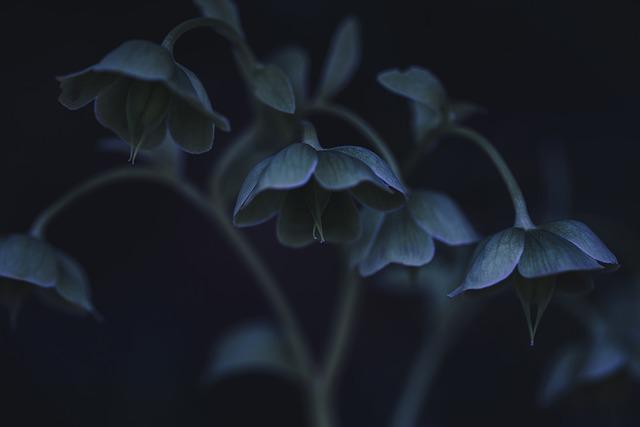
Time didn’t work the same way in Grandma’s garden.

Time had its own rules there.

Time is not the same for children as it is for adults either. And if you combine children with a dark and secret place they have been forbidden to enter, you find that time plays tricks on you. That an ordinary day can become an extraordinary one. That an ordinary day can even last forever.

Would you like that? To live forever?

I thought I did, when I was a child. I first realised death would get me when our dog Ralph got smashed to bits by a speeding car. He wasn’t supposed to be out on the road. That was my fault. I left the gate open and he followed me out to the ice cream van, wagging his fat tail hopefully. His hope ended when the speeding car swung around the corner and took him out. I still remember counting the bits of him that were spread across the road. My mother later said I was in shock, when I kept repeating the number. Twenty-two. It was twenty-two. And I knew then that death was coming for everyone, even me, which didn’t seem remotely fair because I was obviously special, and ought to be allowed to live forever. Children are self-centred like that. Think the world revolves around them.

Until they go to visit their grandparents and the house is full of noise and gossip and there are aunts and uncles everywhere you turn. No child can tolerate that much head rubbing and lip smacking for long, so we wriggled free, me and my cousins, and we went out to the garden.

We followed the wide stone steps from the front door, down to the first layer of the garden. This was Grandad’s domain, with his runner bean plants, giant marrows, trimmed conifer hedges and the door to his cellar. There was a little low brick wall we taught ourselves to balance on, arms flung out to either side. If you toppled one side, you’d land on his runner beans and someone would tap on the glass from the window above to scold you.

We skipped down a worn grass path away from the tapping on the windows and the prying adult eyes until we came to the next layer. A flat spread of grass surrounded by bright flowerbeds. Grandma’s domain. A rotary clothesline swung in circles in the breeze. Her bird table and bird bath were always full to attract the birds she watched from the window.

There was another wall here – you could jump down and land in the final area. The lower garden, where the grass was longer and greener. Grandad’s compost heat warmed the air and flies buzzed manically around it. Here the fences seemed higher, the trees thicker, the canopy above sheltering us from the windows of the house.

Here, we traded secrets. Robert was a snitch and a tell-tale. Martin wet the bed last time he slept over at Grandma’s. Lucy’s dog got splattered on the road and the blood sprayed all the children in the face. It was a zombie dog who kept walking even after his head had rolled away. Maria’s mum had an affair and now she is getting a new daddy. Here, we traded dares. Throw one of Grandad’s tools over the fence. Poke a stick into the steaming compost to see if it is really full of snakes. Steal some knickers from the line and hang them in a tree. Pick the plums from the neighbour’s tree. Throw plums at the houses and then duck.

It was dark and green and safe but in the fence was a small iron gate that led down to the very lowest, furthest part of the garden. Grandma and Grandad did not venture down to the lowest point for several reasons. There were too many trees, Grandad said, so he couldn’t grow anything down there and also, the hose wouldn’t reach. It was too difficult for them now to climb all the way back up, Grandma said, with their old bones and bad backs. It was too wild down there, they said. Best to leave it alone.

We were forbidden. They couldn’t see us from the window, couldn’t see what we were up to and we were always up to something. It was too overgrown down there, too tangled and there could be rubbish, even glass amongst the undergrowth. Over several summers, our curiosity grew into something that felt alive. Something yearning and aching and building up inside of us until that particular summer, the summer I was twelve, we could bear it no more. We hatched a plan and prepared for battle. It was me and my two younger brothers, Patrick, eleven- and nine-year-old Harry. It was my cousins Robert and Martin who were ten-year-old twins at the time, and cousin Maria who was eight.

We set up a picnic in the lower garden, not too close to the fly infested compost pile. We asked to borrow a huge umbrella for shade and behind that, we dutifully spread out a soft blanket and organised the food and drink they’d let us take. We knew from the windows they would just about be able to see the umbrella and would hopefully assume we were still playing behind it.

‘They’ll be too busy watching the match,’ I added when Patrick gave me an anxious look. ‘Besides, we won’t be very long.’

We stood at the gate and took a deep breath. Beyond the gate, darkness beckoned and Maria slid her sweaty hand into mine. I checked my watch – it was ten am. Behind us the sun was a red gold ball of fire torching the garden, but beyond the iron gate, we could feel soft cool air calling to us. It smelled different too. It smelled alive.

What struck me first, before we went through the gate, was how green it all was. How you couldn’t really tell where one tree or shrub ended and another began. It was a mass of tangled green in varying shades and it felt hungry. It wanted us to come in.

So we did. What we found first was a set of small stone steps. This delighted Maria who happily hopped from one to the other, declaring they were small enough for fairies. The boys charged ahead, waving sticks at imaginary danger. I lagged behind, mainly because I wanted to take it all in, this forbidden, secret land, and because Maria was still tightly clutching my hand.

There was little light. Only tiny fragments made it through the thick canopy of trees and vines above our heads. I identified fir trees mostly, but there were hawthorn, ash and elm as well, all pushing and vying for space. The bushes were mostly rhododendron. Grandad always said that plant was an invasive pest, but its flowers were in full bloom, exciting Maria further as she danced ahead to pluck the bright purple petals.

It was silent. I saw the odd bird flit from tree to tree but I didn’t hear any song. The path seemed to go on forever and I was in awe, confused. I had no idea my grandparents garden was this big, this long. It kept going down, which didn’t seem to make sense because I knew that behind their house was another road full of houses just like theirs. I felt like we should have reached a boundary fence by now, someone else’s land. But it just kept going, and the steps got narrower and steeper and when I called ahead, the boys did not answer.

‘They’ve gone,’ Maria stated plainly and my heart beat faster.

‘Hiding,’ I told her. ‘Watch out. They’ll jump out on us soon.’

Suddenly, she froze and screamed. It was a horrible sound, one that I was sure the adults would hear from the house. Thanks to her, our adventure would be over before it had even begun. I shook her arm to get her to stop but she just pointed to something sat on the next step. Something we had almost stepped on.

It was the largest slug I had ever seen. It was almost as big as my foot. I backed up, blinking in panic, because although I liked to think of myself as a tough customer, I was repulsed by those things. It was just sat there, glistening and pulsing. Its gleaming skin was the colour of the steps, mottled green and grey. I looked over my shoulder and felt sick when I saw more slugs posted on the steps we had already descended. How we didn’t slip on them and fall to our deaths, I will never know.

She hadn’t got far but that was enough for Maria. She pulled free of my hand and charged back up the steps, screaming for her mother. Great, I thought, watching her go. Any second now they’ll be bellowing at us to come out and asking us what the hell we thought we were up to.

‘You can stop hiding now,’ I called out to the boys. ‘Maria went back screaming over a slug! The game’s over!’

There was no reply, just a heavy waiting silence. I stepped over the slug and kept going, mainly because I knew I had to retrieve my brothers and cousins before the adults really got angry with us. There were no more steps after a while, but I couldn’t believe how far we had gone. Where was the fence? Where were the other gardens?

Peering ahead, I could see a dusty brown path weaving around tall firs and pines, seemingly stretching on forever. The branches of the trees were so low and heavy they brushed the ground, creating dark pockets of thick shadows between their trunks. I stared at every one, daring the boys to leap out and scare me and every time, it felt like something was watching me in return. I shivered and walked on.

Now the steps had ended, there was nothing man-made down here at all. No signs of human life. No rubbish, no old plant pots or garden tools, no bird feeders, nothing. I looked up and saw a tiny fragment of sunlight winking at me through the tops of the trees. Around me, the darkness seemed to creep closer.

‘Boys?’ I called out again, nervous now. This was no fun without them. The plan wasn’t to come down here on my own and get shouted at on my own afterwards. The plan was to have an adventure, to explore and discover. I didn’t feel like doing that now. I turned in a circle and caught a glimpse of something shimmering to the left. I wove my way through the trees – some spindly white boned birches this time – which were growing in a haphazard fashion around a large pond. ‘Boys?’ I asked again, but I didn’t like the sound of my voice down here. It sounded too loud, too abrasive and I was sure I could hear the bristle and rustle of undergrowth that didn’t like it either.

I stepped closer to the pond and felt cold water seep into my trainers. Yuk! I grimaced and plodded forward a few more steps, cold brown muck squelching between my toes. The surface water of the pond was rippling, suggesting life beneath and I watched for a while, as a trio of ginormous dragonflies descended like mini bug-eyed helicopters. There were flies too. Lots of them. A gentle thrum of crickets and grasshoppers could be heard beneath the buzzing of the flies and as I skirted around the pond and kept going, the sound grew louder.

I searched around the pond, keeping it in my sights, on a mission now to find those little turds and make them pay for ruining our plans. Maria, I could forgive, but the boys were taking this too far now. This was supposed to be a group adventure. Having said that, the silence and solitude were becoming rather nice. I smiled a little bit, thinking how lucky we were to have found such a secretive place. I also felt an unexpected twinge of anger at the adults for keeping this from us for so long.

I searched for footprints in the mud and dust and found none. I searched for broken twigs and sticks, a trail of anything that would lead me to their hiding place and found nothing. I got bored after a while and as there had been no angry bellows from the adults, I started to make a den a safe distance away from the pond. I got lost in my work for a while; dragging suitably long branches and sticks over to a sturdy pine and arranging them around it in a wigwam formation. I covered it with ferns and left a doorway to entice my cousins in. I sat in it for a while, feeling hot and sticky and thirsty, and thinking longingly of our food and drink back on the picnic blanket.

‘Okay,’ I announced after an hour had passed. ‘I’m going back now. I’m hungry. You better come out and follow me back up or we’ll all be in trouble.’

There was no answer. I was proud of the little den though and smiled at it over my shoulder as I walked back past the pond and headed back towards the steps. Only they weren’t there. I stopped and looked around. The pond was on my right, as it had been on my left on the way down. So the steps ought to be directly ahead. But they weren’t. Instead, all I could see were trees and rhododendron bushes. There was no path at all. No steps, nothing. It was like a dusty, dry jungle of silence and waiting.

‘What?’ I asked myself, turning in a circle, but I had no answer. I had no clue. I had no choice but to keep walking. I checked my watch and saw to my horror that it was past lunch time. How could that have happened? I hadn’t taken that long over the den, had I? I must have. I shook my head and kept walking, trying to head back towards the hill of steps that had led me here.

But there was no hill, no rising incline of land, so surely this was the wrong way? If I wasn’t climbing upwards, I was going the wrong way. I turned around, slightly panicked now and laughing at myself nervously and tried the opposite direction. That didn’t make sense because the pond was no longer on my left, but what could I do? Maybe there were two ponds?

‘You guys!’ I yelled out in frustration. ‘You’ve ruined this whole game and I hate you! Come out right now!’

Of course, no one did. The boys were long gone. Perhaps a monstrous slug had scared them too and they’d run back to the gate another way. I had no option but to stomp around in anger and frustration, but I only seemed to get myself more lost. Some time later, gleaming with sticky sweat, I sat on a grassy hill under a ginormous oak tree and checked my watch. I was shocked to discover another two hours had passed me by. This wasn’t right. I was so confused, all I could do was sit there for another hour, just gazing at the ground in front of me, just trying to figure out what the hell had happened here.

Eventually, the panic subsided and a kind of weary, grudging acceptance kicked in. Maybe I live here now, I thought, maybe this is my place and I can never leave. With that notion kicking around in my head, I started to perk up a bit. I stopped freaking out and started exploring instead. I found all kinds of interesting and unbelievable things that day on my own at the bottom of the garden. You would not believe any of them if I told you. And I knew that if I ever spoke a word of this to anyone in my life, I would be branded either a liar or a lunatic.

I knew I would keep it to myself and once I’d made that decision, things got easier again. I began to enjoy myself, climbing trees that seemed to provide the perfect branch at the perfect time. I found long, twisted vines of elder and ivy and swung from them, each one holding my weight easily. I found a little stone bridge that swerved over a thin, shining point, where I stood and watched rainbow-coloured frogs diving and swimming.

I heard the voices in the undergrowth, the whispers in the trees, the soft playful laughter behind the leaves and I laughed back. I was home.

And not long after that, with my watch telling me it was now four in the afternoon, I suddenly came across the stone steps again. The slugs had gone. Bright light sparkled from the garden at the top and I could even hear my cousins laughter.

I emerged blinking and squinting into the hot sun that parched the end of my grandparents garden, fully expecting the adults to come racing down towards me, stressed and panicked and furious. But they didn’t. My cousins and siblings looked up at me from where they were sprawled out lazily under the umbrella we had set up, but none of them seemed to react with any urgency. I’d been gone all day; what the hell was wrong with them?

‘Can we eat this now you’re back?’ asked Maria holding up a slice of apple cake in her grubby hand.

I stumbled towards them, nodding, my head fuzzy with fatigue and confusion. None of them reacted as I plonked myself on the blanket and plucked several leaves from my sweaty hair.

‘How long was I gone?’ I asked them after a while. I was staring at my watch, trying and failing to understand this.

Martin shrugged, his mouth full of crisps. ‘Dunno.’

‘Ten minutes?’ Patrick suggested.

I tapped my watch. ‘That’s impossible.’ I opened my mouth to start to tell them, to explain that my watch said I’d been in there all day, that I knew I had because of how long and far I had walked and climbed and played, because every inch of me, every bone ached and throbbed with exhaustion. But then my mouth snapped shut and I said nothing.

Minutes passed and still I said nothing. I was starting to think keeping it to myself might be the best option. I didn’t want anyone to laugh at me or call me a liar and besides that, I’d found something special, hadn’t I? Something dark and inviting, something secretive, something alive.

Something that was mine.

Creating A Universe

Writing is fun, challenging, therapeutic, cathartic and exciting for many reasons, and I have posted before about why I love writing so much. But I was thinking the other day about something that has begun to happen by accident with me and my writing. And that is creating a universe.

Now, if you are writing a fantasy, sci-fi, dystopian or even a horror story, then you’ll be well aware of the need to create a universe. What do we mean by universe? By ‘universe’ we mean a fictional world made up of locations, events and characters that differ from this world.

Image by WikiImages from Pixabay

As you can see, this makes perfect sense when writing in certain genres. You need to create a specific world because your story is not set in this one. However, creating a universe within writing can also mean something else. For example, stories set in the same town or place, whether real or imagined, or stories using the same characters but in separate stories, or characters that cross over from one story to another. Think of spin-offs, for example!

This is something that has happened quite by accident to me. Most of my books now exist in the same universe to some extent. And the universe keeps growing.

Out of the fifteen books I have published, eleven of them are set in the same ‘universe’ and are in some ways connected to each other. These books are The Boy With The Thorn In His Side 5-part series, The Mess Of Me, Elliot Pie’s Guide to Human Nature, the Holds End trilogy: A Song For Bill Robinson, Emily’s Baby and The Search for Summer, and This Is Nowhere.

This Is Nowhere is slightly different because it is the only book I’ve written where I’ve kept the locations real. It is set where I currently live and I have used the same houses, streets and other locations and kept everything as it actually is in real life. However, it does connect to the other ten books mentioned because the location is used for part of the story in Elliot Pie’s Guide to Human Nature, and one of the characters lives next door to characters from This Is Nowhere.

So, how do the other ten books exist in their own universe? The main way is through location. In all those books I have mostly used places and locations that actually exist and I have changed the names, or fictionalised them. For example, I used to live on a council estate called Townsend. In A Song For Bill Robinson and the rest of the trilogy, I’ve changed the name to Holds End but kept most of it the same. In The Boy With The Thorn In His Side series and the Holds End trilogy, I use a location called Belfield Park. This is loosely based on an area nearby known as Boscombe. In The Boy With The Thorn In His Side series and in The Mess Of Me I created a seaside town called Redchurch, which is pretty much a fictionalised version of my area, Christchurch.

I didn’t create this universe intentionally, but linking up my books in different ways has always been really enjoyable, and those links just keep getting stronger. For example, when writing The Mess Of Me, I thought it would be interesting to have the main characters mention and discuss the violent incident that happened between Danny and his stepfather, Howard, in The Boy With The Thorn In His Side books. The Mess Of Me is set after this series, but the incident happened locally to them and Danny is somewhat of a legend or hero in their area. He even went to the same school as them and scratched his name into a park bench they know of.

Elliot Pie lives on the Holds End estate, and is actually a neighbour of Bill Robinson and his family. Elliot’s mother pops up briefly in Emily’s Baby, and Bill is seen by Elliot striding away from their street with his guitar on his back. Elliot also travels to Redchurch and Belfield Park in his story, as well as Hurn, which is a real place (my village) and is the main location for This Is Nowhere. In my upcoming four book series The Day The Earth Turned, I have used Hurn and Christchurch as my main locations, and have changed Hurn to Heron and Christchurch is again, Redchurch.

I find it makes it easier for me to fictionalise locations I already know. It’s easier to describe them and get across the tone of them if they are places I am familiar with, but fictionalising them makes it even more fun. I can add things that are not there, for example, things that I need in my story, and I can play around with them and bend them to my advantage. I usually change the names, though sometimes keep them the same. For example, Barrack road in Redchurch is mentioned in a few of my books, and this is a real road.

The universe also contains infamous places such as Chaos, the nightclub Danny discovers in Belfield Park when he is a teenager. It plays a large role in the series, and eventually, as an adult, Danny becomes the DJ and owner of the club. In the Holds End trilogy, Chaos is mentioned as the club to play in if you are a new band and want to try and get signed. Bill Robinson’s band eventually get an audition, followed by several gigs at the club, which plays live music on certain nights. They even meet an older version of Danny, who appears briefly in a few scenes.

As you can imagine this is tremendous fun. I love all my characters; they are in fact my best friends. To play with them and move them around this fictional universe I have accidentally created, is the best thing ever. It is starting to feel like a real place, a separate place I can go to when this world creates stress or anxiety. At the moment I am working on the spin-off book to The Boy With The Thorn In His Side series, so I am in my element and quite addicted to it.

I’m back in the same universe, with some of the same characters and events, and of course, places like Redchurch, Belfield Park and Chaos are all popping up here and there. It’s like having a secret place that is all mine, that I created and am in complete control of. There is something really quite special and exciting about that.

This universe doesn’t have a name. I guess it is just Chantelle’s world, where most of my characters live. There is another universe on the horizon though. I created a town called Black Hare Valley when I recently penned the first draft of a YA supernatural story. It’s having a rest at the moment, but I am very keen and excited to get back to it when the time is right. It really is very separate and different to my other universe and I can’t see any way these characters could link up or cross over with my others, but I do feel like the Black Hare universe could continue to grow. With this one, it would be through time. I have vague plans, depending on how things go, of course, to eventually extend this story with prequels and sequels, set in the same town, the same universe, but at different points in time.

I’m still learning a lot about creating a universe in writing, because I only recently realised that’s what I have done. My top tips so far would be these:

  • be consistent. When writing a new story set in the same universe, you are going to need to go back to the old ones and check you are keeping location, road names etc the same
  • keep an eye on the timeline. For the same reason you need to keep track of place names, you need to make sure events happen at the right time, if you have already mentioned them in other stories.
  • read through previous stories to remind yourself of the characters and to get a feel for them again if they are going to show up somewhere else
  • don’t link up stories or characters for the sake of it. There has to be a point to it, for example, it made sense for Danny to appear in Holds End because Bill is a singer and Danny’s club hires live bands
  • make sure each story works just as well on its own. It is great fun creating a universe where the same characters can link up or appear in each other’s lives at different times, but each story has to stand on its own two feet as well… I’m very conscious of this at the moment with my spin off book. These characters showed up half way through book five and we only had a glimpse of their personalities and back stories. In this book we are seeing how they ended up at that point and got mixed up in Danny’s criminal activities, so there is a lot more back story and character development. And although there are scenes that cross over, I am writing them purely from these characters points of view, as this is their story, not Danny’s.

I hope you’ve enjoyed hearing about the universe I didn’t realise I was creating! Has this ever happened to you? If you write, do you enjoy linking your stories up in some way? If you’re a reader, do you like it when you find books that are connected to each other by location or character? Feel free to leave a comment!

Come Back To What You Know

I’m feeling nostalgic.

I don’t look back on the past with rose-tinted spectacles. I think every decade in human history has been seeped in tragedy, usually man-made, of some kind. But there is something in me at the moment constantly yearning for simpler times.

I wouldn’t do away with the internet or mobile phones, but only for one reason. I’d never sell a single book without either of them!

But I find myself tiring of it all. I suppose everything becomes tiring after a while. Everything loses its shine. Sometimes though, we go back around again, we go full circle and return to things we once turned our backs on.

For me lately, this has been bringing some unexpected comfort in an increasingly fraught, depressing and uncertain world. I’ll just talk about a couple today; things I have returned to and how they are helping me navigate these seemingly endless difficult times.

Walking

I’ve always liked walking. I feel I have some sort of affinity with it, like it is something I am supposed to do. I like how it is so solitary and gives me time to think. So many stories and ideas came from walking when I was a teenager. I thought nothing of walking an hour or more to get to a friend’s house and I hated buses. I would always rather keep walking. I used to run too, mostly in my late teens and my twenties when I got rather caught up in trying to control my figure. But these days, 44 year old me is a bit kinder to myself (most of the time anyway,) and I worry about falling over or hurting my back or my knees. So I think my running days might be over but my walking days have begun again in earnest. I now walk to save money on petrol and I feel good about this. It’s good for my wallet, my body and the planet. I also sort out all my plot holes and writing struggles when I am walking.

Letter writing

During the lockdowns of the pandemic my eldest sister who lives in a very rural location a few hours away from us, started writing letters and cards to my youngest son. He loved this and wrote back every time and they have kept this up ever since. A few months back I decided to join in, so now me and my sister converse through letters. Of course, we text, phone and Whatsapp each other too! But there is something so calm and patient about writing a letter, posting it and waiting for one to fly back to you. Whenever I receive one, I wait for a special moment to read it. I need peace, quiet, a comfy spot and a cup of tea. I have also started writing letters to two friends. It’s not something you do instantly. It’s something you wait until you have time for. And then you go back over everything that has happened since you last wrote and make sure you also address and respond to all their news. This all takes time and that’s what is so nice about it. Knowing that someone took time over doing something for you, knowing the extra effort that went into it – it really is lovely and I feel like people talk differently in letters too. It’s interesting.

Wearing a watch

I got my first mobile phone when I was 19. I think that must have been the last time I wore a watch. I can remember that last watch too because I had it all through my teens and I really loved it. It was a chunky silver Timex and rather than a strap and a buckle to fasten, it was attached to a stretchy silver bracelet. Weird, I know, but it made taking it on and off easier! Gradually it started falling apart and I really missed it. I think I kept the clock head for a while somewhere. After that, phones took over and recently I realised that whenever I need to check the time, I check my phone. I think we all do. But carrying a phone everywhere is getting annoying. They’re not just phones anymore, are they? They’re mini computers we lug around with us, which means we have the entire world in our pocket weighing us down. It’s annoying, especially in the summer when you are less likely to have good pockets! I also thought about all the post-apocalyptic TV I watch and books I read. In that eventuality, phones become useless but watches return. My husband bought me a lovely watch for my birthday and I’m in love with it. I absolutely adore it. I don’t have to take my phone everywhere anymore and I am prepared for the end of the world. Win, win!

Childlike curiosity

There are so many things I don’t know about. I am 44 years old and I still can’t identify that many birds, trees, or plants for example and I know barely anything about the Universe or space… As adults I think we stop being curious. We stop asking questions. I am sure you have all experienced the incessant questioning from a young child who wants to know why, why, why…. I am trying to get back to that. If I don’t know what something is, I am trying to find out. Mostly nature based things! For example, I have a plant identifying app that has helped me learn the names of a lot more plants and trees lately. And I just got this cool app that records and identifies birdsong for you! It’s really addictive.

Collecting stones

Walk around my house and I can guarantee you will find a pile of stones in every room thanks to my youngest son. Like most young children he still has the habit of picking up natural objects that look or feel nice. Sticks and stones mostly. There are sticks everywhere too, though of course really they are guns of various sorts. But stones… I looked the other day and found a pile on the kitchen window sill mixed in with fossils. Another pile on the table. A few more on the side. Some on the stairs. A few in the lounge on the coffee table. A whole gang of them in his room which seem to have been decorated with various spots which apparently mean different things. This stone obsession reminded me that when I was his age I had a whole shoe box of them under my bed. I wasn’t as good as he is at finding cool ones though! He really does have an eye for it. The other day I emptied his school bag and found a whole pile of smooth brown pebbles at the bottom. They were all almost identical in size and colour. Today he brought home a big stone which had been sheared in half at some point, so we could see inside it. My son is right about stones. They are fascinating – apparently pebbles on a beach can be as old as 4 billion years! It’s not like we often get the chance to hold something so ancient in our hands… They can be beautiful, colourful, smooth, jagged, tiny, large. I recently found one with a sad face but then I lost it again, which was sad. Anyway, thanks to my son, my love of collecting random stones just to hold them for a bit has been well and truly rekindled.

Longhand writing

If you follow my social media writing updates, you will know that I often write in longhand. This is also something I have returned to. As a kid I wrote in notebooks of all sizes and shapes. I wrote on anything I could. I was very excited when I got my first electric typewriter! Years later, and it’s all laptops and Word and Google Docs and so on. I still use these things, but I love starting a story off in a notebook. It means I can carry it about with me, write in it at weird times, like when cooking dinner or waiting in the car. Sometimes I end up writing the whole thing in a notebook, just like Black Hare Valley I blogged about last week. Sometimes I’ll get so far then start typing it up. Short stories and poems nearly always start their lives in notebooks these days. There is something about holding a pen in my hand, scratching words out on paper that returns me to me, that makes me feel more connected to it.

What about you? Are there any ‘old-school’ things you have returned to? Or any you never gave up in the first place? I’d love to know so feel free to leave a comment!

How To Keep Going When Your Story Gets Stuck

When you first get a solid idea for a story, it feels exciting, like anything could happen. You write it down, start building on it and thinking about it. You start crafting character bios and researching locations. You put the work in and hope that when the time comes to start, the words will just be there, waiting to flow. Starting the story is sometimes the trickiest and scariest part of writing. There are so many things to figure out, for example. What point of view to tell it in, what tense to use, how to structure the plot, how to keep up the pace and so on. Once you get past the start, it feels easier. You have a great idea, you’ve put the work in and you’ve worked out how and where to start it. Then, you get stuck. Inevitably, you run out of steam, or get lost, or run out of energy or get some form of writer’s block…

Don’t worry if this happens to you – it’s very common! This is the really tricky part, you see, the part where the whole thing could get derailed and fade to nothing. This is the danger zone, potentially at least. So many stories never get past this point and so many writers of all ages and abilities give up when this happens and move on to something new. Because new is exciting right? And chances are, there is another great idea knocking around inside your head! I see this all the time with young writers and it was a trap I fell into too at that age. So, what can we do to avoid it? How can we get a stuck story unstuck? Here are a few ideas that have worked for me over the years.

  • talk it out – find a willing friend, family member or even a fellow writer to talk to about it. This has helped me numerous times over the years. As the writer, you are so connected to the story it can be hard to separate yourself enough to stand back and figure things out. Sometimes just talking to someone else about your story can be enough to get it going again. They might suggest a way out of a plot hole if you are lucky, but even so, sometimes just relaying the story to another person can be enough to get you inspired again.
  • go back to the start – You might not be sure why you are stuck but going back to the start can be really helpful. Read it through, edit, get invigorated by what you’ve already written and hopefully inspiration will hit you again
  • try to figure out what the problem is – It is important to try to figure out why are you stuck, because there are so many potential answers. Are you bored of the story, if so, why? Are the characters flat? Do you need to do more research? Has the plot unravelled? Or is your attention being stolen by a new idea?
  • be honest with yourself – it’s vital to be honest with yourself if you want to get this story going again. Does the story flow? Is the pace fast enough for the genre? Are your characters fully fleshed or do they need a bit more work? Being honest with yourself at this stage is difficult because acknowledging that something is wrong with the story means you are going to have to redo things! But it will be worth it.
  • experiment – If you have been honest with yourself, you may now have figured out what is wrong with the story, or what is stopping you from writing it. Perhaps you need to change something, for example, the narrative point of view or the tense it’s written in. This means more work but experimenting could be the answer to getting unstuck so it is worth exploring.
  • go for a long walk and try to figure it out – This always works well for me. Long walks alone or with my dogs tend to get my brain whirring again. It’s definitely preferable to sitting in front of a blank screen for too long. Go for a walk and see what happens.
  • have a break and write something else – If your story is stuck, rather than giving up and writing a new one, why not try tackling a different form of writing, like poetry or non-fiction? This way you are still writing, and it will feel fresh to try something new, but you won’t be fully abandoning your story. You will just be having a little break from it while you try something else creative.
  • remember why you started it in the first place – Ask yourself what made you start this story in the first place, why was it important to write? What were you trying to say and why? Sometimes reminding ourselves of why we started can give us the push to carry on.
  • write a bit each day – When writing gets tough we can either give up and walk away or we can keep battling through it. The best way to do this is just to write a little bit of it each day. Even if it is just a paragraph, even if it is just a sentence! Even if it doesn’t really move the story on and doesn’t solve why you are stuck – just try writing a tiny bit, a few words each day to move it forward. It is possible to write our way through a hump or a block.
  • remember it doesn’t have to be good yet – sometimes we get stuck because our first draft feels so clumsy and ugly. It doesn’t feel as if it is going well. But remind yourself that it is just a first draft! It can be messy and chaotic, it can have notes and bullet points and question marks all over it. It doesn’t matter. The first draft is just you telling the story to yourself. Getting it out of your head. Getting it done so that you can start to polish it up in the second draft.

These are all things that have helped me get unstuck in the past. I hope it keeps you going too! Feel free to leave a comment. What helps you when you are stuck with a story?