I’ve been active on Medium now since 2023 and active on Substack for over a year. My trusty and much loved blog here on WordPress has been going since I started my writing and publishing journey back in 2012 or therearebouts! Since I published my debut novel The Mess Of Me in 2013 I have gone on to publish a total of 23 books, if you count The Dark Finds You which is out next month.
It was all a learning curve in the beginning and it’s true to say I actively hated a lot of it. I just wanted to be writing. Fast forward through the years and I started to get used to it and eventually, even enjoy it. And then of course the landscape shifted – again and again and again – and like all independent authors on a low budget, I’ve had to shift and adapt with it each time.
What I do now is try new things, give them some time and then assess what is working and what is not. After all, no one wants to spend their entire lives on social media and these books have got to be written somehow! With all that in mind I thought I’d do a little recap on what has been working for me, as well as what I am thinking of trying in the future!
The first thing to mention is that my sales are up. Reviews are still very hard to come by, but I get sales from Amazon and from Draft 2 Digital (who distribute both ebooks and paperbacks to everywhere else) every month and in the last year or so, those sales have improved. Now, I am nowhere near being able to pay the rent! Nowhere close! But I do get a nice surprise most months, a little ‘oh!’ moment when my royalties show up. Funnily enough, most of my royalties are coming from Draft 2 Digital distributors, not Amazon!
Let’s start with social media.
Facebook and Instagram: I am still not as active as I probably should be, but whatever I am doing there for free does seem to be fetching me sales. I have 424 followers on Instagram which is linked to my Facebook author page where I have around 1,500 followers. I post daily life pictures and videos such as dog walks in my favourite places, gardening and baking pictures and writing updates. I post review graphics of all my books as much as I can, and quote graphics too, all with buy links and blurbs attached with the relevant hashtags. What I’ve done differently this year is use music! I caught on late and who knows what difference it makes, but it is fun picking songs to go with your pictures and reels. I try to repost and share my Substack and Medium posts to Instagram and Facebook too but not as much as I should.
What I want to try in 2026: I want to try posting more videos of me talking. Scary, I know, but a lot of the time it would actually be quicker to record myself saying or doing something and post that to several places. I particularly want to try this with my Chasing Driftwood Writing Group social media platforms and blog. I work with young writers running clubs on Zoom and in schools, but I often worry about the young writers I can’t reach. There is only one me and I can’t run any more clubs than I already do. I already post a weekly round-up of what the kids have been up to on my Chasing Driftwood Writing Group blog and Facebook page, but I was thinking of changing that to a video where I could go into a bit more detail. It might be useful for writers who can’t access clubs and workshops, and I could cross post it to lots of places. I’m unsure at the moment, but it could potentially be more effective as well as a time-saver!
Medium: It’s been up and down over on Medium but I do try and publish pieces there at least once a week. Essays, poems and short stories mostly. I am still running my tiny little publication The Wild Writers Club but constantly wondering if it is worth it! I have been boosted a few times lately and while two of them didn’t earn as much as I would have liked, one did hit the sweet spot and earned me over £200 just in time for Christmas! I was thrilled. Funnily enough, although I was only responding to a writing prompt about revolution, it was the most political piece I have ever shared there, so maybe I should do that more often? Anyway, it continues to be worth it, so I will stick around for the forseeable future. One new thing I have been doing is sharing links to my Medium pieces to my Substack weekly round-up post. I share the Medium member link and the free friends link to cover everyone.
What I want to try in 2026: I need to remember to share my Medium pieces in more places, such as Instagram and Facebook as well as Substack. Chances are the same people are not following me in all these places, so it makes sense to cross post as much as possible. I also intend to keep up my once a week posting if I can and maybe even up it, but we will see. Maybe I will be brave and share more of my political and social opinions!
Substack: I am not earning anything on Substack, that is the most important thing to point out. I have zero paid subs and I don’t think I am likely to ever get any. I have thought about offering high value content to paid subscribers but it just feels a bit cheap. I’m not sure I have anything to offer that’s worth £5 a month. I just want people to read my books and that’s what I focus on there. Sales have been better this year, so perhaps it is working? I have 139 subscribers there. I post weekly round-ups on a Friday where I share the main news of the week, whether it is writing, work or just life related and I also share what I am reading, watching and listening to. I just enjoy it! It’s fun sharing books and music and TV I love! There is always writing related news too and as I already said, I also post links to my Medium pieces. I also post an end of the month author newsletter, which really just replaces the old useless MailChimp one I used to have. This is always 100% writing related. And up until recently I was serialising Black Hare Valley Book 1 on Substack as well as here.
What I want to try in 2026: I was thinking about adding writing tips and prompts to my weekly round-up but if I go ahead with my weekly video thing for Chasing Driftwood Writing Group, I wouldn’t need to do this. I would link to it. One thing I am definitely doing is adding character POV things to my author newsletter. There is endless content for this! I am going to be handing over a part of the newsletters to one of my characters each month. For example, Danny from The Boy With The Thorn In His Side will share his favourite sad songs, or Bill Robinson from The Holds End Trilogy will share his best ‘fuck you’ songs to sing at a gig. Chess and Reuben from The Day The Earth Turned series will share survival skills, and so on! There will be all sorts from playlists, reading recommendations to life hacks, recipes and philosophical thoughts! I am looking forward to this!
Well, I think that’s everything. As always there are probably a million more things I could be doing to sell books and improve visibility as an independent author, but at the moment I think it’s wise to stick to the things I know and keep building on them. Tweaking things and trying something new every now and then within these platforms also seems to be worth it!
How about you? If you are an author what is working and not working for you at the moment and d you plan to try anything different in 2026? If you are a reader, where are you finding your books at the moment?
NO AI TRAINING: Without in any way limiting the author’s [and publisher’s] exclusive rights under copyright, any use of this publication to “train” generative artificial intelligence (AI) technologies to generate text is expressly prohibited. The author reserves all rights to license uses of this work for generative AI training and development of machine learning language models.
1
Willow Harrison knows exactly who the strange girl at the window is. In a small town like Black Hare Valley, any news is big news and her parents have told her all about Mark Aster returning to Black Hare Valley to reclaim the Hare and Hound pub after his father, Clive, passed away.
It was no secret that they never got along and that Clive Aster never forgave his only son for not marrying or reproducing. Who had the last laugh, Willow wonders now, staring at the girl’s moonbeam face. Mark Aster now has a wife, a step-daughter and a baby of his own on the way. Nice work, she concedes, and just look at that poor soul. Not a clue…
The girl seems frozen. Her face is a mask of panic, embarrassment and possibly hope. If she thinks Willow is going to move from her cosy spot behind the counter, she has another thing coming. Willow glares at her, wishing her away.
Suddenly, the girl turns, her attention averted by the clatter and chatter of two girls leaving Milly’s Café next door. Now Willow’s mood shifts. When she sees it’s the abhorrent Alexa Bradley and Bryony Duggan, she feels a surge of pity for the new girl. The inanely grinning, chubby-faced, mud-splattered new girl. A long sigh escapes her lips and she pushes back her hair before slinking out from behind the till and approaching the window in wonder.
It’s a bit like watching a rabbit caught in the headlights of an oncoming car. The perfect teenage girls versus the inadequate and desperate to please new specimen, who Willow can tell from even such a brief view, is not the kind of girl Alexa and Bryony would give the time of day to in a million years.
She watches in absolute horror as the new girl offers them her hand to shake…
Oh God, no.
The perfect girls titter and giggle. They say something that causes the new girl’s smile to wither and fade. Then they skirt around her like they are avoiding dog shit on the pavement. Willow watches. The girl sags, then makes a snap decision to bundle hurriedly across the road and divert almost blindly down School Lane.
‘Where they will return to eat you alive…’ Willow murmurs to herself. ‘Leaving only bones,’ she adds as she turns away.
The door opens and the bell jingles and Willow half-expects the girl to be back, but no, it’s the vicar, Gregory Roberts.
Oh, Christ.
Won’t he ever give up?
‘Good afternoon, Miss Harrison!’ he declares in the same booming and authoritative voice he uses with his congregation at Saint Marks church.
‘Afternoon, Vicar,’ she returns evenly, her face expressionless.
‘Wet out there,’ he says rather pointlessly as he aims his folded umbrella at the floor and gives it a vigorous shake. Willow watches the rainwater spraying across the shop, peppering the books and gifts with droplets. ‘But don’t you worry, the May Queen will still be crowned!’ He flashes her a toothy smile. ‘It will just be inside a rather large tent.’
‘I wasn’t worried.’
He ignores the comment as he takes off his glasses to rub them dry on the inside of his coat. His red hair is thinning on top so he keeps it very short and neat. He is always clean shaven and is remarkably unwrinkled for a man of forty-eight. His skin has a loose, smooth quality to it. He is a portly man with a chin that blends into his neck and he is rarely seen without a sheen of perspiration on his smooth forehead.
‘What a shame you have to work!’ he goes on. ‘Mind you, I suspect it will be a smaller crowd than usual, what with the weather and everything. It really is blowing up a storm out there!’
‘Yes,’ Willow agrees, her voice soft as she glances at the window and the soaked town beyond it. ‘It is. How can I help you?’ She heads back to the counter, the new girl entirely forgotten.
Vicar Roberts looks around the gift shop and laughs out loud. Evidently, he has no idea how offensive he can be at times. Willow rolls her eyes, plonks herself down on the stool and picks up her book.
‘Oh no, no no,’ he says, not moving from the door. He rarely comes in any further, as if slightly afraid of the place. ‘I was just passing.’
Of course you were, she thinks.
‘Popping next door for a cream tea, actually,’ he goes on. ‘Plus I’m spreading the word about the marquees they’ve been erecting in the park. We don’t want people missing out on the celebrations just because of the rain. Oh, it was lovely this morning though!’ he tells her. ‘Isn’t it funny how it can change like that?’ He laughs as if it is all a great joke and Willow stares down at the pages of her book, wishing he would just leave. ‘Are your parents in? I was hoping to talk to them again about the neighbourhood watch committee.’
‘They’re a bit busy right now,’ Willow sighs, ‘but I’ll pass on the message.’
‘Oh. Okay. Right then.’ The vicar frowns and for a moment his lower lip protrudes like a sulky child. ‘And your mum is all right?’ he adds as an afterthought, although it can’t be, not really. He asks every time he comes in and Willows mother nearly always hides from him.
‘Yes, she’s fine.’ It’s always the same, Willow thinks in frustration, he just never gives up. He shifts slightly towards the door, umbrella in hand, but she can tell he hates to leave without getting what he wanted.
Go, please, just go.
‘Oh,’ he says then. ‘You will tell them about the marquees, won’t you? I really don’t want the weather putting people off. May Day is such an important event in the calendar.’
Willow releases the tiniest of sighs.
‘Oh, and you could pass on another message if you like.’
She raises her eyebrows and waits.
‘The new people arrived.’
‘Oh yeah.’ She looks back at her book. ‘I know.’
The vicar steps forward again. ‘Oh, you’ve seen them?’
‘Yeah, the girl was out there earlier.’
‘Oh, how lovely! I know the mayor was going to visit them and see if the mother would be interested in joining the committee. I do hope she was successful. Then of course for the girl there’s Sunday School, the Youth Choir…’
‘I’ll tell them,’ Willow cuts him off with a tight smile.
The vicar Roberts looks at her for a moment and Willow stares back at him. She keeps her expression as blank as possible. His smile is still there but its weaker now, his congregation cheer frozen. Willow waits.
He opens the door. ‘As you were.’
‘Goodbye, Vicar.’
He leaves. She watches him outside, putting the umbrella back up, flicking up the collar of his raincoat. He waits for a moment, as if gathering himself together. Then finally he strides away and out of sight.
‘Fuck you,’ Willow says, putting down her book. ‘Mum?’
‘Is he gone?’
‘He’s gone.’
Her mother’s pale face appears around the door to the stock room. She wears her dark hair long like her daughter’s and her slim frame is enveloped in a paint-splattered old shirt. She gently twists the ring through her nose and sighs wearily.
‘Well, thank goodness. D’you know, some things never change? I used to hide from him as a kid. Now all these years later I’m doing it again.’
Willow opens her mouth to ask what her mother means, but promptly changes her mind. She does not need to know. As much as she loves and appreciates her parents, Willow is not particularly interested in what they were like at her age, what they did, where they went. It might be the same town, she often wants to tell them, but it’s the 90s now, not the 60s. It’s different.
She checks her mother’s expression and demeanour though; she can’t not. Willow has learnt to spot the signs. Sometimes she thinks her mother’s depression is like a sleepless monster that lives inside of her. It claws her away from time to time, making her bleed. But she seems okay at the moment. So there is hope.
Her mother waves a hand at her. ‘Darling, you can go. I’ll take over. Not that we’ll get much custom in this weather.’
Willow does not need to be told twice. She grabs her own raincoat from the hook next to the door and zips it up over her black clothes.
‘I’m going to Paddy’s.’
‘Thought so.’
2
Willow slips out. The coast is clear. She can hear roars of laughter from the cafe as the vicar’s repertoire is eagerly received by Milly and all the other old women.
Willow crosses the road, holding onto her hood. The streets are deserted. As she cuts down School Lane, she sees someone up ahead. A bright blue anorak and duck yellow wellington boots. It’s the new girl. Willow slows, reluctant to bump into her. The rain is harder now but if she walks too fast she will easily catch up with the girl.
Part of her thinks, well, so what? Maybe I’ll say hi. Maybe I’ll tell her not to give a fuck about Alexa and Bryony. But part of her doesn’t want to be anywhere near this new girl. Her desperation was just too tragic. Willow is not good at sympathy and struggles with empathy too. She knows she won’t be any good for the new girl, so what would the point be?
She thinks about Paddy and their ongoing story and her mind is made up. The Tale of Dirty Feet and Esme is a story they have been writing together for almost a year now and the lure of another chapter is too important. The idea was born on a lazy July afternoon last summer when they were lying behind the old ruins that overlook Bob Rowan’s land. They were watching hares, she remembers, when fascinated and amused by their antics, they started to give them all names. Dirty Feet was the biggest boy and Esme was the smallest girl and together they got up to the most mischief. Before they knew it they had planned a story where the hares could talk and dream and plan just like humans.
Willow is normally a private writer. She doesn’t even hand her best work in at school. She thinks writing is a way to both make sense of life and endure it. In her darkest moments, she scrawls angry poems in notebooks she keeps stuffed under her mattress. In her darkest moments, Willow feels a bright hungry fear that she is turning into her mother.
Their story took them over last summer, Willow remembers now, with each of them injecting ideas and dreaming up adventures for the two hares. They had started to take turns to write it down and it had been a surprise to Willow to realise she could share both her writing and her ideas. It had never been just her story. It had always been Paddy’s too, and it still was. Paddy’s father had promised he would lend them his typewriter to type it up when it was finished. He would place it in the bookshop, he said, pride of place. The last time they’d worked on it, Paddy had been adamant he wanted to find a way to send the hares to space and Willow had hated the idea. It’s not a sci-fi story, she had insisted and he had winked at her.
The girl is suddenly moving faster. She’s almost running, which seems stranger. She goes out of sight, onto Black Hare Road. Maybe she’s really upset, Willow considers, picking her pace up a little. But if she is, why not just go home?
And if the girl is upset, so what? What can Willow do about it? Absolutely fuck all.
Unlike Jesse Archer, Willow has a healthy respect and even a grouchy sort of love for Black Hare Valley. It’s never quite turned on her the way it has Jesse. As she scuttles along its rain washed streets she feels a sense of it cleansing itself when it has to. She catches glimpses of the hills on either side of the valley – a vibration of their foreboding, patience and longevity fills the town and as always, she pictures Dirty Feet and Esme dancing across the hills.
Willow, along with Paddy, has mastered the art of courteous exploration – spending their childhoods playing in the woods, paddling in streams and rolling down hills. They’ve pretended to be kings and queens, cops and robbers, witches and dragons and everything else in between for years. They’ve even snuck into the Holloway, made dens in it, clambered up its earthy claggy walls and left their footprints in the clay and mud. The Holloway, of course, is where Dirty Feet and Esme live.
The town has been their playground and as Mayor Sumner likes to say so often, it really does have everything they need. Willow supposes it depends to some degree what you need, but her and Paddy have been well provided for: hours of dipping feet in dappled water, resting on smooth pebbles while frogspawn floats, dragonflies hover and newts bask in the sun; day long games in the woods, hiding from the world, just them and their make-believe worlds; weeks of tracking and recording the natural world as it is permitted to thrive boastfully in Black Hare Valley; promising themselves that they’ll be able to finally see a legendary black hare but feeling equally satisfied and entranced with the brown hares they glimpse from time to time.
Willow and Paddy have been watched and watched over by deer, foxes, badgers, rabbits, buzzards, sparrowhawks … And if she feels watched over by anyone its by Vicar Gregory Roberts – but that’s because he is one of those religious types who thinks it’s his life’s duty to convert everyone else.
3
Willow passes the school. The clouds are moving fast, swollen with black rain. It feels suddenly much later, almost evening. There’s a chill around her legs and a cold wind blasts around the corner, forcing her to recoil.
She bows her head and moves faster. She stops at Black Hare Road and scans the area. There is no sign of the new girl. Maybe she ducked into a shop to escape the downpour. Willow shrugs to herself. She crosses over, still checking around just in case.
The Hardware and Pets store is closed. The bookshop is open – maybe she went in there? She looks like the bookish type… Willow pulls open the door and goes insides, immediately soothed by the familiar and comforting smell of dusty warmth and the residue of hazy sunshine. The bookshop shields her from the brewing storm.
It’s like a separate entity frozen in time. The pace is lighter here, slower, calmer. In here, you lose time. She can see quietly bowed heads wandering in every aisle and she can hear the delicate rustle of old pages being turned. She focuses on the threadbare carpet and imagines Dirty Feet and Esme padding gently across it to hide behind bookshelves.
She drifts through, calmer now, inhaling the smell of a million stories. Paddy’s dad is at the counter, and looks up from a book to smile warmly at Willow. Paddy’s father looks exactly how she imagines Paddy will when he’s a man. Marvin Finnis is thin and tall and wears glasses like his son. He gives off a gentle, old-fashioned vibe, she thinks, in his knitted cardigans and soft corduroy trousers. She cannot imagine him in jeans and a t-shirt.
‘Oh Willow, go on through. They’re in the treehouse.’
‘They?’
So, the new girl did come in here then? Did Paddy see her, maybe? It would be just like him to spot a girl in distress and offer her shelter and comfort. Willow can see how that would have happened. She feels a stab of jealousy and hopes he is not telling the new girl about their story.
‘Yes, Jesse came in again.’
Willow’s mouth snaps shut. Her hands clench. She swallows and moves stiffly away.
‘Okay, thanks Mr Finnis.’
Fucking Jesse Archer! The absolute shit. Willow storms through to the conservatory, while the rain drums relentlessly on the thin glass and outside the sky is almost black. What the hell is the malignant creep playing at? Did he really feel so humiliated by that bloody stupid assembly that he’s still taking his rage out on Paddy, who, he obviously fails to realise, was equally as humiliated?
‘God’s sake,’ she huffs, yanking open the door. Jesse Archer is a manipulative, lying, thieving little shit. He’s taking the piss out of you; she has tried to warn Paddy over the last six weeks. She has warned him more than once that he cannot trust an Archer.
But he doesn’t seem to get it. His soft, sweet heart malleable like putty. His intention to see the same honesty and integrity in others as he strives for in himself. It’s partly his dad’s fault, she concedes, the man is obsessed with giving people second chances. He seems to think Jesse’s father Nick had a bad time as a kid and as a result has passed that on to his own son. Not entirely sure what he means, Willow also doesn’t care. In her opinion, having a shit dad is not an excuse to be shitty to everyone else.
Willow scurries through the rain to the treehouse. Lightning flashes across the sky and thunder cracks as she clings to the ladder and makes her way up. She clambers into the shelter and for a moment is lost for words. Just then another roll of thunder crashes above them and the four teenagers all cringe at the same time.
Willow eyes the new girl distrustfully but it does make sense that she ran in here to shelter from the rain and Paddy welcomed her into his treehouse, because that’s how he is. Mr Finnis loves a stray and no doubt rounded her up and made sure Paddy looked after her.
It’s Jesse Archer that Willow really glares at. Why is he sat there like that, like he owns the place? It instantly enrages her. He walks around school and town like he owns the world; can’t they at least have one place that is sacred and safe? And why is he sat between Paddy and the new girl like he’s some kind of leader, just because he’s older and taller? Why were they having such an animated conversation without her? And why do Jesse’s eyes keep tracking to a spot in the pallet roof?
She scowls as Paddy helps her in. ‘This is my best friend, Willow,’ he tells the new girl.
New girl does that hand thing again – almost taking Willow’s eyes out. She jerks away from it, still scowling.
‘Jaime.’
‘Okay.’ Willow looks at Paddy. ‘What the hell, Paddy?’
He shrugs but he’s smiling. Of course, he’s happy to have these strange intruders in their treehouse, invading their hideout. He’s always enjoyed teasing Willow about how unsociable she is. She supposes he thinks this is funny.
‘Everything happened at once!’ he tells her.
Jaime lowers her hand, her bottom lip pulled in by her teeth. ‘I saw you in the gift shop.’
‘Yeah, I work there.’
‘Her parents own it,’ Paddy adds.
‘Oh cool!’ Jaime brightens again. She doesn’t seem to stay down for long… ‘It’s so cool that all our parents own businesses here!’
Willow frowns – is this kid simple? She really does look delighted with this pointless fact.
‘My mum is married to Mark and we’ve just taken over the Hare and Hound,’ she goes on, as if they didn’t all know that already. ‘And obviously Paddy lives above the bookshop. How cool is that? What about you, Jesse? Where do you live? What do your parents do?’
All eyes turn to Jesse and Willow smirks, enjoying his obvious discomfort.
‘Yeah,’ she says. ‘Tell her where you live, Jesse. Tell her about your parents.’
His jaw tightens and his expression sours under their persistent gaze. His arms are wrapped tightly around his wet jeans and Willow watches his fingers clasp together tightly, as if holding on.
‘Why all the questions?’ he mutters.
‘Here’s another one for you,’ says Willow. ‘Why are you even here and why won’t you leave Paddy alone and stop whatever this long-winded plot to humiliate him is?’
‘What?’ Jesse blinks at her.
‘You know what I’m talking about!’
‘No, I fucking don’t!’
‘Willow -’
‘No Paddy, I’m serious. Ever since that stupid assembly he keeps showing up here latching onto you. What for? He can’t really want to be friends. He’s up to something!’
‘Willow, come on…’ Paddy lays a hand on her arm but she shakes it off.
Her penetrating glare remains on Jesse. He tries to meet her gaze and hold it, but he can’t. His eyes are shooting all over the place. Guilty conscience, she thinks.
‘Maybe I do want to be friends…’ he says, his eyes meeting Paddy’s.
Paddy smiles while Willow growls.
‘You’re his fucking bully! Bully!’
‘Willow,’ Paddy tries again. ‘Seriously, you can’t be so cynical your whole life. He hasn’t done anything to me, I swear.’
Willow looks at Paddy in disgust. ‘Yeah, and you can’t be so trusting… I know he’s up to something. He’s always up to something!’
‘He just tried to blow up the school!’ Jaime pipes up excitedly.
They all look at her. Her blue eyes are wide, her small thin lips pulled into a huge smile. Willow can’t work her out. She looks like someone who just won the jackpot.
‘That’s what we were just talking about.’ Paddy turns to Willow. ‘See? Jesse tried to avenge us. Tried to get back at Bishop.’
Willow shakes her head; she can barely believe what she is hearing. ‘Are you actually serious?’
They all nod. Jaime is grinning like a loon, while Paddy’s eyebrows are arched as if suggesting this act of insanity proves his point somehow, and Jesse is just glaring back at her like; yeah, so what?
‘You tried to blow up our school? Are you fucking stupid?’ She holds up a hand. ‘No, don’t answer that. I know you are.’
‘The policeman caught him in the act,’ Jaime witters on. ‘I got photos and everything.’
Jesse looks away – his lips are moving but nothing is coming out.
Willow leans forward. ‘What do you mean, you got photos? Of what?’
Jaime looks hesitant but then unzips her anorak to reveal the camera. ‘I got this for my last birthday,’ she says. ‘Do you know anywhere I can develop the film?’
Willow throws up her hands aggressively. ‘Why are you wandering around taking goddamn photos of people? That’s not gonna make you any friends, you know!’
Jaime zips it back up. ‘I’m a reporter.’
‘She wants to be…’ Jesse murmurs.
‘She’s just curious,’ Paddy says, helping her out. ‘I think it’s an admirable quality.’
Willow elbows him. ‘You would.’
Jaime looks at her lap. ‘It’s my ambition, that’s all. I get a bit carried away sometimes.’ Her gaze shifts to Jesse, and Willow, watching, sees her eyes glaze over a little, her lower lip droop. Oh God, no. ‘I won’t do anything with them,’ she tells him quietly. ‘I promise.’
‘You’re not gonna blackmail him?’ Willow asks. ‘Well, that is disappointing.’
‘I’m not gonna do anything,’ Jaime says, her eyes still on Jesse, who is doing the shifty eye thing again, trying like hell not to make eye contact with any of them. What is he up to?
‘You’re not gonna write a story or anything?’ he finally asks, glancing just briefly at Jaime.
She beams back at him. ‘No! Of course not. Not now I’ve met you.’
‘You should probably give him the photos when you develop them,’ Paddy suggests, ever the voice of reason and fairness. ‘That’d be the right thing to do. He won’t want his dad seeing anything like that.’
‘My dad won’t care,’ Jesse snorts, his top lip raising.
Willow snorts back in agreement. ‘His dad is a bigger criminal than he is.’
‘But what about the policeman?’ Jaime looks bewildered, staring at them each in turn. ‘Won’t he tell someone? Won’t he tell your dad?’
Suddenly, all eyes are back on Jesse and Willow can tell that he hates it. He opens his mouth then thinks twice and closes it again. He shifts his backside and glances at the door. Willow can sense his desire to escape. More than anything right now she can feel how much he wants to just run. He gulps. His panic reeks. For the first time, Willow is genuinely curious about this boy. What is he so panicked about? What is he hiding?
‘Maybe he let you off with a warning?’ Jaime suggests for him. ‘Police can be like that sometimes. Like, maybe he wanted to give you a second chance.’
‘Yeah, right,’ Jesse sighs, eyes down. He pulls at a strip of rubber coming loose from the soles of his fake Nike trainers.
‘Well, what then?’ Willow demands. ‘Truth time. Who was it, Mayfield? I bet it was Mayfield.’ Jesse nods reluctantly, not meeting her eye. ‘What, he just catches you trying to burn down the school and lets you off with a warning? No way. I’m not buying that.’
‘Does seem kind of strange,’ admits Paddy.
‘Very strange,’ Willow goes on. ‘Tell us what you saw, Jaime. Did Mayfield even take Jesse home?’
‘I don’t know where he lives, but no. He just drove him here and let him out.’
‘He lives in the scuzzy flats on Taylor Drive,’ Willow says, not taking her eyes off Jesse. ‘So, what else?’
‘He was in handcuffs.’
Jesse’s face burns.
‘Handcuffs?’ Willow inhales, her eyes stern. ‘Well, well, well. You better start talking, Jesse Archer. What the hell is going on between you and Sergeant Mayfield?
Thanks for reading!
Please feel free to leave a comment letting me know what you thought of this latest chapter. Who is your favourite character so far? What are your thoughts on the town?
NOTE: Please remember this is NOT the finished version of Black Hare Valley Book 1. This book has not been to my editor yet or even my beta readers. There will be typos, grammatical mistakes, and sentences that need rewriting.
COMING NEXT THURSDAY:Chapter Five “Ralph – Monster Hunter”
NO AI TRAINING: Without in any way limiting the author’s [and publisher’s] exclusive rights under copyright, any use of this publication to “train” generative artificial intelligence (AI) technologies to generate text is expressly prohibited. The author reserves all rights to license uses of this work for generative AI training and development of machine learning language models.
1.
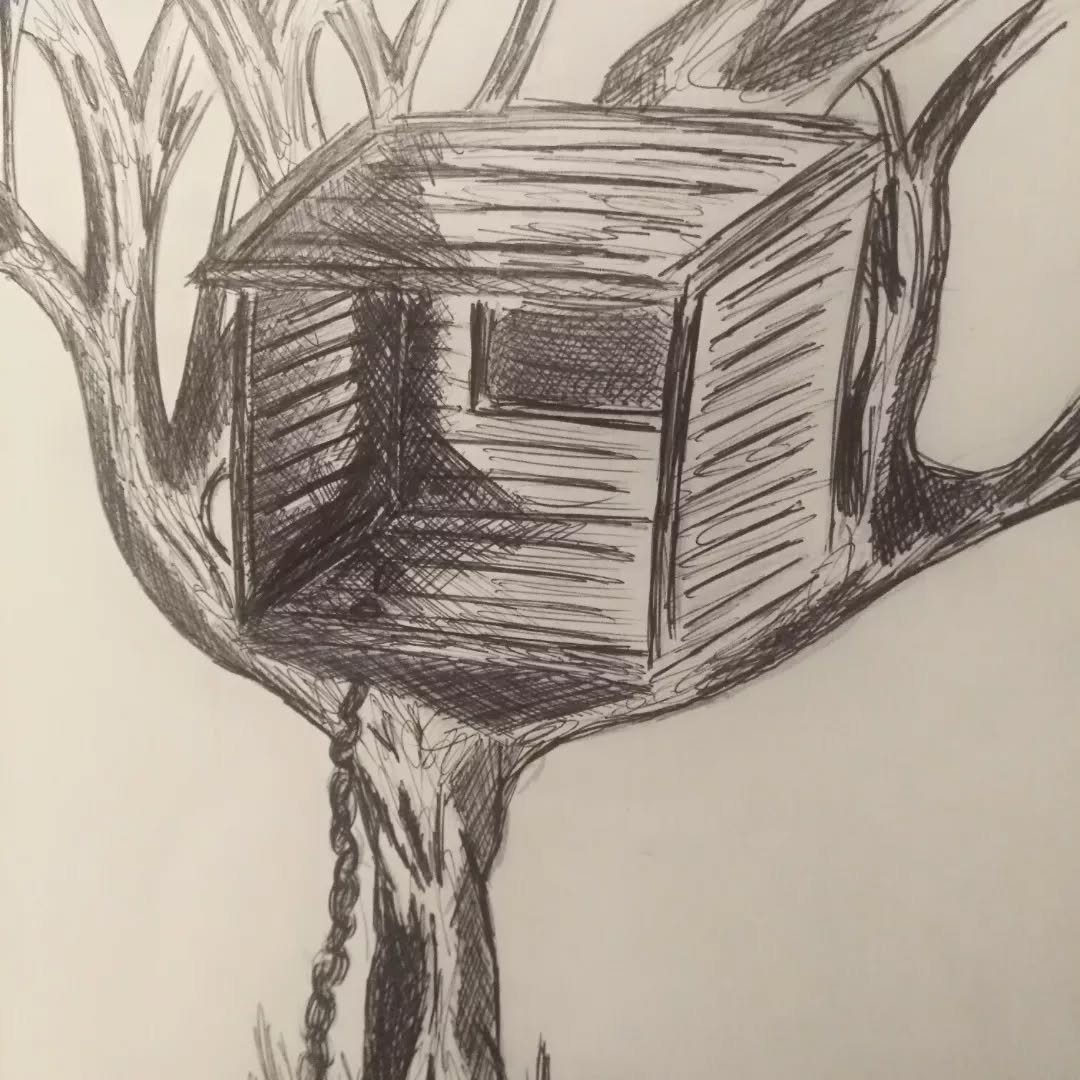
The rain hammers against the roof of the treehouse. Paddy Finnis pulls his legs up and shuffles back until his spine meets the rough wooden wall. There is only one window, or rather, a gap in the wood big enough to be classed as a window. It once had a small sheet of see-through plastic nailed over it to protect the floor from the elements but it has long since torn and flown away. Now, a small puddle starts to form under the window and Paddy finds he only has limited space on either side of the window and door in which to keep dry.
No matter. The roof is solid and trustworthy. It will hold. The floor too is dependable. Paddy can still remember his father dutifully collecting piles of old wooden pallets all those years ago. The resulting treehouse was not quite the grand affair eight-year-old Paddy had envisioned but he had been happy and grateful just the same. Beyond the door, the rope ladder whips back and forth in the wind and he wonders if a storm is coming. He smiles to himself, imagining how that will affect the May Day celebrations that he won’t be going to, but he is sure the mayor will have a solution up her capable sleeve.
From his position, Paddy can see the thin stretch of garden which leads up to the conservatory. He can see his father’s rickety deckchairs and array of houseplants on the windowsills. He can just about see the blue wooden door that leads into the shop. To the right is a striped curtain and behind that, the narrow, dark stairs that lead up to the cluttered two bedroomed flat.
His eyes drift up to the windows – the long bay is his father’s room, on the opposite side is the lounge and to the left is the kitchen, both with views of Black Hare Road. Higher still, is Paddy’s room, the loft room, smaller, darker, colder but with a window on each side which gives him an almost aerial view of the whole town.
Both are perfect for stargazing and he moves his Meade LX200 telescope from one side to the other on a daily basis. Out in the treehouse he keeps his smaller Celestron Firstscope.
Paddy scowls at the weather. Yesterday had been so beautiful; one of those days when you feel good to be alive and grateful to live in such a beautiful place. But the weather in Black Hare Valley twists and turns like a restless soul and today the sky is a sulky grey and the clouds are black and billowing, throwing out rain as if in a temper. Paddy can hear cars splashing through puddles on the road and imagines folk dashing about under umbrellas. It is quite amusing however that the weather chose to be vile on May Day.
Paddy and his father had already opted to boycott what they consider to be an outdated tradition. His father refuses to bow down to the shop being closed for the day and they both think sitting a pretty young girl on a throne and pulling her through town is a bit old-fashioned, to say the least. Willow, of course, has far stronger things to say about the May Queen and Paddy hopes she turns up after working the morning shift in her parent’s gift shop. Paddy knows she detests the rain but she detests the May Queen tradition even more and he’ll enjoy hearing her rant about it.
He wants to do something in the meantime though – not just sit it out and wait for school to come crawling after him. He feels the first flutter of dread in his belly and resents it and the bullies that usually cause it; Steven, Dominic and Jesse. Thinking about Jesse, Paddy’s lower lip juts out as it tends to do when he is mulling something over.
There has been a change in Jesse Archer recently and at first, Paddy didn’t know whether to trust it or not. Willow doesn’t, that’s for sure. She still thinks his sudden and awkward attempts at friendship are part of a nasty plot; that he intends to make Paddy think they’re friends and then humiliate him at school. She could be right. She probably is right. Why would someone tough and cool like Jesse Archer ever want to be friends with someone like him?
As Mr Bishop had so unkindly pointed out on that hideous day six weeks ago, the two boys were polar opposites. Prey and predator, he had called them, right in front of an assembly of children. Paddy’s cheeks burn with shame at the memory and his small hands clench into fists on his lap.
The townsfolk always sing the praises of Mr Bishop but Paddy knows he is just another vile bully. Maybe the worst of them all. He sneers at children, looks down on them distastefully, wrinkles his nose at them as if they all give off an offensive smell. It was worse when I was at school, Paddy’s father likes to remind him, we were caned for giggling or not standing up straight enough! You kids don’t know how lucky you are.
Paddy is not sure about that but he rarely argues with his father, who has an eternal sleepiness about him that makes Paddy fear he is perpetually slipping away.
It hadn’t been Paddy’s fault that day, but it hadn’t exactly been Jesse’s either. That’s what Paddy can’t stop thinking about. If it is all a nasty plan to humiliate him, Paddy will be impressed because as Mr Bishop unhelpfully pointed out, Jesse Archer is not an obvious strategist or intellectual.
‘An animal,’ Mr Bishop had called him. ‘A predator of brute force hunting in a pack. Seeking out the physically weak and picking them off.’
Paddy shudders at the memory. It was actually Steven who had thrown the ball of wet tissues at his head but it was Jesse who had got the blame and wearily accepted it. But Mr Bishop was never one for missing an opportunity to teach. A kinder man may have sent both boys out of the hall or even to detention, but no, his eyes lighting up in glee, the headteacher had ordered Paddy and Jesse up onto the stage where he had been giving an assembly on his recent trip to Africa.
Mr Bishop went abroad twice a year and twice a year he gave endless and monotonous assemblies where the children were forced to endure slideshows in the name of education. He’d find a way to relate it to various topics they were studying but usually it was a tenuous link that none of them quite believed in.
On the screen behind them was a photograph of a lioness stalking a young, fragile gazelle. Mr Bishop kept a firm hand on each boy’s shoulder. He held assemblies alone – there were no other adults there to witness him describe Paddy as classic prey for bullies and brutes. Small, thin, weak, fragile, Paddy had felt his eyes burning into the floor as his head dropped lower and lower.
‘Probably born prematurely, poor eyesight. Quite probably uncoordinated and clumsy. Attracts the attention of the predator as an easy kill.’
Bishop had given Jesse’s shoulder a little shake. Paddy, risking a sideways glance, had seen the true fury on the other boy’s face. A knitted brow, flared nostrils, lips screwed up tight and pale as his body seemed to tremble with the effort to remain still under Bishop’s claw of a hand.
‘Predator. Survival of the fittest, you see. Taller, stronger, faster, braver. Brutish. Desperate to survive. Hunts in packs, exists in a hierarchal system. Must prove himself again and again.’
Paddy sits now staring at the puddle and still unable to quite believe the things Mr Bishop had said about them.
‘Of course, the gazelle has a choice. He can outwit the predator. Like Patrick Finnis here. A smart, quick, intellectual mind can sometimes outwit the plodding nature of a predator. But often not. It’s brute force and speed that wins.’
2
The stranger thing was the way Jesse Archer turned up at the bookshop the next day. Alone, not with his goons in tow. Paddy had been stacking books while his father answered a phone call behind the till.
Jesse Archer had slouched in, looked once at Paddy and then looked away. He had circled the shop twice – slowly, running his index finger along the spines of second hand books – pausing occasionally to pluck one out, read the back and slot it back in place.
Paddy had no idea what his game was. Stealing, probably, but he wasn’t in the mood for it. He sighed, put down the books and slipped through the maze of mismatched bookshelves to find Jesse in the far corner of the shop, perusing the books in the window display.
He looked over his shoulder at Paddy and said, ‘It’s trapped.’
‘What?’
On closer inspection, Paddy saw what Jesse was looking at. A Red Admiral butterfly was batting itself against the window in a frantic attempt to get out. Paddy put his hands in his pockets and came up bare.
‘Have you got a tissue or a handkerchief?’ he asked Jesse.
Jesse pulled a black and white bandanna out of his back pocket. Paddy recognised it – when they were a few years younger, Jesse and his gang had declared themselves outlaws. Cowboys. Jesse was at that point in his life totally in love with the fact his father had named his three sons after real life Wild West gunslingers.
He handed it to Paddy and Paddy leaned carefully over the books and used the cloth to gently scoop up the butterfly.
‘Out the back,’ he had said, thinking of the flowerbeds, and for some reason, Jesse Archer, notorious bully and good-for-nothing third son of drunken Nick Archer, followed him with a look of awe on his face.
Paddy walked to the back, through the dusty conservatory and out into the garden. The thin stretch was a colourful haven for pollinators – sunflowers, wildflowers, lavender, foxgloves, geraniums – the perfect place for a lonely butterfly.
He had crouched beside the lavender bush and unfolded the bandanna. Jesse had crouched too, and watched silently as the butterfly paused, flapped its wings twice then fluttered on to the bush.
‘Here.’ Paddy had returned the bandanna.
Jesse said, ‘Mr Bishop is a bastard. He’s wrong you know. He’s wrong about everything.’
It was the first time Paddy had considered that Jesse hadn’t just been angry up on that stage, but humiliated, just like him. It was the first time Paddy had considered that Jesse Archer had feelings of his own.
He’d nodded at the treehouse. ‘Want to come up?’
3
Now, Paddy hears a voice.
He scrambles forward and sticks out his head. His father is at the conservatory door, waving.
‘You’ve got a visitor!’
Paddy wonders if it’s Jesse. No, more likely it is Willow. He climbs down and dashes through the rain to follow his father through the shop. He looks around but can’t see Willow.
Instead, Jesse Archer is skulking in the shadows. He couldn’t look more suspicious if he tried. Paddy glances at his father who smiles and goes back to the book he is reading behind the counter.
Since the day with the butterfly, Jesse Archer has wandered in alone at least once a week and on a few occasions, he and Paddy have ended up back in the treehouse together.
Jesse never asks. He never says hello. He just wanders around the shop until Paddy intervenes. His father, ever the optimist, thinks it’s a good sign. He sees it as hopeful and has reminded Paddy to never judge a book by its cover, or by the gossip spread by townsfolk. In response, Paddy reminded his father about Jesse’s behaviour; his reputation for a troublemaker and a bully is well known.
‘He’s a nightmare at school,’ Paddy said. ‘He trips people up, he disrupts classes, he throws things at people. You don’t want to run into him.’
Paddy’s father had smiled gently before telling him that sometimes people just need a chance to do the right thing and that maybe Jesse has never been given that chance. He knows about Jesse – his family, his brothers, his background – and being the kind and gentle man he is, he feels for him. Mr Finnis think bad apples can turn good. Paddy is not yet convinced, but he is curious enough to give Jesse a chance. He hates to admit it even to himself, but he has been enjoying the boy’s company.
There is something there, he has found himself thinking, there is something about him.
And here he is again.
And this time, he walks right up to Paddy, hands in pockets, soaked through, no coat, blood on his neck.
‘I need to talk to you.’
Paddy nods and leads the way back to the treehouse. Just as Paddy is climbing up after him, Jesse holds up a hand.
‘Is there any chance of a drink? Or something to eat?’
Paddy pauses. Jesse has never asked for anything before. But he does look hungry. And weary. Like something heavy is pushing down on him relentlessly. Paddy’s father has told him more than once that Jesse does not have the best home life and this makes Paddy feel sorry for him.
‘Okay. Hang on.’
Paddy scuttles off to the kitchen, retrieves two slices of apple cake, a big bag of salt and vinegar crisps and two cans of 7-Up from the fridge.
Back in the treehouse, Jesse is sitting against the wall and glaring hard at an undefinable point in the roof – a gap between slats and spongey green moss. He looks angry as he raises a middle finger.
‘What’re you doing?’
‘Nothing.’
‘Here.’ Paddy clambers up and passes the cake and crisps over.
For a while they sit in silence. Jesse eats and drinks with his eyes fixed on the same spot. Paddy watches him silently, uneasily. He still can’t read the boy. He doesn’t understand him at all. He’s not sure he’s safe with this boy and he knows that Jesse has stolen books from them, just as his father knows.
‘It’s all right, Paddy,’ he’d said when Paddy had voiced his suspicions. ‘Maybe he’s reading them.’
Paddy hopes so.
‘More like burning them,’ Willow had snapped, churlishly.
But Paddy remembers the look of gentle wonder on Jesse’s face when the butterfly flew away. Paddy remembers that Jesse was side-tracked by its futile attempt to escape via a hard glass window. Paddy hopes that Jesse is not faking it when he asks to look through the telescope, and that he means it when he quietly declares that one day he is going to get out of this town and make something of himself.
‘What is it?’ he asks Jesse now.
The boy looks at him with sharp dark eyes. Paddy looks back and he does not see a brute or a hooligan now. He sees intensity – something fierce, inquisitive and acutely alive.
‘I tried to burn down the school.’
Paddy, visibly shocked, asks, ‘What? Why?’
‘Why’d you think? So we don’t have to go back there ever again.’
‘Oh.’ A few beats later… ‘Wow.’
Jesse looks away and shrugs. ‘Didn’t work.’
‘That’s probably a good thing.’
Jesse looks back at him and seems about to say something. But a metallic clattering sound outside halts him and they both turn suddenly and suspiciously towards the noise. Paddy stares at the end of the garden where the metal bins sit and the old gate doesn’t quite close properly.
‘There’s someone there,’ he says in surprise.
4
Jesse moves fast. Shoving the food from his lap, he shoots past Paddy and practically leaps to the ground before rushing over to the gate.
It’s raining harder now. Paddy almost slips on the rope ladder on his way down and when he lands, his other foot loses grip on wet grass and he goes down on his backside. He clambers quickly to his feet and rushes up behind Jesse who is towering aggressively over a short chubby girl in a bright blue anorak.
‘Who are you? What the hell are you doing spying on us?’
The girl just stares in horror. Her mouth an ‘o’ shape, her hands clutching the camera around her neck.
‘Were you spying on us?’ Paddy demands. He is sure he has never seen her before, which is a rare thing in such a small town.
Jesse pulls her inside the gate and she squeaks in fright.
‘Who the hell are you?’
Suddenly, there is a crack in the sky above them. Lightning forks without warning and is promptly followed by a deafening boom of thunder. The air hisses with electricity.
Paddy doesn’t think twice. He grabs Jesse’s hand and the girl’s and pulls them both towards the treehouse.
Jesse stands back, shaking now as heavy sheets of rain drum down on them, allowing the girl to scramble up first. He then gestures to Paddy, but it’s Paddy’s treehouse and he enjoys playing the host so he shakes his head and gives Jesse an urgent shove.
Jesse does not need to be asked twice. He hoists himself up after the girl and Paddy follows.
The three of them huddle together in the dry spot. The girl squeals when the sky booms again and Paddy puts out a hand to calm her.
‘It’s okay. Just thunder. I’m Paddy, by the way. I live here.’
‘Jaime,’ she replies, her voice a little high as her eyes shoot anxiously between him and Jesse. ‘And I wasn’t spying. Honest. Okay, I sort of was. But only because I’m a reporter you see, a journalist – okay, well not really, not yet, obviously, because I’m only fourteen right now but I want to be one day and so I’m sort of in training, you see? And anyway, sorry but I’m really not going to do anything with the photos anyway. I don’t even have a newspaper or anywhere to share them.’
She looks between their startled faces, smiling desperately, her shoulders bunched up to her neck.
‘You took photos?’ asks Paddy. ‘Of what?’
‘Who the hell are you?’ Jesse demands again, glowering at her.
‘Jaime Perry,’ she says again, a little exasperated now. ‘We just moved in yesterday. I’m new.’
To this, Jesse groans. ‘Jesus fucking Christ, are you fucking mad? Why would anyone want to move here?’
‘My mum,’ she frowns, looking at Paddy as if hoping he will help her. ‘She and my step-dad, Mark.’
‘Aster?’ Paddy helps her out and nods at Jesse as if to reassure him. ‘It’s okay, my dad told me Mark Aster is back in town to take over the Hare and Hound since his old man passed away. Remember? He got married. This must be his step-daughter.’
Both boys stare at Jaime, looking her up and down. Paddy sees a kindly face framed by wet blonde air. Her cheeks are as round as her bright blue eyes and her mouth is one big smile. She looks like the sort of person who smiles at everything and everyone.
‘Jaime,’ she says again, in case they have forgotten.
‘Still doesn’t explain the creeping around and taking photos,’ Jesse growls at her.
She seems to shrink, wrapping her arms around her knees. ‘I told you. I’m a reporter.’
‘You’re fourteen.’
‘Yes, I know, I said one day. I mean, one day I will be.’ She shrugs hopefully at Paddy. ‘I’m practicing. Don’t you guys practice what you want to be when you grow up?’
The boys swap a look. Paddy thinks about his treehouse and wonders if Jesse is thinking about crime. Yeah, they both practice.
‘Okay,’ he says to Jaime. ‘We get you.’
‘I don’t,’ Jesse disagrees and is still glaring at her. ‘I want to know what was so interesting about us.’
‘You,’ she corrects him and then blushes a fierce red. Paddy smiles, feeling sorry for her. Jesse just looks angrier.
‘What about me?’
‘I mean, I followed you here. I saw you get arrested at the school and I saw that policeman just drop you off here after so I was curious. I mean, you have to be curious if you want to be a journalist, so I went around the back to see what I could see. I was chasing a story.’
‘Not creepy at all…’ Jesse mutters.
Paddy is enthralled. ‘You didn’t say you got caught!’
Paddy exhales slowly. He looks between Jesse and the new girl.
‘And what? Mayfield just let you go?’
‘No damage done.’ Jesse looks away. ‘Me and Mayfield have an understanding. I just came to tell you that I tried, that’s all.’
‘Jesse, you’re crazy! You didn’t have to try and burn down the school for me. Or you!’
‘Is that why you got arrested?’ Jaime is all ears and her eyes are wide, the storm forgotten as she stares greedily at Jesse.
He gives her a long, measured look. ‘Yeah.’
She slaps a hand over her mouth. ‘Oh my God. This is so exciting. I am so glad I moved here!’
Jesse examines her carefully before shifting his gaze to Paddy, his eyebrows raised.
‘She won’t be for long…’
Thanks for reading!
Please feel free to leave a comment letting me know what you thought of Chapter One – May Day. Please also let me know if you would prefer shorter chapters. They are quite long and I could split each in half.What do you think of the characters introduced so far??
NOTE: Please remember this is NOT the finished version of Black Hare Valley Book 1. This book has not been to my editor yet or even my beta readers. There will be typos, grammatical mistakes, and sentences that need rewriting.
COMING NEXT THURSDAY:Chapter Four “Willow Watches”
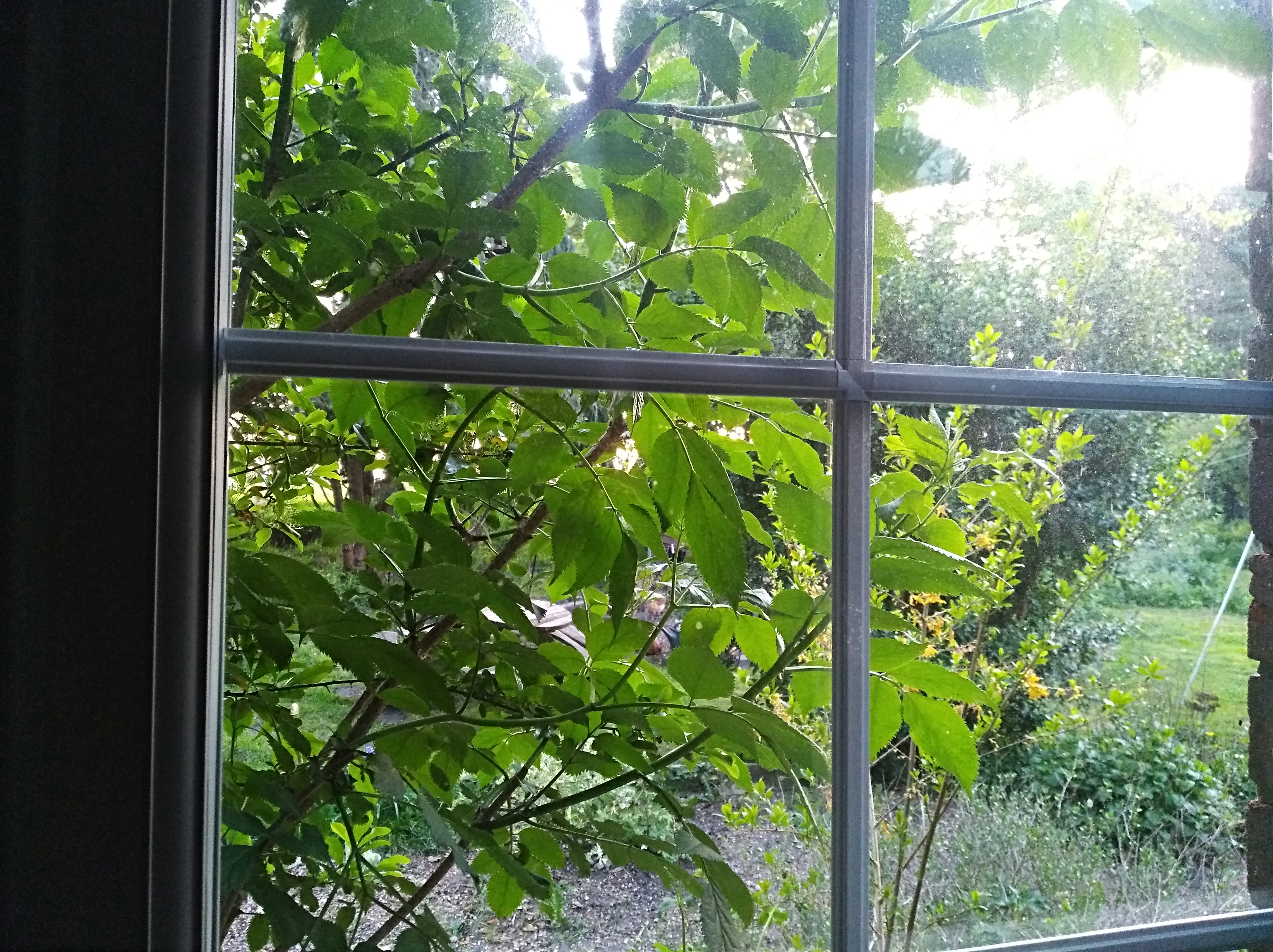
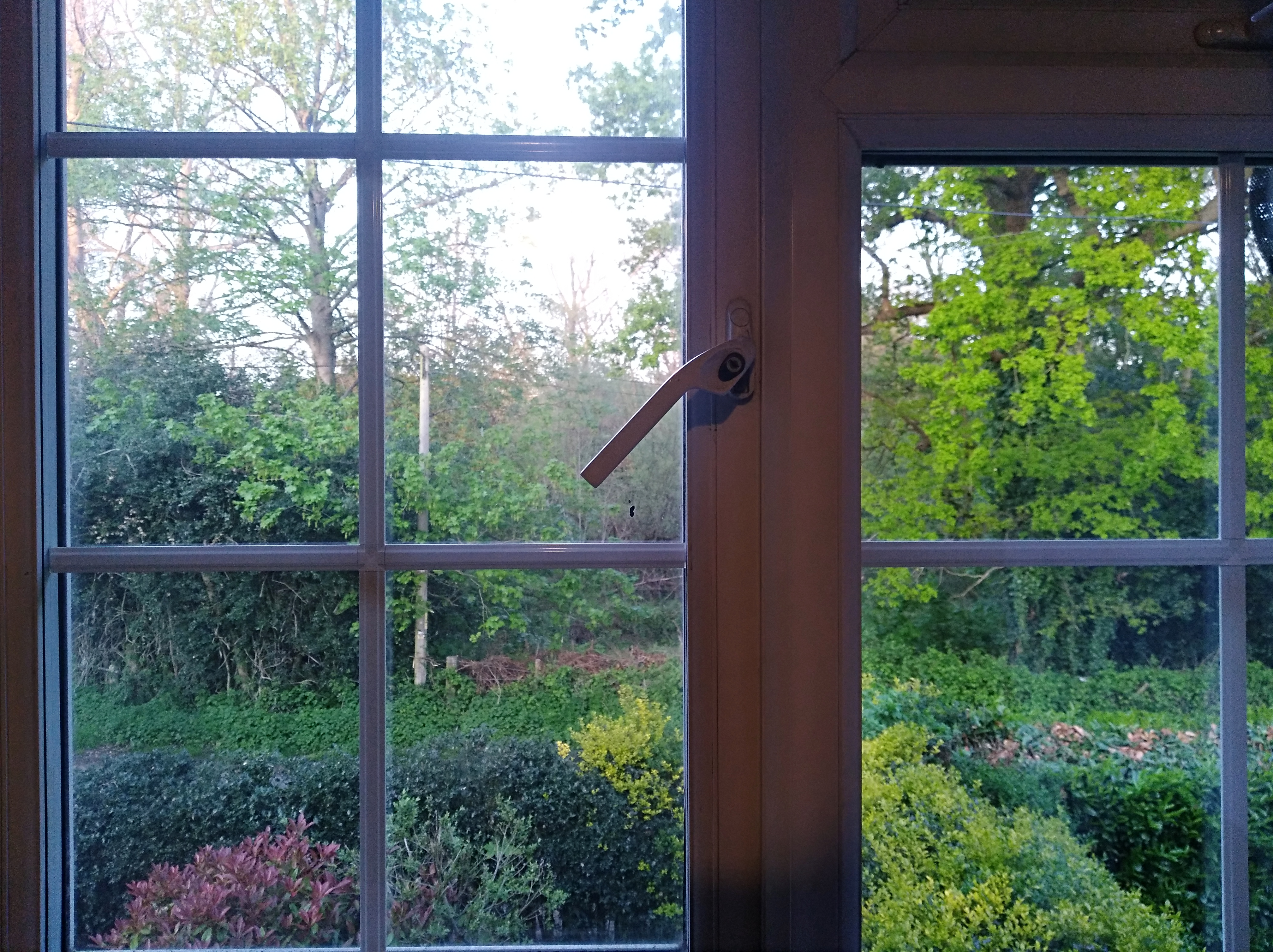
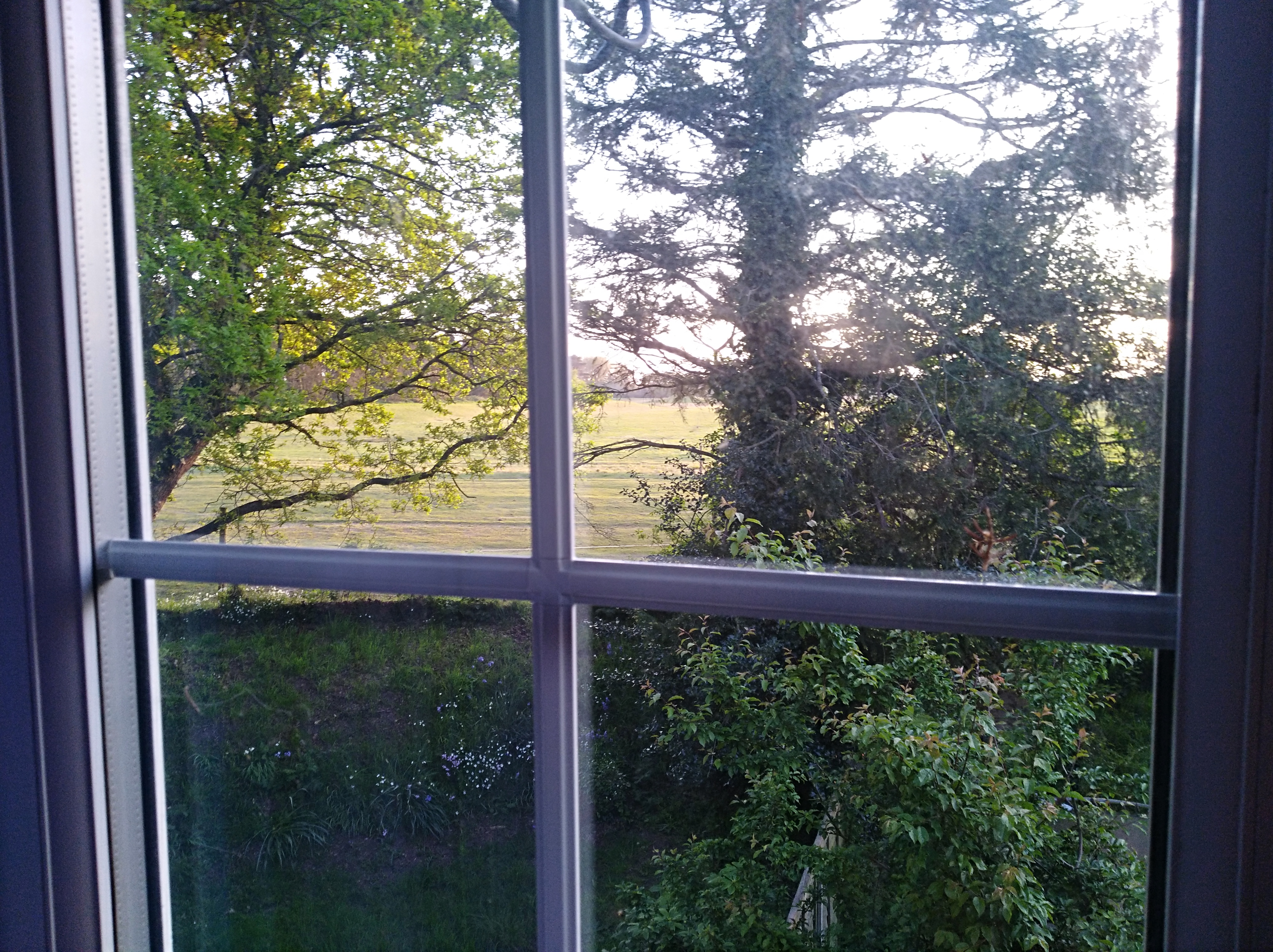
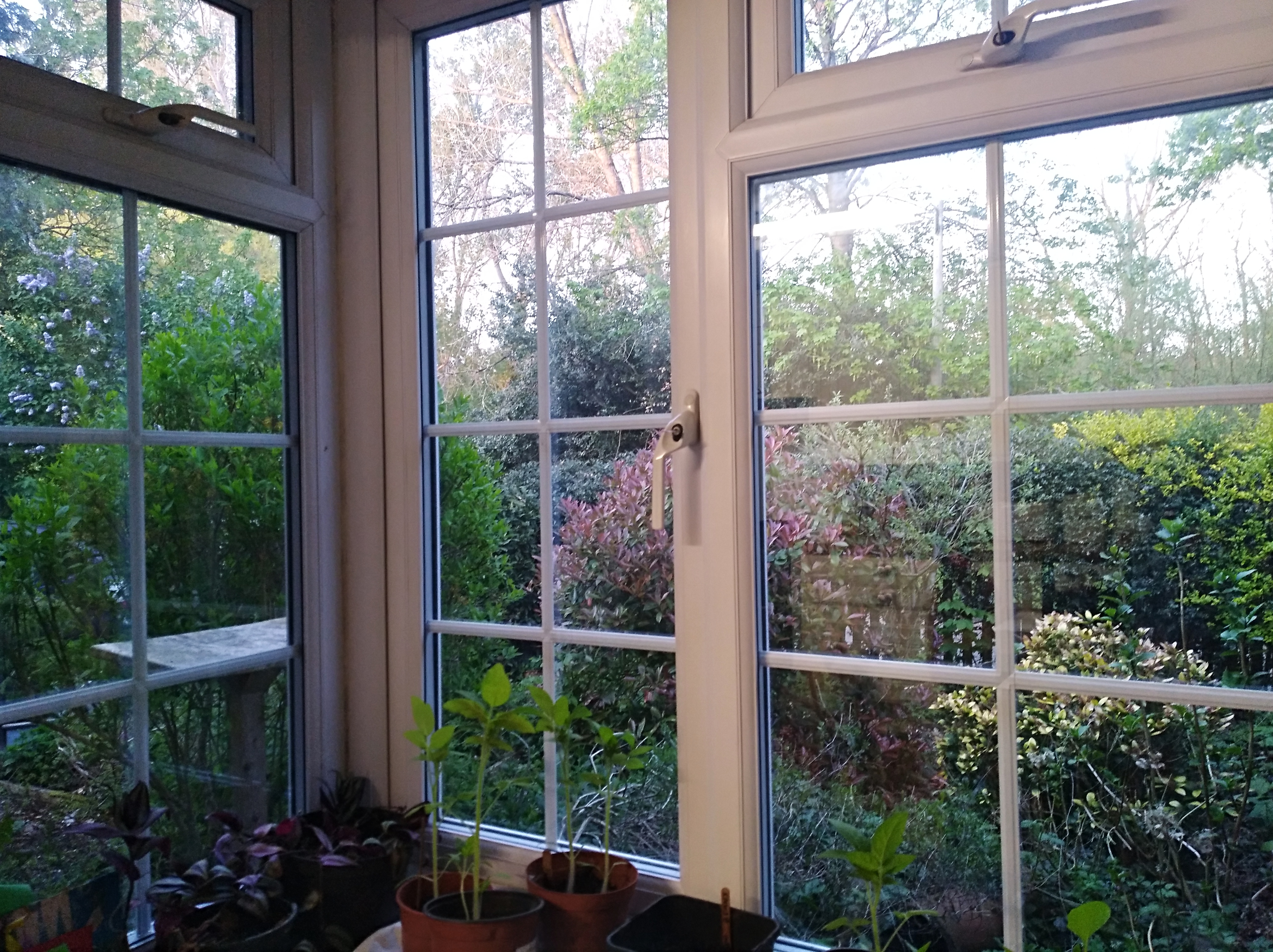
Come with me, let me show you. Room to room. Window to window. Do you see? So close now, so close.
photo is mine
A long time ago I used to call it a wall of green. Back in the days when people were still a thing, and I’d do the gardening on sunny Sunday afternoons. Every now and then I’d stop and rest, rub the small of my back and grin at the trees.
‘Look at that wall of green,’ I’d say.
Because it was. Firs taller than the house, giant oaks, poplars, willows, sycamores and ash. So many trees. In the winter most of them shed their leaves and looked sorry for themselves. They looked barren and stark, nothing to offer but the impressive silhouettes they made against a silver moon.
But in the summer it was something… A wall of green I called it. From the huge trees lining the bridge across the road, to the endless rows of oaks, beech and hazel lined up along the lane, to the trees that edged our garden. Even the trees we added, the pear, and the apples, the plum, the cherry, the buddleia and the lilac, they grew so fast and were soon so tall they joined that great green wall.
And beyond that, sat us, surveying our huge green lawn, smiling smugly at the borders left to go wild, at the constant buzzing in the borage and the buddleia. Oh, we were smug, weren’t we? Thought we were doing our bit.
And oh, I did love those trees, that wall of green. We felt sheltered behind it, like nothing could ever touch us, like nothing could get through. And though a busy road ran past us, it didn’t feel like that in the garden, behind that ever growing wall of green.
We could hide there. Live there. Lie back on the grass and stare at the clouds. Listen to the robins and the blackbirds and the tits. Watch the crows see off the buzzards, and gasp in delight whenever a red kite hovered over us.
But things are different now. That life, that world, over. Only ourselves to blame, and all that. Of course. We always knew it was coming, always knew we were doomed. Why? Well, because people are mostly just awful that’s why.
Anyway. It doesn’t matter.
Things are different now, that’s all there is to say. That’s all I need to worry about. And the trees are closer. I know that. I feel it in my bones, in my blood. I suppose I could go out there with a tape measure, make an experiment out of it, prove myself wrong or right, but really, what would be the point?
I know.
photo is mine
The trees are closer now. They’ve crept in. Bit by bit. They’ve grown, multiplied, reached higher, spread wider. The green is startling, I can tell you that. It hurts my eyes. It makes my vision blur if I stare too hard. I start to get lost in all that green. I think about opening the door and letting it in. Or wandering out to join them. I think I can see faces in the trees — maybe people who felt that same longing, people who opened their doors.
They didn’t use to be this close, filling every single window. I can’t escape them now. Every window is covered. They stand like sentries, turning my home into a prison. And I am not free. I cannot simply leave.
Every window, I tell you, every single window. The green fills the space and there is no room for anything else. The green taps its fingers against the windows, asking to come in. The green scratches and scrapes, prods and pokes. The green is only pretending to be shy.
The green is terrible and beautiful and it is only what we deserve, after all, we slaughtered them, hacked off their limbs, uprooted them, burnt them. The green just wants to say hello. And oh, I am tempted to open the doors, open the windows. Let it touch me. Wander barefoot and mad into it’s inevitable embrace.
photo is mine
I tell myself to hold on. To wait. To try to live. I might be the only one left…
I tell myself to be brave, to try to survive.
I tell myself the green is patient and wise, but maybe it doesn’t mean to hurt me.
But I also tell myself that perhaps the green is the better option, the kinder end, because something darker and uglier and thicker and gnarlier roars and rumbles to life under the very house I stand in.
The roots are awake.
The roots are closer now.
The roots want to come in.
Thanks for reading! This was written in response to the prompt ‘from a window’ on The Wild Writers Club. Initially I wanted to take a photo from every window in my house showing the close trees, bushes and greenery and writing a non-fic piece about how much I love it. However, I started to get an idea for a creepy story instead so that’s what I went with…


 The Glorious Outsiders