Medium Gave Me What 12 Years of Publishing and 23 Books Couldn’t

And then it took it away again…

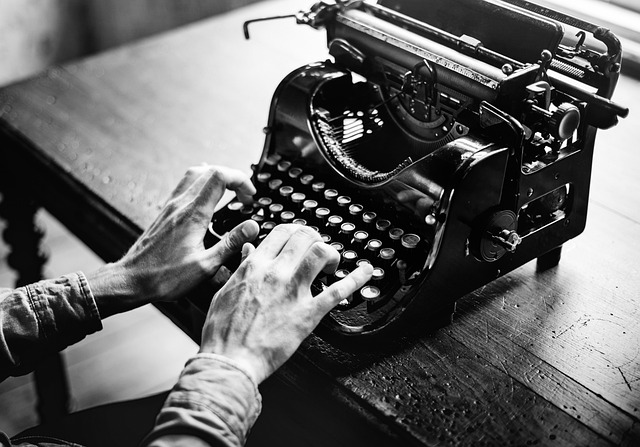
Image by rawpixel from Pixabay

It’s coming up two years since I joined the writing platform Medium. For years, various author friends had mentioned it, enthused about it and encouraged me to join, but I resisted because I didn’t think I had the time. Almost two years ago a writer friend messaged me again after reading one of my blogs and finally persuaded me to join Medium by asserting that my blog topics and style were just the sort of thing that did well on Medium.

I gave in and joined and I quickly discovered he was right! Once I had joined the Partner Programme and was eligible to earn from my essays, articles, stories and poems, I found the boosts, the positive comments and the money came flowing in.

I was overjoyed. I felt validated. I felt like a real writer.

You’d think that after 12 years of publishing and 23 books released, I’d feel like a real writer, but the truth is, I don’t. Not much has changed for me during those 12 years. I have never had the spare money to throw at advertising my books, but I have done everything they tell you to do to get your books noticed. One of the main pieces of advice I recall reading at the time, was to get on with writing the next book, because once you have more books out there, it all gets easier.

I have never found that to be true. From the moment I published The Mess of Me in 2013, to the moment I released its sequel The Mess Of Us in 2025, I have made a few sales a month. Yes, some months are better than others, and I have never, ever had a month without sales. I am told that for an indie author with no advertising budget, that is not too shabby. And I do agree – with the billions of other books to compete with out there and the social media algorithms wanting you to pay to be seen, it is extremely hard to get sales and make it.

A few years back I reached out to some successful indie authors to ask what their secret was. The answer was not surprising – money. These authors were able to spend hundreds of pounds marketing their books at the start and now they don’t have to. They’ve made a name for themselves, and gained a loyal following.

I am constantly shouting into the abyss, despite how hard I work, despite how many books I write and publish, despite overwhelmingly positive reviews and a handful of awards… I cannot do any better. I am stuck right where I was at the start.

So, although I am still as addicted to writing as ever, and I will never stop as long as I have these ideas in my head, I am honestly hard-pressed to feel like a real writer most days. It doesn’t help that my close family and friends don’t give a shit and refuse to do the one thing they could do to support me in my life.

You can imagine how elated I felt when Medium started rewarding me so quickly. I was so happy! People were reading and commenting on my work. I was getting boosted regularly. Somehow, I was doing it right! And I was getting paid! I was making extra money, more than I had dreamed of to be honest. It made a massive difference to our finances and I even started thinking about putting some away and using it to better market my books.

Then in January, everything changed.

No one knows why and as far as I can tell, the answers are still not terribly forthcoming. Views, reads and earnings plummeted. At the same time, AI slop, bots, scammers and spammers were going through the roof and basically ruining it for everyone. Some say the drop in earnings is a reflection of Medium getting to grips with all that… But I don’t know.

I wasn’t too bad off in January because I’d been boosted a few times in December. January was awful. I barely made anything, and February was even worse. No boosts – which is a shame but not the be all and end all. I once made $15 on a short story that wasn’t boosted. It would take me a long time to make $15 from my books. No kidding.

By the time March arrived I felt like giving up. Millions of writers had jumped ship to Substack and I did the same, though I kept my Medium account. I still posted in February, but not as much. I suppose I had a crisis of confidence. I kept taking it personally. What had I done wrong? Had my writing declined in quality? Was the stuff I wrote just not wanted anymore? I still can’t figure it out.

Substack is great, by the way, and is shaping up to be one of my favourite places to hang out. It’s newsletters, any kind of writing, and social media all wrapped up in one. It took me a little while to get myself settled in, but at the moment I am posting an end of the month author newsletter, an end of the week round-up, and any poems or short stories I would normally put on Medium, I now put on Substack first.

Substack is a lot of fun but it is not as easy to make money there. Money is raised from having paid subscribers. I feel grateful enough to have any subscribers, whether there or here on my trusty old blog. To ask them to pay seems a lot.

I’ve set mine up for paid but have no paid subs yet and I don’t expect to get any for a long time. Still, I am happy to have almost 100 subscribers who I really hope are genuinely interested in me and my books. Let’s see what happens.

Back to Medium – I am not ready to give up on it just yet. It was foolish to ever rely on it for an income, and I didn’t, not really. It was just very handy extra money that made life easier for a bit. I am hanging around to see what happens, and like everyone else, I guess I am trying to crack the code again.

I decided to up my game in March and my content has increased back to my usual levels. It’s not making a difference so far and at this rate it is soon going to be hard to recoup the $5 you pay to be a member.

It makes me feel sad, in all honesty. All I ever wanted in my life was to be a writer. I am a writer and on good days I am incredibly proud of myself, my books, and the work I put in. I couldn’t give up writing, if I tried. It’s just what I do. It’s who I am.

But for a while there, Medium made me feel like a real writer. You know, someone whose words get read by hundreds, if not thousands of people. Someone who uses writing money to pay the bills. It was nice while it lasted but now I am right back where I began.

There had to be an answer somewhere. I guess I will keep on looking.

Giving up is not an option. And for all its faults and ups and downs, I will continue to publish writing on Medium. Writing there has given me an outlet for other types of work, such as essays, articles and poems, and like I always tell the kids I work with, writing in many formats and writing as often as you can, is how you get better.

I’m in it for the long haul.

Giving Myself Permission to Draw Reminds Me Of When I Gave Myself Permission To Write

Reclaiming my love of drawing

When I was a child I’d lose hours alone with a notebook, writing stories about lost and neglected animals and illustrating them myself. If you’d asked me back then I would have told you I longed to be an author and I’d also have told you how much I loved drawing. I did go on to study GCSE Art but that was where my attempts to draw came to an end. I stuck with writing for longer – though it fizzled out when I became a mother and I lost an entire decade where I did not write at all.

As a teenager, I used to sketch the characters in the stories I was working on, including The Boy With The Thorn In His Side, but post aged sixteen, I barely drew again. That’s as far as I allowed my skills to develop.

It’s sad when we grow up and lose our creativity and it happens all the time and to most people. Children are naturally creative in everything they do. They are curious about materials, they like to dance, move around, play make believe, sing, make noise, scribble and paint and make up stories. They don’t worry about being ‘good’ at it and they certainly don’t entertain the idea of making a ‘career’ out of it.

Yet as adults it is those two concerns that inevitably lead to us distancing ourselves from the creative pursuits we used to enjoy.

I remember going through a phase as a teenager where I would write little poems onto notepaper then illustrate the edges and paint over with water colours. I remember being thrilled with the results! Years later, when I finally got back into writing, I told myself it was just novel writing and that poetry was not my thing. Even when reclaiming writing, I was still putting up barriers to my creativity.

My journey with writing will never be over and I’m happy to say that as the years passed I naturally found myself progressing to embrace all forms of writing. Novels, short stories, flash fiction, essays, articles and yes, poetry! I love them all and practice them all every week.

What stopped me writing for a decade was not thinking I was good enough and not believing I could earn money from it. I’m so relieved that the urge continued to persist inside of me and that eventually it grew too big to ignore. I finally gave in and the dam burst in spectacular fashion. I recently published my twenty-third book, and earn monthly from writing in various forms on Medium. I’ve also had essays and articles published by various magazines over the years.

I have confidence in my writing now, but I still embrace progression and experimentation with it.

Back to drawing. Recently I started to get a very strong urge to draw. It reminded me very much of those urges to write I eventually gave into. It’s like a little bit of the old you poking relentlessly at your brain demanding to be let in, remembered and nurtured.

I started feeling like I wanted to create a graphic novel version of Black Hare Valley for crying out loud, that’s how strong the urge was. I gave in, to some extent. I didn’t plan to. But I was buying some supplies for my kids writing clubs in The Range and spotted some nice sketchbooks and before I knew it I had tucked one under my arm. It felt like giving myself a treat. Giving myself permission.

I’ve started playing around with ideas of sketches for Black Hare Valley. I’ve had fun with a few art tutorials and workbooks and had some helpful tips from my son who is studying A-Level Art. I’ve been pleased with my efforts but do you know what instantly occurred to me when I examined them?

one of the hares I’ve drawn for Black Hare Valley – just practicing!

They are the same level as the character drawings I did as a teenager. I haven’t gotten any better or matured my skills because I did not keep it up. Imagine how much better I would be at drawing now if I had not pushed that side of me away for so long!

Now every time I feel a bit embarrassed about my artistic efforts, and every time I feel like I am wasting my time or shouldn’t be doing it, I remind myself of how and why writing came back to me. It came back to me by itself. It hammered at my mind until I let it back in and once it had me in its grip again it refused to ever let go.

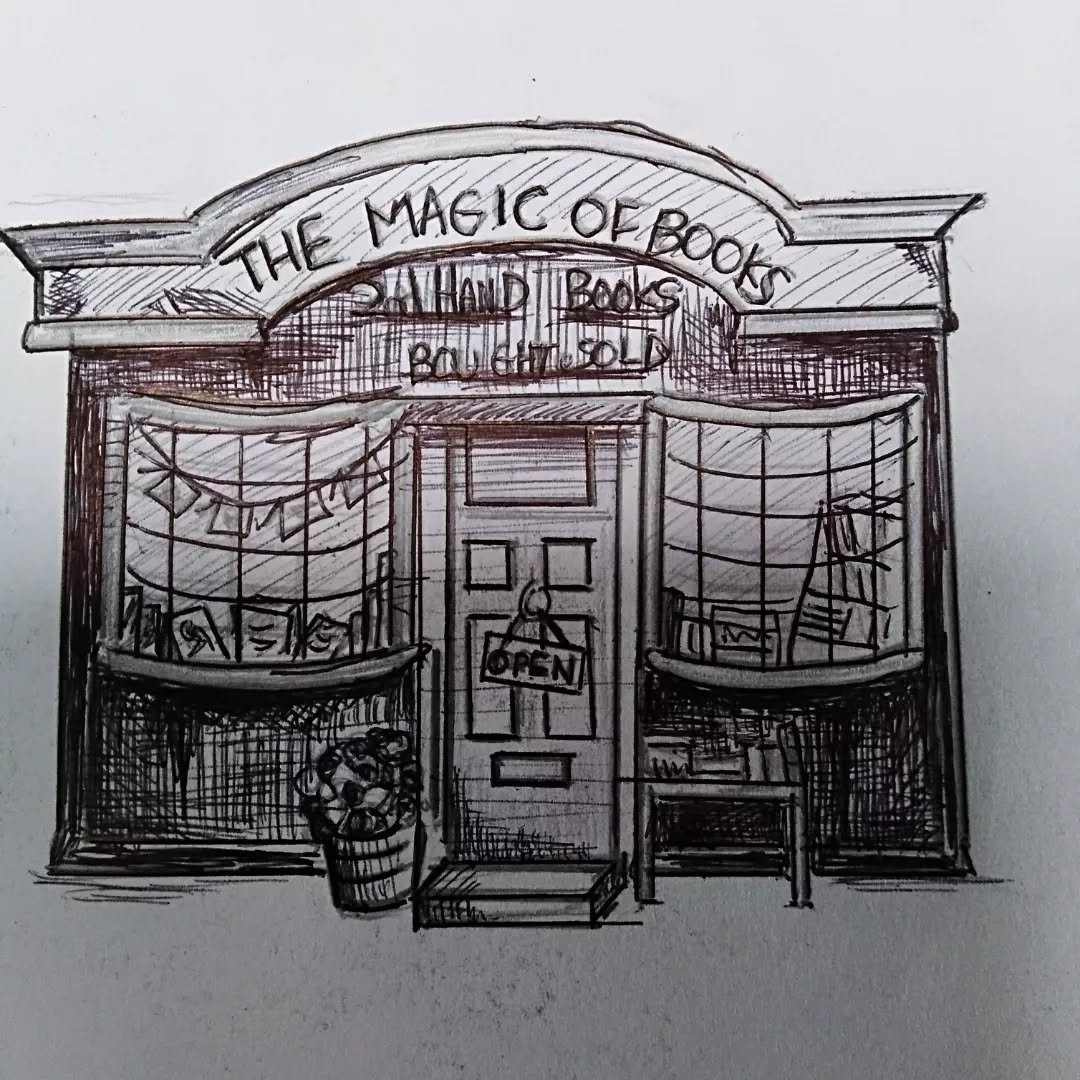
the bookshop in Black Hare Valley – a major location!

And because I stuck with it and practiced it, and tried new things, and studied it, and learnt from others, and got feedback, and kept going…. I got better!

I need to remind myself that the same thing applies to art.

the white hare – a character in Black Hare Valley – needs work!

My challenge is this: I want to illustrate the entire Black Hare Valley series myself. To do this I need to discover, embrace and improve my own style, much like writers do with their voice. I feel excited. I feel motivated. Whatever happens, it is good to have a challenge and a new hobby!

the ruins in Black Hare Valley – a major location
The raven in Black Hare Valley – another character – just pencil so far, will be going over with pen.

Advances in Tech Have Been Good To Writers – Until AI

Using AI to help you write is not a road we should go down

Image by Christopher White from Pixabay

Up until recently technological advances in writing have been to my benefit as a writer. For example, without the internet we would not have self-publishing in the way we do now, print-on-demand, indie presses or even Amazon itself. Without the internet and everything it has brought us, it would have been much harder for me to realise my dream of becoming a published author.

Without the internet I would be unable to effectively market my books and build an author platform. I would not have my blog, my author accounts on social media, or good old Canva to help me make cool graphics.

In many ways, the internet offered a level playing field to writers. It didn’t matter so much who you were or where you came from, how wealthy or poor you were, or how educated or uneducated. There were no more gatekeepers — not if you were happy to take the independent route anyway.

Of course, being able to self-publish didn’t mean you would automatically sell a lot or gain any kind of following or respect, but hey, it was a start. At least our books were out there.

Up until now, technology has been a friend to me on my creative journey. I’d much rather type on my laptop than my old vintage typewriter, for example! The spelling and grammar check on Word is handy, and is there if I need it. So is Google — helping me research various topics without even have to leave my desk.

All of these things have helped me, so of course I am grateful for them. Have they made me a better writer though?

No. Experience has made me a better writer. Getting older has made me a better writer. Regular reading has made me a better writer. And my editor has made me a better writer. Funny how those things are all human…

Which is why I am unequivocally not in favour of writers using AI as a tool to help them write. To me, it’s cheating. There, I’ve said it. Now let me explain why, and let me explain why I do not advise new writers to go down that road.

Let’s put aside for now the many ethical issues with AI. The fact it is terrible for the environment and the fact it was trained by stealing from the published works of creative people without their permission. By the way, those two facts alone are enough for me to steer clear of it. Not that steering clear of it is easy! That’s another whole issue too. How exactly are we to avoid it?

Let’s stick with writing. What writing is, what it means to be a writer. I often think there are two kinds of writer if you want to be really basic about it. There is the writer who is born a writer: they’ve had a head full of ideas for as long as they can remember; they’re probably a maladaptive daydreamer; they frequently drift off into their own little worlds and they write all the time, every day, no matter what. Not because they want to but because they have to. They would still write even if the internet vanished. They would still write even if they never made a penny from it. They would still write even if no one ever read a word of it. They have to write.

The second kind come to writing a little later maybe. They have that one good idea they can’t let go of, and eventually they drum up the courage to do something about it. They then get the bug and realise they have a whole lot more to say. They may, for this reason, be a little more motivated by money, reads and respect. If the money dried up, for instance, they might not bother again.

I have the privilege of working with young writers. My job is supporting and encouraging them on their own writing journeys by offering prompts, challenges, activities and feedback. I run various clubs online and in person for children aged between 7 and 18. I love my job.

Nearly all of these children fall into the first category of writers I mentioned. Making money and future careers are not on their mind at all. They simply love writing. They were writing before they joined my clubs, and I have every faith they will still write after they leave.

Imagine my distress then when one of my young writers told me that they often use AI to help with their writing. In their own words, ‘to help them get better.’ Imagine my frustration when another, even younger writer, told me their school teacher had shown them how to use AI to write whole stories. They couldn’t understand why I wasn’t a fan of this. I wanted to remind them that there would be no job left for me if this trend continued. If they use AI to ‘get better’ at writing or if they use AI to write a story for them, what do they need me for?

So, that’s one concern. The other is that they are simply selling themselves short and taking the quick route to finishing a story or a project.

I didn’t say it to them, but my honest opinion is that using AI to help you write is cheating. I am not talking about using a spell check or grammar check — that is not the same thing.

I am talking about writing a paragraph and then asking AI to make it ‘better’ for you. I am talking about having ideas for a story and then asking AI to write it for you. I am talking about using AI to craft your emails or to regurgitate articles and essays here on Medium. I am talking about handing over your own beautiful creative human soul to AI.

It makes me want to cry!

The way I feel is this: writing should be hard. Crafting the perfect email should be something you take time over. Constructing a poem to reveal your inner feelings, should take a long time. Novels should be written draft after agonising draft. Blood, sweat and tears should go into writing because writing is important! Goddamn it, writing is what makes us human. Telling stories has been part of our lives since the very start. Telling stories, reading books, listening to music, dancing, acting, sewing, knitting, all of these creative and imaginative pursuits are what make us human.

Writing is far too important to hand over to AI.

I have had a few discussions with young writers about using AI and they have outlined their reasons for relying on it, but they have failed to change my mind. One of the reasons someone gave was that they knew what they wanted to say but not how to say it, so they wrote the paragraph of the essay then asked AI to reword or reorganise it.

NO, I wanted to scream, that’s your job! That’s called editing. Editing, revising, rewriting are all important aspects of writing and they are how you learn to get better! You can’t tell me AI teaches you these things. You’re not going to learn that way. You’re going to learn by figuring it out for yourself.

And yes, I know, a writer rarely works alone. After many, many drafts of a novel, the writer uses beta readers, editors and proof-readers to polish up that product. Please don’t tell me that’s the same as using AI because it bloody isn’t. Firstly, do we really want to see all those people out of jobs? And second, AI cannot do what they do. It cannot replace the relationship you build with these people, it cannot relate to you and your writing in the way they can once they understand your writing voice and style. And worse than all of that, AI is trained by using other people’s work… Do you really want your writing to sound like someone else’s?

And let’s go back to writing voice and style because I think that is one of the main things at risk from using AI to ‘help’ you write. Having your own unique voice is one of the most important and beautiful and human things about writing. The fact that the same thing can be said in so many different ways simply because we have different personalities, is beautiful to me. Fascinating. Even with my youngest writers I notice their different styles. That’s a unique human thing and we cannot allow AI to replace that.

How will new and young writers ever find their writing style and voice if they use AI to help them so early on?

One of the people I discussed this with stuck to their argument, which was fine, but I told them again and again, you do not need it. You have got this far without it. This person is incredibly smart and articulate, and has their own writing style and voice. One I hugely admire. They do not need AI!

In fact, I would go as far to say that the there are only two groups of writers who do need AI, and even they shouldn’t use it. Writers who are just not very good and don’t want to learn how to get better, and people who want to make a fast buck by using AI to churn out ebooks.

From someone who spends years on each book I write, it makes me feel genuinely sick. These people are not writers and do not understand how important writing is.

AI is diluting what it means to be a creative human being. It genuinely worries me. Not only does it make me fear for my job, both as an author and as a creative writing tutor, but I fear where it will lead us. What will be the outcome of this? What will future writers sound like? What if the authors of the future can’t even string a sentence together by themselves because they never learned how? What if the writers of tomorrow never connect with other creatives because they’ve asked AI to craft all their emails and correspondence, used AI as an editor and proof-reader, and churned an ebook out that has no heart, no soul, no meaning?

I worry about how this will impact human imagination. I worry about how this will affect the whole process of what it means to be a writer. Writers who rely on AI will miss out on so much: the joy and tears of trial and error, of success after failure, or pushing through writers block to get to that finish line, of holding a book in your hands and smiling joyfully as you rightfully claim, I wrote this!

My final argument against the use of AI in writing is this. Shakespeare didn’t need it. Jane Austen didn’t need it. The Brontes didn’t need it. Stephen King didn’t need it. Countless authors who have touched our lives, inspired us, made us laugh and made us cry for hundreds of years, got this far without AI helping them — so why the hell do we need it now? We don’t.

We can and should do it ourselves.

I’m going to give the final words on this debate to one of my favourite poets and authors, Charles Bukowski. Bukowski wrote a lot of poems about writing but this is my favourite and this is exactly how I feel about writing.

“If it doesn’t come
bursting out of you
in spite of everything,
don’t do it.

Unless it comes unasked
out of your heart
and your mind
and your mouth
and your gut,
don’t do it.

If you have to sit for hours staring at your computer screen
or hunched over your typewriter
searching for words,
don’t do it.

If you’re doing it
for money or fame,
don’t do it.

If you’re doing it because
you want women in your bed,
don’t do it.

If you have to sit there
and rewrite it again and again,
don’t do it.

If it’s hard work
just thinking about doing it,
don’t do it.

If you’re trying to write
like somebody else,
forget about it.

If you have to wait
for it to roar out of you,
then wait patiently.
If it never does roar out of you,
do something else.

If you first have to read it
to your wife
or your girlfriend
or your boyfriend
or your parents or to anybody at all,
you’re not ready.

Don’t be like so many writers,
don’t be like so many thousands of people
who call themselves writers.
Don’t be dull
and boring
and pretentious,
don’t be consumed with self — love.

The libraries of the world
have yawned themselves
to sleep over your kind.

Don’t add to that.
Don’t do it.

Unless it comes out of your soul
like a rocket,
unless being still
would drive you to madness
or suicide
or murder,
don’t do it.

Unless the sun inside you
is burning your gut,
don’t do it.

When it is truly time,
and if you have been chosen,
it will do it by itself
and it will keep on doing it
until you die
or it dies in you.

There is no other way.
And there never was.”

Charles Bukowski
This Week I Had Five WIPS Vying For Attention In My Head

I Need More Me’s!

Image by TyliJura from Pixabay

If you’ve followed my blog for a while you’ll probably know that I find it impossible to work on just one writing project at a time. Ideally, I would love to. One story idea, one plot, one set of characters, one job to do! I envy writers whose minds work like that. It must feel very in control.

It’s never that way with me. There is always the book ready to be published that needs quotes posting, cover sorting, final edits and so on. There is always the current priority work-in-progress and sometimes that’s a series, not a standalone. And there are always the future books, the ideas, all in various stages!

It’s been like that this week, and then some.

First, I am trying to draw attention to The Mess Of Us which came out on Valentines Day. That means promoting it as best I can and creating graphics of quotes from the book and reviews as they come in.

Second, I am preparing my next book for release at the end of the year. I need to sort out the cover, finalise the blurb and send it to my editor. Recently I read it through on my kindle to pick up any lingering typos or plot holes and found it to be a very clean read. But it still needs that professional edit and proofread. I hope to release The Dark Finds You towards the end of the year.

Third, I’ve been adding stories and poems to my next anthology Dirty Feet. I’ve no idea when I will release this, but every now and then I add new bits and pieces to it, so it’s always on the go.

Next, I’ve been working on my official work-in-progress, Black Hare Valley. It was never meant to be a series but book one inspired two more books and then I had the idea of a diary style companion book. That’s what I am writing at the moment, and once that is finished, I will be going through each book in the series with a fine toothed comb, ensuring there are no plot holes and a clear timeline that makes sense!

But as well as all this I started getting the urge to create a graphic novel style version of Black Hare Valley. Don’t ask me why. I can’t even draw very well! I haven’t done anything about this. But the urge is there and it’s very strong!

Plus, I’ve been thinking a lot about which book I will work on once Black Hare Valley is complete and decided it will be The Seventh Child, a family mystery thriller. This idea has been building for a while, and I already had the whole plot, the location and the character bios in a notebook. A while back I wrote the first chapter, because, why not? This week, this book has been screaming at me to get on with it! Please, someone tell it it has to wait!

On top of that another book idea keeps growing and swelling and this week I figured out exactly how I will tell it. Anya and Cody Start The Apocalypse is an idea that came to me in bits and pieces with the characters showing up first. I eventually started a notebook to keep track of things and soon had character bios and locations and a loose plot. That plot has since tightened up but I was still unsure of how to tell the story. Then I figured it out. Epistolary style! The book will be written by another narrator who is writing a dissertation project on Anya and Cody after their story is over. It will be told by the narrator compiling diaries, letters, news reports and social media posts in order to explain what happened. I’ve written diary style books before, (The Mess Of Me and The Mess Of Us, plus the companion diary for Black Hare Valley) but I’ve never tried anything like this so I am really, really excited! And I want to do it now!

But it has to wait! I will carry on adding bits to the notebook of course. But that doesn’t mean it will shut up.

My head is full of all these stories all the time. I wish I could create some extra me’s or some extra hands to get it all done. I think I will feel better once I finish the Black Hare Valley diary book. I can then fully concentrate on getting the whole series ready for publication in 2026. I would love to have the first book ready to go in January 2026, for example. The rest of the books will follow one by one throughout that year, and in that time I will be busy writing The Seventh Child.

Then it will be Anya and Cody’s turn…

What is wrong with me?