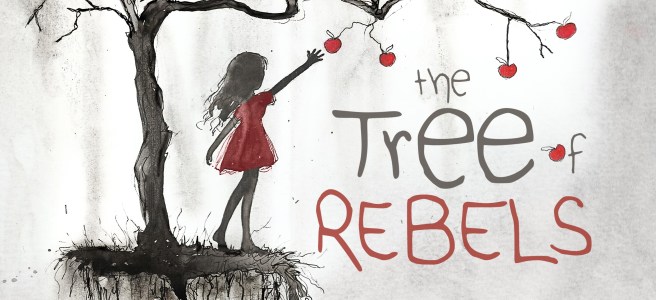
Character Interview – Lissie Turner; The Tree Of Rebels

1 ) Tell us what your positive character traits are

I’m loyal…well, some people might disagree with that. But I know I’m loyal to my friends. I’m a dreamer. My parents wouldn’t call that a positive thing, but my Great-Grandmother would. I’m fast! I am the fastest girl in Province 5! I’m fierce when I need to be and I won’t be bullied.

2)What would you say are your negative character traits?

That I’m a dreamer…I have my head in the clouds and I’m not ready to be an adult yet. That I’m nosy and stubborn. I’m rebellious, although I only found that out recently.

3) What are your current ambitions or dreams?

I want to get out of Province 5. I dream about other places and people and other ways of life. I want to know more about how and why the Old World died and I want to have a say in the future. I don’t like everything I see here at home, and I want to explore, try things out, question things.

4) What are your fears?

My fears are that I will never leave the Province or find out what happened to the Old World. I fear I will let my parents down, no matter what I do. I fear destroying my family and being all alone. I also fear the truth. I know we are not being told the truth here and that scares me. Life is pretty good here. No one complains. Everyone has everything they need and everything is calm and peaceful. But I know it’s all based on lies. Sometimes I think the truth scares me more than anything.

5) Do you have any enemies?

Yes, Saul Lancaster has been my enemy for as long as I can remember. I could never work it out before, because his father, the Governor here in Province 5 seems to really think highly of my family and even gave me special duties in his garden. But Saul hates me and has had it in for me since we were little kids. He’s a bully and I despise him. If he ever ends up in charge of this place, he’ll be the worst Governor ever! As for Soren Lancaster, his father, I think he might be my enemy too. He’s trying very hard to keep me on side, but he knows I know things I shouldn’t. He knows I am dangerous.

6) Tell us about your best friend

Ned is my best friend. His parents are friends with mine. I’ve always had to stick up for him because of people like Saul, and because his parents don’t seem to notice he is even alive. Their first son died, you see, and although Ned came along, they never got over t and can’t seem to see him at all. Poor Ned. He’s the best friend ever. He’s not scared of anything. He’s like me. He just wants to be excited, he just wants to ask questions and know stuff! we’re in this together. I feel bad about getting him into trouble too but he says he doesn’t care.

7) What’s your biggest secret?

My biggest secret is my Great-Grandmother’s diary. She wrote it when she was a girl like me, so it’s our only bit of history. It’s a true account of what it was like in the Old World where they had online and cars and stuff like that! It’s so fascinating to read, I just can’t put it down. There are wars going on all over the place and they’re on the run now because they got in trouble for growing their own food! I’m learning so much about how things used to be and how things ended up like this.

8) Do you have any regrets?

Hmm, not yet. I do feel guilty. I feel guilty about lying to my parents, hiding the diary and going outside of the Province. I feel guilty that I am not what they want me to be. But I don’t regret any of it. Not yet.

9) Where do you see yourself 5 years from now?

Well, if nothing changes, I will be living in my own hut, probably coupled and probably with a child. I will be working for Animal Control or the hospital like my parents. I will be just like them. But if everything changes? Who knows? I could be out there! Free. I could be wandering around, setting up camp, sleeping under the stars, like Aisha and the other rebels. I could be a rebel. I think I am a rebel.

Author Interview: Emily Williams

Emily Williams has written an endearing and emotional debut novel about the enduring and powerful love between mother and unborn child. Letters To Eloise is a book that had me smiling in recognition, and wiping away the tears. The narrator, Flora, is a student who falls pregnant and begins to write heartfelt letters to her unborn baby daughter, who she names Eloise. The story weaves the past with the present, as Flora deals with an unexpected pregnancy, unsuitable men, and heartbreak. The ending was one I did not see coming and I would highly recommend this charming tearjerker. Emily kindly agreed to an interview, and here she talks about the inspiration for her debut novel, her experience of publishing so far and her plans for the future…

IMG_3343.JPG

1) Can you tell us about your writing and publishing journey so far?

Letters to Eloise has become a very special novel to me. The journey has been a long one and started quite a few years ago. I started the novel when I had the initial idea five years ago, which I jotted down into a notebook and then onto post-it notes. These post-it notes then formed the timeline of the letters for the whole novel.

I choose the epistolary element for Letters to Eloise as I have always enjoyed reading books that contain diary entries or letters so felt this would fit Flora’s situation perfectly. I liked that she had someone real to write to, someone to pour out her emotions. I loved writing every single letter and making sure that the plot linked up through Flora’s narrative.

I was at a time in my life where I desperately wanted a family but wasn’t in a situation where this was possible, so I wrote Letters to Eloise as an outlet to that. The novel took so long to write as, unexpectedly, I also fell pregnant like protagonist Flora. I had just finished the first draft, and when dealing with all things pregnancy related, I found that I couldn’t read or even look at the book so it was put aside!

Luckily, I did return to the novel after my second child, a daughter, last July. I finally completed my long journey to publication; however, my journey isn’t over and now continues with my new projects.

I am very excited about my next two novels.

2) How would you describe your debut novel Letters To Eloise?

I find it hard to describe my own novel! I will combine some of the lovely words from reviews to make a sentence – a heart-breaking yet warm, witty and touching love story.

I like writing things a bit different and enjoyed writing Letters to Eloise in letter format.

3) What has been the hardest part of your publishing journey?

The hardest part has been learning all the formatting and other details that go with publishing an eBook and paperback. I have had to learn everything from scratch, which although hard, I have really enjoyed! The other hard bits have been the marketing side and embracing social media.

Everything is still such a learning curve at the moment.

4) What do you feel has been the best part of your publishing journey?

Each time I read a review, it has all been worth it. I’ve been so lucky to receive such lovely reviews and reading them makes me smile. I am so pleased that others enjoy my writing and have loved Letters to Eloise.

5) Do you have any advice or tips for new writers about to hit publish?

Don’t rush! Before you hit publish, make sure you have been through the novel with a fine toothcomb. Ensure you have rested your book for a while to look at it again with fresh eyes. Hitting publish doesn’t just end the process though, there’s plenty more work to do! I wish I had organised beta readers and blog tours etc earlier, so be prepared well in advance.

6) Tell us about your writing process. How does a typical day go?

During the day, if any ideas come to me, I use the notes app on my phone to jot down any ideas or post-it notes. Then in the evening (when the kids are safely tucked in bed out the way!), I look back through my notes. I have a chapter’s grid, which keeps track of the order of the novel and any chapters I need to add in. With both Letters to Eloise and now with my current novel, I don’t write the chapters in order. I like to pick and choose what to write which helps with writers block!

I then write for a couple hours in the evening or until at least one chapter is finished. I re-read before saving! The next day I will re-read and edit the work and carry on with another chapter!

7) What are you working on right now? What else can we expect from you?

I am working on a charity novel entitled ‘The Subtle Art of Keeping a Racehorse.’ The proceeds from the novel will go to two horse charities, one of which is the Thoroughbred Rehabilitation Centre. The story is a YA book about teenagers, a missing racehorse, secrets, lies and chaos!

I am also working on another adult novel, more of a psychological thriller than a romance, but will be just as emotional as Letters to Eloise.

8) Who are your favourite authors?

Favourite authors would include Cecelia Ahern, who creates amazingly imaginative worlds for her characters that I can picture myself in. Her stories have strong characters with a magical element of fantasy to them. She too has inspired me to think outside the box! Sheila O’Flanagan writes very clearly about the families in her stories and her characters emotions. There are many, many authors who inspire me and all the books I have read as a child have made me the writer and reader I am today.

I was, and still am sometimes, a massive pony book fan and still have all my childhood pony stories, especially Patricia Leitch novels. I am hoping my son and daughter will love reading them too!

9) Tell us about your long-term goals and dreams

I would love to be a full-time writer and live in the countryside with all our animals. We are hoping to move to the country or even to France soon, to run a small business. I hope that my writing can pay the bills!

10) Tell us 3 interesting things about either yourself or your novel

1. I have no funny bones! After a riding accident I had surgery on both my arms which moved the nerve that causes the funny bone sensation! I find writing difficult now so hand-write or use a Dictaphone if they are particularly painful.

2. The protagonist in Letters to Eloise is called Flora, short for Florence. I called my daughter Florence too. I wasn’t allowed to call her Eloise, so Eloise is a pet cockatiel I have in my aviary!

3. I have never ever been to the hairdresser! My hair does need a good chop but I’m still scared to go!

image1.jpeg

Bio; Emily Williams lives by the seaside in West Sussex with her family and a menagerie of small pets. After graduating from Sussex University with a BA in Psychology, Emily trained as a primary school teacher and teaches in a local school. Letters to Eloise is her debut novel.

Links; You can follow Emily on FacebookTwitter

A Catch-up Interview with Author Kate Rigby

Just over a year ago I posted my very first author-to-author interview to this blog. I was honoured to host the wonderful Kate Rigby, an indie author I had discovered by chance. You can read the interview here. I’m a huge fan of Kate Rigby, and I’ve been working my way through her huge back catalogue since I came across her on social media. I think we’re fairly similar in style and content, and we certainly have the same views in life, so inevitably we’ve become friends and even got to meet up with each other a few months ago! Anyway, I thought it would be great to celebrate a year of author interviews by catching up with Kate to see what she’s been up to since the last interview! Kate has the experience of being both traditionally and independently published, so it’s always interesting to talk to her.

1- It’s been a while since we last chatted – can you tell us what you’ve been doing since then? What books are you working on etc?

Yes, the only new book I’ve been working on at the moment is one I began circa 2005. It’s about a neighbourhood conflict but the political climate of that time which formed the backdrop has changed a lot. So in a way it’s been more difficult trying to bring it up to date than if I was starting it anew. I have spent many years converting my backlist into digital format, this was the one I left until last and inevitably it got more and more out of date! The more out of date it got the more daunting the thought of updating it became. But I need to finish it this year. I planned to finish it last year but things didn’t quite work out that way! I think it’s nearly there or it may be I’m just tired of it now but I’m struggling with the title, not something I usually do.

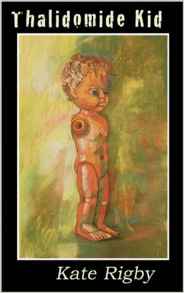
2- Thalidomide Kid is a story about Daryl, who was born without arms due to the Thalidomide tragedy. Could you tell us what inspired you to write this novel?

thalidomidekid

I think it was a gradual evolution and dovetailing of several ideas. I had an idea for a short story involving someone who cut the limbs off their rag dolls (as my sister and I did!) and the idea for a Thalidomide survivor very much fitted together with that idea. I also had an idea about writing a book in a school setting. I wanted it to be retro and to draw upon my own schooldays, so that side of it became (partially) autobiographical. I spent the same years in Cirencester though I slightly changed the name of the secondary school. There was a boy who was a Thalidomide survivor at the school I went to in Liverpool, although I didn’t really know him and visually he was very different to Daryl. But I wanted Daryl’s disability to be incidental and not the raison d’etre for the story. Yes, it has an impact on his relationships and the way his peers relate to him, but he’s also just another kid growing up and having to deal with what all adolescents do: romantic encounters, sexual awakening and friendships with his added disability.

3- How do you think things have changed for people with disabilities since you wrote Thalidomide Kid? Are they better or worse?

I’m not sure how they are for schoolchildren today, I am hoping things are a lot better with all the strides that have been made by people with disabilities for parity in all spheres of life, the Equality Act and so on. I like to think that things like the Paralympics have made a lot of difference to how kids view disability but at the same time I think the pendulum is swinging the other way due to contradictory government policies. You only have to look at the rise in disability hate crime and the number of attacks on people with disabilities, stoked up by the right wing tabloids to justify stripping people of their benefit entitlements. I could get very political here! But it does make me really angry and ashamed to think this is the way society is heading, after all the decades of progress. It just goes to show how fragile progress is and that we can’t take anything for granted.

4- How much research went into the book?

I mainly based it on observation although I will always try and research around areas where there are gaps in my knowledge. But I do like to be accurate and authentic if possible and of course I had a publisher – Bewrite Books – for this novel so had the added input from the wonderful editorial team at that time. I often get my information from TV programmes or documentaries that just happen to be on during the course of writing a book. But having been a child in the 60s I do remember the climate and the impact of the Thalidomide drug. Every child of that era knew of it.

5-I know you are politically active, and in our last interview, you mentioned keeping a ‘campaign diary’, perhaps with a view to releasing another ‘Guide To…’ style book. Is this still something you might do?

Yes, this follows on nicely from the question about whether things have changed for people with disabilities. I began the Campaign Diary in 2012 when I saw how bad things were getting for people with long term health problems and disabilities under the Welfare Reform Act. After yet another person died, quite needlessly, I felt I needed to record it in words. I didn’t really know her, although we’d spoken now and again on Social Media and her name was mentioned on Question Time. But there have been so many needless deaths. There’s much solidarity along many campaigners. This is important because all the time the government rely on divide and rule tactics to divert us when we need to be united. I just had to begin writing down all the terrible things that were happening, as some sort of outlet, and as documentation. Some of it is just copying and pasting from articles until I can get round to shaping into something. Now it has moved on to Brexit and Trump and other depressing things, although Welfare Reform still plays the largest part. It is all too close and depressing but one day I may have the energy and the distance to distil it. Having said that, there are various things relating to it that I’ve incorporated into my current novel.

As for the Little Guides, yes, they are a lot more fun! I have only written Little Guide To Unhip so far but that went down well on Authonomy when I first showcased it and subsequently when it was published. I have ideas for several more but they are stuck in the backlog! But they don’t require a lot of planning and plotting, so they could be done relatively quickly.

6-Do you have any promotion/marketing tips for newbie indies out there? Has anything been a particular success?

Ooo, I wish I knew the answer to that one! I think it’s what all indie authors want – to find that golden goose. Things are changing so fast too, that what worked a few years ago, or today, may no longer work tomorrow. I do the occasional paid promotion with tried-and-tested promo sites but if I break even that is good. The general advice is to build up your reviews so that you get more visibility on place like Amazon. But people rarely leave reviews these days, even friends who mention how much they’ve enjoyed a book, and I’m not very good at asking people to post reviews! I don’t wish to sound as if I’m nagging. I prefer to approach review bloggers who like my work and there are some wonderful dedicated bloggers out there doing a fantastic job of featuring or reviewing indie authors on their blogs. It’s just a question of finding the ones who review in your genre and like your work. And of course interviews and guest posts like this all help to garner visibility! Another area that is growing is audiobooks and that’s something I would like to explore at some point. The thing that has been most successful in all my years of writing was having a traditional publisher. I was very lucky to find one back in the day when books were all paper and there were many more bookshops. They did all the marketing, they had the contacts and they did get me some reviews in some thrilling places like The Times and The Face as well as publication in the States. But those times are gone. Even people with traditional publishing contracts these days are expected to put in a lot of the leg work and time on social media, so the lines between different publishing contracts are blurring.

7-If you could rewrite any of your novels now, would you, and if so what would you change?

Not so much a major rewrite but maybe some major tweaking. Nowadays that is easy to do with the advent of digital technology but with my first published novel, Fall Of The Flamingo Circus, once it was in print that was it! If I was writing it now I would have included more about punk music and bands than I did and also I’d have had Lauren in a band. In fact she was based on a character I invented called Donna who was in a band so I just don’t know why I didn’t translate that into the book. When I brought it out digitally a few years ago that was the time to rewrite it but because it was successful as it was I decided to leave it be. I also should have properly capitalised on the relative success of Flamingo Circus. I had a publisher and an agent at that time and they were trying to help me with my follow up book but I didn’t really take on board their feedback. They say that it’s harder to get a second book published than a first and I think that was very true in my case.

8-You’ve covered so many gritty social issues in your novels, such as domestic abuse, substance abuse, homelessness, racism, runaways, disabilities and even feral children. What else is left to do? What else would you like to get your teeth into?

I think humanity is such that you never run out of things to get your teeth into! It may seem as if I’m an issue-based writer but often it’s the characters that come first. I have a backlog of ideas for novels and short stories. Sometimes a couple of ideas for short stories, for instance, will be combined into something longer. I also want to get on with the Little Guides and have also been doing some poetry so I have an idea of putting together a collection of that too at some point. Shorter pieces in the form of poetry, flash fiction or short stories seem to be the way forward, not only because of my own health and time restrictions these days, but also seem to lend themselves more to the 21st century way of life where there’s so much more vying for people’s attention but only the same number of hours to read it in, and that’s just the literature! The same is happening in art, photography and music. If people have to leave Facebook and click on a link to read more or listen to something they tend not to. So their attention needs to be held before that. This is where poetry, art or photography have the advantage in their immediacy. I also want to write something more autobiographical, not that I’ve led a particularly exciting life but I have a plan to do a slightly different take on it. My mum, on the other hand, lived through WW11 and has written an autobiography of her early years but she doesn’t want to get it published! But it would be nice to get it into print form for the family and the technology exists for that too these days.

9- Do you currently have any characters in your head who are waiting their turn to get written?

At the present time, it’s more a question of following up on characters from former novels to see where they’re at now. I already decided to do a follow up of Down The Tubes as some readers wanted to know what happens next! I already knew in my mind some things that have happened so thought I should write about it but just haven’t caught up with myself yet. I’ve never been one to do series or sequels but one reviewer expressed an interest in a follow up to Thalidomide Kid and I’ve also left other novels open-ended, like Savage To Savvy, which would lend themselves to a sequel. So maybe I will do some sequels after all!

10-What are you hoping to achieve in 2017?

For the last two or three years I’ve tried to set myself writing goals as well as other goals. This year I tried not to be too ambitious as for the last couple of years I found that I didn’t achieve them and then felt very disappointed with myself. So this year I have been more realistic and then I won’t feel as if I’ve failed dismally! My writing goals for 2017 are to finish the novel I’m currently working on, bring another of my books out in paperback (perhaps Fruit Woman or The Dead Club, both would be nice) and begin the follow up to Down The Tubes. I think that is manageable!

Thanks very much, Chantelle, for this interview – I’ve really enjoyed it.

If you would like to find out more about Kate Rigby and her books, here are the links!

Amazon Page / Facebook Author Page / Goodreads / Website/Blog


Interview with Author Harriet Springbett

Last week I read and reviewed a beautiful and unique YA book, called Tree Magic. I came across this book in a Facebook group I am lucky enough to be part of, and the front cover and title immediately caught my eye. It sounded just my sort of thing. (If you follow me on Instagram you might have an idea of how obsessed with trees I am!) You can read my review of Tree Magic here. Author Harriet Springbett kindly agreed to an interview, which you can enjoy below. Tree Magic comes out in paperback on the 1st of March, and is currently only 99p for the ebook on Amazon. Grab it!

Tree magic3

1) Can you tell us what inspired you to write Tree Magic?

I was sitting under a weeping willow tree in my garden, writing the start of a novel about Rainbow, a teenager who didn’t fit in. A recent storm had uprooted a nearby sumac tree and I found myself wishing I could stroke its branches back into shape to rebalance it: we hug trees to make ourselves feel better, but who ever makes trees feel better? I started to wonder what it would be like if someone could communicate with trees and help them in this way. As Rainbow was under my pen, she became the one to be blessed / cursed with this gift.

2) Did the plot come first, or the characters?

Definitely the main character. I’d already written a short story about Rainbow, and a member of Lumineuse, my writers’ group, said she was such a vivid character that she could almost see her beside me. The plot grew organically from Rainbow, her gift and her problems. This was a deliberate approach on my part, because the previous novel I’d written was plot-led and I’d found the writing experience too restrictive.

3) The story is told in both past and present tense – why did you choose this approach, and how difficult was it to pull off?

The tenses are intrinsically linked to the characters of the two protagonists: Mary wants to forget her past so the present tense represents her best, whereas Rainbow is like a tree, with roots into her past. It wasn’t a question of ‘pulling it off’, because it was natural rather than being a storytelling device. I was warned that publishers wouldn’t like the tense-mixing, but I believed it was too essential to change. In fact, my publisher (Impress Books) never questioned the tenses.

4) Are any of the characters based on people in real life?

No! Part of the fun of writing stories is creating characters. I’m a detail hoarder, and I jot down lots of rubbish that amuses or interests me, which may then produce a character (or not). For example, the other day I was running with a friend who’d bought a new pair of trainers. I noticed that the underside of her trainers happened to match the colour of her T-shirt, and found myself thinking about the kind of person who would do this deliberately.

5) Did you have to do much research into trees, or did you already have some knowledge in that area?

I love trees. I grew up on a Dorset farm that had 10 acres of woodland and a stream, and we were always playing in them, making tree houses or fixing rope ladders and swings to them. We had our own trees in the way other children have pets. Tree Magic doesn’t have technical details about trees, so I only needed an everyday knowledge, which my childhood and a tree guide provided. However, I did research details for the habitats and characteristics of certain trees, such as the symbolic silver maple.

6) This is your debut YA novel, can you tell us what is coming next?

I have already finished another YA novel called Red Lies, White Lies. It’s a thriller with a 17-year-old protagonist, set in France, and has no magic realism. A beta reader said she couldn’t put it down – but I really should make time to seriously hunt for an agent. I love the writing part of being an author, but I’m not very good at sending out my work. I must confess that I have begun to write another YA novel when I should really be trying to find a home for Red Lies, White Lies.

7) Do you read a lot of YA yourself? If so, what are your favourite YA books?

I didn’t intend Tree Magic to be a YA novel because I hadn’t read much YA fiction. When it was placed runner-up in a competition, the judge told me that with a little rewriting I could target the YA market. An agent who rejected it mentioned YA too – so I researched the YA market and rewrote it for younger readers. I only really started reading YA a short time ago – and I’m seriously seduced by what I’ve read. There’s a refreshing liberty in YA writing. I loved The Sun is Also a Star for its ‘science versus intuition’ approach (a little like in Tree Magic). I was shocked and impressed by Orangeboy. I adored the protagonist in Wing Jones and thought A Monster Calls was beautifully written. I could go on, but I’d better stop there.

8) Can you tell us about your writing and publishing journey so far? What have been the highs and lows?

The lows were the rejections. I originally sent Tree Magic to about 10 agents, was rejected by all of them and concluded that the story was rubbish. I left it in a drawer for years before learning that this rejection rate was normal, and that small publishers accepted unsolicited manuscripts. Long live small publishers! The highs were firstly getting my manuscript accepted by Impress Books (though I worried for ages that they’d change their minds) and then the whole editing process with them. They are wonderful. The weirdest moment was when I read the blurb my editor wrote. My immediate reaction was ‘that sounds like an exciting book’ and my second was ‘it’s your book, you idiot.’

9) What advice would you give to new writers just about to start the journey into publication?

Don’t be put off by rejections. You must keep searching for a home, but make sure you get readers and other writers to critique your story first. Writers’ groups are invaluable for this. Also, I wish I’d written more short stories before launching into a novel because the experimentation, feedback and rewriting loop takes less time than with novels. Short stories help you to find your voice.

10) What have you learned so far about promoting your book?

I didn’t realise that book promotion and publicity would be so time-consuming. Getting started can be scary, so it’s wonderful if you have a publicist to guide you. If you’re not careful, it will eat into your writing time, so you have to sum up your courage and push yourself to be proactive while still remembering that the writing is what’s most important.

11) Describe an average writing day for you

I exchanged my full time job for part time work in order to have writing time, so this motivates me to sit down every morning and write until lunchtime. Most evenings I run or cycle – this is my problem-solving time, when I run through scenes in my head and visualise characters’ reactions. Of course, my friends don’t believe me when I say I’m working as I run! I don’t write at weekends, because I want to live fully, spend time with my family, do sport, see friends etc. Inspiration comes from interacting with real life, from watching and listening to what’s going on in the world, so it’s important not to shut yourself away all the time. It also means I look forward to getting back to my computer on Monday mornings.

12) Finally, tell us three interesting facts about yourself

This is the most difficult question. OK: when I was 22 I did a Raleigh International expedition in Chile and then hitchhiked 5000km from the south to the north. My ideal holiday is an itinerant trip with a bike, a tent and good company. And I’m (distantly) related to Thomas Hardy.

More about Harriet Springbett…

Harriet Springbett lives in France with her French partner and teenage daughters. She grew up in West Dorset and qualified as a manufacturing engineer before realising she preferred people to machines, and words to numbers. She moved to France in 1995, where she studied French and then worked as a project manager, a freelance feature writer, a translator and an English teacher. She has always written in her free time.

Her debut YA novel, Tree Magic, was published by Impress Books in ebook format in January 2017. The paperback is due out on 1st March. Harriet writes every morning and blogs on writing and cultural events at Harriet Springbett’s Playground of Words and Thoughts. Several of her short stories (Quark Soup, Shingle & Sand, Ami Entends-tu?, Big Bones…) have been placed and shortlisted in competitions or published in magazines such as The French Literary Review.

Links;

Tree Magic page at Impress Books: http://www.impress-books.co.uk/impress/tree-magic/ Tree Magic on Amazon.uk: https://www.amazon.co.uk/Tree-Magic-Harriet-Springbett/dp/1911293001/ref=sr_1_1?ie=UTF8&qid=1485160742&sr=8-1&keywords=9781911293002 My Blog: https://harrietspringbett.wordpress.com Facebook author page: https://www.facebook.com/HarriSpringbett/ Twitter: https://twitter.com/HarriSpringbett