Interview with Indie Author Anthony Morgan-Clark

Anthony Morgan-Clark is an indie author I have followed online for some time. Anthony has spent over a decade working in and managing children’s homes. Since 2014 Anthony has published a sci-fi short story collection, ‘Reformed’, and the Tor horror series.  He has also been published on the QuarterReads website, and has had short stories published in several magazines. Anthony grew up in Brighton and Wales before moving to the Wye valley, and currently lives in the Forest of Dean. Having read and enjoyed part one of his horror trilogy The Tor, Part One; Whiteshill and the prequel to the seriesThe Cauldron I recently went on to read The Complete Tor, which is available in paperback and ebook. This epic edition contains the prequel, the three parts of the series, and another short story related to The Tor, Symeon’s Tor. I’ve always been a fan of horror, so it’s been a pleasure to discover Anthony’s work. I’ve been well and truly pulled into the creepy world of The Tor and I am looking forward to reading more from this author. Enjoy the interview!

Q1- Can you tell us a bit about where the idea for The Tor came from?

My original idea was to have the Tor at the centre of five villages, with the Batsford being one of the five villages. Whiteshill was to be another. Weird stuff would happen in each of the villages, the kids at the local comprehensive school would map out the disappearances, they’d notice the Tor being at the geographical centre and they’d investigate. Then, after some more horror, everything would be okay. Stephen King meets the Famous Five. Anyway, after I realised this was far more in terms of settings and characters than I needed to tell a story, I cut it all back to one village and a handful of characters, and started again.

With regard to the Tor itself, I was walking to work -I used to work and live in the village upon which Batsford is based- and on the hill in front of me I saw, through the mist, a cottage and smaller buildings. The shape and layout of those buildings looked very much like a circle of standing stones. That image became The Tor; the trees came from Mayhill, a local landmark.

Q2 Was it originally written as one book, which was then divided up for the ebook series? Or did you write it with serialisation in mind?

Originally I’d planned one book. I thought at first about telling the story of Whiteshill from Martin’s perspective, then from Eddie’s, then from Constable Donnell’s. But as I worked through it I realised that there was a narrative bigger than that which eventually became Part One, especially after introducing Symeon into the story.

Coupled with that was the story of Rebecca. In 2004 I was living on my own and had the idea for the story that became Rest. I wrote it in one draft and, naively, sent it to a publishing house for appraisal. They wrote back, praised my writing, but struggled with the question of why the protagonist would suddenly fall for Rachael (as she was known then) after a single meeting. It was a plot issue that had concerned me also. So I shut the story away and moved on to other things, and didn’t think of the story again until after I’d written Whiteshill and begun work on The Cauldron. As I wrote, the character of Rebecca felt familiar, and it was whilst walking home from work one evening (a good walk does wonders. It gives the mind time to wander and explore and make all these little links of its own accord) that I realised both the character from The Cauldron and the character from The Tor were one and the same.

Q3 Is the story of The Tor over? Or are there other stories connected to it that might arise?

After abandoning Rest in 2004 I started a fantasy piece based around a young, excluded boy who moves to a new town. There he befriends and old, bearded man who is of mysterious origin, and lives to collect stories. The story did not turn out as I had planned, but it was the genesis of the characters Martin and Mr Symeon. Symeon is Symmonds in that story (named after Symonds Yat if

you’re interested). I’d love to rewrite and finish that one. I’ve also just completed writing two short stories based around the red man from Rest’s white tower. I’ve thought about writing more of Rebecca’s history too. In Rest she goes through an apparent drug addiction, but this is the longest we see her away from the Tor. Is she suffering withdrawal from the Tor? Is she taking substances to escape it? Does she go back willingly? There’s a lot to explore there, but to reveal too much would, I think, spoil the story.

Q4 I could really imagine it as a creepy TV series, X-Files or Twin Peaks style, stretching over the decades. Have you ever thought about developing it into a screenplay?

Not seriously enough to dedicate such a big amount of novel-writing time into doing so. Like novels, the writing is only half of the work at most. To generate interest, pitch it, sell it, etc – I have no idea how much work that would involve. I’d be really interested in a graphic novel adaptation though.

Q5 When did you first know you wanted to be a writer?

As a kid I figured I had the perfect career planned out. I was obsessed with Jeff Capes (who I was convinced came from Llanelli, like I did), Spiderman, Nigel Mansell and Roald Dahl. I figured being a strongman would help my superhero career; the travelling involved would be the perfect cover for it; and since F1 drivers only work every other weekend and superheroes work at night, I’d have plenty of time during the week to write.

Aside from a few speeding points, writing was the only thing I stuck with. I remember writing Star Wars and Transformers stories with stationery sets I received as a kid, and amassing a collection of notebooks filled with fantasy and scifi tales as a teen. I used to relish English lessons in school. It’s something I’ve always done. Some people play sport, some people paint, some people keep animals. I write.

Q6. Can you tell us about your writing journey so far? Ups and downs?

This is a tricky one. I’m not one of those eternally optimistic people who see every problem as a challenge in disguise, but I do believe there is something to learn (and therefore something to be gained) from every situation. Publishing my first book to Kindle, seeing my first short story in print, and having a short story selected for a collection have all been ups, as have the strong reviews my work consistently receives. The only real down is the fact that my writing does not yet bring me enough of an income to write full time. But I’m sure that’s a matter of time (the TV rights for the Tor are up for grabs if anyone wants to throw me some money…) and effort.

Q7 What made you decide to take the indie route?

Impatience. I can finish a book on Monday, and readers can buy it on Tuesday. I love that. Also the flexibility being an indie author affords me. If I want to drop the price, I can. If I want to try another genre, I can. I’m in control of my writing. Publishing houses are like record labels. It’s not about quality, it’s about what sells. That’s why we have a million boy bands for every Nirvana. Publishers chase the market, but being an indie author allows you to carve out your own niche. Kindle and Createspace have broken the market up in the same way, if not to the same degree, that the plummeting price of home recording equipment has done for the recording industry. Who needs a record deal when you can promote on YouTube and sell your MP3s via your website? Who needs a publishing deal when you can promote and sell your own books?

Q8 What would you say are the hardest things about being an indie? And what would you say are the best?

The best things about being an indie author are those I mentioned above. As a writer I’m not beholden to any publishing company’s notion of what I should be. The worst things I think are the fact that, when it comes to self-published indie authors, there is an incredible amount of dross out there tarnishing what we do. Some readers equate “indie author” with “couldn’t get a publishing deal”, and for a lot of writers that’s true – not that I’m suggesting publishing houses don’t put out poor books, because they do. I read The Da Vinci Code at work a few years back, and was amazed that such a thing could get published. But being an indie author means battling against people’s expectations and stereotypical views of an author who is not traditionally published.

Being an indie also means you have responsibility for every aspect of the book, from the first draft to the marketing plan. It’s an opportunity to learn many new skills, but it can also be incredibly tiring. Then there are the issues of drumming up sales, chasing reviews… being an indie author is hard, time-consuming work if you want it to be anything more than a hobby.

Q9 What advice would you give to a writer about to embark on their own indie journey?

It’s a hell of a lot more work than you’ll expect. Work hard, but don’t burn out. And leave ample time between drafting, editing, proofing and releasing your work to ensure it’s the best it can be. Once you hit ‘publish’, all your mistakes are public.

Read lots of books, good ones and mediocre ones. Work out what methods the author uses to make them so good (or not). Deconstruct the work of different authors, you’ll learn a hell of a lot this way.

Spend time reading around the subjects of writing and editing. I’d always advise hiring a good quality editor to go through your novel, but for many people this just isn’t realistic. Read and re-read Strunk & White’s Elements of Style, and Browne & King’s Self-Editing for Fiction Writers. Even if you can afford an editor you’ll save a ton of cash by giving them the best manuscript you can. The Tor was the hardest thing I’ve edited, particularly the second section Rest. I learned a hell of a lot from doing so and now I’m tempted to re-edit Reformed. Editing is a skill like any other, and the more you do it and the more you read about the techniques involved, the better you’ll be.

Q10 What are you working on right now?

A short horror story collection that will include stories relating to The Tor; a collection of new and previously released short stories covering a variety of non-horror genres; and a stand-alone horror tentatively titled The Swarm. I also have a notebook full of short stories that will one day make up a sequel to Reformed.

Q11 Who are your favourite authors?

As a kid Roald Dahl and CS Lewis were my favourites. I also devoured comics, particularly Batman. The late eighties Batman comics had some complex characters. That version of Batman was a really complex character, and Jason Todd (Robin) had a real dark side. All the characters in Roald Dahl and CS Lewis’ books were black-and-white good guys or bad guys, but when you read of Batman beating information out of goons, or Robin allowing a bad guy to fall to his death instead of rescuing him (or possibly even pushing the guy off – it all happened off-panel)… as a kid it was a real eye-opener for how complex fictional characters could be. And to have read it in a comic, as well! Before that I’d been obsessed with Stan Lee’s Marvel creations, all day-glo spandex and good-guys-beating-bad-guys.

Lately I’ve been reading a lot of Philip K Dick’s novels and short stories, and I love the hallucinatory, paranoid nature of his work. Neil Gaiman and Clive Barker both have a depth and breadth of imagination that always leaves me exhilarated. Steven King is underrated as a literary author; I find his writing to be better than a lot of people give him credit for, and the horror elements to be overrated. For example, the characters and depiction of the town and residents in Needful Things were far more powerful than the horror and weak resolution; in the same way the final section of It was nowhere near as vivid or moving as what preceded.

Terry Pratchett is another writer who took a long time to be recognised for the strength of his characterisations and his writing as a whole, rather than as ‘just’ a good fantasy author. I think it’s a problem common to all genre authors. People see you as a horror/scifi/fantasy/whatever writer, rather than as simply an author.

Alan Moore’s comics (Watchmen in particular, but also From Hell, V for Vendetta and The Killing Joke) always reward being read again.

With regard to ‘literary’ authors, I’ve read 1984 countless times. I love Of Mice and Men too. Oryx and Crake is another favourite, as is American Psycho.

Q12 Tell us three interesting facts about yourself

Three interesting facts? Hmm… As a teen I had insomnia and, when I did sleep, a recurring dream. I decided one day to write the dream down. Once I’d done so still had a recurring dream, but

a different one. This happened four or five times. And yes, those dreams have made it into my writing.

I have a phobia of spiders falling down into my collar when I’m in sheds or garages. This is a really specific phobia and I don’t think it has a name. I can’t enter a shed or garage without pulling my top tight around the back of my neck.

I can’t tell the difference between certain shades of purple and certain shades of grey. I know that’s not especially interesting, but I’m running out of ideas here – you’re asking a man who has 450 CD’s alphabetised by band name and then album title…

You can connect with Anthony on social media and via his website;

https://anthonymorganclark.wordpress.com/ (blog/website)

https://www.facebook.com/MorganClarkAuthor/ (Facebook)

@AMorganClark  (Twitter)
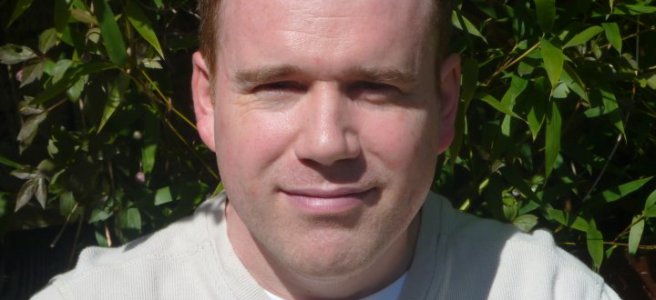
 

Author Interview; Keith Gillison

Welcome to another indie author interview! If you missed the last interview I posted, it was with indie author Joel Dennstedt,  during which he told me all about the inspiration behind his novels, and how manages to keep writing alongside his constant travels. Next up is Keith Gillison, a British author I discovered recently. His debut novel The Boss Killers is a dark and twisted satire about one man’s desire to dispose of his vile boss. Intrigued? You should be, it’s a hell of a story!
1) Your novel, The Boss Killers is a dark satire about one man’s desire to kill his terrible boss. Could you tell us where you got the idea from? 

I’d love to say I did lots of research, spotted a niche area ripe for exploiting and then painstakingly plotted the novel out. However, I was walking through the splendid grounds of a public school in Dorset when this scene played out in my head of a man having his annual appraisal and in his mind he’s saying all the things he really wants to say to his jobsworth boss. I just liked the idea and wanted to know what would happen next so took the idea from there as a starting point and ran with it. The hammer came from an actual former boss who, on my first day, showed me a hammer he kept in his desk, which I’m pretty sure was intended as a threat.

2)Did you always know you wanted to be a writer?

When I was at school for some reason I actually enjoyed writing essays. In my career in marketing I wrote a lot of business copy for promotional materials and websites. I liked writing but never tried my hand at creative writing, I was one of those people who thought ‘one day I’ll write a book’ while secretly knowing that it was a pipe dream and I’d never do anything about it. Nine years ago that changed when I lost my sister to cancer. I thought I couldn’t look myself in the mirror if I didn’t at least try my best to write that book.

3)What has your journey as a writer been like so far? How would you describe the experience?

It’s been a tough journey. At the same time my sister was dying of cancer I was very ill. My energy levels were getting worse and then one day I was out in Dorchester, I sat down at a bench and couldn’t move any part of my body. I was eventually diagnosed with Chronic Fatigue Syndrome (also known as ME) and nearly ended up in a wheelchair. I’ve battled back but have still had frequent bouts of chronic illness for the last 10 years. During this time I also had two children, moved home and wrote a novel. It took me a long time to write it because I was ill so much so there were long periods when I couldn’t write. Also, I wrote the entire novel before I attended my first writing class, which probably isn’t the wisest way of doing things. At first I really struggled writing the novel, as I’d never even written a short story before but I persevered and then one weekend I wrote this scene, what would become The House of Lard chapter, and I thought ‘Woah, where did that come from?’ It was like I’d opened this door into my imagination and suddenly I felt like I might actually be able to do this.

I’ve had ups and downs, I’ve won a writing competition and had short stories published in magazines and anthologies, and been broadcast on local radio, as well as plenty of rejections along the way. I’d say I’m more confident in my own ability now and have learnt some of my blind spots and areas I need to work on but I’m still learning.

4) What made you decide to take the self-publishing route?
I contacted a number of agents initially and was rejected by some, others didn’t even bother to reply. I had some nice rejections but I found the process of waiting an interminable amount of time (always longer than their guaranteed reply period!) very frustrating. I found myself in the position of having a decision to make – did I want to spend the next however many years sending my novel off to publishers and agents or did I genuinely want people to be able to read it. I was impatient to start working on other writing projects as well and I didn’t spend all that time and effort writing my novel to sit on my computer forever so I went for self-publishing. I think people need to ask themselves that question – do you want people to read your work? If the answer is yes then there is nothing stopping you doing it yourself through self-publishing.

5) What would you say is the best thing about being an indie writer?
You can do whatever you want. Nobody is telling you what to do or when to do it, you have the freedom to just go ahead and publish and while the process is a lot of hard work, you also learn a lot and gain valuable skills. It’s a feeling of freedom to not be dependent on other people, knowing you can just do it all yourself. You don’t have to be one of those people who says ‘I wrote a novel but couldn’t get it published so I gave up.’ Self-publishing means when you are rejected by publishers it’s not the end of the road. It’s better that some people read your work than nobody.

6)What would you say are the worst things about being an indie writer?
It would still be good to not have to do everything yourself. As a self-published author you have to do all the promotion of the book yourself and there are times when I’d rather have someone do that for me so I could just concentrate on writing. It’s also irritating that sometimes the self-published tag is perceived as meaning lower quality which is an unfair generalisation. I’m sure there are some poor self-published novels, but I’ve also read plenty of traditionally published novels that were utter tripe.

7) Do you have any top tips for indie survival?

In the words of a well-known sports clothing brand; just do it. It’s an amazing feeling to have your work published and out there for everyone to read. The biggest piece of advice I can give is – believe in your work. As an indie author you have to fight to get attention for your work and you’ll get disappointments along the way but if you truly believe in your work then you’ll know that people just need to read it. Don’t expect it to be easy though, there are millions of books and authors out there but you know something they don’t – your book is awesome! And keep going, it might take you longer to get where you want to be but you can still get there

8)What are you working on at the moment?

I injured my arm in December and typing is still painful now so at the moment I’m mostly writing short stories and flash fiction, with a view to an anthology later this year. I’m about 40,000 words into another novel and I have plans for several others as well. I’ll get back to the novel when I can write more intensively again without the severity of pain.

9) How would you describe your genre and style?
Humour tends to be my natural style of writing, with a leaning towards dark and surreal or ridiculous humour. I love taking an idea and stretching it way beyond what anybody would consider normal. I’d like to think of my writing as very original and different from everything else out there.

10) Who are your influences/fave authors?

Terry Pratchett is a huge hero of mine. I love the humour in his writing and he has some of the greatest fictional characters of all time. Lord Vetinari is a particular favourite, as are Granny Weatherwax and Cut-my-own-throat-Dibbler. Pratchett takes you on amazing journeys of the imagination and he combines great humour with brilliant storytelling.

11) what are your dreams/hopes for the future?

The ultimate dream would be to be able to make a decent living out of writing novels, be a bestselling novelist. I’m sure all authors would want that. I’d just like to write more novels and feel that I’d told the stories in my head as I wanted to and that people enjoyed them. I don’t want to be accused of literature but it would be nice to be recognised as a writer that readers regard as entertaining and original.

12) Tell us about your writing routine/process – how does it work?

I write the old fashioned way – pen and paper and then I type it up later. It adds to the time but I just can’t get any creative juices flowing staring at a screen. There is something special about just a pen and paper and your imagination, you can go anywhere, be anyone and do anything. Pen and paper also means being able to write anywhere without the need for technology. I’m continually scribbling bits at the side and adding arrows so the page is organised chaos. Ideally I like to be alone and somewhere quiet and then just write for a few hours. I have found it difficult to find a quiet place, even libraries aren’t quiet anymore, sometimes I’ve written in my car and bits of the novel were written at kids soft play places but I wouldn’t recommend that. I don’t edit as I go, just write it all out, including the rubbish bits, it’s important to keep the flow and once I’m on a roll I’ll keep writing until I’ve either got to the end of a story for a short story or the end of a scene or chapter for a novel. I don’t like to leave a scene or story half-finished, I’d rather wait until next time. I usually write a few notes at the top of the page, pointers of things I want to include but I don’t plan anything out in detail, I like to just picture the scene in my mind and then write it.

13) Tell us three interesting things about you

1/ I’m a decent table tennis player. I’ve played for my county at both junior and senior level. I spent my youth travelling around the country playing in table tennis tournaments.
2/ I suffer from acute anxiety and have frequent panic attacks.
3/ My background is in marketing. I have a management degree from Aston University and a postgrad diploma from the Chartered Institute of Marketing. I once worked for a woodland burial ground and funeral directors, selling burial plots to the general public and steel mortuary trays to funeral directors. That was a conversation stopper; ‘So what do you do?’ ‘I work for a funeral director’. Many a tumbleweed moment was had.
 Keith Gillison is 40 years old and lives in Dorset, but is originally from Birkenhead on Merseyside. He is married with two children. A graduate of Aston University and the Chartered Institute of Marketing, he spent 17 years working in marketing. He published his first novel, The Boss Killers, in 2015. He also writes short stories and flash fiction and has been published in magazines, anthologies and online.
Find out more at thebosskillers.com or follow Keith on Facebook and Twitter

Interview with indie author Joel Dennstedt

Almost a year ago I interviewed two great author’s about their experiences of writing and publishing, Kate Rigby and Alec John Belle. You can find the interviews here. I’ve been meaning to interview more author’s since then, and just have not had the chance to get around to it. Anyway, that’s all about to change! Joel Dennstedt is a very diverse indie author, and I have enjoyed all three of his novels. Here he chats to me about his indie journey so far, his books, his on-going travels, and his plans for the future.


1) You and your brother are currently travelling through South America. Could you tell us a bit about what made you decide to do this? And was there a conscious decision to write and blog about it as you went?

Everything was Steve’s idea. As of 2010, I was working for the same evil corporation as he, a criminal organization known as the largest bank in the United States. He couldn’t take it anymore and decided to retire. His wife could not take that, so they divorced. He said he was off to see the world. I had to ask him twice – he did not believe me the first time – if I could tag along. So, in April of 2012 we packed everything we owned into our backpacks and duffels and went off to see the world …. slowly. Four years later, we have made it to Peru. He began his blog a year before we left, and once we hit our first stop in Merida, Yucatan, MX he said: you should publish your novel Orange Cappuccino. So I did. Because he has really great ideas.

2) Your novels are all quite different. Could you tell us what inspired you to write each one? Where did each idea come from?

Orange Cappuccino is true. I wrote it as a novel for the style. It tells the story of my life with my second wife and our trials and tribulations in Alaska. I had to write that story to make way for other things. And yet, the first book I wrote was Hermit – A Novella. I wrote that during my breaks at work, and though the main character is a lot like me, the story was simply a fantasy to help me get through my days in the real world. I published Orange Cappuccino first, and Hermit only after a hundred hours of editing while ensconced in a hostel/brewery in the jungles of Honduras. Guanjo is my science fiction novel, a promise to myself when I was young. The idea came from two photographs I had collected along the way: one of a huge longhouse situated in the canopy of a rainforest; the other of a little native girl with her pet frog.

3) Did you always know you wanted to be a writer?

I have never wanted or intended to be anything else. I considered myself an abject failure for 60 years of my life because I caved to the necessities of the real world.

4) What has been your journey so far as a writer? How would you describe the experiences you’ve had?

Mostly, I have felt rather lost. The writing is not fun. There has been little appreciation for my work. And yet, when I compare now to four years ago, that is not true at all. I have had a lot of fun. The appreciation has been immense. Now put those two feelings into one and shake them up every single day, and you know something of the rollercoaster ride that you and I are on. The experience of writing has called on every reserve of wisdom that I possess, and made me practice the path I follow with an intensity far beyond what I had known

before. The best things come unexpectedly. The worst come from my own expectations. The lesson: stop expecting and start accepting. And all I can say to that is when I do, things seem to progress perfectly.

5) What would you say are the best things about being an indie writer?

This is pretty easy. The creative control is great. The ability to immediately respond to any new idea, whether in the writing itself or in the marketing and sales keeps everything alive and fresh. The rebelliousness of it all. The interactions with other indie writers, their support and commiserations.

6) What would you say are the worst things about being an indie writer?

Only one thing that I know of: lack of exposure. The challenge to locate your audience, when mainstream authors seem to find their audience ready-made.

7) What are your personal top tips for indie survival?

Be prepared to do it all. Create, Write, Proofread, Edit, Produce, Promote, Market & Sell. If you don’t understand the essential elements of business, then enjoy the vanity of it all, but don’t expect success. And one personal tip for Indie Authors in general: if you don’t start learning to edit and correct your mistakes, you are going to fail. I read a lot of Indie works now, and I am nauseated by the typo’s, grammatical errors, misspellings, and simple format errors that permeate their books. It has given and will continue to give Indie Authors a bad reputation.

8) What are you working on at the moment?

I am supposed to be working on my literary novel: In the Church of the Blue-Eyed Prophets. Instead, I work most consistently on my blog, my collection of horror short stories, and my book reviews.

9) Who are your favourite authors?

My top 5 favorite authors are British: Barry Unsworth, Jean LeCarre, William Golding, Charles Dickens, and Graham Greene.

10) What are your dreams/hopes for the future in terms of your writing?

My biggest dream is to be accepted by the industry professionals and regarded as a writer of great literary merit. I know I ought to be seeking popular approval, but mostly I just want affirmation from those who know good writing.

11) Tell us about your writing routine/process

I guess that you’re assuming I have a routine. Not so much, really. I write what I want, when I want, at the pace I want. In this regard I pretty much go against all the advice of others. I do not write a certain number of words a day. I do not challenge myself to write so many pages. I do not even make myself write each day. It does not work for me. And even if it did, I would not do it. When I have experimented with such a program, what I wrote was trash, and I had to go back and rewrite every word. Sometimes I write a single paragraph in a day. Sometimes a page. Much more than that, and once again it turns to trash. I also ignore the trusted advice to just get the first draft out. Doesn’t work for me. I edit as I write. A lot. I cannot proceed until the writing is almost at the standard I maintain. And when I’m done, I go back and edit, edit, edit all over again. You see, writing does not come easily to me. And if I don’t take long breaks between, the writing suffers … a lot!

12) Tell us three interesting things about you

I am the son of a dwarf.

I believe that I am high-functioning autistic, enough not to be diagnosed.

I believe that animals can talk.

https://www.facebook.com/JoelRDennstedt/

Writings


Interview With Author Alec John Belle

Welcome to my second author-to-author interview. This time I am really excited to introduce a great new talent. Alec John Belle is only seventeen years old and already has two novels, Before I Break and Forbidden Darkness under his belt. I came across Alec on Facebook and liked the sound of Before I Break, which is a novel dealing with homophobia among teenagers, as well as issues such as self-harm and suicide. I decided to check it out and was suitably impressed. Alec has self-published both his books, but has just recently been snapped up by a small press. Personally I think if Alec can write this well at only seventeen, he is definitely an author worth watching! Over to Alec.

1)      How old were you when you first started writing?

I was in fifth grade when I first started writing.  I was obsessed with the Goosebumps books by R.L. Stine and one day in class we had a free write, where we could write about anything we wanted.  I decided to write a horror short story about a kid who goes to see a fortune teller who makes all his wishes come true.  My teacher was shocked at how well it was written for a 10 year old, so she asked me to write more.  That year I won a writing award for school for another story I’d written about a human who woke up to realize they were an alien.  It was then that I knew I wanted to be a writer.

2)      How would you describe your work?

The best way to describe my work would be “gritty and raw”.  My first book, Before I Break, explored topics such as bullying, discrimination, LGBT teens, self harm, suicide, and a few others that would be spoilers.  It really was a lot to write, and sometimes even I had to take breaks because it was too much to take in.

My new series, in the paranormal YA genre, called The Forbidden Darkness Chronicles, follows similar topics.  It’s about a girl who discovers she is a Monster Hunter one year after her best friend’s attempted suicide.  In the series, there’s a physical entity called Darkness that feeds off of negative emotions, such as depression, anxietym bipolar, etc.  That’s what makes the Darkness strong.  Once again, with a less realistic approach, there are still real world topics that make it fall under “gritty and raw”.

3)      What is your writing process/routine?

This may sound weird, but I actually don’t have one. For me, it’s just whenever I get the urge.  I may go a week without writing, then one day feel the push.  People think that actually means it takes me longer to write a book, but when I do write, I make up fot missing days.  I can write the first draft somewhere between 1-3 months.

Also, I’m a night owl.  So all of my good writing is done at night.

4)      What are you working on right now?

Both of my books, Before I Break and Forbidden Darkness  (the first in my new series), are being reprinted under the publishing house, Booktrope.  While going through that process, I am working on the second book in The Forbidden Darkness Chronicles, titled Shadow’s Wings.

5)      What else have you got planned for the future?

The Forbidden Darkness Chronicles will have 8 books, plus some short stories in between I hope.  I also am hoping to make Before I Break a trilogy.  The second Before I Break novel, titled Once I Fall, is kind of on the back burner for now, but I’ll get back to it eventually.

6)      What is your approach to self-promotion?

Self-promotion is the hardest part about being a writer.  For me, I just post on social media about my books ALL the time, especially my WordPress site.  It’s helped bring in some new readers.

7)      Where do you get your ideas from?

My ideas are usually pretty random.  I got the idea for The Forbidden Darkness Chronicles in 7th grade when I was on a Hayride at a Halloween event.  That idea sat in my head for years, which created a story that now needs 8 books.

Before I Break came to me one day when sitting in Spanish class when I went to public school.  Suddenly, a question popped into my mind: “What if a homophobic straight male became friends with another guy without knowing the other guy was gay?”  Then next thing you know, the whole story just flooded into my head, including the ending.  I knew exactly what would happen at the end by the time class was over.

8)      What would be your advice be to other young writers?

My advice, as cliche as it may sound, is to keep writing.  Write your heart out.  Think your idea is stupid?  Write it.  Think your idea isn’t good enough? Write it.  Think it’s too controversial?  Guess what?  Write it.  Don’t let anyone tell you what you can and can’t write. If I did, Before I Break and Forbidden Darkness wouldn’t be Amazon Bestsellers.

9)      What advice would you give to a writer embarking on the independent path?

It’s difficult.  It took months for Before I Break to hit the Bestseller list on Amazon.  You also won’t make the New York Times Bestseller List.  But you will build a fan base.  It won’t come overnight and you’ll need to try and try and try and try before you start selling even one book a day, but it’s so worth it.  Trust me.

10)   Can you describe your highs and low so far?

The highs have included a few.  The first high was getting my book published.  Before I Break came in the mail and it was so overwhelming.  Same with Forbidden Darkness.  Another high was making the Amazon Bestseller List.  I cried when that happened because it was so overwhelming, and while some say the Amazon Bestseller List means nothing, it does.  I also love book signings and being able to meet new readers and talk about some of these issues.  It gives me great joy being a figure some people look up to.

The only real low is not many sales.  As an indie author, the sales haven’t been that great, but they’ve been alright.  Self-promotion is difficult.  I just hope that with my books being reprinted under Booktrope, my sales will start to get better.

You can connect with Alec on Facebook; http://www.facebook.com/alecbellefanpage

or follow his blog here; http://alecjohnbelle.wordpress.com/

Find my previous author-to-author interview with Kate Rigby here; https://chantelleatkins.wordpress.com/2015/02/11/interview-with-author-kate-rigby/