Interview with Author Harriet Springbett

Last week I read and reviewed a beautiful and unique YA book, called Tree Magic. I came across this book in a Facebook group I am lucky enough to be part of, and the front cover and title immediately caught my eye. It sounded just my sort of thing. (If you follow me on Instagram you might have an idea of how obsessed with trees I am!) You can read my review of Tree Magic here. Author Harriet Springbett kindly agreed to an interview, which you can enjoy below. Tree Magic comes out in paperback on the 1st of March, and is currently only 99p for the ebook on Amazon. Grab it!

Tree magic3

1) Can you tell us what inspired you to write Tree Magic?

I was sitting under a weeping willow tree in my garden, writing the start of a novel about Rainbow, a teenager who didn’t fit in. A recent storm had uprooted a nearby sumac tree and I found myself wishing I could stroke its branches back into shape to rebalance it: we hug trees to make ourselves feel better, but who ever makes trees feel better? I started to wonder what it would be like if someone could communicate with trees and help them in this way. As Rainbow was under my pen, she became the one to be blessed / cursed with this gift.

2) Did the plot come first, or the characters?

Definitely the main character. I’d already written a short story about Rainbow, and a member of Lumineuse, my writers’ group, said she was such a vivid character that she could almost see her beside me. The plot grew organically from Rainbow, her gift and her problems. This was a deliberate approach on my part, because the previous novel I’d written was plot-led and I’d found the writing experience too restrictive.

3) The story is told in both past and present tense – why did you choose this approach, and how difficult was it to pull off?

The tenses are intrinsically linked to the characters of the two protagonists: Mary wants to forget her past so the present tense represents her best, whereas Rainbow is like a tree, with roots into her past. It wasn’t a question of ‘pulling it off’, because it was natural rather than being a storytelling device. I was warned that publishers wouldn’t like the tense-mixing, but I believed it was too essential to change. In fact, my publisher (Impress Books) never questioned the tenses.

4) Are any of the characters based on people in real life?

No! Part of the fun of writing stories is creating characters. I’m a detail hoarder, and I jot down lots of rubbish that amuses or interests me, which may then produce a character (or not). For example, the other day I was running with a friend who’d bought a new pair of trainers. I noticed that the underside of her trainers happened to match the colour of her T-shirt, and found myself thinking about the kind of person who would do this deliberately.

5) Did you have to do much research into trees, or did you already have some knowledge in that area?

I love trees. I grew up on a Dorset farm that had 10 acres of woodland and a stream, and we were always playing in them, making tree houses or fixing rope ladders and swings to them. We had our own trees in the way other children have pets. Tree Magic doesn’t have technical details about trees, so I only needed an everyday knowledge, which my childhood and a tree guide provided. However, I did research details for the habitats and characteristics of certain trees, such as the symbolic silver maple.

6) This is your debut YA novel, can you tell us what is coming next?

I have already finished another YA novel called Red Lies, White Lies. It’s a thriller with a 17-year-old protagonist, set in France, and has no magic realism. A beta reader said she couldn’t put it down – but I really should make time to seriously hunt for an agent. I love the writing part of being an author, but I’m not very good at sending out my work. I must confess that I have begun to write another YA novel when I should really be trying to find a home for Red Lies, White Lies.

7) Do you read a lot of YA yourself? If so, what are your favourite YA books?

I didn’t intend Tree Magic to be a YA novel because I hadn’t read much YA fiction. When it was placed runner-up in a competition, the judge told me that with a little rewriting I could target the YA market. An agent who rejected it mentioned YA too – so I researched the YA market and rewrote it for younger readers. I only really started reading YA a short time ago – and I’m seriously seduced by what I’ve read. There’s a refreshing liberty in YA writing. I loved The Sun is Also a Star for its ‘science versus intuition’ approach (a little like in Tree Magic). I was shocked and impressed by Orangeboy. I adored the protagonist in Wing Jones and thought A Monster Calls was beautifully written. I could go on, but I’d better stop there.

8) Can you tell us about your writing and publishing journey so far? What have been the highs and lows?

The lows were the rejections. I originally sent Tree Magic to about 10 agents, was rejected by all of them and concluded that the story was rubbish. I left it in a drawer for years before learning that this rejection rate was normal, and that small publishers accepted unsolicited manuscripts. Long live small publishers! The highs were firstly getting my manuscript accepted by Impress Books (though I worried for ages that they’d change their minds) and then the whole editing process with them. They are wonderful. The weirdest moment was when I read the blurb my editor wrote. My immediate reaction was ‘that sounds like an exciting book’ and my second was ‘it’s your book, you idiot.’

9) What advice would you give to new writers just about to start the journey into publication?

Don’t be put off by rejections. You must keep searching for a home, but make sure you get readers and other writers to critique your story first. Writers’ groups are invaluable for this. Also, I wish I’d written more short stories before launching into a novel because the experimentation, feedback and rewriting loop takes less time than with novels. Short stories help you to find your voice.

10) What have you learned so far about promoting your book?

I didn’t realise that book promotion and publicity would be so time-consuming. Getting started can be scary, so it’s wonderful if you have a publicist to guide you. If you’re not careful, it will eat into your writing time, so you have to sum up your courage and push yourself to be proactive while still remembering that the writing is what’s most important.

11) Describe an average writing day for you

I exchanged my full time job for part time work in order to have writing time, so this motivates me to sit down every morning and write until lunchtime. Most evenings I run or cycle – this is my problem-solving time, when I run through scenes in my head and visualise characters’ reactions. Of course, my friends don’t believe me when I say I’m working as I run! I don’t write at weekends, because I want to live fully, spend time with my family, do sport, see friends etc. Inspiration comes from interacting with real life, from watching and listening to what’s going on in the world, so it’s important not to shut yourself away all the time. It also means I look forward to getting back to my computer on Monday mornings.

12) Finally, tell us three interesting facts about yourself

This is the most difficult question. OK: when I was 22 I did a Raleigh International expedition in Chile and then hitchhiked 5000km from the south to the north. My ideal holiday is an itinerant trip with a bike, a tent and good company. And I’m (distantly) related to Thomas Hardy.

More about Harriet Springbett…

Harriet Springbett lives in France with her French partner and teenage daughters. She grew up in West Dorset and qualified as a manufacturing engineer before realising she preferred people to machines, and words to numbers. She moved to France in 1995, where she studied French and then worked as a project manager, a freelance feature writer, a translator and an English teacher. She has always written in her free time.

Her debut YA novel, Tree Magic, was published by Impress Books in ebook format in January 2017. The paperback is due out on 1st March. Harriet writes every morning and blogs on writing and cultural events at Harriet Springbett’s Playground of Words and Thoughts. Several of her short stories (Quark Soup, Shingle & Sand, Ami Entends-tu?, Big Bones…) have been placed and shortlisted in competitions or published in magazines such as The French Literary Review.

Links;

Tree Magic page at Impress Books: http://www.impress-books.co.uk/impress/tree-magic/ Tree Magic on Amazon.uk: https://www.amazon.co.uk/Tree-Magic-Harriet-Springbett/dp/1911293001/ref=sr_1_1?ie=UTF8&qid=1485160742&sr=8-1&keywords=9781911293002 My Blog: https://harrietspringbett.wordpress.com Facebook author page: https://www.facebook.com/HarriSpringbett/ Twitter: https://twitter.com/HarriSpringbett


Today I’m Gonna’ Run

Today I’m gonna’ run.

I’m gonna’ run from the madness and the anger and the fear, I’m gonna’ run from the TV stations, and the radio and the internet. I’m gonna’ run to feel the earth hard and firm beneath my feet, to feel the cold wind against my skin, and in my hair. I’m gonna’ run to feel my heart beating harder and faster inside my chest, to know I am still alive, and that this is still a life, to feel my breath coming short, to feel my legs working, to feel my body getting stronger and leaner and harder.

I’m gonna’ run to exert power and control over me, my body, my life. I’m gonna’ run outside, to be under the sky, and upon the earth, to see sky over my head and dirt under my feet. Today I’m gonna’ run through dark trees and see light and shadows fragmented on the ground, I’m gonna’ run down dusty tracks, and jump over heather and squeeze past gorse. I’m gonna’ run as if I am free, as if I am animal and returned to the wild. I’m gonna’ push and breathe, and go higher, and faster and harder and longer.

Today I’m gonna’ run to remind myself I come from the earth and will return to the earth. That Mother Nature owns and controls us, not the other way around, that for far too long we have used and abused her, that one day surely she will turn on us all.

I’m gonna’ run to pledge my loyalty and love to her above all others. I’m gonna’ run from the small minds and the big fears, and the demons running amok, I’m gonna’ run to remember that they can’t own me and they can’t own nature, and that all things in this life and world are cyclical and that good times will roll around again. I’m gonna’ run to feel better and lighter so that when I return I can look my children in the eye and tell them that better days are coming, that they are the light and the hope, and that the only thing they should listen to is the earth itself.

When Fear Drives Fiction

So, I’m reading George Orwell’s 1984 for the first time and wondering if what deterred me from it for so long was fear of fear. By that I mean there is already so much to be afraid of in this world, why would I want to give myself more? I’m currently writing from a place of fear and uncertainty and it’s pretty obvious that I’m not the only human feeling like that right now. And I mean on a daily basis. It’s like that Monday morning stomach lurch, except it happens every morning. It’s like the heavy sluggish twisting guts you get before an exam, before a driving test, before you do anything you’re scared to do. Except it never goes away. It’s there all of the time. Weighing me down, wringing me out, making me pause to catch my breath. It’s like that too; like I can’t breathe properly, like there is a deep and shaking level of fear rising up to the surface, and if I am quick I can take a breath and send it back down again. Deal with it another day. Move on quickly into the light.

And there is light. It’s vital to remember that. There is light and love everywhere, and I hope you’ve got as much as I have in my life. When I feel too bad, when the sinking feeling starts to drag me down, I buck myself up and busy myself with the things I love. My beautiful children. Loud music. My garden full of flowers, vegetables and animals. Writing and books.

I’m examining the world right now and wondering if life imitates art, or if it is in fact the other way around. Does art reflect the world we have already created? Or does it project our fears for the future based on what’s going on around us right now? George Orwell must have been pretty terrified, that’s all I can think. Big Brother. Thought police. Uniforms and Two Minutes Of Hate. Chilling stuff. Which all feels rather apt and grim at the moment.

I’m writing to you from a post Brexit Britain. I hate the word Brexit. To me it sums up the dumbing down we’ve been subject to for so long now. Let’s join two words together and make a new one so we don’t have to say too many words! Now I don’t care how you voted, and I’m not going to talk here about my vote, or the whole situation in any real depth. I personally feel that there were good reasons to stay and to leave, but that as usual the government and the media focused on immigration and fed us lies, and what an ugly divisive country this now looks as a result. Let me say again, if you voted to leave, I respect that vote and your reasons for it, and I’m not going to talk about what might happen next. What saddens me most right now is the applause and delight demonstrated by far-right groups across the globe. Whether you like it or not, there are many people out there using this situation to legitimise racism and xenophobia, and that makes my heart sink. I thought we had come so much further than that, but it feels like we are slipping backwards all the time.

It feels like we are now adrift, with no one stepping in to guide us through this unchartered territory. The Labour party and the Conservatives are in turmoil. Everything feels weird and unsafe. I can’t help but wonder what future writing will evolve from this tumultuous time in politics. And that’s the only way to get through it, I feel. Write about it.

My next two books certainly reflect a lot of my current fears, thought I don’t think I was entirely conscious of it to begin with. The Tree Of Rebels was conceived one day when I signed an online petition to prevent Monsanto patenting seeds. I didn’t really know too much about the case, but some very concerned friends of mine deemed it a very serious issue, so I signed it and hoped for the best. It got me thinking though. What if a company could patent seeds? All the seeds? What if they could then, bit by bit, own nature? What if in the future, growing your own food was banned? Surely a government with complete control over nature, would have complete control over its people. The idea made me wonder further; how would this society operate without total rebellion? Well, the people would need to be thankful for what they were given, and what makes people thankful? Perceiving life to be better now than it was then. A story driven by wonder and what if’s…but ultimately fear. I’m a keen gardener myself. I worry so much about the state of the world, so I’m trying to become more self-sufficient, just in case. The thought of someone telling me it’s now illegal to grown my fruit and vegetables or raise my chickens and ducks is terrifying. The thought of a giant and powerful company with extremely dubious ethics essentially owning nature appalls me. So I wrote about it.

Writing helps me make sense of the world. Or at least it is my desperate attempt to. I guess we all have our fears. Things that keep us awake at night. I’ve felt for a while that the world and all it’s people are heading towards some kind of tipping point. Is the world now worse than it has ever been? I scroll through my Facebook feed to witness a never-ending roll call of human misery, animal abuse, environmental damage and worse than all of that; apathy. I feel sick to my stomach, as well as helpless, cynical and angry. Are these the most selfish times we’ve seen? The most brutal? Maybe it is all too easy to look back on the past too fondly. I’m guilty of this myself. I become convinced that the 1980’s and 90’s were a wonderful, simple time. Surely it was all lovely then, wasn’t it? Well no, actually. It’s just that I was a kid and totally unaware.

Fear and dismay drive fiction. We create stories we are frightened of as a way of warning ourselves and others. Helplessness spawns words and worlds and sometimes, if we are lucky, solutions. At least it makes us feel better, anyway. Elliot Pie was born of this frustration with the modern world and the way it is all heading. Elliot is 12 and he wants to do something to help his mother, who is refusing to leave the house after a number of hard knocks. How can he convince her the world is not a bad place filled with bad people?

It’s been quite a task for a writer currently so disillusioned and afraid. But I had to go back and look at it all through a child’s eyes. Elliot doesn’t want to give up on the world yet, or on life. He feels like the adults in his life have all written it off for him before he’s even had a chance to work it out for himself.

Like Elliot, and for my own children, I have to cling onto a dangerous and painful amount of hope. I stand by the very few politicians who have decent intentions. I hope the powers that be don’t prevent them trying to change things. I hope that people are not too apathetic, too far gone, too addicted to reality TV and pointless celebs to fight back before it is all too late. I hope George Orwell was wrong. I hope Elliot Pie is right.

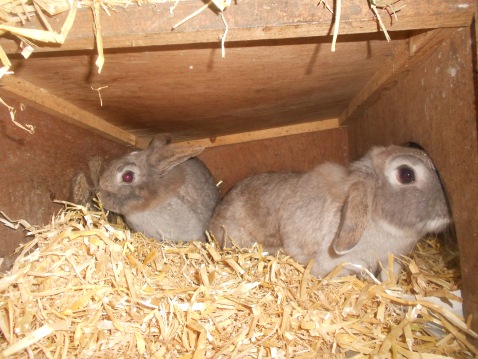
In the meantime, my advice to anyone feeling like I am right now, is to do what you can to ensure love wins. Whatever that means, in whatever way you can, make spreading love and tolerance part of everything you do. This morning I woke up feeling more positive than usual. I decided on the school run journey that I would be kinder than normal, and I let out as many waiting cars as I could. It was actually sad how many of the drivers looked genuinely surprised and thankful. I played some invigorating, uplifting music, told my kids I loved them, and decided that if the two little rabbits in the adoption centre of the pet shop were still waiting for a home, then I would get them. I’d had my eye on them for a while, and once I’d learnt their history (four years of neglect) it was a done deal. I know it’s not much in the grand scheme of things, but every little bit of love counts. And at least I changed the world for them.

DSCN3186.JPG