Writing & Editing Checklists by K.M. Allan is out now!

Interview with YA author K.M Allan on her new non-fiction release
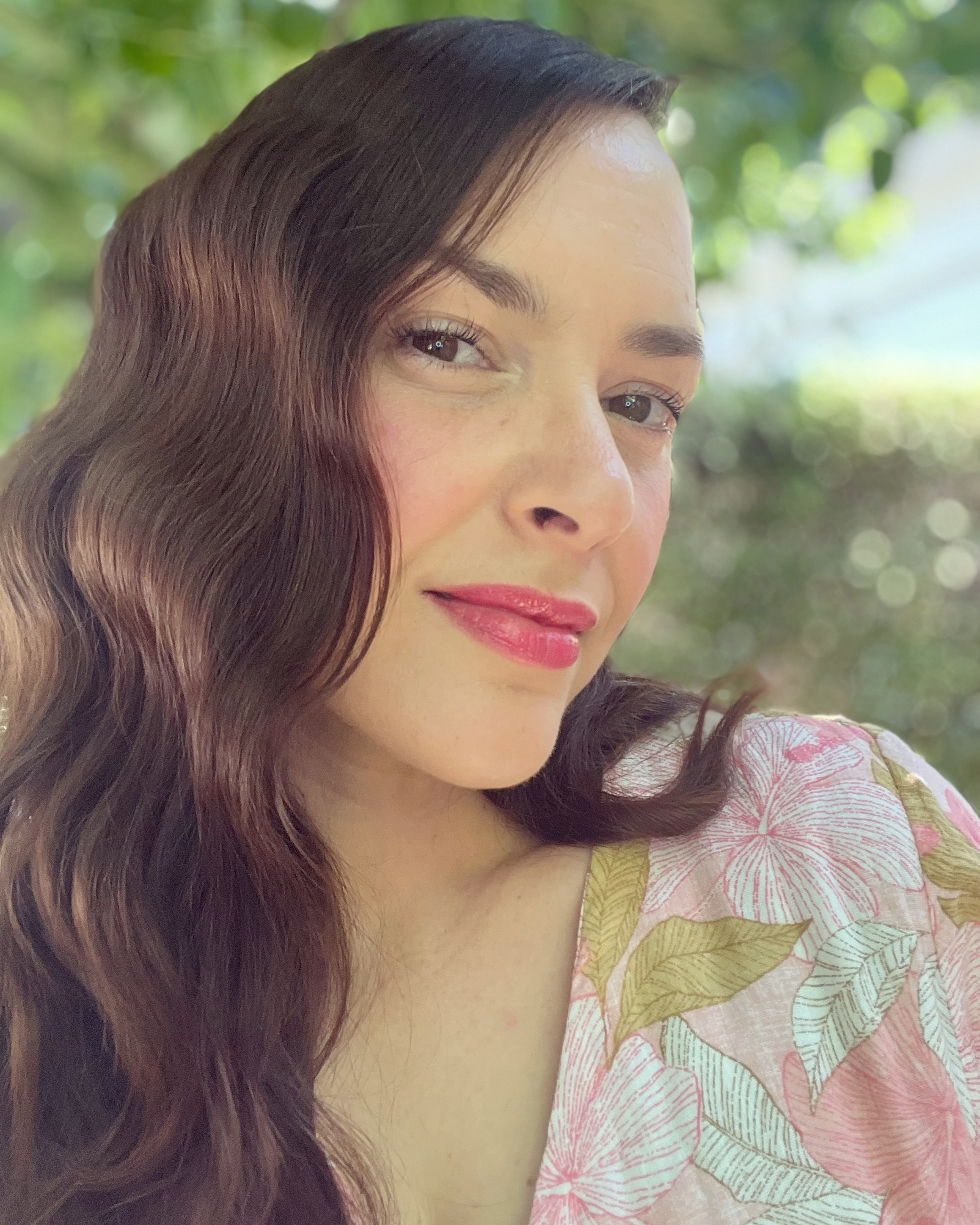
Author K.M. Allan – image belongs to the author

Today on The Glorious Outsiders blog we have an exclusive interview with YA author K.M. Allan. In a break from YA fiction, the Blackbirch author has just released her first non-fiction book, Writing and Editing Checklists, with another non-fiction book soon to follow. I was curious about what prompted the move from fiction to non-fiction and what inspired her to share her tips and advice with new and aspiring writers. I have had the pleasure of reading this book and I’ll be recommending it to new writers I work with in my job, because it really is extremely useful! With handy checklists to refer back to, this book ensures you cover everything needed to write and edit your manuscript to perfection. You can find my review at the end of the post.
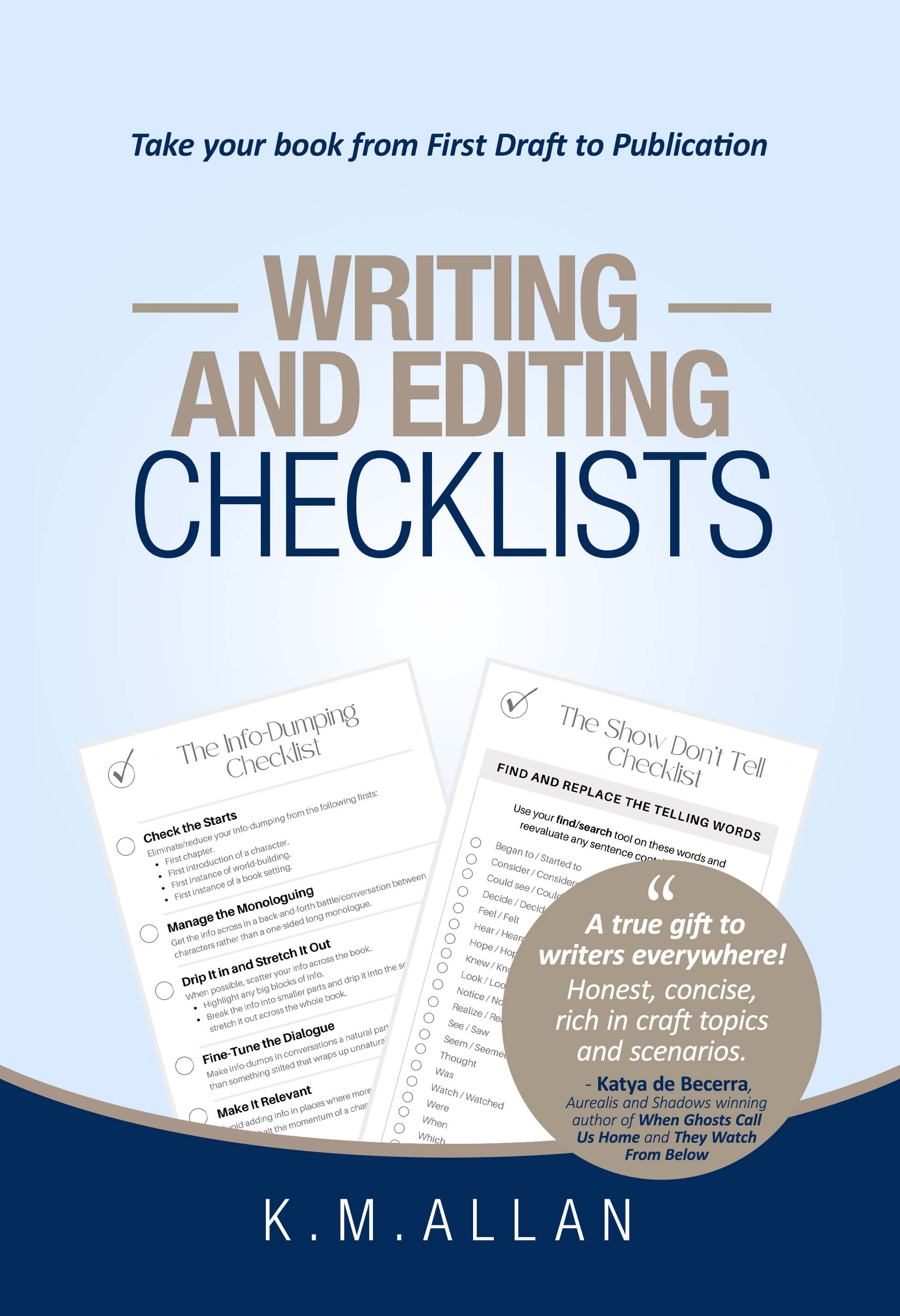
  1. Your new book, a non-fiction titled Writing and Editing Checklists is out now. What made you decide to pen a non-fiction book after the Blackbirch YA series was complete?

Honestly, it was burnout.

I’d been working on the Blackbirch series for a long time, and its four books all came out within three years. When the final book was released, I needed a break.

No fictional ideas were coming to me, and I didn’t want to stop working on anything, so I turned to my writing blog.

At that point, I’d been writing about writing for seven years, and there were more than a few readers over that time who’d mentioned how helpful the posts were to their own process. I, and them, especially liked the checklist blog posts, so I decided to turn as many blogs as I could into checklists, and that’s how the book came about.

2. What would you say are the main challenges of writing a non-fiction book and how did the process differ from writing fiction?

Well, I didn’t have to come up with any plot twists for this book, so that was a big difference!

From a writing point of view, there were things that were similar, such as making sure the voice and tone of the book were consistent all the way through. I actually found that the biggest challenge was the formatting.

For Fiction books, you only have to worry about headers and footers, page numbers, and maybe some fancy drop capitals or chapter images. For non-fiction, because the format needed title pages, examples, bullet points, and graphics for the checklists, getting those elements right was a learning curve. It was frustrating at times, but once it all came together, it was worth it.

3. Your blog centres very much on sharing advice and tips – was this always the intention when you started blogging or did you fall into naturally?

It was definitely a bit of both. When I launched the blog, I didn’t have a book out or any creative work behind me, so the only thing I could blog about was my writing process, what I was learning as I was trying to write my first book, navigating impostor syndrome, and at the time, getting a book ready for querying with agents and publishers.

I found sharing tips and advice, my love of making checklists to write and edit, and writing routines the easiest topics to blog about, and readers really seemed to like that too.

4. Have you ever considered running workshops or clubs for aspiring writers?

No, I haven’t. I’m good with words on a screen, not so much with words in real life. I’d be too nervous for something like that, which is one of the reasons why I turned the posts into a book. I hope the book will reach more aspiring writers than the blog can, and help them that way.  

5. What research, if any, did you have to do to complete this new book?

As the content had already been researched when I wrote the original posts, I just had to research which posts were the most helpful to readers to decide what to include. As some of them go back seven years, I also made sure the info was still as accurate as possible.

6. Who did you have in mind as the audience when you wrote this book?

Definitely new writers, writers who like to be organized, and writers like me who love a good checklist to tick off so we feel like we know what we’re doing and have accomplished something.

7. What is the one bit of advice you would give to a new writer? The most important lesson to learn, in your opinion?

Go with whatever process gets you sitting at your desk, and just write. The more you write, the better you get at it. It’s how you learn what works and doesn’t work for you, and how you develop your own style.

I’d also add to read as much and as widely as you can. If a book makes you feel something, try and work out how and why so you can do the same for your own stories.

8. Can you tell us what helped you the most when writing Blackbirch? For example, writing handbooks, instructions, other blogs podcasts, writing advice etc?

I was learning as I went when writing Blackbirch, and then turning those lessons into posts for my blog, so that was helpful. As for writing books, The Emotion Thesaurus by Angela Ackerman and Becca Puglisi is one I’d highly recommend. If you’re a writer who hasn’t used it before, definitely check it and the other books in the series out. They are invaluable tools of the writing trade and so handy to have within reach when you’re working on an emotional scene.

9. Do you envision marketing this book will be different to marketing Blackbirch? Do you perceive any particular challenges, for example?

Marketing for me is the same as most writers nowadays, which is to post on social media and my blog and hope those following see it.

I do really enjoy the creative side of making marketing graphics and taking photos of my books, though, and that has been fun to do again.

As for challenges, I usually include book teasers with interesting dialogue, or the last sentence of a cliffhanger scene when marketing, and the checklist book doesn’t have those things. For that part of marketing, I’ll have to find something else from the book to highlight for new readers, but I’m looking forward to it.

10. What can we expect from you next? Please tell us about any upcoming projects!

Now that the checklist book is out, I’m excited about getting back into fiction writing. At the start of this year, I penned the opening paragraph of a YA murder-mystery that’s been floating around in my head for a few years now. I’ve missed coming up with characters and working on puzzling plots, so I’m eager to get back to that and start fleshing it all out.
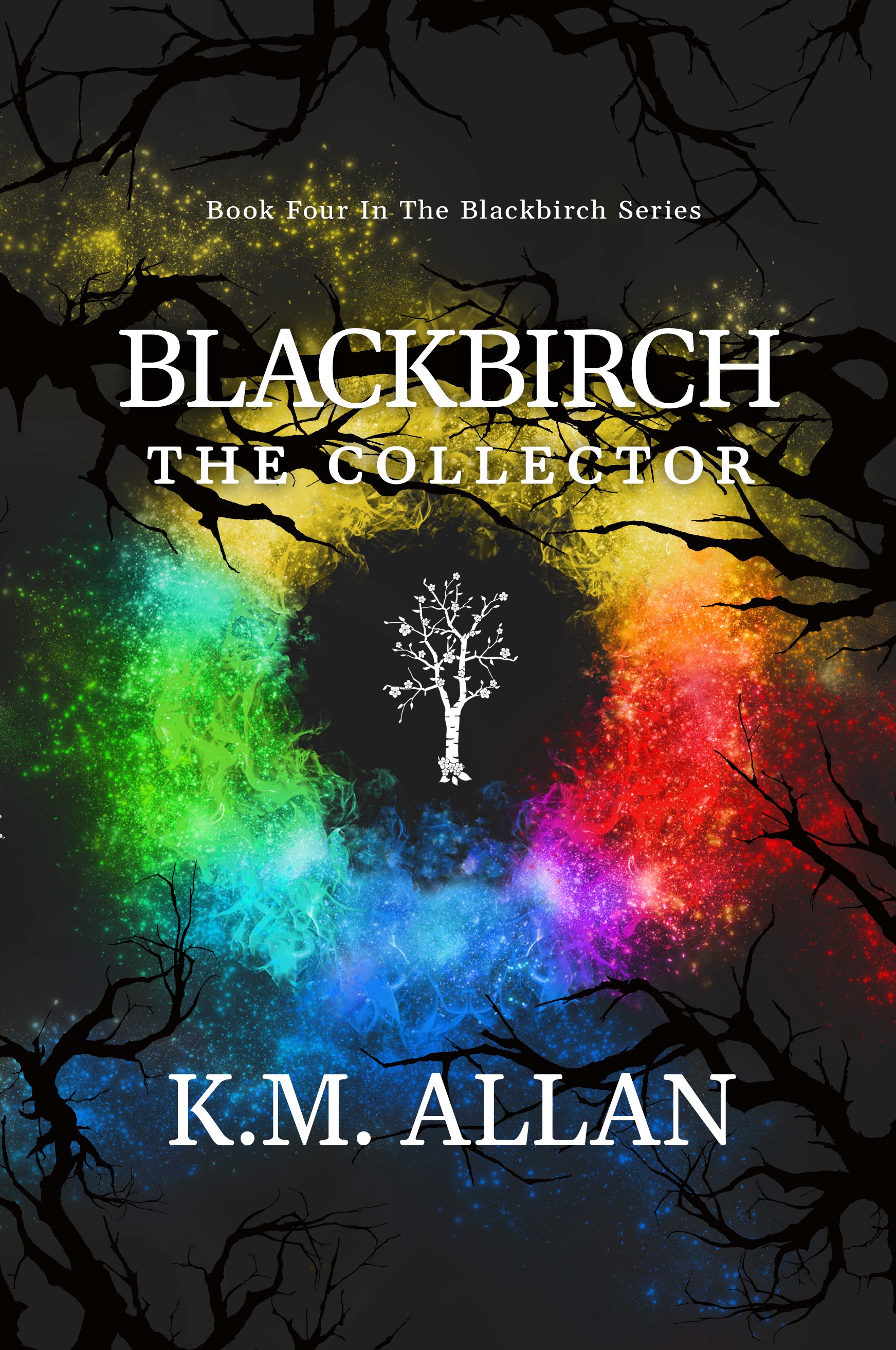
image belongs to the author

If you’d like to find out more about K.M. Allan and her books please check out the links below.

Blog: https://kmallan.com/

Instrgam: https://www.instagram.com/k.m.allan_writer

Facebook: https://www.facebook.com/k.m.allan.author

And here is my review of her latest book, Writing and Editing Checklists:

“I was excited to read an ARC of this book and as a creative writing tutor and editor, I can honestly say I will be recommending this book to all of my students and any aspiring writers I make contact with. Personally, my brain likes checklists so this is a great format for me. It covers absolutely everything you can think of with regards to writing and editing and is a great little book to refer back to time and time again. You can jump around the chapters and pay attention to what suits you at the moment in your own writing journey. I think the editing checklists are so valuable too – they will enable writers to ensure their work is as clean as possible before spending money on an editor. This is a fantastic companion book for writers of all stages and genres. Highly recommended!”
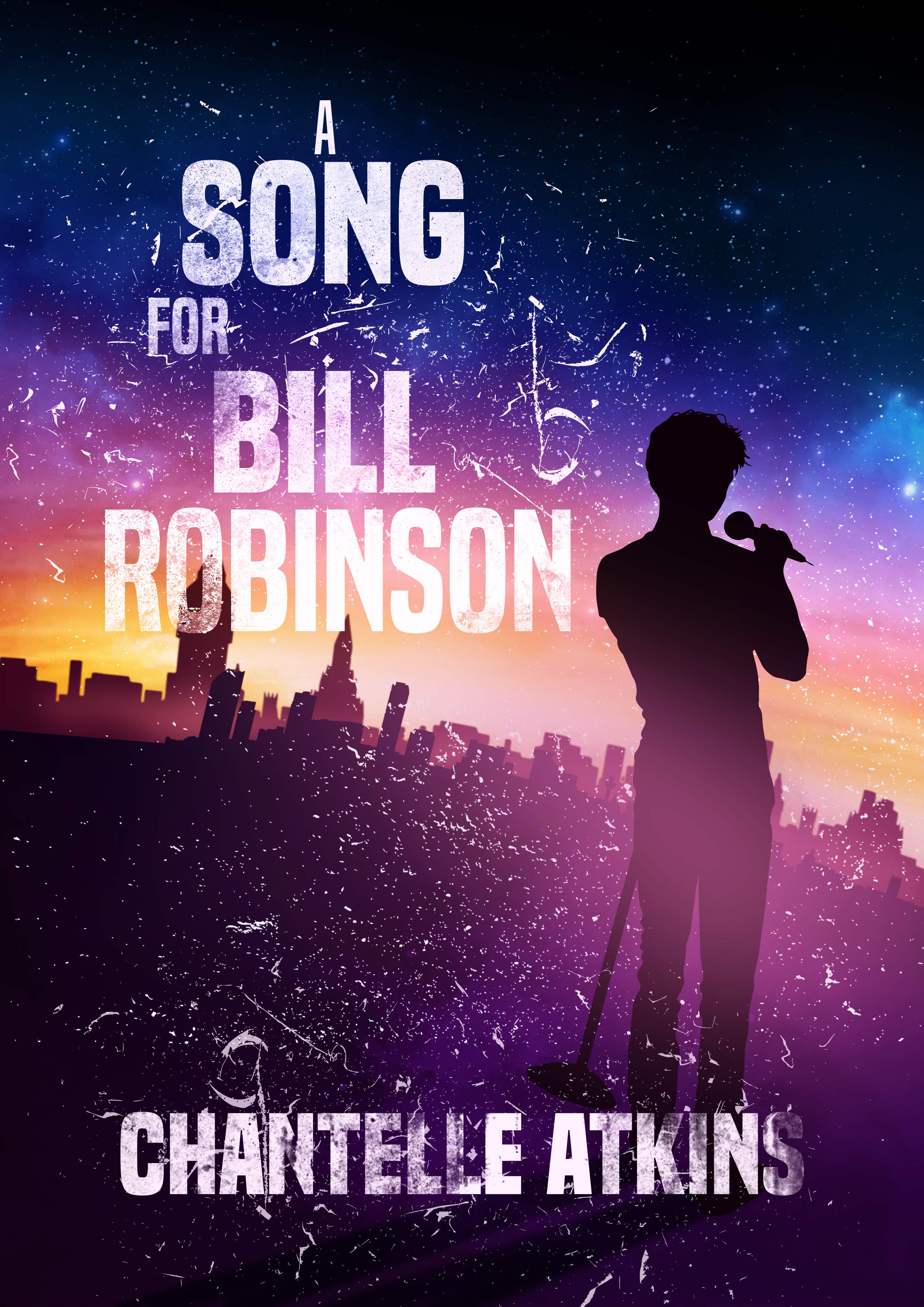
March Writing Challenge: Changes in my writing

At the start of every month I ask my Facebook followers to suggest some writing prompts and challenges and then I post the one I chose at the end of the month. January and February flew by without me remembering to ask for prompts but at the start of March I put out a plea and had some great suggestions. I was tempted by a few that inspired fictional responses, but in the end I was most tempted by this non-fiction challenge by Becky Bekstar Paroz: changes you’ve seen in your writing, the industry and industry trends. I’ve decided to just focus on changes in my own writing for this post.

I published my first book The Mess of Me in 2013 so it’s been a ten year journey now for me. It’s had its ups and downs, which, I have to say, are far more interesting than the flat periods, where not much happens. I’ve learnt a lot and I like to think I have come a long way. When I first self-published through a now defunct ebook platform called Autharium in 2013 I had no clue what I was doing. My first attempts at front covers were terrible, my blurbs needed work, I wrote books that were overly long, and I had no idea how to market them.

My covers have definitely improved! I am really happy with most of them now. There are a few older ones I’d still like to revamp at some point, but it all takes time and money. I think my writing has improved too; partly due to constant practice, time, maturity and experience. It would be pretty awful to be worse at writing after ten years of publishing! But I can also credit other people with helping me get better. My wonderful editor and proofreader, my invaluable and honest beta readers and other authors who have, over the years, offered to read manuscripts in order to give advice and tips. I’ve learnt through my own hard work but also through the guidance, kindness and honesty of others.

My writing has changed in a few ways. I think I’m better at saying things with less words now. I’m generally writing shorter books than I used to, with a few exceptions. I also have a large amount of trust in my own writing, if that makes sense. I don’t overthink it. When it comes to a first draft, for example, I just get on with it once my planning is in place. I just write it. I definitely have more self-belief.

The other way my writing has changed is the fact I’m writing in far more genres these days. In terms of marketing, that can be a headache, but hey, the main reason I write is for the pure and magical joy of it. At the start of my journey I was writing hard-hitting, gritty, realistic dramas. The plot for The Mess Of Me, for example, involves drug-running, eating disorders and self-harm. The Boy With The Thorn In His Side series delves into the murky world of career criminals, domestic and child abuse, murder, drugs and self-harm. It’s a dark ride! This Is Nowhere examines missing people and fragile mental health. Elliot Pie’s Guide To Human Nature involves a boy trying to prove to his agoraphobic mother that the world is not full of bad people.

Things changed when Sim Sansford asked me to consider writing a series with him. He had already published books in the paranormal/supernatural genre and I was intrigued. We ended up writing a YA trilogy together about two kids with amazing superpowers! If you’d told me ten years ago that I’d move from writing about teenage body image issues, to teenagers with dark forces inside them, I wouldn’t have believed you!

My interests have also inspired some change in the genres I try. Like a lot of people I’m worried about climate change and the decimation of nature and wildlife, and my upcoming series, The Day The Earth Turned comes from this fear. I hope to release book one in June. In the series, which I’d describe as horror, a group of children have to navigate a post-apocalyptic world where all the adults have been culled by nature itself. Many died in multiple pandemics, and the rest died in various awful ways as Mother Nature sought to shake herself clean of humanity. The children are given a second chance, but can they stop fighting each other longer enough to figure out how to live in this new world where humans are no longer in charge?

I’ve been a huge fan of The Walking Dead and anything zombie related for a while now, so about two years ago I started writing a diary-style story about a 15 year-old boy left to fend for himself in a zombie apocalypse. I didn’t finish it but at the moment I’m typing it up to Word and having a lot of fun as in the last two years I have planned out everything that happens!

After re-reading Stephen King’s ‘It’ a few years back, I got the idea for a creepy, strange town where a group of misfit kids have to fight evil and I created Black Hare Valley. Nothing else happened for a few years as I’m always working on other things, but I did design a map of the fictional town, created most of the characters and penned a potential opening scene. A year ago, a prolonged power cut meant I couldn’t use the laptop so I started writing Black Hare Valley into a notebook, got entirely addicted and filled up 5 books before I finished it! I haven’t touched it since then because I’m trying to get other projects ready and published before I return to I’ve full attention to this potential horror series. It’s about dark evil, magic and shape shifters! Again, I never would have imagined me writing that kind of thing!

Marketing issues remain the same. I don’t have a lot of money, if any, to throw at advertising my books so my sales and reviews remain dispiritingly low. I am hoping to change this and have some ideas planned, including trying Facebook ads for the first time and so on, but it is still the hard bit. You put so much into creating these worlds and characters, usually two years of editing back and forth before you publish, and then it proves as hard as getting blood from a stone when it comes to selling and getting reviews.

I know I’m not alone though, and I’d say, if anything, it’s got harder in this industry to be seen. I have realised throughout my own journey that the indie authors doing well have been able to pay for regular ads and marketing in order to push those sales and get those reviews. They can keep it going then, as the more reviews you have, the more you get noticed.

The indie collective Sim and I are building is something to feel hopeful about though. Chasing Driftwood Books is in its early stages but we have big plans! More on that another day!

September Writing Challenge: Late Night Thoughts

Every month I ask my Facebook author page followers to give me writing prompts. It can be anything from a visual prompt, to a song title or lyric, overheard conversation, a piece of flash fiction, or a poem. This month I had another wonderful selection to choose from and a non-fiction prompt really caught my eye. Thanks to author Shannon Rohrer for this one!

Late Night Thoughts

Before bed, I venture outside and the air is cool, September saying hello. It makes me smile. Feel sort of giddy like that back to school feeling and the smug comfort of pulling on a favourite hoodie for the first time since the heat came. The sun sets a little earlier every night, dark now by 8pm. I cross the garden, flattening grass that died and came back to life. I think about life. I think about death.

I close up the chickens, then check the field behind. I’ve watched all the sunsets this summer, I’ve seen all the colours spread across that same horizon. I’ve watched the copse darken until it resembles a spiked hedge, jagged edges breaking up the sky.

There is a chill in the air, reminding me to say goodbye to summer. I eye up the woodpile when I go back inside. Will it be enough? What sort of winter lies ahead?

There is a calmness, like the earth breathing out, or perhaps she is holding her breath, bracing herself for what comes next. This summer we torched her. We burned her like never before. For the first time, some of us thought about water. And not having water.

Inside, I sit down to write, the window open, the road silent and dark, the pheasants making a fuss as they settle in the trees that line the lane. Everything goes around and around. The sun goes down, the sun comes up. Summer ends, autumn begins, they merge and overlap, until the first frost bites. We wake up and get up and do the things that make a life. We lie down and sleep. One day we don’t wake up.

I think about death when I climb into bed. I try not to assume another morning awaits me. Like every time I get into the car and wonder if today is the day I die. Because we don’t know, we never know. We take it for granted or is it faith? My car won’t crash. Not me. Not today. There is no death in my rear view mirror, only all the open roads that lie ahead. Paths to choose, forks in the road, possibilities, waiting, potential, waiting. Somehow, we feel like we are always waiting.

As a child, we wait for the school day to end. We wait for summer to free us. We wait for Christmas to excite us. We wait to grow up. As teenagers, we wait to become adults, to taste the things we’ve heard about for so long. To have our turn. Take our place. As adults, we wait for the weekend. We wait for better days, more money, more time. As parents, we wait for babies to be born, alive. We wait for babies to survive into toddlerhood and we sigh in relief every day we keep them safe. We wait for children to become teenagers, so that we can claw our lives back and let them go. We wait for phone calls in the dead of night letting us know they are safe. Then we wait for death.

We wait for aching bones and finding it hard to get on your feet. We wait for our bladders to wake us up at night like clockwork. We look forward to sitting down with a nice cup of tea and a good book. I think about this late at night. What am I waiting for?

I don’t know.

Maybe I have everything I will ever need or want, right now. A home, a partner, children, work, a garden to tend, writing to do. Maybe I’m not waiting for anything anymore. Maybe death hovers, reminding us that it’s always close but maybe I don’t have to wait for death, just keep an eye on it.

Late at night, I think that life is very, very weird. You’re born, you live, you die and ultimately, eventually, you will be forgotten. But that’s okay, isn’t it? Is that the part of death we fear the most? We fear death of loved ones because we can’t stand the thought of losing them. We fear our own deaths because we will cease to exist. Possibly. Probably.

Mostly, I don’t think I mind.

In some ways, I have left things behind so that I might not be totally forgotten. Four children, countless trees and shrubs and so far, sixteen books. Eventually, that will all be gone too. Does it matter? I don’t think so.

Life moves on. From dawn til dusk, from summer to autumn. We have no more right to everlasting life than the leaves drying and curling and floating down to rot on the forest floor, and we are just as much a part of everything. Of life, death and decay.