10 Ways Writing A Book Is Like Raising A Child


This blog post is brought to you from the mind of a writer who has a three-year-old son who won’t go to sleep by himself. As frustrating as it is, his delightful refusal to fall asleep on his own, is entirely my fault. As my fourth and last baby, I have held onto him even tighter. This time, I ignored the advice I had struggled with in the past, I shunned the social norms and expectations and embraced what felt natural. So, he was breastfed to sleep until he was two and three months, and since then, I have cuddled up in bed with him and held him until he falls asleep. So of course, he has absolutely no clue how to drop off on his own. We tried working on it last week and it was horrible. There was crying and shouting and stomping about and general confusion for both of us. Inevitably, I gave in to him and to my heart and got back into bed with him. As I lay there, holding his half snoring, half sobbing body tightly to mine, I suddenly realised that a year from now he will be about to start school. I held him even tighter and as I gazed into his face I could have wept with the useless, torment of knowing this will all one day be over. And then I started thinking about writing books, preparing them and letting them go. I released my latest book The Tree Of Rebelson the 11th August after two years of work. The more I thought about it, the more I realised that writing books and raising kids have quite a few things in common…

  1. They occupy your mind constantly and completely. I sometimes say my mind is like a sieve these days. Utter mush. But in truth, it is just full of children and writing and there is not a lot of room for much else. If I am not thinking of,  worrying about or planning things for my children, then I am consumed with thoughts and fears and ideas of the fictional kind.
  2. You don’t want to let them go. Well, sometimes you do. When they drive you mad, when you’re at a complete loss as to what they need or want. When you’re tired, close to exhaustion, just want to escape, or have completely forgotten why you started this in the first place! But most of the time, letting go is hard. Almost impossible. I just spent two years making sure one book was good enough to meet the world. And as for the kids, I’m never going to be ready for that.
  3. You are always preparing to let go. Though you don’t want to, you know you have to. As a parent, bringing up your child to be a decent human being, is preparation for letting them go. From the moment you first hold them in your arms, you are making decisions that will affect how they turn out. You encourage them to walk and talk and run and climb. You send them to pre-school and teach them how to hold a knife and fork. You do all of these things because you know that one day they will be standing on their own two feet. It’s the same with writing a book. When you first start it feels impossible that it will ever be developed enough to share with anyone. It’s a mountain to climb. Followed by another one. But every draft, every edit, every rewrite, every proofread are all part of letting it go bit by bit.
  4. You know you must work hard for the end result to have a positive impact on the world. You don’t want to raise an arsehole. You don’t want to inflict a spoiled brat on the world. You don’t want to create a selfish, mean or ignorant human. There are already enough of those! Raising decent kids is a lot of hard work. You have to say no a lot, and you have to explain why you are saying no. You have to distract them from the thing you are saying no about. You have to be inventive, creative, spontaneous, organised and heroic. Writing a book is similar. You might not aim to change the world, but surely you don’t want to make the world a worse place?
  5. Inspiration works both ways. My children and our lives together inspire my writing. I write for them and because of them. Our journey takes me outside of myself and later allows me to fully wallow inside of myself. They have made me a better person and I want to be that better person for them. Being a writer also inspires me as a parent and a human. Because I love writing, I am interested in humanity and in the stories that make up a society. I hope this makes me more empathetic as a person, as I try, time after time, to get into the heads of other people.
  6. The work is never really over. You get to the top of the mountain, only to discover another one! The work is never over if you are a writer. There will always be another idea, another plot, another story to be told. The same applies to parenthood. They might fly the nest one day, but you are never going to stop worrying about them.
  7. But once it’s mostly done, you will have more time for the next project. When I go cold at the thought of my littlest one starting school, I remind myself how much more time I will have for other things, once he does. I can remember when my third child started school, I spent months dreading it and welling up at even the thought of it, and then, that summer, I started writing again. I had not written in years. But suddenly it was back and I needed it more than ever. I was suddenly excited. I had something just for me. I had a part of me back again! And the same thing applies to writing a book. You feel so many mixed emotions when you finally publish it, but what allows you to let go is the call of the next project, the next characters and so on. It keeps you excited.
  8. They will always be your baby. Kids grow up fast. They often move away from you before you are ready. Pulling their hand out of yours when they spot their friends. Saying they are too old for bedtime stories. It happens bit by bit. You watch them grow. You prepare to say goodbye. But even when they eventually leave home, just like the books you wrote, they will still be your babies. Forever. Nothing can change that.
  9. They came from inside of you. And I don’t just mean physically, although this is obviously true of both your children and your writing! I mean they were created and developed and matured with your thoughts, feelings, emotions and imagination. What is inside of you as a human, what makes you you, has had an influence on these offspring of yours.
  10. Creating them means you will live forever. Well, sort of. I like to think of it like this anyway. Passing your genes onto your children, as well as some of your experiences, stories, opinions, beliefs, means parts of you live on after you have died. The same could be said of writing books. Your words and therefore, parts of you and who you were, will continue to exist long after you do.

people-2572105_640


Self-publishing; Good times, bad times, and ugly truths

I am writing to you from a place of confusion. I’m unsure about so many things that I feel the need to write them down to make sense of them. The one thing I am sure about is this; I am a writer and I need to write. I will always be a writer and I will always need to write. Everything else is a muddle.

Let me try to explain. When I got back into writing in 2011, I had a decade of wasted years lying behind me. Don’t get me wrong, these years were not wasted in my personal life. I was bringing up small children and earning a wage. I was too exhausted to write. Or so I told myself. The real reason? I was too afraid to take it further. I was too shy, too anxious, too introverted and too protective of my work to send it out to agents and publishers. Ahh, I can breathe a sigh of relief now that’s off my chest!

Once I started writing again, nothing would stand in my way. Not a new job, or a new baby. And at some point in 2013 my attitude towards publishing changed. I got braver. I’d shared some work on here and had some good feedback from a few very early followers. So I started sending the two books I had written, The Mess Of Me and The Boy With The Thorn In His Side out to agents and publishers. I wrote massive lists of both and worked my way through them. It was, of course, depressing and demoralising, but I felt I had to do it. I never expected any of them to like my work, and in many ways, it felt like a rites of passage to go through this.

Self-publishing presented itself to me and appeared to be the answer to all of my problems. I didn’t need to torture myself by waiting for inevitable rejection anymore. I didn’t have to stress over how to word a query or an email. I could take full control and get my books out there on my terms. Brilliant.

philosoraptor-self-publishing-you-say-i-think-this-could-work-out-well

It was exciting to start with. I felt like I had accomplished something. I had realised a dream. I had written and published my books! I wasn’t too fussed about sales or money as that had never been my motivation, and in those early, hazy days, I was just excited.

Of course, reality soon set in, and over the last four years I have had one hell of a bumpy ride and made many mistakes. I’m actually embarrassed now to look back on the early days. I had no idea about front covers. I had no idea about social media, building an author platform or promoting my work. I soon bumped back to earth and started the real hard graft that is the life of an indie author.

Let me tell you the reality of being an indie author.

It’s good and it’s bad. It’s pretty and it’s ugly. I love it and I hate it.

Indie authors do everything themselves. Yes, they may hire editors and front cover designers. If they have oodles of spare money they may pay for adverts and promotions too. There is nothing more evil to me than the saying ‘you have to spend money, to make money.’ That’s the crappest thing ever to say to someone who has no money.

Indie authors offer their work for free. This happens in very few other areas of life. But people expect it now. They expect freebies and offers and giveaways. We expect reviews and recommendations in return but rarely get them. In essence, being an indie is like giving your all, your everything, your blood sweat and tears, and then getting very, very little back. And again, I don’t just mean sales. I keep my books priced low because I want people to be able to afford them. I give free books and stories away with my newsletter and I post free stories on Wattpad and I do the odd giveaway.

Indie authors work extremely hard. They’ll have families, and other jobs, and still keep plugging away, writing more books, building their platform, increasing their content, remaining active on social media, trying new things all of the time in the hope it enables their books to become visible. They don’t want to spam people, they don’t want to beg. They have to learn how to self-promote without getting on people’s nerves. They have to deal with people thinking they are totally wasting their time.

insanity-wolf-buy-my-books-buy-my-books

Let me be clear once again; it’s not about the money. It’s about the connection. I write books because I want people to read them. I love that connection. I love passing my stories on. I love receiving messages about how people related or reacted to the characters.

Right now I feel like I am betraying the indie scene, because I am trying the traditional route again with the next two books. I started the process the other night with The Tree Of Rebels and was instantly reminded of why I hated it so much last time. Ugh. It’s scary. I kept thinking, just self-pub it! Why are you doing this to yourself again? You’ve been here and done this! You’ve moved on! You’ve grown! You’re indie and proud! You know how to do it now, how to get the right cover, the right blurb, the right marketing plan…Yes I do, but I am also, really, really tired. My confidence is at an all time low. I am not making that connection with people. I am banging my head against a brick wall.

So, here I am again. Researching publishers and putting my heart in the firing line. I already had one rejection the day after I started this! I expect many more to come. Maybe I feel I need to do this. Give it one last try. Because I am not succeeding as an indie. I am getting better as a writer, and I am getting better at all the things you need to do to be an indie, but I am not succeeding where I really wish to, which is gaining new readers and forging that connection.

I see other authors getting promoted with their publishers and I want a piece of that action. I admit it. I am envious. I am filled with longing. I am practically drooling for the same number of sales and reviews. I want what they’ve got and I am afraid that my efforts as an indie will never be enough to get it.

So, heart in mouth, I will try the traditional route again.

But no fear, I will self-pub these books if I get nowhere. I promise you. I will self-pub the god damn hell out of them! I will market and promote the holy fuck out of them! I absolutely promise you that. I promise myself that. I will come back harder and faster and stronger.

There is no giving up. Not ever.

Either way, I will keep writing and getting better at it and if I self-pub again I will never give up trying to find more readers. This is not a post about quitting. This is a post about the realities of finding success as an indie. And by success, I mean a growing readership.

It’s just at the moment, I am tired of the indie ups and downs. The good days followed by the bad days. The endless hope that one day it will all be worth it…

And in a weird kind of way, submitting to publishers has already made me appreciate being an indie…it’s already made me feel that surge of pride and passion again about everything indie authors do, and are…I love the indie scene, I really do. I have read countless amazing books, in fact, I rarely read traditionally published books these days, because there is so much talent in the indie pool. It just makes me sad that so many of them are not getting the recognition they deserve.

Over to you. What do you think? Do you love being an indie? Is it what you thought it would be? How do you keep going when times are tough? I would love to hear your thoughts on everything I have talked about today. Join the conversation, have a moan if you need to..and then we will all get back to the writing!

Message and Themes; What Are You Trying To Say?

When I was at school, English Literature was always my favourite subject. I was a total book-worm who dreamed of becoming an author, so you can kind of see why I adored English Literature. Reading books, talking about books and writing about books was my idea of heaven. Having said that, there was always one part of the subject that annoyed me at times. When analysing a text, the teacher would often ask us to think about what message the author was trying to get across. It was a question akin to the equally confusing one; what are the themes of the novel? I remember thinking, I bet the author didn’t know there was a message or a theme, or that we would try to work one out. I always considered that Shakespeare, Bronte and Steinbeck just wrote books because they had great ideas, great characters, and could string some pretty awesome sentences together.

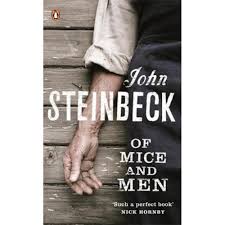
But English Lit demands we find the messages and the themes, and yes, when you pick apart a text and analyse it within a classroom setting, you do tend to find them. But were they intended? I suppose I’m asking, did the author write the book with a theme or a message in mind? Or is it the reader who later determines what the potential messages are? I mean, did Steinbeck write Of Mice and Men because he had something to say about society or human nature? When I was a kid, I thought not. But it turns out I was wrong;

In every bit of honest writing in the world there is a base theme. Try to understand men, if you understand each other you will be kind to each other. Knowing a man well never leads to hate and nearly always leads to love. There are shorter means, many of them. There is writing promoting social change, writing punishing injustice, writing in celebration of heroism, but always that base theme. Try to understand each other.

John Steinbeck in his 1938 journal entry
I remember trying to distinguish the themes of the novel when I was at school. What seemed so obvious to the teacher, had to be pointed out to us. I haven’t read the book since then, but it is on my to-read list as part of a reading challenge I’m undertaking, where one of the books has to be one I read in school. But I think I will see things differently now.
Why? Because I am approaching my fourth decade and I’ve seen enough of life, love, people and society to know that Of Mice and Men is not ‘just a story’ as I once mistakenly believed. It’s a book about dreams and aspirations, loneliness and solitude and the author had plenty to say about all of these things. I am now the writer I hoped I would be, and writing books is a fascinating process, which involves the seed of an idea germinating into an intricate plot full of characters who become real to you and set up camp in your head. But more than that, writing is about what you want to say to the world.
I’ve been thinking about this a lot lately after I received feedback from a beta on my still unfinished novel Elliot Pie’s Guide To Human Nature. One of the things she picked up on was the messages or themes of the book, and in particular, her observation that some of the characters had views very similar to my own. She felt this at times made the narrative somewhat preachy, or at least, it was in danger of heading in that direction.
I had to stop and think about what she meant. None of the characters are me, or based on me, or anyone I know. I plucked them up out of the thin air to build around the character and story of Elliot, who I really did know and believe in.
However, I have to admit that unintentionally, or at least sub-consciously, bits and pieces of the writer and the writer’s viewpoints seep into the writing. I knew what this book was about, and I knew from the beginning what I was trying to say, so as you can see, I have come a long way from my previous scepticism that books did not contain deliberate messages. On the contrary, I have had something to say in all of my books, and I think it very much depends on what is going on in my life at that time. For this book in particular, Elliot and his mother are like the two sides of me. One side is heartbroken and terrified about the state of our world and wants to withdraw from it all, while the other side is perpetually hopeful and joyful, determined to the best in everything.
So is this a good thing or a bad thing? I think my beta was right to point out the danger of appearing preachy in the narrative. I certainly don’t want my books to come across that way. I have to be sure it is the character’s viewpoint being explored, not the author’s. I have to be conscious of what is being portrayed as ‘right’ or ‘wrong.’ So at the moment, I am going through the book again, with the beta’s notes beside me. Sometimes it just needs a tweak, some words rearranged or deleted. Sometimes I don’t need to do anything because I think the character truly believes in what they are saying, and in doing so is remaining true to character.
This brings me to another question, though. Do people pick up books looking for messages or themes? Do most readers notice them, even if they are supposed to be there? I suspect that what one reader picks up as a message or theme, is very different to anothers. Do readers want to be spoken to in this way? I don’t think many people pick up a book looking for clarity or persuasion. I think they pick up books looking for stories. And stories involve people and their messy human lives, and messy human lives contain messages, whether intentional or not. Because they are written by one person, created by one person, and whether they were totally aware of it or not at the time, that person had something to say.
So, what do you think? As a reader, do you choose a book because of the message it seems to be conveying? Do you notice the themes of a novel as you are reading it, or do they become obvious to you afterward? Do you ever feel like the writer is trying to tell you something about the world or about life? Does this every feel like you are being preached to?
And what about you writers? Do you know what you are trying to say before you start to write the book, or does the message reveal itself to you in time? Are you aware of any themes in your book, and again, are these intentional? Do you ever worry that you are trying too hard to get a message across?
Please feel free to join in the conversation!

My 16 Best Books of 2016

In order to compile my list of the best books I’ve read in 2016, I sat back and thought about the books that have had the biggest impact on me. I quickly wrote down all the ones that came to mind, and so here they all are. I have also included how I came across each book, ie was it recommended to me, was I sent it and so on. I thought this might be useful! I have read so many books this year, and it is simply impossible to list them all, so I have tried to pick books here that are the sort of thing I generally look for when reading.I have not listed them in order of preference, they are simply listed in the order they came to mind. However, there is one book that stood out above all the others for me personally, one book that I can safely say is the best book I have read in 2016 and this is listed as Number One. Enjoy.

MOOJIEgelettburgess1MB

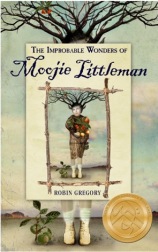
  1. The Improbable Wonders Of Moojie Littleman by Robin Gregory is an absolutely beautiful book and very unique. It had me smiling from start to finish, contains fabulously flawed and addictive characters and provides a great big splash of the hope and positivity we all so desperately need right now. I’ve actually lost track of the amount of awards this book has won, so I’ve added a link here . I’ve also got to mention that Robin provided me with a wonderful interview you can read here and she is a thoroughly lovely person!
  2. No Dogs Or Indians by Lisa Hare is  a book I read purely by accident. I’m one of the reviewers for Underground Book Reviews, where authors pick reviewers based on their reading preferences. I was sent this book by accident, as it was not on my list, but was advised to read it anyway as it’s been nominated as one of the books of the year. It sounded interesting so I dived right in and came out with tears running down my face. One of the best books I’ve read in ages, and again, very unique, beautiful in its themes and messages, and one that will stay with me for a very long time. Get it!!
  3. A Necessary Act by Tony Wirt is a book I did choose to read for Underground Book Reviews, and I nominated it for a top pick and book of the year, it was that good. The plot revolves around a really interesting question; if you were utterly convinced a fellow schoolmate was well on the way to becoming a serial killer, would you do anything to stop him? The book puts its teen characters in this predicament and ends with a twist I never saw coming. Tense, horrific, unputdownable!
  4. The Many by Wyl Menmuir is probably one of the most controversial books on my list. By that I mean, it has the most mixed reviews I’ve ever come across! From glowing five stars to downright grumpy one stars, it seems this is a love it or hate it or plain just don’t get it kind of book! I first heard about it on my Facebook timeline as it had been longlisted for the Booker prize which was quite an achievement for a debut novel signed to a small press. I then came across the author in a magazine I receive for being a NAWE member (National Association of Writers In Education) I was so inspired by his article about independent writing spaces in school I contacted Wyl and thanks to his advice, I will hopefully be diving into my first school project next year with my business Chasing Driftwood Writing Group. But anyway, back to the book! Haunting, surreal, dark and claustrophobic are just some of the words that spring to mind. Eerily silent and with an ending that quite literally punched me in the gut. If you are looking for something unique to read, something that has divided opinion quite wildly, then this is the book!
  5. L-2011 by Mark Gillespie is written by a fellow indie author I’ve followed for a while. I loved the idea of this speculative fiction novel; what if the London riots in 2011 had not ended? What if the riots had gone on and on? In this gritty coming of age drama, Mark introduces us to some memorable and believable characters in this book which is the first in the series. The second book Mr Apocalypse is not now and is on my to-read list as I can’t wait to find out what happens next.
  6. The Unwind dystology by Neal Shusterman will go down as the most disturbing series I have read this year. If you are at all into The Hunger Games, Divergent or The Maze Runner books, then you simply have to dive into this YA series, as it is so much better! It’s taken me all year to read the four books, partly because I have so many other things to read, and partly because they get under my skin too badly and I just need a break between reading them! This series takes us to a not too distant future after a civil war in America led to a new law being written where parents can retrospectively abort their children between the ages of 13 and 18. They are not technically killed though. Every single part of them is harvested (while they are fully conscious) to be donated to people who need them. Quite horrifically, troublesome teens body parts have become a very valuable commodity. The most genius part of book one is how the author makes you wait until nearly the end of the book to show you what actually happens during unwinding. All the way through you are thinking about it and trying not to think about it, and the tension becomes unbearable. Just finished book four today and I’m really excited to hear they’re being made into films. But read them first, please!
  7. Daydreams and Devils by the brilliant Robert Cowan is a book I selected to read for Underground Book Reviews. I was attracted by the storyline of gangsters and bands and was not let down in the slightest. It was another of my top picks of the year for UBR and I currently have another of Robert’s books on my to read list. This book ticked every box for me; great characters, believable dialogue, fast paced, edgy, coming of age and with an awesome musical soundtrack. I was one happy reader from start to finish and Robert is a terrific reader I am very happy I discovered in 2016
  8. The Leaving by Tara Altebrando is a book I noted down when it came up on a best YA books list. I bought it for my daughter and we both really enjoyed it. The plot revolves around six five year olds who went missing eleven years ago. Out of the blue five of them have now returned. What I liked about this mystery novel was how each chapter was from a different characters viewpoint but in the third person. Each chapter had a very different voice and was written differently, even set out and formatted differently to the others. Very spooky with plenty of twists and turns, I think anyone would enjoy this!
  9. Far Cry From The Turquoise Room by the amazing (and still my favourite indie author) Kate Rigby is a great example of Kate’s work, which is often edgy, gritty and retro. I love her style and her characters who you just want to take home. In this story a young Asian girl feels shunned by her charismatic father after the death of her sister and ends up running away. Kate covers so many hard hitting subjects in this book, and always in a tender, humorous and realistic manner. I’m working my way through her books and always relish getting my hands on the next one!
  10. Chance by Peter Dudgeon was recommended to me by a friend. It’s about a killer who picks his victims by random chance and 9-year-old Cassie who is able to see into the future when someone is about to be hurt. Being in close proximity to both the killer and some of his potential victims allows Cassie a disturbing glimpse into his warped mind and she soon realises the police are on the wrong track completely. Brilliantly written, tense and gripping, you won’t be able to put it down. There is also a sequel which is on my to-read list, and Peter Dudgeon is another author I’m very glad I discovered this year!
  11. Nightfall by Jake Halpern and Peter Kujawinski is another book I read after my teenager had her hands on it. She picked it up in the book shop one day and after reading the blurb I couldn’t wait for her to finish so I could start. It’s an eerie YA dystopian set on a mysterious island , where it is daylight for fourteen years followed by nightfall for fourteen years. During the nightfall the islanders pack up and leave the island and do not return until the next daylight. The main characters Marin and Kana are brother and sister and they miss their boat off the island when they go in search of their best friend Line, who is missing. When reunited, the three teens have to face the darkness as it begins to fall, knowing they are trapped on the island for fourteen years, but worse than that, they soon realise they are not alone. Loved this from start to finish! So well written, steadily paced, so much is held back until you need it, which makes you just keep turning the pages.
  12. The Recital by Kyle V. Hiller is another book I chose to read and review for Underground Book Reviews. I was intrigued by the storyline which promised contemporary issues wrapped up in magic realism. The story is told in the first person from the wonderful Edith, a 12 year old girl I quite quickly fell in love with. Edith has a few troubles on her plate. She hasn’t grown in a year, she is in love with a boy who is dating her arch enemy and her family life is about to be shattered. On top of all of that she has just found out she is a witch who needs to learn to control her powers (which, by the way, can have quite horrific results for anyone who is in the wrong place at the wrong time!) As Edith staggers awkwardly from one disaster to the next, an intriging and unique story unfolds, involving magic and spells, as well as coming of age, bullying and sexuality. Put a smile on my face from start to finish and I will definitely be reading more from this author!
  13. Those Who Wander (All That Glitters Book 1) by Shalaena Medford is a fast-paced steampunk YA novel which involves pirates, maps, and a stolen zeppelin. In many ways an action-packed steampunk adventure, but also a coming of age tale, in which main character Song has to let go of the past and construct a new, true version of herself, this book is a journey in many ways. I felt like I was on the journey with her, both the physical and the emotional one. Extremely visual, I could see this making an awesome movie! I was very impressed and will definitely be buying book two when it is released. Anyone who likes steampunk, action, adventure, fantasy or sci-fi will love this! I came across this book as I follow Shalaena on social media.
  14. The Soul Bazaar by Anthony Morgan Clark is a uniquely crafted and captivating collection of dark stories, which will have both a physical and emotional effect on the reader. From the title story The Soul Bazaar, which introduces a chilling trader of souls, who wears only red, to post-apocalyptic disease and violence in After The Disease Part One and Two, this is a rollercoaster ride of horror and uneasy feeling. Wake, the story of a man enduring a life-saving transplant, will stay with me for some time to come. As will Bes, a glimpse into the troubled mind of a dangerous individual and his imaginary friend. The author has the unique ability to make your stomach cramp with the tension he builds, and the language used to convey the horror his characters live through is just perfect. A disturbing and spine chilling read, highly recommended. I came across this book as I follow Anthony on social media.
  15. Spine Chillers: Hair-Raising Tales Book One by Q.L Pearce is a book fans of Goosebumps will really enjoy.  I was sent this book for free in return for an honest review. (Plus, look out for an exclusive interview with Q.L Pearce in the New Year here on my blog!) Each one is guaranteed to offer the reader a dark and bumpy ride into the unknown and leave you with your jaw hanging open. I enjoyed all of these stories but got a particular kick out of Hale Hallow Woods, a tale of ghostly revenge, Seaworthy, a creepy pirate themed adventure, and my firm favourite, The Healer. The twist in The Healer is one I did not see coming and have been unable to stop thinking about ever since. This is a flawless collection of spine chilling tales and I very much look forward to the next instalment.
  16. The Giver by Lois Lowry is a book I had been meaning to read for a very long time. When I finally got around to it, I was not disappointed in the slightest. I was enchanted, disturbed, touched and intrigued. You probably all know the plot, but for those who don’t, 12 year old Jonas lives in a seemingly perfect, pain free world where children are assigned to their parents, just as spouses are perfectly matched and employment is dealt out depending on personality and skills. The system works. no one feels pain and everyone is content. But when Jonas goes up to receive his position he is told he is to become the next Receiver of Memory. His training starts right away with an old man known as the Giver, and Jonas soon discovers the disturbing truth about his utopian world. A trail blazer in the genre of dystopian fiction, this book is simply breathtaking. I quickly ordered the entire quartet and read them one after the other. (My daughter is getting them all for Christmas and I really can’t wait for her to read them so we can talk about them lots and lots!)