10 Ways Writing A Book Is Like Raising A Child


This blog post is brought to you from the mind of a writer who has a three-year-old son who won’t go to sleep by himself. As frustrating as it is, his delightful refusal to fall asleep on his own, is entirely my fault. As my fourth and last baby, I have held onto him even tighter. This time, I ignored the advice I had struggled with in the past, I shunned the social norms and expectations and embraced what felt natural. So, he was breastfed to sleep until he was two and three months, and since then, I have cuddled up in bed with him and held him until he falls asleep. So of course, he has absolutely no clue how to drop off on his own. We tried working on it last week and it was horrible. There was crying and shouting and stomping about and general confusion for both of us. Inevitably, I gave in to him and to my heart and got back into bed with him. As I lay there, holding his half snoring, half sobbing body tightly to mine, I suddenly realised that a year from now he will be about to start school. I held him even tighter and as I gazed into his face I could have wept with the useless, torment of knowing this will all one day be over. And then I started thinking about writing books, preparing them and letting them go. I released my latest book The Tree Of Rebelson the 11th August after two years of work. The more I thought about it, the more I realised that writing books and raising kids have quite a few things in common…

  1. They occupy your mind constantly and completely. I sometimes say my mind is like a sieve these days. Utter mush. But in truth, it is just full of children and writing and there is not a lot of room for much else. If I am not thinking of,  worrying about or planning things for my children, then I am consumed with thoughts and fears and ideas of the fictional kind.
  2. You don’t want to let them go. Well, sometimes you do. When they drive you mad, when you’re at a complete loss as to what they need or want. When you’re tired, close to exhaustion, just want to escape, or have completely forgotten why you started this in the first place! But most of the time, letting go is hard. Almost impossible. I just spent two years making sure one book was good enough to meet the world. And as for the kids, I’m never going to be ready for that.
  3. You are always preparing to let go. Though you don’t want to, you know you have to. As a parent, bringing up your child to be a decent human being, is preparation for letting them go. From the moment you first hold them in your arms, you are making decisions that will affect how they turn out. You encourage them to walk and talk and run and climb. You send them to pre-school and teach them how to hold a knife and fork. You do all of these things because you know that one day they will be standing on their own two feet. It’s the same with writing a book. When you first start it feels impossible that it will ever be developed enough to share with anyone. It’s a mountain to climb. Followed by another one. But every draft, every edit, every rewrite, every proofread are all part of letting it go bit by bit.
  4. You know you must work hard for the end result to have a positive impact on the world. You don’t want to raise an arsehole. You don’t want to inflict a spoiled brat on the world. You don’t want to create a selfish, mean or ignorant human. There are already enough of those! Raising decent kids is a lot of hard work. You have to say no a lot, and you have to explain why you are saying no. You have to distract them from the thing you are saying no about. You have to be inventive, creative, spontaneous, organised and heroic. Writing a book is similar. You might not aim to change the world, but surely you don’t want to make the world a worse place?
  5. Inspiration works both ways. My children and our lives together inspire my writing. I write for them and because of them. Our journey takes me outside of myself and later allows me to fully wallow inside of myself. They have made me a better person and I want to be that better person for them. Being a writer also inspires me as a parent and a human. Because I love writing, I am interested in humanity and in the stories that make up a society. I hope this makes me more empathetic as a person, as I try, time after time, to get into the heads of other people.
  6. The work is never really over. You get to the top of the mountain, only to discover another one! The work is never over if you are a writer. There will always be another idea, another plot, another story to be told. The same applies to parenthood. They might fly the nest one day, but you are never going to stop worrying about them.
  7. But once it’s mostly done, you will have more time for the next project. When I go cold at the thought of my littlest one starting school, I remind myself how much more time I will have for other things, once he does. I can remember when my third child started school, I spent months dreading it and welling up at even the thought of it, and then, that summer, I started writing again. I had not written in years. But suddenly it was back and I needed it more than ever. I was suddenly excited. I had something just for me. I had a part of me back again! And the same thing applies to writing a book. You feel so many mixed emotions when you finally publish it, but what allows you to let go is the call of the next project, the next characters and so on. It keeps you excited.
  8. They will always be your baby. Kids grow up fast. They often move away from you before you are ready. Pulling their hand out of yours when they spot their friends. Saying they are too old for bedtime stories. It happens bit by bit. You watch them grow. You prepare to say goodbye. But even when they eventually leave home, just like the books you wrote, they will still be your babies. Forever. Nothing can change that.
  9. They came from inside of you. And I don’t just mean physically, although this is obviously true of both your children and your writing! I mean they were created and developed and matured with your thoughts, feelings, emotions and imagination. What is inside of you as a human, what makes you you, has had an influence on these offspring of yours.
  10. Creating them means you will live forever. Well, sort of. I like to think of it like this anyway. Passing your genes onto your children, as well as some of your experiences, stories, opinions, beliefs, means parts of you live on after you have died. The same could be said of writing books. Your words and therefore, parts of you and who you were, will continue to exist long after you do.

people-2572105_640


Life Is Story and Stories Are Everywhere

Just recently I penned a guest post for another blog, the topic of which was the reason I write. I know people write for many, many complex reasons, and I think there is more than one reason that compels me to make up stories, but certainly one of the biggest reasons is simply to live more lives. To become other people, to step into their shoes, to create them and control them, to live with them and die with them. It’s the same reason I read, I guess. So that I’m not just me, living this one life.

What I also notice, as I go through my one, short life, punctuated by the lives of the people and worlds I have lovingly created, is how stories are everywhere. How they make up our lives and our worlds, and our day to day existence. Maybe you don’t always notice them, but if you look, stories are everywhere. Everything is, in fact, a story. Or at least, the potential for one. The inspiration for one.

When you get an idea for a story, it’s because you asked a question. You asked, what if? You asked, why? You asked, what is going on here? And you wanted to know the answers to those questions, so you made some up.

Children are wonderful at doing this. Natural play in childhood is nothing but stories and make-believe. I find this utterly enchanting. How they lose themselves completely in made-up worlds. These worlds and stories might make no sense at all to us, the adults, but to them they do. They set them up and let them roll. They start them out of nothing, out of the thin blue air. And they carry them on, for weeks, sometimes years.

20170704_182940.jpg

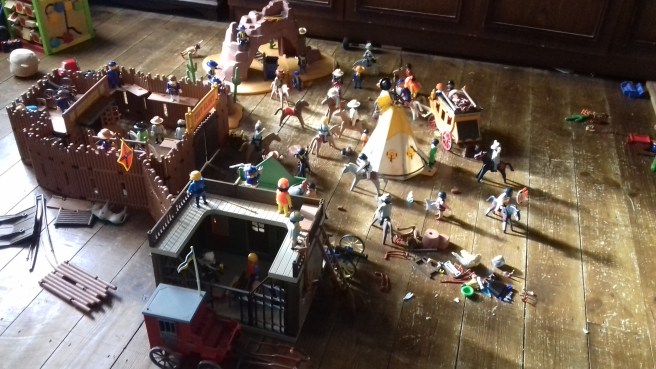
Look at this Playmobil set up. My 3-year-old got given a box of the stuff this week but it was his 10-year-old brother and 13-year-old sister who set it all up like this. I walked past it while tidying up and found myself wondering what was going on. There is one fellow, an outlaw, tied to the roof of a wagon, for instance, and I wanted to know why. There are a lot of rifles placed on a table in the sheriff’s office, and this was also obviously part of the story. The kids had dinner and went back to the Playmobil. I had to do other things, but I would have loved to know what happened next to all these people! This might look like play, and it is, but it’s also a story in action, one that I am sure will develop over the next few days.

A few days ago my youngest sat down to do some drawings on his chalkboard. I wasn’t allowed to join in, I was only allowed to watch. He started drawing big circles and little circles with lines joining them, up. He chatted to himself and when I asked about it, he gave the circles all names like Hop and Plop and Poop and said they were all holding hands because they were friends. They didn’t have faces, but some did have bananas! He then drew a square around them all and said they had gone into a house. This went on for a while, with my son adding further layers to the story. It was a lovely moment, art and storytelling interlinked quite naturally!

Children are just natural storytellers, and we should notice and cherish and encourage this as much as possible. Tonight, one of my older sons early creations, came back to visit us, and I was once again reminded how naturally children construct stories and carry them on through their lives.

When he was almost three, my older son used to get scared at night and get into our bed. We would ask him about this and he would talk about odd little creatures he called the Muckoos. In the day, his sisters would question him, and he would describe them in ever greater detail. (They were small and spiky and multi-coloured and liked to steal biscuits) They also kept him awake at night with their noise and they did lots of naughty things around the house. As the story grew among us all, my son started blaming the Muckoos when things went wrong. I wrote a story about it at the time, which I still have, and may one day do something with!

I’ve never forgotten the Muckoos, and I quite often call my littlest son a Muckoo, as in my mind it sums up a small child, mucky and messy and troublesome and cheeky! I sometimes call him Muckoo Madness, and he will retort; I am not Muckoo Madness!

Anyway, sometimes we have trouble getting the littlest one to bed, and my older son has been helping out the last few nights, by pretending to be a creature called Gavin, who loves stories. This in itself, is just gorgeous. He insists on sitting on a pillow on one side of me, while his little brother sits on the other side. They both get toys to cuddle and we all choose one book to read. Then ‘Gavin’ has to go back to his cave, and my little son happily goes to bed. What a way to use storytelling to encourage a young child to sit still and listen to stories! Tonight, my older son remembered the Muckoos, and ‘Gavin’ told us he was a Muckoo, in fact, the last of his kind. Quite a poignant moment, I felt! It was magical to witness this ‘story’ resurfacing after so many years and I am quite convinced it will continue to develop further layers and complexities…

And for anyone wondering what the last Muckoo looks like, my oldest son agreed to draw one for you!

muckoo


Dear Untamed Human Of Mine

Look at you, so utterly absorbed in all you do, so completely within the moment, not thinking backwards or forwards. Sadly, you do now understand the concept of ‘in a minute’ ‘not now’, ‘just wait.’ It’s weird how it once seem unfathomable that you would be able to articulate speech or instigate questions, but now, approaching your third birthday, you are brimming over with why? And how? Every time you open your mouth we are shocked by the new things that spill out. You make us laugh out loud daily with the things you come out with. It only seems moments ago that you were lying wordlessly in my arms.

It’s funny to me how you know your own mind already. You have a preference for how things should be done and tell me ‘not like that, Mummy.’ And it’s always over the smallest of things, like me trying to put your shoes on, or give you a kiss. It’s like you have to have the last word, the ultimate control over everything. You’re stubborn too. There are days when you argue with me over everything. If it’s raining and I say it’s raining, you will adamantly insist that it is absolutely not raining.

Your funny walks and your funny talks, though in the wrong moment, you will hate for us to laugh at you, in the right ones, you play the clown and laugh your husky laugh along with us. Your funny faces, your spontaneity, your wildness, you have no real clue how to fit in anywhere or how to behave, but we are teaching you, and sometimes I regret this.

When I tell you to hurry up, when I insist the shoes do go on the right feet, when I take your out of your car seat on the ‘wrong’ side, when I make you sit on your chair at dinner time, when I say no to your impulsive demands for biscuits or juice, I am taming you. I am teaching you how to behave.

We are all doing it. We are all complicit in your taming, restraining you from running wild, telling you not to jump in the puddles too much or your socks will get wet, telling you have to hold hands, telling you to hurry up, come on, we have things to do…

Sometimes I watch you. Sometimes I can’t stop staring at you when you’re in a puddle and set on staying there as long as possible because there is nothing more important to you in the world, and I am tired, I need coffee, and all the bribes of hot chocolate or CBeebies have not worked, because you just want to stay in that puddle. I stare at you, at how lost and absorbed and interested you are, swirling your stick around in the water, stamping your feet, walking up and down, repeating the same actions again and again, and it hurts my heart to imagine you in a shirt and tie and blazer, forced to sit still at school.

I can’t imagine you not like this. Wellies and mud, picking up sticks and stones, not listening to a word I say, with your crazy hair and your mucky face, because you hate for me to wipe it, and how you want to climb on absolutely everything, and how it drives me crazy sometimes when I am in a hurry, and want to get on, and don’t want you to hurt yourself and absolutely know that you will. Sometimes I hate myself for telling you to be careful, for warning you of pain you have no concept of. It’s even worse when I scold you because I simply want to get home, because I’ve had enough, because I’m bored, or tired, or grumpy, because I just want one moment to myself…

I wish there was always time in this life for climbing and balancing and puddles and crouching down to intently inspect your world, for wandering off, for taking the other path, for doing something unplanned and not in the schedule, for sitting down and refusing to move, for refusing to wear your hood up in the rain, for everything you love, for everything that holds your interest. My last child, my wild child, I long for you to be forever untamed, forever entranced by trees and tigers and muck and hose pipes.

I look at you sometimes,  and I think of all the things you need to learn to be. Patient, quiet, still, orderly. I think that we are preparing you for pre-school, which will prepare you for school, which will prepare you for employment, and I want to say no, no, no no! We’re teaching you how to behave. We’re teaching you how to fit in. We’re taming you and I’m sorry.

Growing Your Own; A Positive Rebellion

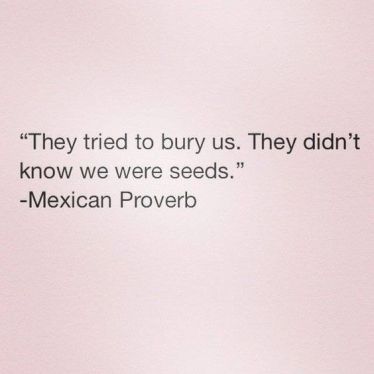
Gardening is a lot like writing. It starts with a seed, and with love, care, attention, commitment and imagination, it grows into something much, much more. For me, gardening and writing are similar because they both involve creating something positive and injecting it into the world. They both make the world brighter and better. They both involve hope, love and rebellion.

seedsproverb

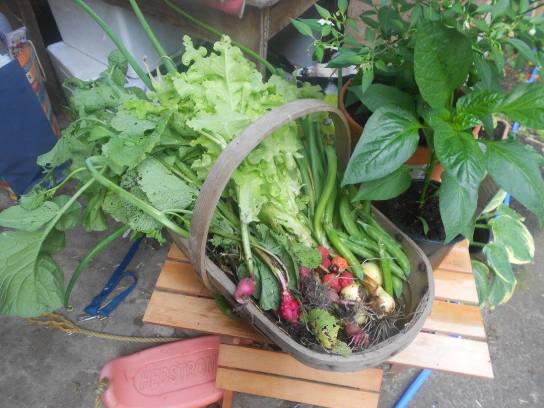
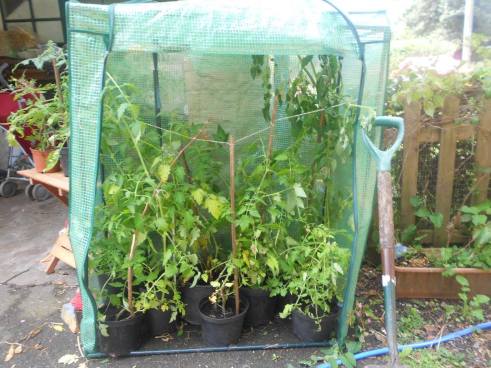
I’ve always been attracted to gardening. My parents grew vegetables when I was a kid, and so did my grandparents. I have fond memories of sitting on cool concrete steps with a plastic bowl on my lap, popping peas from their pods. There is nothing in this world quite as divine as the pungent scent of a full grown tomato plant. As soon as I had my own place, I started growing my own. There is something so deliciously simple and satisfying about planting a seed and growing it into a plant, from which you can pick and eat food. If you’ve never had the pleasure, I can assure you it’s an incredible feeling. Like all is well with the world. Like you’ve just solved all the world’s problems, by tugging out a handful of carrots and shaking the dirt from their roots. It never fails to make me smile, the sight of home grown food, picked and ready to eat. It just makes you want to sit back and go ‘ahh’.

13920054_1231406820211914_1274144773204141057_o.jpg


We live in tumultuous times. There are many days when I want to avoid the news, for fear of what will dismay or horrify me next. I sometimes wish I could turn the clock back for all of us, back to a simpler time, where we all grew our own food, worked the fields, and reaped what we sowed.

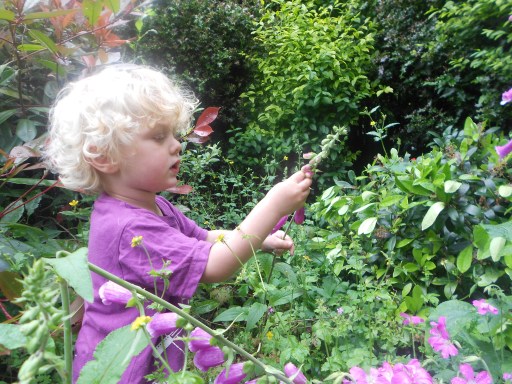
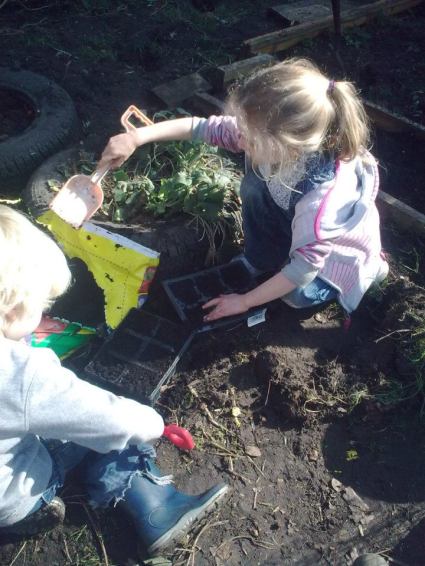
When I am feeling distraught, just like writing, gardening will make me feel better. I forces me to take a deep breath, it forces me to get on with things, to get on with life, and to do something positive. Getting my hands dirty, feeling the soil under my finger nails, pushing seeds into the earth, it all helps me to feel grounded again and more in control. Being outside, kneeling in the dirt, choosing what to plant, putting my back into turning over the earth, it helps me remember where I come from, where we all come from. Gardening is therapeutic; I keep telling people this. I get my little man out there with me, and I want him to feel the earth and take care of the seeds, and tend them and watch them grow. Right now, I can’t think of anything more important for him to know and understand.

dscn3095

Gardening grounds me, calms me and satisfies me. From the beginning, it is a labour of love and good intentions. I have the old adage of ‘you reap what you sow’ in mind nearly always, for I know I will get back what I put in. The seeds are the hope, you see. Like new life, bursting with potential. A freshly dug and turned over plot is like the womb, spongey and fresh, eager to provide and sustain. It’s exciting from the first moment you plant the seed. When it rears its head, it’s like birth. You care for it, water it, protect it and finally, you are rewarded with food. The cycle of life right there. And around it goes again, the plant itself providing the seeds from which to start the whole process again.

13923592_1231407403545189_8560900702571823766_o.jpg

When I’m in my garden, I’m calmer and happier, but I am also filled with grit and determination. For I am taking back control. Working the land, growing our own food used to be the norm. It was how we survived. But over time the food industry grew into a monstrous thing, delivering us convenience, but taking away so many other things. What have we traded, what have we compromised on in order to be able to do all our shopping under one huge roof? We’ve not only handed over control of the food chain to massive faceless corporations, we’ve compromised on animal cruelty and environmental damage and destruction. We’ve increased waste massively, through packaging, delivery, and distribution. We’ve lost contact with what is put into our food, what it actually is, where it comes from, and what or who has suffered in order for us to have it exactly as we demand it.

When you try to grow your own food, you remember how it used to be, how it could be again, how important it is to get back that control and to reconnect our roots with the earth we walk on. We have no respect for nature when we are removed from it. When all the hard work is done for us, when we have no idea how foods are made or what is in them, or what damage has been done to the planet in order to obtain them. I believe it’s crucial we teach our children where food comes from. Reconnecting them with the earth and their own wild roots is going to become increasingly important.

429116_371518756200729_1266579260_n.jpg

It’s not easy for everyone to grow their own food. Not everyone has the space and barely anyone has the time. But in years to come, I truly believe it’s going to become imperative to learn how. We are going to struggle to feed people on this planet for many reasons. Climate change may be the biggest challenge of our generation, endless war, struggling economies and falling wages will all take their toll. I’m sure I’m not the only one who has noticed that food prices are rising.

Growing your own food, planting a vegetable patch, may be just about the most positive and rebellious thing we can do right now. It’s two fingers up to the establishment, it’s a break away from slavery to the supermarkets, and a refusal to be complicit in animal cruelty, environmental destruction and the taking from those who have less.

Growing your own is saying, go away, I don’t need you, I can do this on my own. I’ve got a new motto this year in my house. It’s ‘I won’t buy it, if I can make it myself.’ Now this only applies to food so far, and is a work in process, but a good intention heading in the right direction. I’m digging my heels in and saying no. I don’t need to buy supermarket naan bread when I make a curry, because I can save the packaging and make my own. I don’t need to buy pizzas, or jam, or pastries or pies, sauces, breads, cakes or biscuits, because I can make my own.

I need to be outside right now. This world is breaking my heart and filling me with terror. I need to be planting things, growing things, nurturing things. I need to be responsible for new life and hope and potential. I need to believe that good things can happen if you are a good person. I need to believe that there is a possibility for a greener, brighter future for my children.

When I am writing or gardening, I am reminded that I still have power.