Medium Gave Me What 12 Years of Publishing and 23 Books Couldn’t

And then it took it away again…
Image by rawpixel from Pixabay

It’s coming up two years since I joined the writing platform Medium. For years, various author friends had mentioned it, enthused about it and encouraged me to join, but I resisted because I didn’t think I had the time. Almost two years ago a writer friend messaged me again after reading one of my blogs and finally persuaded me to join Medium by asserting that my blog topics and style were just the sort of thing that did well on Medium.

I gave in and joined and I quickly discovered he was right! Once I had joined the Partner Programme and was eligible to earn from my essays, articles, stories and poems, I found the boosts, the positive comments and the money came flowing in.

I was overjoyed. I felt validated. I felt like a real writer.

You’d think that after 12 years of publishing and 23 books released, I’d feel like a real writer, but the truth is, I don’t. Not much has changed for me during those 12 years. I have never had the spare money to throw at advertising my books, but I have done everything they tell you to do to get your books noticed. One of the main pieces of advice I recall reading at the time, was to get on with writing the next book, because once you have more books out there, it all gets easier.

I have never found that to be true. From the moment I published The Mess of Me in 2013, to the moment I released its sequel The Mess Of Us in 2025, I have made a few sales a month. Yes, some months are better than others, and I have never, ever had a month without sales. I am told that for an indie author with no advertising budget, that is not too shabby. And I do agree – with the billions of other books to compete with out there and the social media algorithms wanting you to pay to be seen, it is extremely hard to get sales and make it.

A few years back I reached out to some successful indie authors to ask what their secret was. The answer was not surprising – money. These authors were able to spend hundreds of pounds marketing their books at the start and now they don’t have to. They’ve made a name for themselves, and gained a loyal following.

I am constantly shouting into the abyss, despite how hard I work, despite how many books I write and publish, despite overwhelmingly positive reviews and a handful of awards… I cannot do any better. I am stuck right where I was at the start.

So, although I am still as addicted to writing as ever, and I will never stop as long as I have these ideas in my head, I am honestly hard-pressed to feel like a real writer most days. It doesn’t help that my close family and friends don’t give a shit and refuse to do the one thing they could do to support me in my life.

You can imagine how elated I felt when Medium started rewarding me so quickly. I was so happy! People were reading and commenting on my work. I was getting boosted regularly. Somehow, I was doing it right! And I was getting paid! I was making extra money, more than I had dreamed of to be honest. It made a massive difference to our finances and I even started thinking about putting some away and using it to better market my books.

Then in January, everything changed.

No one knows why and as far as I can tell, the answers are still not terribly forthcoming. Views, reads and earnings plummeted. At the same time, AI slop, bots, scammers and spammers were going through the roof and basically ruining it for everyone. Some say the drop in earnings is a reflection of Medium getting to grips with all that… But I don’t know.

I wasn’t too bad off in January because I’d been boosted a few times in December. January was awful. I barely made anything, and February was even worse. No boosts – which is a shame but not the be all and end all. I once made $15 on a short story that wasn’t boosted. It would take me a long time to make $15 from my books. No kidding.

By the time March arrived I felt like giving up. Millions of writers had jumped ship to Substack and I did the same, though I kept my Medium account. I still posted in February, but not as much. I suppose I had a crisis of confidence. I kept taking it personally. What had I done wrong? Had my writing declined in quality? Was the stuff I wrote just not wanted anymore? I still can’t figure it out.

Substack is great, by the way, and is shaping up to be one of my favourite places to hang out. It’s newsletters, any kind of writing, and social media all wrapped up in one. It took me a little while to get myself settled in, but at the moment I am posting an end of the month author newsletter, an end of the week round-up, and any poems or short stories I would normally put on Medium, I now put on Substack first.

Substack is a lot of fun but it is not as easy to make money there. Money is raised from having paid subscribers. I feel grateful enough to have any subscribers, whether there or here on my trusty old blog. To ask them to pay seems a lot.

I’ve set mine up for paid but have no paid subs yet and I don’t expect to get any for a long time. Still, I am happy to have almost 100 subscribers who I really hope are genuinely interested in me and my books. Let’s see what happens.

Back to Medium – I am not ready to give up on it just yet. It was foolish to ever rely on it for an income, and I didn’t, not really. It was just very handy extra money that made life easier for a bit. I am hanging around to see what happens, and like everyone else, I guess I am trying to crack the code again.

I decided to up my game in March and my content has increased back to my usual levels. It’s not making a difference so far and at this rate it is soon going to be hard to recoup the $5 you pay to be a member.

It makes me feel sad, in all honesty. All I ever wanted in my life was to be a writer. I am a writer and on good days I am incredibly proud of myself, my books, and the work I put in. I couldn’t give up writing, if I tried. It’s just what I do. It’s who I am.

But for a while there, Medium made me feel like a real writer. You know, someone whose words get read by hundreds, if not thousands of people. Someone who uses writing money to pay the bills. It was nice while it lasted but now I am right back where I began.

There had to be an answer somewhere. I guess I will keep on looking.

Giving up is not an option. And for all its faults and ups and downs, I will continue to publish writing on Medium. Writing there has given me an outlet for other types of work, such as essays, articles and poems, and like I always tell the kids I work with, writing in many formats and writing as often as you can, is how you get better.

I’m in it for the long haul.
Tuesday, A Slow Walk With An Old Dog

I had a poem boosted on Medium!

I still can’t believe it. Getting boosted on Medium is a huge deal because it brings far more readers to your work which translates nicely to more earnings. I have been extremely lucky to have been boosted many times since I joined Medium over eighteen months ago, but I never, ever expected to get boosted for a poem! Poems and short form writing don’t do so well on Medium because they are so short, but it’s still a lot of fun to write them and in particular, I love responding to writing prompts.

I was thrilled to bits to have this poem boosted as it is my favourite one at the moment. It was written in response to a prompt from the Promptly Written publication which suggested keeping a gratitude journal and writing a poem a day from it.

I’ve been thinking about gratitude a lot lately so this was really timely for me and immediately caught my interest.

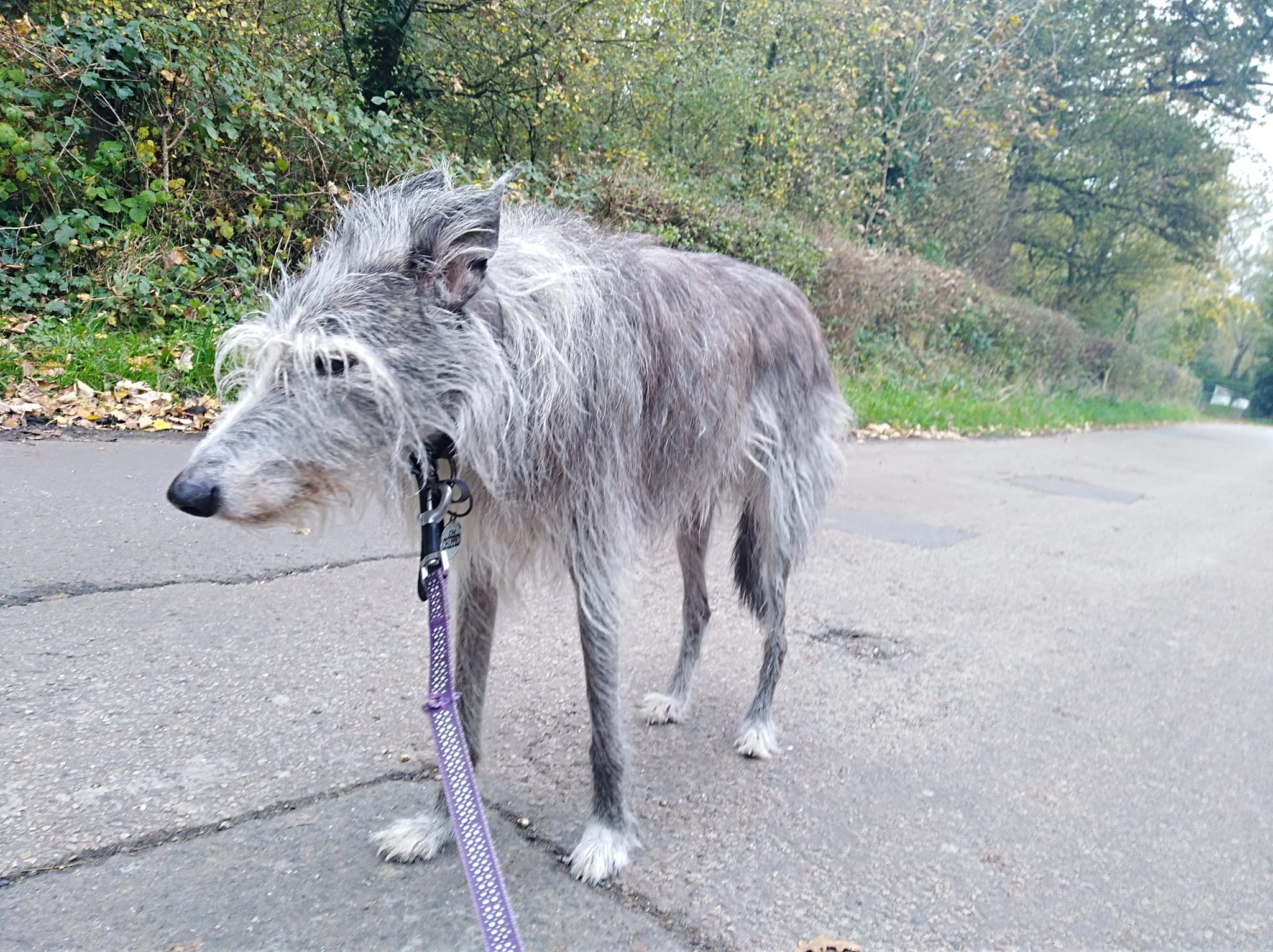
I wrote a poem for Monday which got a few reads and earned me a few pence, then posted the following poem for Tuesday, which was about walking my elderly dog Tinks down the lane. Getting boosted for this really means a lot as we all know she is on her last doddery legs and every moment with her is precious. For her poem to get boosted and seen by more people is just lovely.

Anyway, here it is, alongside a photo I took of her on the day in question.

image is mine

Just for while
we had the world to ourselves
in a moody silence
just the buzzard on the oak tree
looking over its shoulder
to follow our slow progress
just the fast flit of tiny birds
from one hedgerow to another
just the crows taking off lazily
and the pheasant on the fence post
just wandering alongside you
matching your feeble pace
and the age it takes
to get from here to there
and back again
is the time it takes
for everything to fall silent
for this beauty to breathe so slowly
that I can breathe with it
in, out, in, out
with the time to see, hear, taste and smell
the lonely land falling asleep
as winter creeps into
your old bones


Found Poetry For Reluctant Poets – Why It’s The Go-To Activity For Myself and the Kids I Work With

This piece was originally published on Medium!

Image by ShonEjai from Pixabay

Found poetry is one of my favourite activities to do with the young people I work with. It never fails to inspire even the most reluctant writers and it will usually lure in the children who are adamant that they hate poetry. Because I’ve spent a lot of time researching it, experimenting with it and preparing classes with it, it has quickly become my favourite type of poetry too.

There are a lot of reasons for this and there are many different types of found poetry. I will get to both these points in just a minute.

But for now, let’s quickly dive into what it is about poetry that puts people off in the first place. I can only approach this analysis from a personal point of view and from the things poetry-wary children and teenagers have told me over the years.

For me, and often for the youngsters I work with, poetry is something that is forced on them. I work with school children and home-educated children, most of whom also study poetry for English Literature and Language classes. It differs a lot — overall, the home-ed kids have a lot more say in their curriculum but often still have an aversion to poetry, whereas the school children have no choice in what they are taught. For this reason, poetry is forced upon them. They might grow to like it or even love it, but they don’t have a choice in studying it.

This in itself is often enough to put them off. I often encounter children in my sessions who just want to write what they want to write and don’t appreciate being dragged from their amazing story idea to focus on poetry they don’t care about. They are defensive already; their backs are up.

Also, some of the poetry inflicted on school children in particular is, lets be honest, hard to swallow. It’s been a long time since I was at school but I clearly recall studying poems that meant nothing to me and had no impact on me. In short, I could not relate to them. I often found them too long, too boring, too flowery and wordy. I was put off. If the words themselves had to be translated for me to understand, I was put off even more.

This isn’t the case for everyone and of course, there are some beautiful, in fact stunning, poems out there that deserve to be studied for centuries to come.

And this leads us to the second problem. Poetry can be intimidating.

We read things like Do Not Go Gentle Into That Good Night by Dylan Thomas, The Waste Land by T.S Eliot and She Walks In Beauty by Lord Byron, and we are in awe, instantly feeling we can’t compete, nor should we ever try. Poetry can be beautiful, engaging and life-affirming. Like all writing, poetry can change the world. It can certainly change your life.

When I ask young people why they don’t like poetry they usually give the same reasons I used to for not liking poetry:

It’s boring.

It’s inaccessible.

It’s intimidating.

It’s not relatable.

It’s hard. (This is the complaint I hear the most from poetry-averse kids!)

It’s too complicated/wordy/long…

The first time I really fell in love with poetry and felt like I could actually write it too was when I discovered Charles Bukowski. I had already read and loved some of his books so it seemed a natural step to check out his poetry and I was blown away. So much so that I have lines from two of his poems tattooed on my arms.

Reading Bukowski made me want to write poems — finally! Reading Bukowski made me feel like I could. Like poetry was for me too.

It was so freeing. Why? Because he didn’t care what anyone thought, he didn’t try to impress anyone, he didn’t even try to impress himself. He didn’t follow rules, he just wrote from the heart. That is my favourite kind of poetry and I’m always ecstatic when I discover pieces like that.

But let’s get back to found poetry and why it works so well for reluctant poets like me and the kids I work with.

Here are a few of the forms and briefly how to do them:

Blackout poetry — you find some old newspapers, magazines, unwanted books, posters, leaflets — anything you can get your hands on. You get a big fat marker pen and start eliminating words. You look for words lost and stranded between the chunks of black you are creating.

Magnetic poetry — a really fun form of found poetry. There are various themed sets you can buy online. I currently have a nature themed one and a horror/gothic themed one. They come in cute little boxes and kids can spread them out and see what words draw their eye. They can make list poems, haikus, anything they like, and it’s always lovely to see their faces light up when the magnets create something beautiful for them.

Haicubes — I have a set of these but we don’t just use them to create haiku poems, we use them for any type of poetry and sometimes even as writing prompts or story starters. It’s basically a huge set of dice with random words on and a few with themes. Kids can pile them up, line them up or pick random ones to inspire longer sentences.

Found poetry from the environment — there are two ways I approach this in my writing clubs. One, I bring in a bag full of words and phrases I have cut out of magazines, posters, leaflets and newspapers. I cut out anything that catches my eye and it is quite addictive. I like to have as many as possible. Some will be single words. Some will be whole sentences. Some are more like headlines or sub-titles. I spread them out on the desks and let the kids rifle through them. The idea is to pick any words that call out to them and see what that inspires. We have had some fantastic poems made this way.

The other way is to use the environment itself. This is fairly easy in the school building as there are posters and notice boards everywhere! They can wander around with a clipboard and pen, picking up words and phrases and writing them down. They then sit down and try to reorder them into a poem.

Cut-up/fold-up poetry — this is currently my favourite form of found poetry as you will see if you look through my poems on Medium! I discovered fold-up poetry about two years ago when researching ideas for my clubs. The one I came across asks writers to divide a piece of paper into four boxes. You write a list of everything you can see in one box, everything you can hear in another, followed by everything you can smell in the third and then in the last box, everything you can taste. You then try to pick at least two lines from each box, add to them, rework them if you like, and try to arrange the eight lines into a poem. It helps to try and pick out themes; for example, I was recently on a road trip and the weather was atrocious, so lots of my senses boxes had lines about the rain, how it sounded and so on. The poem ended up with a definite theme and I called it Driving Conditions. However, I have to admit that the fold-up technique using the senses can be quite tricky in a classroom or Zoom setting. So, since then, we have been making up our own boxes and breaking the rules.

We choose as many lines as we like, for example. Perhaps you get lines from each box or perhaps one box gets ignored completely; it doesn’t matter. The idea is to pick a strong first line and then see where it takes you.

You can title the boxes with anything you like.

Try writing things you love in box one, in box two write things you hate, in box three write things you fear, and in box four write things you dream of. You can change it up anyway you like!

Personally I always like to have a box with things I can hear in it and love writing these poems on long road trips. Probably because I can see and hear different things than normal on a road trip. The ‘hear’ one is a favourite of mine as we always have music on, and random lines will leap out at me and get written into a box. I try to pick the lines that could be said by anyone, as obviously you have to be aware of plagiarsm or copyright infringement. One of my lines in a recent poem was ‘I’d rather die’ which came from a Lana del Rey song we were playing. I added ‘love hurts’ in front of it and made a new line with a different meaning.

There are so many ways of playing around with found poetry and I think it’s incredibly freeing. You can approach the page with a blank mind and no ideas, because eventually you will find the words and the ideas floating around you.

For young writers who dislike poetry, this is a fantastic mode of persausion. They don’t actually have to come up with the words themselves; they just have to find them. Most of the time, I see this lead to a real increase in confidence with poetry, which is wonderful.

Check out a few of my found poems below and why not give it a try?

Wanderlust – a cut-up poem

excluded from running wild
never our land
check your barriers
and thank you for driving carefully
the road gets tough
mixing petrol fumes with coffee and cream
follow the white lines
across a patchwork land
praying the car won’t die
lights coming towards us
ignite our wanderlust
the sea, behind green hills
mist rolling down the valleys
love hurts, I’d rather die
so I carved out a quiet
little
life
for
myself

The Future Is Coming – a cut-up poem

Why do people ruin everything?
wildfires — no water
rusted, barbed wire coiled like snakes
sharp stones underfoot
but we cleared up the broken glass
falling over, getting splashed
this place is hungry
the current trickles under the fallen log
let’s trespass, let’s explore
what’s that noise?
The future — it’s coming
run

Poem: Shadow Girl

She’s a heavy thing, this shadow girl, this shredded one

I know her well, tried to shake her off long time ago

But she was there the whole time, claws in

A vampire, bloodsucking, soul draining parasite

I got to drag you around with me the rest of my life?

No knowing why she came back, only maybe she was hiding

Teasing, biding her time, playing the long game

She’s on my back, on my shoulder, in my mind, behind my eyes

She’s the dark, spite filled voice in my head

She said, hey you thought you’d got rid of me, thought you’d get free

Thought I’d gone forever, but no such luck

I’m here to fuck you up

She says, you fuck, how did you let this happen

You used to be so in control, when I had you, you were mine

I had you in line, and you had a spine

Now you have no edges, didn’t you like them better sharp

Now you have no lines to define you except the ones on your face

She promises me peace and satisfaction

She promises me a different reflection

give her back the driving seat, the controls

If I let her in, then she will do it for me like she did before

and I will be happy, like I was before.