Tuesday, A Slow Walk With An Old Dog

I had a poem boosted on Medium!

I still can’t believe it. Getting boosted on Medium is a huge deal because it brings far more readers to your work which translates nicely to more earnings. I have been extremely lucky to have been boosted many times since I joined Medium over eighteen months ago, but I never, ever expected to get boosted for a poem! Poems and short form writing don’t do so well on Medium because they are so short, but it’s still a lot of fun to write them and in particular, I love responding to writing prompts.

I was thrilled to bits to have this poem boosted as it is my favourite one at the moment. It was written in response to a prompt from the Promptly Written publication which suggested keeping a gratitude journal and writing a poem a day from it.

I’ve been thinking about gratitude a lot lately so this was really timely for me and immediately caught my interest.

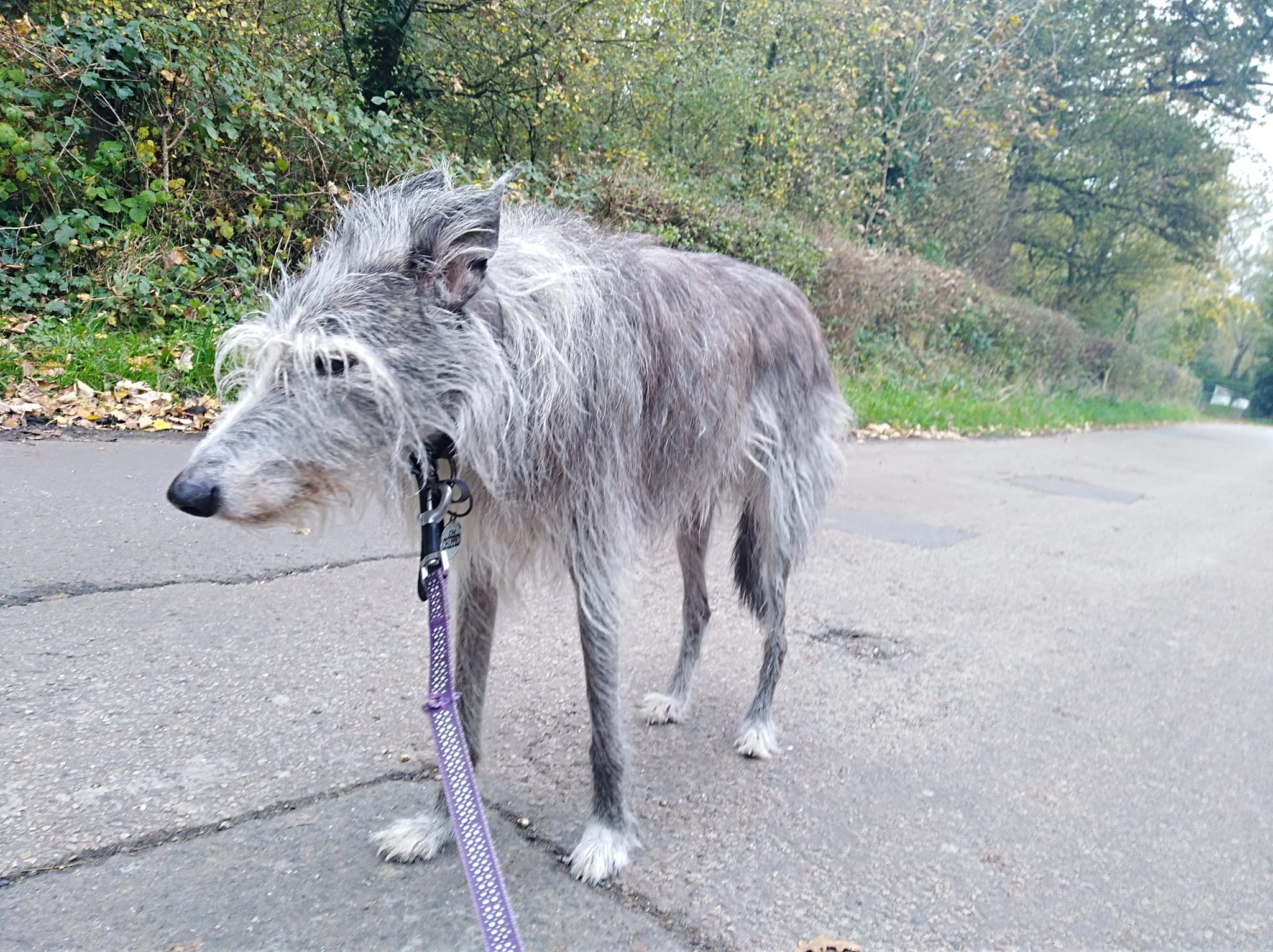
I wrote a poem for Monday which got a few reads and earned me a few pence, then posted the following poem for Tuesday, which was about walking my elderly dog Tinks down the lane. Getting boosted for this really means a lot as we all know she is on her last doddery legs and every moment with her is precious. For her poem to get boosted and seen by more people is just lovely.

Anyway, here it is, alongside a photo I took of her on the day in question.

image is mine

Just for while
we had the world to ourselves
in a moody silence
just the buzzard on the oak tree
looking over its shoulder
to follow our slow progress
just the fast flit of tiny birds
from one hedgerow to another
just the crows taking off lazily
and the pheasant on the fence post
just wandering alongside you
matching your feeble pace
and the age it takes
to get from here to there
and back again
is the time it takes
for everything to fall silent
for this beauty to breathe so slowly
that I can breathe with it
in, out, in, out
with the time to see, hear, taste and smell
the lonely land falling asleep
as winter creeps into
your old bones


Found Poetry For Reluctant Poets – Why It’s The Go-To Activity For Myself and the Kids I Work With

This piece was originally published on Medium!

Image by ShonEjai from Pixabay

Found poetry is one of my favourite activities to do with the young people I work with. It never fails to inspire even the most reluctant writers and it will usually lure in the children who are adamant that they hate poetry. Because I’ve spent a lot of time researching it, experimenting with it and preparing classes with it, it has quickly become my favourite type of poetry too.

There are a lot of reasons for this and there are many different types of found poetry. I will get to both these points in just a minute.

But for now, let’s quickly dive into what it is about poetry that puts people off in the first place. I can only approach this analysis from a personal point of view and from the things poetry-wary children and teenagers have told me over the years.

For me, and often for the youngsters I work with, poetry is something that is forced on them. I work with school children and home-educated children, most of whom also study poetry for English Literature and Language classes. It differs a lot — overall, the home-ed kids have a lot more say in their curriculum but often still have an aversion to poetry, whereas the school children have no choice in what they are taught. For this reason, poetry is forced upon them. They might grow to like it or even love it, but they don’t have a choice in studying it.

This in itself is often enough to put them off. I often encounter children in my sessions who just want to write what they want to write and don’t appreciate being dragged from their amazing story idea to focus on poetry they don’t care about. They are defensive already; their backs are up.

Also, some of the poetry inflicted on school children in particular is, lets be honest, hard to swallow. It’s been a long time since I was at school but I clearly recall studying poems that meant nothing to me and had no impact on me. In short, I could not relate to them. I often found them too long, too boring, too flowery and wordy. I was put off. If the words themselves had to be translated for me to understand, I was put off even more.

This isn’t the case for everyone and of course, there are some beautiful, in fact stunning, poems out there that deserve to be studied for centuries to come.

And this leads us to the second problem. Poetry can be intimidating.

We read things like Do Not Go Gentle Into That Good Night by Dylan Thomas, The Waste Land by T.S Eliot and She Walks In Beauty by Lord Byron, and we are in awe, instantly feeling we can’t compete, nor should we ever try. Poetry can be beautiful, engaging and life-affirming. Like all writing, poetry can change the world. It can certainly change your life.

When I ask young people why they don’t like poetry they usually give the same reasons I used to for not liking poetry:

It’s boring.

It’s inaccessible.

It’s intimidating.

It’s not relatable.

It’s hard. (This is the complaint I hear the most from poetry-averse kids!)

It’s too complicated/wordy/long…

The first time I really fell in love with poetry and felt like I could actually write it too was when I discovered Charles Bukowski. I had already read and loved some of his books so it seemed a natural step to check out his poetry and I was blown away. So much so that I have lines from two of his poems tattooed on my arms.

Reading Bukowski made me want to write poems — finally! Reading Bukowski made me feel like I could. Like poetry was for me too.

It was so freeing. Why? Because he didn’t care what anyone thought, he didn’t try to impress anyone, he didn’t even try to impress himself. He didn’t follow rules, he just wrote from the heart. That is my favourite kind of poetry and I’m always ecstatic when I discover pieces like that.

But let’s get back to found poetry and why it works so well for reluctant poets like me and the kids I work with.

Here are a few of the forms and briefly how to do them:

Blackout poetry — you find some old newspapers, magazines, unwanted books, posters, leaflets — anything you can get your hands on. You get a big fat marker pen and start eliminating words. You look for words lost and stranded between the chunks of black you are creating.

Magnetic poetry — a really fun form of found poetry. There are various themed sets you can buy online. I currently have a nature themed one and a horror/gothic themed one. They come in cute little boxes and kids can spread them out and see what words draw their eye. They can make list poems, haikus, anything they like, and it’s always lovely to see their faces light up when the magnets create something beautiful for them.

Haicubes — I have a set of these but we don’t just use them to create haiku poems, we use them for any type of poetry and sometimes even as writing prompts or story starters. It’s basically a huge set of dice with random words on and a few with themes. Kids can pile them up, line them up or pick random ones to inspire longer sentences.

Found poetry from the environment — there are two ways I approach this in my writing clubs. One, I bring in a bag full of words and phrases I have cut out of magazines, posters, leaflets and newspapers. I cut out anything that catches my eye and it is quite addictive. I like to have as many as possible. Some will be single words. Some will be whole sentences. Some are more like headlines or sub-titles. I spread them out on the desks and let the kids rifle through them. The idea is to pick any words that call out to them and see what that inspires. We have had some fantastic poems made this way.

The other way is to use the environment itself. This is fairly easy in the school building as there are posters and notice boards everywhere! They can wander around with a clipboard and pen, picking up words and phrases and writing them down. They then sit down and try to reorder them into a poem.

Cut-up/fold-up poetry — this is currently my favourite form of found poetry as you will see if you look through my poems on Medium! I discovered fold-up poetry about two years ago when researching ideas for my clubs. The one I came across asks writers to divide a piece of paper into four boxes. You write a list of everything you can see in one box, everything you can hear in another, followed by everything you can smell in the third and then in the last box, everything you can taste. You then try to pick at least two lines from each box, add to them, rework them if you like, and try to arrange the eight lines into a poem. It helps to try and pick out themes; for example, I was recently on a road trip and the weather was atrocious, so lots of my senses boxes had lines about the rain, how it sounded and so on. The poem ended up with a definite theme and I called it Driving Conditions. However, I have to admit that the fold-up technique using the senses can be quite tricky in a classroom or Zoom setting. So, since then, we have been making up our own boxes and breaking the rules.

We choose as many lines as we like, for example. Perhaps you get lines from each box or perhaps one box gets ignored completely; it doesn’t matter. The idea is to pick a strong first line and then see where it takes you.

You can title the boxes with anything you like.

Try writing things you love in box one, in box two write things you hate, in box three write things you fear, and in box four write things you dream of. You can change it up anyway you like!

Personally I always like to have a box with things I can hear in it and love writing these poems on long road trips. Probably because I can see and hear different things than normal on a road trip. The ‘hear’ one is a favourite of mine as we always have music on, and random lines will leap out at me and get written into a box. I try to pick the lines that could be said by anyone, as obviously you have to be aware of plagiarsm or copyright infringement. One of my lines in a recent poem was ‘I’d rather die’ which came from a Lana del Rey song we were playing. I added ‘love hurts’ in front of it and made a new line with a different meaning.

There are so many ways of playing around with found poetry and I think it’s incredibly freeing. You can approach the page with a blank mind and no ideas, because eventually you will find the words and the ideas floating around you.

For young writers who dislike poetry, this is a fantastic mode of persausion. They don’t actually have to come up with the words themselves; they just have to find them. Most of the time, I see this lead to a real increase in confidence with poetry, which is wonderful.

Check out a few of my found poems below and why not give it a try?

Wanderlust – a cut-up poem

excluded from running wild
never our land
check your barriers
and thank you for driving carefully
the road gets tough
mixing petrol fumes with coffee and cream
follow the white lines
across a patchwork land
praying the car won’t die
lights coming towards us
ignite our wanderlust
the sea, behind green hills
mist rolling down the valleys
love hurts, I’d rather die
so I carved out a quiet
little
life
for
myself

The Future Is Coming – a cut-up poem

Why do people ruin everything?
wildfires — no water
rusted, barbed wire coiled like snakes
sharp stones underfoot
but we cleared up the broken glass
falling over, getting splashed
this place is hungry
the current trickles under the fallen log
let’s trespass, let’s explore
what’s that noise?
The future — it’s coming
run
Author Interview with Joel Dennstedt

This week’s blog post comes to you a few days early and in the form of an author interview! I last chatted to indie author Joel Dennstedt around a year ago. Since then he’s been travelling, writing and professionally reviewing books. Here he is talking about his travels, and the inspiration behind his latest release, horror collection, When Dolls Talk

1) Can you tell us where in the world you are right now, and where you are heading to next?

I am back where I began: my hometown of San Diego, California. Five years non-stop trekking through Mexico and Central and South America brought me home to visit family and to re-gear up for 5 more years. I plan to visit Scotland for the Scotch/Whiskey tour, then head to Eastern Europe and across Central Asia into Southeast Asia.

2) Has your travelling inspired any of the books you have written or are working on, and if so, in what way?

Traveling inspired my SF novel,  GuanjoN, , which happens on a planet resembling the Amazon. However, I reached the Amazon after the book was written. So, maybe future thoughts prompted this eerie adventure about Earth natives endangered by indigenous aliens.

3) How has travelling changed you as a person and as a writer?

Oddly, travelling made the authentic me emerge. The true me as a writer. Travelling fulltime gave me the freedom to become myself. Transformation, while challenging, results in total liberation. And travelling is fun.

4) You have a new book out. A horror collection. How did this come about?

This doll spoke to me. Rather, a photo of this creepy doll. She wanted me to write her story. So I did. After that, they just came out of the woodwork.

5) Are you a fan of horror yourself? Who is your favourite horror writer?

Yes, I’m a fan and a follower. My style is inspired by Edgar Allen Poe with a contemporary twist. H.P. Lovecraft has a say for darkness. I worship Stephen King. I never miss a Dean Koontz debut. Overall, I prefer my horror on the literary side, and definitely with a dash of dark humor.

6) Where did the ideas come from for these stories?

Those damn dolls. Actually, I searched out individual creepy photographs to inspire each story. Then I let my fearful imagination go. I’ve posted the photographs on Facebook and in the Bonus Gift Pack that came with every pre-order.

7) I understand you first posted these stories on Wattpad. How useful was that for gaining comments and a potential audience for the book?

Wattpad has a unique audience to itself. They rarely buy the final book. But they keep me encouraged to keep on writing, they offer wonderfully perceptive observations, and they often provide desperately needed Amazon Reviews.

8) Is there a message in this collection? Or in any of your books? Something you wish the world to know? Only to this extent – a

Only to this extent – a marvellous author friend made the following observation about these stories: “So much more depth to them than just scary bump in the night stuff. They’re scary all right, but more about the scary human condition and experience, parables, metaphors, etc.” That is – the real horror in life comes from us humans being human.

9) What can we expect from you next?

Lord, I wish I knew. I want to write a sequel to Guanjo. I plan to write Book 2 of these short horror stories. I need to work on my literary novel, which is still a decade in the making. And I need to keep working on my book of travel short stories based on true events.

10) Is there any genre you would never attempt to write in and if so, why?

I don’t write in genres I don’t read. I don’t read much fantasy. I don’t read hot romance. I wrote a quirky little romance called Hermit, but nothing with muscled men and naked women on the front. But I’m already in trouble with the crowd who says you must pick a genre and stick with it. I cannot do that.

11) How has your journey as an indie writer progressed since we last chatted? Any highs and lows?

It’s a roller coaster; you know that. All highs and lows. More is never enough. The next good thing makes you manic. In the end, it really, truly, MUST be all about the writing. But … it never stays that way. So, I paid my ticket. I’m on the ride. Hanging on.

12) I know you review books professionally. Please give us your top three books so far! What have you read and reviewed that we really don’t want to miss?

That is difficult to answer. I’ll give you my personal favorites, but my taste is not yours. However, I have read many great books by Indie Authors, when I did not expect to do so.

1. Decline – by Jared Kane A perfect little book, a poetic literary

style – understated post-apocalyptic

tale.

2. The Finest Hat in the Whole World – by Colleen Parkinson

Resonates with the feeling and style of

To Kill a Mockingbird. Masterful attention to the details.

3. 602 Brigade – by Musashi Miyamoto

Like Decline, a poetic literary style.

A post-apocalyptic, anti-war tale.

Thanks so much for chatting with me again, Joel!

If you’d like to find out more about Joel, his writing and his travels, here are his links;

Website: http://www.joelrdennstedt.com

Author Page: https://www.amazon.com/Joel-R.-Dennstedt/e/B008VJZ6RE

Independent Book Reviews: https://www.facebook.com/independentbookreviews

Author Interview; Ashley Rice

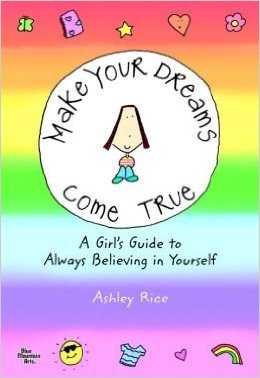
Welcome to my latest author interview! Today I would like to introduce you to Dallas-based author/illustrator Ashley Rice. Ashley has created several popular illustrated books, including You Are An Incredible Kid, Girls Rule, and You Are A Girl Who Totally Rocks. Ashley’s latest release is Make Your Dreams Come True. Ashley’s mix of artwork, poetry, songs, real life experiences and positive messages are loved by tween and teen girls (and boys!)  worldwide. Her work also appears on her bestselling line of greeting cards, as well as bookmarks, fridge magnets and so on. It was a pleasure to speak to Ashley, who is a dog lover like myself!

41OGhjG2iZL._SX258_BO1%2c204%2c203%2c200_

1) Who are your books aimed at, and how would you best describe your books?

Most of my books are written for tweens (9-12 year olds) and, more specifically, with tween girls in mind… but I also have a book called For an Incredible Kid, for example, which could be for anyone. I’ve also gotten messages and emails from older girls and women who will tell me how one of the girl power books helped them out in some way, so really the books are for anyone and everyone who finds that, in their own way, she or he can get something out of them.

2) What first inspired you to write these sorts of books?

I’ve always believed that a girl in the world could do anything, and, as I was growing up, and more specifically when I was older and actually got out into the “real world,” I was surprised whenever I would meet someone who wasn’t aware of that fact — whether it was a male friend or acquaintance who hadn’t gotten the message yet about the “girl power” movement, but especially when it was a girl who wasn’t aware of all the possibilities that were waiting for her out there that she hadn’t yet discovered. You have to believe in those possibilities and in your own personal sense of empowerment before those possibilities can turn into real, solid opportunities that can work for you in your life. So I thought it was important to reach girls like that — or, really, just to get the word out to let all girls know just how talented they truly are. And how amazing their lives will be if they keep on believing in the beauty of their dreams. That’s why I wrote the girl power poems, which were then turned into books.

3) How do you decide on the theme for each book?

Sometimes this is an idea that I think of, other times the idea will be based on a suggestion from my editor.

4) Do you often get feedback from children and if so, what do they say to you about your books?

I do get feedback from girls from time to time. Usually when they contact me it’s to tell me why they liked one of my books. Sometimes they will share with me something personal such as how that book helped them to better deal with some specific problem they were having. Those kinds of letters touch me the most and really mean a lot to me!

5) How do you promote your work?

I haven’t really done much in the way of promotion in the past but am starting to do things like interviews now. I do have a blog on my goodreads author page where I’ll post an update whenever something significant happens to me — like whenever a new book of mine comes out. I also have a web page. It’s at http://www.ashleyrice.net.

6) What are you working on right now?

I’m working on some new poems for girls on different “rules” they can make for themselves to live by, and how they can then use those principles they relate to the most to help guide them in their lives.

7) Where do you see yourself and your work in 5 years time? 

I plan to keep on writing and illustrating books along with doing my greeting card line. I have a new calendar coming out next year… hopefully many more books, etc. will follow after that! All I know is that, whatever happens, I’ll keep on writing, illustrating.

8) Did you always want to be a writer/illustrator?

I always wanted to be a writer (since I was 7) and I always drew characters and other things – mostly just doodling — but I didn’t think I was talented or skilled enough to work as an illustrator. I just illustrated my first original poems (which I was turning in to my greeting card publisher to be published as possible greeting cards) as a way to show my employer what types of images I thought could look good alongside my poems if they in fact decided to make those poems into cards. I thought they would then have a “real” artist copy my drawings — or adapt them, really – using their own, professional style. It surprised me when my publisher said they liked my artwork and planned to publish the designs I’d made as-is.

IMG_1404.JPG

9) What advice would you give to young people who wish to follow in your footsteps?

Work hard, believe in what you do, know that anything is possible for you if you are true to yourself, but most of all: never give up! (Even when it’s hard).

10) What inspires you to write/draw?

I get a lot of ideas from browsing articles, etc – whether in bookstores or on the Internet. But I tend to get ideas from anything, really – when I’m walking my dogs and just thinking while surrounded by nature something might come up in my mind that makes me want to write the words down (which is why I always carry my phone with its electronic notepad with me anywhere I go!)… thoughts and ideas can happen that way, or can be inspired by doing something like watching a movie.

11) Tell us three interesting facts about you

I live in a historic neighborhood (with arts and crafts style houses mostly houses built in the early early 1900’s)… and I really love that!

Before moving back here (to Dallas) I used to live in a community in Boston that was all artists’ lofts, and which had originally been a giant piano factory. You had to have two different artistic recommendations to get in, which meant that your neighbors were artists too (so you could help each other out, etc). That made for an interesting time! Also, to live there, we had to paint the outside of our front doors in a style that we liked a lot – mine was hot pink with a hand-drawn blue flower on it, for example. It took like seven hours for me to do though!

I often volunteer at an animal shelter during lunch… but sometimes it’s too hard for me to leave my own dogs at home to go and do that so I just skip it… but on the days when I do go I have a lot of fun and it feels good to help some other animals out… mostly the work involves “socializing” the dogs and cats at the shelter… which basically means playing with them a lot!

12) Who are you inspired/influenced by?

Shel Silverstein, Dr. Seuss, Todd Parr, Adrienne Rich, to name a few.. along with all of the other writers and artists who also work for my publisher and are amazing!

Thanks so much for the interview Ashley! Good luck with the latest book.

You can find out more about Ashley’s inspiring work on her blog/website ashleyrice.net

Look out for another interview coming soon!