My 2017 Reading Challenge

At the start of 2017 I came across a post on Facebook about a reading challenge. I had seen things like this before and never felt the urge to join in. I’m still not sure why I did this time, actually. But I am so glad I did and I am even considering doing a similar challenge in 2018. So, I thought I would share the books I read for the challenge with you, as well as mini-review of each. The best thing about doing this challenge was reading books I would not otherwise have read. It really dragged me out of my comfort zone!

  1. A Book You Read In School – Lord of The Flies by William Golding. This was great to revisit. I had actually been meaning to re-read it again at some point, as the post-apocalyptic YA series I have planned has some similar themes. If you’ve not read it, this chilling adventure story of what happens when a group of kids become abandoned without adults on a deserted island, is well worth a read.
  2. A Book From Your Childhood – King of The Vagabonds by Colin Dann. To be honest, I would have chosen Watership Down by Richard Adams, as this is my absolute favourite childhood book, but I had already re-read it the year before. I couldn’t quite recall the title and author of this book about a pet cat who wants to live with the ferals in his neighbourhood, but a  bit of Googling soon helped me out. I ordered the paperback and thoroughly enjoyed a little trip down memory lane. I was probably about ten when my oldest sister bought me this book for Christmas. I wrote similar stories myself after reading it and drew pictures too.
  3. A Book Published Over 100 Years Ago – The Terrifying Tales by Edgar Allen Poe. I had high hopes for this, but I really didn’t like it! I enjoyed the first one, The Tell-Tale Heart, and I thought The Pit and The Pendulum was also excellent, but the rest? I kept skim reading them. They totally lost me. I was bored.
  4. A Book Published In The Last Year – The Roanoke Girls by Amy Engels. At the start of 2017 my friend author Kate Rigby asked me to join a Facebook group called Book Connectors. It’s an awesome group made up of authors, bloggers, readers and reviewers. Because of this group, I am constantly adding more books to my to-read pile! This was the first one that caught my eye due to so many people reviewing it in the group. A dark tale about the twisted lives of the enigmatic and tragic Roanoke girls. I couldn’t put it down.
  5. A Non-Fiction Book – How To Keep Ducks. I’ve had ducks and chickens for years and have three chicken books and not one duck book. So I decided to tick this one off by buying a duck care book! It was very interesting!
  6. A Book Written By A Male Author – History Is All You Left Me by Adam Silvera. I would like to read more by this author, but this book didn’t exactly thrill me. Brilliant plot, excellent characters and dialogue. It was just all a bit too tragic and depressing.
  7. A Book Written By A Female Author – Thalidomide Kid by Kate Rigby. I was a fan of Kate’s before we became friends, and I am slowly working my way through her many books. This tale of a working-class disabled boy who falls in love with an able-bodied middle-class girl is just classic Kate Rigby. I just want to cosy up with her books and immerse myself into the little world’s she creates so lovingly. I always fall in love with her characters.
  8. A Book By Someone Who Isn’t A Writer – Coreography by Corey Feldman. This was a bit of a challenge, as if you think about it, anyone who has written a book is a writer! But I interpreted it to mean someone who is better known for something else, and I had wanted to read this book for ages, so it was a good opportunity to tick another off the challenge. I was a massive fan of Corey Haim back in the day, fancied the absolute pants off him, if truth be told. Me and my sister obsessed over Corey films. The Lost Boys, Dream a Little Dream, Licence To Drive and so on. This book is eye-opening in the most tragic of ways. I thoroughly enjoyed the glimpse behind the scenes of classic films like The Goonies and The Lost Boys, but everything else Corey Feldman had to reveal was rather disturbing and I truly hope the two Corey’s get justice one day for what was done to them.
  9. A Book That Became A Film – Miss Peregine’s Home For Peculiar Children by Random Riggs. I think this was the first book I read in 2017! I bought it for one of my kids for Christmas and ended up reading it before she did. Brilliant book, and although they alter things a bit, it’s also a brilliant movie!
  10. A Book Published In The 20th Century – The Handmaid’s Tale by Margaret Attwood. One I had been meaning to read forever! And yes, I stupidly watched the TV show first. I was disturbed by it, yet could not stop watching. The same thing happened when I read the book. I think her writing style is superb and I desperately want to read more by her!
  11. A Book Set In Your Home-Town/Region – Tree Magic by Harriet Springbett. Half set in Dorset, half in France, I absolutely loved this YA magic realism novel. It’s a fantastic story about a girl who can bend trees. Really special.
  12. A Book With Someone’s Name In The Title – Searching For Ethan by Robert Cowan. I discovered Robert Cowan when I reviewed one of his books for Underground Book Reviews. I’d been meaning to read another one for some time, as I really liked his style and content. This book was great. Gritty coming-of-age!
  13. A Book With A Number In The Title – The Six Train To Wisconsin – Kourtney Heintz. One I picked to review for Underground Book Reviews. A really interesting and unique story about a woman who can read the thoughts and feelings of others.
  14. A Book With A Character With Your First Name – A Little Bit Of Chantelle Rose by Cristine Hodgson. I was really struggling with this one, until a fellow Book Connector author posted about her book in the group. This is not the type of book I would normally read, but I actually really enjoyed it.
  15. A Book Someone Else Recommended To You – We Are All Completely Beside Ourselves by Karen Joy Fowler. My daughter read this book because the librarian at her school recommended it to her. She then recommended it to me. It was utterly brilliant. An extremely moving and complex story about family secrets.
  16. A Book With Over 500 Pages – The Bachman Books by Stephen King. I may have cheated a bit with this one. I had already read all the books in this collection, except for The Road. So, I just read The Road. (Compelling YA dystopian plot about a Hunger Games-esque contest that sees teenage boys walking until they drop)
  17. A Book You Can Finish In A Day – The End by Justine Avery.  Another one picked for Underground Book Reviews, this novelette was extremely short and also unputdownable. A fast-paced story about a man who witnesses his own death on his Go-Pro camera before it has happened.
  18. A Previously Banned Book – In Cold Blood by Truman Capote. I had a great reaction on my Facebook author page when I asked for recommendations for a banned book to read. In the end, I chose this one and I’m really glad I did. The story of a murdered family and the subsequent manhunt and trial of their killers, is written in such an extraordinary way, I can’t help but think it would struggle to get published these days. You know who did it from the start. The plot is all about the killers, their lives, and attitudes, and the authorities attempt to catch them. Fascinating read.
  19. A Book With A One Word Title – Bloq by Alan Jones. Another book I had picked to review for UBR. This gritty tale of a missing girl and her father’s desperate attempts to find her was shocking, brutal and also very moving.
  20. A Book Translated From Another Language – Piglettes by Clementine Beauvais. I came across this in the Book Connectors group. One of the lovely bloggers had reviewed it and it sounded like something I would enjoy. Three girls are voted as the ugliest in their school in a Facebook contest. How they react to this makes one hilarious and inspiring story.
  21. A Book That Will Improve A Specific Area Of Your Life – Rise Of The Machines: Human Authors In A Digital World by Kristen Lamb. A great book for indie writers just starting out. I wish I had read this before I started!
  22. A Memoir Or Journal – How Not To Be An American High-School Girl In The 70’s by Gail Spencer Choate. Another book I picked to review for UBR. I really enjoyed this; a cringe inducing recollection of awkward teenage moments. Great fun.
  23. A Book Written By Someone Younger Than You – The Hate U Give by Angie Thomas. I saw this in Book Connectors, bought it, devoured it and promptly passed it to my daughter who did the same. One of those books you think about for a long time afterwards. I urge everyone to read it. A powerful portrayal of racism and class in modern America.
  24. A Book Set Somewhere You’ll Be Visiting This Year – The Butcher Of Glastonbury by David Bowker. We went to Somerset in April, and there are a fair few books set in that region, but this one seemed so bizarre I just had to pick it. It’s the story of a girl who returns home one day to find her entire family brutally butchered. She then helps the local detective try to solve the case and catch the killer, but she knows it was not a human who dismembered her family. This book gets more surreal with every page, but I really enjoyed it! A strange and satisfying little find.
  25. An Award Winning Book – Aristotle and Dante Discover The Secrets Of The Universe – Benjamin Alire Saenz. I absolutely loved this book. The tender story of two lonely boys who become best friends and have to face their true identities and desires. My daughter just read it and she loved it as much as me. Short, snappy chapters, more dialogue than narrative. First person narrative. It’s beautiful.
  26. A Self-Published Book – Uncivil Wars by Wendi Kelly and Deborah Dorchak. Another UBR pick, I have been reading this series for a while now. Not a genre I would ordinarily pick, (shape-shifters, werewolves, vampires and more) I’ve been pleasantly surprised and impressed with the character development and complex plots. Brilliant sutff.

So, that’s my list! My 2017 Reading Challenge. It’s been tremendous fun seeking out bookt so fit the criteria and meet the challenge. I’ve discovered some amazing new authors and read some books that will stay with me forever. I am pretty sure if I can find a good challenge for 2018, then I’ll do it. How about you? Have you read any of these books? Any take your fancy? Have you ever tried a reading challenge and if so, how did you get on? Please feel free to share and comment!
10 Reasons I Love Writing and Reading YA

On the 11th August my next book The Tree Of Rebels will be released as an ebook. (The paperback is already available!) This will be my sixth release and my fourth YA book. My books fall into both the adult and young adult genres. I never really decide which it will be; that’s a job for my characters. It just so happens that all of my characters tend to be young adults, and in fact, even in my adult books, the young adult voice is very present.  When it comes to reading, I’m not too fussy about genre. I recently devoured horror, crime thriller, literary fiction, autobiography and YA. But it’s fair to say that I am more consistently drawn to YA books, to read and to write.  Here are my reasons for being in love with reading and writing YA;

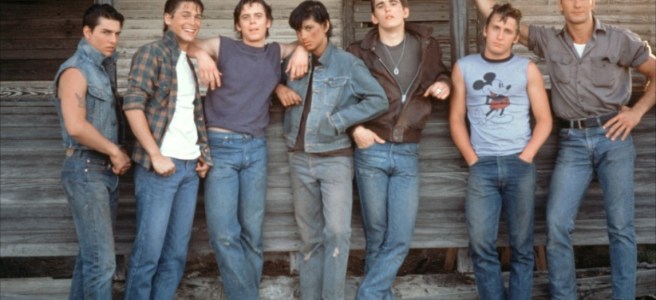
  1. Inspiration – When I was a kid, the first books I ever really fell in love with were The Catcher In The Rye and The Outsiders. I had enjoyed many books as a child, and I had been writing stories for as long as I could remember, but those two books affected me in a way the childhood books had not. I fell into those books and got lost. I fell in love with the characters and saw them as utterly real. I could totally empathise with the feelings, emotions, and scenarios of both books. I loved the style and the voice they were written in. More than any other books I can remember, those two made me want to be a writer. I emulated them in my teens, writing similar stories with similar characters. From that point on I was always searching for books as good as those. I’m still not sure I’ve found any to top them.
  2. Nostalgia – For that reason, YA evokes nostalgia in me. YA books make me remember the surge of enthusiasm and inspiration I got from that genre when I was a teenager. They take me back to that time and remind me of the impact books can have on your life. This I think, draws me towards reading and writing YA. I’m not a rose tinted glasses kind of person by any means, but I do love a bit of nostalgia!
  3. Feeling Young – There is this. Not that I feel old. I really don’t. In my head, I am still a kid, and I always assume people are older than me and certainly wiser. I still feel new sometimes. I still feel like I have so much to learn. I like reading and writing about young people because I still feel like one of them! What I see in the mirror is not what I see in my head. When I read a really good YA book, I can totally recall what it feels like to be that young. I particularly love a good coming-of-age story. I think being a young adult is a totally unique time in your life. Too many people embrace adulthood too quickly and tend to put up walls, separating their generation from the ones below them. (You only have to look at the amount of millennial bashing that goes on!) I think YA books are important for this reason. They remind you of what it is like to be young, conflicted, confused, with those huge highs and lows, mixed with fear, ambition, self-doubt and hope. If you can read YA and feel young again, perhaps it helps build a bridge between generations.
  4. YA is so varied – This is true. YA is a genre with so many sub-genres and I love them all. I’ll even read Romance, if its YA! Horror, dystopian, post-apocalyptic, coming-of-age, historical, thriller… Having young adult characters just seems to make all these genres better.
  5. YA is fast paced – of course, there are exceptions, but generally I find YA books move pretty fast. Not that I mind a slow moving book. I’m not particularly drawn in by the ‘page-turner’ claim, but YA does tend to grip me. I can’t think of too many YA books I’ve read where I haven’t wanted to start a new chapter as soon as I’ve finished the one I’m on. (Michael Grant Gone series and Unwind dystology comes to mind!!)
  6. Gritty, edgy themes – I don’t want to be bored when I read or write. I want subjects I can really get my teeth into. YA has these in abundance. Frightening dystopian futures, post-apocalyptic disasters, family drama, domestic abuse, substance abuse, self-harm, suicide, bullying, running away, sexuality, sexual awakening, poverty, race relations and more, YA is all about tackling difficult issues head on. As a reader and a writer, this is the stuff I yearn for.
  7. Characters that come alive – I struggle with characters in some adult books because I can’t relate to them. Like I already mentioned, I don’t feel like I am nearly 40, so I find it hard to relate to middle aged characters. I consider myself working class, and so much adult fiction is written by and about middle class people. YA offers a wider spectrum of characters who are flawed, still growing, changing and learning. This in itself makes them relatable and interesting. I’m thinking of Holden Caulfield and Ponyboy Curtis, but also Charlie (The Perks of Being A Wallflower), Katniss (The Hunger Games,) Theodore Finch (All The Bright Places) Leisel (The Book Theif) Jonas (The Giver) Todd and Viola (Walking Chaos Trilogy) and so many more! I really struggle to think of a character from an adult book that has stayed in my head…
  8. You are not alone – Reading YA as a teenager is a life saver. Whatever struggles you might be going through, you are going to find a YA character going through the same thing. There is a YA book out there that is going to help you and show you that you are not alone. This is so important when you are young
  9. Packs an emotional punch – The reason I love writing and reading YA books so much, is the emotional journey they take me on. Writing young characters opens up so many possibilities for reaction and action and motivation when you are throwing dramatic situations at them. They don’t just have the plot journey to go on, they have their own inner, coming-of-age journey going on as well, which I find, magnifies the emotions of everything else! YA books tend to pack an emotional truth and are not afraid to venture into dark or emotional territory. I need this when I am reading, and I find this cathartic when I am writing. What can I throw at these young people and how will they react? How will they change and grow and develop as the story unfolds?
  10. Offers hope – YA books may stray into dark waters, but they are never afraid to offer hope. The characters, being young, tend to veer on the optimistic side. They are not tired or jaded by life yet. They are not cynical. They believe things will get better. These books may not all have happy endings, but you can guarantee most will be fuelled by hope…

Over to you folks! What do you think about YA books? Do you have a favourite from your youth? Or have you discovered any great ones in adulthood? (PS – here are 12 of my favourite ones off the top of my head!)

  1. The Outsiders – S.E Hinton
  2. The Catcher In The Rye – J.D Salinger
  3. The Chaos Walking Trilogy – Patrick Ness
  4. The Unwind Dystology – Neal Shusterman
  5. The Gone series – Michael Grant
  6. The Giver (quartet) Lois Lowry
  7. The Book Theif – Markus Zusak
  8. The Hate U Give – Angie Thomas
  9. All The Bright Places – Jennifer Niven
  10. The Perks of Being A Wallflower – Stephen Chbosky
  11. The Shock of The Fall – Nathan Filer
  12. Vernon God Little – DBC Pierre


Life Is Story and Stories Are Everywhere

Just recently I penned a guest post for another blog, the topic of which was the reason I write. I know people write for many, many complex reasons, and I think there is more than one reason that compels me to make up stories, but certainly one of the biggest reasons is simply to live more lives. To become other people, to step into their shoes, to create them and control them, to live with them and die with them. It’s the same reason I read, I guess. So that I’m not just me, living this one life.

What I also notice, as I go through my one, short life, punctuated by the lives of the people and worlds I have lovingly created, is how stories are everywhere. How they make up our lives and our worlds, and our day to day existence. Maybe you don’t always notice them, but if you look, stories are everywhere. Everything is, in fact, a story. Or at least, the potential for one. The inspiration for one.

When you get an idea for a story, it’s because you asked a question. You asked, what if? You asked, why? You asked, what is going on here? And you wanted to know the answers to those questions, so you made some up.

Children are wonderful at doing this. Natural play in childhood is nothing but stories and make-believe. I find this utterly enchanting. How they lose themselves completely in made-up worlds. These worlds and stories might make no sense at all to us, the adults, but to them they do. They set them up and let them roll. They start them out of nothing, out of the thin blue air. And they carry them on, for weeks, sometimes years.

20170704_182940.jpg

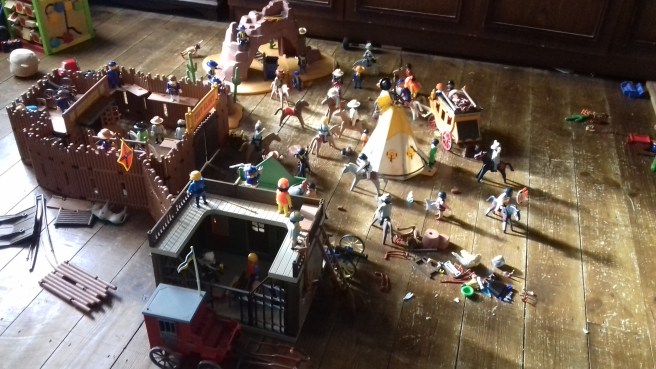
Look at this Playmobil set up. My 3-year-old got given a box of the stuff this week but it was his 10-year-old brother and 13-year-old sister who set it all up like this. I walked past it while tidying up and found myself wondering what was going on. There is one fellow, an outlaw, tied to the roof of a wagon, for instance, and I wanted to know why. There are a lot of rifles placed on a table in the sheriff’s office, and this was also obviously part of the story. The kids had dinner and went back to the Playmobil. I had to do other things, but I would have loved to know what happened next to all these people! This might look like play, and it is, but it’s also a story in action, one that I am sure will develop over the next few days.

A few days ago my youngest sat down to do some drawings on his chalkboard. I wasn’t allowed to join in, I was only allowed to watch. He started drawing big circles and little circles with lines joining them, up. He chatted to himself and when I asked about it, he gave the circles all names like Hop and Plop and Poop and said they were all holding hands because they were friends. They didn’t have faces, but some did have bananas! He then drew a square around them all and said they had gone into a house. This went on for a while, with my son adding further layers to the story. It was a lovely moment, art and storytelling interlinked quite naturally!

Children are just natural storytellers, and we should notice and cherish and encourage this as much as possible. Tonight, one of my older sons early creations, came back to visit us, and I was once again reminded how naturally children construct stories and carry them on through their lives.

When he was almost three, my older son used to get scared at night and get into our bed. We would ask him about this and he would talk about odd little creatures he called the Muckoos. In the day, his sisters would question him, and he would describe them in ever greater detail. (They were small and spiky and multi-coloured and liked to steal biscuits) They also kept him awake at night with their noise and they did lots of naughty things around the house. As the story grew among us all, my son started blaming the Muckoos when things went wrong. I wrote a story about it at the time, which I still have, and may one day do something with!

I’ve never forgotten the Muckoos, and I quite often call my littlest son a Muckoo, as in my mind it sums up a small child, mucky and messy and troublesome and cheeky! I sometimes call him Muckoo Madness, and he will retort; I am not Muckoo Madness!

Anyway, sometimes we have trouble getting the littlest one to bed, and my older son has been helping out the last few nights, by pretending to be a creature called Gavin, who loves stories. This in itself, is just gorgeous. He insists on sitting on a pillow on one side of me, while his little brother sits on the other side. They both get toys to cuddle and we all choose one book to read. Then ‘Gavin’ has to go back to his cave, and my little son happily goes to bed. What a way to use storytelling to encourage a young child to sit still and listen to stories! Tonight, my older son remembered the Muckoos, and ‘Gavin’ told us he was a Muckoo, in fact, the last of his kind. Quite a poignant moment, I felt! It was magical to witness this ‘story’ resurfacing after so many years and I am quite convinced it will continue to develop further layers and complexities…

And for anyone wondering what the last Muckoo looks like, my oldest son agreed to draw one for you!

muckoo


Message and Themes; What Are You Trying To Say?

When I was at school, English Literature was always my favourite subject. I was a total book-worm who dreamed of becoming an author, so you can kind of see why I adored English Literature. Reading books, talking about books and writing about books was my idea of heaven. Having said that, there was always one part of the subject that annoyed me at times. When analysing a text, the teacher would often ask us to think about what message the author was trying to get across. It was a question akin to the equally confusing one; what are the themes of the novel? I remember thinking, I bet the author didn’t know there was a message or a theme, or that we would try to work one out. I always considered that Shakespeare, Bronte and Steinbeck just wrote books because they had great ideas, great characters, and could string some pretty awesome sentences together.

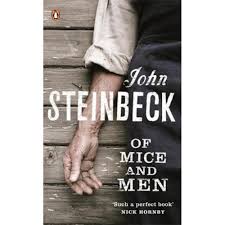
But English Lit demands we find the messages and the themes, and yes, when you pick apart a text and analyse it within a classroom setting, you do tend to find them. But were they intended? I suppose I’m asking, did the author write the book with a theme or a message in mind? Or is it the reader who later determines what the potential messages are? I mean, did Steinbeck write Of Mice and Men because he had something to say about society or human nature? When I was a kid, I thought not. But it turns out I was wrong;

In every bit of honest writing in the world there is a base theme. Try to understand men, if you understand each other you will be kind to each other. Knowing a man well never leads to hate and nearly always leads to love. There are shorter means, many of them. There is writing promoting social change, writing punishing injustice, writing in celebration of heroism, but always that base theme. Try to understand each other.

John Steinbeck in his 1938 journal entry
I remember trying to distinguish the themes of the novel when I was at school. What seemed so obvious to the teacher, had to be pointed out to us. I haven’t read the book since then, but it is on my to-read list as part of a reading challenge I’m undertaking, where one of the books has to be one I read in school. But I think I will see things differently now.
Why? Because I am approaching my fourth decade and I’ve seen enough of life, love, people and society to know that Of Mice and Men is not ‘just a story’ as I once mistakenly believed. It’s a book about dreams and aspirations, loneliness and solitude and the author had plenty to say about all of these things. I am now the writer I hoped I would be, and writing books is a fascinating process, which involves the seed of an idea germinating into an intricate plot full of characters who become real to you and set up camp in your head. But more than that, writing is about what you want to say to the world.
I’ve been thinking about this a lot lately after I received feedback from a beta on my still unfinished novel Elliot Pie’s Guide To Human Nature. One of the things she picked up on was the messages or themes of the book, and in particular, her observation that some of the characters had views very similar to my own. She felt this at times made the narrative somewhat preachy, or at least, it was in danger of heading in that direction.
I had to stop and think about what she meant. None of the characters are me, or based on me, or anyone I know. I plucked them up out of the thin air to build around the character and story of Elliot, who I really did know and believe in.
However, I have to admit that unintentionally, or at least sub-consciously, bits and pieces of the writer and the writer’s viewpoints seep into the writing. I knew what this book was about, and I knew from the beginning what I was trying to say, so as you can see, I have come a long way from my previous scepticism that books did not contain deliberate messages. On the contrary, I have had something to say in all of my books, and I think it very much depends on what is going on in my life at that time. For this book in particular, Elliot and his mother are like the two sides of me. One side is heartbroken and terrified about the state of our world and wants to withdraw from it all, while the other side is perpetually hopeful and joyful, determined to the best in everything.
So is this a good thing or a bad thing? I think my beta was right to point out the danger of appearing preachy in the narrative. I certainly don’t want my books to come across that way. I have to be sure it is the character’s viewpoint being explored, not the author’s. I have to be conscious of what is being portrayed as ‘right’ or ‘wrong.’ So at the moment, I am going through the book again, with the beta’s notes beside me. Sometimes it just needs a tweak, some words rearranged or deleted. Sometimes I don’t need to do anything because I think the character truly believes in what they are saying, and in doing so is remaining true to character.
This brings me to another question, though. Do people pick up books looking for messages or themes? Do most readers notice them, even if they are supposed to be there? I suspect that what one reader picks up as a message or theme, is very different to anothers. Do readers want to be spoken to in this way? I don’t think many people pick up a book looking for clarity or persuasion. I think they pick up books looking for stories. And stories involve people and their messy human lives, and messy human lives contain messages, whether intentional or not. Because they are written by one person, created by one person, and whether they were totally aware of it or not at the time, that person had something to say.
So, what do you think? As a reader, do you choose a book because of the message it seems to be conveying? Do you notice the themes of a novel as you are reading it, or do they become obvious to you afterward? Do you ever feel like the writer is trying to tell you something about the world or about life? Does this every feel like you are being preached to?
And what about you writers? Do you know what you are trying to say before you start to write the book, or does the message reveal itself to you in time? Are you aware of any themes in your book, and again, are these intentional? Do you ever worry that you are trying too hard to get a message across?
Please feel free to join in the conversation!