A Catch-up Interview with Author Kate Rigby

Just over a year ago I posted my very first author-to-author interview to this blog. I was honoured to host the wonderful Kate Rigby, an indie author I had discovered by chance. You can read the interview here. I’m a huge fan of Kate Rigby, and I’ve been working my way through her huge back catalogue since I came across her on social media. I think we’re fairly similar in style and content, and we certainly have the same views in life, so inevitably we’ve become friends and even got to meet up with each other a few months ago! Anyway, I thought it would be great to celebrate a year of author interviews by catching up with Kate to see what she’s been up to since the last interview! Kate has the experience of being both traditionally and independently published, so it’s always interesting to talk to her.

1- It’s been a while since we last chatted – can you tell us what you’ve been doing since then? What books are you working on etc?

Yes, the only new book I’ve been working on at the moment is one I began circa 2005. It’s about a neighbourhood conflict but the political climate of that time which formed the backdrop has changed a lot. So in a way it’s been more difficult trying to bring it up to date than if I was starting it anew. I have spent many years converting my backlist into digital format, this was the one I left until last and inevitably it got more and more out of date! The more out of date it got the more daunting the thought of updating it became. But I need to finish it this year. I planned to finish it last year but things didn’t quite work out that way! I think it’s nearly there or it may be I’m just tired of it now but I’m struggling with the title, not something I usually do.

2- Thalidomide Kid is a story about Daryl, who was born without arms due to the Thalidomide tragedy. Could you tell us what inspired you to write this novel?
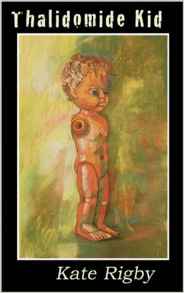
thalidomidekid

I think it was a gradual evolution and dovetailing of several ideas. I had an idea for a short story involving someone who cut the limbs off their rag dolls (as my sister and I did!) and the idea for a Thalidomide survivor very much fitted together with that idea. I also had an idea about writing a book in a school setting. I wanted it to be retro and to draw upon my own schooldays, so that side of it became (partially) autobiographical. I spent the same years in Cirencester though I slightly changed the name of the secondary school. There was a boy who was a Thalidomide survivor at the school I went to in Liverpool, although I didn’t really know him and visually he was very different to Daryl. But I wanted Daryl’s disability to be incidental and not the raison d’etre for the story. Yes, it has an impact on his relationships and the way his peers relate to him, but he’s also just another kid growing up and having to deal with what all adolescents do: romantic encounters, sexual awakening and friendships with his added disability.

3- How do you think things have changed for people with disabilities since you wrote Thalidomide Kid? Are they better or worse?

I’m not sure how they are for schoolchildren today, I am hoping things are a lot better with all the strides that have been made by people with disabilities for parity in all spheres of life, the Equality Act and so on. I like to think that things like the Paralympics have made a lot of difference to how kids view disability but at the same time I think the pendulum is swinging the other way due to contradictory government policies. You only have to look at the rise in disability hate crime and the number of attacks on people with disabilities, stoked up by the right wing tabloids to justify stripping people of their benefit entitlements. I could get very political here! But it does make me really angry and ashamed to think this is the way society is heading, after all the decades of progress. It just goes to show how fragile progress is and that we can’t take anything for granted.

4- How much research went into the book?

I mainly based it on observation although I will always try and research around areas where there are gaps in my knowledge. But I do like to be accurate and authentic if possible and of course I had a publisher – Bewrite Books – for this novel so had the added input from the wonderful editorial team at that time. I often get my information from TV programmes or documentaries that just happen to be on during the course of writing a book. But having been a child in the 60s I do remember the climate and the impact of the Thalidomide drug. Every child of that era knew of it.

5-I know you are politically active, and in our last interview, you mentioned keeping a ‘campaign diary’, perhaps with a view to releasing another ‘Guide To…’ style book. Is this still something you might do?

Yes, this follows on nicely from the question about whether things have changed for people with disabilities. I began the Campaign Diary in 2012 when I saw how bad things were getting for people with long term health problems and disabilities under the Welfare Reform Act. After yet another person died, quite needlessly, I felt I needed to record it in words. I didn’t really know her, although we’d spoken now and again on Social Media and her name was mentioned on Question Time. But there have been so many needless deaths. There’s much solidarity along many campaigners. This is important because all the time the government rely on divide and rule tactics to divert us when we need to be united. I just had to begin writing down all the terrible things that were happening, as some sort of outlet, and as documentation. Some of it is just copying and pasting from articles until I can get round to shaping into something. Now it has moved on to Brexit and Trump and other depressing things, although Welfare Reform still plays the largest part. It is all too close and depressing but one day I may have the energy and the distance to distil it. Having said that, there are various things relating to it that I’ve incorporated into my current novel.

As for the Little Guides, yes, they are a lot more fun! I have only written Little Guide To Unhip so far but that went down well on Authonomy when I first showcased it and subsequently when it was published. I have ideas for several more but they are stuck in the backlog! But they don’t require a lot of planning and plotting, so they could be done relatively quickly.

6-Do you have any promotion/marketing tips for newbie indies out there? Has anything been a particular success?

Ooo, I wish I knew the answer to that one! I think it’s what all indie authors want – to find that golden goose. Things are changing so fast too, that what worked a few years ago, or today, may no longer work tomorrow. I do the occasional paid promotion with tried-and-tested promo sites but if I break even that is good. The general advice is to build up your reviews so that you get more visibility on place like Amazon. But people rarely leave reviews these days, even friends who mention how much they’ve enjoyed a book, and I’m not very good at asking people to post reviews! I don’t wish to sound as if I’m nagging. I prefer to approach review bloggers who like my work and there are some wonderful dedicated bloggers out there doing a fantastic job of featuring or reviewing indie authors on their blogs. It’s just a question of finding the ones who review in your genre and like your work. And of course interviews and guest posts like this all help to garner visibility! Another area that is growing is audiobooks and that’s something I would like to explore at some point. The thing that has been most successful in all my years of writing was having a traditional publisher. I was very lucky to find one back in the day when books were all paper and there were many more bookshops. They did all the marketing, they had the contacts and they did get me some reviews in some thrilling places like The Times and The Face as well as publication in the States. But those times are gone. Even people with traditional publishing contracts these days are expected to put in a lot of the leg work and time on social media, so the lines between different publishing contracts are blurring.

7-If you could rewrite any of your novels now, would you, and if so what would you change?

Not so much a major rewrite but maybe some major tweaking. Nowadays that is easy to do with the advent of digital technology but with my first published novel, Fall Of The Flamingo Circus, once it was in print that was it! If I was writing it now I would have included more about punk music and bands than I did and also I’d have had Lauren in a band. In fact she was based on a character I invented called Donna who was in a band so I just don’t know why I didn’t translate that into the book. When I brought it out digitally a few years ago that was the time to rewrite it but because it was successful as it was I decided to leave it be. I also should have properly capitalised on the relative success of Flamingo Circus. I had a publisher and an agent at that time and they were trying to help me with my follow up book but I didn’t really take on board their feedback. They say that it’s harder to get a second book published than a first and I think that was very true in my case.

8-You’ve covered so many gritty social issues in your novels, such as domestic abuse, substance abuse, homelessness, racism, runaways, disabilities and even feral children. What else is left to do? What else would you like to get your teeth into?

I think humanity is such that you never run out of things to get your teeth into! It may seem as if I’m an issue-based writer but often it’s the characters that come first. I have a backlog of ideas for novels and short stories. Sometimes a couple of ideas for short stories, for instance, will be combined into something longer. I also want to get on with the Little Guides and have also been doing some poetry so I have an idea of putting together a collection of that too at some point. Shorter pieces in the form of poetry, flash fiction or short stories seem to be the way forward, not only because of my own health and time restrictions these days, but also seem to lend themselves more to the 21st century way of life where there’s so much more vying for people’s attention but only the same number of hours to read it in, and that’s just the literature! The same is happening in art, photography and music. If people have to leave Facebook and click on a link to read more or listen to something they tend not to. So their attention needs to be held before that. This is where poetry, art or photography have the advantage in their immediacy. I also want to write something more autobiographical, not that I’ve led a particularly exciting life but I have a plan to do a slightly different take on it. My mum, on the other hand, lived through WW11 and has written an autobiography of her early years but she doesn’t want to get it published! But it would be nice to get it into print form for the family and the technology exists for that too these days.

9- Do you currently have any characters in your head who are waiting their turn to get written?

At the present time, it’s more a question of following up on characters from former novels to see where they’re at now. I already decided to do a follow up of Down The Tubes as some readers wanted to know what happens next! I already knew in my mind some things that have happened so thought I should write about it but just haven’t caught up with myself yet. I’ve never been one to do series or sequels but one reviewer expressed an interest in a follow up to Thalidomide Kid and I’ve also left other novels open-ended, like Savage To Savvy, which would lend themselves to a sequel. So maybe I will do some sequels after all!

10-What are you hoping to achieve in 2017?

For the last two or three years I’ve tried to set myself writing goals as well as other goals. This year I tried not to be too ambitious as for the last couple of years I found that I didn’t achieve them and then felt very disappointed with myself. So this year I have been more realistic and then I won’t feel as if I’ve failed dismally! My writing goals for 2017 are to finish the novel I’m currently working on, bring another of my books out in paperback (perhaps Fruit Woman or The Dead Club, both would be nice) and begin the follow up to Down The Tubes. I think that is manageable!

Thanks very much, Chantelle, for this interview – I’ve really enjoyed it.

If you would like to find out more about Kate Rigby and her books, here are the links!

Amazon Page / Facebook Author Page / Goodreads / Website/Blog
 

The Many Roles That Make Up Who We Are

Last Tuesday was a fairly busy day for me.

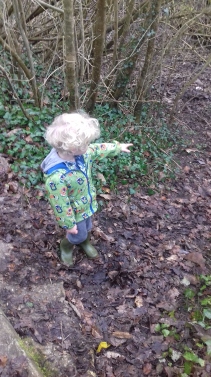
I got up around 6am with my two-year-old, as is the norm. We had breakfast, got dressed, let the chickens and ducks out and fed and watered them all. Then we had our usual little mooch down the lane with the dogs. Back home, I had my coffee and he had a hot chocolate to warm up. These things happen every day.

20170219_085234


After that, I left the house with my fourteen-year-old and drove us to the local community hall where I was running a writing workshop for 7-16 year olds. I do this every school holiday with my Chasing Driftwood Writing Group business . I slipped off my ‘mum’ hat and popped on my teaching one, welcoming the children in, talking about writing and getting the workshop started. Once it was over, my daughter helped me put the tables and chairs away, and I was Mum again.

We arrived home and I slipped further into the usual role of Mum, with my toddler who had missed me. I only had time to eat some lunch, placate him with brief cuddles and chat, before I had to get back into the car to drive to another job. This time it was within my other role as a dog walker. I’ve only gone back to this fairly recently, but it was what I was doing before I had my youngest child. Back then, it was the perfect day job to tie in with writing. In between walking dogs, I wrote.

I put on my wellies and mucky dog walking coat, collected the dogs from their home and set off across the muddied fields of Throop, adjacent to the river, as usual, in total awe at the beauty of my surroundings. I was yet another me. The dog loving me. Never happier than when in the company of these lolling, wagging, slobbering beasts. Dogs are an obsession to me as much as reading, writing and music. They make me who I am, and who I have always been, and when I am walking along with them, lost in my own head, smiling at their antics, I am reminded of who I was as a child and of what I dearly wanted. To be a writer and to work with animals.

20170208_113514

While I walked, I slipped between dog walker and writer mode, throwing their ball and tossing them treats, as I thought up blog posts and articles and snippets of short stories in my head. Every now and then, as is standard, I had to tap something into my phone notebook in case I forgot it later.For this time, I was not Mum or writing teacher, I was myself, I was Chan.

Back home, a brief rest and then it was time to walk my own doggies again. I was definitely tired by then, and had just recieved a text from a good friend reminding me that it was drinks tonight. I had totally forgotten and instantly I thought no, I can’t, it’s been a busy day and I really need to do some writing and get an early night…At the same time, I desperately wanted to go. This is a group of friends I made through being a mum. Our 9 year olds have all been friends for the last five years, and our friendships have grown over that time. We try and meet up every now and again outside of school, as these days, we are seeing less and less of each other within the school environment. The boys are getting older and wanting more independence, and we’ve all noticed we now see less and less of the usual mums in the playground, as we increasingly drop the kids off and leave them to it.

I made myself go out and socialise, as it is not something I do very often. Like most writers, I’m an introvert at heart and love nothing more than my own company, my own imagination, and to round off the night, a good book. I was so glad I went, though, as I was able to enjoy a few glasses of wine, and strip off all the roles I had played in the day and all the many ‘hats’ I had worn. With the workday over, children in bed, and partners at home, we were all able to have a good moan and a catch-up, a bit of essential ‘me’ time!

This was a busy day, but not an unusual one and it got me thinking about how the roles we play make up who we are. But who is the real you? Are we ever really our true selves, or just different versions of us, presented in different ways, for different reasons? It got me thinking about the next week ahead. On the Friday I was lucky enough to be interviewed on BBC Radio Solent as part of their Dorset Lives section. I was incredibly nervous, but yet when I listened back, I was overwhelmed by how calm, confident and professional I sounded talking about my writing and why I set up my Chasing Driftwood business. I couldn’t believe that was actually me! I mean, was it actually me? Or just the version of myself I knew I had to present in order to get through that particular situation? It was certainly not the same me that gets ratty with my kids at home, or wanders by the river, splattered with mud, throwing balls for dogs! This week I will going into a local school for a meeting about a proposed school writing project, inspired by another writer, but put forward by me for this area. Yet again, I am sure the ‘me’ I put forward during this meeting is going to be different. Professional and confident, but she is also going to need to be warm and passionate about the project and how it could benefit the school.

Is there ever a true us? Does a real me exist? Is it the one who is left when I am totally alone, beholden to no one, with nothing expected of me? Or is it the one who chats to other mums inside the school gates? The one who drifts off inside her own head when out with her dogs? The one who runs the bath, and picks up the dirty clothes and makes the lunch boxes for the next school day? Or the one who plans writing workshops and presentations?

I guess I am or have slowly become all of these roles, and all of these people. They are all me, when I need them to be me. They are all parts of who I am and what make me an individual. Some of them did not use to exist at all, but now, here they are. Here I am. All these different faces and demeanours and personas. How very odd when you think about it!

So, what about you? Who is the real you? How many roles do you play out in your busy life? How many hats do you have to wear? Please feel free to comment and join in the conversation! I would love to hear from you!


Changing Perspective

Last week I explained how my beta readers have shaped the direction of my next novel Elliot Pie’s Guide To Human Nature. (Beta Readers: How and Why? I mentioned how some of the issues that have been addressed thanks to my betas were pace, showing rather than telling and point of view. So today I thought I would talk a bit about point of view and perspective in storytelling.

It’s a subject that can prove quite divisive. I know I was shocked the first time I realised not everyone loves first person viewpoint! Apparently, some people really despise it! Obviously, it has its limitations. Here are some of the disadvantages of climbing entirely inside the head of just one character;

  • you only get the viewpoint and opinions of one character
  • this can limit the amount of information and back story the reader receives
  • other viewpoints are neglected, including the potential scenes between other characters when the narrator is not present
  • it gives the story one voice, the narrative voice of the character telling the story which can be a bit restrictive
  • if the reader dislikes or does not connect well to the first person viewpoint, it can really deter them from the book
  • it’s a very personal way to tell the story, and can impose biased and subjective viewpoints which may grate on the reader
  • it runs the risk of becoming boring and/or repetitive
  • there is a danger of relying too much on ‘telling’ rather than ‘showing’

Now I am not ashamed to admit that I LOVE first person. I think this may have something to do with how obsessed I get with characters. It’s character over plot for me all the way, hence why The Catcher In The Rye is still my favourite book ever. If I like a character, I don’t mind being inside their head one bit. Anyway, these are the reasons I think first person can be a really effective way to tell a story;

  • it allows the reader to fully connect with the protagonist/narrator
  • it’s much easier to gain sympathy and empathy from the reader
  • easier to construct a consistent style and voice
  • can make it easier to explain/justify a characters motivations and behaviour
  • can be much more emotional, drawing the reader in
  • it brings a vivid sense of immediacy to the story
  • done well, can be extremely powerful

But how do you know which is the best perspective for your story? There is also alternating points of view, which can be done in first or third person. Then there is the authorial third POV where the narrator is the all seeing eye of everything and everyone.

I think every author has their preferred perspective to use, but it is important to think about the story being told and what will best suit its needs. I know for a fact I am way too tempted to use first person. I did so with The Mess Of Me; a YA drama written in a tell-all, confessional diary style. We climb inside Lou’s head and never get to see through the eyes of any of the other characters. I could have explored third person, and jumped from character to character, but there was a reason I didn’t. As well as being about body issues, family drama and first love, The Mess Of Me is a story about those people we sometimes have in our lives, yet do not really know. eg Travis, Leon and Marrianne, for Lou are all deeply involved in her life and the drama of the story, yet are all as good as strangers. The story needed to revolve around her mind set and emotions in order to get this across. So it just had to be first person.

The Boy With The Thorn In His Side was a different matter. I originally wrote and rewrote this story in third person. Yep, you got every character’s viewpoints, and there are a lot of characters! The action jumped around all over the place. But it didn’t work. I didn’t feel close enough to my two main characters, protagonist Danny and antagonist Howard, and the more I rewrote it and got into their mindsets the more I realised that this was their story. Truly, this book is about their warped and dangerous relationship. So I changed it to first and boy did it work then. I must have worked with a constant smile on my face! You see I knew them both so well by this point that it was a piece of cake to climb into their heads and write from their POV. I used alternating POV from both characters in the first person. You get to examine their twisted relationship from both their views. This is a fantastic way to make first person narrative more interesting and varied.

With the sequel, This Is The Day, I wrote it in third person to begin with and then again switched it to first, but this time using alternating perspective from five characters. This was fun to do because I got to really explore the motivations of the characters who were introduced in the first book. And I think it worked; it was the best way to put the story together.

So, as you can see, there was a growing tendency and fondness to using first person narrative. I had found my comfort zone and made myself extremely comfortable! I forced myself to break out of this warm little zone with This Is Nowhere. (And I would strongly recommend forcing yourself to break away from the familiar every now and then.) Third person. It had to be. But with the chapters zipping back and forth from the past to the present. However, I still stuck to one point of view, Jake’s. This was not intentional at the time but now I can see why it makes sense. Jake’s story is the unpicking of two mysteries; what happened to his mother in 1996 and who he is. The other characters didn’t really need a say in this, although their behaviour and secrets helped pave the way for the climax where Jake discovers the truth about everything. I also think this was the best way to tell the story. Third person worked with jumping between time frames, as we got to see the young Jake and how his mind worked then, helping us to understand the person he was in the present. Other characters perspectives would have made this way too muddled and complicated.

Tree Of Rebels. Uh oh, I was back to the first person again. You see my problem? I really do like that comfort zone!! This book is still awaiting a final rewrite so I will not pass judgement on it yet as there is still work to be done and decisions to be made, but at the moment is feels right to leave it in first person.

Which brings us up to the two latest works. The unexpected rewriting of Elliot Pie, and the quickly thrashed out first draft of A Song For Bill Robinson.

Before I started writing Elliot Pie, I knew it would be written in the first person viewpoint. I think this was because he had been in my head for so long by that time, I knew him inside out, knew what he thought and felt, and how he looked upon the world. It was scarily easily to climb inside his mind and allow him to tell his story. But there are lots of other characters of importance in this story, and there was no way Elliot could know everything about them. I had to switch to third person whenever an adult character stepped into the plot. There was no real intention to do this; it just sort of happened. So, all of Elliot’s chapters were in first person, present tense. Very YA. Very Catcher In The Rye. And all of the adult’s were in third person, past tense. Which felt very grown up and evolved. It actually surprised me how smoothly writing that way became, especially as I had sunk so deeply into the first person comfort zone.

I was initially happy with this, and thought, that although different and challenging, it worked. I told myself it was good to try something a little bit different!A little bit brave.

While Elliot Pie was with another beta reader, I thrashed out a first draft of a YA drama called A Song For Bill Robinson. This is based on a book I wrote but never finished aged sixteen. It was written in third person back then, so it seemed apt to write it again this way. I was also feeling confident after the third person narrrative in Elliot Pie had gone so well and become so enjoyable. Third person, multiple viewpoints worked best for this latest book because again, there are so many characters and so much going on, it really would not work in first person. And also, a bit like with Jake in This Is Nowhere, I didn’t really want to climb into these people’s heads. I felt a bit of distance was needed.

When I received final feedback from betas on Elliot Pie, there were several issues, some of which I discussed in last week’s post and some of which I will probably mention another day. But what dawned on me more and more as I went through them, was how many of them could be solved by changing Elliot’s narrative to third person. Which is what I am currently doing. Just to see how it works.

So far, it’s working. It suddenly feels more adult (it is to be aimed at adults) and I do feel relieved to be out of his head. It gives me as an author a whole new perspective on the story, on his character, and on the best way to tell this story. I noticed there were many problems with writing his parts in first person. For instance, he was rambling too much, daydreaming, going off on tangents, all of which slowed the pace down, and may have proved dull for some readers. However, writing his parts in first person initially have helped me truly understand his character, which I really hope shines through when it is all completed.

The moral of the story today is this; sometimes as a writer you want to tell a story in a certain way, for whatever reason. But sometimes, you have to stand back, take a look and admit that it may not be the best way to tell it. This may concern other things, such as structure and pace, but if your story is not working out the way you hoped, maybe changing the narrative perspective is worth considering.


Beta Readers; How and Why?

Several months ago I was convinced that my new novel, Elliot Pie’s Guide To Human Nature was ready. I sent it to a tried and trusted beta reader who very patiently and kindly informed me that it really wasn’t. I listened, realised she was right, and tackled it again. And again. And…well, you know how it goes. Finally, a few more months down the line, I thought, okay, this is it, I’m happy, really happy! I’d addressed all of her concerns and it was definitely a much better book. I then sent it to another beta reader, quite arrogantly expecting her to gush with excitement about how ready it was. She didn’t. It wasn’t. Repeating these things to my husband, he asked a very important question. How do I know the beta readers are right?

This is an excellent question and one worth addressing. But first of all what should you look for in beta readers and why do you even need them?

You need them because you are far too close and subjectively involved in your marvellous work of art to see its flaws. It is very difficult for an author who is in love with their story, to be able to see where the pace is too slow, or the information repetitive. You may not realise how much of you and your beliefs and opinions are seeping into the book. You may not realise that there is too much dialogue, or not enough. It is your baby, your child, your masterpiece. Yes, your relationship with it is up and down. You love it and then you hate it. You are filled with self-doubt one moment, only to be surging with confidence the next. Either way, you need beta readers to bring your down to earth. You need them to tell you what is good about the book and what is not so good about the book. Of course, you don’t have to accept their advice, and you certainly don’t have to act on it, but to release a book or submit it to publishers without using beta readers would be, in my opinion, insane.

So, what should you look for in a beta reader? I think this is quite a personal thing and may also depend on your genre of writing, but here are the things I look for and require in my beta readers.

  • they need to have already read my work and connected with it
  • they need to be somewhat connected to me and my life, and have some knowledge of my beliefs etc
  • they need to be highly educated, or at least way better at grammar than I am!
  • they need to be an avid reader, someone who consumes books like an addiction
  • they need to be open to most genres, not snobbish or narrow-minded
  • they need to be breathtakingly honest and not scared to offend
  • they need to be able to understand how a book could be made better
  • they need to be prepared to read the book at least twice and make notes

What sort of things should a beta reader be looking out for when reading your work? Well, again this is very personal, but I will explain the way I often approach it. With Elliot Pie, I wrote the book quite naturally, just letting it flow as you do with a clumsy first draft, worrying about the finer details later. I finished the very first messy draft just over a year ago, and I honestly didn’t think it would need too much more work! This goes to show how blind you can be about your own writing. I did a few more drafts before sending it to the first beta. At this point I was looking for opinions on the plot and the actual story and on the characters. Did they work? Were they real enough etc? What about the structure of the plot and the flow of the narration?

What I got back was very interesting and resulted in me changing a lot of the chapters around. The beta had loved the characters (yay!) and the story but she found the pace too slow in the middle of the book and she guessed the ending. Not too big a problem, as it’s not supposed to be a real twist at the end or anything, but she did help me work out ways I could knock the readers off course a bit. She was also right about the pace. It was too slow in the middle and lots of it needed to go.

Job done. I attacked the book again, and again and again. Each time I went through it, I cut bits out, added bits, fleshed the characters out more, and wrote lists as I went which consisted of the things I still needed to do when this draft was done. I considered my work done when the lists ended. As far as I was concerned I could do no more. Yes it would need some more proofreading and a few more read throughs, but I was happy. More than happy.

I sent it to the second beta reader as she is my biggest critic and I knew she would be intensely honest. There was no way she would hold back if there was anything about it she thought could be better. We ended up having several Skype chats while she went through her very detailed notes on the novel. I made lists, nodded and listened. The more she talked, the more I realised how right she was, and the more I felt my own subconcious misgivings becoming unearthed. Everything she said about the book was true. I had written it in both first and third person. A bit of a challenge, yes, but that was just the way the story presented itself to me in the first draft and so I went with it and ended up sticking with it. This meant that all of Elliot’s, (the 12-year-old protagonist) perspective is in the first person. We are entirely inside his head. And in my opinion, that’s a wonderful place to be. I find him interesting and funny and amusing, you see. Of course I do, I created him! But would the reader think the same? Or would they find the narrative repetitive as he talked them through his little world? Was I telling them far too much detail when a lot of it could be shown rather than told, or omitted altogether?

I sat and nodded grimly and knew that my beta was right. I had climbed inside his head and got lost there. I was way too close and way too involved. I loved him too much but I needed to get back out and get some distance. I suggested changing his view to third person and the beta had thought the same thing. The more we thrashed it out, the more I realised how many problems this would solve. I actually began to get excited. There were other issues too, aside from POV, but I won’t go into them now as they will probably pop up in another blog post.

We talked about how I’d had a similar problem with The Boy With The Thorn In His Side. (Again, this is where history, friendship and connection aid the beta/writer relationship) Originally written in the third person, from all the characters point of view, it was eventually rewritten into the first person, and from two points of view. At the time I was both terrified and excited to take this machete to my work, to slice it up and stitch it back together again, to tell the story in a totally different way. I knew I would lose tons of scenes and perspectives and dialogue and this saddened me beyond belief. But it worked.

With Elliot I have the same problem but in reverse. I need to lose the first person, get some distance from Elliot and tell the story in a different way. There is a lot of work to be done, but the groundwork is all there. The second beta also loved the actual story, the plot and the characters and found the pace just right.

I am so glad I gave it to her to dissect. But back to the original question? How do I know she is right? How do I know either of them are right? I know because as soon as they voiced their opinions, I knew I had been thinking the same thing all along. All they did was confirm what I already knew deep down inside. I just didn’t want to admit it to myself, because admitting it meant even more work, even more drafts, even more editing and proofreading, and it means the other books that are on hold waiting for this one to be done have to keep waiting and waiting and cramming my mind and driving me insane! I wanted the book to be ready so badly I had convinced myself it was.

But I can’t let a book go until I am sure it is the best it can be, and in my case, my betas are there to help me get to that point. I can’t thank them enough for the time and effort they invest in me and my books. I trust them implicitly and I know I am extremely lucky to have them.

But what about you? Do you use beta readers and if so how did you find them? What do you look for in a beta? Have they ever felt differently to you about a book being ready for release? How have they helped your books reach their full potential? Have they ever been totally wrong? Please feel free to comment and share!