Author Interview; Rae Stoltenkamp

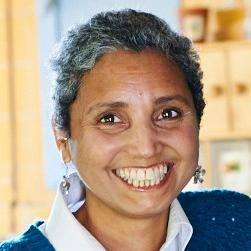
Welcome to my latest indie author interview, this time with author Rae Stoltenkamp. I first came across Rae when we were both authors on the now defunct indie publishing platform Autharium. I read her excellent  crime thriller  Six Dead Men and will soon be diving into her new venture, the first in a young adult series, Where Rainbows Hide. In this interview Rae talks about her writing and publishing journey so far, tells us about her writing process and offers her advice to writers about to embark on the indie route!

Q1 Tell us about your writing and publishing journey so far;

In 2006 I made the firm decision to leave teaching and write on a more full time basis. When I told my dad of my decision he didn’t blink an eye and supported me without a moment’s hesitation. In 2012 my dad died and my rebellious streak asserted itself in a desire to do something to honour his passing. I had a completed novel (Six Dead Men) which I was editing whilst sending letters and emails to agents and publishers – getting the usual rejection mail as expected. His death prompted me to do SOMETHING more concrete with my novel. Unbelievably, an opportunity arose to publish in e-book format without any expenditure on my part at all (Autharium). At that time e-publishing was a much debated topic and people were convinced it would have no place in the world. I thought, “Well, what the heck – it’s not costing me a penny.” Tons of no risk no gain sayings crossed my mind: Nothing ventured nothing gained If you’re not willing to risk the unusual you’ll have to settle for ordinary For who that dare not undertake, by right he shall no profit take So I forged ahead. I didn’t have the slightest clue what I was doing but the e-book went into the world and I told my friends and family all about it. I made the sum total of £12 in royalties and could not have been prouder.

Q2 When did the writing bug first grip hold of you?
I first got the writing bug around age 12 but started with incredibly soppy poetry that always rhymed. From 13 onwards wrote angst ridden teenage poetry which is so embarrassing I probably shouldn’t even mention the existence of it. Then ventured into short stories around age 14 and started on my first novel called Panthra.
Q3 Tell is a bit about Six Dead Men. Where did the idea for the story come from?
It’s quite sad really. I’d been to a neighbour’s party and met a rather nice guy. We ended up snogging for quite some time. Afterwards he asked for my number and I was certain he’d call but then he didn’t. I just put it down to the way things go sometimes. But a few weeks later my neighbour called me in, sat me down, made me a cup of tea and was generally acting very anxious. He then told me that the lovely man had been killed in a tragic accident. It may have been the shock but I found myself thinking it was probably my kisses which cursed him. And so was born the premise for Six Dead Men.
Q4 How would you describe your genre and your style?
My preferred genre is Magic Realism. I’m intrigued by how much in life can seem totally inexplicable. This genre allows me to explore this and helps me to delve into characters’ minds to look at how they may think or behave or be affected by circumstances and influences. My style is influenced by writers like Toni Morrison and the poet Maya Angelou. I love how these writers use the rhythm, feel and sound of words to get a message across in a dramatic way. I also equally love the element of melodrama you get in work by Austen and the Brontes. My YA books are all Science Fiction as they have a strong eco message which lends itself to this genre. It was also one of my mother’s favourite genres so I have a great soft spot for it. I guess my YA books are mostly a tribute to her.
Q5 You write in adult and YA genres, can you explain to us how this works? Does the character come first, or it is usually the plot?
As I’ve already said, Six Dead Men was born out of a personal experience so the character was built around this. I thought long and hard about the names as I wanted them to be significant. With my WIP; the prequel to Six Dead Men, the character came first. In fact I woke one morning with her words in my mind. Her voice was strong and clear and I had to race to scribble them all down. My YA novels always seem to be story led but I’ve recently found that characters are beginning to demand I tell their story in greater detail. As this is a series of books on the same topic I don’t have to think about the plot so much – it is almost a foregone conclusion. So it seems natural that I can now focus more on characters and what they feel, think and ultimately do.
Q6 Can you tell us about your writing process? What is an average writing day like for you?
I teach at a local charity 3 days a week so only have 2 dedicated writing days a week. I also volunteer one evening a week and tutor in the evenings the rest of the week. So I usually get up around 6:30am. After a coffee I get stuck right in. I have to set the timer on my phone as I often forget to have breakfast. After breakfast I get straight back into it and work until about 2pm. The afternoons are reserved for meetings or any marketing which needs doing. If I have no meetings scheduled I write until about 3 or 4pm then call it quits for the day. I’m currently thinking of moving all my marketing activities to a Saturday as this will free up more writing time as I want to crack on with several projects.
Q7 What are you working on at the moment?
My current WIPs are: 1. The prequel to Six Dead Men 2. A series of short stories based around characters in Six Dead Men and its prequel 3. The sequel to Where Rainbows Hide 4. The sequel to The Lonely Dragon.
Q8 What would you say have been the best and the worst parts of being an indie author?
The best part is writing about things that matter to me and seeing them in print. There is no worst part as it allows me to do something which makes me feel incredibly fulfilled. Sometimes the precariousness of the financial side can cause sleepless nights but when I’m deep into a project and the words are flowing on the page, I get such a sense of rightness that the worry simply falls away.
Q9 What advice would you give to anyone about to embark on the indie publishing route?
Only go down this route if you have great support from friends or family or both. Trying to do it all alone is a very hard road. Be prepared to put the hours in. No-one will be standing over you to make it happen – you’ll have to do that all on your own. Join a body like the Alliance of Independent Authors as they have a wealth of information which is invaluable. And finally – know your product and your audience then market accordingly.
Q10 What are your hopes and dreams for the future with regards to your writing? What would you like to achieve?
My hope is that within 5 years I will be able to earn a living from my writing and give up tutoring in the evenings so I can spend more time with friends and family. I would then wish to publish any writing for children for free.
Q11 Who are your favourite authors and why?
My favourite authors make up a very long list so I’ll just do my top 10: Jane Austen, The Brontes, George Eliot, Toni Morrison, Louis de Bernieres, John Steinbeck, Terry Pratchett, Joanne Harris, Neil Gaiman and Jacqueline Wilson The Brontes, Austen and Eliot because of the element of melodrama they bring to a cracking good story. de Bernieres because he opens up unexpected worlds in my mind. Pratchett and Gaiman because they tackle serious topics but also make me laugh out loud. Morrison, Harris and Steinbeck for their beautiful use of language. Finally, Wilson as she tackles issues so very relevant to children in this day and age and does it with great sensitivity.
Q12 Tell us three interesting facts about yourself
Not sure these are particularly interesting but here goes: 1. I absolutely loath white trainers – don’t know why, just do 2. I don’t like being given cut flowers as a present as they only serve to remind me that they are already dead and only good for the compost heap now. 3. I love watching garden make-over programmes even though I am the worst gardener on the planet and never even go into my own.
Thanks so much Rae!

Rae Stoltenkamp was born in South Africa and came to England in 1987 to visit family. She liked the weather so much she stayed. After a writing holiday in Greece she had an epiphany and realised she should be writing on a more full time basis. It was probably heat stroke since she hadn’t had sun in a while. She then studied writing at City Lit with the poet Caroline Natzler and is now a writer, blogger and former English teacher living in South London.

Currently Rae also works with www.inkhead.co.uk , teaching creative writing courses to children. This has inspired her to work on a children’s book called The Lonely Dragon. She is writing and editing several projects simultaneously, including a series of YA Science Fiction novels and the sequel to The Lonely Dragon.

Rae has a passion for Argentine Tango and when she is not chained to her desk and laptop, can often be seen tripping the light fantastic with her tango friends. She has also recently discovered the delights of Lindy Hop and is laughing her way through this style of dance.

https://www.facebook.com/raestoltenkamp.author

http://raestoltenkamp.blogspot.co.uk/

https://twitter.com/Raedenewrites

Indie Survival Kit

Indie Survival Kit

When I first started out as an independently published author in 2013, I had no idea what was going to happen. I had no idea what I was doing, and it took me a long time to figure out what I needed to know. There is a lot of help and support out there for indies, if you know where to look, but it’s very difficult to find the time to research, when you are already spending a lot of time writing. With this in mind, here is an Indie Survival Kit. A list of things you will need! Imagine you are about to pack a bag and start a long, unknown journey. These are the things you might need to pack.

The Right Attitude.

You need grit, determination and self-belief. You need to believe your story is worth telling, and that you have the skills to tell it. You will need to grow a thick skin, and become good at self-promotion. You might wish you could just sit at home writing and not have to bother with the rest of it, but you can’t. Not if you want to succeed. So roll up your sleeves, open up your mind and get working.

Community.

Surround yourself with like-minded people. Become part of the author community. Read other authors and reach out to them, connect, support and join forces, as together you are stronger. It’s not all about you, and if you think it is, you won’t get very far. It’s amazing how supportive and helpful other author’s can be, so make sure you are involved. Invite authors to post on your social media pages, or on your blog or website, and offer to do the same for you. Interviews are always very popular and interesting to both writers and readers!

Social Media Checklist

Have you signed up to at least three social media sites? One of these should be your blog/website. Do you blog regularly? At least twice a month, although ideally more? Are you visible on social media? Do people know who you are, or have they forgotten about you because you haven’t posted anything interesting lately? Has Facebook assumed your fans are bored, and has unliked the page on their behalf? Keep things fresh and fun, start debates, run contests, let people know about your struggles and successes, link up your sites to save time, share articles of interest and so on! Do this daily, as much as you can and don’t neglect it.

Reviews

Seek them out. Go after them. Don’t just rely on friends and family, or on the assumption that readers will remember to review. They rarely do. Go to review sites, and be prepared to pay for some and to be put on waiting lists for the ones that are free. The same applies for bloggers. Research them, make lists and do this weekly to build up those reviews. Remember that reviews help your book move forward; they encourage readers to buy and they convince Amazon to take your book more seriously.

Courses

Keep your skills up to date. Join writing groups online and in real life. Take courses. Udemy and FutureLearn are great sites that often have deals and freebies, so grab the offers when you can. Keep your skills sharpened and work to constantly improve your craft.

Audience

Be patient, but work on growing your fanbase at all times. Use your blog, Wattpad, Street Teams and social media sites to interact and connect with readers. Ask their opinions, share sneak peeks, freebies and competitions, share your ups and downs, your decision making processes and so on. Stay positive and upbeat. They will feel like they are on the journey with you. Offer free samples and short stories at the back of your books, or on your blog.

Resources

Look for free or cheap to help keep costs down. Canva.com is a great site for graphics and posters. You can create social media graphics, memes, posters, leaflets and even ebook covers on there. iAuthor is free, and is a great way to find the readers who are looking for your type of book. You simply add your books to the extremely diverse ‘themes’, or even make up your own. Wattpad is free, and is a great way to find readers and get feedback. Fiverr is a site where you can pay people as little as $5 for file conversions, artwork and more.

Follow the right people

There are so many great sites and pages out there for writers, it’s hard to know where to start. But do start. Follow organisations that will provide you with the information you need, so that you do’t have to go looking for it. The Alliance of Independent Authors, Author Unlimited, Writer’s Digest, The Writer’s Circle and Positive Writer are just some of the many pages/groups I follow to pick up tips and up to date information on the writing world.

Income streams

Find other ways to make money out of writing. Ads on your blog, sending articles to sites who pay, short story submissions and competitions are all great options. You can also get paid work as a book reviewer. There are so many sites  popping up now to provide reviews for indies and these sites also need reviewers! Offer editing and/or formatting to other indies, or even front cover design, graphics and art work if you are up to it. Many writers also make additional money by going into schools to run workshops, or by offering workshops to other writers. You can also do this online and sell the content. Copy writing, ghost writing, ad writing, all are other ways to pick up income through writing.

Promotion

As an indie, you will more than likely have a love/hate relationship with the promotion of your books. You know you need to do it, but you don’t know how. You know you must figure it out in order for readers to know you exist, but all you really want to do is write. I think the sooner you get to grips with promotion and accept it as part of the deal, the better. It can even become fun. Your blog for instance, should be fun. After all, it should be your little stage, your platform to talk about anything you want to talk about. Again, social media should be fun, and it can be if you engage with it and make time for it. Set aside one day a week when you concentrate on promoting your books. I advise setting up a website/blog early on and making sure it is as professional as possible, after all it may be the main landing point for readers interested in your books. Everything else can come from here; your links to social media, links to your books and your style of writing itself. Set up a subscribe by email button, and another button that collects emails for a fan newsletter. Do this as soon as possible so that you can start building an email list of people who are genuinely interested in your writing. You can then treat them to freebies, sneak peeks and special events and you are on the way to building an audience.

These suggestions are all simple and relatively cheap, and they are all things I wish I had known before I started.
Final Draft? Patience is the key…

Last Friday I finally finished the final draft of my YA novel The Tree Of Rebels. Yes, yes, yes, it is done! It is finished at last! Or is it? I’ve lost count of how many drafts and rewrites it has been through now. I’ve blogged about a fair few of them! I decided to change the tense from present to past, and I also added some new scenes. Then I went through it all again, with what felt like a very gentle and enjoyable edit. Correcting typos here and there.Small corrections. Nothing major. And I finally liked it!

As I may have mentioned once or twice before, I’ve had a love/hate relationship with this novel since I first got the idea for it. I ignored the idea for a while because it would mean writing a book way out of my comfort zone. When I finally started it, I suddenly got another really good and important idea for another book, which wanted to interrupt this one. I didn’t let it, and forced myself on, which in hindsight, was probably the wrong thing to do. I do wonder if I ought to have listened to the loudest voice, put Tree of Rebels to one side and gone with Elliot Pie when he was at his most demanding…

But anyway, I didn’t. I wrote this book, and then started a second draft, sent to beta-readers, drafted again, hated it, drafted again, loved it, left it for ages while I wrote Elliot Pie…drafted it again, hated it even more and so on, and so on. It was like having a constant argument with myself. This book is brilliant! No, it’s not, it’s a total waste of time!

I’m pleased to report that during this last, final, never to be messed with again, draft, I really and truly fell in love with this book. I got the feeling I had been waiting for. Everything clicked. I knew what it was and I was proud of it. Changing the tense worked wonders, and the extra scenes I added seem to work really well too. I was so into this book by the time I finished it, I even carried on and drafted the synopsis of the sequel, and wrote the first two chapters of this!

So when will I be releasing it then?

Hmm, not yet. Because I still don’t think it is finished! I decided that after so much doubt, it would be worth sending it back to my top beta reader/editor for a final read through. I know she will be honest and scathing if she needs to be. I am curious to see what she thinks of the change in tense and the extra scenes. Waiting for her to read it will give me some head space from it, and a chance for the book to breathe. I thought this was a sensible idea. If there are any lingering typos or things that don’t make sense, they will be picked up and sorted and being patient will help me decide if it really is finished.

The problem is, I am already getting more ideas. Just little bits here and there. Just bits of dialogue, and brief scenes or moments that have suddenly popped into my head. I really didn’t think this would happen! I really did think I was done…

But I’m glad that it has, even if this does mean once it comes back, it will be getting another going over by me. You see, it’s all too easy these days to write something, do a few more drafts and then self-publish it and move onto the next one. Believe me, it is very, very tempting to do this. I have so many other books to write, but I have to resist the temptation to rush things. Patience is the key. A book is done when it is done, and not a moment before. I could release this book now and see if you like it, or I could wait to see what my favourite critic says first. I could release it after that, after any last lingering mistakes have been mopped up, or I could wait a bit longer, see if it can be any better. It’s surprising how you feel about a piece of writing if you leave it alone for a while. You might think its the best it can be, but give it a few months, during which hopefully your writing skills would have improved even more, and quite often you can already see that it can be made better. And if it can, then it should.

So, apologies folks. The Tree Of Rebels is done…but not done.

The really good news is that I have finally fallen in love with it, which is how it should be in my opinion. I’ve had a strange relationship with this book, and I’ve nearly given up on it several times. It never felt quite the same as my other books, like the connection was not quite right. But this feeling has well and truly gone now. I’m even writing some more of the sequel tonight!