The Mess Of Us – Q&A with Chantelle Atkins

Here’s an interview I did this week for our little indie collective Chasing Driftwood Books!
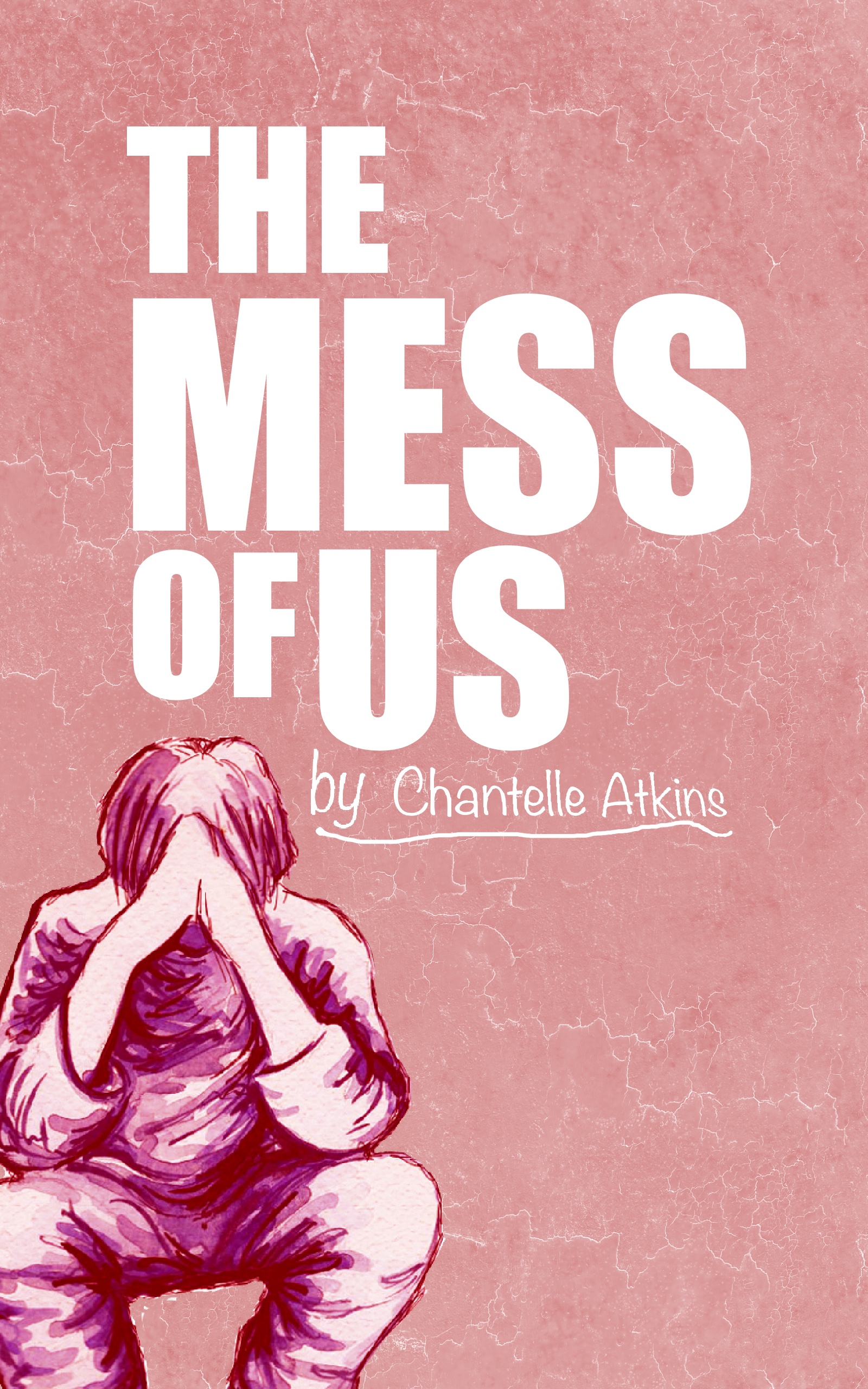
A gripping sequel to her 2016 novel, The Mess of Me, this book dives back into the world of Joe and Lou and these of identity and resilience… Let’s get started!

The Mess of Me was a huge success, what inspired you to return to this story after a decade?

A. A sequel was in the pipeline years ago. I had always wondered what happened next to Lou and Joe. The first book ends with a sort of happy ending, but with lots of questions about what would happen after the dramatic and violent events of that book. A few years back I started writing the sequel when I got the idea of a teenage pregnancy. I was fascinated with how they would both cope with that on top of recovering from the events of the first book. It then took me a whole to get around to writing it due to other projects, but it was the teenage pregnancy idea that really sparked off the rest of it. That, and always wanting to explore Leon’s character more. He is the villain of the first book and I always feel like villains have a story to tell. How did they become that way, for example? Are they capable of redemption? So I felt like he deserved a story. 

How has your writing style or approach changed in the past ten years? 

A. It’s probably the same! I still start with loose ideas in my head that eventually end up as notes in a notebook which I’ll then add to whenever I get more ideas. Eventually there will be enough plot to get started so that’s what I do. I rarely plan the whole book in advance, but I always know what’s going to happen for the next few chapters at least. I’m probably better at self-editing and being ruthless with the word count though. I think I am better at that now.

Did you always plan to write a sequel, or was there a moment when you knew this story wasn’t finished? 

A. I didn’t plan a sequel at the time, no. It was years later that I got the idea for the teenage pregnancy and the rest grew from there. Plus, Lou is like a lot of my characters. She would chat to me from time to time. I’d tune into her and wonder how life was going. If that keeps happening, it starts to feel like a sequel is inevitable.

What challenges did you face in reconnecting with the characters and world after so much time?

A.I reread the first book before I started the sequel. I then revamped and republished it! That pretty much gave me what I needed to pick those characters up again. Plus, they had never really left me, so it was not hard to tune into them for the sequel. As for the world, these books are part of a bigger inter-connected universe of books and I was still writing books in that universe, so again, it was not challenging to reconnect with it. It was a pleasure! I know them all so well it felt like coming home.

Were there any major plot points or character arcs that surprised you while writing the sequel?

A. No, I always had it in mind that Leon would come out of prison and Lou and Joe would have to deal with that. Would Joe want to see him, for example? Would he want to forgive him? What would Leon be like now? Worse, or a reformed character? I was really curious about that and really excited to further explore Leon’s character and back story. Parts of the plot revealed themselves to be as I wrote it, but it all felt natural so I just went with the flow.

How do you think readers’ perceptions of the first book will shape their experience of the sequel?

A.I hope they like it! A few people have read it without reading the first one so I have every confidence it also works as a standalone, but I really hope readers of the first book enjoy it too! There were a few readers that often mentioned it was their favourite book of mine and they’d love a sequel, so in some ways I had them in mind while writing it. I expect they’ll know what’s coming in terms of the gritty storylines and references to eating disorders, self-harm and drugs. They’ll also know it’s another diary style format.

Have your own life experiences over the last decade influenced the themes or direction of this book?

A.Yes. To be honest, Lou is the character most based on me. I have suffered with eating disorders in the past and the truth is, they never really go away. They follow you about and haunt you and wait for opportunities to take control again. They’re like little voices in your head that want to convince you to trust them, that they can make everything all right again. I’m much older than I was when I had these issues, but as Lou finds out in The Mess of Us, often when things go wrong, those little voices come back. So you have to be wary and careful. You can’t let your guard down.  Forms of self-harm can be addictive and can be coping strategies you come to rely on. I have also experienced a miscarriage, which is another hard-hitting storyline in the book. That part was very hard to write but I hope I did it justice. 

What kind of balance did you try to strike between nostalgia for longtime fans and accessibility for new readers?

A.That was the aim, to give readers of the first book a sequel they would enjoy and let them find out what happened next, but also write a book new readers could enjoy on its own. That meant Lou and the other characters had to sometimes mention or explain what had happened previously, but you have to be careful not to make it boring or repetitive for the original readers, so it is hard!

If you could go back and change anything about the first book, would you?

A.I would probably make it shorter!

Do you see this sequel as the end of the story, or is there potential for more in the future?

A.It’s the end of the story for Lou and Joe, as far as I know anyway! But it is not the end of the story for Leon. He will be back in a new book towards the end of the year. We will finally have his point of view and his full story. The book will be called The Dark Finds You and I’d describe it as a crime thriller. It is also a crossover book which will be enjoyable to anyone who has read the books in the shared universe. If you’ve read The Holds End trilogy, The Boy With The Thorn In His Side series, Elliot Pie’s Guide To Human Nature or The Mess Of Me and The Mess Of Us, you will find characters from all those books returning!

Thank you, Chantelle!

The Mess of Us is one book in a connected universe made up of various series penned by Atkins. You can grab your copy of The Mess of Us by clicking here.

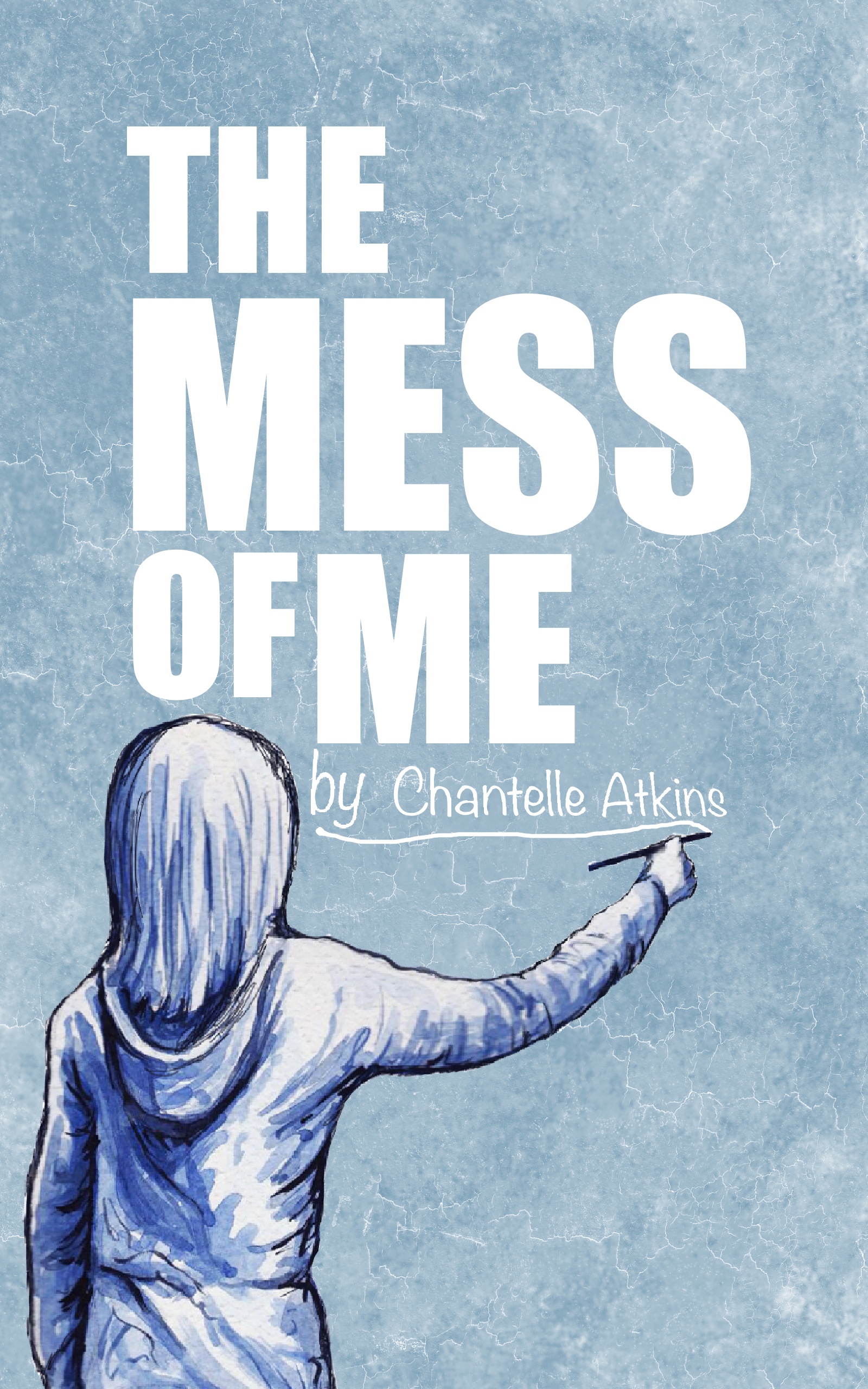
Or start the journey from the beginning today with the groundbreaking 2013 novel, The Mess of Me.
The Mess Of Us Is Out Today!

My debut novel The Mess Of Me finally has a follow-up…

Twelve years after my debut YA novel The Mess Of Me was released, it finally has a follow up book, and it’s out today! Thank you so much to anyone who has preordered the ebook while it’s been discounted. Here is the universal book link for anyone interested. This will take enable you to buy from multiple platforms and in paperback. https://books2read.com/u/4NNka6

Last week I gave you a bit of insight into what inspired the sequel and why it took so long to get around to. I also gave a few extracts from both books where we see Lou analysing Leon. Leon is the main protagonist in the first book but has a redemption arc in the sequel. This then led to me writing another book where he appears again as a character, and this time we get his POV for the first time.

I thought today I’d run through a list of my connected books that exist in the same universe. If you have read any of these, for example, you might like to know where you can see those characters again. Also, the list of books finds everyone’s stories tying up nicely in the final book, The Dark Finds You which I aim to release towards the end of 2025.

So, here we go. This is the suggested reading order of the books in the universe and details about how they connect!

  • The Boy With The Thorn In His Side 5-book series – these books introduce us to the character of Danny, who grows up in the 90s in a seaside town called Redchurch. His violent stepfather, a local hard man and criminal, owns a nightclub in the town and later purchases one, Chaos, in nearby Belfield Park, another location in the series.
  • The Mess Of Me – set years after the events of The Boy series, Lou and Joe also live in Redchurch and Danny and co went to the same school as them back in the 90s. They mention Danny once or twice as a sort of local legend whose name is found scratched on a park bench.
  • Elliot Pie’s Guide To Human Nature – set in Holds End, a fictional council estate which is located between Redchurch and Belfield Park, this is the story of 12 year-old Elliot Pie who attempts to befriend strangers in an attempt to convince his agoraphobic mother that the world is not all bad. He lives next door to a family called the Robinsons and mentions seeing the middle child, Bill, leaving his house with a guitar on his back.
  • The Holds End trilogy – also set in Holds End, this trilogy of books is made up of A Song For Bill Robinson, Emily’s Baby and The Search For Summer. There are several main characters but Bill Robinson who is sixteen in the first book, is the main protagonist. He’s a flawed and self-destructive singer who ends up trying to solve the murder of a local teenager. In the third book, The Search For Summer, Elliot Pie’s mother, Laura, appears briefly. Danny also appears briefly in the trilogy when Bill’s band play in his nightclub, Chaos and he becomes an early champion of their music.
  • At Night We Played In The Road – a spin-off from The Boy series, this is the story of brothers Alfie and Tom Lane, who appear in Part Five of The Boy With The Thorn In His Side, where they find themselves tangled up in drug-dealing and crime, with an adult Danny posed to help them. This is the story of how they got there and at the end of this book, Danny appears in the present day and is forced to save the brothers again by making a huge concession to one of his old enemies, Nick Groves, a man who served under his stepfather.
  • The Mess Of Us – set two years after the first, Lou and Joe are back and this time have an unplanned pregnancy to deal with on top of struggling to adjust to adulthood and come to terms with what Leon did two years earlier. Leon is now out of prison and wants to make amends. It is mentioned that he has returned to work as a drug-dealer for Nick Groves and co who own the nightclub in Redchurch that Danny’s stepfather once owned. Towards the end he tells his brother Joe that a band are holding drummer auditions at Chaos in Belfield Park. The band is Bill Robinson’s.
  • The Dark Finds You – coming next! This book picks up where The Mess Of Us ends… Leon is trying to make amends to Joe and trying to pay back the debt he owes Nick Groves and his violent crew. He works the Belfield Park area where he is ordered to hit Chaos, which is now Danny’s nightclub. Leon gives Joe a lift to the drummer auditions he mentioned in The Mess of Us and Joe joins Bill Robinson’s band. Meanwhile, things become awkward when Bill recognises Leon as one of his regular drug-dealers. Elliot’s mother Laura is having a baby with Bill’s dad, Andy, and the two dysfunctional but loving families have merged and all live in one house. Bill and Elliot are effectively step-brothers who have become very close, so Bill naturally wants to help when Elliot’s best friend Finn goes missing. Danny, who is friends with Bill due to the band playing at the club, finds himself drawn into the mystery, as does Leon, who is effectively working for both sides.

Phew! Well, hopefully that explains how they all tie in together and how the final book in the universe finishes everyone’s stories! I hope if you’ve read any of the above books you might now be tempted to try another!

See you next week!

Why I’m Deleting Apps and Returning My Phone To Just Being a Phone

And how I will still maintain an online author presence

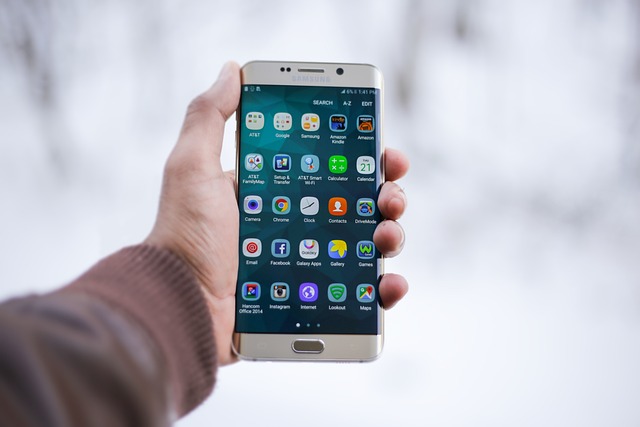
Image by Pexels from Pixabay

Do you remember when you got your first mobile phone? I guess everyone does. I was twenty, it was 1998 and my friends had collectively bought me one for my birthday. I hadn’t expressed any longing for one – at that point it was still relatively rare for people to have one – but some of my friends had had phones for a while and they wanted me to join in. It was a nice gift. A chunky little pay-as-you-go Nokia.

It was a novelty to start with. Kind of fun to send a text or get a phone call. They couldn’t connect to the internet and most of us hadn’t even started using the web yet. We had no need to. Those early phones could not take photos either. They had chunky push buttons and you had to pay for cool ring-tones.

We were innocent in our acceptance of them. We had no idea where it would all lead; how much easier it would make our lives, how addicted we would become.

Back then, we didn’t take them everywhere with us. It was still entirely acceptable not to own one. We all still had landlines and still knew the numbers of our loved ones by heart. Twenty-seven years later we are slowly waking up to the fact that our phones, and what we now have on them, are addictive. We are slowly waking up to the fact that giving a smart phone to a child can be extremely detrimental to their mental health.

Ten, twenty years from now, where will we be? Will we see phones and contracts with health warnings on them like we do with alcohol and tobacco? There is a push among some countries, and within many schools and parenting communities to limit the use of smartphones for young people and there is a growing movement of people who want to disconnect from the hold their phone has on them.

And I’m one of them.

I’ve been wanting to do something about it for some time. The way my phone took over my life was slow, insidious. It’s not until you look back and remember how it was that you see how far it has come. I wasn’t interested in mobile phones to start with. Like I said, my friends bought me my first one. I remember my first camera phone. It would have been around 2004 because I recall trying to take photos of my two young daughters with it. Every photo was blurry because they couldn’t sit still.

I’ve never been that impressed by phones. I always had this one friend that got really excited about them and was always upgrading and talking about the next big thing, but I was never in a hurry to upgrade mine. Every phone I’ve ever had I’ve kept until it eventually died. Camera phones were soon all the rage and before long the cameras were actually good. Phones also had torches and calculators on them now.

My friends connected to the internet with their phones years before I did. I was still getting my head around the internet itself back in 2007 when we got our first family laptop.

I didn’t get Facebook until around 2009 and the only reason I did was because a mum at school was telling me about her virtual farm. At the time we were renting a very small house with a very small garden and I didn’t have much room to grow things. A virtual farm sounded fun and it was, so I joined Facebook just to play Farmville!

I soon got lured in by connecting with friends, old and new. I soon started following various pages that connected to my interests. At this point I still had a rubbish camera phone and was using an actual camera connected to the laptop to upload photos.

Fast forward to when my fourth child was born in 2014, and everything had changed. I now had apps on my phone. Facebook and Instagram and my email account. I now had various author pages I needed to update each day. I could buy straight from Amazon using my phone. I could take cute photos of my newborn and upload them instantly to my socials.

I was now addicted to my phone.

I didn’t realise it at first, of course. I took it everywhere with me just like everyone else. It was a source of comfort and safety, peace of mind. Phone boxes have become scarce. No one can remember anyone’s numbers anymore and if you break down in the middle of nowhere you are going to need a phone.

But without me knowing, an addiction had formed.

An addiction that started as soon as I woke up in the morning and the very first thing I did was check my phone. I’d then settle down with my breakfast and check it again, this time answering any messages on Facebook Messenger, text, or WhatsApp. Then I’d check TimeHop. Followed by Facebook and Instagram notifications which inevitably led to me scrolling mindlessly for far too long. I’d break the scrolling to check the news. Not on the TV like the old days – on my phone. Then I’d check my emails. All before getting dressed.

Once I’d got dressed and woke the kids up and completed a few other morning chores, I was right back on my phone again, this time with a coffee on the go. Checking those apps again. Scrolling again. Quite often getting angry or depressed again.

And that’s how the day would carry on. In between work, travel and household chores, I would check my phone. I didn’t even know what I was checking for but it had become such a habit that I didn’t notice it at first. My hand moving towards my phone all the time, almost of its own accord.

If we were watching a TV programme and adverts came on, I’d pick up my phone. If a programme was a bit dull, I’d look at my phone. Waiting in the car to pick my son up from school, I’d check my phone.

In recent years it began to annoy me.

We can all agree that the entire world had gone to shit and who knows how much worse its going to get. Checking my phone now caused me to feel utter despair. Utter helplessness. My phone was making me angry and sad. Looking at my phone was constantly ruining my day.

And then there is how instantly contactable they make you. If you’ve got a few apps on there, anyone can ping you a message or tag you in something at any time, day or night. I would groan at the messages. Groan at the emails. Roll my eyes at the notifications and the things people send you for no reason. I’d constantly sneer at people’s feeds and posts. Constantly feel annoyed by people, by the world, by everything.

Yet I couldn’t stop looking!

Doing something even though you know it is causing you harm? If that’s not addiction, I don’t know what else.

Something had to change. I read The Way Home by Mark Boyle just before Christmas and it tapped into everything that was frustrating me about the modern world. I don’t think my family would let me run away to live in a cabin in the woods with no technology, but reading that book made me long for a more simple life again.

At first I tried not looking at my phone so much. Every time my hand reached for it, I would tune into what I was doing and stop myself. More often than not I would have already opened an app and started scrolling though before I remembered I was trying to wean myself off.

I’d force myself away mid-scroll, but the itch to return was still there. Fear of missing out, I suppose. Plus the ingrained habit of constantly reading and seeing what everyone else is up to at every moment of the day, and me sharing what I’m doing, thinking and feeling. At some point we stopped talking to people in real life and started sharing our private lives across social media.

Social media has become increasingly toxic. It’s not a nice place to be. The majority of these platforms are owned by pretty despicable people with pretty deplorable morals. They can also change the game any time they like. Despite being billionaires, they want you to pay for ads to boost your posts. Visibility for author pages is constantly dwindling unless you can afford to pay. And then there’s AI slop and the enshittification of the entire internet…

I think that’s what did it for me in the end.

I left Twitter and joined Bluesky. I’ve upped my game on Substack, while trying to remain busy on Medium and here on my blog. None of these apps are on my phone.

Next came the culling. I did it when I was feeling angry; when I was thinking about Zuckerberg caving to Trump who thinks right-wingers are unfairly fact-checked on Facebook; when I was thinking about Spotify donating to Trump and being terrible for the music industry, when I was fed up of people messaging me, tagging me, sending me things.

So, I did it. First Facebook Messenger from my phone, followed a few days later by Facebook itself and Spotify. It’s a start.

I thought it would be hard. I thought losing all my playlists would sting. I thought not constantly knowing what’s happening on Facebook would worry me, but in the end it hurt far less than I had anticipated. Snip. Gone.

Now every time I reach for my phone I almost instantly put it back down because there is far less to check or get sucked into. I still have Instagram for the moment. That’s because it’s an author page linked to my Facebook author page, so if I post book related stuff there it will automatically show up on my author page on Facebook without me having to go on Facebook. My plan is to delete both if my followers and engagement on Bluesky and Substack overtake my followers on Facebook.

People can only message me now if they have my phone number! It’s bliss. And I still have plenty of time in the morning and/or evening to ‘check’ Facebook on my laptop, and to post to Substack and Bluesky.

It’s a start! I hope to go further. I’d like to make my phone just a phone again, but it’s not easy when you have books to sell. And it’s not easy weaning yourself off such an entrenched addiction!

My phone no longer has the same hold over me. I can’t doom scroll anymore. I can read the news, or not. I can check Instagram and post book stuff, or not. That’s about it.

It feels good. Like freedom. Like sanity!

I also have a lot more time for other things. Instead of scrolling on my phone, I pick up a book instead or get more writing done. I’ve started planting seeds for the garden and I am slowly redecorating our entire house. I don’t think I’d have time for all this if I was as addicted to my phone as I was…

How about you? Does your phone control your life? Could you live without it? Are there a few apps you could delete? Do you think we are starting to see a backlash against social media platforms?

Indie Writers Are The Bravest Writers I Know

Image by Alexa from Pixabay

Last week I posted about how risk and courage go hand in hand with writing and I stand by that. It is incredibly brave to write at all and even braver to share that with the world. But in my view and in my experience, indie writers are perhaps the bravest of all.

Let’s look at what indie writers willingly put themselves through in order to get their stories out there for you to read and let’s also remind ourselves of what is involved in being an indie author these days.

  • First, the indie writer writes and finishes their book. This is in contrast to the 97% of people who start writing a book and never finish it.
  • Before becoming an indie, most but not all indie writers try the traditional route. They will have sent out to hundreds of agents and hundreds of small presses. They may have entered numerous competitions. Anything to try and get a foot in the trad door. But to no avail. They don’t give up there though. That’s how brave they are. They are not quitters.
  • They decide to go indie. This means different things to different people but ultimately it means the author is in control of their book, including the editing and proofreading, the blurb, the front cover and marketing it. Scary and brave, especially in the beginning!
  • If they haven’t already, they will start and build multiple social media pages with their blog or website at the forefront of their news and writing. This takes a lot of time and commitment and it is hard starting with 0 followers, yet they do it anyway, even if they are talking to themselves most of the time!
  • When it comes to their book, they will do multiple drafts if they care about the craft of writing and they will send it out to beta readers for honest feedback.
  • They’ll respond to this feedback and revise the book again. More edits may follow until they are happy enough to send it to an editor and/or proofreader.
  • Meanwhile, they’ll be battling with the blurb, sourcing possible front covers at reasonable prices or learning how to make their own.
  • They will start learning how to market their book. They will start trying to figure out where and who their audience is. This is both time consuming and scary. Writers are introverts at heart so it takes some guts to start shouting, look at me! Read my book!
  • Once the book is back from the editor they will do final edits and proofreads and then decide on a release date
  • They’ll also decide whether to go exclusive with Amazon and make sure their book is available on multiple platforms in multiple formats.
  • They will set up a pre-order for the book and start marketing as best they can!
  • In reality, most of them won’t make back the money they have spent getting it this far, but that won’t stop the indie author. They will already be writing the next one.
  • Sadly, the majority of the indie author’s close friends and family won’t buy, read, review or even respond to their exciting book news, so they will have to rely on the kindness of strangers and random readers on the internet.
  • The indie writer might be feeling quite demoralised by now, but they’ll keep going. Brave, you see.
  • The indie writer faces endless hurdles. In order to market their book they need money and if they don’t have money, they have to do whatever they can for free. This puts them at an instant disadvantage but it won’t stop them. No way. They are resilient and will find a way to keep going.
  • The hurdles never stop coming and they just seem to be getting worse. They now have to compete with AI as well as other authors, and traditionally published authors. A bit of a slap in the face, if you ask me, but the indie writer won’t give up or give in. Especially not to bots! No way. The indie author is here to stay.

I think I could go on for a while listing the hurdles indie writers face, and the very many ways in which they prove themselves to be the bravest of writers. They overcome rejection and keep going. They learn how to produce, format and market their own book, and don’t give up even if it fails. They are largely unsupported by family and friends, but don’t let that stop them and now they have AI coming for their jobs…

I mean, maybe we’re all just a bit mad, rather than brave!

What do you think?