The Tree Of Rebels and Disconnection From Nature

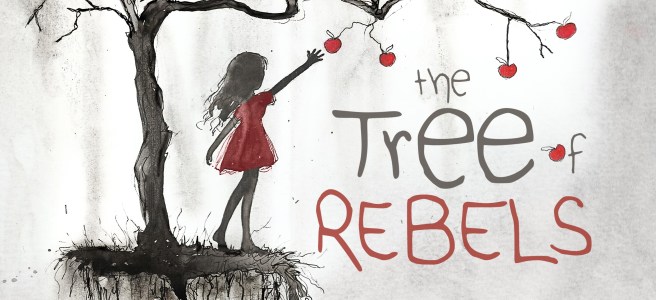
So it’s finally here! The day has finally arrived! Sometimes when in the middle of writing and rewriting and crafting a book, publication day can feel like an impossibility. Something so far in the future it feels like it will never happen. The Tree Of Rebels felt like an impossible thing more than once. This was a very tough book to write and one I had a constant love/hate relationship with. It’s very different from my other books and I wrote it with an audience in mind, something I’d never done before.

As I’ve mentioned before, the seed of this book was sown while scrolling through Facebook one day. I’d kept seeing these petitions to sign to stop Monsanto patenting seeds. I didn’t understand a lot of it, but what I did read and digest alarmed me and got the cogs turning in my head. I’ve often thought about nature and who owns it. Have you ever walked through the woods or across a field, only to be stopped by a fence and a Private Property sign? Have you ever stood on a high hill and looked down at the landscape and realised how restricted our movements actually are? How the paths and roads have been laid out for you and how signs and fences stop us roaming as we once did?

The more I thought about large corporations owning seeds and nature and having that control over the food chain, the more I imagined a frightening dystopian world where growing your own food is banned. This might seem like a far fetched idea right now, but for some people this is already becoming a reality. Believe it or not, there are places in America where people are not allowed to have backyard gardens or chickens. Where people can be arrested for attempting to gather rainwater. The frightening future is already on its way…
13920054_1231406820211914_1274144773204141057_o

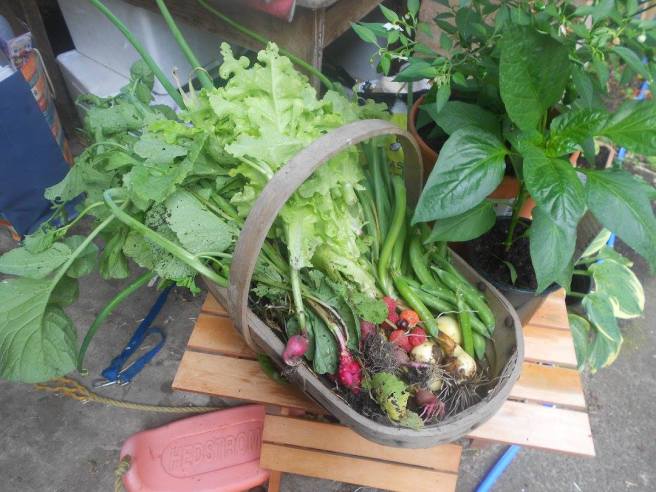
Distrustful of GMO’s, hormones in meat, anti-biotics in milk and pesticides on fruit and vegetable, more and more people are turning to growing their own food. Self-sufficiency is becoming popular again, and you can’t deny this is a form of rebellion, of taking back control. It’s vital for our planet too. The meat and dairy industry is literally killing the earth.

Dystopian future in mind, I already knew I wanted to write a young adult book. The protagonist, 13-year-old Lissie had been evolving in my imagination for some time, and now she finally had a place to play and grow. The book undoubtedly evolved into something more than I had envisioned. It’s not just about seeds or a post-apocalyptic future, it’s about rebellion, questioning the status quo, defying your parents and searching for the truth, no matter who it hurts. All classic issues in the complicated journey of growing up.

But one of the main messages I hope people pick up from this book if they do indeed pick up any is the consequences of becoming disconnected from nature.

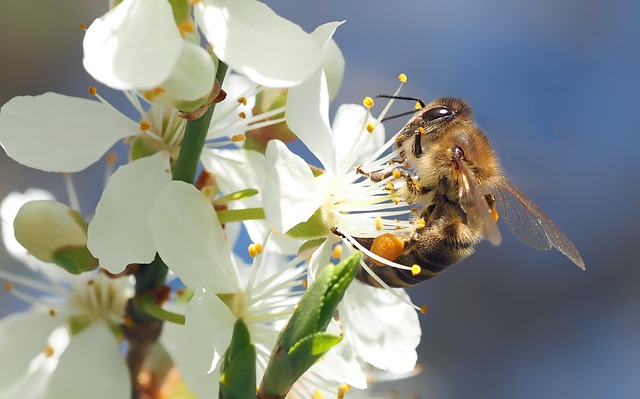
I’ve always been a bit of a dreamer. A head in the clouds type of girl. I love nothing more than a walk down the lane, to the river, or across the fields, the common, or the woods. Something special happens to us when we are in nature, when we walk barefoot upon the earth, when we touch trees, smell leaves and view flowers and wild animals. Sometimes I think I might be a bit odd. I have very strong urges to touch and hug trees. They call to me, they really do. Once I lay my hand on the trunk of an ancient Oak, I find it very hard to pull away. I can’t get over the fact they are helping me to breathe! They are eating pollution. Without them, we would all die. The same goes for the humble bee and other vital pollinators. We simply cannot afford to ignore nature. We are nature. And I truly worry that many of us have forgotten.
bee-on-cherry-blossoms-1403010_640

Where I live is very beautiful, but I fear that others do not see it. When they race their cars down the narrow lane and hurl their rubbish into the bushes, I fear they never linger long enough to see the beauty and majesty of the trees. I fear they have no clue that they would die if the trees were not there. I’m fascinated by the unseen lives of birds, insects, and animals. I’ll stare at birds in the sky, watching their flight, hearing their cry, wondering where they are going and where they live and what they do. I want to know. I want to be part of their world. Sometimes I feel like I am trespassing. Especially come dusk when the bats start circling and the owls start hooting. This is their time, not mine. How they must despise us, I often think.
branch-1753745_640.jpg

I think the thing we are often missing is gratitude and wonder. I am in awe of nature which makes me want to protect and nurture it. Sadly, others just don’t see it at all. In truth, this means they do not see themselves. They are disconnected from it, therefore they don’t care about it or appreciate it. If you don’t care about something, or see the value in it, you’re not going to go out of your way to protect it, are you?

In Lissie’s world, the people are taken care of. They are housed and fed and educated and worked. There is no war or violence. They have returned to traditional ways, fearful of the technological world that enabled war and destruction to almost wipe out the entire human race. But in order to keep them contained, the people are separate from nature. Food is grown and delivered to them. Animals are raised in domes . Unwanted plants are circled and torn up. Wild animals are feared and killed. They know very little of the natural world. And this is all sold to them as the perfect world. A society without war and hunger and homelessness. A safe, sheltered, catered for life. It’s Lissie who resists this version of life and strives to find out more about the outside world. A true rebel, spurred on by the dying words of her Great-Grandmother, she seeks the truth. What happened to the Old World? Who destroyed it and why?

Please feel free to leave a comment! What are your fears for the future? Do you enjoy reading post-apocalyptic or dystopian books, and if so why? How do you feel about the issues of humans becoming disconnected from nature? What can we do about any of it? I would love to hear your thoughts!
 

Character Interview – Lissie Turner; The Tree Of Rebels

1 ) Tell us what your positive character traits are

I’m loyal…well, some people might disagree with that. But I know I’m loyal to my friends. I’m a dreamer. My parents wouldn’t call that a positive thing, but my Great-Grandmother would. I’m fast! I am the fastest girl in Province 5! I’m fierce when I need to be and I won’t be bullied.

2)What would you say are your negative character traits?

That I’m a dreamer…I have my head in the clouds and I’m not ready to be an adult yet. That I’m nosy and stubborn. I’m rebellious, although I only found that out recently.

3) What are your current ambitions or dreams?

I want to get out of Province 5. I dream about other places and people and other ways of life. I want to know more about how and why the Old World died and I want to have a say in the future. I don’t like everything I see here at home, and I want to explore, try things out, question things.

4) What are your fears?

My fears are that I will never leave the Province or find out what happened to the Old World. I fear I will let my parents down, no matter what I do. I fear destroying my family and being all alone. I also fear the truth. I know we are not being told the truth here and that scares me. Life is pretty good here. No one complains. Everyone has everything they need and everything is calm and peaceful. But I know it’s all based on lies. Sometimes I think the truth scares me more than anything.

5) Do you have any enemies?

Yes, Saul Lancaster has been my enemy for as long as I can remember. I could never work it out before, because his father, the Governor here in Province 5 seems to really think highly of my family and even gave me special duties in his garden. But Saul hates me and has had it in for me since we were little kids. He’s a bully and I despise him. If he ever ends up in charge of this place, he’ll be the worst Governor ever! As for Soren Lancaster, his father, I think he might be my enemy too. He’s trying very hard to keep me on side, but he knows I know things I shouldn’t. He knows I am dangerous.

6) Tell us about your best friend

Ned is my best friend. His parents are friends with mine. I’ve always had to stick up for him because of people like Saul, and because his parents don’t seem to notice he is even alive. Their first son died, you see, and although Ned came along, they never got over t and can’t seem to see him at all. Poor Ned. He’s the best friend ever. He’s not scared of anything. He’s like me. He just wants to be excited, he just wants to ask questions and know stuff! we’re in this together. I feel bad about getting him into trouble too but he says he doesn’t care.

7) What’s your biggest secret?

My biggest secret is my Great-Grandmother’s diary. She wrote it when she was a girl like me, so it’s our only bit of history. It’s a true account of what it was like in the Old World where they had online and cars and stuff like that! It’s so fascinating to read, I just can’t put it down. There are wars going on all over the place and they’re on the run now because they got in trouble for growing their own food! I’m learning so much about how things used to be and how things ended up like this.

8) Do you have any regrets?

Hmm, not yet. I do feel guilty. I feel guilty about lying to my parents, hiding the diary and going outside of the Province. I feel guilty that I am not what they want me to be. But I don’t regret any of it. Not yet.

9) Where do you see yourself 5 years from now?

Well, if nothing changes, I will be living in my own hut, probably coupled and probably with a child. I will be working for Animal Control or the hospital like my parents. I will be just like them. But if everything changes? Who knows? I could be out there! Free. I could be wandering around, setting up camp, sleeping under the stars, like Aisha and the other rebels. I could be a rebel. I think I am a rebel.

Where Is My Mind?? On End Of Term Brain Fog

I feel like I’ve done a lot of stupid things lately. You know, how we all have days when our brain just isn’t functioning properly? You go upstairs to get something, then come back down empty handed? You tell people the same thing more than once? You go the shop to buy something and come out with something else entirely? This is all annoying stuff, but what it if gets worse? What if you forget people’s birthdays or special events? What if you make arrangements and then totally forget about them? You start to feel like you are losing your mind.

Last Saturday I had an event to go to. It was a bit of a weird one that came about due to a conversation via Twitter months ago. Another author tagged me in a Tweet from Waterstones asking if there were any YA authors in the Bournemouth area. I replied yes, someone took my email address, and that was that for a while. It later transpired that they wanted someone local to interview two YA authors (proper ones, with actual books in actual Waterstones.) I thought why the hell not? It will be an experience. These past few years I’ve been saying yes to a lot of stuff I once would have said no to, and the results have been quite fun. So I looked up the authors, did my research, purchased some books and put some questions together.

I sorted out childcare and turned up on Saturday afternoon fully prepared and intrigued. Only to be told it was the wrong day.

I wanted the floor to open up and pull me in.

I felt my face catch on fire, mumbled something about it being fine for me to come again tomorrow and hurried out of the shop.

I felt so pissed off with myself after that. I had been utterly convinced it was Saturday. But they were quite right. I checked all the emails later that night. 16th July. Sunday. How could I possibly have got it so wrong? Why on earth was I so convinced the 16th was a Saturday? Why did I not double check? What the hell is wrong with me?

headinhands

I really didn’t want to go back the next day, but I did. I didn’t see the shop girl I had blushed in front of the day before, so I decided to play it cool and pretend it never happened. The lady who organised the event introduced me to the authors, we all had a drink in the cafe and then I interviewed them while the organiser filmed us. Scary stuff, and totally new to me, but I did it. Plus, I’d developed a heavy cold overnight and was feeling terrible. I don’t think I want to watch it when it ends up on Twitter. But I did it.

That mistake was embarrassing, but there have been loads of instances like this lately and I think I have a good old fashioned case of ‘end of term brain fog’. I see the other mums in the morning on the school run, and I know from the brief snatches of conversation we get between shoving kids into school, that we are all running on empty, and counting the minutes down to the summer holiday.

Of course, entertaining kids for six weeks and juggling commitments brings its own anxieties, but at least there is less structure, less of a time scale to keep to. We can do stuff or we can laze about. We can book some busy days and we can have stay at home days. We don’t have to get up early or make lunch boxes or iron the school clothes. We can all take our time and just breathe…

Brain fog is horrible. Forgetting stuff and getting in a muddle is really frustrating, especially when you are trying so damn hard to look like you’ve got your shit together! All the mums I know work bloody hard. They all have jobs, many of them self-employed so they can work it around the kids, and they all do the bulk of the housework as well. They spend their days shaking kids out of bed, shovelling breakfast into them, dealing with fussiness and dragging feet, checking the time, finding the car keys, getting stuck in traffic, and all the time your mind is already on all the other things you’ve got to do that day…so much so that on some days you actually can’t wait for the day to be over.

These last few months have been pretty full on. I’ve been preparing The Tree Of Rebels for release (11th August!!!) and I was working for many weeks on a workshop I ran on living the Indie Life. (I ran this the weekend before last and managed NOT to screw anything up!!) I am also in the process of turning my Chasing Driftwood Writing Group into a Community Interest Company. This is taking up a lot of my time. And then have have been all the things I’ve said yes to…

Maybe I need a few months of slowing down…

Perhaps my brain is trying to tell me something. I’ve had so many ‘oh my god, what is wrong with me’ moments lately, I’ve genuinely started to worry if I’ve got some sort of early dementia.

Hopefully not. For now, I will blame it on that frazzled end-of-school-year feeling and look forward to a lovely six weeks with my kids!

Over to you! Do you suffer from brain fog? Is it worse at certain times of the year? Have you done anything really embarrassing lately? Do let me know and feel free to comment and share!

Dealing with Self-Doubt

Writers are often plagued with crippling self-doubt and I am no exception. It’s always there, lurking, waiting for opportune moments to show up and throw me into a panic. I’m preparing a book for release, and I always find self-doubt shows up in a big way around about now, so it is something I am currently dealing with. But there are lots of other times I’ve experienced self-doubt about my writing, so I thought I would list them here as well as my tips for dealing with it.

  1. Childhood. When I was a child, I didn’t know what self-doubt was. Sure, I was shy and introverted, but I also had the child’s innocent optimism and I was utterly convinced that one day I would be a world famous author. Of course, life happens to children. Reality is dictated to them. You can’t do that, you can’t be that, you won’t make money, not many writers are successful, and so on. The worst thing you can do to a child is squash their creativity. If you were that child, be kind to yourself now. Remember that people probably had good intentions. Perhaps their ideals and aims in life differed greatly from yours. And if you know a child who wants to be a writer, for God’s sake don’t crush their dreams. Let them make mistakes. Don’t pick on their grammar, their spelling or their lack of plot. Just let them write! It can all too easily be discouraged in children these days.
  2. Adolescence. Writing helped me get through my teenage years. Without a doubt, it was my greatest friend and comfort. From the diaries I wrote daily, to the lyrics I scrawled onto my bedroom wall, I wrote endlessly. I was in a constant dream and my head was full of wonderful words. Self-doubt had found me though, and I now accepted I needed a realistic Plan B. I would have to decide on a day job to pay the bills. My advice to anyone at this stage would be this; keep writing. Keep dreaming. Don’t worry about structure or plot, or how many drafts it will take, or how similar your work is to your favourite films or books, or how pointless it seems putting down words that are unlikely to be read by anyone else. Perhaps right now they are only meant for you. Don’t let anyone tell you it’s not useful, worthwhile or beautiful. Keep going. In private, in your bedroom, in your head, in snatched moments. It will all take you somewhere one day.
  3. Writing Group. Self-doubt may lead you to attend a writers group and they can be a wonderful help. Just remember not to compare yourself to anyone else. No doubt you will all be of different ages, backgrounds and cultures. There will be people there with more and less experience than you. There will be people there with a better grasp of grammar. There will be people there who can write the most beautiful prose. Don’t be intimidated. You are not them. Only you can do what you do. Use writing groups as sound boards and listen to any advice that is helpful but don’t let exposure to other writers encourage self-doubt. You are there to get better and to move forward.
  4. Twenties. Real life. Graduation. Jobs, Careers. Marriage and babies. All these things get in the way when you are becoming an adult, leaving less and less time and energy for writing. This is the period of life when so many leave writing behind, viewing it as a childish, foolish habit they must move on from. After all, very few writers earn a living from it, and there are bills to pay and rent to find and debts to cover and there will just never be enough time to sit down and write like you used to. And then every now and then someone you used to know will ask if you still do the writing. And saying no, not anymore, will break your heart. So write anyway. Even if it’s just a diary. Or a blog. Or scribbles and rants into a notebook. Even if it’s five minutes or ten minutes a day. Even if you don’t think it will ever go anywhere. Get back in the habit. NOW.
  5. First draft, We all get there eventually. The first draft. Self-doubt will plague you more than ever before. Are you wasting your precious time? Is everyone laughing at you? Is everyone expecting you to fail? Can you even write? Is anyone ever going to care? Something keeps you going, but self-doubt is clawing at you every step of the way telling you to go back, to quit, to stop before you waste any more energy. Don’t listen. Keep going. The first draft is just the beginning of a long journey, but if you can get it done, if you can get over that hurdle, then all the rest will come. You’ll have fostered the stamina and grit needed to pursue this idea until the finish.
  6. Feedback. Getting feedback is hard. You need it, but you dread it. You sort of hope everyone is going to gush over your work and say it is the best thing they’ve ever heard. But being realistic, what you really need right now is the cold hard truth. You need to be able to take it. If your characters suck, if your dialogue is stiff, if your middle drags or your ending is unsatisfying, you need someone to tell you. Then you need to take the time to think about it, digest the information and decide what you agree with. Don’t let self-doubt hijack you now. Writers never stop getting better. That is part of the fun.
  7. Submissions. Submitting your work is a brave step. Maybe it’s competitions, or magazines, or articles. Maybe it’s your novel to agents or publishers. You’ve done all the hard work and now you are handing it over to the ‘experts’. If you are lucky you might get some feedback. It might sting, it might be encouraging. Or you may get the long cold silence. Whatever happens, self-doubt will creep in to remind you that you are a crap writer and nothing you write will ever be published by anyone. Just keep writing and remind yourself that the more you write, the better you get. That rejection is part of the process for ALL writers and that all you can do is learn from it, and refuse to let it make you quit.
  8. The Final Draft. Nearing the end of a project is exciting and thrilling. Seeing the end in sight after a bumpy road of stops and starts and endless highs and lows, can be a huge reward for a writer. You have finished the book. You have rewritten and edited and proofread and copyread the book and you have probably done all of this so many times you have lost count. In your head, at last, the book is ready. It’s done. It’s the best it can possibly be so it’s time to let it go. But hang on…suddenly the doubts are back in full force. A dark paranoia that you were wrong all along, that no matter what you do to it, no matter how many more times you rewrite or go over it, it still hasn’t worked. It’s not the book you had in your head. It’s failed. You’ve failed. I don’t know why this happens when the final draft is done, but it always seems to happen to me. One moment I will be basking in the relief and the joy of a completed, polished manuscript, ready to move onto the next project, and the next I will be doubting every single word I have written. I will want to change my mind entirely, consider scrapping the entire book even. The only way I get through this is by reminding myself that I felt exactly the same about the previous books. And would I change anything about them now they are out there? No. When it’s time to let go, I think you get a gut feeling, followed by a flood of doubt and fear. Try to accept this as natural and ease it gently to one side.

Feelings of self-doubt are part and parcel of being a writer. They follow you about, peering over your shoulder and niggling at you. They will never go away, and that is perfectly normal. If we were full to the brim with endless confidence, I suspect we might start turning out some pretty poor writing. Self-doubt forces you to aim for perfection, to question yourself and your work again and again, until one day you know you have done all that you can.