Author Interview; Rae Stoltenkamp

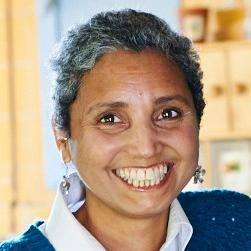
Welcome to my latest indie author interview, this time with author Rae Stoltenkamp. I first came across Rae when we were both authors on the now defunct indie publishing platform Autharium. I read her excellent  crime thriller  Six Dead Men and will soon be diving into her new venture, the first in a young adult series, Where Rainbows Hide. In this interview Rae talks about her writing and publishing journey so far, tells us about her writing process and offers her advice to writers about to embark on the indie route!

Q1 Tell us about your writing and publishing journey so far;

In 2006 I made the firm decision to leave teaching and write on a more full time basis. When I told my dad of my decision he didn’t blink an eye and supported me without a moment’s hesitation. In 2012 my dad died and my rebellious streak asserted itself in a desire to do something to honour his passing. I had a completed novel (Six Dead Men) which I was editing whilst sending letters and emails to agents and publishers – getting the usual rejection mail as expected. His death prompted me to do SOMETHING more concrete with my novel. Unbelievably, an opportunity arose to publish in e-book format without any expenditure on my part at all (Autharium). At that time e-publishing was a much debated topic and people were convinced it would have no place in the world. I thought, “Well, what the heck – it’s not costing me a penny.” Tons of no risk no gain sayings crossed my mind: Nothing ventured nothing gained If you’re not willing to risk the unusual you’ll have to settle for ordinary For who that dare not undertake, by right he shall no profit take So I forged ahead. I didn’t have the slightest clue what I was doing but the e-book went into the world and I told my friends and family all about it. I made the sum total of £12 in royalties and could not have been prouder.

Q2 When did the writing bug first grip hold of you?
I first got the writing bug around age 12 but started with incredibly soppy poetry that always rhymed. From 13 onwards wrote angst ridden teenage poetry which is so embarrassing I probably shouldn’t even mention the existence of it. Then ventured into short stories around age 14 and started on my first novel called Panthra.
Q3 Tell is a bit about Six Dead Men. Where did the idea for the story come from?
It’s quite sad really. I’d been to a neighbour’s party and met a rather nice guy. We ended up snogging for quite some time. Afterwards he asked for my number and I was certain he’d call but then he didn’t. I just put it down to the way things go sometimes. But a few weeks later my neighbour called me in, sat me down, made me a cup of tea and was generally acting very anxious. He then told me that the lovely man had been killed in a tragic accident. It may have been the shock but I found myself thinking it was probably my kisses which cursed him. And so was born the premise for Six Dead Men.
Q4 How would you describe your genre and your style?
My preferred genre is Magic Realism. I’m intrigued by how much in life can seem totally inexplicable. This genre allows me to explore this and helps me to delve into characters’ minds to look at how they may think or behave or be affected by circumstances and influences. My style is influenced by writers like Toni Morrison and the poet Maya Angelou. I love how these writers use the rhythm, feel and sound of words to get a message across in a dramatic way. I also equally love the element of melodrama you get in work by Austen and the Brontes. My YA books are all Science Fiction as they have a strong eco message which lends itself to this genre. It was also one of my mother’s favourite genres so I have a great soft spot for it. I guess my YA books are mostly a tribute to her.
Q5 You write in adult and YA genres, can you explain to us how this works? Does the character come first, or it is usually the plot?
As I’ve already said, Six Dead Men was born out of a personal experience so the character was built around this. I thought long and hard about the names as I wanted them to be significant. With my WIP; the prequel to Six Dead Men, the character came first. In fact I woke one morning with her words in my mind. Her voice was strong and clear and I had to race to scribble them all down. My YA novels always seem to be story led but I’ve recently found that characters are beginning to demand I tell their story in greater detail. As this is a series of books on the same topic I don’t have to think about the plot so much – it is almost a foregone conclusion. So it seems natural that I can now focus more on characters and what they feel, think and ultimately do.
Q6 Can you tell us about your writing process? What is an average writing day like for you?
I teach at a local charity 3 days a week so only have 2 dedicated writing days a week. I also volunteer one evening a week and tutor in the evenings the rest of the week. So I usually get up around 6:30am. After a coffee I get stuck right in. I have to set the timer on my phone as I often forget to have breakfast. After breakfast I get straight back into it and work until about 2pm. The afternoons are reserved for meetings or any marketing which needs doing. If I have no meetings scheduled I write until about 3 or 4pm then call it quits for the day. I’m currently thinking of moving all my marketing activities to a Saturday as this will free up more writing time as I want to crack on with several projects.
Q7 What are you working on at the moment?
My current WIPs are: 1. The prequel to Six Dead Men 2. A series of short stories based around characters in Six Dead Men and its prequel 3. The sequel to Where Rainbows Hide 4. The sequel to The Lonely Dragon.
Q8 What would you say have been the best and the worst parts of being an indie author?
The best part is writing about things that matter to me and seeing them in print. There is no worst part as it allows me to do something which makes me feel incredibly fulfilled. Sometimes the precariousness of the financial side can cause sleepless nights but when I’m deep into a project and the words are flowing on the page, I get such a sense of rightness that the worry simply falls away.
Q9 What advice would you give to anyone about to embark on the indie publishing route?
Only go down this route if you have great support from friends or family or both. Trying to do it all alone is a very hard road. Be prepared to put the hours in. No-one will be standing over you to make it happen – you’ll have to do that all on your own. Join a body like the Alliance of Independent Authors as they have a wealth of information which is invaluable. And finally – know your product and your audience then market accordingly.
Q10 What are your hopes and dreams for the future with regards to your writing? What would you like to achieve?
My hope is that within 5 years I will be able to earn a living from my writing and give up tutoring in the evenings so I can spend more time with friends and family. I would then wish to publish any writing for children for free.
Q11 Who are your favourite authors and why?
My favourite authors make up a very long list so I’ll just do my top 10: Jane Austen, The Brontes, George Eliot, Toni Morrison, Louis de Bernieres, John Steinbeck, Terry Pratchett, Joanne Harris, Neil Gaiman and Jacqueline Wilson The Brontes, Austen and Eliot because of the element of melodrama they bring to a cracking good story. de Bernieres because he opens up unexpected worlds in my mind. Pratchett and Gaiman because they tackle serious topics but also make me laugh out loud. Morrison, Harris and Steinbeck for their beautiful use of language. Finally, Wilson as she tackles issues so very relevant to children in this day and age and does it with great sensitivity.
Q12 Tell us three interesting facts about yourself
Not sure these are particularly interesting but here goes: 1. I absolutely loath white trainers – don’t know why, just do 2. I don’t like being given cut flowers as a present as they only serve to remind me that they are already dead and only good for the compost heap now. 3. I love watching garden make-over programmes even though I am the worst gardener on the planet and never even go into my own.
Thanks so much Rae!

Rae Stoltenkamp was born in South Africa and came to England in 1987 to visit family. She liked the weather so much she stayed. After a writing holiday in Greece she had an epiphany and realised she should be writing on a more full time basis. It was probably heat stroke since she hadn’t had sun in a while. She then studied writing at City Lit with the poet Caroline Natzler and is now a writer, blogger and former English teacher living in South London.

Currently Rae also works with www.inkhead.co.uk , teaching creative writing courses to children. This has inspired her to work on a children’s book called The Lonely Dragon. She is writing and editing several projects simultaneously, including a series of YA Science Fiction novels and the sequel to The Lonely Dragon.

Rae has a passion for Argentine Tango and when she is not chained to her desk and laptop, can often be seen tripping the light fantastic with her tango friends. She has also recently discovered the delights of Lindy Hop and is laughing her way through this style of dance.

https://www.facebook.com/raestoltenkamp.author

http://raestoltenkamp.blogspot.co.uk/

https://twitter.com/Raedenewrites

10 Things I Hate, 10 Things I Love About Being an Indie

The other day I was putting a blog post together and frantically searching the internet for suitable images for laughter inspiring memes. I like to try and make my own in case I get into any trouble, but I’m really not that good at it. I kind of have an idea in my head which never seems to  work out! Anyway, it was tedious and it annoyed me, just like Facebook annoys me every time it limits my post reach to a tiny amount of people. So I decided to write a list of the things that annoy me about being an indie author. And of course, to counteract the negative list, I had to come up with a positive one as well. Please feel free to add yours in the comments!

10 Things I Hate

  1. Creating amusing memes to add to blog posts, because it is time-consuming and I am crap at it.
  2. Finding or creating ‘fun’ images to help boost my Facebook reach every time I update my page because I am also crap at it
  3. Asking for reviews. Tedious, repetitive and pretty ineffective
  4. Having to be good at tech stuff ie formatting, because I am not
  5. Facebook showing only 3 people my exciting update, despite the addition of a funny meme/image
  6. Indie writers who do nothing to promote their books or build a platform, and then moan about never selling any books
  7. Indies who do not support other indies in any way, but constantly ask for support
  8. How much everything costs (I’m talking paid promotions and paid reviews)
  9. Having to write the synopsis
  10. People thinking your books must be crap because ‘anyone’ can self-publish


10 Things That Are Actually Quite Cool

  1. Designing front covers, and working with very cool people (and Canva!) to get your ideas out of your head and onto your book
  2. Connecting with other indies, who totally understand what you’re going through
  3. Connecting with readers, who message you about your book, article or blog to say what it meant to them
  4. Being the master of your own destiny!
  5. Learning how to run a business
  6. Embracing social media. Hated it to start with, sort of love it now
  7. Thinking up new and inventive ways to promote your books
  8. Breaking the rules
  9. Knowing you are getting better at all of it
  10. Perpetual hope that some kind of success is on its way!


Over to you guys! What do you love and what do you hate about being an indie author?

Do you ever think about how far you have come? Or if you are at the beginning of your journey, what are your biggest fears? What are you most excited about? To those further along, what would you do differently? What lessons have you learned?

My Body Battles

(Warning…not strictly writing related…unless you have read The Mess Of Me or intend to one day…Monday was World Mental Health Day and this post is somewhat inspired by that.)

I feel like I have always been at odds with this flesh covered vehicle of transport I call my body.

I think the only time we’ve been on the same side is when we were trying to push out babies. (Although possibly not during the fourth labour, but that’s not a story anyone wants to hear today!)

I remember how I viewed this casing of skin as a child. I can’t remember ever feeling like it fitted me right. It always felt too big. I can clearly recall being about eight years old and noticing the thin, brown arms of a boy sat close to me in the classroom. They were like little brown matchsticks, and when I looked back at mine they seemed too big in comparison. I couldn’t understand why. They were just too fleshy…just too much.

When I was about ten my body began to develop. I had womanly curves whilst still playing with Lego. I hated it. And I hated all the friendly euphemisms for being a big child as well. ‘You’re a big girl, aren’t you?’ ‘It’s just puppy fat.’ Ugh. I didn’t really want to be a fat puppy, funnily enough.

As I grew I became increasingly aware of my unwanted flesh. I had breasts that jiggled and moved. I had hips and a bum. I had rolls of fat when I bent over or squished up. None of it felt like it belonged to me. It all felt like it needed to be shredded.

The weird thing is, if I look back at old photos of me, I really wasn’t as big as I thought I was at the time. I had a brother and two sisters who were all like stick insects, and I was bigger than them and I looked big for my age, but I wasn’t really fat. I was just developing. Still, it was not the body I wanted or felt I should have, and that feeling has never really gone away.

As a teenager my weight went up and down, and more often than not, I simply loathed the human suit I was forced to wear. I wanted to unzip it and step out, revealing the true me. I would have long, thin, shapely legs. Matchstick arms. A flat, hard belly. A neat, trim waist. Angles on my face. I would shed my skin and emerge looking like the girls I saw on TV and in magazines.

At one point in my teenage years, I submitted to my body and gave in. I hated sports because I felt so fat and slow, so I avoided them like the plague, shut myself away in the imaginary worlds of books and writing, and hence got bigger. I thought I was stuck with this flabby cage forever. I did not want people to see me. I often wished I could cease to exist.

During my later years as a teenager, a full on battle commenced. Much like the one Lou goes through in The Mess Of Me. I went to war with my body. I fought back. I kicked its arse and got control of it. I aimed to change it and remould it, to make it into something I could be proud of. It all started off sensibly enough, but as you can imagine, it soon all got rather messy.

I figured out ways of fighting back and rebelling. I told my body to fuck off. I discovered ways I could eat without getting fat. I figured how easy it was to just not eat at all. I realised that I could run and that once I started, it was hard to stop. So I ran faster and faster and faster, doing all I could to outrun the fat girl, to leave that chubby loser far behind.

During my early twenties, this battle continued. It’s fair to say I treated my body like utter shit. I hated it and felt like it hated me. We would never be friends. I would punish it any chance I got. Away from parental control, my University days were not good for me at all. I became obsessed with feeling hungry. With feeling for ribs and hip bones, with feeling the enthralling darkness of pleasure and fear. At my thinnest, I got more compliments than ever. I got noticed by boys, flirted with, asked out. Things that had never happened much when I was bigger. I loved it when people told me how much weight I had lost. I went to a family wedding and people did not recognise me. The only thing that ever scared me into eating  was each time my periods stopped…and only because I was desperate to be a mother.

I’ve always said having children saved me from myself, and it’s true. The first pregnancy we had ended in a miscarriage and I was devastated and completely blamed myself. I’d still been exercising, still watching what I ate, still waging war with my flesh.

The second pregnancy was a success and in the years that followed I threw myself into being the best mother I could be, and although I worked hard to get my body back, it didn’t occupy my mind in quite the same way as it had. There just wasn’t time. Through pregnancy, birth and breastfeeding I did, at last, learn to feel pride in my body. It wasn’t just a clumsy machine to be hated and abused, it was actually quite amazing. It could grow a baby. I could feed and sustain and nurture a life. Although I am far from happy with my body today, I do feel an element of pride in wobbly bits and stretch marks. They are part of who I am and what I have chosen to do with my life.

I’ve struggled over the years not to return to the old, messed up me. I was lucky enough to receive therapy before I became a mother, and I truly believe that opportunity set me on the correct path of health and fitness and sensible attitudes.

The thing is, you can’t hurt yourself when you have children because you realise that if you did, you would also be hurting them.

And now here we are. Me and my body which is fast approaching it’s fourth decade and still feels to me like it’s not really mine. I can’t say that we’re friends yet. In fact, lately it has been frustrating me more than  ever. It just won’t let me lose weight. I swear it feels like it’s getting revenge for those years of punishment. It’s getting its own back on me. It’s hanging onto the baby weight my two-year-old left behind like there is no tomorrow. He was a large, overdue, ten pounder who has certainly left his mark. There is fat to spare and my body wants to keep it all! It’s not making milk any longer, but it won’t let the post-baby body shrink no matter what I do.

This battle has been ongoing for six months now, and I am starting to take things up a notch out of sheer desperation. I’ve barely touched a drop of alcohol. I am running and skipping almost every day. I don’t make excuses. If I have a cold, tough. If I only have ten of fifteen minutes, tough. My new motto is Do It Anyway!

Is it making a difference? Slowly. Oh, so…slowly.

My body is now a snail, a slug, a tortoise.

It sneers and rolls its eyes and tells me to fuck off.

I jump on the scales every Friday morning and wonder if they are in fact broken.

I get out with the dogs and run faster and further and harder.

I feel my jeans getting looser in the legs and around the waist.

And then the scales say otherwise…

I honestly don’t know what is going on. I mean, maybe it’s just me? Maybe I’m eating more than I realise?? Maybe there is something up with my metabolism!

I only know that I am not going to give up. I am not going to quit and say, okay body you win, I will accept this body wrecked and ruined by childbirth and age. I will take it and be grateful, and I will eat cake and drink wine and never mention it again.

But the problem is the mirror. The old enemy resurfaces. I can’t hold my head up high or look people in the eye when I don’t feel I’m in the right body.

I know it can’t be perfect, and to be honest, perfection was never really the goal. Just feeling happy with it was.
 

Writing Is An Addiction For Which There Is No Cure

And why would you want one anyway?

But it is this for me; an addiction, an affliction, a certain kind of mental state. Whether you are born with it, or cultivate it, or whether it just gets its claws into you one day out of the blue, the end result is the same.

Once it has you, it has you.

It’s an assault on your mind, an invasion of your inner life, your privacy. A constant influx of voices, people and ideas. You can’t shut it off or drown it out. Everywhere you go you see something or someone to write about.

Like the great man Bob Dylan once said ‘I’ve got a head full of ideas that are driving me insane.’

Never a truer word spoken!

72188459

So, I go out for a walk, I escape the laptop and the notebook, and the home, and this is an instant mistake. Because if I go somewhere quieter, the ideas and the voices just take advantage, and use this as an opportunity for a full scale invasion.

My defences are always too low. I am weak and helpless.

I can’t fight back, I can’t fight them off. In the end I always give in and roll over and let them come.  And they trample each other, they push and elbow their way in. And they never close the damn door behind them.

There is no security here.

I think this constant assault is an exciting privilege, and an exhausting one. Not to mention frustrating, causing panic, because life is only as long as it is, which is short. Very short. And there will never be enough days or hours or minutes to satisfy the constant invasion. Sometimes I want to put up a Closed sign. Be back later.

Anyway, I surrender. I give up. I am open and fully addicted. I am constantly thinking about writing, about the next chance I get to write, and how in many ways, I am always writing. If not with pen, then into my phone, notes for later, or in notebooks, or on scraps of paper, or just in my head. Words. So many words. Not always in the right order, but impatient and scrambling, sometimes hesitant and self-conscious, sometimes awesome and life affirming!

I couldn’t give it up if I tried. I can’t go cold turkey for even one day. I give myself Saturday’s off, but not really. More often than not I sneak onto the laptop anyway, even for a few minutes, or I’m writing in my notebook, jotting down ideas, adding dialogue to conversations, and if not, then it’s all in my head, being laid down bit by bit.

I wouldn’t exist without it. I couldn’t. It’s my oxygen. I need a little fix every day or I don’t feel like me.

Writing has helped me through so many stages of my life. Diaries, poems, songs, stories, novels, blogs, reviews. So many ways to write! So many opportunities to share your thoughts, feelings, and ideas, to offload your outrage and despair, or to channel aggression into something fictional. I find it so exciting, so exhilarating on a daily basis, like a mini adventure every day, not knowing where it will go or what will happen or who will be born or who will die!

Writing is an addiction for me and I wouldn’t have it any way.