For Writers, Risk and Courage Come Hand In Hand

It’s never been tougher than it is right now…

Image by Public Co from Pixabay

Being a creative person and sharing what you create is risky. While creating art, writing, dancing or acting are all very human things, all part of our desire to tell stories and express what is inside of us, sharing them with the world is something else. What starts as pure pleasure can easily morph into something that induces fear, self-doubt and regret, even horror.

Undoubtedly, when you put time, effort and money into creating something that might not be appreciated or even noticed, there is a high level of risk attached. You might regret what you’ve shared. You might hate it. You might feel embarrassed of your attempts. You might receive negative feedback that hurts so much you never want to write again. You might become swamped with imposter syndrome. In short, you might fail.

But time and again writers do it anyway and perhaps they are especially brave for this or perhaps they just don’t have a choice in the matter. I’m inclined to think compulsion and obsession have more to do with it than courage. But we can’t deny it’s both brave and risky to share a little piece of your soul with the world.

There is also courage in the act itself — in putting pen to paper. There is risk around every corner. Risk staring right back at you from the horror and the challenge of the empty page or blank screen. There is a world of words and ideas in your head but the courage it takes to attempt to put them into some sort of order, to allow yourself to open up and let them pour out of you, is something else.

It hurts, to make art, to write, to allow yourself to be open, raw and vulnerable. It’s uncomfortable at times, to be that in tune with your feelings and emotions. Writing involves looking inwards as much as looking outwards. Writing is scary because it has the potential to go so horribly wrong. Writing is risky because transferring it to page or screen can feel utterly impossible, yet we do it, again and again. Writing is like magic, like witchcraft. Writing is the one thing that can allow us to truly know ourselves and explore the entire world and all of history and space at the same time. Writing is the thing that makes us feel free. Writing is the thing that makes us human. (Or at least it used to be until AI came along.)

It’s not easy to write a story, a poem, a novel. It takes real guts to dig your own claws into your own weak skin in order to reveal what’s underneath. It’s having the audacity to believe little old nobody you actually has something to say. It’s feeling the never-ending itch to unleash ideas and characters and made-up worlds from inside of you. And for what reason? What purpose? A lot of the time, we don’t even know.

There is so much fear involved in writing that some writers never even put pen to paper. There is so much risk involved in writing that some writers never ever finish the book they’ve been working on. So much courage is needed that many writers give up entirely, often before they’ve ever really started.

And who can blame them?

It’s a tough world out there. Despite relying heavily on every area of the arts to survive this life, humans have never been particularly good at appreciating or valuing creative pursuits.

The arts are generally underfunded and undervalued and this often means adults and educators actively discourage young people from trying to make a living from the arts. Sometimes it feels like everything is stacked up against you from the very start. Actually, screw that. The truth is everything is stacked up against you from the very start.

I remember my friends, relatives and teachers applauding my stories when I was a kid. But that congratulations and encouragement only went so far. The arts were, after all, a hobby, something to do for fun, to pass the time and to entertain yourself. Not something to make a living out of. It took me a long time to claw my way back from that but these days I’m happy to say I earn my living from the arts and I encourage kids to as well.

You might even argue that we live in a society that actively discourages people from being creative. And hey, now we have AI taking over art, do we even really need creative people anymore?

That’s a depressing thought but it’s one that leads me back to courage and risk, because these days being creative and sharing it with the world is increasingly risky, and therefore increasingly brave. Creative people are going to have to fight even harder to be seen and heard thanks to AI.

Are publishing companies going to be even more reluctant to sign up new writers when they have AI at their disposal? Are we going to see an upwards trend in big companies replacing all kinds of writers with AI because of the amount of money it will save them? Is AI going to get so good that soon readers will be unable to tell the difference between it and human told stories? Will readers even care?

Querying agents and publishers is risky and scary and it always has been — wasting time you don’t have and knowing that the chances of ‘making it’ are very slim. It takes a huge amount of courage to send out queries only to get rejected again and again.

Independent publishing has given many talented writers a chance to go alone and bring in their own readers, but it carries its own risks. You need money to put out a professional product and you’ll often find that family and friends still don’t take you seriously because you don’t have a traditional publishing deal.

You risk everything when you decide to write and share it with the world. You risk humiliation, rejection, ridicule and dismissal. You risk losing money, losing faith, losing self-belief and determination. You risk being misunderstood and misinterpreted. You risk the door being slammed in your face. You risk bad reviews and low sales. You risk no one taking you seriously. You risk writing for no reason, for no money, no reward, no praise.

But if you are truly a writer, you do it anyway.

And you always will.

If you are a real writer, you won’t be dissuaded by any of that because who can realistically piss on your fireworks? No one. Because you know. You know how vital it is. If you truly love writing, you will do it anyway. Despite all of the above, and in spite of all of the above. If you love writing, you will do it anyway because there is never any other choice. Because to do it anyway is the biggest fuck you possible to all of the above and after all, what is it to be human, but to fall down and get back up again, again and again?

If you really mean it, you’ll do it. You’ll squash AI generated stories with your little finger. You’ll rise above it. You’ll keep doing it. You’ll listen to the voices in your head, you’ll drift off and zone out time and time again, you’ll create worlds you can disappear into whenever you like, you’ll laugh and sing and dance and write for the pure damn thrill of it. For the pure damn joy.

It won’t matter if you never get paid, never get noticed, never get seen, never get respected. It won’t matter and it won’t stop you. Because everything inside of you is exploding like fireworks and that makes you different from everyone else out there. That makes you special.

You’re a writer. It is insanely risky and unbelievably brave.

And that’s why you’ll do it anyway.

Social Media Fatigue, AI Slop and the Enshittification of the Internet

I’ve Had Enough – But Where Do We Go From Here?

Image by TyliJura from Pixabay

I learnt a new word this week: enshittification.

I came across it in an article and it struck such a chord I looked it up. Wikipedia describes it as: “Enshittification, also known as crapification and platform decay, is a pattern in which online products and services decline in quality. Initially, vendors create high-quality offerings to attract users, then they degrade those offerings to better serve business customers, and finally degrade their services to users and business customers to maximize profits for shareholders.”

And wow, doesn’t that just sum up the late stage of capitalism we are in right now? Late stage capitalism = end of the world, if you’re feeling really gloomy.

But in all seriousness, it kind of adds up to that, doesn’t it? As the above quote explains, huge companies, the elite, the ultra rich, the CEOs and shareholders, the governments, the rulers and the polluters are paying no heed whatsoever to the plight of the world, the natural environment or human suffering. It’s as if they can see the burning end coming and are trying to hoard as much wealth and security as possible in preparation for when end days really arrive. They’ll be fine in their bunkers while everything collapses around the rest of us.

But let’s go back to my new favourite word. I’d been feeling this way about social media for some time. I even wrote a poem on Medium about it and I’ve posted it at the end just for fun. I recently read a book called The Way Home by Mark Boyle, which is about one man shunning the modern world and technology to live in a self-made cabin in the woods and survive by himself. By the time I’d devoured it I wanted to do the exact same thing myself. I soon realised I couldn’t, of course. You need money to buy land and be left alone. Plus, how could I sell my books or get paid for my writing if I gave up technology? I am trapped. We are all trapped.

That depressed me but I decided to fight back by cutting down my use of tech. I’ve started leaving my phone behind, for example. No, I don’t mean when I leave the house, I don’t have the guts for that yet, but I mean when I move from room to room. Yes, like a lot of us, that’s how glued to my phone I normally am. It’s always in my back pocket. It’s an addiction, let’s be honest.

But it’s an addiction that we all seem to hate and grumble about constantly. Twitter, now known as X, has seen a huge exodus to rival Bluesky in response to Elon Musk’s support for Trump. That includes me, by the way. Facebook has just announced they’re getting rid of the fact-checking facility. So, in the name of free speech, we’ll now be subjected to a tidal wave of lies and misinformation, not to mention hate speech and more political interference from certain wealthy quarters.

Facebook has been declining for some time too and I can see it soon going the same way as X. It is my intention to start building my content up on other platforms from now on.

Medium was a lifeline for a while. In a few months I’ll have been on there for two years and for the majority of that time it has surpassed my expectations. It’s paid me for my writing, rewarded me for my words, made me feel appreciated and valued. But then AI came along and ruined it all. These days Medium is fast becoming another platform I need but actively loathe going on.

All right, it’s not that bad yet. I’m getting good at spotting, blocking and reporting the huge amount of spammers, scammers and bots that now stalk it, but it’s still depressing, not to mention time consuming to have to do this. Reads, views and earnings are down for everyone. People are leaving in droves. It’s becoming impossible to determine what is human written and what is AI generated and Medium didn’t seem to be doing anything to discourage the barrage of AI slop, until today that is. I’ve just edited this blog post and luckily before I published it, because Medium have just emailed its subscribers updating them on their approach to AI slop, spammers and scammers.

I felt a huge sense of relief reading the email. They do seem to be very much aware of the frustrations we’ve been having, even down to the generic ‘nice’ or ‘good’ or ‘follow me’ comments we get on our articles from people who have not read them. The rules for Medium are clearly presented as follows, and anyone who breaks them is being suspended and/or removed. Yay!

  • creating multiple accounts to engage with yourself and generate earnings
  • using responses solely to drive attention to your stories with the intention of creating reciprocal earnings
  • writing responses, clapping, following, or highlighting solely to generate earnings
  • using AI-generated content to earn money for stories and responses in the Partner Program

I don’t know where writers go from here. I sometimes feel like our time is running short. Why will anyone hire a real human writer if they can get AI to do the job for them? Stories, poems, essays, articles, copy, ghost-writing, you name it, AI can do it.

And it was already hard enough for writers, both trad published and indie. Hard and getting harder. So, what do we do? Where do we go?

Well, we don’t give up, that’s for sure. We seek out better places. For me, that means returning humbly to the safety of my blog. I am now adding my blog link to every piece I publish on Medium and since joining Bluesky, I am also cross-posting my blog pieces to there. My blog is mine and I control it. That’s something to value these days and I predict the humble blog will see a rise in popularity and usage in the next few years as writers turn away from the enshittification of social media platforms.

I’m on Substack but need to up my game. I’m still working out how best to use it, because although it is tempting to repost Medium and blog pieces there, this seems a bit dull. I don’t know. Maybe I’ll use it to serialise my next book? I’m not sure. At the moment I’m just using it for my newsletter and I’ve only posted two so far, so there is work to be done.

Bluesky so far is mostly a breath of fresh air. We’ll see though. I’ll definitely be posting there more often and if it takes off along with Substack, then I predict I’ll use Instagram and Facebook far less.

That’s my way of handling it anyway. We can’t give up, that’s for sure. Though I truly felt like it when I was told by one of the kids in my writing clubs this week that their teacher had been showing them how to use AI to write stories. They all thought this was wonderful while I was horrified. They couldn’t understand my horror so I changed the subject. They’re too young for me to rant at but I wanted to ask them what they thought would happen to me teaching them writing, if they could use AI to do the same thing? I’d be out of a job, surely?

I also wanted to ask them if they didn’t see it as cheating, because I do. We’ve got this far without AI churning out stories and poems for us. Why are we so quick to hand our imagination over to huge nameless companies? And yes I know that tools such as Grammarly and even the spell check function on Word are technically AI, but, and you can fight me on this, using a tool to check your spelling and grammar, is not the same as using a tool to form a sentence or a paragraph for you.

It frustrates me. Writing should be hard! It should take your blood sweat and tears! It should enrage and frustrate you because once you get through that and figure it out for yourself, it will excite and thrill you. Can you say the same thing about AI? I doubt it. When you are praised for a piece of writing, can you really take the credit? Can you really feel proud?

Pride. Imagination. Working through those humps and blocks. Thrashing out ideas. Rearranging sentences. Cutting out repetitive words. Are we really going to let AI do the hard work for us?

Well, I’m not.

I’m a writer and I write and I will continue to do so even if things continue to get harder.

What are your thoughts on all this? I’d love to know so feel free to drop a comment…

Sick Of Social Media

I’m sick of social media
it makes me feel sick
dehydrated, disconnected
draining my empathy
til all that I can see
is how I don’t want to be
so please don’t message me
don’t chase me up
don’t hound me down
don’t send me a reel
or assume my time is yours to steal
don’t leave me a voice-note
don’t tell me how to vote
don’t message me a random link
and expect me to click it
don’t pretend to know anyone
don’t pretend you are having fun
don’t say things to strangers online
that would get you battered in real life
don’t send thoughts and prayers
don’t pretend that you care
or that your sympathy isn’t reserved
for some countries more than others
don’t ask me to follow you
don’t assume I want to know you
don’t offer me a service
or expect me to want this
don’t assume I am interested
or that your life has me invested
I’m sick of social media
it is making me sick
dehydrated, disconnected
blunting my sympathy
til all that I can see
is who I don’t want to be

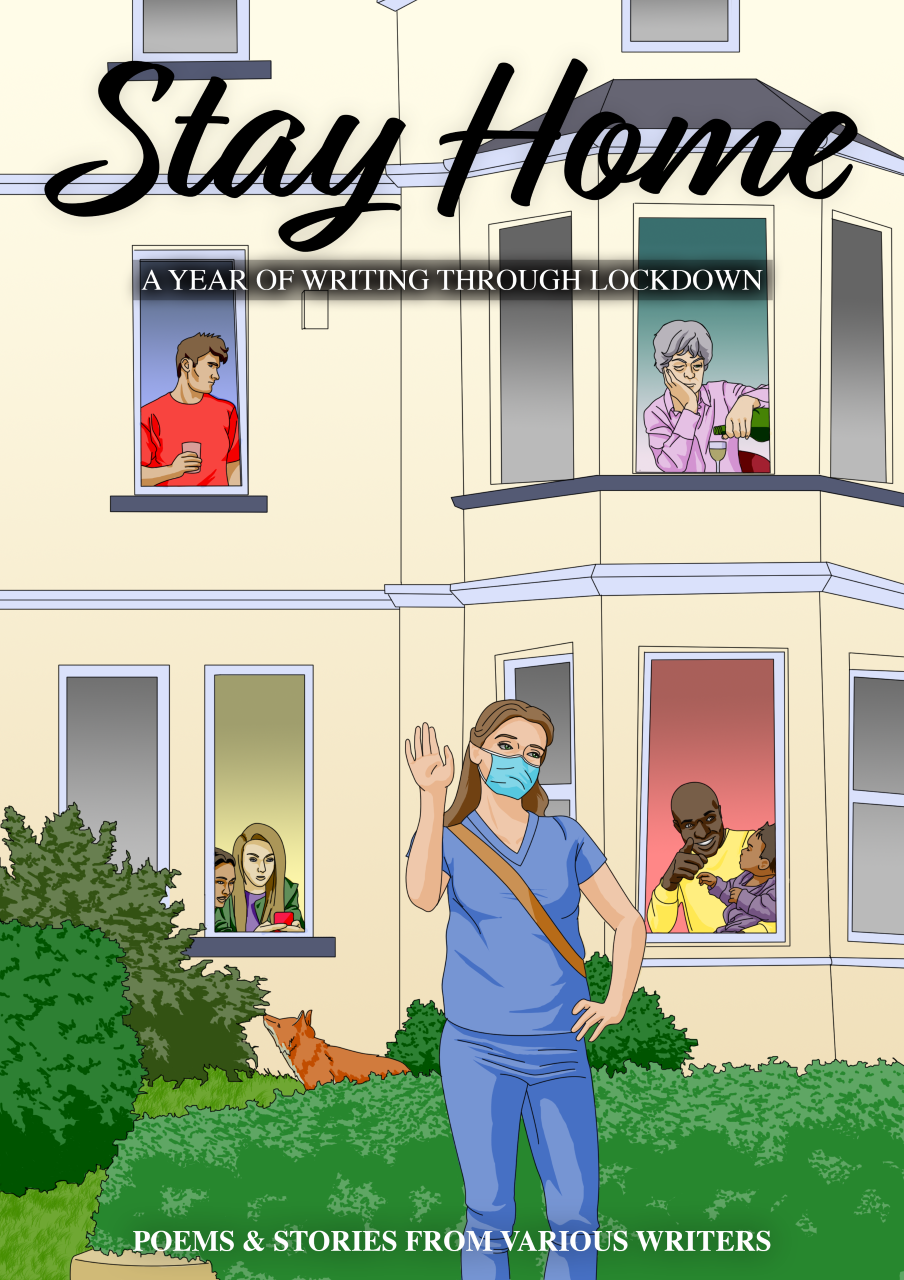
Stay Home – A Year of Writing Through Lockdown

It’s finally here!

Stay Home – A Year of Writing Through Lockdown is the first book published by the Community Interest Company myself and author Sim Alec Sansford run, Chasing Driftwood Writing Group. The book has been published under Chasing Driftwood Books and we hope there will be many more to come. In fact, we will be annoucning a brand new community writing project very soon!

So, what is Stay Home about and why did we put it together?

At the start of the Covid 19 pandemic, I turned almost daily to my blog to write about my fears and experiences as a nationwide lockdown saw the closing of schools, colleges and workplaces. The majority of us stayed home. We watched the world from our windows, took our daily walks, and turned to music, books and streaming services to entertain us. We also turned to gardening, pets and chicken-keeping! For a short while, our lives stopped and a new reality took over. As my blog posts and ponderings piled up, I decided to open up my blog to guests who might want to share their thoughts, feelings and experiences of life under lockdown. I had in mind at this point that putting together an anthology to publish under Chasing Driftwood would be a good plan. So, we opened it up to even more people, including the adults and children who attend our writing clubs and workshops.

We were overwhelmed by the wonderful submissions of personal essays, stories and poetry and we soon had a decent sized anthology on our hands.

It’s been a great learning experience for myself and Sim. Of course, as self-published authors ourselves we understand the process of compiling a manuscript, formatting, editing, proofreading, choosing a front cover and uploading to Amazon, but there were still new things to learn along the way. We would like to publish more anthologies in the future written by the people we work with, so Stay Home was a fantastic opportunity to learn from.

It has been published under Chasing Driftwood Books and is available now in ebook and paperback from Amazon. All the money from book sales will go back into the CIC to help fund our next community writing project. If you re interested in reading the book and supporting emerging writers and our next project, then here is the link to check it out.

mybook.to/StayHome

A huge thank you to all the wonderful contributors and to artist Law Baker who kindly designed the front cover for us!

Guest Post #1 – Hello Home…

Last week I posted about how it felt to be entering yet another strict lockdown here in the UK due to Covid 19 infections soaring again. It was a post addressed to my home…the place that is sheltering us and keeping us safe. It got me thinking, how are other people coping in their homes? All our homes are so very different – how does it feel for other people to be locked in again? So, I reached out and I’m happy to report I’ve got a wonderful selection of guest posts lined up for the coming weeks on the theme ‘Hello Home…’. For the first post please welcome author R. V Biggs. You can find out more about him and his books at the end of the post!

Home.

‘Home… home again.

I like to be here when I can.

When I come home cold and tired,

I love to warm my bones beside the fire.’

Wonderful song lyrics that I’ve remembered for almost 50 years and taken from the album ‘Dark Side of the Moon’ by Pink Floyd.

But at some point during autumn, maybe into November, a switch usually turns on inside my head while I’m glaring at tail lights during the daily commute home along the M6. The switch activates the memory of these song lyrics and draws me into the warm embrace of what home means, especially when we’re heading for the dark months.

That warm embrace offers up a myriad of recollections all listed under the heading of Nostalgia and not just related to the winter months when, for the most part, we humans migrate indoors.

As the years have passed, I’ve realised that Nostalgia isn’t just a yearning for years gone by. It can invoke memories in the recent past, and I think lockdown has had its effect on this notion as well.

My commute came to a halt in March 2020, much like, I imagine, many others, though I deem myself one of the lucky ones who can work quite effectively from home. So now my house has become my sanctuary, since I’m shielding, a place where I’ve been able to shut out the world to keep safe.

But the way I feel about my home has changed over the last twelve months. It has taken on a more poignant meaning after a three week stay in hospital when the medical experts tried to figure out what was wrong. Mercifully they did and returning home made me realise how I long for and value my home when I’m away.

For almost a year now I’ve worked from home, which suits me for the main reason that I don’t have to commute… the single most exhausting part of the working day. It means I’m here to have breakfast with my wife, and elevenses, lunch and dinner, the latter without being almost too tired to eat. There’s a comfort in knowing I can share more of my day with her and Mags, our Labrador rescue.

As I look around, I see the material things that make up our home. The furniture, the photographs, prints on the wall, the candles, the DVDs, my wife’s knitting basket. Then outside the trees we have planted, the roses, the summer bedding, the hard landscaping, the vegetable garden, the bird feeders. The list goes on.

But each of these things invokes a shared memory. The memory of when and where we bought ‘x’, or planted ‘y’. When this or that photo was taken and what we were doing at the time.

Imagine if you stood in each room of your home in turn, picked out an object and pondered when you bought it, from where, and what you were doing at the time, how far down memory lane could you go? What connections would you make?

Here’s an example. On the bistro table in the photograph above, there are cups and saucers my wife and I purchased from a charity shop in Tywyn, near Aberdovey. At the time we were having a short break in October 2019 for our wedding anniversary. I use one of this set each day for coffee while I’m working, and it reminds me of our rediscovery of the Cardigan Bay coastline of Wales.

During the year we met, we took a short break in Wales and fell in love with the place and each other. For years we holidayed there in the Autumn before discovering the vastness of Scotland after which we only had days out in Wales. But the return was an eye opener, since we’d all but forgotten its beauty. Now when I look at these cups and saucers, I remember that holiday in 2019, I remember the days out over the years, the seafront at Criccieth, Cadwalladers ice cream, the long beach at Harlech, Fish and Chips from Barmouth… catching the sunset before the long drive home. And all this from an object that sits in a cupboard in our kitchen.

Maybe these are the things that really define our homes so that when we return we are surrounded by the memories we’ve made.

I mentioned lockdown above. Well, below is a picture of homemade jam. The fruit was partially foraged locally by my wife during lockdown on daily dog walks, and from Cumbria during an early autumn holiday of this year before the world closed in once more.

Everything around me has a link to a memory somewhere in the near or distant past, and for me each of these memories relates to and brings me back home.

But if I were to be honest, home has two meanings for me. The first is that which we all recognise from the word… the place where we live. But for me, the other meaning is my wife. She is the reason I have a home, the reason I have so many memories, so many objects around me that link to my past. In the words of Roger Waters, (sorry, Pink Floyd once again but more recently than 1973), ‘Everybody’s got someone they call home.’

I think home must mean more to me than I sometimes realise, which is why I chose to weave themes of family and home into my writing. Not a decision I sat and thought about… it just developed that way, as you can see in this extract from Reunion, the second in my short series of psychological mysteries.

Sarah’s need for the sanctuary of family was her greatest strength and her greatest weakness. What was family, she thought, if not a place to belong? Family was everything. It was a warm blanket… an embrace… a safe place to hide when the world threatened. A refuge where the door was always open, and a friendly face welcomed. Her need was deep-rooted, which explained the intensity of her grief after losing both of her parents.

With thoughts of family, she recalled the feeling she’d had when entering the building over half an hour ago. But the feeling of home that touched her back then, was little to do with the carpeted entrance, the heavy curtains and fresh flowers. Instead, it was the presence that called to her… a manifestation which sent forth warm tendrils of love that spread outwards from this quiet room overlooking the sea.

So I guess ever more so during these times of lockdown, home is not only where the heart is, it’s where memories lie, where our spirit settles, where our souls are at peace.

Thank you so much to Rob for this wonderfully personal piece. If you would like to find out more about him and his work his bio and links are below! We will have a new ‘Hello Home…’ piece mid-week!

R V Biggs lives in a small ex-mining village near Wolverhampton, England, with his wife Julie, and Mags the black lab. He has four grown up children and six grandchildren.

Walking with the dog is a favourite pastime and much of the story line for his first novel was developed during these lengthy outings.

Robert worked for 35 years in telecommunications but changed career paths to a managerial supporting role within a local Mental Health National Health Service trust. It was during the period between these roles that the concept for Song of the Robin was born.

Robert is a firm believer that destiny and co-incidence exist hand in hand and this conviction extends to his writing. He has a passion for holistic well-being and after first-hand experience of the potential healing powers of Reiki, a form of energy therapy, took a Reiki level 1 training course to heighten his spiritual awareness. Robert’s experiences in these areas helped conceive the ideas that led to Song of the Robin and its sequel Reunion, novels with central themes of fate, love and the strength of family. His writing is not fantasy but is set in modern times involving real people living real lives.

Amazon :- Tinyurl.com/yavoqlbx
My website:- rvbiggs.com